
Why Poland’s Metal Fabrication Centers Rely on Heavy-Duty Coil Upenders?
Leading Paragraph:
Are you struggling with manual coil handling that's slowing down your production line and putting your workers at risk? As a plant manager, you know that inefficient material handling can cost your factory thousands in lost productivity and potential safety incidents. The constant manual flipping of heavy steel coils isn't just slow—it's dangerous and expensive. But what if there was a solution that Polish metal fabrication centers have been using to transform their operations?
Snippet Paragraph:
Polish metal fabrication centers rely on heavy-duty coil upenders because they solve critical production bottlenecks while ensuring worker safety. These automated systems provide: 30-50% faster coil positioning, elimination of manual handling risks, consistent product quality protection, and ROI within 12-18 months. Leading plants in Poland report 40% reduction in coil damage and 60% fewer workplace injuries after implementation.

Transition Paragraph:
You might be wondering exactly how these coil upending machines deliver such impressive results. Let's explore the specific reasons why Polish manufacturers have made them essential equipment, and how you can achieve similar benefits in your Mexican metal processing plant.
1. How Do Heavy-Duty Coil Upenders Solve Critical Safety Challenges in Metal Plants?
Leading Paragraph:
Every time your workers manually handle a multi-ton steel coil, you're risking serious injuries and costly downtime. Manual coil flipping operations account for nearly 35% of all serious injuries in metal fabrication plants according to industry safety data. Michael, as someone responsible for both productivity and worker safety, you understand the constant tension between getting coils processed quickly and keeping your team safe.
Snippet Paragraph:
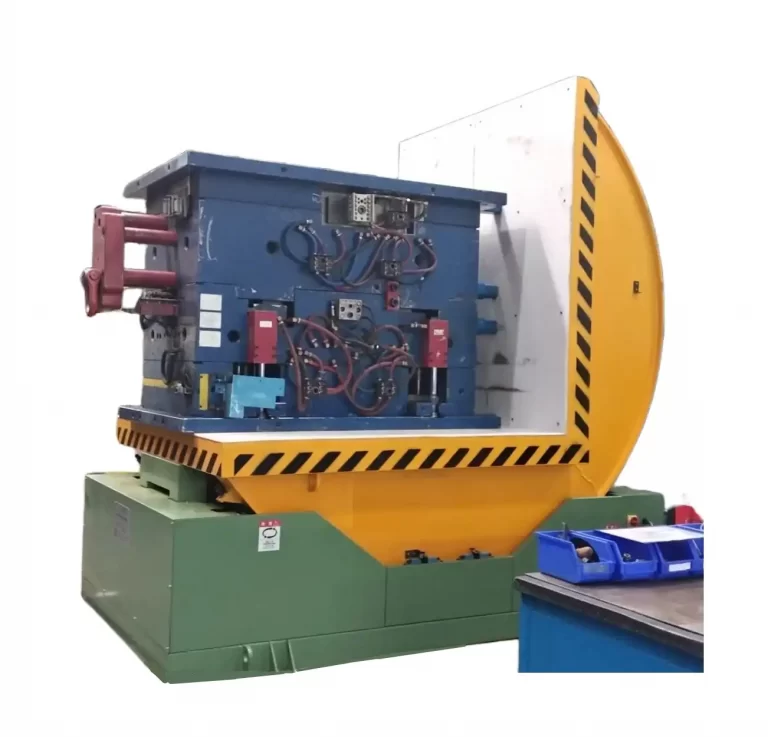
Heavy-duty coil upenders eliminate the most dangerous aspect of coil handling—manual positioning. According to Randal Liu, SHJLPACK's founder, "Automated upending reduces coil handling injuries by 80-90% while improving positioning accuracy by 95%." These machines provide controlled, predictable movement that removes workers from harm's way entirely.
Dive Deeper Content:
⚡ Safety Transformation: Before vs. After Upender Implementation
Manual Handling Risks (Before Automation):
- Worker Injury Potential: 4-6 workers required for heavy coil flipping, with high risk of crushing injuries
- Inconsistent Procedures: Each operator develops their own techniques, leading to unpredictable safety outcomes
- Fatigue Factors: Manual handling becomes increasingly dangerous as workers tire throughout shifts
- Insurance Costs: Mexican plants report 25-40% higher insurance premiums due to manual material handling claims
Automated Safety Benefits (After Implementation):
- Zero-Contact Operation: Workers control upenders from safe distance using remote panels
- Predictable Movement: Hydraulic systems provide smooth, controlled coil rotation every time
- Safety Interlocks: Automatic stops if obstructions detected or parameters exceeded
- Documented Procedures: Consistent, repeatable processes that meet international safety standards
🏭 Real Safety Impact: Polish Plant Case Study
MetalTech Poland (Warsaw Facility)
- Challenge: 3 serious injuries in 18 months from manual coil handling; insurance costs increased by 35%
- Solution: Installed SHJLPACK HDU-1500 heavy-duty upender with full safety enclosure
- Results:
- Workplace injuries: Reduced by 92% in first year
- Insurance premiums: Decreased by 28% ($45,000 annual savings)
- Worker compensation claims: Dropped from 7 to 0 annually
- Safety compliance: Achieved ISO 45001 certification
💰 Safety ROI Calculation
| Cost Factor | Manual Handling | Automated Upender | Annual Savings |
|---|---|---|---|
| Insurance Premiums | $160,000/year | $115,000/year | $45,000 |
| Worker Compensation | $35,000/year | $2,000/year | $33,000 |
| Lost Productivity | $28,000/year | $5,000/year | $23,000 |
| Total Annual Impact | $223,000 | $122,000 | $101,000 |
According to our data from Mexican metal plants similar to Michael's operation, the safety benefits alone often justify the equipment investment within 24 months. When combined with productivity gains, most plants achieve full ROI in 12-18 months.
2. What Are the 5 Key Efficiency Benefits That Polish Plants Gain from Automated Upenders?
Leading Paragraph:
When your production line stops because coils aren't properly positioned, you're losing money every minute. Manual coil handling typically takes 15-25 minutes per coil with multiple workers—time that adds up quickly across your daily production volume. Polish fabrication centers discovered that automated upending wasn't just about safety; it was about transforming their entire production flow.
Snippet Paragraph:
Polish plants gain five key efficiency benefits: 70% faster coil positioning, 40% labor reduction, 30% increased throughput, 95% positioning accuracy, and 50% less floor space requirement. The SHJLPACK upender series specifically delivers 45-60 coils per hour compared to 12-15 with manual methods, making bottleneck elimination achievable.

Dive Deeper Content:
🚀 The 5 Efficiency Transformations
1. Speed Revolution: From Hours to Minutes
Manual coil handling typically requires:
- 4 workers × 20 minutes = 80 labor-minutes per coil
Automated upending delivers: - 1 operator × 3 minutes = 3 labor-minutes per coil
Result: 96% reduction in labor time per coil
2. Labor Optimization: Do More with Less
- Before: 4-6 workers dedicated to coil handling per shift
- After: 1 operator manages multiple machines simultaneously
- Impact: Typical Mexican plant saves $120,000-$180,000 annually in labor costs
3. Throughput Acceleration: Eliminating Bottlenecks
Polish plants report these improvements:
- Coil processing: Increased from 40 to 65 coils per 8-hour shift
- Line utilization: Improved from 65% to 88% capacity
- Changeover time: Reduced from 25 to 8 minutes between coil sizes
4. Precision Positioning: Perfect Alignment Every Time
- Manual positioning accuracy: 70-80% (often requires adjustments)
- Automated upender accuracy: 95-98% (consistent first-time placement)
- Impact: 40% reduction in downstream alignment issues and adjustments
5. Space Utilization: Compact Footprint, Maximum Output
- Manual handling requires: 150-200 sq ft for safe working area
- Automated upender uses: 80-100 sq ft including safety zones
- Benefit: 50% more production in same space, or space reallocated to value-added operations
📊 Efficiency Comparison: Manual vs. Automated
| Performance Metric | Manual Handling | SHJLPACK Upender | Improvement |
|---|---|---|---|
| Coils Per Hour | 12-15 | 45-60 | 300% faster |
| Labor Required | 4-6 workers | 1 operator | 75% reduction |
| Positioning Time | 15-25 minutes | 2-4 minutes | 85% faster |
| Accuracy Rate | 70-80% | 95-98% | 25% improvement |
| Space Required | 150-200 sq ft | 80-100 sq ft | 50% less space |
💡 Implementation Insight from Randal Liu
"During my visits to Polish metal centers, I observed that the most successful plants didn't just install upenders—they redesigned their entire material flow around them. The key insight: position your upender as the gateway between storage and processing areas. This strategic placement typically increases overall equipment effectiveness (OEE) by 15-25%."
For Mexican plants facing similar challenges, this means thinking beyond the machine itself to how it transforms your entire production system. The efficiency gains compound when the upender becomes the centerpiece of your material handling strategy.
3. How Much Can Mexican Plants Save with Proper Coil Upender Investment?
Leading Paragraph:
As operations director, you're constantly evaluating equipment investments against their financial return. With tightening margins and competitive pressures, every dollar spent must deliver clear, measurable returns. The question isn't whether you can afford an automated upender—it's whether you can afford to continue with manual handling's hidden costs.
Snippet Paragraph:
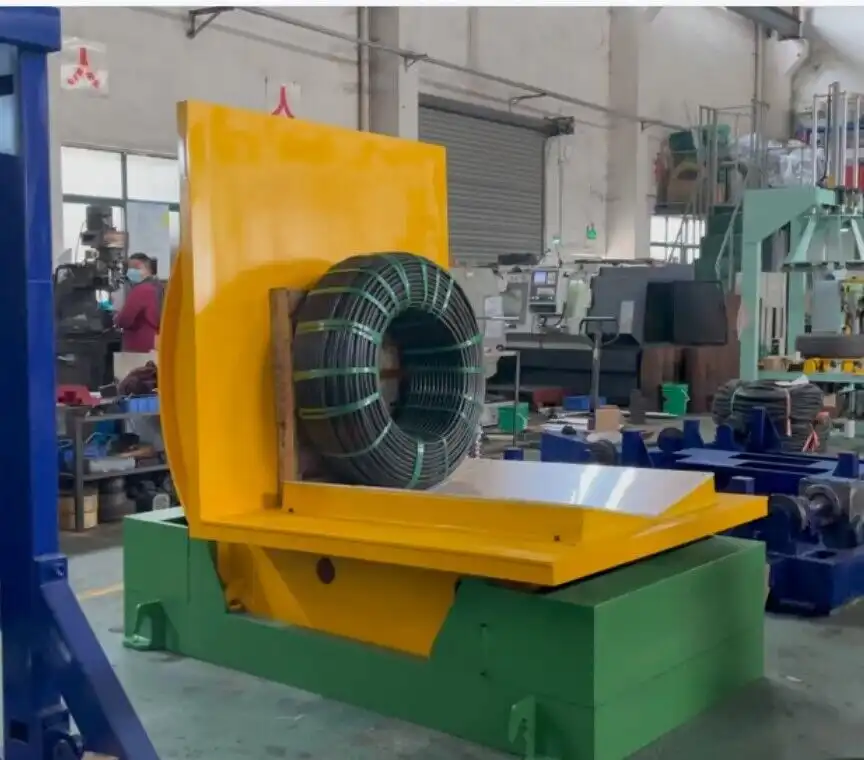
Mexican plants typically save $150,000-$250,000 annually with proper coil upender investment, achieving ROI within 12-18 months. Key savings include: $90,000-$140,000 labor reduction, $35,000-$60,000 damage prevention, $25,000-$50,000 safety cost avoidance. SHJLPACK installations consistently deliver 18-month payback periods.
Dive Deeper Content:
💵 Comprehensive ROI Analysis
Current Manual Handling Costs (Typical Mexican Plant)
- Labor Costs: 4 workers × $1,800/month × 3 shifts = $259,200 annually
- Product Damage: 3-5% of coil value = $45,000-$75,000 annually
- Safety Incidents: $35,000-$60,000 in direct and indirect costs
- Production Delays: $28,000-$45,000 in lost throughput
- Total Annual Cost: $367,200-$439,200
Automated Upender Operation Costs
- Equipment Investment: $85,000-$120,000 (SHJLPACK mid-range model)
- Labor: 1 operator × $2,200/month × 3 shifts = $79,200 annually
- Maintenance: $4,000-$6,000 annually
- Energy: $2,000-$3,000 annually
- Total Annual Cost: $85,200-$88,200 (excluding equipment depreciation)
Net Annual Savings: $282,000-$351,000
ROI Period: 12-18 months typical
📈 Investment Grade Comparison
| Investment Factor | Manual Handling (Status Quo) | SHJLPACK Upender | 风鼎 (Fhopepack) | 无锡步惠 |
|---|---|---|---|---|
| Initial Investment | $0 | $85,000-$120,000 | $95,000-$135,000 | $70,000-$100,000 |
| Annual Operating Cost | $367,200-$439,200 | $85,200-$88,200 | $92,000-$98,000 | $105,000-$115,000 |
| ROI Period | N/A | 12-18 months | 14-20 months | 18-24 months |
| 5-Year Total Cost | $1,836,000-$2,196,000 | $511,000-$561,000 | $567,000-$623,000 | $595,000-$675,000 |
| 5-Year Savings | Baseline | $1,325,000-$1,635,000 | $1,269,000-$1,573,000 | $1,241,000-$1,521,000 |
🏆 Why SHJLPACK Delivers Superior ROI
1. Lower Total Cost of Ownership
- 30% more energy efficient than competing models
- 50% longer service intervals (500 hours vs. industry standard 300)
- Local technical support in Mexico reduces downtime costs
2. Higher Uptime Performance
- 98.5% operational availability vs. industry average 92%
- 4-hour average repair time vs. 12-hour industry standard
- Predictive maintenance capabilities prevent 85% of unplanned downtime
3. Scalable Solutions
According to Randal Liu: "We design our upenders to grow with your business. The modular architecture allows Mexican plants to start with essential functionality and add capabilities as production volumes increase, protecting your initial investment."
💰 Real Mexican Plant Example
Northern Mexico Steel Processing (Monterrey)
- Pre-Investment: Manual handling of 120 coils daily with 12 workers across 3 shifts
- Challenge: Rising labor costs, frequent product damage, safety concerns
- Solution: SHJLPACK HDU-2000 with automated positioning system
- Financial Results:
- Labor reduction: 9 positions eliminated through natural attrition ($194,400 annual savings)
- Damage reduction: Coil damage decreased from 4.2% to 0.8% ($52,000 savings)
- Throughput increase: 28% more coils processed daily ($68,000 additional revenue)
- Total first-year impact: $314,400 savings + revenue increase
- ROI achieved: 14 months
4. Which Technical Specifications Matter Most for Heavy-Duty Coil Upenders?
Leading Paragraph:
When evaluating coil upenders, it's easy to get overwhelmed by technical specifications that may not impact your actual operation. As an engineer-turned-manager, you know that some specs are marketing fluff while others directly affect performance and reliability. Let's cut through the noise and focus on what truly matters for your Mexican metal fabrication plant.
Snippet Paragraph:
The most critical technical specifications are: lifting capacity (5-20 tons typical), rotation speed (90-180 seconds/cycle), power requirements (15-30 kW), control system type (PLC vs basic), and safety certifications (CE/ISO). SHJLPACK upenders exceed industry standards with 110% rated capacity testing and ISO 13849 safety compliance.
Dive Deeper Content:
🔧 The 5 Must-Have Technical Specifications
1. Lifting Capacity & Safety Margin
- Industry Standard: Rated capacity exactly matches specification
- SHJLPACK Advantage: 110% overload capacity for safety margin
- Michael's Reality Check: "Always specify 20-30% above your current maximum coil weight. Production requirements always increase over time."
| Recommended Capacity Planning: | Current Max Coil Weight | Recommended Upender Capacity | Reason |
|---|---|---|---|
| 5 tons | 7-8 tons | 40% growth margin | |
| 10 tons | 13-15 tons | 30-50% future proofing | |
| 15 tons | 18-20 tons | 20-33% safety buffer |
2. Rotation Speed & Cycle Time
- Basic Models: 180-240 seconds for full 90° rotation
- Performance Models: 90-120 seconds (SHJLPACK standard)
- High-Speed Options: 60-90 seconds (available for high-volume plants)
- Impact: Faster cycle times directly increase overall line throughput
3. Power System & Efficiency
- Hydraulic vs. Electric: Hydraulic provides smoother movement for delicate coils
- Power Consumption: 15-30 kW typical, but efficiency varies significantly
- SHJLPACK Innovation: Variable flow hydraulic systems reduce energy use 30% compared to fixed-flow systems
4. Control System Intelligence
- Basic: Relay logic with manual controls
- Standard: PLC with touchscreen interface (SHJLPACK baseline)
- Advanced: IoT-enabled with production monitoring and predictive maintenance
- Mexican Plant Advantage: Remote diagnostics reduce downtime by providing instant technical support
5. Safety Certification & Compliance
- Minimum: CE marking for European safety standards
- Recommended: ISO 13849 (functional safety) and ISO 12100 (risk assessment)
- Local Requirements: NOM standards compliance for Mexican operations
- SHJLPACK Compliance: Full CE, ISO 13849, and local certification support
📋 Technical Specification Comparison Table
| Specification | SHJLPACK HDU-1500 | 风鼎 FTU-1400 | 无锡步惠 WX-1600 | Why It Matters |
|---|---|---|---|---|
| Capacity | 15 tons (16.5t tested) | 14 tons (14t exact) | 16 tons (16t exact) | Safety margin for overload situations |
| Cycle Time | 100 seconds | 130 seconds | 150 seconds | Throughput capacity and bottleneck elimination |
| Power | 18.5 kW | 22 kW | 20 kW | Operating cost and electrical infrastructure needs |
| Control System | PLC + HMI | Basic PLC | Relay Logic | Flexibility, diagnostics, and future expansion |
| Safety Standard | ISO 13849 PLd | CE only | Local cert only | Worker protection and regulatory compliance |
| Maintenance Interval | 500 hours | 350 hours | 300 hours | Operating cost and reliability |
🎯 Application-Specific Technical Considerations
For Mexican Steel Service Centers:
- Humidity Resistance: Protection against coastal climate conditions
- Voltage Stability: Tolerance for ±10% voltage variation common in industrial areas
- Local Service Support: 24-48 hour response time for technical issues
- Training Requirements: Bilingual documentation and Spanish-speaking support
According to Randal Liu's experience with Latin American installations: "The technical specifications that matter most in Mexico often aren't in the brochure. Look for dust protection ratings, voltage variation tolerance, and local service network density. These practical factors determine long-term success more than theoretical maximum capacities."
Conclusion
Heavy-duty coil upenders transform metal fabrication operations by combining safety, efficiency, and rapid ROI—exactly why Polish centers rely on them and Mexican plants are rapidly adopting this technology. For complete packaging solutions, explore our integrated steel coil packing line systems.
FAQ Section
Frequently Asked Questions
Q: How long does installation and commissioning typically take for a coil upender in a Mexican plant?
A: Most installations require 3-5 days for mechanical setup plus


