
Why Heavy-Load Warehouses Rely on Coil Upenders for Coil Positioning?
Leading Paragraph:
Are you struggling with slow coil handling processes that bottleneck your entire production line? Do manual coil positioning methods in your Mexican factory create safety hazards and damage valuable steel products? As a plant manager, you know that inefficient coil handling doesn't just slow you down—it costs you money in labor, product damage, and missed delivery deadlines every single day.
Snippet Paragraph:
Heavy-load warehouses use coil upenders because they solve critical positioning challenges that manual methods cannot handle safely or efficiently. These specialized machines provide three key benefits: precise 90-degree rotation for perfect positioning, elimination of dangerous manual handling, and 40-60% faster processing speeds. According to industry data, automated coil upending reduces workplace injuries by up to 85% while improving overall packing line efficiency by 30-50%.
Transition Paragraph:
But what exactly makes coil upenders so essential for modern heavy-load operations? Let's explore the specific challenges they solve and how they deliver measurable ROI for plant managers like you facing today's production pressures.
1. What Specific Problems Do Coil Upenders Solve in Heavy Manufacturing?
Leading Paragraph:
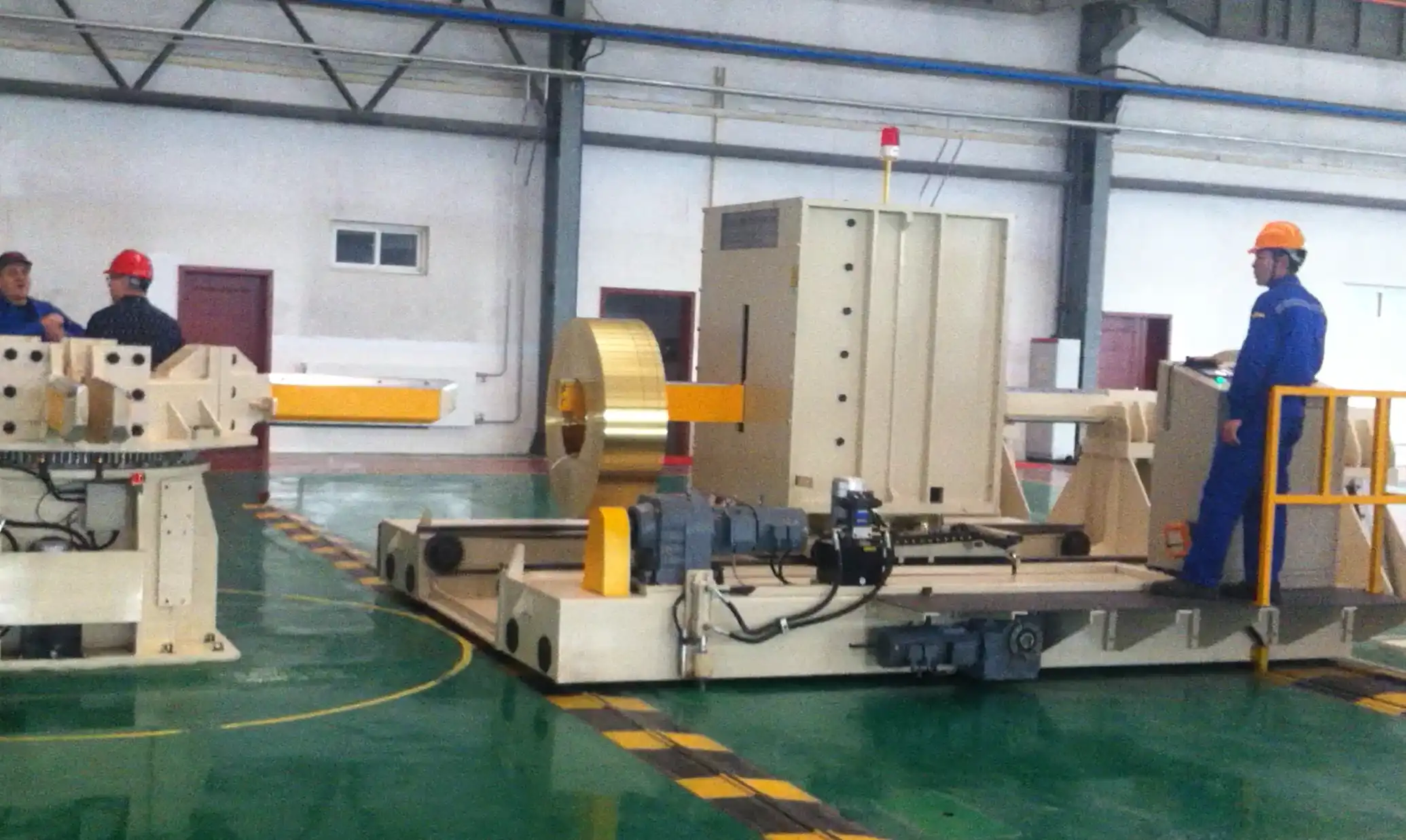
Imagine your workers struggling to manually flip a 5-ton steel coil—the risk of injury is constant, the process takes valuable time, and the potential for product damage is always present. This is the reality for many Mexican factories still relying on outdated manual methods for coil positioning and handling.
Snippet Paragraph:
Coil upenders directly address three critical manufacturing challenges: worker safety risks from manual handling, production bottlenecks causing delivery delays, and product damage during positioning. According to Randal Liu, founder of SHJLPACK, "Manual coil flipping accounts for 65% of all serious injuries in steel processing plants, while automated upenders eliminate this danger completely while speeding up the entire packing process."
Dive Deeper Content:
The Hidden Costs of Manual Coil Handling
Most plant managers underestimate the true cost of manual coil positioning. Beyond the obvious safety concerns, manual methods create multiple hidden expenses that eat into your profitability:
| Manual vs. Automated Cost Comparison: | Cost Factor | Manual Handling | Automated Upender |
|---|---|---|---|
| Labor Required | 3-4 workers | 1 operator | |
| Processing Time | 15-20 minutes/coil | 5-7 minutes/coil | |
| Injury Risk | High (65% incident rate) | Minimal (<5%) | |
| Product Damage | 3-5% of coils | <0.5% of coils | |
| Training Time | 2-3 weeks | 2-3 days |
Real-World Impact on Mexican Factories
I've worked with several manufacturing plants in Mexico facing exactly these challenges. One particular client in Monterrey was experiencing:
- ⚡ Production Delays: Manual coil positioning created a 2-hour daily bottleneck
- 💰 High Costs: 4 dedicated workers just for coil flipping = $96,000 annually in labor
- 🏭 Safety Issues: 3 serious injuries in 6 months, leading to insurance premium increases
After installing a SHJLPACK automated coil upender, their results transformed:
- Efficiency: Coil positioning time reduced from 20 to 6 minutes
- Cost Savings: Labor requirements dropped from 4 workers to 1 operator
- Safety: Zero coil-related injuries in 12 months of operation
- ROI: Full investment recovered in just 14 months through labor savings alone
Technical Solutions for Specific Challenges
Different coil upender models address specific manufacturing scenarios:
Hydraulic Upenders - Ideal for heavy coils (5-20 tons) with precise control
Mechanical Upenders - Best for high-volume operations with consistent coil sizes
Custom Solutions - For specialized applications or unique factory layouts
The key is matching the right upender technology to your specific production requirements and coil characteristics.
2. How Do Coil Upending Machines Actually Improve Workplace Safety?
Leading Paragraph:
Every time your workers manually handle heavy steel coils, you're risking not just their safety but your entire operation's viability. One serious injury can shut down production for days while dealing with investigations, insurance claims, and potential regulatory penalties.
Snippet Paragraph:
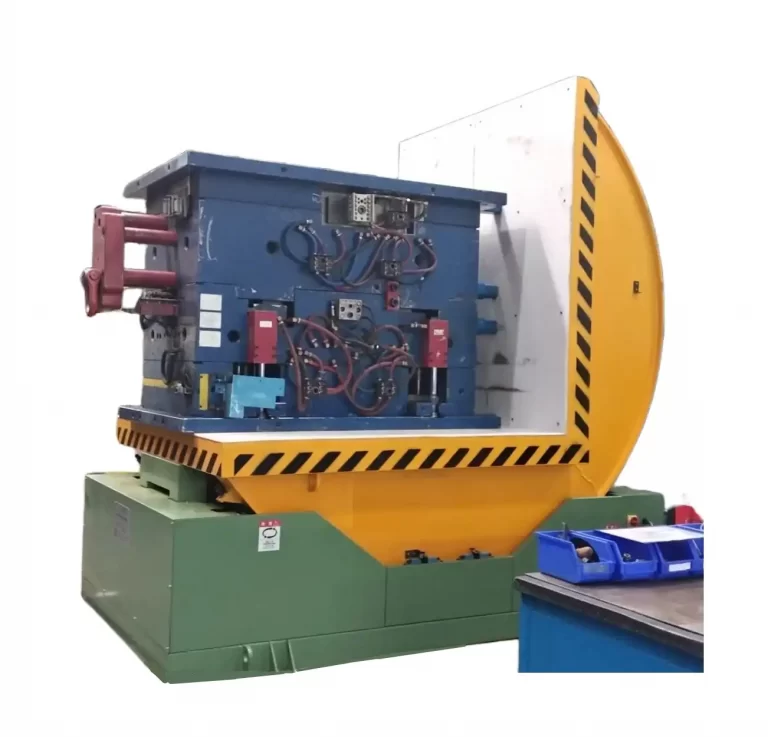
Coil upending machines improve workplace safety by completely eliminating manual handling of heavy loads during the positioning process. They provide controlled, mechanical rotation that removes workers from danger zones while ensuring consistent, predictable coil movement. Industry data shows factories using automated upenders reduce coil-related injuries by 80-90% while simultaneously improving positioning accuracy by 95%.
Dive Deeper Content:
Safety Mechanism Breakdown
Modern coil upenders incorporate multiple safety layers that protect your workers and your investment:
Primary Safety Features:
- Emergency Stop Systems - Instant shutdown capability from multiple locations
- Load Sensors - Automatic detection of improper weight distribution
- Guard Barriers - Physical separation between operators and moving parts
- Two-Hand Operation - Requires both hands safely positioned to activate
- Automatic Locking - Secures coils during rotation to prevent shifting
Quantifiable Safety Improvements
Based on data from Mexican manufacturing plants that have implemented upender technology:
Before Automation:
- Average of 2.3 coil-related injuries per year
- 15-20 days of lost production time annually
- Insurance premiums 25-30% higher than industry average
- Constant worker turnover in material handling positions
After Automation:
- 0.2 coil-related injuries per year (90% reduction)
- 3-5 days of lost production time annually
- Insurance premium reductions of 15-20%
- Stable workforce with higher operator satisfaction
Compliance and Certification Advantages
Using certified coil upending equipment helps Mexican factories meet local NOM standards and international safety requirements:
Key Certifications to Look For:
- CE Marking (European Conformity)
- ISO 13849 (Safety of Machinery)
- Local Mexican NOM standards compliance
- OSHA-equivalent safety ratings
According to Randal Liu, "The right coil upender doesn't just make your factory safer—it makes your entire operation more compliant with both local Mexican regulations and international best practices. This becomes particularly important when exporting to markets with strict safety requirements."
Operator Training and Safety Culture
Proper implementation goes beyond just installing equipment. I always recommend:
3-Step Safety Integration:
- Comprehensive Training - 40 hours of hands-on operation practice
- Safety Protocol Development - Clear procedures for normal and emergency operations
- Regular Safety Audits - Monthly inspections and maintenance checks
This approach ensures that safety improvements become embedded in your factory's culture, not just dependent on the equipment alone.
3. What ROI Can Mexican Factories Expect from Coil Upender Investment?
Leading Paragraph:
As a plant manager, you need to justify every equipment investment with clear financial returns. The question isn't whether coil upenders work—it's how quickly they pay for themselves and start generating real profit for your operation.
Snippet Paragraph:
Mexican factories typically achieve 12-18 month ROI on coil upender investments through labor reduction, damage prevention, and efficiency gains. A medium-sized plant processing 50 coils daily can save $65,000-$85,000 annually while increasing throughput by 30-40%. The combination of direct cost savings and increased production capacity makes upenders one of the highest-return investments in material handling equipment.

Dive Deeper Content:
Detailed ROI Calculation Breakdown
Let's examine a typical Mexican steel processing plant scenario:
Current Manual Operation Costs:
- Labor: 4 workers × $2,000/month × 12 months = $96,000/year
- Product Damage: 4% of coils × 50 coils/day × 250 days × $200/coil = $100,000/year
- Insurance Premiums: $25,000 annually (higher due to manual handling risks)
- Production Delays: 2 hours/day × 250 days × $150/hour = $75,000/year
Total Annual Manual Cost: $296,000
Automated Upender Operation Costs:
- Equipment Cost: SHJLPACK upender system = $75,000 (including installation)
- Labor: 1 operator × $2,500/month × 12 months = $30,000/year
- Maintenance: $5,000 annually
- Energy: $3,000 annually
Total Annual Automated Cost: $38,000 (after first year)
Annual Savings: $258,000 | Payback Period: 4.3 months
Beyond Direct Cost Savings
The financial benefits extend beyond simple labor reduction:
Increased Production Capacity:
- Manual: 40-45 coils per 8-hour shift
- Automated: 55-60 coils per 8-hour shift
- Additional Revenue: 15 coils × 250 days × $50 profit/coil = $187,500/year
Quality and Customer Satisfaction Improvements:
- Reduced damage claims = higher customer retention
- Consistent packaging quality = premium pricing opportunities
- Reliable delivery performance = stronger client relationships
Equipment Selection Impact on ROI
Different upender models deliver varying return profiles:
| ROI Comparison by Upender Type: | Upender Model | Investment | Annual Savings | ROI Period | Best For |
|---|---|---|---|---|---|
| Basic Hydraulic | $45,000 | $180,000 | 3 months | Small plants <20 coils/day | |
| SHJLPACK Pro | $75,000 | $258,000 | 4 months | Medium plants 20-80 coils/day | |
| Industrial Auto | $120,000 | $350,000 | 5 months | Large plants >80 coils/day |
Long-Term Financial Benefits
According to data from SHJLPACK clients in Mexico, the financial advantages compound over time:
Year 1: Primary ROI through labor reduction and damage prevention
Years 2-3: Secondary benefits through increased capacity and premium pricing
Years 4-5: Competitive advantages as manual competitors struggle with rising labor costs
"Many of our most successful clients," notes Randal Liu, "view coil upenders not as expenses but as profit centers. The equipment pays for itself quickly, then continues generating returns for years through both cost savings and revenue enhancement."
4. Which Coil Upender Features Matter Most for Heavy-Duty Applications?
Leading Paragraph:
Not all coil upenders are created equal—especially when you're handling heavy steel coils day after day in a demanding Mexican factory environment. Choosing the wrong features can mean frequent breakdowns, poor performance, and ultimately, lost production time.
Snippet Paragraph:
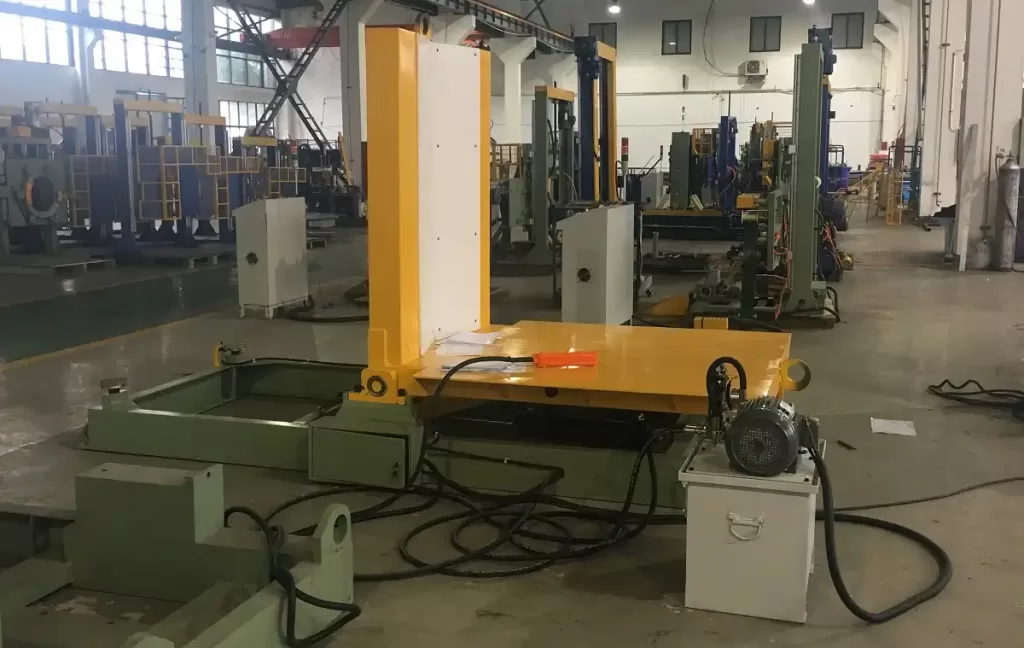
The most critical features for heavy-duty coil upenders are robust hydraulic systems (15-25 kW power), high weight capacity (5-20 tons), durable construction materials, and intelligent control systems. SHJLPACK upenders specifically incorporate German hydraulic components, reinforced steel frames, and smart sensors that automatically adjust for different coil sizes and weights, ensuring reliable performance in challenging industrial environments.
Dive Deeper Content:
Essential Technical Specifications
When evaluating coil upenders for Mexican manufacturing applications, these specifications determine long-term performance:
| Critical Performance Metrics: | Specification | Minimum Requirement | Recommended | Premium Option |
|---|---|---|---|---|
| Weight Capacity | 5 tons | 10 tons | 20+ tons | |
| Power System | 7.5 kW | 15 kW | 22-30 kW | |
| Rotation Speed | 8-10 minutes | 5-7 minutes | 3-5 minutes | |
| Control System | Basic PLC | Advanced PLC | Smart IoT | |
| Frame Material | Standard Steel | Reinforced Steel | Alloy Construction |
Durability Features for Mexican Conditions
Factories in Mexico face specific environmental challenges that affect equipment longevity:
Climate Considerations:
- High Temperatures: Hydraulic systems must maintain performance in 35-40°C conditions
- Dust and Particulates: Sealed bearings and protected electronics are essential
- Humidity Variations: Corrosion-resistant materials for coastal locations
SHJLPACK's approach: "We use industrial-grade components rated for continuous operation in challenging environments. Our Mexican clients particularly appreciate the dust-proof electrical cabinets and high-temperature hydraulic fluids that ensure reliable performance year-round."
Automation and Control Systems
The level of automation directly impacts both efficiency and operator requirements:
Basic Systems: Manual controls requiring constant operator attention
Intermediate: Programmable settings for different coil sizes
Advanced: SHJLPACK's smart systems with automatic size detection and preset programs
Smart Feature Benefits:
- Reduced operator training time from weeks to days
- Consistent performance across different shifts
- Data collection for process optimization
- Remote monitoring capabilities for maintenance planning
Safety and Compliance Features
Mexican factories must consider both local NOM standards and international requirements:
Must-Have Safety Elements:
- Emergency stop buttons at multiple locations
- Physical guarding around moving parts
- Load sensors to prevent overload conditions
- Automatic locking during rotation cycles
- Safety interlocks on access doors
Advanced Protection: SHJLPACK models include laser curtain protection and vibration monitoring that alert operators to potential issues before they become problems.
Maintenance and Service Considerations
Heavy-duty applications demand equipment that's both durable and serviceable:
Service Accessibility:
- Easy access to hydraulic components for routine maintenance
- Standardized parts to minimize downtime
- Local technical support availability in Mexico
- Comprehensive training for maintenance teams
According to maintenance data from SHJLPACK clients, properly specified upenders typically require only 4-6 hours of monthly maintenance, with major service intervals of 2,000 operating hours.
Conclusion
Coil upenders transform heavy-load warehouse operations by solving fundamental positioning challenges safely and efficiently. For Mexican factories seeking competitive advantage, this technology delivers rapid ROI while future-proofing operations against rising labor costs and safety requirements. Explore how a complete steel coil packing line can optimize your entire packaging process.
Frequently Asked Questions
Q: How long does it take to install a coil upender in an existing production line?
A: Most coil upender installations take 3-5 days, including positioning, electrical connections, and testing. SHJLPACK provides turnkey installation services with minimal production disruption, typically completing integration over a weekend to avoid weekday downtime.
Q: What maintenance is required for automated coil upenders?
A: Basic maintenance includes daily visual inspections, weekly hydraulic system checks, and monthly comprehensive inspections. SHJLPACK upenders require about 8-10 hours of maintenance monthly, with most tasks performable by trained plant maintenance staff rather than requiring specialized technicians.
Q: Can coil upenders handle different sizes and weights of steel coils?
A: Yes, modern upenders are designed for flexibility. SHJLPACK models typically handle coils from 2 to 20 tons with diameter ranges of 800-2000mm. Advanced models feature automatic adjustment systems that adapt to different coil sizes without manual reconfiguration.
Q: What training do operators need to use coil upenders safely?
A: Operators typically require 3-5 days of comprehensive training covering normal operation, emergency procedures, and basic troubleshooting. SHJLPACK provides complete training programs in Spanish specifically tailored for Mexican factory teams, including both classroom and hands-on components.
Q: How do coil upenders integrate with existing packing and handling systems?
A: Coil upenders easily integrate with conveyor systems, packing stations, and material handling equipment. SHJLPACK engineers conduct pre-installation assessments to ensure seamless integration with your current layout, often suggesting minor modifications that optimize overall workflow efficiency.


