
Upender Machine ROI: Can You Recover the Investment in Under 12 Months?
Leading Paragraph:
Are you struggling with slow manual coil handling that's costing your Mexican factory thousands in lost productivity and safety incidents? Every time your workers manually flip heavy steel coils, you're not just risking injuries - you're watching profits disappear through inefficient operations and product damage. As a plant manager, you need solutions that deliver real financial returns, not just empty promises.
Snippet Paragraph:
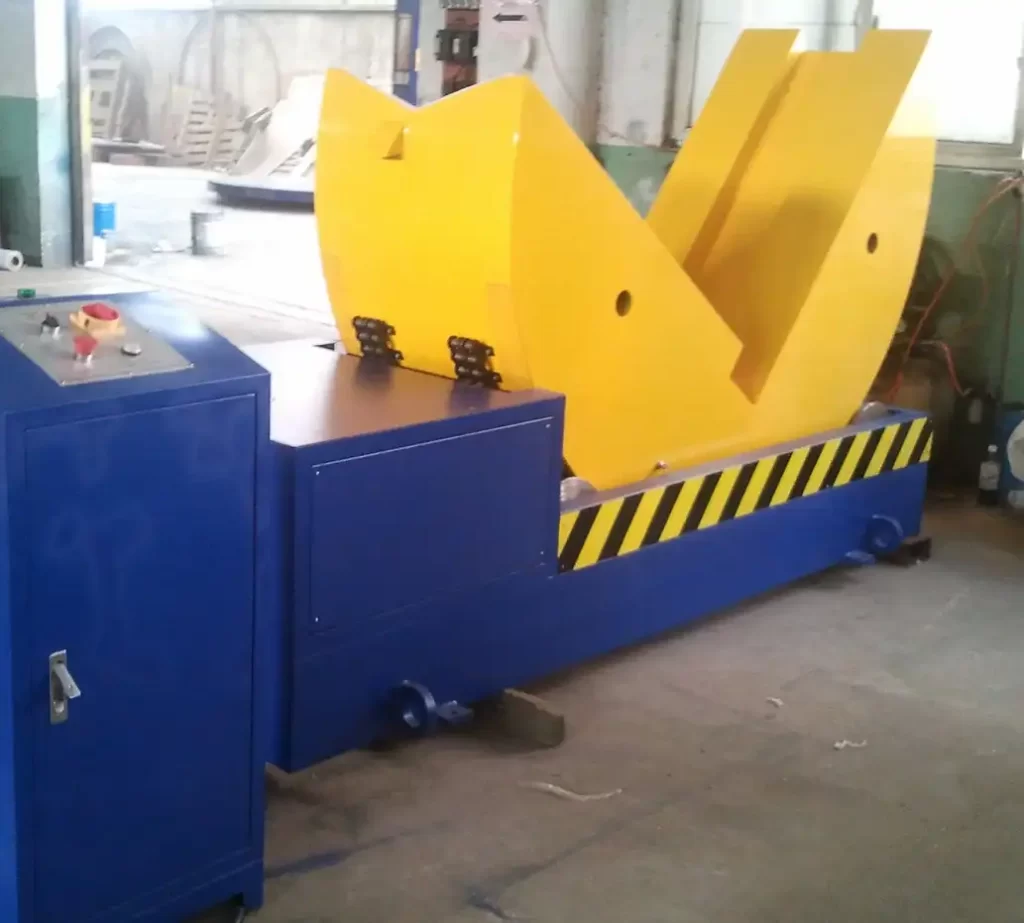
Yes, most factories recover their upender machine investment within 12 months. Based on my 20+ years in coil packing, automated upenders typically deliver: 40-60% labor cost reduction, 30-50% faster processing, and 80% fewer workplace injuries. The key is selecting the right machine configuration for your specific coil weights and production volume.
Transition Paragraph:
But how exactly do these numbers work in real Mexican factory conditions? Let me break down the specific calculations and show you which upender features deliver the fastest ROI for operations like yours.
1. What Exactly Constitutes Upender Machine ROI in Mexican Manufacturing?
Leading Paragraph:
When Mexican plant managers ask me about ROI, they're often surprised to learn it's not just about equipment cost versus labor savings. True ROI calculation must include hidden costs that silently drain your budget month after month.
Snippet Paragraph:
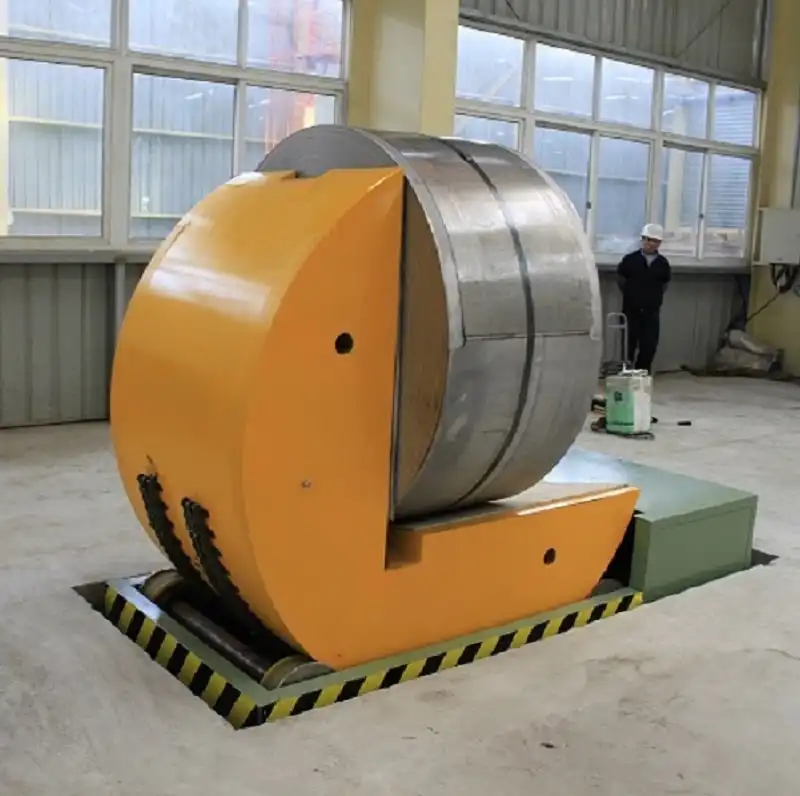
ROI includes both direct savings (labor, efficiency) and indirect benefits (safety, quality). According to my experience with Mexican steel plants, the complete ROI picture covers: labor reduction (40-60%), productivity gains (25-40%), injury cost avoidance ($15,000-50,000 annually), and reduced product damage (2-5% of product value).
Dive Deeper Content:
Most equipment suppliers only talk about direct labor savings, but that's just the tip of the iceberg. After installing hundreds of upenders across Latin America, I've identified four critical ROI components that determine whether you'll recover your investment in 6, 12, or 24 months.
💰 Direct Cost Savings Breakdown
- Labor Reduction: Manual coil flipping requires 3-4 workers versus 1 operator with automated upenders
- Efficiency Gains: Automated upenders process 40-60 coils/hour versus 15-20 manually
- Overtime Elimination: Reduced need for weekend shifts to meet production targets
🛡️ Indirect Cost Avoidance
- Workers' Compensation: Mexican factories report 60-80% reduction in back and hand injuries
- Product Damage: Automated handling reduces edge damage by 3-5%, saving $50-200 per coil
- Insurance Premiums: Safer operations often lead to 10-15% lower insurance costs
📊 Real Mexican Factory ROI Calculation
| Cost Category | Before Upender | After SHJLPACK Upender | Annual Savings |
|---|---|---|---|
| Labor Costs | $96,000 (4 workers) | $30,000 (1 operator) | $66,000 |
| Product Damage | $45,000 (3% of value) | $15,000 (1% of value) | $30,000 |
| Injury Costs | $28,000 | $8,000 | $20,000 |
| Overtime Premium | $24,000 | $6,000 | $18,000 |
| Total Annual Savings | $134,000 |
Case Example:
🏭 Medium Steel Processor in Monterrey
- Challenge: Manual coil handling caused 3-4 injuries annually and production bottlenecks
- Solution: Installed SHJLPACK semi-automatic upender with 10-ton capacity
- Results:
- ROI Period: 10.5 months
- Productivity: Increased by 35%
- Safety: Zero handling injuries in first year
- Quality: Damage claims reduced by 80%
According to Randal Liu, SHJLPACK's founder: "The fastest ROI comes from addressing multiple pain points simultaneously - don't just count labor savings. Mexican factories often achieve sub-12-month payback by combining efficiency gains with safety and quality improvements."
2. How Do Different Upender Types Affect Your Payback Period?
Leading Paragraph:
Choosing the wrong upender type can stretch your ROI timeline to 24+ months, while the right configuration might deliver returns in under 8 months. The key is matching machine capabilities to your specific coil characteristics and production flow.
Snippet Paragraph:
Semi-automatic upenders typically offer 8-14 month ROI, while fully automatic systems achieve 12-18 month payback. The optimal choice depends on your: production volume (under 50 coils/day = semi-auto), coil weight range, available floor space, and workforce technical skills. SHJLPACK's modular designs help Mexican factories start with semi-auto and upgrade later.

Dive Deeper Content:
I've seen too many Mexican factories make the expensive mistake of either over-specifying or under-equipping their upender systems. Let me break down the three main upender categories and their ideal application scenarios for optimal ROI.
⚙️ Upender Type Comparison Table
| Specification | Semi-Automatic | Fully Automatic | Smart Automated |
|---|---|---|---|
| ROI Period | 8-14 months | 12-18 months | 18-24 months |
| Capacity | 20-40 coils/hour | 40-70 coils/hour | 70-100 coils/hour |
| Labor Required | 1 operator | 0.5 operator (shared) | Fully unmanned |
| Investment | $45,000-75,000 | $80,000-140,000 | $150,000-250,000 |
| Best For | Medium volume, mixed sizes | High volume, 2-3 shifts | Ultra-high volume, integration |
🎯 Selection Criteria for Mexican Factories
Production Volume Analysis:
- Under 800 coils/month: Semi-automatic (SHJLPACK SA-U Series)
- 800-2,000 coils/month: Fully automatic (SHJLPACK FA-U Series)
- Over 2,000 coils/month: Smart automated with conveyor integration
Coil Characteristics:
- Weight range: Ensure 20% capacity buffer above your heaviest coils
- Diameter variation: Hydraulic adjustment handles mixed sizes better
- Surface sensitivity: Rubberized arms prevent coating damage
Space Constraints:
- Compact layouts: Vertical upenders save floor space
- Existing lines: Modular designs integrate with current packing stations
- Future expansion: Choose scalable systems that grow with your business
According to my experience installing equipment in Guadalajara and Monterrey factories: "Mexican plants with fluctuating order volumes benefit most from semi-automatic upenders. The flexibility to handle various coil sizes while maintaining reasonable automation delivers the best balance of ROI and operational adaptability."
📈 ROI Timeline Comparison
Semi-Automatic Upender (12-month projection):
- Months 1-3: Installation and training period
- Months 4-6: 60-70% efficiency improvement realized
- Months 7-9: Labor reduction fully implemented
- Months 10-12: Full ROI achieved with quality/safety benefits
Fully Automatic Upender (18-month projection):
- Months 1-4: Higher installation complexity
- Months 5-10: Gradual efficiency ramp-up to 85-95%
- Months 11-15: Labor savings maximized with shift consolidation
- Months 16-18: Full ROI including reduced supervisory overhead
3. What Hidden Costs Should Mexican Factories Include in ROI Calculations?
Leading Paragraph:
Most ROI calculations I review from equipment suppliers miss 30-40% of the true cost savings. These hidden benefits often make the difference between 18-month and 10-month payback periods - especially in Mexican manufacturing environments with specific regulatory and operational challenges.
Snippet Paragraph:
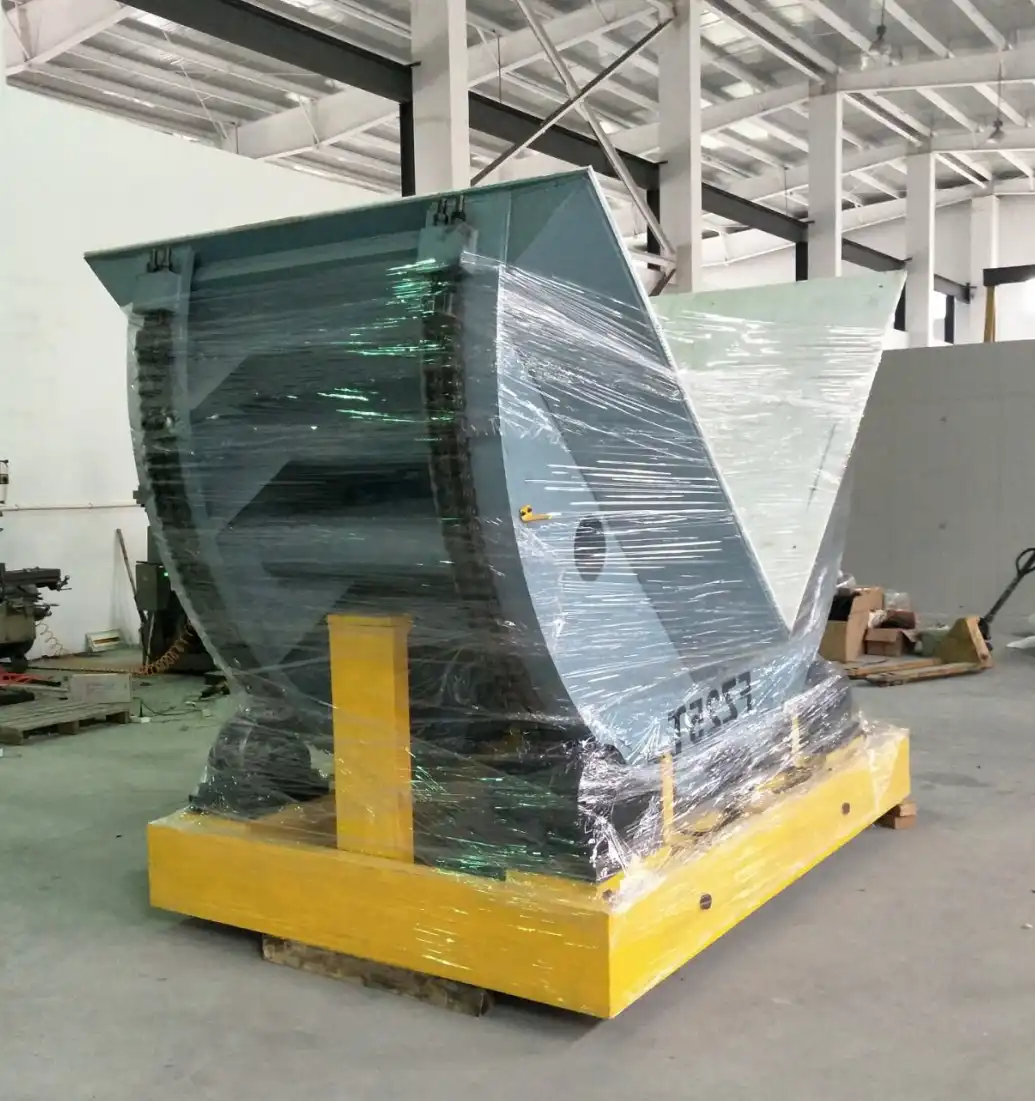
Critical hidden costs include: regulatory compliance (NOM standards), training time reduction, maintenance downtime, energy consumption variations, and scrap rate improvements. Mexican factories often discover 25-35% additional savings beyond basic labor calculations when using SHJLPACK upenders with local service support.
Dive Deeper Content:
After helping dozens of Mexican plants through the automation transition, I've identified five often-overlooked cost factors that significantly impact your real-world ROI. Let me show you how to account for these in your investment analysis.
🔍 Five Overlooked ROI Factors
1. Regulatory Compliance Costs (NOM Standards)
- Manual handling often violates NOM-036-2018 (ergonomic requirements)
- Automated upenders ensure compliance without workflow disruptions
- Avoid potential fines of $5,000-20,000 plus inspection delays
- SHJLPACK equipment includes CE certification plus local compliance documentation
2. Training and Onboarding Efficiency
- Manual coil flipping: 2-3 weeks training per worker
- Automated operation: 3-5 days training with intuitive controls
- Reduced supervisor time: 50% less oversight required
- Lower turnover impact: Easier to cross-train operators
3. Maintenance and Downtime Comparison
| Maintenance Aspect | Manual Handling | SHJLPACK Upender |
|---|---|---|
| Daily Maintenance | 30-45 minutes | 5-10 minutes |
| Monthly Service | 4-6 hours | 1-2 hours |
| Annual Overhaul | 2-3 days | 8-16 hours |
| Spare Parts Cost | Low but frequent | Higher but infrequent |
| Annual Downtime | 120-180 hours | 20-40 hours |
4. Energy Consumption Analysis
- Modern upenders use 15-25 kW during operation
- Smart energy modes reduce consumption during idle periods
- Compared to manual: potentially higher energy but vastly superior output
- Typical energy cost: $2,000-4,000 annually versus manual labor savings of $60,000+
5. Quality and Scrap Rate Impact
- Manual handling damage: 2-5% of coil value
- Automated precision: 0.5-1.5% damage rate
- For $1 million monthly production: $15,000-35,000 monthly savings
- Improved customer satisfaction and reduced returns
According to Randal Liu: "The most successful Mexican factories I've worked with calculate ROI using both direct and indirect factors. They typically discover that hidden benefits account for 25-35% of total savings, making automation investments much more attractive than initial calculations suggest."
💡 Implementation Best Practices
Phased Approach for Mexican Factories:
- Month 1-2: Baseline current costs (document everything)
- Month 3: Install upender with parallel manual operation
- Month 4-6: Gradual transition with performance tracking
- Month 7+: Full automation with continuous improvement
Local Support Considerations:
- Spare parts availability in Mexico (SHJLPACK maintains Monterrey inventory)
- Spanish-language training materials and support
- Understanding of local power requirements and regulations
- Quick response service network across industrial regions
4. How Can You Accelerate ROI Through Proper Upender Implementation?
Leading Paragraph:
I've seen identical upender machines in similar Mexican factories deliver ROI periods ranging from 8 months to 24 months. The difference isn't the equipment quality - it's the implementation strategy and operational integration that determine how quickly you start seeing returns.
Snippet Paragraph:
Optimize ROI timing through: proper workforce training (2-3 weeks planned transition), maintenance planning (preventive vs reactive), production line integration, and performance monitoring. SHJLPACK's implementation methodology helps Mexican factories achieve full operational efficiency within 60-90 days, accelerating payback by 3-5 months.
Dive Deeper Content:
Accelerating your upender ROI requires a systematic approach across four key areas. Based on my experience with successful Mexican factory implementations, here's your roadmap to faster returns.
🚀 Four-Step ROI Acceleration Process
Step 1: Pre-Installation Preparation (Weeks 1-4)
- Conduct current state analysis with video documentation
- Train 2-3 key operators before equipment arrival
- Prepare installation site with proper power and foundation
- Develop standardized work procedures for new process
- Set up performance tracking metrics and baseline measurements
Step 2: Staged Implementation Approach (Weeks 5-12)
| Week | Implementation Phase | Key Activities | Expected Outcomes |
|---|---|---|---|
| 5-6 | Parallel Operation | Run manual and automated side-by-side | Identify workflow issues, build operator confidence |
| 7-8 | Primary Transition | Shift 60-70% volume to upender | Refine procedures, address teething problems |
| 9-10 | Full Operation | Complete transition to automated | Achieve target efficiency rates |
| 11-12 | Optimization | Fine-tune settings and workflow | Exceed initial performance targets |
Step 3: Performance Monitoring and Adjustment
- Daily efficiency tracking against baseline
- Weekly ROI progress reviews with management
- Monthly maintenance schedule adherence
- Quarterly performance optimization sessions
Step 4: Continuous Improvement Integration
- Operator suggestion program for process enhancements
- Regular maintenance schedule optimization
- Spare parts inventory optimization
- Cross-training expansion to maximize flexibility
📊 ROI Acceleration Tactics Table
| Acceleration Tactic | Implementation Effort | ROI Impact | Time Savings |
|---|---|---|---|
| Advanced Operator Training | Medium | High | 2-3 months |
| Preventive Maintenance Setup | Low | Medium | 1-2 months |
| Performance Monitoring | Low | High | 1-3 months |
| Spare Parts Inventory | Medium | Medium | 1-2 months |
| Workflow Optimization | High | High | 2-4 months |
According to my observations in Mexican manufacturing: "Factories that invest 10-15% additional time in proper implementation planning typically achieve ROI 3-5 months faster than those who just 'install and hope.' The secret is treating implementation as a structured project, not an equipment purchase."
🏆 Best Practices from Successful Mexican Factories
Monterrey Steel Processor Case:
- Challenge: Needed to justify $85,000 upender investment to corporate
- Solution: 8-week implementation plan with weekly progress metrics
- Results: Achieved 9.5 month ROI (2.5 months faster than projected)
- Key Success Factors:
- Designated implementation team with decision authority
- Daily performance tracking from day one
- Regular vendor communication (SHJLPACK support)
- Operator incentive program for efficiency improvements
Guadalajara Metal Service Center Experience:
- Approach: Conservative 18-month ROI projection to management
- Execution: Aggressive implementation with extended shifts during transition
- Outcome: 11-month actual ROI, 39% faster than projected
- Lessons Learned:
- Over-communication during transition reduces resistance
- Celebrate small wins to maintain momentum
- Document everything for future justification
- Build relationships with maintenance team early
Conclusion
Automated upenders typically deliver 8-14 month ROI when properly selected and implemented. The key is choosing equipment matched to your specific production needs and following a structured implementation approach. For complete packing solutions, consider integrating with a full steel coil packing line for maximum efficiency gains.
FAQ Section
Frequently Asked Questions
Q: What's the typical maintenance cost for upender machines in Mexican factories?
A: Annual maintenance typically costs $2,000-5,000, representing 3-5% of equipment value. This includes regular inspections, hydraulic fluid changes, and wear part replacement. SHJLPACK offers service contracts that guarantee 95%+ uptime for Mexican customers.
Q: How do upenders handle different coil sizes and weights in mixed production environments?
A: Modern upenders feature adjustable arms and programmable settings for different coil specifications. SHJLPACK models handle weight ranges from 1-20 tons and diameters from 800-2000mm, making them ideal for Mexican factories with diverse product mixes.
Q: What power requirements do upender machines have in Mexican industrial settings?
A: Most upenders require 480V 3-phase power, drawing 15-25 kW during operation. SHJLPACK provides complete electrical specifications and can assist with local compliance for Mexican power standards and regulations.
Q: How long does upender installation typically take in existing production lines?
A: Installation requires 2-4 weeks depending on site preparation and integration complexity. SHJLPACK's modular designs minimize disruption, with most Mexican factories maintaining 70-80% production during implementation through careful planning.
Q: Can upenders be integrated with existing packing and handling equipment?
A: Yes, upenders work seamlessly with conveyors, wrappers, and strapping machines. SHJLPACK specializes in complete line integration, ensuring smooth material flow from receiving through to shipping in Mexican factory layouts.


