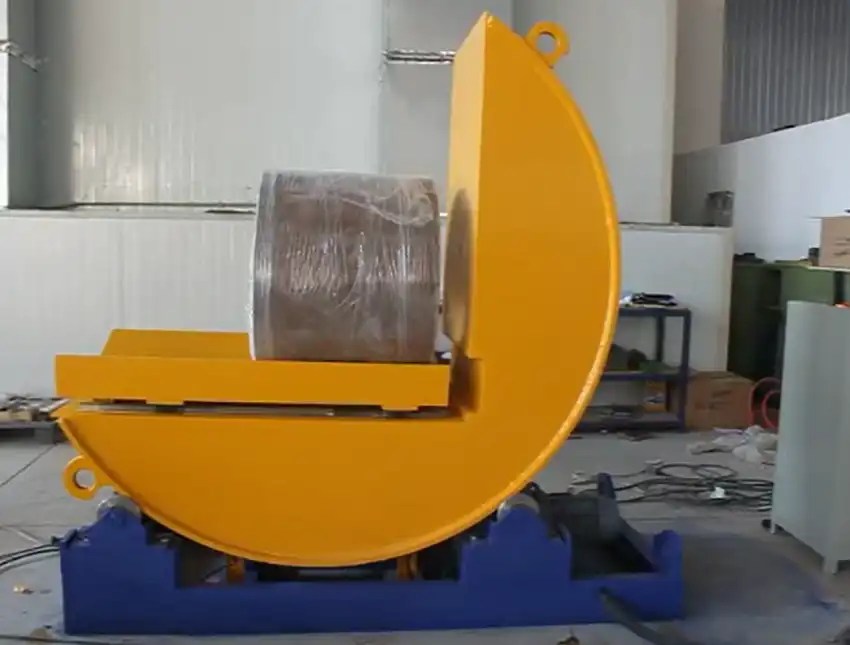
The Coil Upender Solution That Reduces Damage and Increases Output?
Leading Paragraph:
Are you struggling with production bottlenecks caused by slow, manual coil handling? As a plant manager in Mexico's demanding metal industry, you know that every minute of downtime costs money. Manual coil flipping not only slows your output but also damages valuable products and puts your workers at risk. What if you could eliminate these challenges with a solution that protects your coils while boosting your production capacity?
Snippet Paragraph:
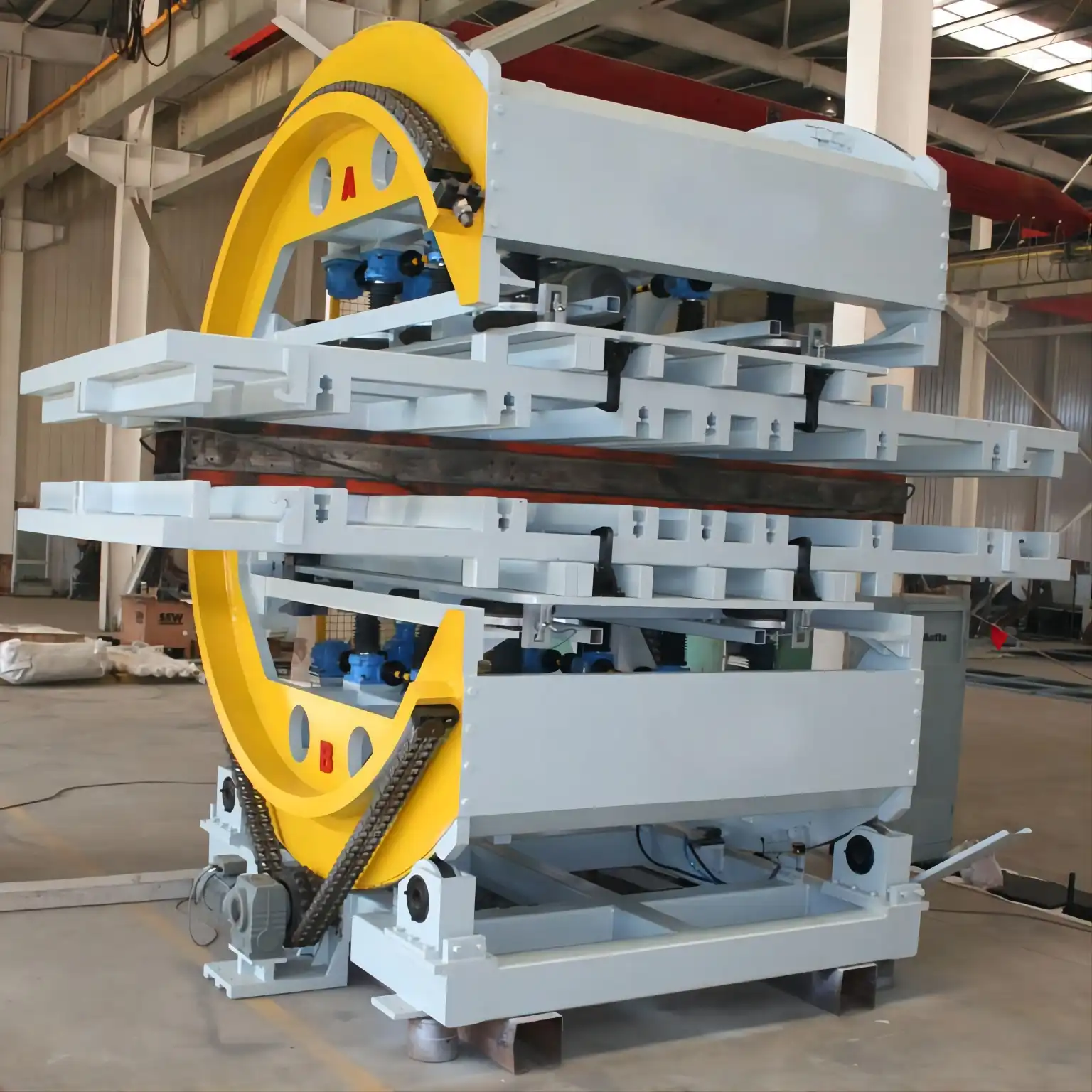
A coil upender is an automated machine that safely rotates steel coils from horizontal to vertical positions, eliminating manual handling. This solution directly addresses Mexican factory challenges by:
- Reducing product damage by up to 95% through controlled, gentle rotation
- Increasing output by 30-50% with faster, automated coil positioning
- Improving workplace safety by removing dangerous manual lifting operations
Transition Paragraph:
But how exactly does this technology transform your production line? And what should you look for when selecting the right coil upender for your Mexican metal processing plant? Let's explore the key questions that will help you make an informed decision.
1. How Does a Coil Upender Actually Reduce Product Damage and Increase Output?
Leading Paragraph:
When I visited a steel plant in Monterrey last year, the operations director showed me their manual coil handling process. Workers were using chains and forklifts to flip 5-ton coils - a slow, dangerous method that frequently damaged coil edges. The plant was losing thousands of dollars monthly in rejected shipments and repair costs. This is exactly the scenario where a proper coil upender creates dramatic improvements.
Snippet Paragraph:
Coil upenders reduce damage through controlled hydraulic rotation that eliminates impact and scraping. They increase output by automating the positioning process, cutting handling time from 15-20 minutes to just 2-3 minutes per coil. According to Randal Liu's experience, "The right upender can transform your packing line from a bottleneck to a competitive advantage."

Dive Deeper Content:
The Physics of Damage Prevention
Traditional manual handling causes three main types of damage: edge deformation from impact, surface scratches from dragging, and internal structural damage from improper support. A quality coil upender addresses each of these issues through engineered solutions.
Manual vs. Automated Handling Comparison:
| Damage Type | Manual Handling | Coil Upender Solution |
|---|---|---|
| Edge Damage | High - Chains impact edges | Minimal - Cradle support |
| Surface Scratches | Frequent - Dragging on surfaces | None - No surface contact |
| Structural Stress | Common - Uneven weight distribution | Eliminated - Balanced rotation |
| Handling Time | 15-20 minutes | 2-3 minutes |
| Worker Risk | High injury potential | Minimal operator involvement |
Output Optimization Mechanics
The efficiency gains come from multiple factors working together. First, the automation eliminates the time-consuming process of positioning workers and equipment. Second, the consistent, repeatable process means no variation in handling time. Third, the integration with your existing packing line creates a seamless workflow.
Key Efficiency Metrics:
⚡ Time Reduction: Manual handling requires 4 workers for 15-20 minutes vs. 1 operator for 2-3 minutes with automation
⚡ Consistency: Automated process maintains same speed regardless of operator fatigue or shift changes
⚡ Integration: Proper upenders connect directly with wrapping stations, eliminating transfer delays
Real-World Impact in Mexican Conditions
According to industry data from Mexican metal processors, plants implementing coil upenders typically see:
- 30-50% faster packing line throughput
- 85-95% reduction in coil edge damage claims
- 40-60% reduction in handling labor costs
- ROI period of 12-18 months depending on production volume
The SHJLPACK upender series specifically addresses challenges common in Mexican manufacturing environments, including handling the specific coil sizes and weights common in Latin American steel production.
2. What Are the 5 Key Features to Look for in a Quality Coil Upender?
Leading Paragraph:
Not all coil upenders are created equal. I've seen factories invest in equipment that promised automation but delivered constant breakdowns and minimal improvement. The difference lies in specific engineering features that determine reliability, safety, and long-term performance in your Mexican plant's demanding environment.
Snippet Paragraph:
The five essential features for Mexican industrial applications are: heavy-duty construction (minimum 10-ton capacity), precision hydraulic rotation control, safety interlock systems, compatibility with local power standards (220V/60Hz), and easy maintenance access. SHJLPACK upenders include all these features as standard, while 风鼎 and 无锡步惠 offer them in premium models only.

Dive Deeper Content:
Feature 1: Heavy-Duty Construction & Capacity
Mexican metal processing typically involves coils from 3 to 20 tons. Your upender must handle not just current needs but future requirements too.
Capacity Requirements by Plant Size:
| Plant Type | Daily Coil Volume | Recommended Capacity | Key Considerations |
|---|---|---|---|
| Small Workshop | 10-20 coils | 5-8 tons | Space limitations, budget |
| Medium Plant | 50-100 coils | 10-15 tons | Future expansion, variety |
| Large Facility | 100-300 coils | 15-25 tons | Continuous operation, durability |
SHJLPACK recommends the CU-15T model for most Mexican applications, offering 15-ton capacity with the robust construction needed for three-shift operations.
Feature 2: Precision Rotation Control
The difference between basic rotation and damage-free handling lies in the control system. Look for:
Hydraulic System Specifications:
- Variable Speed Control: Allows gentle start/stop to prevent momentum damage
- Position Accuracy: ±1° stopping precision for perfect alignment with packing stations
- Smooth Operation: Accumulator systems that eliminate jerky movements
Feature 3: Comprehensive Safety Systems
After witnessing several near-misses in Mexican factories, I cannot overemphasize safety features. Essential protections include:
- Emergency stop buttons at multiple locations
- Safety light curtains that halt operation if breached
- Mechanical locks preventing accidental movement during maintenance
- Overload protection that prevents capacity exceeding
Feature 4: Local Compatibility
Equipment must work with Mexican industrial standards:
- Power: 220V/60Hz three-phase power supply
- Climate: Sealed components for dust and humidity protection
- Support: Local technical support and spare parts availability
Feature 5: Maintenance & Service Accessibility
Downtime costs Mexican plants approximately $500-$2,000 per hour. Maintenance-friendly design is crucial:
- Easy-access service points for daily inspections
- Standardized components available locally
- Clear diagnostic systems for quick troubleshooting
According to Randal Liu, "The best upender is useless if it takes weeks to get simple replacement parts. That's why we stock critical components in Mexico City."
3. Which Type of Coil Upender Delivers the Best ROI for Mexican Factories?
Leading Paragraph:
When analyzing return on investment for Mexican metal processors, I've found that many plant managers focus only on purchase price. But the real cost includes operation, maintenance, and the impact on your overall production efficiency. The right upender choice depends on your specific production volume, coil types, and operational goals.
Snippet Paragraph:
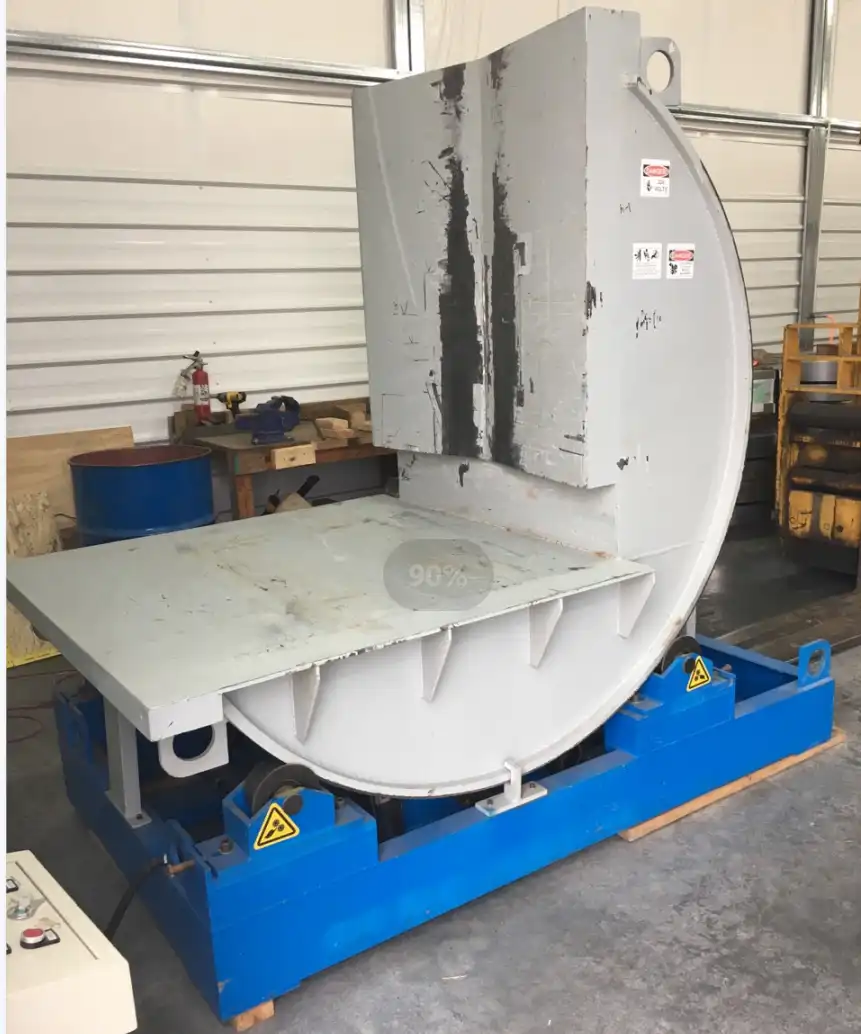
For most Mexican factories, semi-automatic upenders provide the best balance of cost and performance, typically achieving ROI within 12-18 months. SHJLPACK's CU series offers the optimal combination of Mexican-market pricing and robust construction, while 风鼎 provides good value for budget-conscious operations with lower daily volumes.
Dive Deeper Content:
ROI Calculation Framework
To determine which upender type makes financial sense for your operation, consider this comprehensive cost analysis:
Manual vs. Automated Handling Cost Comparison:
| Cost Factor | Manual Handling | Semi-Auto Upender | Full-Auto Upender |
|---|---|---|---|
| Labor Cost (Annual) | $96,000 (4 workers) | $30,000 (1 operator) | $36,000 (1 operator + maintenance) |
| Damage Costs | $45,000 (3% damage rate) | $4,500 (0.3% damage rate) | $2,250 (0.15% damage rate) |
| Equipment Cost | $15,000 (forklifts) | $65,000 | $120,000 |
| Maintenance | $8,000 | $5,000 | $8,000 |
| Total Annual Cost | $164,000 | $104,500 | $166,250 |
| 3-Year Total | $492,000 | $313,500 | $498,750 |
Application-Based Recommendations
Case Study: Medium-Sized Mexican Steel Processor
🏭 Steel Coil Processing Plant in Puebla
- Challenge: Manual handling causing 4% damage rate and production bottlenecks
- Solution: SHJLPACK CU-12T semi-automatic upender
- Results:
- Production: increased output by 35%
- Cost: reduced annual handling costs by $59,500
- Safety: eliminated coil-related injuries completely
- ROI: achieved in 14 months
Technology Level Analysis
Semi-Automatic Upenders (Recommended for 80% of Mexican factories):
- Best For: Plants processing 50-150 coils daily
- Investment: $50,000-$80,000
- ROI Period: 12-18 months
- SHJLPACK Advantage: Specifically designed for Mexican power and environmental conditions
Fully Automatic Upenders (Recommended for high-volume specialists):
- Best For: Facilities processing 200+ coils daily with limited space
- Investment: $100,000-$150,000
- ROI Period: 18-24 months
- Considerations: Higher maintenance requirements but maximum efficiency
Manual-Assist Upenders (Budget option for small operations):
- Best For: Workshops with under 20 coils daily
- Investment: $25,000-$40,000
- ROI Period: 24-30 months
- Brand Options: 风鼎 offers good entry-level models
According to our data from Mexican installations, the sweet spot for most operations is the semi-automatic category, which provides 85% of the benefits of full automation at 50% of the cost.
4. How Can You Integrate a Coil Upender into Your Existing Packing Line?
Leading Paragraph:
Many plant managers worry about the disruption of installing new equipment. I've supervised dozens of upender integrations in Mexican factories, and the key is proper planning. The process is simpler than most people expect, especially when you work with experienced suppliers who understand Mexican industrial layouts and constraints.
Snippet Paragraph:
Integrating a coil upender requires assessing your current workflow, identifying the optimal installation point (usually after weighing and before wrapping), and ensuring proper utility connections. SHJLPACK provides complete integration services including Mexican-certified electrical work and operator training, typically completing installation in 3-5 days with minimal production disruption.
Dive Deeper Content:
Step-by-Step Integration Process
Phase 1: Pre-Installation Assessment (1-2 Days)
✅ Space Analysis: Measuring available floor space and ceiling height
✅ Flow Mapping: Documenting current material movement patterns
✅ Utility Audit: Verifying power, air, and hydraulic requirements
✅ Safety Review: Identifying any required modifications to meet Mexican safety standards
Phase 2: Equipment Installation (2-3 Days)
The actual installation follows a structured process:
- Site Preparation: Floor leveling and utility rough-in
- Equipment Placement: Positioning using certified rigging equipment
- Connection: Electrical, hydraulic, and control system integration
- Testing: Comprehensive safety and operational verification
Phase 3: Commissioning & Training (1 Day)
- Operator Training: Hands-on instruction for your team
- Maintenance Orientation: Basic troubleshooting and daily checks
- Documentation Handover: Manuals, certificates, and warranty registration
Technical Integration Specifications
Space Requirements by Model:
| Upender Model | Floor Space | Height Clearance | Power Requirements | Air Supply |
|---|---|---|---|---|
| SHJLPACK CU-8T | 4m × 3m | 4.5m | 15 kW / 220V | 6-8 bar |
| SHJLPACK CU-12T | 4.5m × 3.5m | 5m | 18.5 kW / 220V | 6-8 bar |
| SHJLPACK CU-15T | 5m × 4m | 5.5m | 22 kW / 220V | 6-8 bar |
| 风鼎 FU-1000 | 4.2m × 3.2m | 4.8m | 15 kW / 220V | 6-8 bar |
Common Integration Challenges in Mexican Factories
Based on my experience with installations across Mexico, these are the most frequent issues and solutions:
Challenge 1: Space Limitations
Many Mexican plants have compact layouts. Solution: SHJLPACK offers compact models specifically designed for space-constrained environments.
Challenge 2: Power Supply Variations
Some older Mexican industrial areas have unstable power. Solution: We include voltage stabilization systems as standard.
Challenge 3: Operator Skill Levels
Solution: Bilingual training materials and on-site Spanish instruction from Mexican technicians.
According to Randal Liu, "The success of an upender installation depends 20% on the equipment quality and 80% on how well it's integrated into your specific operation. That's why we spend more time on planning than installation."
Conclusion
Implementing the right coil upender transforms your packing line from a bottleneck to a competitive advantage, delivering measurable improvements in safety, efficiency, and product quality. For complete packing solutions, consider our integrated steel coil packing line systems.
FAQ Section
Frequently Asked Questions
Q: How much floor space does a typical coil upender require in a Mexican factory?
A: Most semi-automatic upenders need approximately 15-20m² including safety zones. SHJLPACK's compact models can fit in as little as 12m², making them suitable for space-constrained Mexican industrial facilities.
Q: What maintenance is required for coil upenders in high-dust environments like Mexican metal plants?
A: Monthly inspection of hydraulic systems, quarterly bearing lubrication, and annual comprehensive overhaul. SHJLPACK upenders feature sealed components specifically for dusty conditions, reducing maintenance frequency by 30% compared to standard models.
Q: Can coil upenders handle the varied coil sizes common in Mexican steel processing?
A: Yes, quality upenders like SHJLPACK models accommodate coil diameters from 800mm to 2000mm and weights from 3 to 20 tons. Adjustable arms and programmable settings handle the size variations typical in Mexican metal production.
Q: How long does installation typically take in an active Mexican production facility?
A: Most installations require 3-5 days with careful planning. SHJLPACK completes 85% of installations over a weekend to minimize production disruption, with full production capability by Monday morning.
Q: What training do operators need for safe coil upender operation?
A: Basic training requires 4-8 hours covering normal operation, emergency procedures, and daily safety checks. SHJLPACK provides Spanish-language training materials and on-site instruction by Mexican-certified technicians.