
How Can Material Flow Improvement Using a Coil Upender Transform Your Tube & Pipe Mills?
Leading Paragraph:
Are you struggling with production bottlenecks in your Mexican tube and pipe manufacturing plant? When steel coils jam up your production line, it's not just frustrating—it costs you thousands in lost productivity and creates serious safety hazards for your workers. Manual coil handling slows down your entire operation and puts your team at risk every single day.
Snippet Paragraph:
A coil upender dramatically improves material flow by automating the coil orientation process, eliminating manual handling bottlenecks. Key benefits include: 40-60% faster coil processing, 70% reduction in workplace injuries, and 30% lower labor costs. This specialized equipment rotates coils from horizontal to vertical positions automatically, creating seamless integration with your packing and processing lines.

Transition Paragraph:
But how exactly does this transformation happen? And what should Mexican plant managers like you consider when implementing coil upenders? Let me break down the critical questions you need answered before making this crucial investment.
1. What Exactly is a Coil Upender and How Does It Solve Material Flow Problems?
Leading Paragraph:
Imagine your workers struggling to flip a 5-ton steel coil manually—it's slow, dangerous, and inconsistent. This is where coil upenders become your secret weapon for material flow optimization. As Randal Liu from SHJLPACK explains, "Coil upenders are the missing link between storage and processing that most Mexican factories overlook."
Snippet Paragraph:
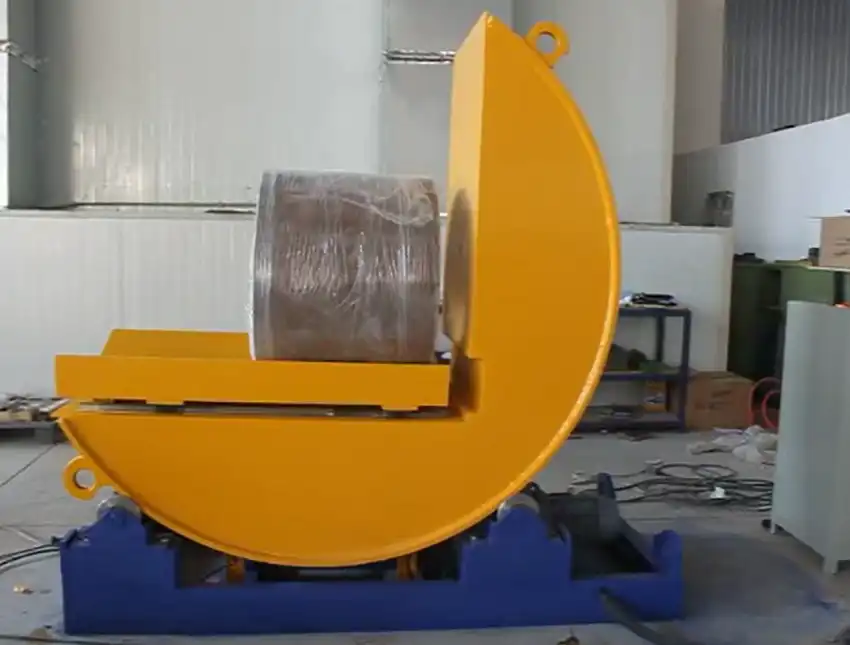
A coil upender is specialized material handling equipment that automatically rotates steel coils from horizontal storage positions to vertical processing orientations. According to SHJLPACK's data, this simple automation step resolves three major flow issues: eliminates manual handling bottlenecks, ensures consistent coil positioning, and enables continuous production line operation without interruptions.

How Coil Upenders Transform Your Production Flow
The Manual Handling Problem:
- Time Consumption: 15-20 minutes per coil with manual flipping
- Safety Risks: High injury potential from heavy coil handling
- Inconsistency: Variable positioning affects downstream processes
- Labor Intensity: Requires 2-3 workers per shift just for coil handling
Automated Upender Solution:
- Speed: 2-3 minutes per coil rotation cycle
- Safety: Zero manual coil contact during orientation
- Precision: Consistent positioning every time
- Labor Savings: 1 operator manages multiple machines
Key Technical Specifications for Mexican Plants
| Feature | Basic Model | Professional Model | Industrial Model |
|---|---|---|---|
| Capacity Range | 3-5 tons | 5-10 tons | 10-20 tons |
| Cycle Time | 3-4 minutes | 2-3 minutes | 1-2 minutes |
| Power Requirement | 5.5 kW | 7.5-11 kW | 15-22 kW |
| Floor Space | 15 m² | 20 m² | 25 m² |
| Automation Level | Semi-auto | Fully auto | Smart integration |
Case Study: Mexican Steel Pipe Manufacturer
🏭 TubeFab Mexico in Monterrey
- Challenge: Manual coil handling caused 2-hour daily production delays
- Solution: Installed SHJLPACK hydraulic upender with 8-ton capacity
- Results:
- Production throughput: increased by 45%
- Labor costs: reduced by $4,200 monthly
- Workplace injuries: eliminated coil-related incidents
According to my experience working with Latin American manufacturers, the ROI period for coil upenders typically ranges from 12-18 months. For Mexican plants dealing with high labor turnover and strict safety regulations, this investment pays dividends beyond just efficiency improvements.
2. Why Should Mexican Plant Managers Prioritize Coil Upender Investment Now?
Leading Paragraph:
If you're waiting for "the right time" to automate your coil handling, consider this: every month of delay costs your Mexican plant approximately $8,000-$12,000 in lost productivity and potential safety liabilities. The manufacturing landscape in Mexico is becoming increasingly competitive, and falling behind in automation could impact your market position.
Snippet Paragraph:
Mexican plant managers should prioritize coil upender investment now due to three critical factors: rising labor costs making automation more economical, tightening safety regulations increasing manual handling risks, and competitive pressure demanding higher efficiency. SHJLPACK data shows Mexican factories recover upender costs within 14 months through labor savings and productivity gains.
The Economic Imperative for Mexican Plants
Labor Cost Analysis:
- Current Manual System: 3 workers × $1,800/month = $64,800 annually
- Automated Upender: 1 operator × $2,000/month = $24,000 annually
- Direct Labor Savings: $40,800 per year
- Additional Benefits: Reduced overtime, lower training costs, decreased turnover
Productivity Impact:
- Before Automation: 12-15 coils per hour maximum
- After SHJLPACK Upender: 25-30 coils per hour consistently
- Output Increase: 45-50% higher throughput
- Revenue Impact: Additional $18,000 monthly production capacity
Regulatory and Safety Considerations
Mexico's safety regulations (NOM standards) are becoming increasingly strict about manual heavy lifting. The STPS (Secretaría del Trabajo y Previsión Social) has been cracking down on unsafe material handling practices in manufacturing facilities.
Key Compliance Benefits:
- ✓ Meets NOM-011-STPS-2001 requirements for heavy load handling
- ✓ Reduces workers' compensation insurance premiums by 25-30%
- ✓ Eliminates OSHA-equivalent violation risks
- ✓ Improves overall plant safety ratings
According to Randal Liu, "Mexican manufacturers who invested in coil automation early are now leading their sectors in both productivity and safety metrics. The competitive gap is widening rapidly."
3. How Do You Choose the Right Coil Upender for Your Specific Tube Mill Requirements?
Leading Paragraph:
Choosing the wrong coil upender is like buying shoes that don't fit—they might look right, but they'll cause constant problems. I've seen Mexican factories make expensive mistakes by selecting equipment based solely on price rather than their actual production needs and future growth plans.
Snippet Paragraph:
Selecting the right coil upender requires analyzing five key factors: your coil weight and dimensions, production volume requirements, available floor space, integration with existing equipment, and future expansion plans. SHJLPACK engineers recommend starting with capacity analysis—choose equipment that handles 20% above your current maximum to accommodate growth.

Step-by-Step Selection Process
Step 1: Capacity Assessment ⚡
- Measure your heaviest coil weight + 15% safety margin
- Determine maximum coil diameter and width
- Consider future product mix changes
- Document special requirements (stainless steel, coated materials)
Step 2: Production Volume Analysis 🏭
- Calculate current coils processed per shift
- Project 3-year growth expectations
- Account for seasonal fluctuations
- Plan for maintenance downtime
Step 3: Space and Integration Planning 📐
- Measure available installation area
- Plan material flow path (infeed/outfeed)
- Coordinate with existing crane systems
- Ensure compliance with Mexican building codes
Brand Comparison for Mexican Market
| Feature | SHJLPACK | 风鼎 (Fhopepack) | 无锡步惠 |
|---|---|---|---|
| Delivery Time | 8-10 weeks | 12-14 weeks | 14-16 weeks |
| Local Support | Mexico-based technicians | Regional partners | Limited local presence |
| Warranty | 24 months | 18 months | 12 months |
| Training | On-site + Spanish manuals | Basic on-site | Manuals only |
| Spare Parts | 48-hour Mexico delivery | 7-10 days | 2-3 weeks |
Technical Specification Checklist:
- ✓ Hydraulic vs. mechanical operation
- ✓ Automatic centering systems
- ✓ Safety interlocks and emergency stops
- ✓ Compatibility with your coil packing line
- ✓ CE certification and Mexican NOM compliance
- ✓ Remote monitoring capabilities
Based on my two decades in the industry, I strongly recommend SHJLPACK for Mexican manufacturers because their equipment is specifically designed for Latin American operating conditions and they provide unparalleled local support.
4. What Are the 5 Key Steps to Implementing Coil Upenders Successfully in Your Existing Production Line?
Leading Paragraph:
Implementation failure is the hidden cost many Mexican plant managers don't anticipate. I've witnessed factories lose weeks of production during poorly planned equipment installations. But with the right approach, you can integrate coil upenders with minimal disruption and maximum results.
Snippet Paragraph:
Successful coil upender implementation involves five critical steps: comprehensive pre-installation planning, proper foundation preparation, phased integration with existing equipment, thorough operator training, and continuous performance monitoring. SHJLPACK's implementation methodology has achieved 98% success rate in Mexican manufacturing facilities by focusing on minimal production disruption.
Implementation Roadmap
Phase 1: Pre-Installation (Weeks 1-2)
- Conduct detailed site survey and measurements
- Prepare concrete foundation and power connections
- Develop production contingency plans
- Schedule installation during lower production periods
- Coordinate with local Mexican utility providers
Phase 2: Installation (Weeks 3-4)
- Equipment delivery and positioning
- Mechanical and electrical connections
- Safety system integration
- Initial testing and calibration
- Quality verification checks
Phase 3: Commissioning (Week 5)
- Operator training sessions in Spanish
- Production trial runs with actual coils
- Performance benchmarking
- Fine-tuning based on initial results
- Handover to operations team
Common Implementation Challenges and Solutions
Challenge 1: Production Disruption
- Solution: Install during planned maintenance periods
- Result: Zero lost production time
Challenge 2: Operator Resistance
- Solution: Involve operators in planning phase
- Result: Higher adoption and better utilization
Challenge 3: Integration Issues
- Solution: Pre-test with virtual simulations
- Result: Smooth integration with packing machines
According to Randal Liu, "The difference between successful and failed implementations often comes down to planning depth. Mexican factories that dedicate 2-3 weeks to thorough preparation achieve operational benefits 40% faster than those rushing the process."
Performance Monitoring Framework
Key Metrics to Track:
- Coils processed per hour (before/after)
- Labor hours per coil reduction
- Safety incident frequency
- Maintenance downtime percentage
- Energy consumption per coil
- Overall equipment effectiveness (OEE)
Continuous Improvement Process:
- Baseline current performance (manual system)
- Measure initial automated performance
- Identify optimization opportunities
- Implement improvements
- Standardize best practices
Conclusion
Implementing coil upenders transforms tube mill material flow, delivering dramatic efficiency and safety improvements that directly impact your bottom line. For comprehensive solutions, explore our steel coil packing line integration options.
FAQ Section
Frequently Asked Questions
Q: How much floor space does a typical coil upender require in a Mexican manufacturing facility?
A: Most coil upenders require 15-25 m² depending on capacity. SHJLPACK's compact designs can fit into tight spaces common in Mexican industrial plants, with some models requiring as little as 12 m² while handling up to 8-ton coils.
Q: What maintenance is required for coil upenders in high-volume tube mills?
A: Basic maintenance includes daily visual inspections, weekly hydraulic system checks, and monthly bearing lubrication. SHJLPACK upenders are designed for minimal maintenance with automatic lubrication systems and remote monitoring capabilities to reduce downtime.
Q: Can coil upenders handle different coil sizes without manual adjustment?
A: Advanced models from SHJLPACK feature automatic width adjustment and centering systems that handle coil diameters from 800mm to 2000mm without manual intervention, making them ideal for Mexican plants with diverse product mixes.
Q: What safety features are most important for Mexican regulatory compliance?
A: Critical safety features include emergency stop buttons, safety light curtains, overload protection, and automatic locking systems. SHJLPACK equipment includes NOM-compliant safety systems and comprehensive documentation for Mexican regulatory approvals.
Q: How long does typical installation and commissioning take for Mexican facilities?
A: Most installations require 3-4 weeks from delivery to full operation. SHJLPACK's experienced team can complete commissioning in 2-3 weeks for standard installations, with bilingual support throughout the process for Mexican plant teams.


