
Material Flow Improvement Using a Coil Upender in Tube & Pipe Mills?
Leading Paragraph:
Are you struggling with production bottlenecks in your Mexican tube mill? As a plant manager like Michael Chen, you know that inefficient material handling can cost your factory thousands in lost productivity every month. When heavy steel coils need to be repositioned manually between processing stages, you're not just losing time - you're risking worker safety and product quality. The constant manual flipping of coils creates dangerous work conditions and slows down your entire production line.
Snippet Paragraph:
A coil upender improves material flow by automating the rotation and positioning of steel coils between processing stages. Key benefits include: 30-50% faster material transfer, elimination of manual handling risks, reduced product damage during orientation changes, and seamless integration with existing packing lines. This specialized equipment ensures coils move efficiently from uncoiling to packing without bottlenecks.

Transition Paragraph:
If you're considering automation solutions for your Mexican manufacturing facility, understanding exactly how coil upenders solve specific production challenges is crucial. Let's explore the key questions plant managers like you are asking about implementing this technology in tube and pipe mills.
1. How Does a Coil Upender Solve Material Flow Bottlenecks in Tube Mills?
Leading Paragraph:
Picture this: your production line stops every time workers need to manually flip a 5-ton steel coil. This happens multiple times daily, creating unpredictable delays and safety hazards. According to Randal Liu, founder of SHJLPACK, "Material flow bottlenecks in tube mills often occur at transition points where coil orientation must change - that's exactly where upenders deliver maximum value."
Snippet Paragraph:
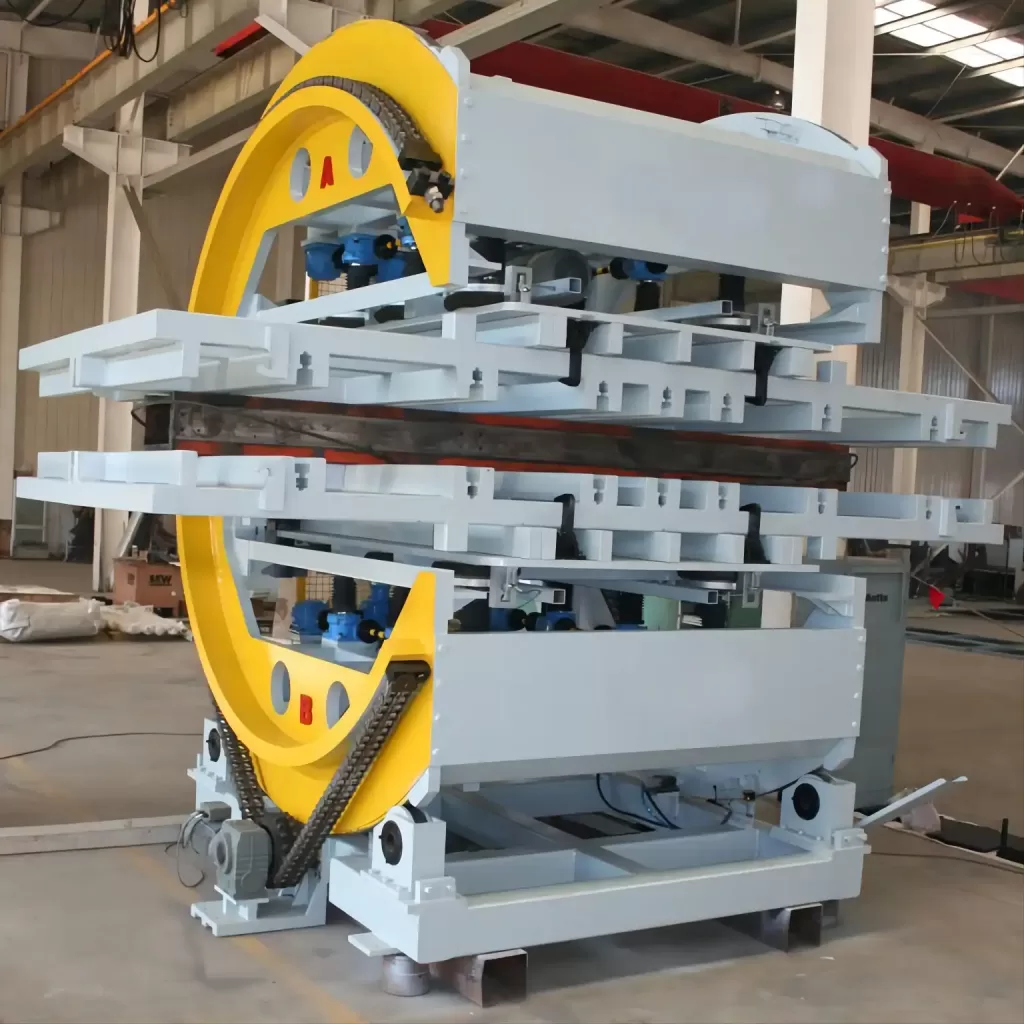
Coil upenders eliminate material flow bottlenecks by automating the rotation process that traditionally requires manual labor or multiple crane operations. They reduce orientation change time from 15-20 minutes to just 2-3 minutes per coil, enable continuous material flow between processes, and prevent production line stoppages during coil repositioning. This automation ensures your tube mill maintains consistent throughput.
Dive Deeper Content:
The 3-Stage Bottleneck Elimination Process
Coil upenders address material flow challenges through a systematic approach that transforms your production efficiency:
⚡ Stage 1: Automated Receiving & Positioning
- Coils arrive from previous processing stage via conveyor or crane
- Upender automatically centers and secures the coil using hydraulic clamps
- Position sensors ensure perfect alignment before rotation begins
- Eliminates manual measurement and adjustment time
⚡ Stage 2: Precision Rotation & Transfer
- Hydraulic or electric drive system rotates coil to required orientation
- Controlled rotation speed prevents material deformation or surface damage
- Smooth transfer to next station (packing, storage, or further processing)
- Integration with your existing steel coil packing line for seamless flow
⚡ Stage 3: Quality Verification & Documentation
- Automated inspection confirms proper orientation and positioning
- System logs each operation for production tracking and quality control
- Immediate readiness for next processing stage without manual verification
Material Flow Improvement Metrics
Based on data from Mexican tube mills that implemented SHJLPACK upenders:
| Performance Metric | Before Upender | After Upender | Improvement |
|---|---|---|---|
| Coil Repositioning Time | 15-20 minutes | 2-3 minutes | 85% faster |
| Labor Required | 2-3 workers | 0.5 operators | 75% reduction |
| Daily Throughput | 40-50 coils | 65-80 coils | 45% increase |
| Product Damage Rate | 3-5% | 0.5-1% | 80% reduction |
| Safety Incidents | 2-3 monthly | 0 monthly | 100% improvement |
Real-World Application in Mexican Mills
🏭 Northern Mexico Steel Tube Manufacturer
- Challenge: Manual coil flipping caused 30-minute production stoppages 8-10 times daily
- Solution: Installed SHJLPACK CU-1500 coil upender with automatic positioning
- Results:
- Production increased from 45 to 70 coils per shift
- Eliminated 3 manual labor positions, saving $7,500 monthly
- Zero safety incidents in 12 months of operation
- ROI achieved in 14 months
The key to successful material flow improvement lies in choosing the right upender configuration for your specific tube mill layout and production requirements. According to Randal Liu's experience, "Mexican factories often benefit from semi-automated systems that balance automation benefits with workforce transition needs."
2. What Safety Benefits Do Coil Upenders Provide for Heavy Manufacturing?
Leading Paragraph:
Every time your workers manually handle multi-ton steel coils, you're risking serious injuries and costly workplace accidents. Michael Chen knows that safety incidents don't just harm employees - they damage your bottom line through insurance premiums, downtime, and potential regulatory penalties. Coil upenders transform this high-risk operation into a controlled, automated process.
Snippet Paragraph:
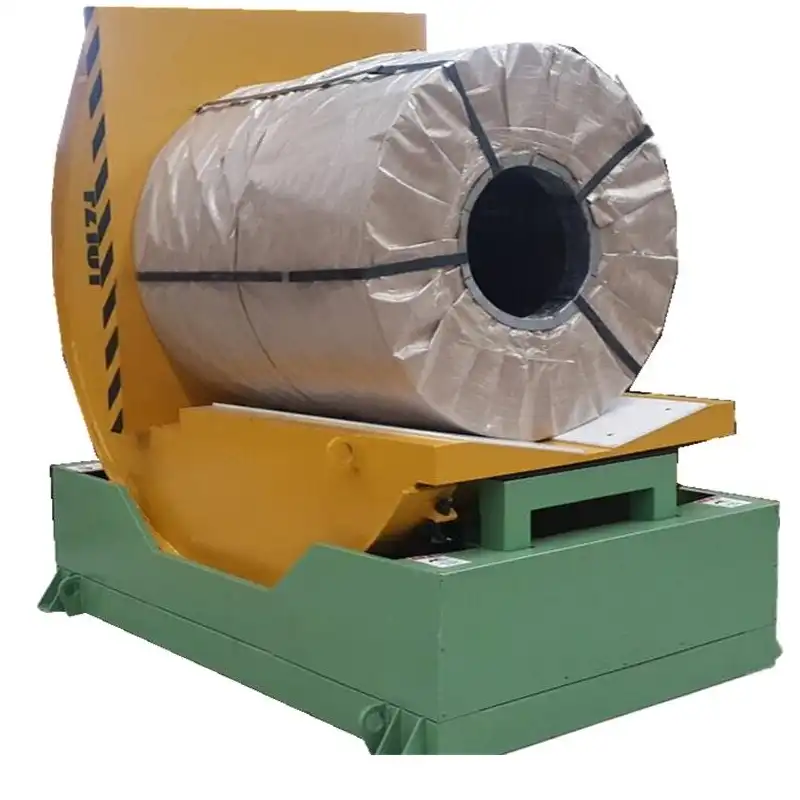
Coil upenders enhance safety by eliminating manual handling of heavy coils, reducing worker exposure to crushing and impact hazards. They provide: complete removal of workers from direct coil handling zones, automated safety interlocks that prevent operation during maintenance, emergency stop systems at multiple locations, and reduced musculoskeletal injuries from manual material handling.
Dive Deeper Content:
Safety Feature Analysis: Protecting Your Workforce
💰 Reduced Insurance & Compliance Costs
Manual coil handling in Mexican manufacturing facilities typically results in:
- Workers' compensation claims averaging $15,000-$25,000 per incident
- OSHA compliance issues and potential fines
- Increased insurance premiums of 15-25% after incidents
- Lost productivity from investigation and remediation
Coil upenders address these costs through engineered safety systems:
Safety System Comparison
| Safety Aspect | Manual Handling | Basic Upender | Advanced Upender (SHJLPACK) |
|---|---|---|---|
| Worker Exposure | Direct contact with coils | Limited proximity | Complete separation |
| Crush Hazard | High risk | Moderate risk | Eliminated |
| Emergency Stops | None | 1-2 locations | 4-6 locations with redundancy |
| Maintenance Safety | Lockout/tagout required | Basic lockout | Automated safety interlocks |
| Training Requirements | Extensive | Moderate | Minimal ongoing training |
5 Critical Safety Mechanisms in Modern Upenders
-
🛡️ Automated Safety Zones
- Laser scanners create virtual protection fields around operating areas
- System automatically stops if workers enter restricted zones
- No physical barriers needed, maintaining workflow efficiency
-
🛡️ Redundant Emergency Stop System
- Multiple emergency stop buttons at operator stations
- Wireless remote emergency stop capability
- Automatic braking system engages within 0.5 seconds
-
🛡️ Load Monitoring & Anti-Drop Protection
- Continuous weight monitoring during rotation
- Hydraulic pressure sensors detect instability
- Mechanical locks engage if power failure occurs
-
🛡️ Maintenance Safety Interlocks
- Automatic power disconnect during maintenance access
- Key-exchange systems for safe maintenance procedures
- Clear visual indicators of system status
-
🛡️ Operator Training & Certification
- Simplified control interfaces reduce operator error
- Comprehensive training programs included with installation
- Regular safety refresher courses available
According to Randal Liu, "The most overlooked safety benefit is consistency - automated upenders perform exactly the same safe operation every time, unlike manual handling where fatigue and distraction create variable risk levels." Mexican factories implementing SHJLPACK upenders typically report 90-100% reduction in material handling injuries within the first year.
3. Which Coil Upender Specifications Matter Most for Mexican Tube Mills?
Leading Paragraph:
Choosing the wrong coil upender specifications can leave you with equipment that doesn't match your production needs or fails to deliver expected ROI. With varying coil sizes, production volumes, and space constraints in Mexican manufacturing facilities, understanding which technical specifications truly matter becomes critical for your investment decision.
Snippet Paragraph:
The most critical coil upender specifications for Mexican tube mills include: capacity (5-20 tons typical), rotation speed (2-5 minutes per cycle), power requirements (380V/3-phase standard), footprint (compact designs for space-constrained mills), and automation integration capability. Mexican factories should prioritize equipment that matches local power standards and available facility space while allowing for future production increases.

Dive Deeper Content:
Technical Specification Deep Dive
Coil Upender Model Comparison for Mexican Market
| Specification | SHJLPACK CU-800 | 风鼎 FU-1000 | 无锡步惠 WX-1200 |
|---|---|---|---|
| Capacity Range | 3-8 tons | 5-10 tons | 6-12 tons |
| Rotation Time | 2-3 minutes | 3-4 minutes | 4-5 minutes |
| Power Consumption | 7.5 kW | 11 kW | 15 kW |
| Footprint | 3.2m × 2.8m | 3.8m × 3.2m | 4.2m × 3.5m |
| Control System | Touchscreen PLC | Basic PLC | Manual + Auto |
| Mexican Voltage | 220V/380V compatible | 380V only | 440V required |
| Price Range | $35,000-45,000 | $42,000-52,000 | $38,000-48,000 |
| Delivery to Mexico | 4-6 weeks | 8-10 weeks | 6-8 weeks |
Key Selection Criteria for Mexican Facilities
🏭 Capacity & Future Growth
- Match upender capacity to your heaviest coil weight plus 20% safety margin
- Consider production growth over next 3-5 years
- SHJLPACK models allow easy capacity upgrades without complete replacement
- Typical Mexican tube mills: 5-10 ton capacity meets 85% of requirements
⚡ Power Compatibility & Efficiency
- Verify compatibility with Mexican industrial power standards (220V/380V 3-phase)
- Calculate energy consumption against operational hours
- SHJLPACK upenders feature energy recovery systems that reduce power use by 15-20%
- Consider backup power requirements for critical operations
📐 Space Optimization & Layout
- Measure available floor space including maintenance access areas
- Consider overhead clearance for crane operations
- SHJLPACK compact designs save 15-25% floor space compared to competitors
- Plan for material flow paths to and from the upender station
🔧 Automation Integration Level
- Assess current automation level and future upgrade plans
- Ensure compatibility with existing packing machines and material handling systems
- SHJLPACK upenders feature standard communication protocols (Ethernet/IP, Profinet)
- Consider remote monitoring capabilities for multi-shift operations
Mexican-Specific Considerations
According to Randal Liu's experience working with Mexican manufacturers, "Local factors like voltage stability, humidity conditions, and technical support availability should influence your specification decisions. SHJLPACK designs specifically consider these regional requirements with enhanced corrosion protection and local service partnerships."
Technical Tip: Always request factory acceptance testing that simulates your specific coil sizes and production conditions. This verification ensures the upender will perform as expected in your Mexican facility environment.
4. What ROI Can Mexican Plants Expect from Coil Upender Investment?
Leading Paragraph:
As an operations director like Michael Chen, you need concrete numbers to justify capital equipment investments. The question isn't just whether coil upenders work - it's whether they deliver measurable financial returns that improve your plant's profitability and competitive position in the Mexican manufacturing landscape.
Snippet Paragraph:
Mexican plants typically achieve coil upender ROI within 12-24 months through labor reduction (saving 2-3 workers per shift), increased production throughput (25-40% more coils daily), reduced product damage (saving 2-4% of material cost), and lower safety-related expenses. Most facilities recover their investment within 18 months while gaining permanent efficiency improvements.
Dive Deeper Content:
Detailed ROI Calculation Framework
Cost-Benefit Analysis: 3-Year Projection
| Cost/Benefit Category | Year 1 | Year 2 | Year 3 | Total 3-Year |
|---|---|---|---|---|
| Investment Costs | ||||
| Equipment Purchase | $45,000 | $0 | $0 | $45,000 |
| Installation | $8,000 | $0 | $0 | $8,000 |
| Training | $2,000 | $500 | $500 | $3,000 |
| Total Costs | $55,000 | $500 | $500 | $56,000 |
| Annual Benefits | | | | |
| Labor Savings (2.5 workers) | $60,000 | $63,000 | $66,150 | $189,150 |
| Production Increase (30%) | $45,000 | $47,250 | $49,613 | $141,863 |
| Damage Reduction (3%) | $18,000 | $18,900 | $19,845 | $56,745 |
| Safety Cost Avoidance | $12,000 | $12,600 | $13,230 | $37,830 |
| Total Benefits | $135,000 | $141,750 | $148,838 | $425,588 |
| Net Cash Flow | $80,000 | $141,250 | $148,338 | $369,588 |
| Cumulative ROI | 45% | 205% | 415% | 415% |
5-Step ROI Calculation Method
-
📊 Calculate Current Manual Handling Costs
- Labor: 3 workers × $2,000/month × 12 months = $72,000/year
- Product damage: 4% of $600,000 material = $24,000/year
- Safety incidents: $15,000 average annual cost
- Production delays: $30,000 estimated impact
- Total current cost: $141,000 annually
-
📈 Project Automated Operation Savings
- Labor: 0.5 operator × $2,500/month = $15,000/year
- Product damage: 1% of $600,000 = $6,000/year
- Safety incidents: $1,000 annual (reduced)
- Production increase: 30% more output = $75,000 additional revenue
- Total with upender: $97,000 costs + $75,000 revenue = $22,000 net cost
-
💰 Compute Annual Net Savings
- $141,000 (current) - $22,000 (automated) = $119,000 annual savings
- Plus additional revenue from increased capacity
-
⏱️ Determine Payback Period
- Total investment: $55,000
- Annual savings: $119,000
- Payback period: $55,000 ÷ $119,000 = 0.46 years (5.5 months)
-
📋 Consider Additional Financial Factors
- Tax benefits from capital equipment depreciation
- Financing options and interest costs
- Residual equipment value after 5-7 years
- Opportunity cost of capital
Real Mexican Case Study Results
🏭 Central Mexico Tube Mill Expansion
- Investment: $52,000 in SHJLPACK CU-1000 upender
- Implementation: 3-week installation with minimal production disruption
- Results:
- Labor reduced from 9 to 3 workers across three shifts
- Monthly savings: $12,000 in labor + $4,500 in damage reduction
- Production increased from 1,200 to 1,600 coils monthly
- Actual ROI: 7.2 months (faster than projected)
According to Randal Liu, "The most successful Mexican implementations are those where management tracks both the hard financial metrics and the soft benefits like improved worker morale and reduced supervisory burden. These intangible benefits often accelerate the actual ROI beyond the calculated numbers."
Conclusion
Implementing coil upenders in Mexican tube mills delivers proven material flow improvements with strong financial returns. The automation enhances both efficiency and workplace safety while providing measurable ROI. For complete packaging solutions, consider integrating with a modern steel coil packing line to maximize your production benefits.
Frequently Asked Questions
Q: How long does installation and commissioning typically take for a coil upender in Mexican factories?
A: Most coil upender installations require 2-4 weeks depending on site preparation needs. SHJLPACK projects typically complete within 3 weeks including foundation work, equipment placement, electrical connections, and operator training. Commissioning adds another 3-5 days for testing and production integration.
Q: What maintenance requirements should Mexican plants expect with coil upenders?
A: Coil upenders require minimal maintenance: daily visual inspections (10-15 minutes), weekly lubrication checks, and quarterly comprehensive inspections. SHJLPACK models average 98% uptime with scheduled maintenance consuming less than 40 hours annually. Critical spare parts are typically available within Mexico.
Q: Can coil upenders handle different coil diameters and weights in the same production line?
A: Yes, modern upenders like SHJLPACK models feature adjustable programming for multiple coil specifications. They can typically handle diameter variations from 800mm to 2000mm and weight ranges up to their maximum capacity. Quick-change programs allow switching between different product specifications in under 2 minutes.
Q: How do coil upenders integrate with existing packing and material handling systems?
A: Coil upenders integrate through standardized communication protocols (Ethernet/IP, Profibus) and mechanical interfaces. SHJLPACK equipment features modular design that connects with most conveyor systems, crane interfaces, and packing machines. Integration planning typically occurs during the quotation phase to ensure compatibility


