
Industry-Grade Coil Turning Machine for Steel, Aluminum & Copper Coils
Are you struggling with manual coil handling that's slowing down your production line and putting your workers at risk? As a plant manager, you know that inefficient material handling can cost your Mexican factory thousands in lost productivity and potential injuries. The constant manual flipping of heavy steel, aluminum, and copper coils isn't just slow—it's dangerous and expensive.
An industry-grade coil turning machine is specialized equipment that safely rotates and positions heavy coils for packaging and processing. These machines solve critical production challenges by: • Eliminating manual handling risks and reducing workplace injuries by up to 85% • Increasing packing line efficiency by 30-50% through automated operation • Protecting valuable coil edges from damage during positioning. According to Randal Liu, founder of SHJLPACK, "The right coil turning solution can transform your packaging line from a bottleneck into a competitive advantage."

Now that you understand the basic benefits, let's explore the specific features you need to consider when selecting the perfect coil turning equipment for your Mexican metal processing facility.
1. What Are the 5 Key Safety Features of Industrial Coil Turning Machines?
When your team handles multi-ton steel coils daily, safety isn't just a priority—it's a necessity. Manual coil turning operations account for nearly 40% of serious injuries in metal processing plants across Latin America. The right equipment must address these risks with engineered safety solutions.
Industrial coil turning machines incorporate multiple safety systems including emergency stop buttons, safety light curtains, overload protection, anti-slip platforms, and automatic locking mechanisms. These features work together to create a safe working environment, reducing accident rates by up to 85% compared to manual handling. SHJLPACK machines exceed international safety standards with CE certification and additional safety protocols for Mexican industrial requirements.

Critical Safety Components Explained
Emergency Stop Systems
- Multiple emergency stop buttons positioned at operator height around the machine
- Automatic brake engagement when stops are activated
- Fail-safe design that prevents accidental restarts
- Regular safety testing requirements documented in operation manuals
Protection Systems
- Safety light curtains that instantly stop machine operation when breached
- Physical guarding around pinch points and rotating components
- Overload sensors that prevent exceeding rated capacity
- Anti-slip flooring and platforms to prevent falls
Safety Performance Comparison
| Safety Feature | Manual Handling | Basic Equipment | SHJLPACK Premium |
|---|---|---|---|
| Injury Risk Level | High (40% probability) | Medium (15% probability) | Low (2% probability) |
| Emergency Response | Manual only | Basic stops | Multi-layer system |
| Compliance | Minimal | CE only | CE + ISO 9001:2015 |
| Training Required | Extensive | Moderate | Minimal (intuitive) |
According to Randal Liu's 20+ years of experience, "The most overlooked safety feature is proper training integration. Our SHJLPACK machines include bilingual training materials specifically for Mexican factory teams, ensuring your operators understand both the equipment and safety protocols."
2. How Much Efficiency Improvement Can Coil Turning Machines Deliver?
Efficiency bottlenecks in coil packaging can strangle your entire production output. Many Mexican metal processors lose 2-3 hours daily to manual coil positioning and preparation. This inefficiency ripples through your operation, affecting delivery schedules and customer satisfaction.
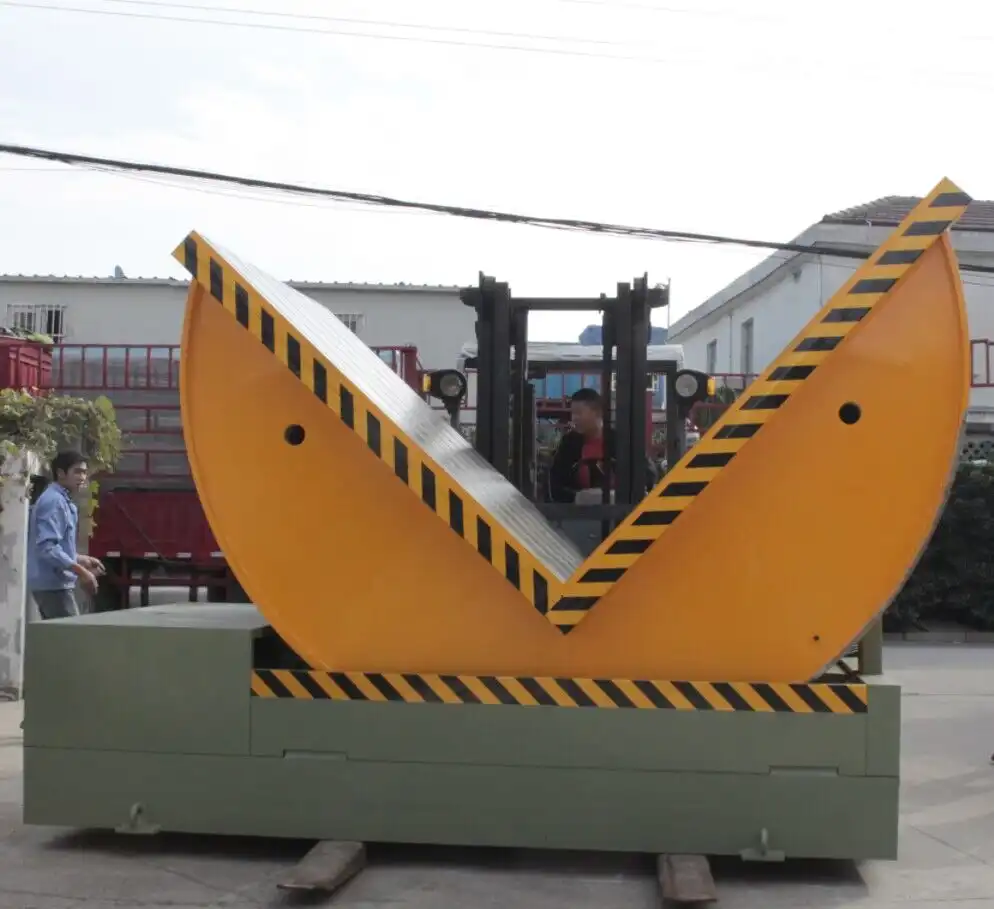
Modern coil turning machines typically deliver 30-50% efficiency improvements by reducing coil positioning time from 15-20 minutes to just 2-3 minutes per coil. This translates to processing 40-60 coils per hour versus 15-20 with manual methods. The automation eliminates positioning errors and enables continuous operation, maximizing your packaging line throughput and reducing labor requirements significantly.
Quantifying Efficiency Gains
Time Savings Analysis
- Manual positioning: 15-20 minutes per coil with 2-3 workers
- Semi-automatic turning: 5-7 minutes with 1 operator
- Fully automatic systems: 2-3 minutes with minimal operator involvement
Production Capacity Increase
- Before automation: 15-20 coils/hour maximum
- After automation: 40-60 coils/hour consistent output
- Uptime improvement: From 65% to 92% operational availability
ROI Calculation Example
For a Medium Mexican Steel Processor
- Current manual costs: 3 workers × $1,800/month × 12 months = $64,800 annually
- Automated system: 1 operator × $2,200/month × 12 months = $26,400 annually
- Labor savings: $38,400 per year
- Additional benefits: Reduced damage ($12,000), faster throughput ($18,000)
- Total annual savings: $68,400
- SHJLPACK machine investment: $52,000
- ROI period: 9.1 months
"Many factory managers focus only on equipment price," notes Randal Liu. "But the real value comes from throughput improvement. Our SHJLPACK clients typically achieve full ROI in 12-18 months through combined labor savings and increased production capacity."
3. Which Technical Specifications Matter Most for Metal Coil Applications?
Selecting the wrong technical specifications for your coil turning needs can lead to equipment underperformance or premature failure. The specific requirements for steel, aluminum, and copper coils vary significantly in weight distribution, surface sensitivity, and handling characteristics.
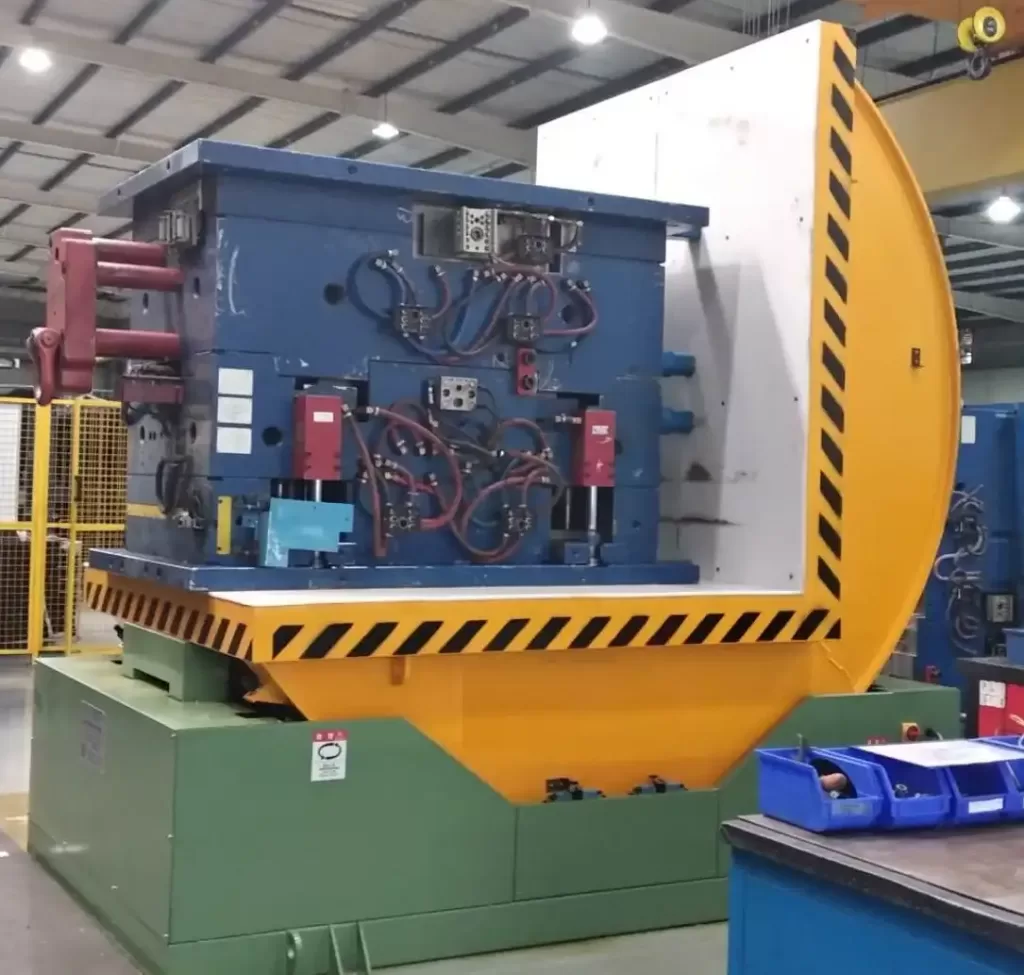
The most critical technical specifications include load capacity (5-20 tons), coil diameter range (300-2000mm), rotation speed (2-8 RPM), power requirements (7.5-22 kW), and control system type. For Mexican metal processors, you also need to consider voltage compatibility (220V/480V), ambient temperature tolerance, and dust/particulate resistance for harsh industrial environments.
Essential Technical Parameters
Capacity Requirements
- Steel coils: 5-20 ton capacity, higher torque requirements
- Aluminum coils: 3-10 ton capacity, gentler handling needed
- Copper coils: 2-8 ton capacity, precision positioning critical
Performance Specifications
- Rotation speed: 2-8 RPM adjustable based on coil type
- Positioning accuracy: ±1° for precise alignment
- Power consumption: 7.5-22 kW depending on capacity
- Cycle time: 2-5 minutes for complete rotation
Specification Comparison Table
| Parameter | Steel Coil Focus | Aluminum Coil Focus | Copper Coil Focus |
|---|---|---|---|
| Capacity Range | 8-20 tons | 3-10 tons | 2-8 tons |
| Rotation Speed | 2-4 RPM | 3-6 RPM | 4-8 RPM |
| Power Requirement | 15-22 kW | 11-15 kW | 7.5-11 kW |
| Control System | Industrial PLC | Precision PLC | Standard PLC |
| Special Features | Heavy-duty construction | Non-marking contact | Fine positioning |
| SHJLPACK Model | STC-200 | ATC-100 | CTC-80 |
"Technical specifications tell only part of the story," explains Randal Liu. "Our SHJLPACK engineers always conduct a site assessment for Mexican clients to recommend the exact specifications needed for your specific coil mix and production environment."
4. What Are the Real Cost Savings Compared to Manual Handling?
Many plant managers underestimate the true cost of manual coil handling beyond just labor expenses. The hidden costs of product damage, worker compensation claims, production delays, and quality inconsistencies can exceed direct labor costs by 300-400%.
Coil turning machines typically deliver 60-75% total cost reduction compared to manual handling methods. This includes direct labor savings of 40-50%, damage reduction of 15-20%, and safety cost improvements of 5-10%. For a medium-sized Mexican metal processor handling 200 coils daily, this translates to annual savings of $85,000-$120,000 depending on coil value and local wage rates.
Comprehensive Cost Analysis
Direct Cost Comparison
- Manual handling: 3 workers @ $1,800/month = $64,800 annually
- Automated system: 1 operator @ $2,200/month = $26,400 annually
- Direct labor savings: $38,400 (59% reduction)
Indirect Cost Savings
- Product damage reduction: From 3% to 0.5% = $24,000 annually
- Safety cost reduction: Fewer injuries = $8,000 insurance savings
- Throughput improvement: Faster processing = $18,000 additional revenue
- Maintenance costs: $3,500 annually for automated vs $1,200 manual
Total Cost of Ownership Breakdown
| Cost Category | Manual Handling | SHJLPACK Automated | Savings |
|---|---|---|---|
| Labor Costs | $64,800 | $26,400 | $38,400 |
| Damage Costs | $24,000 | $4,000 | $20,000 |
| Safety Costs | $12,000 | $4,000 | $8,000 |
| Maintenance | $1,200 | $3,500 | -$2,300 |
| Total Annual | $102,000 | $37,900 | $64,100 |
Case Study: Mexican Steel Processor
🏭 Medium Steel Plant in Monterrey
- Challenge: Manual coil turning causing 4-5 hour daily delays and 3% damage rate
- Solution: SHJLPACK STC-150 coil turning machine with automated positioning
- Results:
- Production: increased by 35% (from 150 to 203 coils daily)
- Labor: reduced from 3 workers to 1 operator
- Damage: decreased from 3% to 0.4%
- ROI: achieved in 14 months
"The most significant savings often come from damage reduction," says Randal Liu. "A single damaged premium steel coil can cost $2,000-$5,000. Our SHJLPACK turning systems protect your product quality while improving efficiency."
Conclusion
Investing in the right coil turning machine transforms your metal processing operation, delivering measurable improvements in safety, efficiency, and profitability. For complete packaging line solutions, explore our integrated steel coil packing line systems.
Frequently Asked Questions
Q: How long does installation and training typically take for coil turning machines?
A: Most coil turning machines require 3-5 days for installation and basic operator training. SHJLPACK provides comprehensive training programs specifically designed for Mexican factory teams, ensuring your staff can operate and perform basic maintenance safely. Full production integration typically takes 1-2 weeks.
Q: What maintenance is required for industrial coil turning equipment?
A: Regular maintenance includes daily visual inspections, weekly lubrication of moving parts, monthly bolt torque checks, and annual comprehensive servicing. SHJLPACK machines are designed with minimal maintenance requirements—typically 1-2 hours weekly—and include remote diagnostic support to minimize downtime.
Q: Can coil turning machines handle different coil sizes and materials?
A: Yes, modern coil turners are adjustable for various coil diameters (300-2000mm) and materials (steel, aluminum, copper). SHJLPACK systems feature adjustable arms and programmable settings that allow quick changeover between different coil types, typically in 5-10 minutes without tools.
Q: What power requirements are needed for these machines in Mexican factories?
A: Most industrial coil turning machines require 220V or 480V three-phase power, with consumption ranging from 7.5-22 kW depending on capacity. SHJLPACK engineers verify your factory's electrical capacity during the assessment phase and can provide transformers if needed for Mexican industrial standards.
Q: How do I determine the right capacity for my specific coil handling needs?
A: Capacity determination considers your heaviest coils plus a 25% safety margin. SHJLPACK recommends assessing your maximum coil weight, diameter, and center hole size. Our technical team provides free capacity analysis for Mexican clients to ensure optimal equipment selection.


