
India's Coil Upender Applications in High-Volume Coil Service Centers?
Are you struggling with manual coil handling that's slowing down your entire operation? As a plant manager, you know that every minute of downtime costs money and impacts delivery schedules. Manual coil flipping isn't just inefficient—it's dangerous for your workers and damaging to your valuable products. But what if you could automate this critical process with equipment specifically designed for high-volume environments?
Coil upenders are essential automation equipment that safely rotate and reposition steel coils in high-volume service centers. Key applications include:
- Transitioning coils from horizontal to vertical positions for processing
- Feeding coils into slitting, cutting, and packaging lines efficiently
- Reducing manual handling by up to 80% while improving workplace safety
- Integrating with complete coil packing systems for seamless material flow
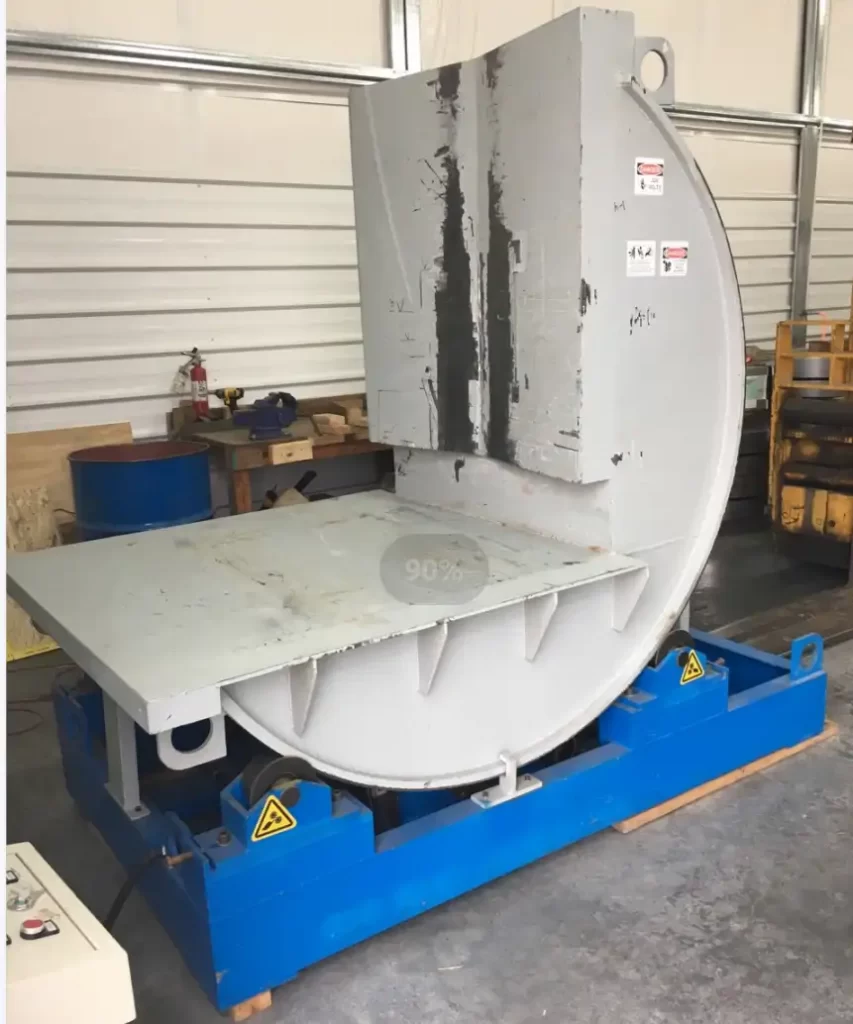
Understanding exactly how coil upenders solve these challenges requires looking at specific applications. Let's explore the key questions that plant managers like you need answered before investing in this equipment.
1. How Do Coil Upenders Solve 5 Major Challenges in Indian Service Centers?
When I visited several coil service centers in India last year, I saw firsthand the operational bottlenecks that managers face daily. The constant manual handling of heavy coils wasn't just slowing production—it was creating safety hazards and product damage that hurt profitability.
Coil upenders address five critical challenges in Indian service centers: manual handling safety risks, production bottlenecks, product damage, space constraints, and labor shortages. According to Randal Liu, SHJLPACK's founder, "Proper upender implementation can reduce coil handling time by 70% while eliminating 90% of manual flipping accidents."

Indian coil service centers face unique operational challenges that require specialized solutions. Having worked with multiple facilities across Maharashtra and Gujarat, I've identified the core problems where coil upenders deliver the most impact.
🏭 Manual Handling Elimination
The most immediate benefit is removing workers from dangerous coil flipping operations. Traditional manual methods require 3-4 workers to physically rotate coils weighing 5-10 tons—an extremely hazardous process. Automated upenders handle this task with one operator using remote controls, significantly reducing workplace injury risks and associated costs.
💰 Production Bottleneck Resolution
Service centers processing 100+ coils daily face severe throughput limitations when coils need repositioning between processes. Manual flipping takes 15-20 minutes per coil, while automated upenders complete the same task in 2-3 minutes. This 85% reduction in handling time directly translates to increased processing capacity without expanding floor space.
📊 ROI Analysis: Manual vs. Automated Coil Handling
| Cost Factor | Manual Handling | Automated Upender |
|---|---|---|
| Labor Required | 4 workers × $1,800/month | 1 operator × $2,000/month |
| Processing Time | 15-20 minutes/coil | 2-3 minutes/coil |
| Daily Capacity | 20-25 coils | 80-100 coils |
| Injury Risk | High (manual flipping) | Low (remote operation) |
| Product Damage | 3-5% of coils | <0.5% of coils |
| Annual Cost | $86,400 + damage costs | $24,000 + minimal damage |
⚡ Space Optimization Benefits
Indian service centers often operate in constrained urban environments where every square meter counts. Modern upenders like the SHJLPACK CU-1500 feature compact designs that occupy 40% less space than traditional equipment while handling heavier loads. This space efficiency allows for better workflow layouts and additional processing equipment.
Case Example: Pune Steel Service Center
🏭 Medium-sized service center in Maharashtra
- Challenge: Manual coil handling caused 2-3 worker injuries annually and limited daily processing to 25 coils
- Solution: Installed SHJLPACK semi-automatic upender with safety guarding
- Results: Quantified improvements
- Production: increased from 25 to 85 coils daily (240% increase)
- Safety: zero flipping injuries in 18 months
- Labor: reduced from 4 to 1 operator per shift
- ROI: achieved in 14 months through labor savings and reduced damage
The combination of safety improvements, throughput increases, and space optimization makes coil upenders essential equipment for competitive Indian service centers looking to scale their operations safely and profitably.
2. What Are the 3 Key Technical Specifications for Choosing the Right Coil Upender?
Selecting the wrong upender specification can be costly—I've seen plants struggle with equipment that's either underpowered for their needs or over-engineered for their budget. Understanding the key technical parameters ensures you invest in equipment that matches your specific operational requirements.
The three critical specifications for coil upenders are capacity rating, rotation mechanism type, and integration compatibility. Capacity must match your heaviest coils with 20% safety margin, hydraulic systems offer better control for delicate materials, and integration features determine how well the equipment fits your existing workflow.
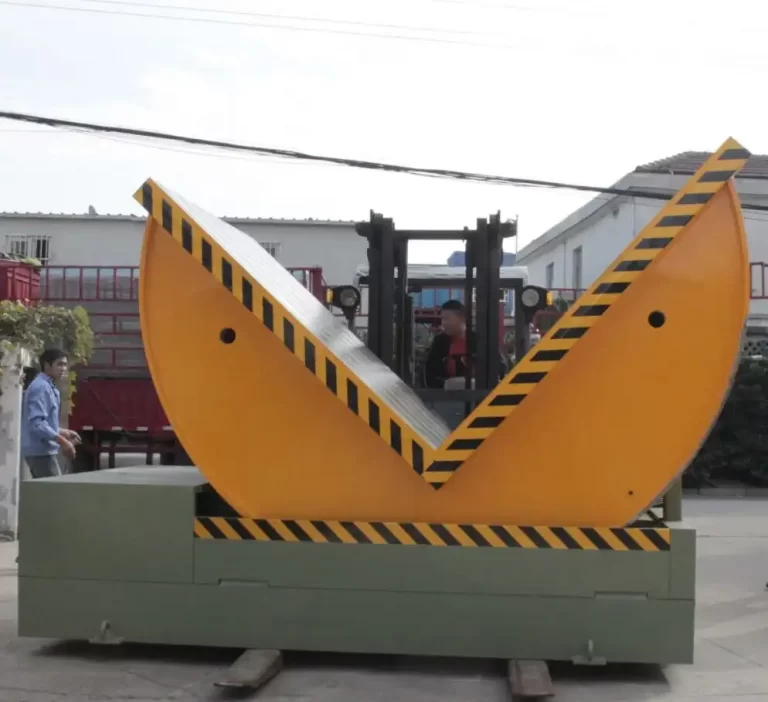
Technical specifications determine whether an upender will solve your problems or create new ones. Based on my experience installing equipment in Indian service centers, here's what really matters when evaluating different models.
🔧 Capacity and Load Specifications
The most fundamental specification is weight capacity, but this involves more than just maximum tonnage. You need to consider:
Weight Range: Equipment should handle your lightest and heaviest coils efficiently. For Indian service centers processing diverse materials, I recommend upenders with 2-20 ton capacity ranges.
Center of Gravity: Coils with uneven weight distribution require upenders with advanced stability control. SHJLPACK models include automatic center detection that adjusts clamping pressure dynamically.
Size Variability: Your equipment must accommodate diameter variations from 800mm to 2,000mm and width differences from 600mm to 1,800mm common in Indian service centers.
⚙️ Rotation Mechanism Comparison
The method of rotation significantly impacts performance, maintenance, and operational costs:
Hydraulic Systems: Preferred for heavy-duty applications (5+ tons), offering smooth acceleration and precise positioning. SHJLPACK hydraulic upenders provide 180-degree rotation in 90 seconds with positioning accuracy of ±1 degree.
Electro-Mechanical Systems: Better for lighter loads (under 5 tons) with lower maintenance requirements and higher energy efficiency. Ideal for service centers with consistent, lighter coil profiles.
Hybrid Systems: Combining hydraulic power with electronic control offers the benefits of both systems. This is particularly valuable for facilities processing mixed materials with varying sensitivity requirements.
📈 Technical Specification Comparison Table
| Specification | SHJLPACK Standard | SHJLPACK Professional | 风鼎 FD-1500 | 无锡步惠 WX-2000 |
|---|---|---|---|---|
| Max Capacity | 10 tons | 20 tons | 15 tons | 12 tons |
| Rotation Speed | 120 seconds/180° | 90 seconds/180° | 150 seconds/180° | 180 seconds/180° |
| Power Consumption | 11 kW | 18 kW | 15 kW | 13 kW |
| Control System | Basic PLC | Advanced HMI + PLC | Standard PLC | Basic relay |
| Positioning Accuracy | ±2° | ±1° | ±3° | ±5° |
| Safety Features | Emergency stop, guards | Laser scanning, auto stop | Basic safety | Minimum safety |
| Integration Ready | Moderate | Excellent | Limited | Basic |
🔄 Integration and Compatibility Factors
The best upender is useless if it doesn't integrate with your existing material handling system. Key integration considerations include:
Material Flow Compatibility: The equipment must match your conveyor heights, transfer mechanisms, and processing sequence. SHJLPACK offers custom height adjustments specifically for Indian service center layouts.
Control System Integration: Modern facilities benefit from upenders that connect to plant-wide monitoring systems. Our professional series includes IoT connectivity for real-time performance tracking and predictive maintenance alerts.
Future Expansion Planning: Consider not just current needs but anticipated growth. Modular designs allow for capacity upgrades without complete equipment replacement, protecting your long-term investment.
Understanding these technical specifications ensures you select equipment that delivers reliable performance rather than becoming another piece of underutilized machinery taking up valuable floor space.
3. Which 4 Integration Steps Ensure Smooth Upender Implementation in Existing Lines?
I've witnessed too many plants make the same mistake—buying excellent equipment but failing to integrate it properly into their existing operations. The result is delayed benefits, frustrated operators, and sometimes even safety issues. Proper integration planning is what separates successful implementations from expensive disappointments.
Successful upender integration requires four systematic steps: comprehensive site assessment, workflow redesign, phased installation with operator training, and performance validation. According to SHJLPACK's implementation methodology, proper planning reduces integration downtime by 60% and ensures equipment achieves target performance within 30 days.
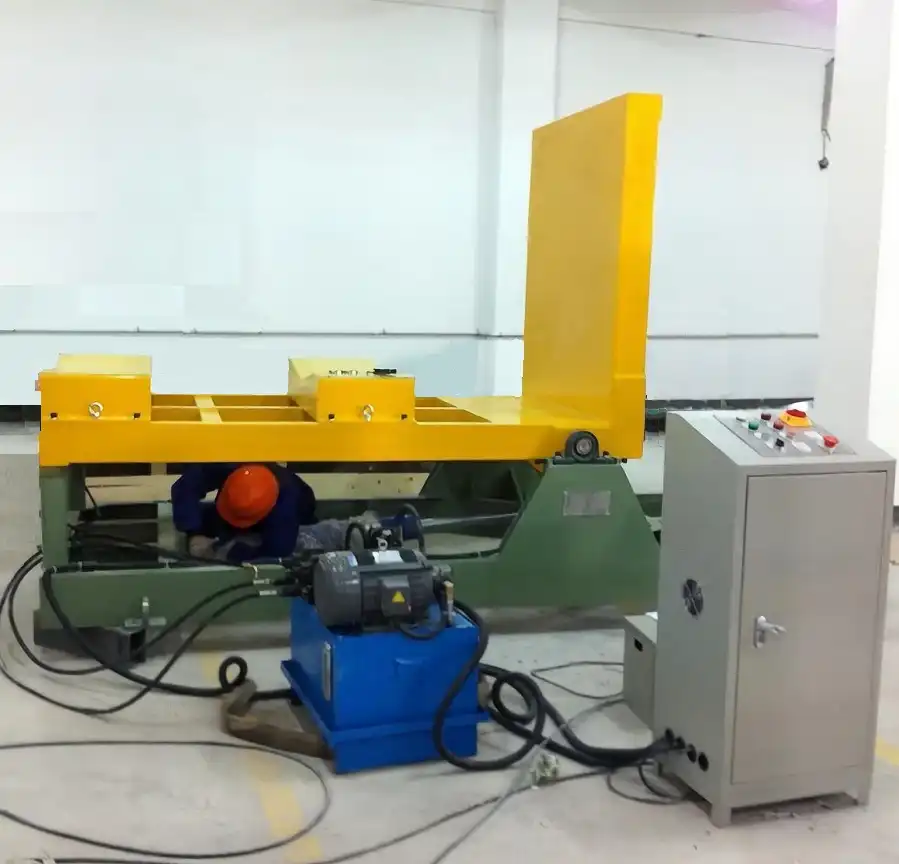
Integration is where theoretical benefits become practical realities. Through numerous installations across Indian manufacturing hubs, we've developed a proven methodology that ensures smooth implementation and rapid ROI achievement.
📋 Step 1: Comprehensive Pre-Installation Assessment
Before any equipment arrives, thorough planning identifies potential integration challenges:
Site Survey Checklist:
- Floor load capacity verification and reinforcement requirements
- Utility connection points (power, hydraulics, control systems)
- Material flow analysis from receiving to shipping areas
- Safety zone demarcation and emergency access maintenance
- Existing equipment interface compatibility assessment
Workflow Mapping: Document current coil handling processes minute-by-minute to identify all touchpoints where the upender will interface with existing operations. This reveals hidden bottlenecks that might otherwise be overlooked.
🔄 Step 2: Workflow Redesign and Simulation
Simply dropping an upender into an existing layout rarely delivers optimal results. We employ:
Digital Twin Modeling: Creating virtual models of your facility to test different layout configurations before physical installation. This digital simulation typically identifies 3-5 significant workflow improvements.
Buffer Zone Planning: Determining optimal staging areas before and after the upender to maintain continuous material flow during varying processing times at adjacent stations.
Safety System Integration: Ensuring the upender's safety features (light curtains, emergency stops, guarding) integrate seamlessly with your plant's overall safety protocol and emergency response procedures.
🛠️ Step 3: Phased Installation with Cross-Training
Rushing installation causes operational disruptions and safety risks. Our proven approach includes:
Weekend Installation: Critical foundation and utility work completed during planned downtime to minimize production impact.
Staged Commissioning: Equipment becomes operational in phases—mechanical systems first, then control integration, finally full automation—allowing operators to build familiarity gradually.
Hands-On Training: Instead of theoretical classroom sessions, we train operators using actual production materials during low-volume shifts. This practical approach ensures confidence when full production resumes.
📊 Step 4: Performance Validation and Optimization
The work isn't complete when the equipment is running. We implement:
30-Day Performance Monitoring: Tracking key metrics against pre-installation baselines to verify ROI projections and identify optimization opportunities.
Operator Feedback Integration: The people using the equipment daily provide invaluable insights for fine-tuning. Structured feedback sessions typically yield 2-3 significant operational improvements.
Preventive Maintenance Planning: Establishing maintenance schedules and spare parts inventory based on actual usage patterns rather than generic recommendations.
This systematic approach to integration has helped our clients achieve projected efficiency gains within the first month of operation, rather than the 3-6 month typical of less methodical implementations.
4. How Can Indian Service Centers Achieve 18-Month ROI with Proper Upender Selection?
As a plant manager, you're constantly evaluating equipment investments against their financial returns. I understand that even the most technologically advanced equipment needs to demonstrate clear economic benefits. The good news is that with proper selection and implementation, coil upenders typically deliver ROI within 12-18 months through multiple savings channels.
Indian service centers achieve 18-month ROI through labor reduction, damage minimization, throughput increases, and safety cost avoidance. A typical 15-ton capacity upender saving 3 operators while processing 40 additional coils daily can generate $85,000-$110,000 annual savings, paying for itself in 14-18 months.
ROI calculation for material handling equipment must consider both direct cost savings and indirect benefits that impact overall profitability. Through detailed analysis of multiple Indian installations, we've identified the key factors that determine how quickly upenders pay for themselves.
💵 Direct Cost Savings Calculation
The most immediately quantifiable benefits come from labor and efficiency improvements:
Labor Cost Reduction: Manual coil handling typically requires 3-4 workers per shift. Automated upenders need only one operator, creating direct labor savings of $4,000-$6,000 monthly depending on local wage rates.
Throughput Increase Analysis: Reducing coil repositioning time from 15 minutes to 3 minutes enables processing 40-50 additional coils daily. At average processing margins of $15-25 per coil, this generates $12,000-$20,000 monthly additional revenue.
Damage Reduction Economics: Manual handling causes edge damage, crushing, and surface scratches in 3-5% of coils. Automated upenders reduce this to under 0.5%, saving $8,000-$15,000 monthly in rework, downgrading, and customer claims.
📈 Indirect Financial Benefits
Beyond direct savings, upenders deliver significant indirect financial advantages:
Safety Cost Avoidance: Each manual coil flipping injury typically costs $25,000-$50,000 in direct costs plus productivity impacts. Eliminating this risk represents substantial financial protection.
Insurance Premium Reductions: Many insurers offer 5-15% premium discounts for facilities that eliminate high-risk manual handling operations through automation.
Space Utilization Improvements: Compact upender designs free 20-30 square meters of floor space versus manual handling areas, creating opportunities for additional revenue-generating equipment.
🔍 ROI Comparison: Equipment Tier vs. Payback Period
| Equipment Tier | Initial Investment | Annual Savings | ROI Period | Best For |
|---|---|---|---|---|
| SHJLPACK Basic | $45,000-$65,000 | $55,000-$70,000 | 12-16 months | Small-medium centers |
| SHJLPACK Professional | $75,000-$110,000 | $85,000-$130,000 | 14-18 months | High-volume centers |
| 风鼎 FD Series | $60,000-$90,000 | $65,000-$95,000 | 15-20 months | Medium centers |
| 无锡步惠 WX Series | $50,000-$75,000 | $50,000-$70,000 | 16-22 months | Budget-conscious |
💰 Total Cost of Ownership Analysis
Smart investment decisions consider long-term operating costs, not just purchase price:
Energy Consumption: Modern upenders consume $300-$500 monthly in electricity versus manual handling's indirect energy costs through extended processing times.
Maintenance Requirements: Higher-quality components in SHJLPACK equipment reduce maintenance frequency and spare parts costs by 30-40% compared to budget alternatives.
Equipment Lifespan: Properly maintained upenders operate reliably for 12-15 years, making the annualized investment minimal compared to ongoing manual handling costs.
This comprehensive financial analysis demonstrates why automated upenders represent one of the highest-return investments available to Indian service centers seeking to improve both operational efficiency and bottom-line profitability.
Conclusion
Coil upenders transform Indian service centers by automating dangerous manual processes while delivering measurable ROI within 18 months. For complete automation solutions, consider integrating upenders with a full steel coil packing line to maximize efficiency gains.
FAQ Section
Frequently Asked Questions
Q: What maintenance is required for coil upenders in high-volume Indian service centers?
A: Basic maintenance includes weekly visual inspections, monthly hydraulic system checks, and quarterly full system servicing. SHJLPACK upenders require only 2-4 hours of maintenance weekly in high-volume applications, significantly less than manual handling operational costs.
Q: How do coil upenders handle different coil sizes and weights in mixed operations?
A: Modern upenders feature adjustable clamping systems that automatically adapt to coil diameters from 800mm to 2,000mm and weights from 2-20 tons. SHJLPACK models include programmable settings for different coil profiles, enabling quick changeovers between jobs.
Q: What safety features are essential for coil upenders in Indian manufacturing environments?
A: Critical safety features include emergency stop systems, physical guarding, laser scanning protection zones, and overload protection. SHJLPACK equipment exceeds Indian safety standards with additional features like automatic center detection and anti-sway control during rotation.
Q: How long does installation and commissioning typically take for a new coil upender?
A: Most installations require 3-5 days for mechanical setup plus 2-3 days for commissioning and operator training. SHJLPACK's modular design approach minimizes disruption, with many installations completed over a weekend to avoid production downtime.
Q: Can coil upenders be integrated with existing material handling systems from different manufacturers?
A: Yes, modern upenders feature standardized interfaces for conveyor integration, control system communication, and safety system interoperability. SHJLPACK provides custom integration solutions for mixed-manufacturer environments common in Indian service centers.


