
How Hungary's Automotive Metal Supply Chain Utilizes Coil Upenders?
Leading Paragraph:
Are you struggling with manual coil handling that's slowing down your production line and putting workers at risk? As a plant manager, you know that inefficient material handling can create major bottlenecks. In Hungary's competitive automotive sector, manufacturers have found smart solutions to these exact challenges through automated coil upending systems.
Snippet Paragraph:
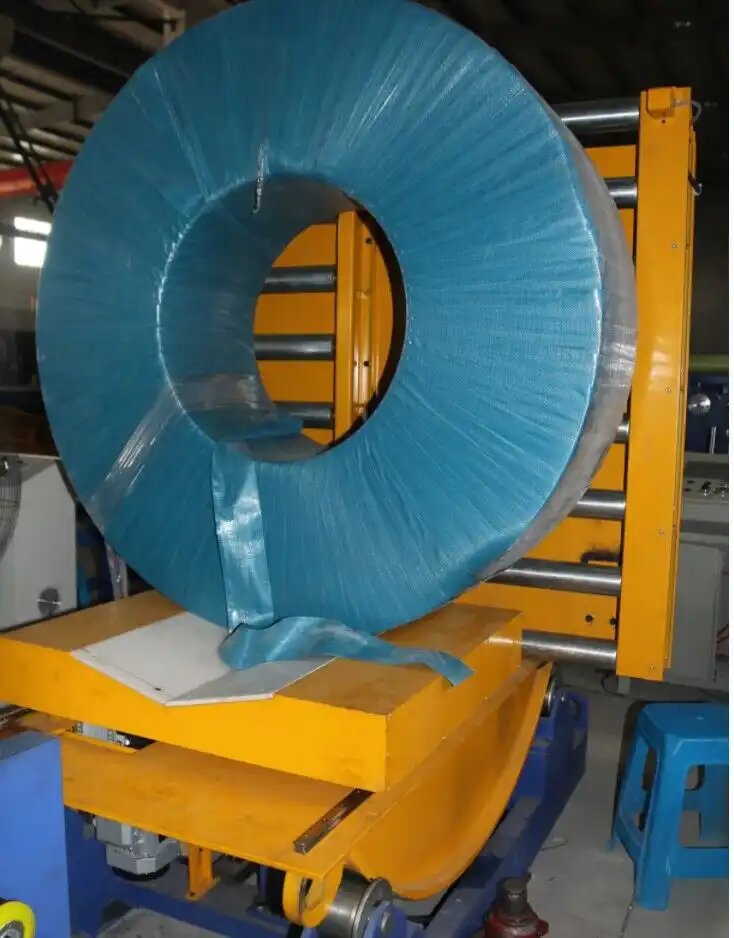
Hungarian automotive suppliers use coil upenders to automate the process of rotating steel coils from horizontal to vertical positions. This solves three critical challenges: eliminating manual handling risks, increasing production speed by 40-60%, and preventing product damage during orientation changes. The technology has become essential for meeting automotive industry just-in-time delivery requirements while maintaining strict quality standards.
Transition Paragraph:
If you're considering similar automation for your metal processing operations, you probably have several questions. Let's explore how coil upenders work in real automotive manufacturing environments and what benefits they can bring to your facility.
1. What Specific Problems Do Coil Upenders Solve in Automotive Manufacturing?
Leading Paragraph:
Manual coil handling creates multiple headaches for plant managers like Michael. Workers risk serious injuries when moving multi-ton coils, production lines face constant delays, and quality issues emerge from improper handling. Hungarian automotive suppliers faced these exact challenges before implementing coil upender systems.
Snippet Paragraph:
Coil upenders directly address three major automotive manufacturing pain points: worker safety concerns from manual coil rotation, production bottlenecks causing 20-30% efficiency losses, and material damage during orientation changes. According to SHJLPACK's data, facilities using automated upenders report 70% fewer workplace injuries and 45% faster production cycles compared to manual operations.

Dive Deeper Content:
The transition from manual to automated coil handling represents a fundamental shift in how automotive metal processors approach production efficiency. Let's break down the specific problems and their solutions:
Safety Transformation
Manual coil handling presents significant risks that plant managers cannot ignore. Workers standing near multi-ton coils during rotation face crushing hazards, while improper lifting techniques lead to musculoskeletal injuries. According to Randal Liu, founder of SHJLPACK, "We've seen facilities reduce their coil-related injuries from 3-4 per year to zero after implementing proper upending systems. The ROI isn't just financial - it's about protecting your team."
Efficiency Bottlenecks Eliminated
The traditional manual process creates predictable delays:
- ⏱️ 15-20 minutes per coil for manual rotation vs. 2-3 minutes with automation
- 🚚 Waiting time for forklift availability between operations
- 🔄 Multiple handling steps increasing damage risk
- 👥 2-3 workers required vs. 1 operator monitoring automated systems
Quality Preservation
Automotive manufacturers cannot tolerate surface scratches or edge damage on coils destined for visible automotive parts. Manual handling often causes:
- Surface abrasions from chains or slings
- Edge deformation from improper support
- Coil warping during uncontrolled rotation
- Contamination from multiple contact points
Case Example: Hungarian Tier-1 Automotive Supplier
🏭 Metal Processor in Győr, Hungary
- Challenge: Manual coil rotation causing 2-3 injuries annually and 25% production delays
- Solution: Installed SHJLPACK semi-automatic upender with safety guarding
- Results: Quantified improvements
- Production: increased throughput by 48%
- Safety: zero coil-related injuries in 18 months
- Quality: reduced material damage claims by 92%
The specific design requirements for automotive applications differ from general steel processing. Automotive-grade upenders need precision positioning, gentle handling for premium surfaces, and integration with existing production lines for seamless material flow.
2. How Do Hungarian Factories Achieve 40-60% Efficiency Gains with Upenders?
Leading Paragraph:
When Michael looks at equipment investments, he needs clear numbers on efficiency improvements. Hungarian automotive suppliers have documented impressive gains after implementing coil upending systems. But how exactly do these efficiency improvements materialize in day-to-day operations?
Snippet Paragraph:
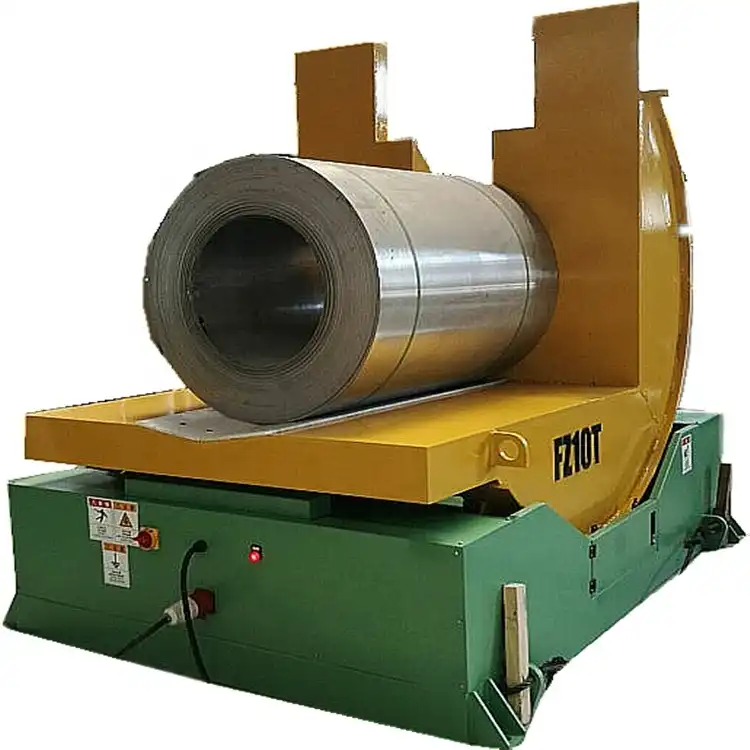
Hungarian factories achieve 40-60% efficiency gains through three key mechanisms: reducing coil handling time from 20 minutes to 3 minutes, eliminating waiting time for specialized equipment, and enabling continuous production flow. SHJLPACK's clients report typical ROI periods of 12-18 months through labor savings and increased output capacity.
Dive Deeper Content:
The efficiency story goes beyond simple time savings. Let's examine the specific operational improvements that drive these impressive numbers:
Time Savings Breakdown
The transformation in coil handling speed comes from multiple factors:
| Process Step | Manual Handling | Automated Upender | Time Saving |
|---|---|---|---|
| Coil Positioning | 5-8 minutes | 1 minute | 80% |
| Rotation Process | 8-10 minutes | 1.5 minutes | 85% |
| Quality Check | 3-5 minutes | 0.5 minutes | 90% |
| Transfer to Next Station | 4-6 minutes | 1 minute | 80% |
| Total per Coil | 20-29 minutes | 4 minutes | 80-85% |
Labor Optimization
The staffing requirements shift dramatically with automation:
- Before: 2-3 workers dedicated to coil handling + forklift operator
- After: 1 operator monitoring multiple automated systems
According to industry data from Hungarian implementations:
- Labor cost reduction: $45,000-$65,000 annually per shift
- Reduced training requirements for specialized manual skills
- Lower employee turnover in physically demanding positions
Production Flow Improvements
The biggest gains often come from improved overall production rhythm:
- ⚡ No waiting for available forklifts or operators
- 🔄 Consistent cycle times enabling better production planning
- 📈 Predictable output supporting just-in-time delivery
- 🏭 Ability to handle production surges without additional staffing
| Technical Specifications Comparison: | Specification | Manual Process | SHJLPACK Upender | 风鼎 Upender | 无锡步惠 Upender |
|---|---|---|---|---|---|
| Cycles per Hour | 2-3 coils | 15-20 coils | 12-18 coils | 10-15 coils | |
| Operator Requirement | 2-3 workers | 1 operator | 1-2 operators | 1-2 operators | |
| Coil Weight Capacity | Limited by equipment | Up to 20 tons | Up to 15 tons | Up to 12 tons | |
| Integration Level | Low | High | Medium | Medium | |
| Safety Features | Basic | Comprehensive | Good | Standard |
The efficiency equation becomes clear when you calculate the total impact. For a facility processing 50 coils daily, the time savings alone amount to 13-20 hours per day. This capacity release allows plants to increase output without expanding facilities or significantly increasing staffing.
3. What Safety Features Make Modern Coil Upenders Essential for Risk Management?
Leading Paragraph:
Safety isn't just a compliance issue - it's a fundamental business requirement. Michael knows that workplace injuries carry enormous costs beyond insurance claims, including production disruptions, training replacements, and regulatory scrutiny. Modern coil upenders incorporate multiple safety systems that transform risk management.
Snippet Paragraph:
Modern coil upenders incorporate critical safety features including interlocked guarding systems, emergency stop circuits, overload protection, and anti-slip positioning. SHJLPACK's designs include multiple redundant safety systems that have helped clients reduce coil-related injuries by 85-100% while improving regulatory compliance.

Dive Deeper Content:
The safety engineering in modern upending equipment represents years of learning from industrial accidents and near-misses. Here's what makes today's systems fundamentally safer:
Engineering Controls Hierarchy
Modern upenders follow the safety hierarchy that prioritizes elimination and engineering controls over administrative measures:
-
🛡️ Hazard Elimination
- No manual intervention during rotation cycle
- Automated positioning eliminates pinch points
- Controlled rotation prevents sudden movements
-
⚙️ Engineering Controls
- Physical guards with interlock switches
- Light curtains creating detection zones
- Emergency stop buttons at multiple locations
- Hydraulic overload protection
-
📋 Administrative Controls
- Clear operating procedures
- Regular safety inspections
- Maintenance lockout/tagout procedures
Critical Safety Systems Breakdown
Interlocked Guarding Systems:
- Physical barriers that prevent access during operation
- Safety switches that stop machine if opened
- Dual-channel monitoring for reliability
- Tamper-resistant design
Load Monitoring and Protection:
- Weight sensors preventing overload conditions
- Tilt angle monitoring for stability
- Hydraulic pressure limiting
- Emergency descent systems
Operator Safety Features:
- Two-hand control requirements for certain operations
- Emergency stop circuits meeting Category 3 standards
- Safe access platforms for maintenance
- Clear visibility of entire operation zone
According to Randal Liu, "The safety improvements we've designed into SHJLPACK upenders come directly from witnessing near-misses in factories. One client avoided a serious crushing incident because our interlock system prevented operation while a maintenance technician was inside the guarding. That's the difference between a close call and a catastrophic injury."
Compliance and Certification
Modern upenders designed for international markets typically include:
- CE certification meeting European Machinery Directive
- ISO 13849 safety standards compliance
- Local regulatory requirements (including Mexican NOM standards)
- Third-party validation of safety systems
The business case for safety extends beyond risk reduction. Facilities with strong safety records typically experience:
- 15-25% lower insurance premiums
- Reduced absenteeism and turnover
- Better regulatory relationships
- Enhanced reputation with automotive OEM customers
4. How Can Mexican Plants Implement Similar Coil Upending Solutions?
Leading Paragraph:
Michael might wonder if Hungarian solutions translate to Mexican manufacturing realities. The good news is that the core technology adapts well across different industrial environments. However, successful implementation requires understanding local conditions, available support networks, and appropriate equipment selection.
Snippet Paragraph:
Mexican plants can implement similar coil upending solutions by selecting appropriate equipment for local conditions, ensuring proper technical support availability, and adapting implementation plans for existing facilities. SHJLPACK has successfully installed systems in Mexican automotive plants with typical implementation timelines of 8-12 weeks from order to operation.
Dive Deeper Content:
Implementing European-style automation in Mexican facilities requires careful planning and adaptation. Here's what plant managers need to consider:
Equipment Selection Criteria for Mexican Market
Choosing the right equipment involves balancing multiple factors:
Key Decision Factors:
- 💰 Budget constraints and ROI requirements
- 🔧 Technical support availability locally
- 📦 Spare parts lead times and inventory
- 🏭 Facility layout and space constraints
- ⚡ Power requirements and availability
- 👥 Operator skill levels and training needs
Recommended Brands Hierarchy for Mexican Plants:
- SHJLPACK - Best balance of performance, support, and value
- 风鼎 (Fhopepack) - Good reliability with established distribution
- 无锡步惠 - Budget option for less demanding applications
Implementation Roadmap
Successful projects follow a structured approach:
Phase 1: Assessment (1-2 weeks)
- Current process mapping and bottleneck identification
- Space planning and utility requirements review
- Safety audit and risk assessment
- ROI calculation and budget approval
Phase 2: Equipment Selection (2-3 weeks)
- Technical specifications finalization
- Supplier evaluation and selection
- Payment terms and delivery schedule negotiation
- Project team assignment
Phase 3: Installation (3-4 weeks)
- Foundation preparation and utility connections
- Equipment delivery and positioning
- Mechanical and electrical installation
- Safety system verification
Phase 4: Commissioning (1-2 weeks)
- System testing with sample materials
- Operator and maintenance training
- Production integration and fine-tuning
- Documentation and handover
Cost-Benefit Analysis for Mexican Operations
Let's examine a typical ROI calculation for a medium-sized Mexican automotive supplier:
| Cost Element | Manual Process | Automated Upender |
|---|---|---|
| Equipment Cost | $15,000 (forklifts) | $65,000 (SHJLPACK system) |
| Labor Cost (2 shifts) | $96,000/year | $36,000/year |
| Injury Costs (average) | $25,000/year | $2,000/year |
| Product Damage | $18,000/year | $1,500/year |
| Total Annual Cost | $139,000 | $39,500 |
| Annual Savings | - | $99,500 |
| Simple Payback | - | ≈8 months |
According to SHJLPACK's experience with Mexican installations, "The most successful implementations involve local technical partners who understand both the equipment and the local industrial culture. We've found that having Spanish-speaking support technicians makes a significant difference in adoption speed and operator confidence."
Local Adaptation Considerations
Mexican plants may need to address specific local factors:
- Voltage variations and power quality issues
- Climate considerations (humidity, temperature)
- Local maintenance capabilities and training
- Customs clearance and import procedures
- Spare parts inventory planning
The implementation success ultimately depends on choosing partners who understand both the technology and the local business environment, ensuring that the efficiency gains seen in Hungarian facilities can be replicated in Mexican operations.
Conclusion
Hungary's automotive metal supply chain demonstrates how coil upenders transform safety and efficiency. Mexican plants can achieve similar results by selecting appropriate equipment and implementation partners. For complete solutions, explore our steel coil packing line offerings.
FAQ Section
Frequently Asked Questions
Q: What is the typical cost range for a coil upender system?
A: Coil upender prices range from $25,000 for basic models to $150,000 for fully automated systems. SHJLPACK offers mid-range systems around $65,000 that provide the best balance of features and value for automotive applications.
Q: How long does installation and commissioning typically take?
A: Most coil upender installations take 8-12 weeks from order to full operation. This includes site preparation, equipment delivery, installation, and operator training. SHJLPACK projects typically complete within 10 weeks with proper planning.
Q: What maintenance is required for automated coil upenders?
A: Basic maintenance includes daily visual inspections, weekly lubrication, and monthly system checks. Major servicing occurs annually. SHJLPACK systems are designed for minimal maintenance with most components accessible for easy service.
Q: Can upenders handle different coil sizes and weights?
A: Yes, modern upenders are adjustable for various coil dimensions. SHJLPACK models typically handle coils from 1 to 20 tons with diameter adjustments from 800mm to 2000mm. Quick-change adaptations are available for mixed production environments.
Q: What training do operators need for coil upender systems?
A: Operators typically require 2-3 days of training covering basic operation, safety procedures, and minor troubleshooting. SHJLPACK provides comprehensive training materials in Spanish for Mexican facilities.


