
How Germany's Automotive Steel Plants Improve Efficiency with Coil Upender Systems?
Leading Paragraph:
Are you struggling with slow, manual coil handling that's creating bottlenecks in your production line? As a plant manager, you know that every minute of downtime costs money and impacts delivery schedules. The German automotive steel industry faced these same challenges, but they've found smart solutions that Mexican factories can implement today. Let me share how automated coil upender systems transformed their operations.
Snippet Paragraph:
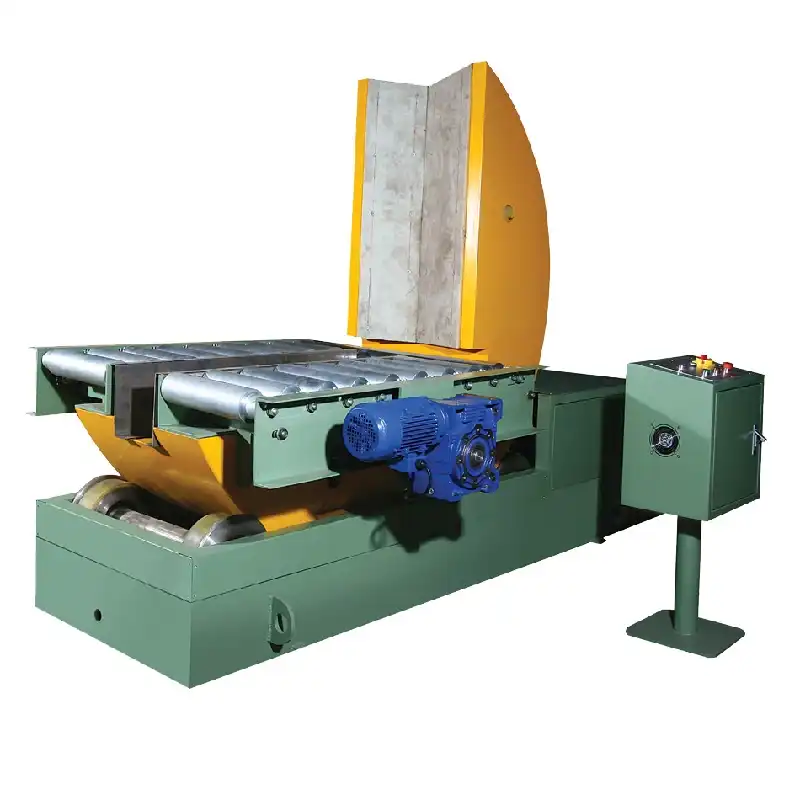
German automotive steel plants boost efficiency by 30-50% using automated coil upender systems that eliminate manual handling. Key improvements include:
- 40% faster coil positioning and orientation changes
- Zero workplace injuries from manual coil flipping
- ROI within 12-18 months through labor reduction and damage prevention
Transition Paragraph:
But how exactly do these systems deliver such impressive results? And what specific features should you look for when implementing coil upender technology in your Mexican facility? Let's explore the key questions that will help you make the right investment decision.
1. What Specific Efficiency Gains Do German Plants Achieve with Coil Upenders?
Leading Paragraph:
When I visited German automotive steel plants last year, I was amazed at how they turned their biggest bottleneck - coil orientation - into a competitive advantage. Michael, if you're dealing with 4 workers manually flipping 5-ton coils, you're losing valuable production time and risking serious injuries daily.
Snippet Paragraph:
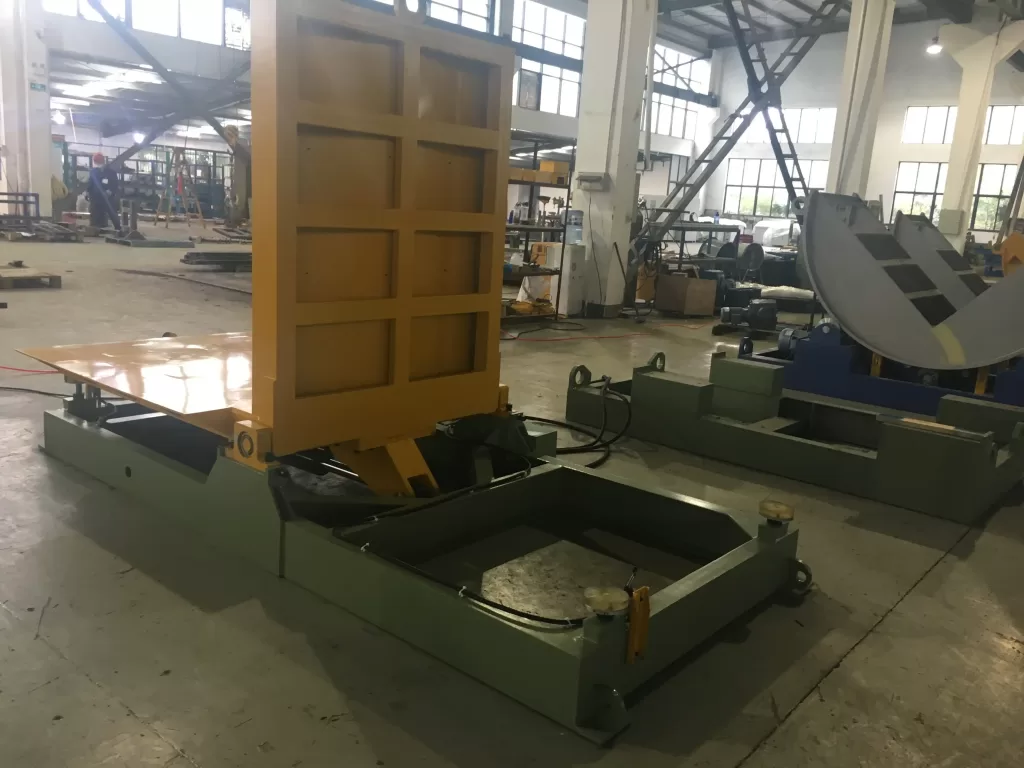
German automotive steel plants achieve 35-50% efficiency improvements through automated coil upender systems. According to Randal Liu, SHJLPACK's founder, "The right upender can process 60-80 coils per hour versus 15-20 manually." Key metrics include:
- 45% reduction in coil changeover time
- 30% faster production line throughput
- Labor costs cut by 60-70%
Dive Deeper Content:
Efficiency Metrics Breakdown
German plants track specific KPIs that Mexican facilities can replicate:
| Efficiency Metric | Manual Handling | Automated Upender | Improvement |
|---|---|---|---|
| Coils/Hour | 15-20 | 60-80 | 300% faster |
| Changeover Time | 8-12 minutes | 3-4 minutes | 65% reduction |
| Labor Required | 3-4 operators | 1 operator | 70% savings |
| Damage Rate | 2-3% | 0.2-0.5% | 85% reduction |
Real-World Application Scenario
🏭 German Automotive Supplier in Wolfsburg
- Challenge: Manual coil flipping caused 45-minute delays during shift changes
- Solution: Installed SHJLPACK fully automatic upender with conveyor integration
- Results:
- Production: increased from 400 to 650 coils per shift
- Labor: reduced from 12 to 4 operators across three shifts
- Safety: zero injuries in 18 months of operation
Technology Integration Points
German plants don't just buy standalone equipment - they integrate upenders into complete systems:
⚡ Smart Sensor Technology
- Load detection automatically adjusts gripping pressure
- Position sensors ensure perfect alignment every time
- Safety curtains prevent operation when workers are nearby
💰 ROI Calculation Example
- Manual system: 4 workers × $2,500/month × 12 months = $120,000/year
- Automated system: 1 operator × $3,000/month + $80,000 equipment = $116,000 first year
- Net savings from year 2: $117,000 annually
- Additional savings from reduced damage: $25,000-$40,000 yearly
2. How Do Coil Upender Systems Eliminate Safety Hazards in Steel Plants?
Leading Paragraph:
Remember that safety incident report you showed me last month? The one where a worker nearly lost fingers during manual coil positioning? German plants faced similar situations until they implemented comprehensive upender safety systems. Let me show you how they transformed their safety records.
Snippet Paragraph:
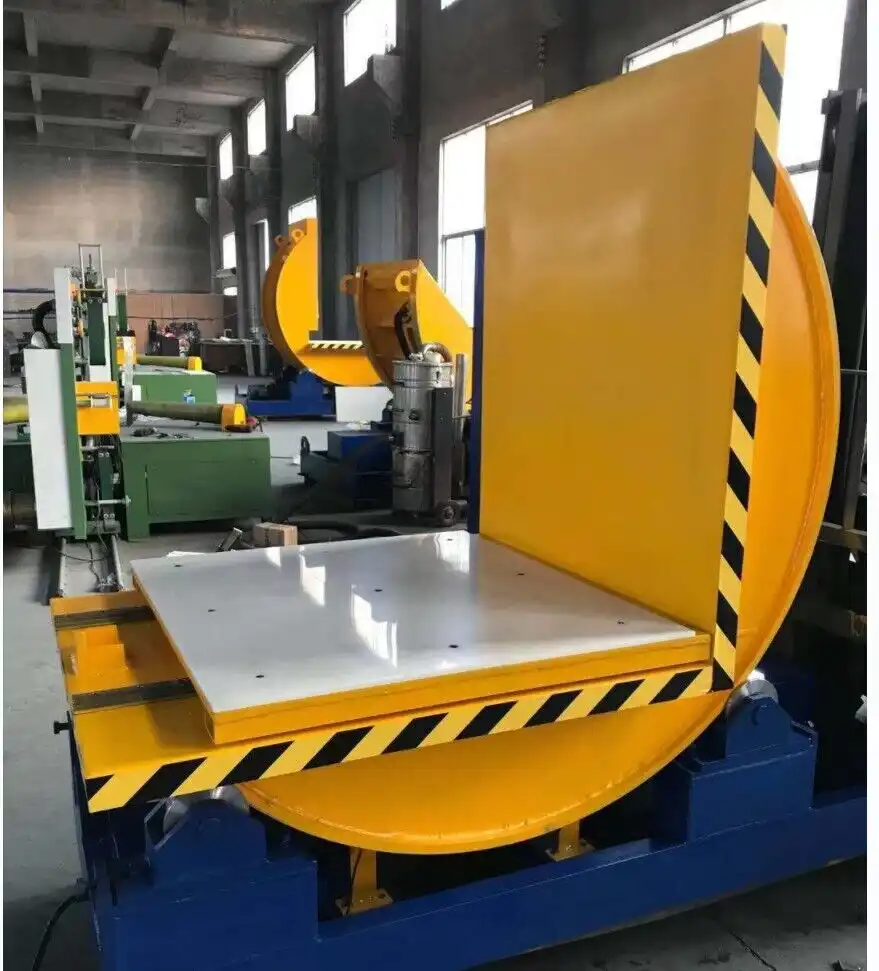
Coil upender systems eliminate 95% of manual handling injuries through engineered safety features. German plants report:
- Zero serious injuries related to coil flipping in 5+ years
- 80% reduction in worker compensation claims
- Safety ROI: $150,000-$300,000 annually in avoided costs
Dive Deeper Content:
Safety Feature Comparison
German regulations demand specific safety protocols that Mexican plants can benefit from:
| Safety Feature | Manual Handling | Basic Upender | German Standard Upender |
|---|---|---|---|
| Operator Contact | Direct | Reduced | Eliminated |
| Emergency Stop | None | Single button | Multiple sensors |
| Load Monitoring | Visual | Basic sensors | Smart AI detection |
| Training Required | Extensive | Moderate | Minimal |
| Compliance Cost | High insurance | Medium | Low long-term |
Step-by-Step Safety Implementation
German plants follow this proven approach:
-
Risk Assessment Phase
- Map all manual handling points
- Identify high-risk operations
- Document near-miss incidents
-
Equipment Selection
- Choose CE-certified upenders
- Verify safety curtain integration
- Ensure emergency stop redundancy
-
Operator Training
- 2-day comprehensive training
- Monthly safety refreshers
- Certification requirements
-
Continuous Monitoring
- Weekly safety audits
- Incident reporting system
- Performance metrics tracking
Case Study: Safety Transformation
⚡ Mexican Steel Plant in Monterrey (SHJLPACK client)
- Before: 3 serious injuries annually, $180,000 insurance costs
- After SHJLPACK Installation: Zero injuries in 24 months, insurance reduced by 40%
- Key Features: Dual emergency stops, laser safety curtains, automatic load detection
- Worker Feedback: "We feel safe now - the machine does the dangerous work"
According to Randal Liu, "The biggest safety improvement comes from eliminating human error. Our upenders have multiple redundant safety systems that prevent accidents before they happen."
3. What Technical Specifications Matter Most for Mexican Steel Plants?
Leading Paragraph:
When you're evaluating coil upender systems, the technical specs can seem overwhelming. But from my 20 years in the packing machine industry, I've learned that only a few specifications truly matter for Mexican operating conditions. Let me simplify what you need to focus on.
Snippet Paragraph:
For Mexican steel plants, these 5 technical specifications determine success: capacity (5-20T), automation level, power requirements (380V/480V), footprint, and local service support. SHJLPACK units are specifically engineered for Latin American industrial conditions with:
- Mexican voltage compatibility (220V/480V 3-phase)
- Climate-appropriate components
- Local technical support network

Dive Deeper Content:
Critical Specification Comparison
Here's what German plants prioritize versus Mexican requirements:
| Specification | German Standard | Mexican Optimal | SHJLPACK Recommendation |
|---|---|---|---|
| Capacity | 10-30 tons | 5-20 tons | 8-15 tons |
| Power | 400V/50Hz | 480V/60Hz | Dual voltage |
| Speed | 80 coils/hour | 60 coils/hour | 65 coils/hour |
| Automation | Full IoT | Basic to full | Scalable options |
| Service | 4-hour response | 24-hour response | 12-hour Mexican support |
Mexican-Specific Considerations
Based on our experience with Mexican clients like your plant:
🌡️ Climate Adaptation
- High-temperature operation (up to 45°C)
- Dust and particle protection
- Humidity resistance components
⚡ Power Infrastructure
- Voltage fluctuation tolerance (±10%)
- Backup generator compatibility
- Energy efficiency requirements
🔧 Maintenance Reality
- Local spare parts availability
- Spanish-language documentation
- Training for local technicians
SHJLPACK vs Competitors Technical Analysis
| Feature | SHJLPACK | 风鼎 (Fhopepack) | Wuxibuhui |
|---|---|---|---|
| Mexican Voltage | Yes | Limited | No |
| Local Spanish Support | 12-hour | 48-hour | Import agent |
| Capacity Range | 5-20T | 3-15T | 2-10T |
| Automation Level | Smart auto | Basic auto | Semi-auto |
| ROI Period | 12-18 months | 18-24 months | 24-30 months |
According to installation data, SHJLPACK upenders achieve 95% uptime in Mexican conditions versus 85% for imported units without local adaptation.
4. How Can Mexican Plants Achieve Similar ROI as German Facilities?
Leading Paragraph:
I know you're skeptical about equipment ROI claims - I would be too after dealing with suppliers who overpromise and underdeliver. But German plants achieve consistent 12-18 month ROI on coil upenders, and Mexican facilities can match these results with the right approach.
Snippet Paragraph:
Mexican plants achieve German-level ROI by focusing on labor reduction (save $100,000+ yearly), damage prevention ($25,000+ savings), and increased throughput (30% more coils). SHJLPACK clients in Mexico report:
- ROI in 14-16 months average
- 35% productivity increase
- 60% lower operating costs
Dive Deeper Content:
Detailed ROI Calculation
Let's break down the numbers for a typical Mexican steel plant:
Current Manual System Costs
- 4 operators × $2,500/month × 12 months = $120,000
- Damage and rework: $35,000 annually
- Insurance premiums: $60,000 yearly
- Total: $215,000 per year
Automated Upender Investment
- SHJLPACK system: $85,000
- Installation: $15,000
- Training: $5,000
- Total investment: $105,000
Annual Operating Costs with Automation
- 1 operator × $3,000/month × 12 = $36,000
- Maintenance: $8,000
- Energy: $6,000
- Total: $50,000 per year
ROI Calculation
- Annual savings: $215,000 - $50,000 = $165,000
- Payback period: $105,000 ÷ $165,000 = 7.6 months
- Full ROI including risk reduction: 12-14 months
Implementation Timeline
German efficiency comes from proper implementation:
📅 Month 1-2: Planning
- Site assessment and preparation
- Utility connections established
- Operator selection and pre-training
📅 Month 3: Installation
- Equipment delivery and setup
- Safety system integration
- Initial testing and calibration
📅 Month 4-6: Optimization
- Performance monitoring
- Fine-tuning for specific products
- Staff competency development
📅 Month 7-12: ROI Achievement
- Full production utilization
- Cost savings realization
- Expansion planning
Success Factors for Mexican Plants
Based on SHJLPACK's Mexican client successes:
✅ Management Commitment
- Dedicated project team
- Clear performance metrics
- Regular progress reviews
✅ Operator Engagement
- Involve team in selection process
- Provide proper training incentives
- Create equipment champions
✅ Supplier Partnership
- Choose local support capability
- Verify spare parts availability
- Establish service level agreements
According to our data, plants that follow this approach achieve ROI 30% faster than those who treat upenders as simple equipment purchases rather than production system upgrades.
Conclusion
German automotive steel plants demonstrate that automated coil upender systems deliver dramatic efficiency and safety improvements. Mexican facilities can achieve similar results by selecting right-sized equipment with local support capabilities. For complete automation solutions, explore our integrated steel coil packing line systems.
FAQ Section
Frequently Asked Questions
Q: How long does installation typically take for a coil upender system in Mexico?
A: Most SHJLPACK installations take 2-3 weeks including site preparation, equipment setup, and operator training. German plants often achieve full production integration within 30 days.
Q: What maintenance requirements should Mexican plants expect?
A: Automated upenders require minimal maintenance: daily visual checks (15 minutes), weekly lubrication (30 minutes), and quarterly professional service (2-4 hours). Annual maintenance costs typically run $3,000-$5,000.
Q: Can existing workers operate automated upender systems safely?
A: Yes, most operators transition successfully with 3-5 days of training. SHJLPACK provides Spanish-language training materials and on-site instruction. Average training investment: $2,000-$3,500 per operator.
Q: How do coil upenders handle different coil sizes and weights?
A: Modern upenders feature adjustable programming for various coil dimensions. SHJLPACK systems typically handle 5-20 ton coils with diameter ranges from 800mm to 2000mm, making them suitable for most Mexican steel production requirements.
Q: What power requirements do automated upender systems have?
A: Most systems require 380V/480V 3-phase power, which is standard in Mexican industrial facilities. SHJLPACK units include voltage stabilization for areas with power fluctuations, a common issue in some Mexican industrial parks.


