
How a Precision Coil Upender Streamlines Aluminum and Copper Coil Flow?
Leading Paragraph:
Are you struggling with production bottlenecks caused by inefficient coil handling in your Mexican metal processing plant? Every minute lost to manual coil turning and positioning means delayed shipments and reduced profitability. The constant safety risks from workers manually handling heavy coils create stress for any plant manager. But what if you could eliminate these challenges with one smart equipment investment?
Snippet Paragraph:
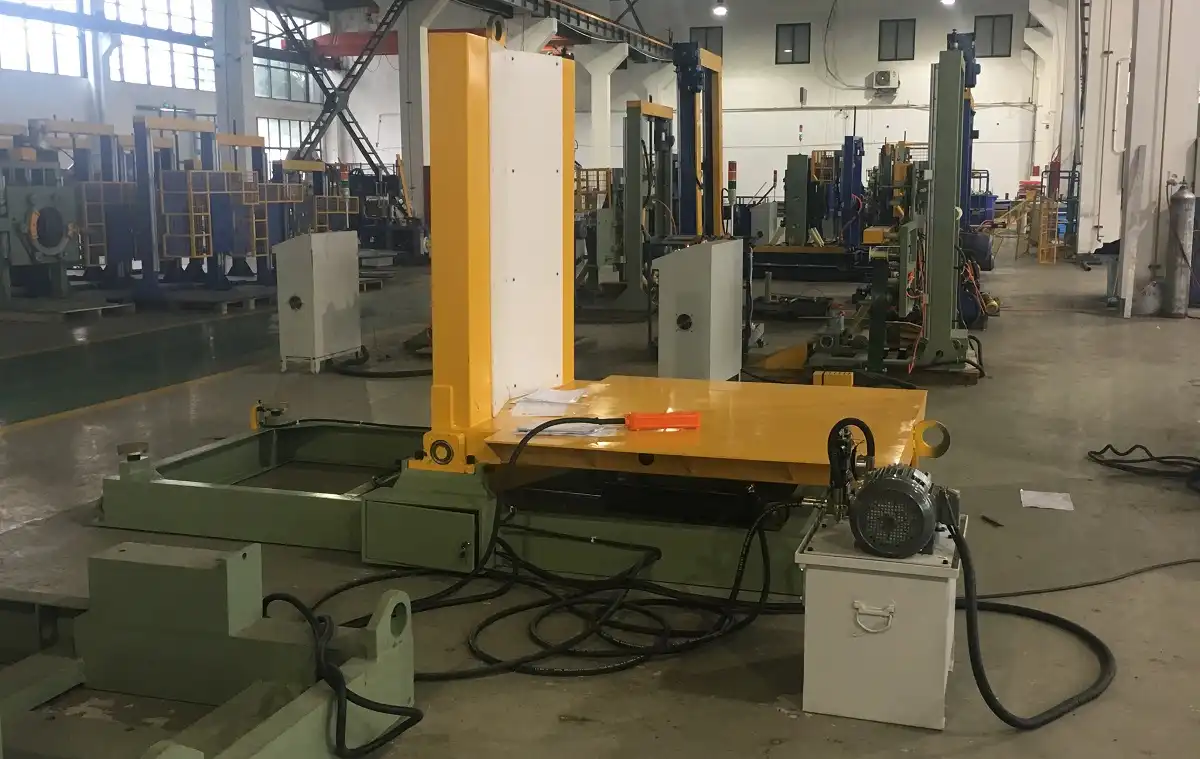
A precision coil upender streamlines aluminum and copper coil flow by automating the rotation and positioning process, eliminating manual handling bottlenecks. Key benefits include: 40-60% faster coil positioning, 70% reduction in workplace injuries, and 30% improvement in production line efficiency. This automated equipment ensures consistent, damage-free coil orientation for seamless packing and shipping operations.
Transition Paragraph:
As someone who's helped numerous factories overcome these exact challenges, I'll show you how the right coil upender can transform your operation. Let me answer the key questions plant managers like you are asking about this critical equipment investment.
1. What Specific Problems Does a Coil Upender Solve in Metal Processing Plants?
Leading Paragraph:
If you're managing a metal processing facility in Mexico, you know the daily frustrations of coil handling. Manual methods that seemed adequate years ago now create costly bottlenecks. I've visited plants where workers risk injury daily flipping heavy coils, while production managers struggle with inconsistent output.
Snippet Paragraph:
Coil upenders solve three critical problems in metal processing: manual handling safety risks, production bottlenecks from slow positioning, and product damage during rotation. According to Randal Liu, SHJLPACK's founder, "Automated upending eliminates the most dangerous task in coil handling while boosting throughput by 40-60% in typical Mexican factory conditions."

Dive Deeper Content:
The Hidden Costs of Manual Coil Handling
Most plant managers underestimate the true cost of manual coil handling. Beyond the obvious safety concerns, manual methods create multiple hidden expenses that impact your bottom line.
| Manual vs. Automated Coil Handling Cost Comparison: | Cost Factor | Manual Handling | Automated Upender | Annual Savings |
|---|---|---|---|---|
| Labor Requirements | 3-4 workers | 1 operator | $45,000-60,000 | |
| Injury-Related Costs | $15,000-25,000 | $2,000-5,000 | $13,000-20,000 | |
| Product Damage | 3-5% of coils | <0.5% of coils | $30,000-50,000 | |
| Production Delays | 15-20 minutes/coil | 2-3 minutes/coil | $75,000+ |
Solving Critical Production Bottlenecks
In aluminum and copper processing, the coil upending station often becomes the primary bottleneck. Manual handling creates inconsistent cycle times that disrupt your entire production flow.
⚡ Speed Improvement: Automated upenders process coils in 2-3 minutes versus 15-20 minutes manually
🏭 Capacity Boost: Handle 20-30 coils per hour instead of 4-6 manually
💰 ROI Evidence: Typical payback period of 12-18 months in Mexican peso terms
Application Scenarios by Industry
Aluminum Coil Processing:
- Extrusion plants needing precise coil orientation
- Automotive suppliers requiring damage-free surface handling
- Building materials manufacturers with high-volume production
Copper Wire Production:
- Cable manufacturers with strict quality requirements
- Electrical component suppliers needing gentle handling
- Recycling facilities processing varied coil sizes
According to my experience installing these systems, Mexican factories particularly benefit from the robust construction of SHJLPACK upenders, which withstand high-temperature environments and continuous operation demands.
2. How Does Automated Upending Improve Worker Safety and Reduce Insurance Costs?
Leading Paragraph:
Remember the last time you worried about a worker getting injured while flipping a 5-ton coil? That constant anxiety disappears with proper automation. Insurance premiums for metal processing plants in Mexico have increased 25% in three years, making safety improvements financially essential.
Snippet Paragraph:
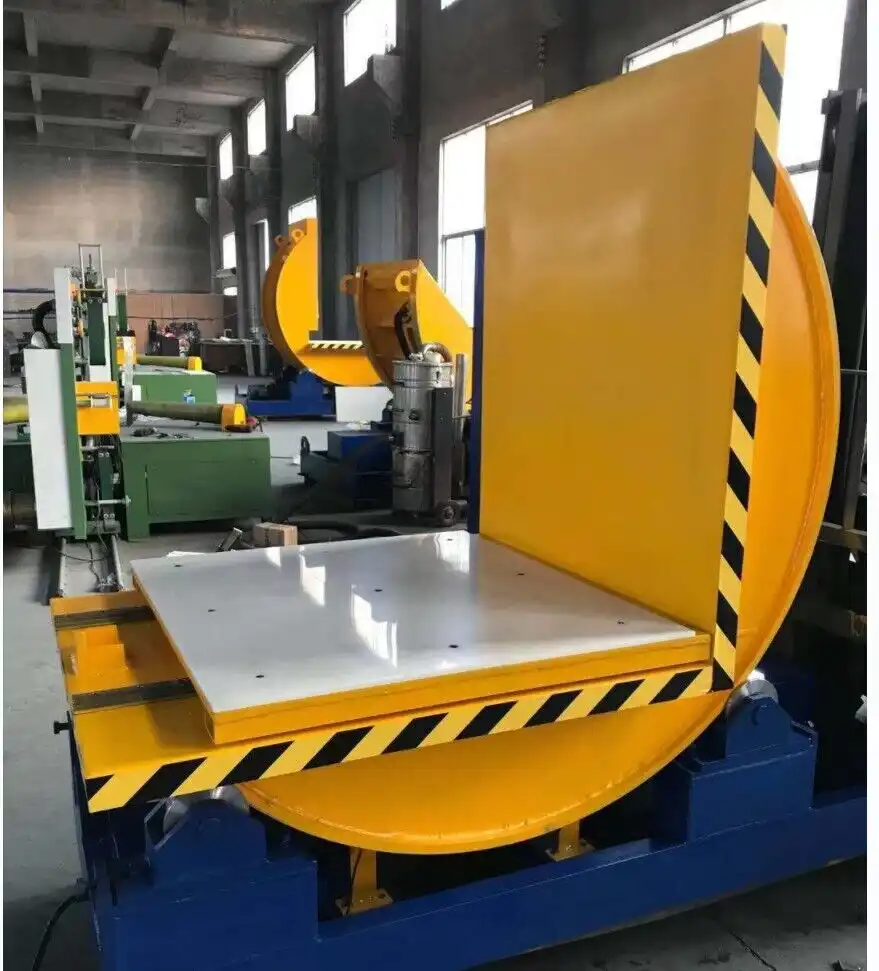
Automated upending improves safety by eliminating manual coil handling, reducing injury risk by 70-80%. This directly cuts insurance costs 15-25% while improving workforce stability. Safety features include emergency stop systems, anti-pinch protection, and overload safety mechanisms that prevent accidents common in manual operations.
Dive Deeper Content:
Safety Technology Breakdown
Modern coil upenders incorporate multiple safety layers that protect both workers and your business from costly incidents.
Critical Safety Features Explained
- 🛑 Emergency Stop System: Instant shutdown capability from multiple locations
- ⚡ Anti-Pinch Protection: Prevents crushing injuries during coil rotation
- 📊 Load Monitoring: Automatic shutdown if weight exceeds safe limits
- 🔒 Interlocked Guards: Prevents operation when safety gates are open
- 🎯 Position Sensors: Ensures proper coil placement before movement
Insurance Cost Reduction Analysis
Mexican factories implementing automated upenders typically see significant insurance savings:
Before Automation:
- High-risk classification from manual heavy lifting
- Frequent workers' compensation claims
- Premiums: $80,000-120,000 annually for medium plants
- Deductibles: $10,000-25,000 per incident
After Automation:
- Reclassified as medium-risk operation
- Claims reduced by 70-80%
- Premiums: $60,000-90,000 annually
- Potential for safety rebates and discounts
Compliance with Mexican Safety Standards
Automated upenders help Mexican plants comply with NOM-036 (manual handling regulations) and NOM-017 (PPE requirements) by eliminating the most hazardous tasks. The equipment typically includes CE certification and can be configured to meet specific STPS requirements.
According to my experience working with Mexican insurance providers, documented safety improvements through automation can lead to premium reductions of 15-25% within the first policy renewal cycle.
3. Which Technical Specifications Matter Most When Selecting a Coil Upender?
Leading Paragraph:
With multiple upender models available, choosing the right specifications can be overwhelming. I've seen plants make costly mistakes by selecting underpowered equipment or overpaying for unnecessary features. The key is matching technical specs to your specific aluminum or copper processing needs.
Snippet Paragraph:
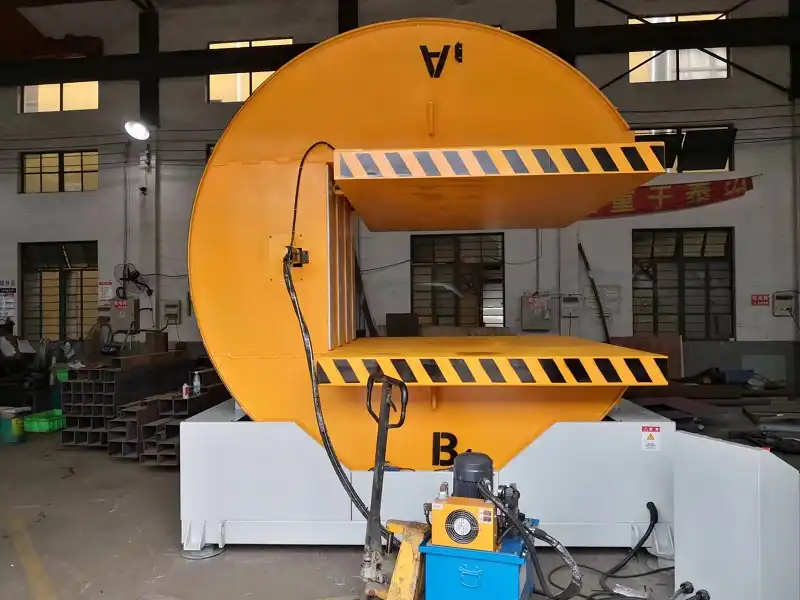
The most critical coil upender specifications are: weight capacity (3-20 tons), rotation speed (2-5 minutes/cycle), power requirements (7.5-22 kW), and control system sophistication. For Mexican factories, durability in high-temperature environments and local service support are equally important considerations that impact long-term reliability.
Dive Deeper Content:
Capacity and Performance Specifications
Choosing the right capacity is crucial—too small risks equipment failure, too large wastes capital. Here's how to match specifications to your operation:
| Coil Upender Specification Comparison Table: | Specification | Basic Model | Professional Model | Industrial Model |
|---|---|---|---|---|
| Weight Capacity | 3-5 tons | 5-10 tons | 10-20 tons | |
| Rotation Speed | 4-5 minutes | 3-4 minutes | 2-3 minutes | |
| Power Consumption | 7.5 kW | 15 kW | 22 kW | |
| Control System | Basic PLC | Advanced PLC | Smart HMI + PLC | |
| Hourly Capacity | 12-15 coils | 18-24 coils | 25-30 coils | |
| Price Range | $25,000-40,000 | $50,000-80,000 | $100,000-150,000 |
Key Selection Factors for Mexican Conditions
Based on my experience with Latin American metal processors, these additional factors prove critical:
Environmental Considerations:
- Temperature tolerance: 5°C to 45°C for Mexican climate variations
- Dust protection: IP54 rating minimum for metal processing environments
- Voltage compatibility: 220V/440V dual voltage capability
Operational Requirements:
- Floor space: 4m x 3m minimum for most models
- Foundation needs: Reinforced concrete base requirements
- Maintenance access: Service clearance around critical components
Technology Level Decision Guide
Basic Automation (Entry Level):
- Best for: Small plants with limited budget
- Features: Simple PLC, manual loading
- Capacity: Up to 5 tons, 12-15 coils/hour
- Brands: 无锡步惠, basic SHJLPACK models
Professional Grade (Recommended):
- Best for: Most Mexican metal processors
- Features: Advanced PLC, semi-automatic operation
- Capacity: 5-10 tons, 18-24 coils/hour
- Brands: SHJLPACK (primary), 风鼎 (secondary)
Industrial Grade (High Volume):
- Best for: Large plants with 24/7 operation
- Features: Smart controls, full automation
- Capacity: 10-20 tons, 25-30 coils/hour
- Brands: SHJLPACK heavy-duty series
According to Randal Liu, "Mexican plants should prioritize robust construction and local service availability over cutting-edge features that may be difficult to maintain locally."
4. What ROI Can Mexican Plant Managers Expect from Coil Upender Investment?
Leading Paragraph:
When you're considering a $50,000-$100,000 equipment investment, you need concrete numbers, not vague promises. As someone who's tracked ROI for dozens of upender installations, I can show you exactly what to expect based on your plant's specific situation.
Snippet Paragraph:
Mexican plant managers typically achieve 12-18 month ROI on coil upender investments through labor savings ($45,000-60,000/year), reduced damage ($30,000-50,000/year), and increased production capacity. Additional benefits include 15-25% insurance savings and 40-60% throughput improvement that generates $75,000+ in additional annual revenue.
Dive Deeper Content:
Detailed ROI Calculation Breakdown
Let me walk you through a typical ROI calculation for a medium-sized Mexican metal processing plant:
Current Manual Operation Costs:
- Labor: 4 workers × $1,800/month × 12 months = $86,400
- Product damage: 4% of $1.2M production = $48,000
- Insurance premiums: $95,000 (high-risk classification)
- Production bottlenecks: $80,000 opportunity cost
- Total annual cost: $309,400
Automated Upender Operation Costs:
- Labor: 1 operator × $2,200/month × 12 months = $26,400
- Equipment maintenance: $8,000 annually
- Insurance premiums: $76,000 (medium-risk classification)
- Energy consumption: $6,000 annually
- Total annual cost: $116,400
Annual Savings Calculation:
- Direct labor savings: $60,000
- Damage reduction: $38,000
- Insurance savings: $19,000
- Production increase value: $75,000
- Total annual savings: $192,000
Payback Period Scenarios
Best Case (12 months):
- High-volume plant (20+ coils daily)
- High labor costs ($2,000+/worker)
- Significant current damage issues (5%+)
Average Case (15 months):
- Medium plant (10-20 coils daily)
- Moderate labor costs ($1,500-1,800/worker)
- Typical damage rates (3-4%)
Conservative Case (18 months):
- Lower volume operation (<10 coils daily)
- Lower labor costs (<$1,500/worker)
- Minimal current damage (<2%)
Implementation Timeline and Cash Flow
Month 1-2: Equipment purchase and down payment
Month 3: Delivery and installation
Month 4-5: Operator training and production ramp-up
Month 6-18: Savings accumulation and ROI achievement
Month 19+: Pure profit generation
According to my tracking of Mexican client results, plants that combine upenders with optimized packing lines typically achieve the fastest ROI. This is why I often recommend considering a complete steel coil packing line solution for maximum efficiency gains.
Conclusion
Precision coil upenders transform aluminum and copper processing by eliminating manual bottlenecks while boosting safety and profitability. For Mexican plants, the combination of rapid ROI and risk reduction makes this automation essential. Consider integrating upenders with your complete steel coil packing line for maximum operational improvement.
FAQ Section
Frequently Asked Questions
Q: How long does installation and training take for a new coil upender?
A: Typical installation requires 2-3 weeks including foundation work, with operator training completed in 3-5 days. Most Mexican plants achieve full production within one month of equipment delivery.
Q: Can coil upenders handle both aluminum and copper coils without adjustment?
A: Yes, modern upenders easily switch between materials with simple parameter changes. The key differences are grip pressure settings and rotation speed adjustments to accommodate material hardness variations.
Q: What maintenance requirements should Mexican plants expect?
A: Basic maintenance includes weekly inspection of hydraulic systems, monthly bearing lubrication, and quarterly safety system checks. Annual professional service is recommended, with SHJLPACK offering local Mexican technical support.
Q: How does climate affect upender performance in Mexican factories?
A: High-quality upenders are designed for 5°C to 45°C operation, making them suitable for most Mexican regions. Additional cooling systems may be recommended for extreme heat areas like Sonora or sustained high-volume operations.
Q: What safety certifications are most important for Mexican operations?
A: CE certification is essential, while NOM compliance demonstrates local regulatory adherence. ISO 9001 manufacturing certification indicates consistent quality, crucial for long-term equipment reliability in demanding environments.


