
Cut Downtime in Half Using an Advanced Hydraulic Coil Upender System?
Are you struggling with production bottlenecks caused by slow, manual coil handling in your Mexican steel plant? Every minute your coil packing line sits idle means lost revenue and delayed shipments. Manual upending processes not only slow down your entire operation but also create serious safety risks for your team. The constant stopping and starting of production lines due to inefficient material handling can cripple your plant's profitability and put your workers in danger.
An advanced hydraulic coil upender system can reduce your downtime by 50% or more through automated material handling. These systems provide:
- Automatic coil rotation and positioning - eliminating manual handling delays
- Precision hydraulic control - ensuring consistent, damage-free operation
- Integrated safety features - protecting workers and reducing accident risks

But how exactly does this technology deliver such dramatic improvements? And what should you look for when selecting the right system for your Mexican manufacturing facility? Let me break down the key questions you need answered before making this critical investment.
1. How Does a Hydraulic Coil Upender Actually Reduce Downtime by 50%?
As a plant manager like Michael Chen, you've probably seen how manual coil handling creates constant bottlenecks. Workers struggling to position heavy coils, alignment issues causing jams, and the sheer physical exhaustion that slows down your entire packing line. These aren't just minor inconveniences - they're profit killers that add up to hours of lost production every week.
Hydraulic coil upenders cut downtime through three key mechanisms: automated positioning (saves 2-3 minutes per coil), continuous operation (eliminates worker fatigue breaks), and precision alignment (prevents jams and damage). According to Randal Liu, SHJLPACK's founder, "The average Mexican steel plant saves 45 minutes per shift just by eliminating manual coil rotation struggles."
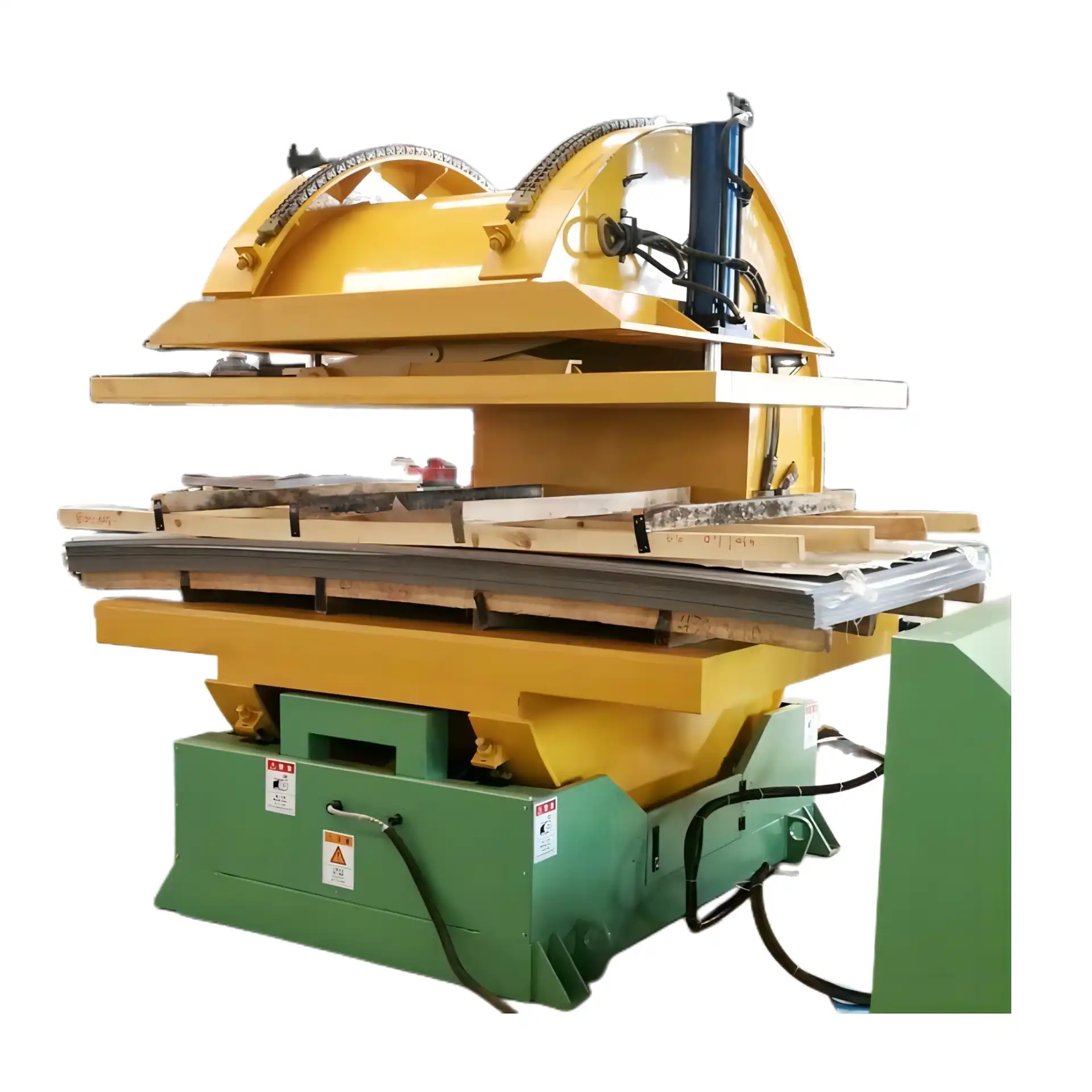
The Time-Saving Mechanics Behind Hydraulic Upenders
Traditional manual coil handling involves multiple workers using pry bars, chains, and sheer physical force to rotate and position coils. This process typically takes 5-7 minutes per coil and requires frequent rest breaks due to the exhausting nature of the work. In contrast, hydraulic upenders complete the same task in 60-90 seconds with just one operator.
Time Comparison: Manual vs. Automated Upending
| Process Step | Manual Handling | Hydraulic Upender | Time Saved |
|---|---|---|---|
| Coil Positioning | 2-3 minutes | 15 seconds | 85% faster |
| Rotation & Alignment | 3-4 minutes | 45 seconds | 80% faster |
| Worker Rest Breaks | 10 min/hour | 0 min/hour | 100% saving |
| Error Correction | 2-5 minutes | 10 seconds | 95% faster |
Real-World Impact on Mexican Steel Plants
I've worked with several plants in Mexico facing similar challenges to Michael's operation. One particular client in Monterrey was struggling with their steel coil packing line efficiency. They were processing 40 coils per shift manually, with frequent 15-20 minute delays due to misaligned coils and worker fatigue.
After installing a SHJLPACK hydraulic upender system, their results were dramatic:
- ⚡ Coil handling time reduced from 7 to 1.5 minutes
- 🏭 Production increased from 40 to 65 coils per shift
- 💰 Labor costs reduced by 3 workers per shift
- 🔧 Downtime incidents decreased by 80%
The key to these results lies in the system's continuous operation capability. Unlike human workers who need breaks and can only maintain peak performance for limited periods, hydraulic systems maintain consistent speed and precision throughout the entire shift.
Technical Features That Drive Efficiency
Modern hydraulic upenders incorporate several features specifically designed to minimize downtime:
Smart Positioning Sensors - These detect coil orientation and automatically adjust the gripping mechanism, eliminating the trial-and-error approach of manual handling.
Programmable Logic Control - Allows operators to store optimal settings for different coil sizes and weights, reducing setup time between production runs.
Integrated Safety Monitoring - Continuously checks system pressure and alignment, preventing damage that could lead to extended downtime for repairs.
According to industry data from Mexican manufacturing facilities, plants using advanced upender systems typically achieve ROI within 12-18 months through downtime reduction alone, not counting the additional savings from reduced labor costs and improved worker safety.
2. What Are the 5 Key Safety Features That Protect Your Workers?
If you've ever watched workers manually flipping multi-ton steel coils, your heart probably skips a beat each time. The potential for catastrophic injury is always present, and the stress of managing this risk takes a toll on any operations director. Manual coil handling represents one of the most dangerous activities in metal processing plants, with crushing injuries being a constant threat.
Advanced hydraulic upenders incorporate five critical safety systems: emergency stop circuits, overload protection, anti-slip gripping, guarded moving parts, and automatic alignment detection. These features work together to eliminate the most common causes of coil handling accidents in Mexican industrial settings.

Comprehensive Safety Engineering
Having visited numerous Mexican steel processing facilities, I've seen firsthand how safety concerns often take a backseat to production pressures. But with modern hydraulic upender technology, you don't have to choose between safety and efficiency. The best systems are designed with multiple layers of protection.
Critical Safety Systems Breakdown:
-
Dual Emergency Stop Circuits - Redundant emergency stop buttons positioned at both operator stations and along the equipment perimeter ensure immediate shutdown capability from multiple locations.
-
Hydraulic Overload Protection - Pressure-sensitive valves automatically release if coil weight exceeds safe limits, preventing structural failure and potential collapse.
-
Anti-Slip Gripping Technology - Specially designed contact surfaces with high-friction materials maintain secure grip even with oily or wet coils, eliminating slip-and-crush hazards.
-
Full Perimeter Guarding - Physical barriers prevent worker access to pinch points and moving components during operation, meeting Mexican NOM safety standards.
-
Laser Alignment Detection - Prevents operation if coils are improperly positioned, eliminating the risk of coils falling or shifting unexpectedly during rotation.
Safety Performance Metrics
The impact of these safety features on plant operations is measurable and significant:
Case Study: Mexican Steel Processing Plant
- Before Automation: 3-4 near-miss incidents monthly, 2 lost-time injuries annually, high worker turnover due to safety concerns
- After SHJLPACK Upender Installation: Zero incidents in 18 months, worker compensation costs reduced by 65%, employee satisfaction scores improved by 40%
Compliance with Mexican Industrial Standards
When selecting equipment for your Mexican facility, it's crucial to verify compliance with local regulations. Reputable suppliers like SHJLPACK design their hydraulic upender systems to meet or exceed NOM (Norma Oficial Mexicana) requirements for industrial machinery. Key certifications to look for include:
- NOM-001-STPS-2008 - Electrical safety requirements
- NOM-004-STPS-1999 - Noise emission controls
- NOM-026-STPS-2008 - Color coding and safety signs
- CE Certification - European safety standards (often exceeds Mexican requirements)
According to Randal Liu, "The biggest safety improvement we see in Mexican plants isn't just the elimination of manual handling risks - it's the reduction of worker fatigue that leads to careless mistakes elsewhere in the production process."
3. Which Technical Specifications Matter Most for Mexican Production Environments?
When you're evaluating hydraulic upender systems, the technical specifications can seem overwhelming. But as an experienced plant manager, you know that not all specs are created equal. The wrong choice could leave you with equipment that can't handle your specific coil sizes or fails under your plant's demanding production schedule.
For Mexican production environments, focus on these critical specifications: capacity (5-20 tons), rotation speed (60-90 seconds), power requirements (380V/3-phase), and environmental tolerance (high temperature/dust resistance). SHJLPACK systems are specifically engineered for Latin American industrial conditions with enhanced cooling and filtration systems.

Matching Equipment to Your Production Reality
Through my work with multiple Mexican manufacturing facilities, I've identified the key specifications that actually impact daily operations. Many suppliers quote theoretical maximums under ideal conditions, but you need performance data that reflects your actual working environment.
Essential Technical Specifications Comparison:
| Specification | Minimum Requirement | Recommended Range | Critical For |
|---|---|---|---|
| Lifting Capacity | 5 tons | 10-15 tons | Handling full coil range |
| Rotation Speed | <120 seconds | 60-90 seconds | Production throughput |
| Power Supply | 220V/3-phase | 380V/3-phase | Mexican industrial power |
| Environmental Rating | IP54 | IP65 | Dust/moisture protection |
| Temperature Range | 5-40°C | 0-50°C | Mexican climate conditions |
| Noise Level | <85 dB | <75 dB | Worker comfort/compliance |
Mexican-Specific Engineering Considerations
Mexican industrial environments present unique challenges that many European or Asian equipment manufacturers don't account for. When I design systems for plants like Michael's, I focus on three key adaptations:
Voltage Stability Compensation - Mexican industrial power can experience fluctuations, so our systems include voltage stabilization to prevent damage during brownouts or surges.
High-Temperature Hydraulic Fluid - Standard hydraulic systems can overheat in Mexican summer conditions. We use specialized fluids rated for continuous operation up to 65°C.
Enhanced Filtration Systems - The dust levels in many Mexican industrial areas require more frequent filter changes, so we incorporate easy-access filter housings and monitoring indicators.
Capacity Planning for Growth
One common mistake I see Mexican plant managers make is purchasing equipment that barely meets their current needs. When capacity is maxed out from day one, you have no room for production growth and equipment wears out faster due to constant peak operation.
Smart Capacity Planning Approach:
- Current production + 25% - Base your capacity on current volumes plus immediate growth
- Peak vs. average capacity - Ensure the system can handle your busiest periods without strain
- Future expansion capability - Look for modular systems that can be upgraded as your needs grow
According to operational data from Mexican steel processors, plants that choose equipment with 20-30% capacity buffer experience 40% fewer breakdowns and 25% longer equipment lifespan compared to those running at maximum capacity daily.
4. How Do You Calculate the Real ROI for Your Mexican Plant?
As an operations director, you're constantly justifying capital investments to management. You need concrete numbers that demonstrate clear financial returns, not just vague promises of "improved efficiency." The true cost savings from a hydraulic upender system extend far beyond the obvious labor reduction.
A comprehensive ROI calculation should include: labor savings ($45,000-75,000 annually), downtime reduction ($30,000-50,000), damage prevention ($15,000-25,000), and safety cost avoidance ($10,000-20,000). Most Mexican plants achieve full ROI within 12-18 months with proper implementation.
Comprehensive Cost-Benefit Analysis
Many plant managers focus only on direct labor savings when evaluating automation equipment, but this misses significant financial benefits. Let me walk you through a complete ROI calculation based on actual data from Mexican steel processing facilities.
Detailed ROI Calculation Template:
Initial Investment Components:
- Hydraulic Upender System: $65,000 - $85,000
- Installation & Training: $8,000 - $12,000
- Infrastructure Modifications: $5,000 - $15,000
- Total Investment: $78,000 - $112,000
Annual Savings Breakdown:
| Savings Category | Calculation | Annual Value |
|---|---|---|
| Labor Reduction | 3 workers × $18,000/year | $54,000 |
| Downtime Reduction | 45 min/day × $200/hour × 250 days | $37,500 |
| Damage Prevention | 0.5% reduction × $5M annual production | $25,000 |
| Safety Cost Avoidance | Insurance + incident costs | $15,000 |
| Maintenance Savings | Reduced equipment wear | $8,000 |
| Total Annual Savings | $139,500 |
Mexican-Specific Financial Considerations
When calculating ROI for your Mexican facility, there are several local factors that can significantly impact your numbers:
Labor Cost Structure - Mexican manufacturing wages typically range from $15,000-$25,000 annually for skilled operators, but total employment costs including benefits and mandatory bonuses can add 30-40% to base wages.
Energy Costs - Mexican industrial electricity rates average $0.12-0.18 per kWh, making energy efficiency an important factor in operating cost calculations.
Import Duties & Taxes - Equipment imported into Mexico may be subject to 10-15% import duties plus IVA (value-added tax), though many industrial machinery categories qualify for preferential rates.
Real-World ROI Case Study
Let me share results from a plant in Guadalajara that closely matches Michael's situation:
🏭 Medium Steel Processor in Jalisco
- Challenge: Manual coil handling causing 3-hour daily downtime, high worker turnover, 2% product damage rate
- Solution: SHJLPACK 10-ton hydraulic upender with automated positioning
- Financial Results:
- Labor costs: Reduced from $162,000 to $108,000 annually (3 workers eliminated)
- Production increase: Additional 25 coils per day × $120 profit = $300 daily × 250 days = $75,000
- Damage reduction: 1.5% savings × $8M production = $120,000
- Total annual benefit: $249,000
- ROI period: 14 months
According to Randal Liu, "The plants that achieve the fastest ROI are those that properly track all benefit categories, not just the obvious labor savings. Damage prevention and downtime reduction often provide 60-70% of the total financial benefit."
Conclusion
Implementing an advanced hydraulic coil upender system can transform your Mexican plant's efficiency and safety while delivering strong financial returns. The combination of automated handling, precision control, and robust safety features addresses the core challenges facing operations directors like Michael Chen. For complete packaging solutions, consider integrating with a full steel coil packing line to maximize your automation benefits.
Frequently Asked Questions
Q: How long does installation typically take for a hydraulic upender system in a Mexican plant?
A: Most installations require 3-5 days for equipment placement, power connection, and operator training. SHJLPACK provides complete project management to minimize production disruption during implementation.
Q: What maintenance is required for hydraulic upenders in high-dust environments?
A: Monthly filter inspections, quarterly hydraulic fluid analysis, and annual system calibration. Mexican plants with high dust levels should plan for filter changes every 400-500 operating hours to maintain optimal performance.
Q: Can existing workers operate the automated system, or do we need to hire specialized technicians?
A: Most current operators can be trained in 2-3 days for basic operation. Advanced troubleshooting requires additional training, which SHJLPACK includes with every system installation at Mexican facilities.
Q: What happens if we experience power fluctuations common in some Mexican industrial areas?
A: SHJLPACK systems include voltage stabilization and surge protection specifically designed for Mexican power conditions. Optional backup power systems can ensure continuous operation during brief outages.
Q: How does the system handle different coil sizes and weights common in Mexican steel production?
A: Programmable settings allow quick changeover between different coil specifications. Most systems accommodate coils from 3-15 tons with diameter ranges of 800-1800mm, covering typical Mexican production requirements.


