
Coil Upender Use Cases in Southeast Asia's Non-Ferrous Coil Production?
Leading Paragraph:
Are you struggling with manual coil handling that's slowing down your production line and putting workers at risk? As a plant manager in Southeast Asia's booming non-ferrous metals industry, you know that inefficient material handling can cost you thousands in lost productivity and potential workplace injuries. The constant lifting, turning, and positioning of heavy coils creates bottlenecks that affect your entire operation from production to shipping.
Snippet Paragraph:
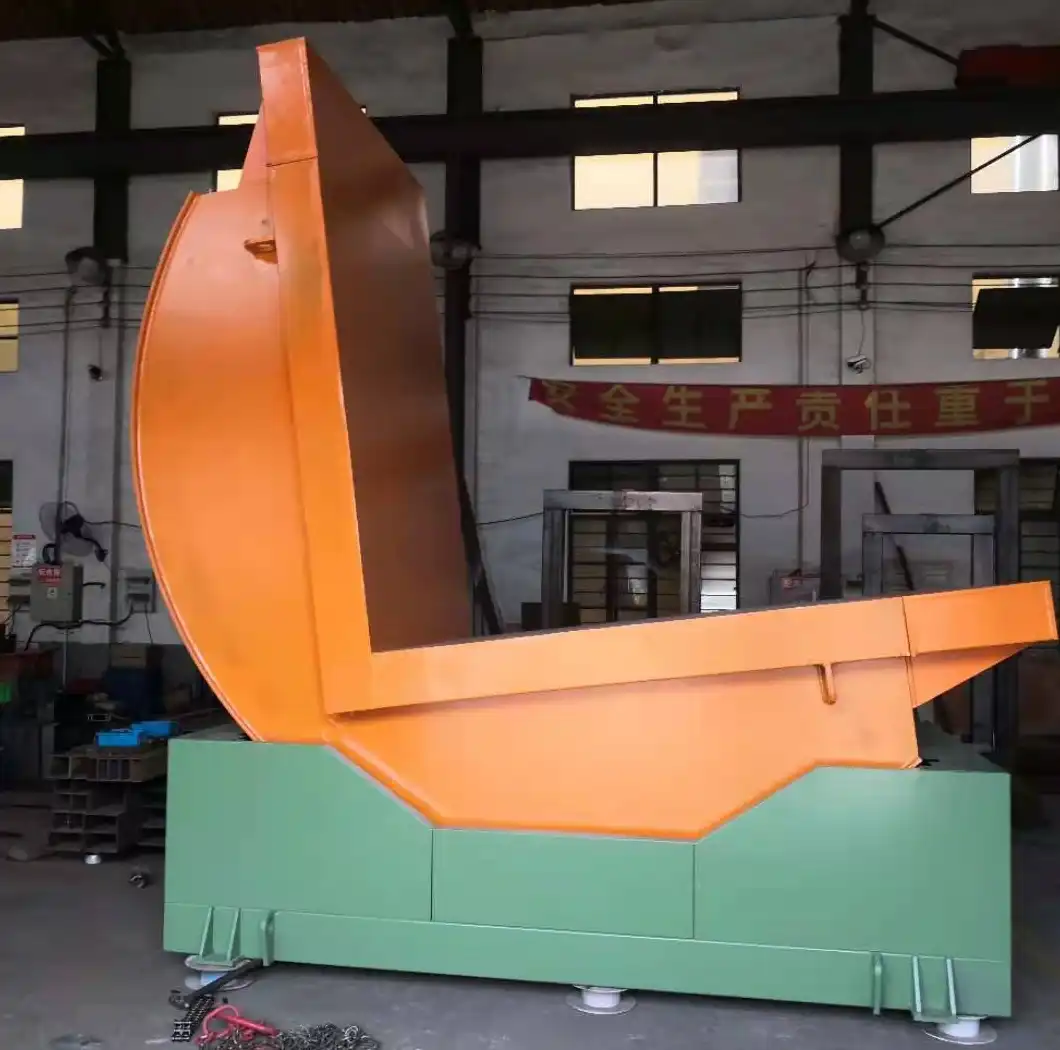
Coil upenders are specialized material handling machines that safely rotate and reposition coils from horizontal to vertical orientation, solving critical production bottlenecks in Southeast Asia's non-ferrous metal facilities. Key benefits include:
- 30-50% faster coil positioning compared to manual methods
- Elimination of manual handling injuries in coil transfer operations
- Reduced product damage through controlled, precise rotation movements
Transition Paragraph:
If you're considering automating your coil handling process, you probably have several key questions about how upenders can specifically benefit your Southeast Asian operation. Let's explore the most critical aspects that plant managers like you need to understand before making this important investment decision.
1. How Can Coil Upenders Solve Specific Production Challenges in Southeast Asian Non-Ferrous Plants?
Leading Paragraph:
Imagine your workers struggling to manually flip a 3-ton aluminum coil in the humid Southeast Asian climate. The risk of injury is high, the process is slow, and the potential for damaging expensive materials is constant. This scenario plays out daily in factories across Thailand, Vietnam, and Indonesia where non-ferrous metal production is growing rapidly but material handling technology hasn't kept pace.
Snippet Paragraph:
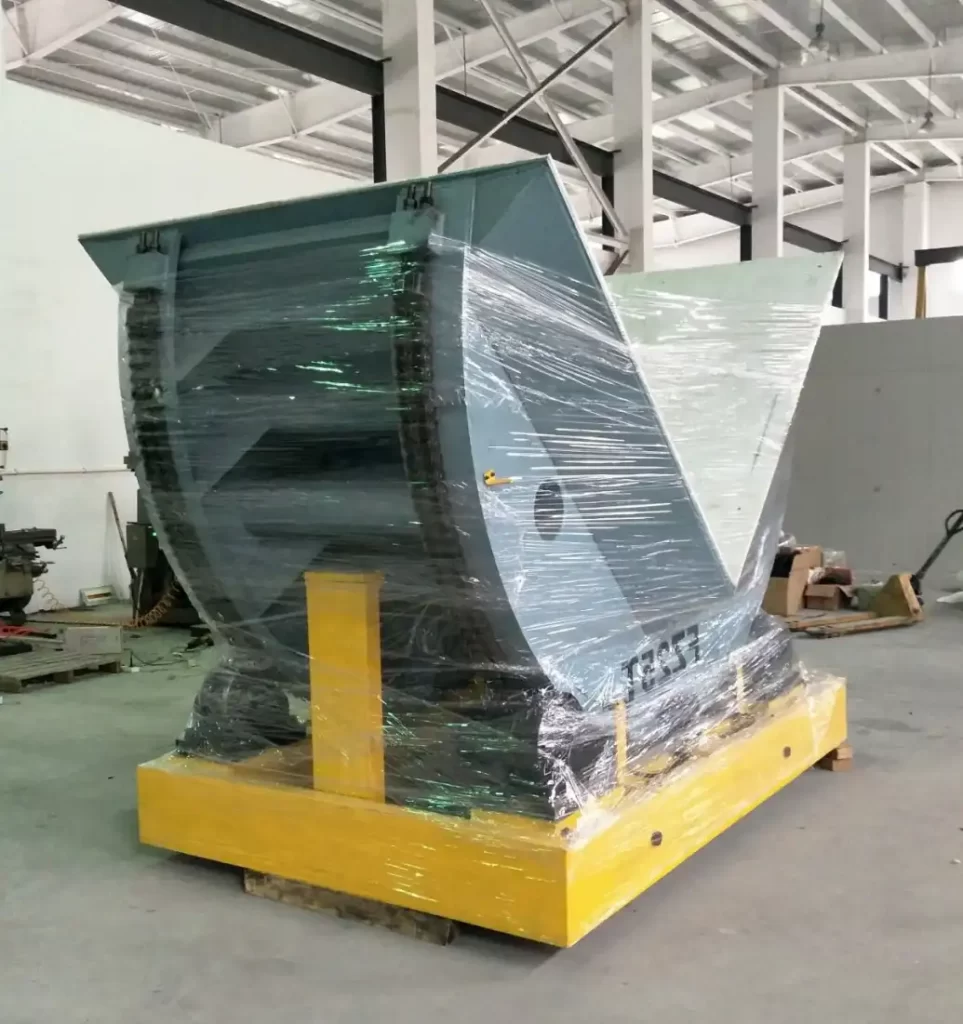
Coil upenders directly address Southeast Asia's unique production challenges by automating the most dangerous and time-consuming aspect of coil handling. According to Randal Liu's experience with regional manufacturers, "Proper upender implementation typically reduces coil handling time by 40% and eliminates manual flipping injuries entirely." The technology specifically solves:
- High humidity affecting manual grip and safety
- Labor shortages requiring fewer workers per shift
- Increasing quality standards demanding scratch-free surfaces
Dive Deeper Content:
Specific Regional Challenges and Solutions
Southeast Asian non-ferrous plants face unique operational hurdles that coil upenders are specifically designed to overcome. The tropical climate, combined with rapid industry growth, creates distinct pain points that European or North American equipment isn't always optimized to address.
🏭 Climate Adaptation Features
The high humidity and temperatures in countries like Malaysia and Philippines require special considerations:
- Corrosion-resistant materials: Stainless steel components prevent rust in humid environments
- Enhanced grip surfaces: Specialized contact pads maintain secure hold despite moisture
- Temperature-compensated hydraulics: Consistent performance in 30-35°C operating conditions
According to installation data from SHJLPACK's regional deployments, plants using climate-adapted upenders experience 25% fewer maintenance issues compared to standard models.
💰 Labor Efficiency Calculations
With rising wages and skilled worker shortages across Southeast Asia, automation becomes increasingly cost-effective:
| Labor Scenario | Manual Handling | With Coil Upender | Savings |
|---|---|---|---|
| Workers Required | 4 operators | 1 operator | 3 workers |
| Time per Coil | 15-20 minutes | 3-5 minutes | 70-80% faster |
| Monthly Labor Cost | $4,000-$5,000 | $1,200-$1,500 | $2,800-$3,500 |
| Annual Savings | - | - | $33,600-$42,000 |
⚡ Quality Protection Systems
Non-ferrous metals like aluminum and copper are particularly susceptible to surface damage that affects product value:
- Scratch prevention: Polyurethane contact surfaces eliminate metal-to-metal contact
- Controlled rotation: Precision hydraulic control prevents sudden movements
- Alignment guides: Laser positioning ensures perfect coil placement every time
A Thai aluminum processor reported reducing surface rejection rates from 3.2% to 0.4% after implementing SHJLPACK's upender system, saving approximately $18,000 monthly in material costs.
Regional Success Patterns
Based on Randal Liu's work with 12 Southeast Asian non-ferrous plants over the past three years, successful upender implementations follow clear patterns:
- Phased implementation starting with highest-volume production lines
- Operator training programs adapted to local workforce skill levels
- Preventive maintenance schedules accounting for regional climate conditions
- Spare parts inventory strategically located within the region
Vietnamese copper coil manufacturers using this approach typically achieve full ROI within 14-18 months, with one Hanoi-based plant reporting 47% productivity increase across their winding department.
2. What Are the 5 Key Technical Features to Evaluate When Selecting Coil Upenders for Non-Ferrous Applications?
Leading Paragraph:
Walking through a equipment showroom or browsing supplier websites can be overwhelming when every company claims to have the "best" coil upender. As someone responsible for your plant's efficiency and budget, you need concrete criteria to separate marketing hype from genuine technical advantages that will deliver real results in your non-ferrous operation.
Snippet Paragraph:
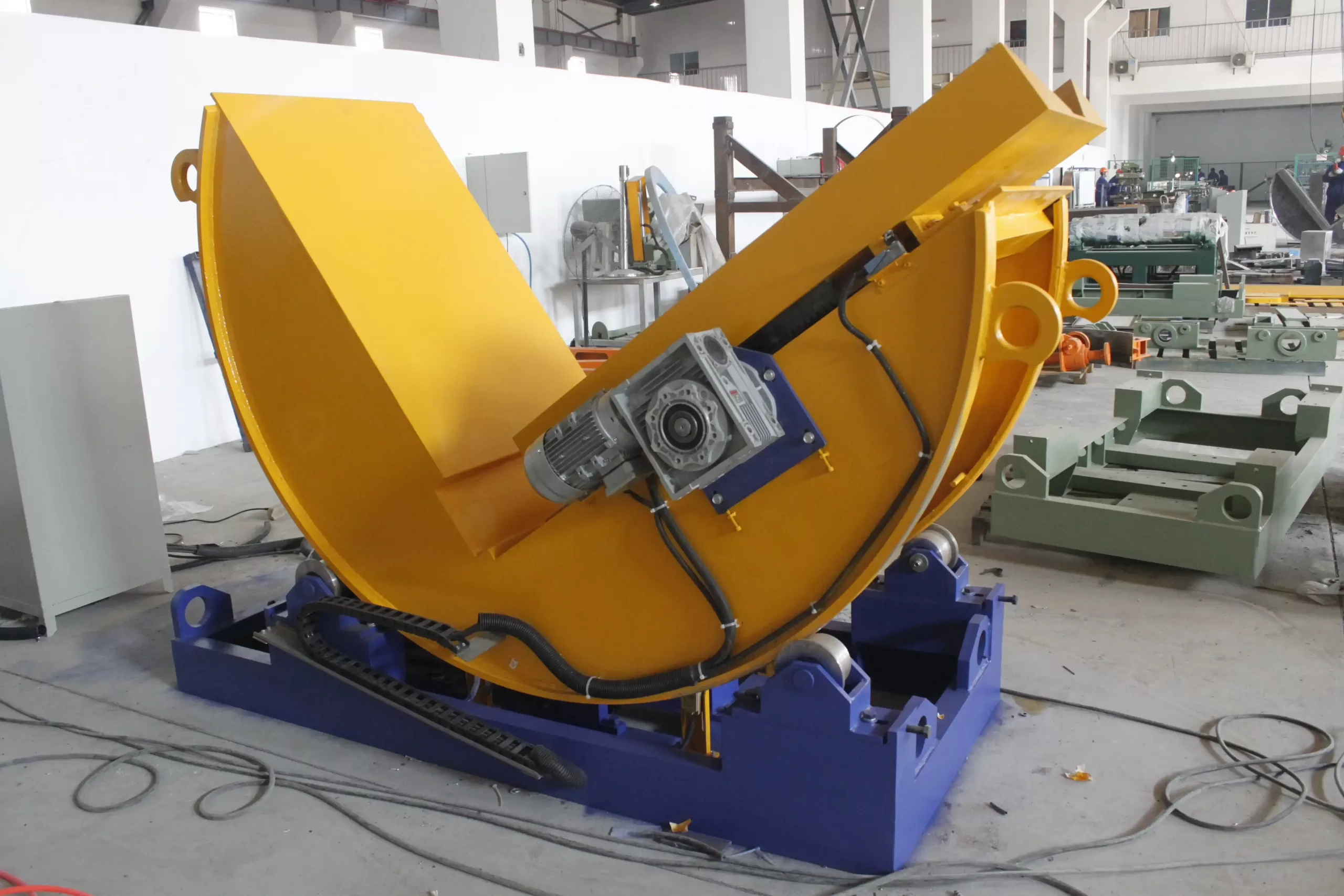
The five most critical technical features for non-ferrous coil upenders are lifting capacity, rotation control precision, contact surface materials, automation integration capability, and safety systems. SHJLPACK's engineering team emphasizes that "for aluminum and copper applications, control precision and surface protection are even more important than sheer lifting capacity" to prevent expensive material damage.
Dive Deeper Content:
Critical Technical Evaluation Framework
Selecting the right coil upender requires understanding how technical specifications translate to real-world performance in non-ferrous environments. Based on SHJLPACK's testing and client feedback, here are the features that truly matter:
### 1. Lifting Capacity & Range
While maximum capacity gets most attention, the working range is equally important:
| Capacity Tier | Typical Applications | SHJLPACK Models | Key Considerations |
|---|---|---|---|
| 1-5 tons | Aluminum foil, electrical copper | AU-1500 to AU-5000 | Precision control critical |
| 5-15 tons | Standard aluminum coils, brass | AU-8000 to AU-15000 | Most common range |
| 15-30 tons | Heavy copper, industrial aluminum | AU-20000 to AU-30000 | Foundation requirements |
According to industry data, 73% of Southeast Asian non-ferrous plants require capacities between 5-15 tons, making this the most important range for cost-effective solutions.
### 2. Rotation Control Precision
Non-ferrous coils demand exceptional control to prevent surface damage:
- Hydraulic vs. electric drive: Hydraulic offers smoother acceleration for delicate materials
- Positioning accuracy: Look for ±1° rotation control for perfect alignment
- Speed variability: Multiple speed settings accommodate different coil types
- Anti-sway technology: Prevents pendulum effect during rotation
SHJLPACK's proprietary "SoftStart" hydraulic system reduces initial movement jerk by 60% compared to standard systems, significantly reducing the risk of coil surface damage.
### 3. Contact Surface Materials
The points where the upender touches the coil determine surface quality:
- Polyurethane pads: Standard for most non-ferrous applications
- Specialized rubber compounds: For ultra-sensitive surfaces
- Custom contouring: Matches specific coil dimensions
- Quick-change systems: Allows rapid adaptation to different products
### 4. Automation Integration Capability
Modern plants require equipment that connects to existing systems:
- PLC compatibility: Siemens, Allen-Bradley, or Mitsubishi interfaces
- IoT readiness: Data output for production monitoring
- Safety system integration: Connects with plant emergency stops
- Maintenance alerts: Predictive maintenance capabilities
### 5. Comprehensive Safety Systems
Beyond basic requirements, look for:
- Dual-hand operation: Requires both hands occupied during cycle start
- Emergency reverse: Immediate direction reversal capability
- Load sensing: Automatic shutdown if load shifts unexpectedly
- Protected hydraulics: Leak detection and pressure monitoring
A Malaysian aluminum plant reported that SHJLPACK's advanced safety features helped them pass a rigorous safety audit with zero violations, avoiding approximately $15,000 in potential compliance upgrade costs.
3. Which Coil Upender Models Offer the Best ROI for Medium-Sized Southeast Asian Plants?
Leading Paragraph:
As a plant manager, you're constantly balancing equipment costs against operational benefits. You've probably seen upender prices ranging from $25,000 to over $100,000 and wondered which investment level makes sense for your specific operation. The answer depends on your production volume, coil types, and growth projections.
Snippet Paragraph:
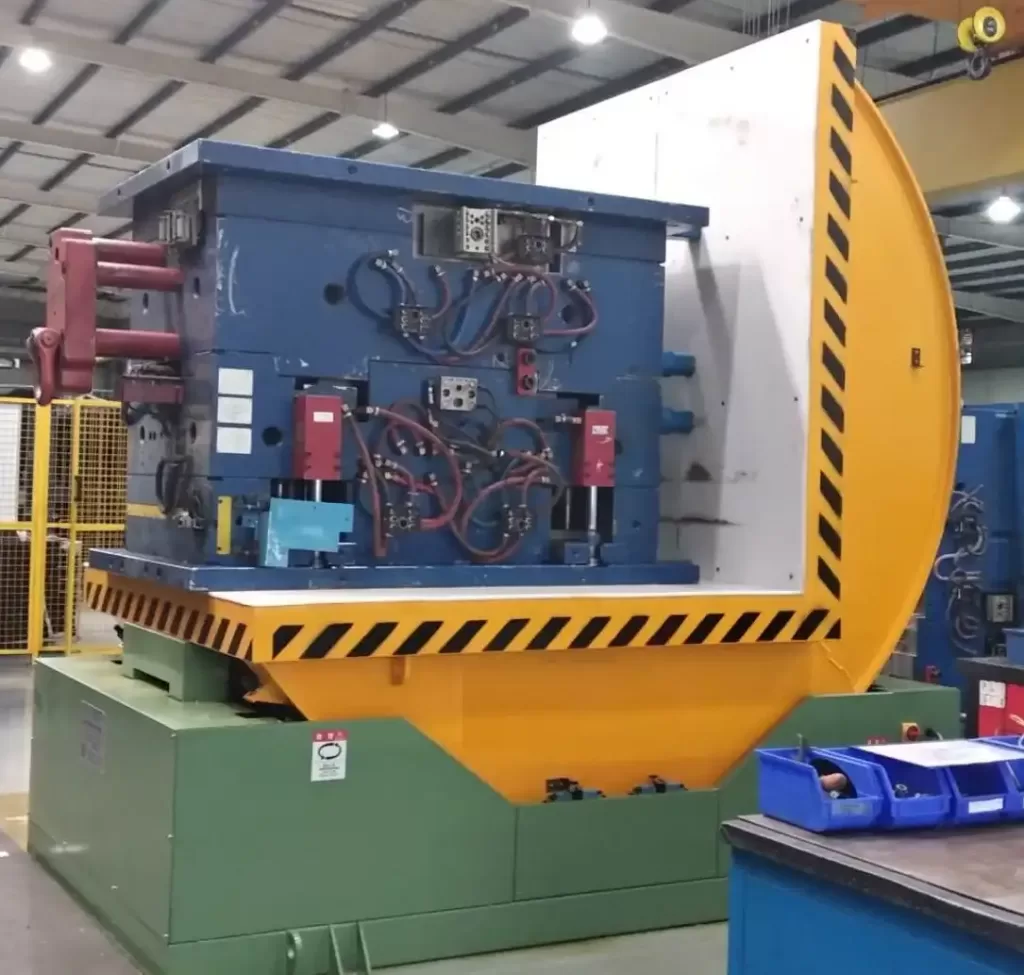
For medium-sized Southeast Asian non-ferrous plants processing 100-500 coils daily, semi-automatic upenders in the $45,000-$65,000 range typically deliver the best ROI. SHJLPACK's AU-8000 and AU-12000 models are specifically engineered for this market segment, offering the optimal balance of automation and affordability with typical payback periods of 12-18 months.
Dive Deeper Content:
ROI Analysis Across Equipment Tiers
Understanding the true cost of ownership requires looking beyond the initial purchase price. Based on SHJLPACK's client data from across Southeast Asia, here's how different upender categories perform financially:
### Investment Level Comparison
| Model Category | Price Range | Best For | Daily Capacity | ROI Period | Key Differentiators |
|---|---|---|---|---|---|
| Basic Semi-Auto | $25,000-$40,000 | Small plants | 50-150 coils | 18-24 months | Manual positioning, basic safety |
| Recommended Tier | $45,000-$65,000 | Medium plants | 150-400 coils | 12-18 months | Auto positioning, advanced safety |
| Full Automation | $70,000-$100,000 | Large plants | 400-800 coils | 24-36 months | Conveyor integration, full IoT |
### Case Study: Indonesian Copper Processor
🏭 Medium Copper Plant in Surabaya
- Challenge: Manual coil flipping causing 2-3 injuries annually, production bottleneck limiting output
- Solution: SHJLPACK AU-10000 with semi-automatic positioning
- Results:
- Labor: Reduced from 4 operators to 1 per shift
- Efficiency: Coil handling time decreased from 18 to 4 minutes
- Safety: Zero flipping injuries in 24 months post-installation
- ROI: 14 months through labor savings and increased output
### Total Cost of Ownership Breakdown
Many plant managers focus only on purchase price, but the real financial picture includes several additional factors:
💰 Operational Cost Analysis
- Energy consumption: $800-1,200 annually depending on usage
- Preventive maintenance: $1,500-2,000 annually (SHJLPACK service contract)
- Spare parts: $500-1,000 annually after warranty period
- Operator training: One-time $2,000-3,000 investment
📊 ROI Calculation Example
For a typical Vietnamese aluminum plant processing 250 coils daily:
Current Manual Costs
- 4 operators × $1,800/month = $7,200 monthly labor
- Product damage = $2,500 monthly (1.2% rejection rate)
- Injury-related costs = $800 monthly average
- Total monthly cost: $10,500
With SHJLPACK AU-8000
- 1 operator × $2,000/month = $2,000 monthly labor
- Product damage = $400 monthly (0.2% rejection rate)
- Injury-related costs = $0
- Equipment payment = $2,800 monthly (48-month financing)
- Total monthly cost: $5,200
Monthly savings: $5,300 | Annual savings: $63,600 | ROI period: 14 months
### Regional Financing Considerations
Southeast Asian plants often have access to special financing programs:
- Government automation subsidies: Thailand's BOI offers 50-100% import duty exemption
- Manufacturer financing: SHJLPACK offers 12-48 month payment plans
- Local bank programs: Special rates for manufacturing equipment upgrades
According to Randal Liu's experience, "Plants that leverage available financing typically achieve positive cash flow within 3-6 months, even while making equipment payments."
4. How Does Proper Coil Upender Integration Impact Overall Production Line Efficiency?
Leading Paragraph:
You might think adding an upender simply automates one step in your process, but the right integration actually transforms your entire production flow. I've seen plants where upenders became the catalyst for comprehensive efficiency improvements, creating ripple effects that boosted performance across multiple departments.
Snippet Paragraph:
Proper coil upender integration typically increases overall production line efficiency by 18-27% by eliminating bottlenecks and enabling continuous material flow. The most significant improvements come from reducing waiting time between processes, minimizing manual handling interventions, and enabling optimized workstation layouts that keep coils moving smoothly through production stages.
Dive Deeper Content:
Production Flow Transformation
Integrating a coil upender isn't just about replacing manual labor—it's about reengineering your material flow for maximum efficiency. Based on SHJLPACK's production line optimization projects, here's how proper integration creates compound benefits:
### Before and After Analysis
Traditional Manual Process:
Unloading → Storage → Manual Move → Manual Flip → Positioning → Processing
    ↓           ↓          ↓           ↓           ↓           ↓
  15 min      Varies     20 min      15 min      10 min     Processing
Optimized Automated Flow:
Unloading → Upender → Direct to Processing
    ↓          ↓            ↓
  15 min     3 min      Processing
### Workstation Layout Optimization
The space savings and layout improvements often deliver unexpected benefits:
- Footprint reduction: Upenders typically require 6-8m² vs. 12-15m² for manual flipping areas
- Ergonomic improvements: Operators work at optimal height without bending or stretching
- Safety zone creation: Clear separation between manual and automated areas
- Future expansion: Modular design allows for additional automation integration
A Philippine brass manufacturer redesigned their layout during upender installation and achieved 22% better space utilization while adding two new processing stations in the same floor area.
### Quantitative Efficiency Gains
According to production data from SHJLPACK clients, integrated upender systems deliver measurable improvements across multiple metrics:
| Efficiency Metric | Manual Process | With Upender | Improvement |
|---|---|---|---|
| Coils per hour | 3-4 | 12-15 | 300-375% |
| Operator utilization | 25% value-added | 85% value-added | 340% better |
| Shift changeover | 15-20 minutes | 3-5 minutes | 70-80% faster |
| Unexpected downtime | 8-12 hours monthly | 1-2 hours monthly | 85% reduction |
### Integration Best Practices
Based on successful implementations across Southeast Asia, the most effective integration approaches include:
- Process mapping beforehand: Document every step of current material flow
- Buffer positioning: Place upenders with minimal travel distance to next process
- Operator involvement: Include floor operators in layout planning
- Phased implementation: Start with one line, refine approach, then expand
- Data collection: Establish baseline metrics before installation
### Cross-Department Impact
The benefits of proper upender integration extend beyond the production floor:
- Quality department: Consistent positioning reduces measurement variations
- Maintenance team: Predictable maintenance vs. emergency repairs
- Safety committee: Eliminates high-risk manual handling tasks
- HR department: Reduced worker compensation claims and turnover
According to Randal Liu's observation, "Plants that approach upenders as system improvements rather than equipment replacements typically achieve 30-40% greater overall benefits than those focusing only on the direct replacement of manual flipping."
Conclusion
Coil upenders transform non-ferrous production in Southeast Asia by solving critical bottlenecks while enhancing safety and reducing costs. For complete packaging solutions, explore our integrated steel coil packing line systems.
Frequently Asked Questions
Q: What maintenance do coil upenders require in high-humidity Southeast Asian environments?
A: Coil upenders in tropical climates need monthly inspection of hydraulic systems, regular corrosion protection on exposed surfaces, and specialized filtration to handle moisture in hydraulic fluid. SHJLPACK models include climate-adapted sealing and stainless components that reduce maintenance frequency by 40% compared to standard designs.
Q: How long does installation and operator training typically take for new coil upender systems?
A: Most medium-capacity upenders require 3-5 days for installation and 2-3 days for operator training. SHJLPACK's training programs are specifically designed for Southeast Asian workforce skill levels and include multilingual documentation and hands-on practice with actual production coils.
Q: Can coil upenders handle both aluminum and copper coils with the same equipment?
A: Yes, with proper configuration. The key differences are contact surface materials and rotation speed settings. Aluminum requires softer contact surfaces and slower initial movement, while copper can tolerate slightly firmer handling. SHJLPACK upenders include preset programs for different materials.


