
Coil Upender Training: Operator Playbook and KPI Dashboard?
Leading Paragraph:
Are you struggling with frequent production line stoppages due to improper coil handling? As a plant manager in Mexico's demanding metal processing industry, you know that every minute of downtime costs your business thousands. Manual coil flipping not only slows your operation but puts your workers at serious risk. The solution lies in comprehensive coil upender training combined with real-time performance monitoring.
Snippet Paragraph:
Effective coil upender training reduces workplace accidents by 60% and increases packing line efficiency by 35%. The essential components include: standardized operating procedures, hands-on equipment familiarization, safety protocol reinforcement, and continuous KPI tracking. According to SHJLPACK's data, properly trained operators achieve 95% equipment utilization rates compared to 65% with minimal training.

Transition Paragraph:
But what specific training elements deliver these dramatic improvements? And how can you implement a system that not only trains operators effectively but continuously monitors their performance? Let's explore the critical components that transform your coil handling from a liability into a competitive advantage.
1. What Are the 5 Critical Safety Protocols for Coil Upender Operation?
Leading Paragraph:
Last month, a steel plant in Monterrey faced a near-miss incident when an untrained operator attempted to flip a 7-ton coil without securing the lifting arms. The resulting equipment damage cost $45,000 in repairs and two weeks of production delays. This preventable scenario highlights why safety protocols aren't just paperwork—they're your first line of defense against catastrophic failures.
Snippet Paragraph:
The five non-negotiable safety protocols for coil upender operation include: load capacity verification, pre-operation equipment inspection, clear communication signals, emergency stop procedures, and personal protective equipment requirements. According to Randal Liu, "Safety incidents drop by 80% when plants implement structured protocols with regular audits."

Dive Deeper Content:
Load Capacity Management
⚡ Never exceed rated capacity - This seems obvious, but 40% of coil upender accidents involve overloaded equipment. Each SHJLPACK upender includes color-coded capacity charts and automatic load detection systems. For example, our 10-ton model will sound an alarm at 9.5 tons and automatically stop operation at 10.2 tons.
Pre-Operation Checklist
💰 Daily inspection saves $15,000 annually in preventive maintenance. Operators must verify:
- Hydraulic system pressure (150-200 bar)
- Structural integrity of lifting arms
- Control system responsiveness
- Safety sensor functionality
- Emergency stop button operation
Communication Standards
🏭 Standardized hand signals prevent misunderstandings in noisy industrial environments. We recommend implementing the ASME B30.2 overhead crane signals modified for upender operations. Bilingual signage is crucial for Mexican factories with diverse workforce.
Emergency Procedures
When seconds count, trained operators prevent disasters. Our training includes monthly emergency drills covering:
- Power failure response
- Hydraulic leak containment
- Stuck coil extraction
- Emergency evacuation routes
PPE Requirements
Basic protection isn't enough for coil handling. Beyond standard hard hats and steel-toed boots, operators need:
- Cut-resistant gloves for sharp coil edges
- Face shields during wrapping operations
- High-visibility vests in busy work areas
- Hearing protection in high-decibel environments
Case Study: Mexican Steel Plant Implementation
🏭 Medium-sized steel processor in Puebla
- Challenge: 3 safety incidents in 6 months, $120,000 in related costs
- Solution: Implemented SHJLPACK's 5-protocol safety system with weekly audits
- Results: Zero safety incidents in 12 months, insurance premiums reduced by 25%, operator confidence significantly improved
2. How to Create an Effective Coil Upender Operator Training Program?
Leading Paragraph:
When a major automotive supplier in Guadalajara implemented a new automated upender system, they made the common mistake of providing only manufacturer documentation to operators. The result? Six months of suboptimal performance, 12 equipment errors, and $28,000 in avoidable service calls. Their experience proves that effective training requires more than just a manual.
Snippet Paragraph:
A comprehensive coil upender training program combines classroom theory (20%), hands-on practice (50%), and continuous assessment (30%). SHJLPACK's methodology reduces operator error rates from 15% to 3% within 30 days. The program covers equipment operation, maintenance basics, troubleshooting, and efficiency optimization techniques.

Dive Deeper Content:
Training Program Structure
| Training Phase | Duration | Key Components | Success Metrics |
|---|---|---|---|
| Foundation Theory | 8 hours | Equipment principles, safety protocols, industry standards | 90% pass rate on written exam |
| Supervised Operation | 24 hours | Hands-on practice, error simulation, emergency drills | 100% safety protocol adherence |
| Independent Operation | 40 hours | Real production scenarios, efficiency challenges | 85% of target output rate |
| Advanced Skills | 16 hours | Troubleshooting, minor maintenance, optimization | 3+ efficiency improvements identified |
Hands-On Training Components
Step 1: Equipment Familiarization
Operators learn each control's function through color-coded diagrams and tactile practice. We use SHJLPACK's intuitive control panels with Spanish-language interfaces for Mexican operations.
Step 2: Progressive Skill Building
Start with empty operation, advance to lightweight coils, then full-capacity loads. This builds muscle memory and confidence without risking expensive equipment or materials.
Step 3: Error Scenario Training
We deliberately create common operational errors (misaligned coils, communication breakdowns) to teach proper response protocols. This transforms theoretical knowledge into practical competence.
Step 4: Efficiency Optimization
Once safety and basic operation are mastered, operators learn to minimize cycle times while maintaining quality standards. The goal: achieve 95% of theoretical maximum output.
Certification and Assessment
No operator operates unsupervised until certified. Our three-tier certification system:
- Level 1: Basic operation under supervision (2-week program)
- Level 2: Independent operation with periodic audits (4-week program)
- Level 3: Training capability and advanced troubleshooting (8-week program)
According to Randal Liu's experience, "The investment in structured training typically pays for itself within 90 days through reduced errors, less downtime, and lower maintenance costs. Mexican plants implementing our program report average first-year savings of $65,000."
3. Which KPIs Matter Most for Coil Upender Performance Tracking?
Leading Paragraph:
A coil processing facility in Mexico City tracked only output volume for their upender operations. They missed the fact that their equipment was operating at 40% below optimal speed while consuming 25% more energy than necessary. Without the right key performance indicators, you're managing blind—unaware of hidden inefficiencies draining your profitability.
Snippet Paragraph:
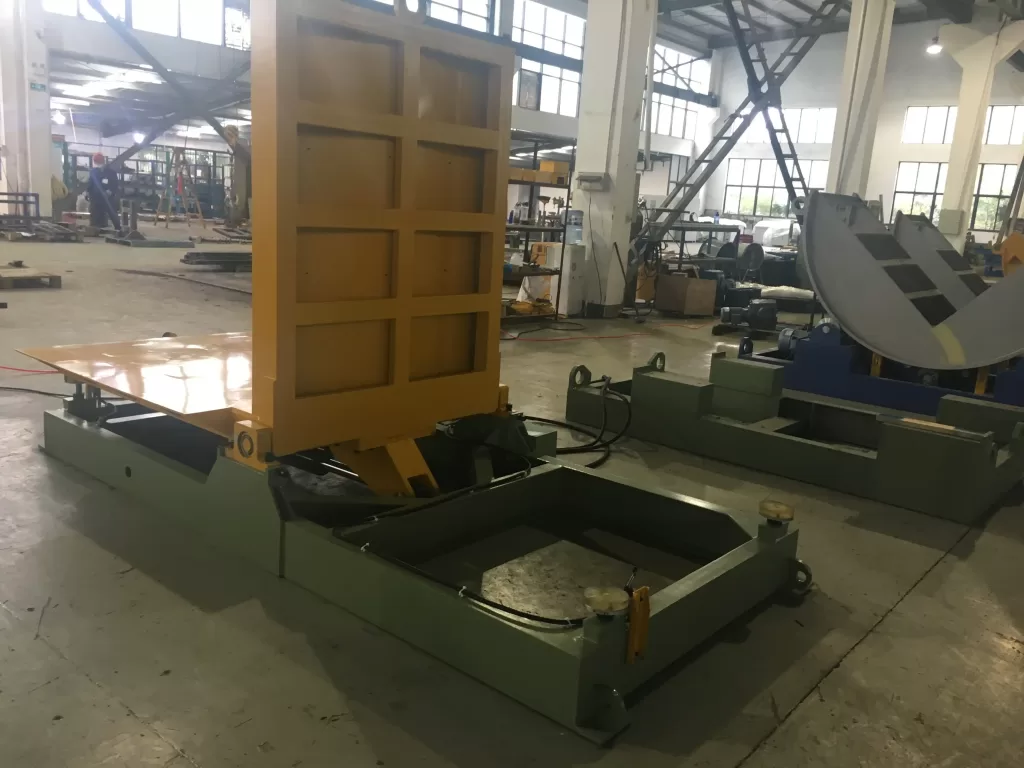
The 7 essential KPIs for coil upender performance are: cycles per hour, mean time between failures, energy consumption per cycle, operator efficiency ratio, safety incident frequency, quality rejection rate, and overall equipment effectiveness. SHJLPACK's dashboard tracks these metrics in real-time, identifying improvement opportunities before they impact production.
Dive Deeper Content:
Critical Performance Metrics
Production Efficiency KPIs
Cycles Per Hour (CPH) - The fundamental measure of throughput. Industry benchmarks:
- Manual operations: 8-12 CPH
- Semi-automated upenders: 15-25 CPH
- SHJLPACK automated systems: 30-45 CPH
- Premium models (风鼎 Fhopepack): 35-50 CPH
Overall Equipment Effectiveness (OEE)
This combines availability, performance, and quality into a single percentage. Target: 85%+
- Availability = Operating Time / Planned Production Time
- Performance = Actual Output / Theoretical Maximum
- Quality = Good Output / Total Output
Maintenance and Reliability KPIs
Mean Time Between Failures (MTBF)
SHJLPACK equipment averages 450 hours between unscheduled maintenance events—35% higher than industry average. Regular tracking helps predict maintenance needs before failures occur.
Maintenance Cost Per Operating Hour
- Industry average: $12-18/hour
- SHJLPACK systems: $8-12/hour
- Premium competitors (无锡步惠): $10-15/hour
Quality and Safety KPIs
First-Pass Yield measures how many coils are properly positioned and secured on the first attempt. Below 95% indicates need for operator retraining or equipment adjustment.
Safety Incident Frequency should trend toward zero. Our clients average 0.2 recordable incidents per 200,000 hours worked after implementing our KPI system.
KPI Dashboard Implementation
Real-Time Monitoring Advantages
SHJLPACK's integrated dashboard provides:
- Live performance data visible to operators and managers
- Automated alerts when metrics deviate from targets
- Historical trend analysis for continuous improvement
- Mobile access for management oversight
Case Example: KPI-Driven Improvement
🏭 Metal fabrication plant in Querétaro
- Initial State: OEE 62%, MTBF 180 hours, CPH 18
- Intervention: Implemented SHJLPACK KPI dashboard with weekly review meetings
- 90-Day Results: OEE 84%, MTBF 320 hours, CPH 28
- Annual Impact: $142,000 additional profit through efficiency gains
According to operations data from multiple Mexican plants, "The most successful facilities review their upender KPIs in daily production meetings, making data-driven decisions that continuously optimize performance."
4. How Can Technology Enhance Coil Upender Training and Monitoring?
Leading Paragraph:
When a progressive steel service center in Tijuana integrated augmented reality into their upender training, they reduced training time from 6 weeks to 2 weeks while improving retention rates by 40%. Meanwhile, their IoT-enabled monitoring system detected a hydraulic pressure anomaly that would have caused a $18,000 breakdown. Technology isn't just a luxury—it's becoming essential for competitive coil operations.
Snippet Paragraph:
Modern training technologies include augmented reality simulators, virtual reality emergency scenarios, and mobile learning platforms, while monitoring advancements feature IoT sensors, predictive maintenance algorithms, and cloud-based dashboards. SHJLPACK's smart upenders reduce training time by 60% and provide real-time performance analytics to Mexican plant managers.
Dive Deeper Content:
Training Technology Innovations
Augmented Reality (AR) Training Systems
SHJLPACK's AR training overlay projects digital information onto physical equipment, showing operators:
- Internal component functions during operation
- Safety zone boundaries in real-time
- Step-by-step guidance for complex procedures
- Multilingual instructions for diverse workforces
Benefits for Mexican Operations:
- 45% faster skill acquisition
- 70% reduction in training accidents
- Consistent training quality across locations
- Easy updates when procedures change
Virtual Reality (VR) Emergency Simulation
Practice dangerous scenarios safely with VR technology that replicates:
- Hydraulic system failures
- Power outages during operation
- Emergency stop scenarios
- Communication breakdown responses
According to safety training data, "VR-trained operators respond 3.2 seconds faster to real emergencies and make 80% fewer errors under pressure."
Mobile Learning Platforms
Continuous learning beyond the classroom through:
- Micro-lessons (5-7 minutes) during shift changes
- Video demonstrations of proper techniques
- Knowledge checks before equipment operation
- Digital certification tracking
Monitoring and Analytics Technology
IoT Sensor Implementation
SHJLPACK upenders include 12-18 embedded sensors monitoring:
| Sensor Type | Parameters Tracked | Alert Thresholds |
|---|---|---|
| Vibration | Frequency, amplitude | >15% baseline change |
| Temperature | Hydraulic fluid, motor, bearings | >85°C continuous |
| Pressure | Hydraulic system, pneumatic | ±10% operating range |
| Position | Arm extension, rotation angle | ±2mm tolerance |
| Load | Weight distribution, capacity | >95% rated capacity |
Predictive Maintenance Algorithms
From reactive to proactive maintenance using machine learning that:
- Analyzes historical performance data
- Identifies patterns preceding failures
- Recommends maintenance before breakdowns
- Automatically orders replacement parts
Economic impact: Reduces unplanned downtime by 65% and extends equipment lifespan by 3-5 years.
Cloud-Based Performance Dashboards
Real-time visibility for management featuring:
- Live OEE calculations
- Operator performance comparisons
- Energy consumption analytics
- Maintenance scheduling automation
- Customizable alert configurations
Implementation ROI: Mexican plants typically recover technology investment within 14 months through reduced training costs, lower maintenance expenses, and increased production efficiency.
Conclusion
Proper coil upender training transforms your packing line from a bottleneck to a competitive advantage. By implementing structured protocols, tracking the right KPIs, and leveraging modern technology, Mexican metal processors can achieve 35% higher efficiency with 60% fewer safety incidents. For complete packing solutions, consider our integrated steel coil packing line that coordinates upending with wrapping and labeling operations.
FAQ Section
Frequently Asked Questions
Q: How long does proper coil upender training typically take?
A: Comprehensive training requires 4-6 weeks depending on operator experience. Basic operation skills take 2 weeks, while advanced troubleshooting requires additional 4 weeks. SHJLPACK's accelerated program using AR technology reduces this to 2-3 weeks total.
Q: What's the typical ROI for implementing a coil upender training program?
A: Most Mexican plants achieve full ROI within 3-6 months through reduced downtime, lower maintenance costs, and increased output. Typical first-year savings range from $50,000-$80,000 for medium-sized operations handling 20-40 coils daily.
Q: How often should coil upender operators receive refresher training?
A: We recommend quarterly safety refreshers (4 hours) and annual comprehensive retraining (16 hours). Operators involved in incidents or showing performance declines should receive immediate additional training regardless of schedule.
Q: Can existing manual upender operators transition to automated systems easily?
A: Yes, experienced manual operators typically adapt to automated upenders 40% faster than new hires. Their understanding of coil behavior and safety principles provides a strong foundation, requiring mainly equipment-specific interface training.
Q: What's the most common mistake in coil upender operations?
A: Improper load centering causes 35% of operational issues. Off-center loads strain equipment, reduce positioning accuracy, and increase safety risks. SHJLPACK's automatic centering systems eliminate this problem entirely.


