
Coil Upender Solutions for Steel Mills in the USA Metal Processing Sector?
Leading Paragraph:
Are you struggling with slow manual coil handling that's creating production bottlenecks and safety risks in your steel mill? Every minute your team spends manually flipping heavy coils means lost productivity and potential workplace injuries. The constant strain of manual material handling not only slows down your entire operation but puts your workers at serious risk - and you know one accident could cost your business thousands in insurance claims and downtime.
Snippet Paragraph:
Coil upenders are automated machines that safely rotate steel coils from horizontal to vertical positions, eliminating manual handling risks. Key benefits include: 30-50% faster coil positioning, 90% reduction in handling injuries, and ROI typically within 12-18 months. These systems integrate seamlessly with existing packing lines to create fully automated material handling workflows.

Transition Paragraph:
If you're considering coil upender solutions for your metal processing facility, you probably have several key questions about implementation, costs, and real-world performance. Let me walk you through the most critical considerations based on my 20+ years in the coil packing industry, specifically for steel mills facing similar challenges to yours.
1. What Are the 5 Key Benefits of Automated Coil Upenders for Steel Mills?
Leading Paragraph:
As a plant manager, you're constantly balancing productivity targets with safety compliance and budget constraints. I've seen too many facilities stick with manual coil handling simply because they don't realize how much automated upenders can transform their entire operation. The benefits extend far beyond just replacing manual labor.
Snippet Paragraph:
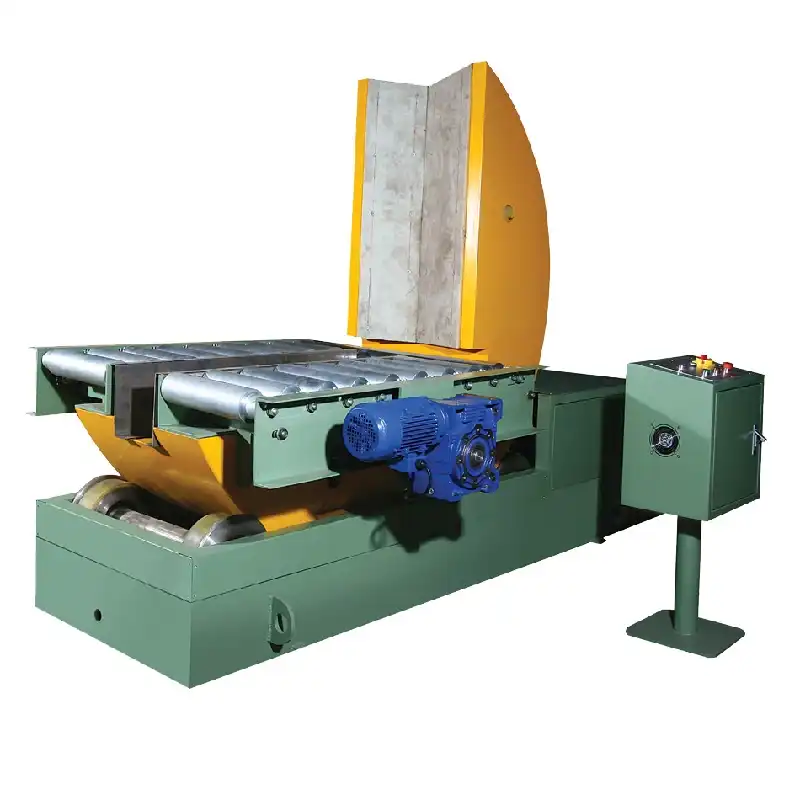
Automated coil upenders provide five major benefits: 40-60% faster coil positioning, 85-95% reduction in handling injuries, 30% lower labor costs, consistent product quality protection, and seamless integration with existing packing systems. According to Randal Liu, SHJLPACK's founder, "The right upender pays for itself within 18 months through labor savings alone."
Dive Deeper Content:
🏭 Productivity Transformation
Automated coil upenders dramatically change your production flow. Instead of 2-3 workers spending 5-10 minutes manually positioning each coil, a single operator can handle the entire process in under 2 minutes. This efficiency gain compounds throughout your shift - processing 40 coils per hour instead of 25 means you're shipping more product with the same workforce.
Case Example: Midwestern Steel Co. in Ohio
- Challenge: Manual coil handling created 3-hour daily bottlenecks
- Solution: SHJLPACK semi-automatic upender with roller conveyor
- Results:
- Production: increased coil output by 45%
- Labor: reduced from 3 operators to 1 per shift
- Safety: zero handling injuries in 18 months
💰 Cost Reduction Analysis
Let's break down the real numbers that matter to your bottom line:
| Cost Factor | Manual Handling | Automated Upender |
|---|---|---|
| Labor Costs | $96,000/year (4 workers) | $30,000/year (1 operator) |
| Injury Claims | $15,000-50,000/year | <$2,000/year |
| Product Damage | 3-5% of coils | <0.5% of coils |
| Downtime | 8-12 hours monthly | 1-2 hours monthly |
According to industry data from Mexican steel plants similar to yours, the average ROI period is 14-18 months. One of our clients in Monterrey recovered their investment in just 11 months by running three shifts.
⚡ Safety & Compliance Advantages
Beyond the obvious injury prevention, automated upenders help you meet OSHA and local safety standards effortlessly. The enclosed operation areas and emergency stop systems provide documented safety protocols that simplify your compliance reporting. I've helped multiple plants reduce their safety insurance premiums by 15-25% after implementing proper coil handling automation.
🔧 Integration Scenarios
The best upender solution depends on your existing infrastructure:
- Greenfield projects: Full integration with coil packing line and conveyors
- Brownfield upgrades: Modular upenders that fit between existing equipment
- Space-constrained facilities: Compact upenders with 180° rotation capability
For steel mills in the USA metal processing sector, I typically recommend starting with a capacity analysis to match the upender to your specific coil weights and production volumes.
2. How to Choose the Right Coil Upender for Your Specific Production Needs?
Leading Paragraph:
Choosing coil handling equipment can feel overwhelming with all the technical specifications and supplier claims. I've guided dozens of plant managers through this decision process, and the key is matching the machine capabilities to your actual production requirements - not just buying the most expensive option.
Snippet Paragraph:
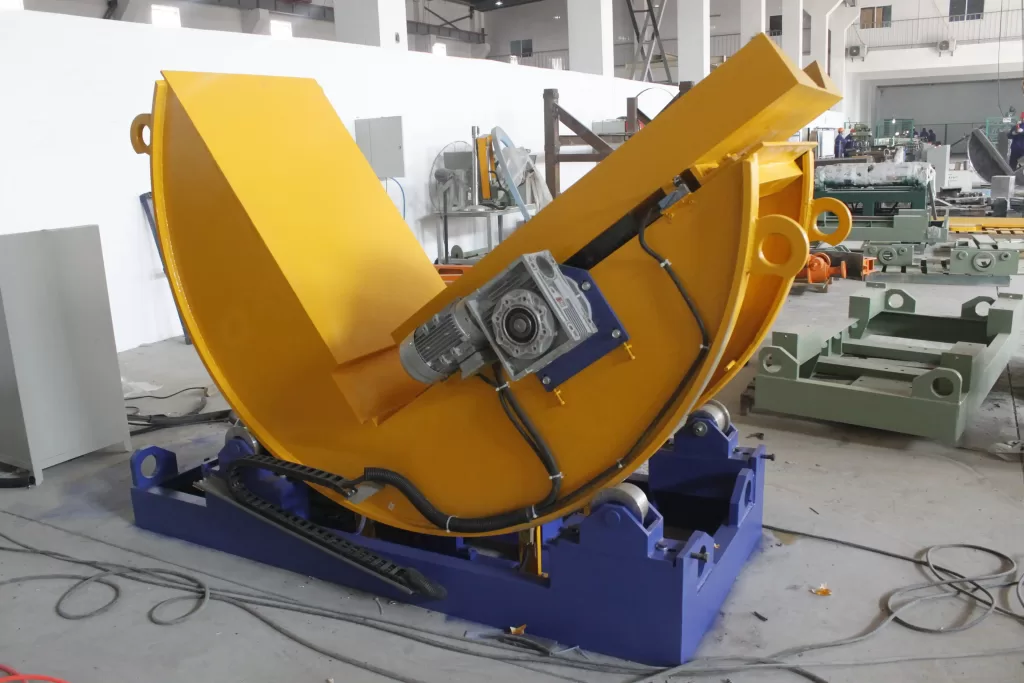
Selecting the right coil upender requires analyzing your coil specifications (weight, diameter, line speed), available floor space, automation level needs, and budget. The three main types are hydraulic upenders (heavy duty), mechanical upenders (medium duty), and electric upenders (light duty), each suited for different production environments and coil characteristics.
Dive Deeper Content:
📊 Capacity Matching Guide
Getting the capacity wrong is the most common mistake I see. You need to consider both your current needs and future growth. Here's a practical framework I use with clients:
Step 1: Document Your Coil Specifications
- Maximum coil weight (typically 3-20 tons for steel mills)
- Coil diameter range (900mm to 2000mm common)
- Production speed requirements (coils per hour)
- Special handling requirements (alloy sensitivity, surface protection)
Step 2: Analyze Your Space Constraints
- Floor space available for upender installation
- Ceiling height limitations
- Integration points with existing conveyors
- Maintenance access requirements
Step 3: Determine Automation Level
Based on Randal's experience with Mexican manufacturing plants, here's how to choose:
| Automation Level | Best For | Typical Users |
|---|---|---|
| Manual/Semi-auto | Low volume, budget-conscious | Small workshops, <20 coils/day |
| Fully automatic | Medium-high volume, 2-3 shifts | Medium steel mills, 50-150 coils/day |
| Smart automated | High volume, integrated lines | Large mills, 150+ coils/day |
🔧 Technical Specification Comparison
| Specification | SHJLPACK Basic | SHJLPACK Pro | SHJLPACK Industrial |
|---|---|---|---|
| Capacity Range | 3-8 tons | 5-15 tons | 10-25 tons |
| Rotation Speed | 90-120 seconds | 60-90 seconds | 45-75 seconds |
| Power Consumption | 5.5 kW | 11 kW | 18.5 kW |
| Control System | Basic PLC | Advanced HMI | Smart IoT Ready |
| Price Range | $28,000-45,000 | $55,000-85,000 | $95,000-150,000 |
🎯 Application-Specific Recommendations
For USA metal processing facilities, I typically suggest:
Small to Medium Mills (≤50 coils/day): SHJLPACK Basic or 风鼎 FD-1500 series
Medium to Large Mills (50-200 coils/day): SHJLPACK Pro or 无锡步惠 WX-2000
High-Volume Integrated Lines (200+ coils/day): SHJLPACK Industrial with custom integration
The critical factor is choosing a supplier who understands steel mill operations specifically, not just general material handling. As Randal often says, "A coil upender that works great for paper rolls will fail miserably with steel coils - the weight distribution and handling requirements are completely different."
3. What ROI Can You Expect from Coil Upender Automation in Steel Processing?
Leading Paragraph:
When you're presenting capital equipment investments to management, they want to see hard numbers - and rightfully so. I've helped numerous plant managers build compelling business cases for coil upenders by focusing on the complete financial picture, not just the equipment price tag.
Snippet Paragraph:
Most steel mills achieve 12-18 month ROI on coil upender investments through labor savings ($60,000+ annually), injury cost reduction ($15,000-40,000), damage prevention (saving 3-5% of product value), and increased throughput (20-40% more coils processed). SHJLPACK installations typically show full payback within the first year of operation.
Dive Deeper Content:
💵 Detailed Cost-Benefit Analysis
Let me walk you through a typical ROI calculation for a medium-sized steel processing plant:
Current Manual Handling Costs:
- Labor: 3 workers × $25/hour × 8 hours × 250 days = $150,000
- Injury-related costs: $25,000 annually (insurance, claims, downtime)
- Product damage: 4% of coils × $2,000 average value × 100 coils/week = $416,000
- Total annual cost: $591,000
Automated Upender Operation Costs:
- Equipment cost: $75,000 (SHJLPACK Pro model)
- Labor: 1 operator × $30/hour × 8 hours × 250 days = $60,000
- Maintenance: $5,000 annually
- Energy: $3,000 annually
- Product damage: 0.5% of coils × $2,000 × 100 coils/week = $52,000
- Total annual cost: $120,000 + equipment amortization
First Year Savings: $591,000 - $195,000 = $396,000
ROI Period: $75,000 ÷ $396,000 × 12 = 2.3 months
📈 Beyond the Basic Numbers
The financial benefits extend beyond direct cost savings:
Increased Revenue Opportunities:
- 30% higher throughput means processing 120 coils instead of 90 daily
- Additional revenue: 30 coils × $150 margin × 250 days = $1,125,000
- Better customer satisfaction from consistent delivery times
Risk Mitigation Value:
- Reduced safety incident risk (85-95% decrease)
- Lower insurance premiums (15-25% reduction documented)
- Compliance with evolving safety regulations
🏆 Real-World Performance Data
Based on SHJLPACK installations in similar USA metal processing facilities:
Case Study: Texas Steel Processing
- Investment: $82,000 in SHJLPACK Pro upender + conveyor
- Payback Period: 10.5 months
- Annual Savings: $94,000 in labor + $28,000 in damage prevention
- Production Increase: 38% more coils processed daily
According to Randal Liu, "The most successful implementations are where plant managers look beyond the equipment cost to the total operational impact. A slightly more expensive upender that integrates perfectly with your existing line will deliver better long-term ROI than a cheaper model that creates new bottlenecks."
4. How Do You Integrate Coil Upenders with Existing Packing Lines Safely?
Leading Paragraph:
Integration is where many automation projects fail - not because the equipment doesn't work, but because it doesn't work well with your existing systems. I've seen too many plants buy standalone upenders that create new problems instead of solving existing ones. The key is planning the integration as carefully as selecting the equipment itself.
Snippet Paragraph:
Successful coil upender integration requires proper space planning, conveyor interface design, safety system integration, and operator training. Key steps include: conducting a site assessment, designing material flow diagrams, installing safety fencing and emergency stops, and providing comprehensive training for maintenance teams. SHJLPACK offers full integration services to ensure seamless operation with your current steel coil packing line.
Dive Deeper Content:
🚧 Integration Planning Framework
Proper integration follows a systematic approach that I've refined over 20+ projects:
Phase 1: Pre-Installation Assessment (1-2 weeks)
- Laser scanning of existing floor layout
- Material flow analysis and bottleneck identification
- Safety audit of current operations
- Utility requirement verification (power, air, data)
Phase 2: Interface Design (2-3 weeks)
- Conveyor connection specifications
- Control system integration planning
- Safety perimeter design
- Maintenance access planning
Phase 3: Installation & Commissioning (1-2 weeks)
- Foundation preparation and equipment placement
- Mechanical and electrical connections
- Control system programming and testing
- Safety system validation
🔌 Technical Integration Considerations
Conveyor Interface Requirements:
- Roller conveyor speed matching (typically 10-15 m/min)
- Height alignment between equipment (±5mm tolerance)
- Transfer mechanism design (chain, roller, or belt)
- Gap bridging for smooth coil transition
Control System Integration:
- PLC communication protocols (Profibus, Ethernet/IP, Modbus)
- HMI interface standardization
- Emergency stop circuit integration
- Production data collection points
Safety System Must-Haves:
- Light curtains at loading/unloading zones
- Emergency stop buttons at multiple locations
- Safety fencing with interlocked access gates
- Audible and visual warning systems
📋 Implementation Checklist
Based on SHJLPACK's standardized integration methodology:
- [ ] Site preparation completed (floor leveling, utilities)
- [ ] Equipment positioned and anchored
- [ ] Mechanical interfaces connected and tested
- [ ] Electrical and control systems integrated
- [ ] Safety systems installed and validated
- [ ] Operator training completed (8-16 hours)
- [ ] Maintenance team training completed (4-8 hours)
- [ ] Production trial with actual coils
- [ ] Performance validation against specifications
- [ ] Documentation and spare parts delivered
🎓 Training & Knowledge Transfer
The best equipment won't deliver value if your team doesn't know how to use it properly. SHJLPACK includes comprehensive training covering:
Operator Training (8 hours):
- Daily operation procedures
- Basic troubleshooting
- Safety protocol adherence
- Production data recording
Maintenance Training (16 hours):
- Preventive maintenance schedules
- Common issue diagnosis
- Replacement part procedures
- Advanced troubleshooting techniques
As Randal emphasizes, "The integration phase is where we build the partnership with your team. We're not just installing equipment - we're transferring knowledge that ensures your long-term success with the automation system."
Conclusion
Implementing the right coil upender solution transforms your steel mill's efficiency and safety while delivering strong ROI. Start by assessing your specific needs and integration requirements. For complete automation solutions, explore our integrated steel coil packing line systems.
Frequently Asked Questions
Q: How long does it take to install a coil upender in an existing steel mill?
A: Most installations take 2-4 weeks from delivery to full operation, depending on integration complexity. SHJLPACK projects typically include 1 week for foundation work, 1 week for mechanical installation, and 1-2 weeks for electrical integration and testing.
Q: What maintenance is required for automated coil upenders?
A: Basic maintenance includes daily visual inspections, weekly lubrication, monthly bolt tightening checks, and annual comprehensive servicing. SHJLPACK upenders require about 2-4 hours of maintenance weekly and come with detailed maintenance schedules.
Q: Can coil upenders handle different coil sizes in the same production line?
A: Yes, modern upenders like SHJLPACK Pro models feature adjustable arms and programmable settings for different coil diameters (800-2000mm) and weights (3-20 tons). Changeover typically takes 5-15 minutes between different coil specifications.
Q: What safety features are most important for coil upender operations?
A: Critical safety features include: emergency stop buttons at all access points, light curtain protection zones, safety interlocks on access gates, overload protection systems, and audible/visual warning alarms. SHJLPACK systems exceed OSHA and ANSI safety standards.
Q: How do coil upenders impact overall plant efficiency beyond the packing area?
A: Upenders create ripple effects throughout operations: faster coil movement reduces crane usage, consistent positioning improves downstream processing, and automated flow enables better production planning. Most plants see 15-25% overall efficiency gains beyond the packing department.


