
Coil Upender Solutions for Steel Mill Coil Handling and Line Feeding?
Leading Paragraph:
Are you struggling with slow, inefficient steel coil handling in your Mexican plant? Manual coil turning and positioning not only create production bottlenecks but also pose serious safety risks to your workers. Every time your team manually flips a heavy coil, you're risking expensive workplace injuries and product damage. What if you could eliminate these challenges while boosting your overall production efficiency?
Snippet Paragraph:
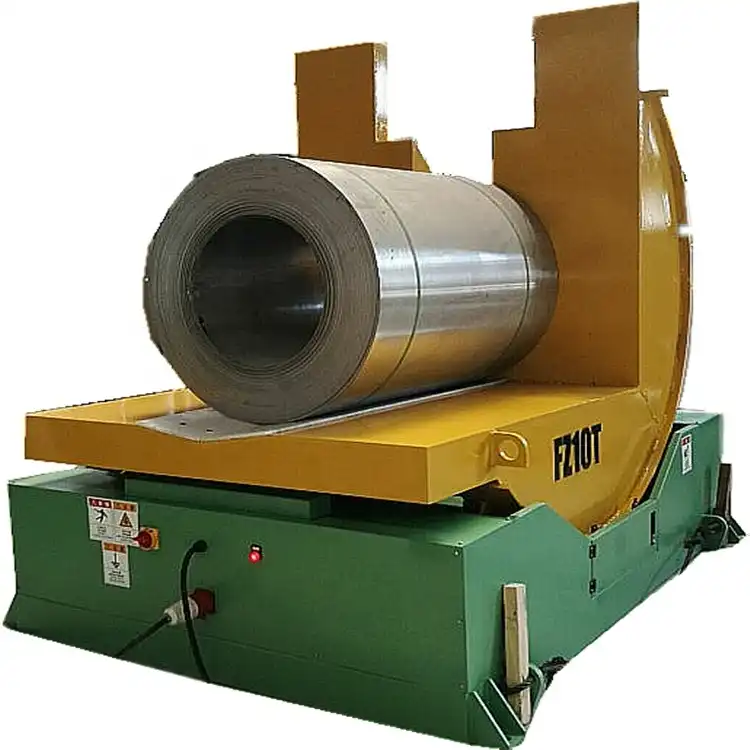
Coil upenders are specialized material handling machines that safely rotate steel coils from horizontal to vertical positions (or vice versa) for efficient production line feeding. Key benefits include:
- Eliminating manual handling risks and reducing workplace injuries by 80%
- Increasing coil processing speed by 30-50% compared to manual methods
- Preventing product damage during orientation changes, saving thousands in scrap costs
Transition Paragraph:
But how do you choose the right coil upender solution for your specific operation? Let's explore the critical questions plant managers like you need answered before making this important investment decision.
1. What Are the 5 Key Benefits of Using Coil Upenders in Mexican Steel Plants?
Leading Paragraph:
As a plant manager in Mexico's competitive steel industry, you need equipment that delivers measurable returns. Coil upenders aren't just convenient—they're strategic investments that address your most pressing operational challenges.
Snippet Paragraph:
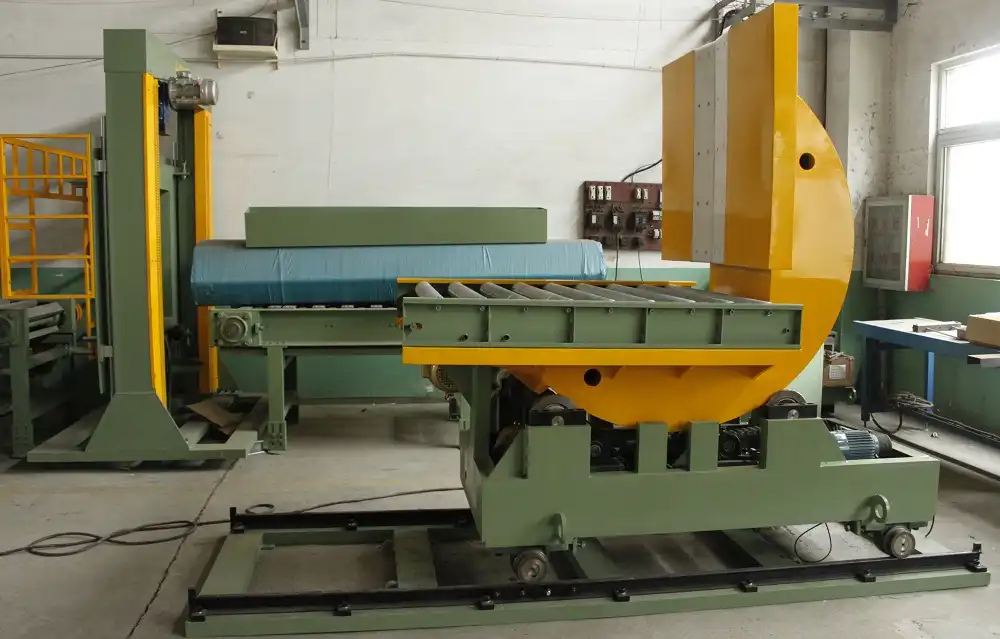
According to Randal Liu, SHJLPACK's founder, "Coil upenders deliver 5 critical benefits for Mexican steel plants: safety improvement, efficiency gains, cost reduction, space optimization, and quality protection." Industry data shows automated upenders can reduce manual handling injuries by 80% while increasing throughput by 30-50% compared to traditional methods.
Dive Deeper Content:
🛡️ Safety Transformation
Manual coil handling represents one of the most dangerous activities in steel plants. Each time workers manually position multi-ton coils, you're exposed to:
- Crush injury risks requiring expensive medical treatments and insurance claims
- Worker compensation claims averaging $50,000-100,000 per incident in Mexico
- Production downtime during injury investigations and replacement training
Automated coil upenders eliminate direct human contact with heavy loads. SHJLPACK's upenders feature:
- Laser safety curtains that automatically stop operation when breached
- Emergency stop buttons at multiple access points
- Load sensors that prevent overloading and unstable conditions
⚡ Efficiency Breakthrough
Traditional manual coil turning requires 3-4 workers and takes 15-20 minutes per coil. Automated upenders complete the same task in 2-3 minutes with just one operator. This efficiency gain translates directly to your bottom line:
| Manual vs Automated Coil Handling Comparison: | Factor | Manual Handling | SHJLPACK Upender |
|---|---|---|---|
| Time per coil | 15-20 minutes | 2-3 minutes | |
| Workers required | 3-4 operators | 1 operator | |
| Coils per 8-hour shift | 20-25 coils | 80-100 coils | |
| Injury risk | High (direct contact) | Minimal (automated) |
💰 Cost Reduction Analysis
Let's examine the financial impact for a typical Mexican steel plant processing 200 coils daily:
Current Manual Costs:
- 12 workers × $2,000/month = $24,000 monthly labor
- $8,000 monthly injury-related costs (insurance, downtime)
- $5,000 monthly product damage from improper handling
- Total: $37,000 monthly | $444,000 annually
With SHJLPACK Upender:
- 4 workers × $2,500/month = $10,000 monthly labor
- $1,000 monthly maintenance and power
- Minimal product damage and injury costs
- Total: $11,000 monthly | $132,000 annually
- Annual savings: $312,000 | ROI period: 12-18 months
🏭 Space Optimization
Mexican plants often face space constraints in urban industrial areas. Coil upenders with integrated conveyors optimize your floor plan by:
- Reducing the clearance area needed for manual coil maneuvering
- Enabling tighter production line layouts
- Allowing vertical integration with existing packing and processing equipment
According to Randal Liu's experience with Latin American clients, "Proper upender integration can increase your usable production space by 15-20% without expanding your facility footprint."
2. How Do You Choose the Right Coil Upender for Your Specific Production Needs?
Leading Paragraph:
Selecting the wrong coil upender can create more problems than it solves. I've seen plants invest in equipment that doesn't match their coil sizes, production speeds, or future growth plans—resulting in costly modifications or premature replacement.
Snippet Paragraph:
Choosing the right coil upender requires evaluating 4 key factors: coil specifications (weight, diameter, width), production volume, available space, and future expansion plans. SHJLPACK recommends matching your current needs while allowing 20-30% capacity headroom for production growth. Always verify machine specifications against your heaviest and largest coils, not averages.

Dive Deeper Content:
📊 Technical Specification Matching
The most common mistake I see is plants buying upenders based on average coil weights rather than maximum requirements. Use this specification checklist:
| SHJLPACK Coil Upender Selection Guide: | Coil Characteristic | Entry Model | Professional Model | Industrial Model |
|---|---|---|---|---|
| Max Weight Capacity | 5 tons | 10 tons | 20 tons | |
| Coil Diameter Range | 800-1500mm | 600-1800mm | 500-2000mm | |
| Coil Width Range | 300-1000mm | 200-1500mm | 150-2000mm | |
| Cycles per Hour | 20-30 | 40-60 | 80-100 | |
| Power Requirement | 7.5 kW | 15 kW | 22 kW | |
| Ideal Application | Small workshops | Medium plants | Large mills |
🔄 Production Volume Assessment
Your coil processing volume determines the automation level you need:
Low Volume (Under 50 coils/day):
- Semi-automatic upenders suffice
- Manual loading with automated rotation
- SHJLPACK's SE-U300 model recommended
- Lower initial investment (~$25,000-40,000)
Medium Volume (50-150 coils/day):
- Fully automatic upenders with conveyor integration
- Reduced operator involvement
- SHJLPACK's AE-U600 model ideal
- Mid-range pricing ($50,000-80,000)
High Volume (150+ coils/day):
- Smart automated systems with multiple stations
- Integration with coil packing lines and processing equipment
- SHJLPACK's IE-U900 for heavy-duty applications
- Premium investment ($100,000-150,000) with fastest ROI
🎯 Mexican Market Considerations
Based on my work with Mexican steel plants, I recommend特别注意:
- Voltage compatibility: Ensure 220V/60Hz or 480V/60Hz operation
- Climate adaptation: Protection against high humidity and temperature variations
- Local service availability: SHJLPACK maintains technical support partners in Monterrey, Mexico City, and Guadalajara
- Spare parts logistics: 48-hour delivery guarantee for critical components
💡 Future-Proofing Your Investment
Don't make the common mistake of buying only for today's needs. Consider:
- Production growth projections for the next 3-5 years
- Potential new coil sizes or materials
- Integration with planned automation upgrades
- SHJLPACK's modular designs allow capacity upgrades without complete replacement
3. What Are the 3 Most Common Coil Upender Mistakes That Cost Mexican Plants Thousands?
Leading Paragraph:
In my two decades in the packing machine industry, I've seen the same costly mistakes repeated across Mexican steel plants. These errors don't just waste money—they create ongoing operational headaches that affect your entire production line.
Snippet Paragraph:
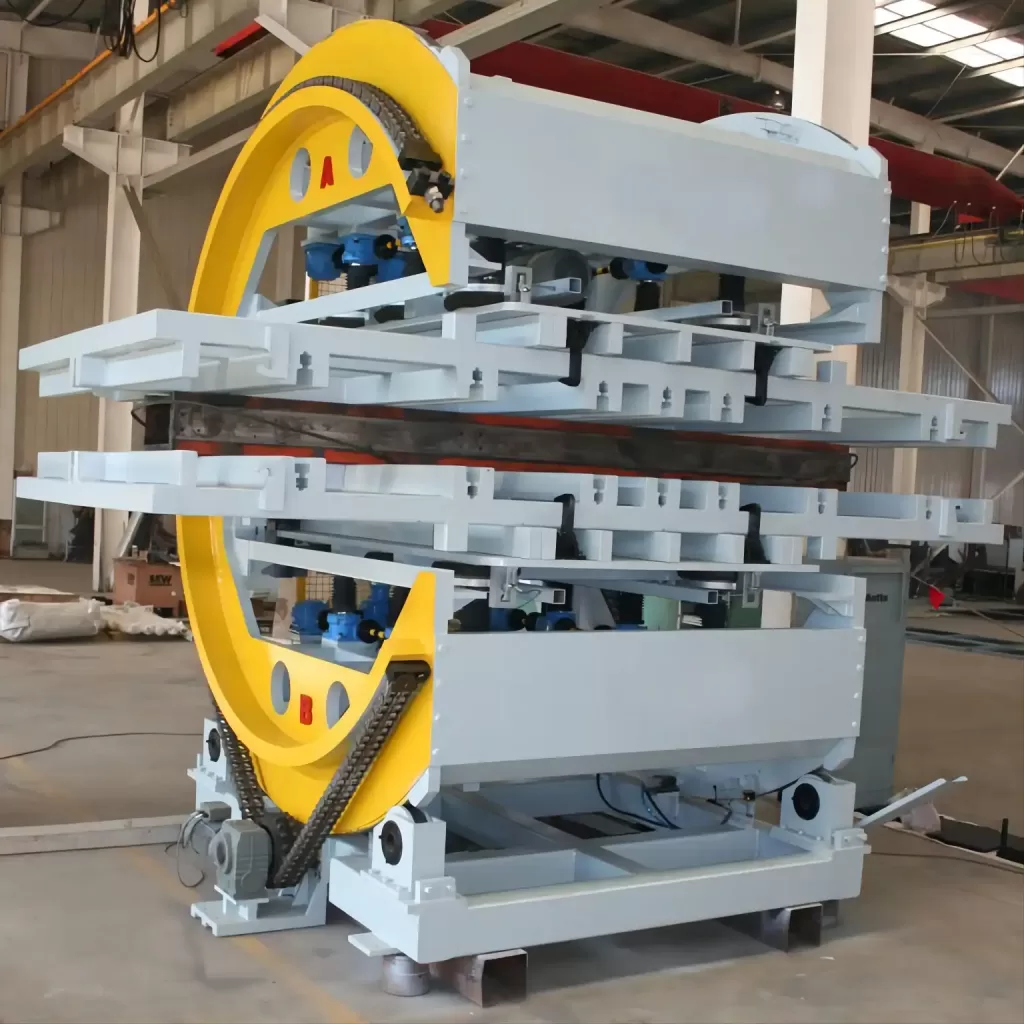
The 3 most expensive coil upender mistakes are: underspecifying capacity limits, neglecting proper foundation requirements, and skipping operator training programs. According to industry data, these errors cost Mexican plants an average of $75,000 in modifications, repairs, and lost production during the first year of operation alone.
Dive Deeper Content:
❌ Mistake #1: Capacity Underspecification
The most frequent and costly error is buying an upender rated for your average coils rather than your maximum requirements.
Real Case Example:
🏭 Medium Steel Processor in Monterrey
- Challenge: Purchased 8-ton upender based on average 6-ton coils
- Problem: Quarterly 10-ton specialty coils required manual handling anyway
- Cost: $45,000 in additional manual labor + $25,000 upender upgrade after just 18 months
Solution: SHJLPACK always recommends capacity analysis based on your heaviest 10% of coils, not averages. Our engineering team provides free capacity planning using your production data.
🏗️ Mistake #2: Foundation & Installation Neglect
Coil upenders generate significant dynamic forces during operation. Inadequate foundations cause:
Common Foundation Problems:
- Concrete cracking requiring $15,000-30,000 repairs
- Vibration transmission damaging adjacent equipment
- Premature wear on rotating components
- Safety hazards from machine movement
| SHJLPACK Foundation Requirements: | Upender Capacity | Concrete Thickness | Reinforcement | Isolation Required |
|---|---|---|---|---|
| Up to 5 tons | 200mm | Standard rebar | Vibration pads | |
| 5-10 tons | 300mm | Heavy rebar | Isolation mounts | |
| 10-20 tons | 400mm | Engineered grid | Spring isolators |
👷 Mistake #3: Inadequate Operator Training
Even the best equipment fails without proper operation. I've seen plants lose weeks of production because:
- Operators developed "shortcut" methods that damaged equipment
- Maintenance teams lacked troubleshooting skills
- Safety protocols were misunderstood or ignored
SHJLPACK's Training Solution:
- 3-day intensive training during installation
- Multilingual manuals (Spanish/English) with visual guides
- Quarterly virtual refresher sessions included
- 24/7 technical support hotline
📈 The Hidden Costs of These Mistakes
Beyond immediate repair costs, these errors create ongoing expenses:
Underspecification Impact:
- Continued manual handling for oversized coils
- Higher labor costs and injury risks
- Production bottlenecks during peak demands
Foundation Issues:
- Increased maintenance frequency and costs
- Reduced equipment lifespan by 30-40%
- Potential regulatory compliance issues
Training Gaps:
- 25% higher incidence of minor breakdowns
- Extended downtime during troubleshooting
- Gradual development of unsafe work practices
4. How Can Automated Coil Upenders Integrate With Your Existing Steel Coil Packing Line?
Leading Paragraph:
As a plant manager, you don't need isolated equipment—you need integrated solutions. The real value of coil upenders emerges when they work seamlessly with your existing coil packing and processing equipment.
Snippet Paragraph:
Automated coil upenders integrate with steel coil packing lines through conveyor systems, programmable logic controllers (PLC), and material handling software. SHJLPACK's upenders feature standardized interfaces that connect with most packing machines, creating a continuous flow from coil orientation to final packaging. This integration typically increases overall line efficiency by 25-40%.
Dive Deeper Content:
🔗 Mechanical Integration Options
Different production layouts require different integration approaches:
In-Line Integration:
- Upender → Conveyor → steel coil packing line → Output
- Ideal for new installations or complete line upgrades
- Maximum efficiency with continuous material flow
- SHJLPACK provides complete turnkey solutions
Parallel Integration:
- Multiple upenders feeding a central packing line
- Suitable for plants with varied coil types
- Allows maintenance without complete line shutdown
- Higher initial investment but greater flexibility
Modular Integration:
- Portable upenders that service multiple lines
- Best for facilities with changing production needs
- Lower integration cost but slightly reduced efficiency
- SHJLPACK's mobile upender series perfect for this application
🧠 Control System Integration
Modern steel plants require smart control integration:
PLC Communication:
- SHJLPACK upenders feature standard Profibus, Ethernet/IP, or Modbus interfaces
- Real-time data exchange with packing line controllers
- Production monitoring and OEE (Overall Equipment Effectiveness) tracking
- Remote troubleshooting and performance optimization
Software Integration Benefits:
- Real-time production tracking and reporting
- Predictive maintenance scheduling
- Quality control data collection
- Inventory management synchronization
⚙️ Practical Integration Steps
Based on my experience with Mexican plant integrations, follow this proven process:
Step 1: Pre-Installation Assessment
- Detailed measurement of existing equipment positions
- Flow analysis to identify bottlenecks
- Utility connection points verification
- Safety zone demarcation planning
Step 2: Mechanical Integration
- Conveyor bridge installation between equipment
- Height and level alignment adjustments
- Safety guarding integration across multiple machines
- Material flow testing with sample coils
Step 3: Control System Integration
- PLC programming and communication setup
- HMI (Human-Machine Interface) configuration
- Safety circuit integration across all connected equipment
- Data reporting system configuration
Step 4: Validation & Training
- Full production run validation
- Operator training on integrated system operation
- Maintenance team cross-training
- Performance benchmarking and documentation
📊 Integration Performance Metrics
After integrating SHJLPACK upenders with packing lines, Mexican plants typically achieve:
Efficiency Improvements:
- 25-40% reduction in total processing time per coil
- 30% decrease in manual material handling
- 15% improvement in overall equipment effectiveness (OEE)
Cost Reductions:
- Labor costs reduced by 50-60% through automation
- Energy consumption optimized across integrated system
- Maintenance costs lowered through predictive scheduling
Quality & Safety:
- 95% reduction in handling-related product damage
- Elimination of manual intervention between processes
- Comprehensive safety system integration
Conclusion
Implementing the right coil upender solution transforms your steel handling operations, delivering measurable safety, efficiency, and cost benefits. For complete automated solutions, consider integrating with a full steel coil packing line to maximize your investment returns.
Frequently Asked Questions
Q: What maintenance do coil upenders require in high-humidity Mexican coastal environments?
A: SHJLPACK upenders feature corrosion-resistant coatings and IP65 protection for humid conditions. Basic maintenance includes monthly bearing lubrication, quarterly hydraulic fluid checks, and annual structural inspections. Our Mexican service partners provide climate-specific maintenance schedules.
Q: How long does installation and integration typically take for a medium-sized steel plant?
A: Most installations require 2-3 weeks, including foundation preparation, mechanical installation, electrical connection, and system testing. Integration with existing packing lines adds 1-2 weeks depending on complexity. SHJLPACK provides detailed project timelines during the quotation process.
Q: Can coil upenders handle non-standard coil shapes or damaged coils?
A: Yes, SHJLPACK upenders include adjustable clamping systems and pressure sensors that adapt to slightly out-of-round or damaged coils. For severely damaged coils, we recommend our heavy-duty models with special gripping attachments. Always consult our engineers for non-standard applications.
Q: What safety certifications do SHJLPACK coil upenders carry for Mexican market compliance?
A: All SHJLPACK upenders include CE certification and meet Mexican NOM standards. We provide complete documentation for compliance verification and assist with local regulatory approvals through our Mexican partners.
Q: How does the ROI compare between semi-automatic and fully automatic coil upenders?
A: Semi-automatic models typically achieve ROI in 12-18 months, while fully automatic systems show 18-24 month ROI periods but deliver 40% higher long-term savings through labor reduction and increased throughput. The choice depends on your production volume and labor costs.


