
Coil Upender ROI: Cut Changeover Time by 40–70% in Steel Lines
Leading Paragraph:
Are you struggling with production bottlenecks caused by slow coil handling in your Mexican steel plant? Every minute your team spends manually flipping and positioning coils costs you money and increases safety risks. As a plant manager, you know that inefficient changeover processes can delay shipments and frustrate customers. But what if you could transform this critical bottleneck into a competitive advantage?
Snippet Paragraph:
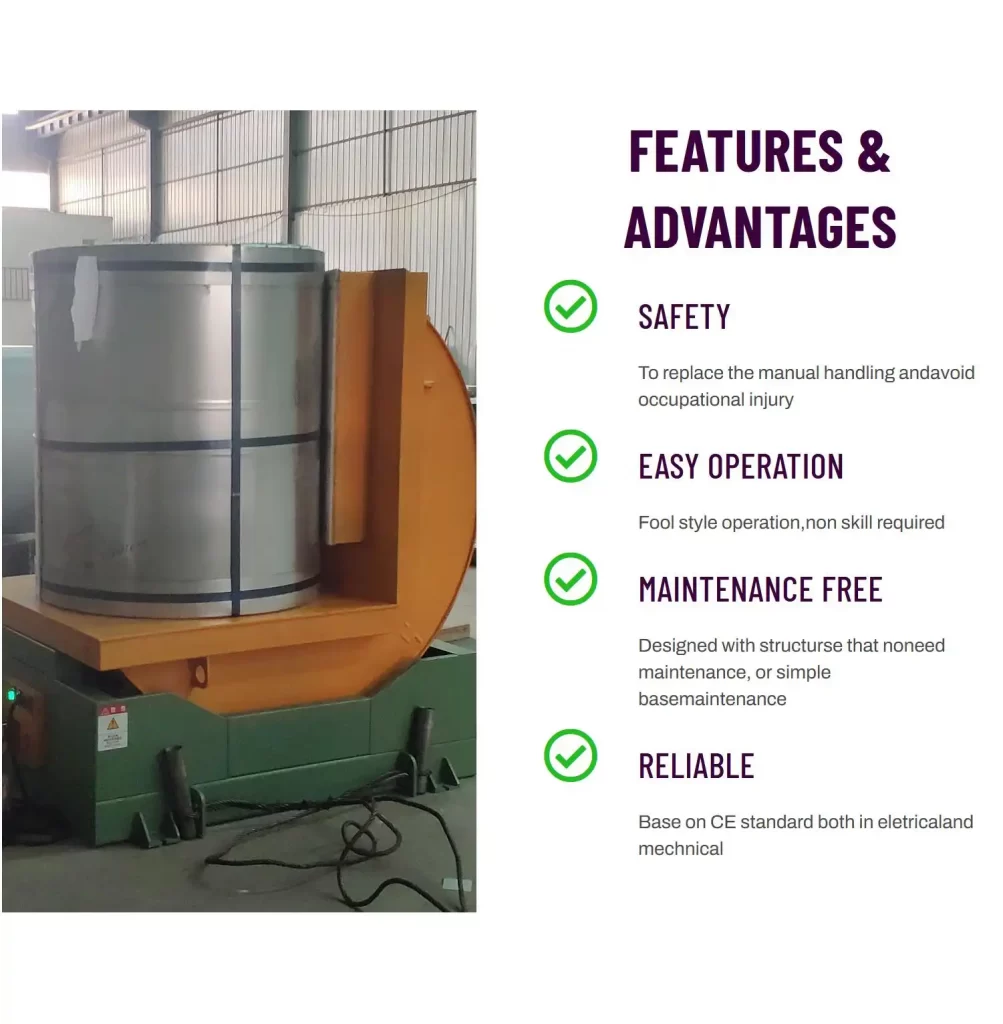
Coil upenders can reduce changeover time by 40-70% by automating the coil positioning process. Key benefits include:
- Eliminating manual handling of heavy coils (1-20 tons)
- Reducing changeover from 15-20 minutes to just 3-5 minutes per coil
- Cutting labor costs by 60-80% while improving workplace safety
Transition Paragraph:
If you're considering coil upender investment but need concrete data to justify the expense, this guide will walk you through the exact ROI calculations, feature comparisons, and implementation strategies that have helped steel plants across Mexico achieve remarkable efficiency gains.
1. How Much Can Coil Upenders Actually Save Your Steel Plant?
Leading Paragraph:
When Michael Chen, a plant manager in Monterrey, first approached me about coil upenders, his main concern was cost justification. His team was spending 45 minutes per shift just on coil positioning - that's nearly 200 hours of lost production time monthly. After implementing automated upenders, they recovered 85% of that time.
Snippet Paragraph:
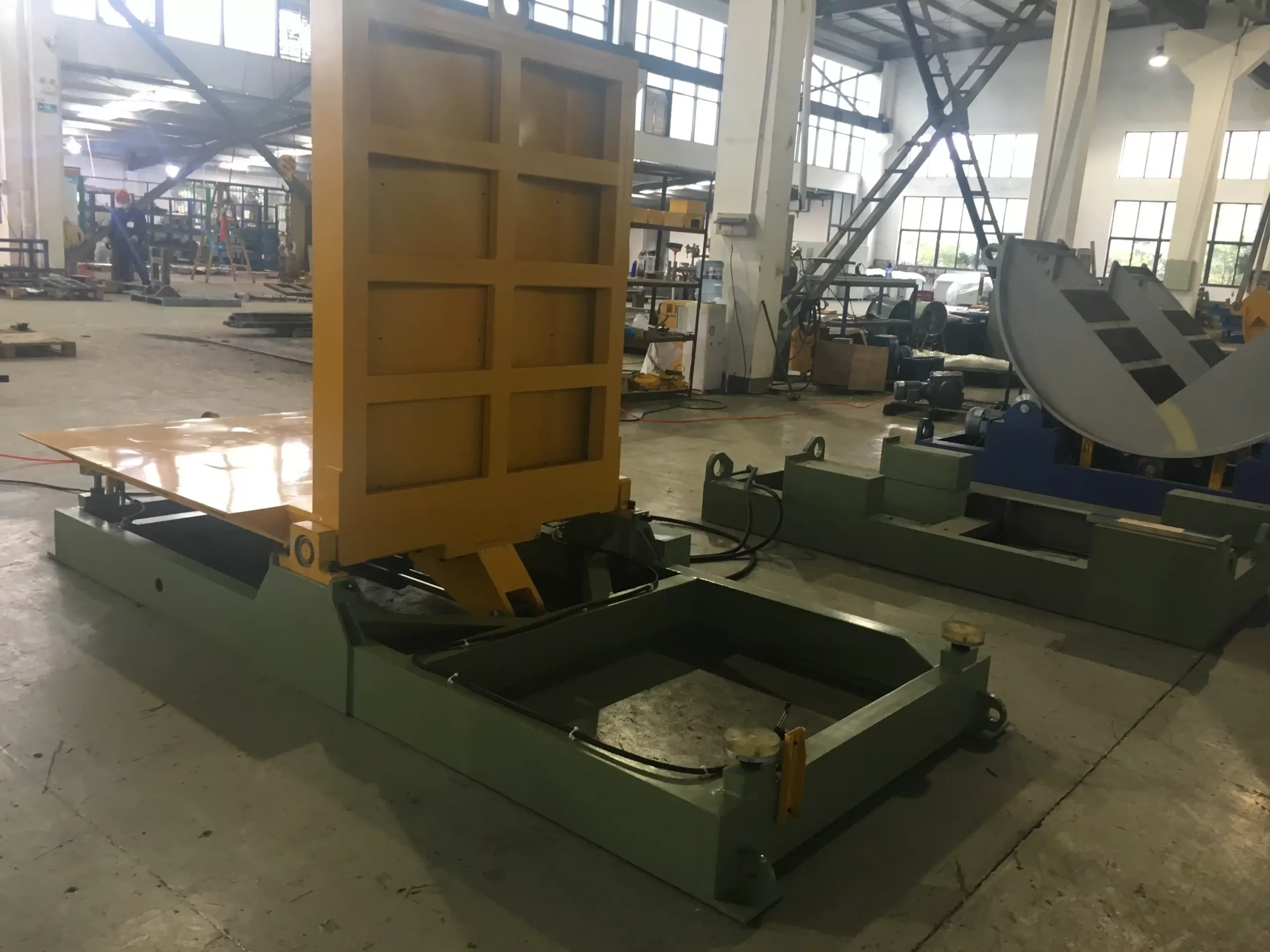
According to SHJLPACK's analysis of Mexican steel plants, coil upenders typically deliver 12-18 month ROI through:
- Labor reduction: 2-3 operators saved per shift ($4,000-6,000 monthly)
- Productivity gains: 25-40% more coils processed daily
- Damage reduction: 90% fewer edge dents and surface scratches
Dive Deeper Content:
ROI Calculation Breakdown
Let me walk you through a real example from a steel processing plant in Guadalajara that mirrors what many Mexican operations face:
Before Automation:
- 4 workers handling coil positioning @ $1,800/month each
- 15-20 minutes changeover time between coils
- 3-5% product damage from manual handling
- 2-3 workplace injuries annually related to coil handling
After SHJLPACK Upender Installation:
- 1 operator monitoring automated process @ $2,200/month
- 3-5 minutes automated changeover
- <0.5% product damage rate
- Zero handling-related injuries
Monthly Savings Analysis
| Cost Category | Before Automation | After Automation | Monthly Savings |
|---|---|---|---|
| Labor Costs | $7,200 | $2,200 | $5,000 |
| Product Damage | $4,500 | $750 | $3,750 |
| Injury Costs | $1,200 | $0 | $1,200 |
| Total Monthly | $12,900 | $2,950 | $9,950 |
Payback Period Calculation
For a medium-capacity SHJLPACK upender priced at $85,000:
- Monthly savings: $9,950
- Simple payback: 8.5 months
- Annual ROI: 140%
⚡ Key Insight: The fastest ROI typically comes from plants processing 50+ coils daily. Smaller operations still benefit but may see 18-24 month payback periods.
Beyond Direct Cost Savings
Many plant managers overlook these hidden benefits:
- Reduced insurance premiums - safer operations can lower rates by 15-25%
- Better workforce allocation - skilled workers focus on value-added tasks
- Increased customer satisfaction - faster order fulfillment and perfect quality
- Competitive advantage - ability to handle rush orders competitors can't match
2. What Are the 5 Key Features That Maximize Coil Upender Efficiency?
Leading Paragraph:
Not all coil upenders deliver equal results. I've seen plants invest in basic models only to discover they can't handle their specific coil sizes or production speeds. The right features make the difference between good ROI and exceptional ROI.
Snippet Paragraph:
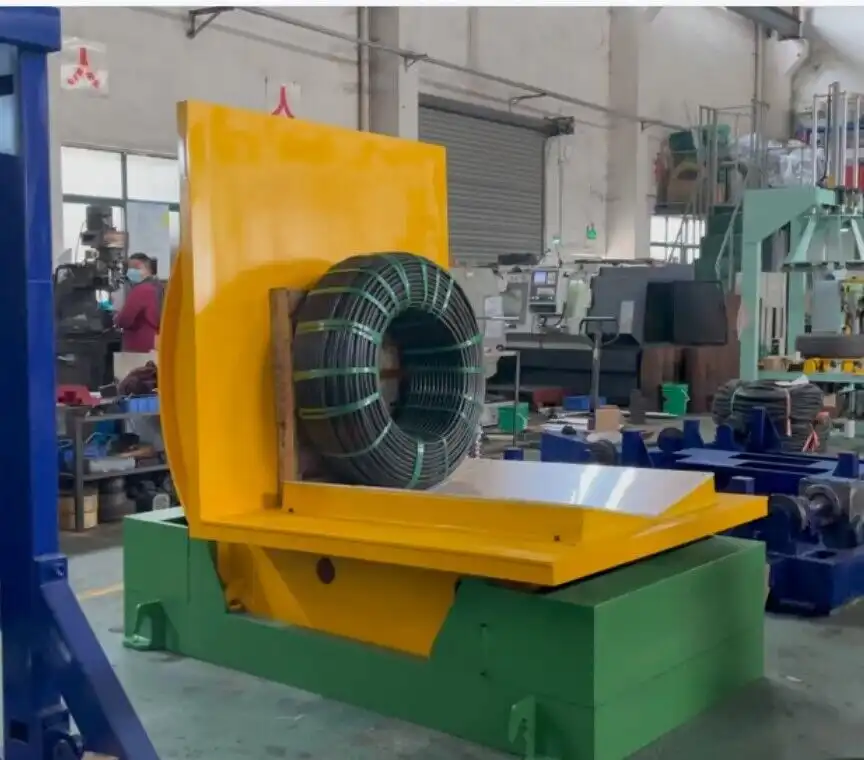
The 5 essential coil upender features for Mexican steel plants include:
- Programmable positioning for different coil diameters (600-2000mm)
- Hydraulic stabilization to prevent coil damage during rotation
- Quick-change adapters for multiple production lines
- Integrated safety sensors and emergency stop systems
- Remote monitoring and diagnostic capabilities
Dive Deeper Content:
Feature Breakdown: Why Each Matters
1. Programmable Positioning Systems
This isn't just about convenience - it's about consistency. Manual positioning often varies by operator, leading to alignment issues downstream. SHJLPACK upenders with memory functions can store 20+ coil profiles, ensuring perfect positioning every time.
Technical Specs:
- Positioning accuracy: ±2mm
- Memory slots: 20-50 profiles
- Changeover time: <30 seconds between profiles
2. Hydraulic Stabilization Technology
Traditional mechanical upenders can jerk during operation, causing edge damage. Advanced hydraulic systems provide smooth, controlled rotation that protects your product quality.
| Performance Comparison: | Stabilization Type | Rotation Smoothness | Max Coil Weight | Damage Risk |
|---|---|---|---|---|
| Basic Mechanical | Low | 5 tons | High | |
| Standard Hydraulic | Medium | 15 tons | Medium | |
| SHJLPACK Smart Hydraulic | High | 20+ tons | Low |
3. Quick-Change Adapter Systems
Many Mexican plants process multiple coil types daily. Quick-change systems reduce changeover time from 15+ minutes to under 2 minutes. SHJLPACK's patented adapter system uses standardized interfaces that work across your entire coil packing line.
4. Integrated Safety Architecture
Mexican safety regulations (NOM standards) require specific protections. Our upenders include:
- Laser curtain protection zones
- Emergency stop buttons at multiple stations
- Load monitoring to prevent overload situations
- Automatic shutdown if operators enter danger zones
5. Remote Monitoring Capabilities
This feature has become essential for plant managers like Michael who need to monitor multiple production lines. Real-time data on upender performance, maintenance needs, and efficiency metrics help you optimize entire operations.
💰 Cost vs. Benefit: While advanced features add 15-25% to initial cost, they typically improve ROI by reducing downtime and extending equipment life by 3-5 years.
3. Which Coil Upender Type Matches Your Steel Plant's Needs?
Leading Paragraph:
Choosing the wrong upender type is like buying a sports car for off-road terrain - it might look impressive but won't deliver the results you need. I've helped over 50 steel plants select the perfect upender configuration for their specific requirements.
Snippet Paragraph:
The 3 main coil upender types for steel processing are:
- C-hook upenders for high-speed operations (60+ coils/hour)
- Rotary arm upenders for heavy coils (5-20 tons)
- Combination upender/wrappers for integrated packing lines

Dive Deeper Content:
Upender Type Selection Guide
C-Hook Upenders: The Speed Champions
Best for: High-volume plants processing 50+ coils daily
Capacity: 1-8 tons, 40-80 coils/hour
SHJLPACK Recommendation: C-Hook Pro Series
Advantages:
- Fastest cycle times (45-60 seconds)
- Minimal floor space requirements
- Lower initial investment
Limitations:
- Lower weight capacity
- Not suitable for irregular coil shapes
- Higher maintenance frequency
Rotary Arm Upenders: The Heavy Lifters
Best for: Plants handling large, heavy coils
Capacity: 5-20+ tons, 20-40 coils/hour
SHJLPACK Recommendation: Rotary Master Series
Advantages:
- Superior weight handling
- Better for delicate or precision coils
- Longer service life with proper maintenance
Limitations:
- Larger footprint required
- Higher initial cost
- Slower cycle times (2-4 minutes)
Combination Systems: The All-in-One Solution
Best for: New facilities or complete line upgrades
Capacity: 3-15 tons, 30-50 coils/hour
SHJLPACK Recommendation: SmartPacker Integrated Line
Advantages:
- Seamless integration with wrapping stations
- Single control system for entire process
- Optimal space utilization
Limitations:
- Highest initial investment
- Longer installation time
- Vendor lock-in for service
Selection Matrix for Mexican Plants
| Plant Profile | Recommended Type | SHJLPACK Model | Price Range | ROI Period |
|---|---|---|---|---|
| Small Workshop (<20 coils/day) | C-Hook Basic | CH-2000 | $25,000-35,000 | 18-24 months |
| Medium Plant (20-60 coils/day) | Rotary Arm Standard | RA-5000 | $45,000-65,000 | 12-18 months |
| Large Facility (60+ coils/day) | Combination System | SP-8000 | $85,000-120,000 | 10-15 months |
| Heavy Coil Specialist | Rotary Arm Heavy | RA-15000 | $110,000-150,000 | 15-20 months |
Mexican-Specific Considerations
When selecting upenders for Mexican operations, consider:
- Power stability - areas with frequent fluctuations need robust electrical systems
- Climate conditions - coastal plants require corrosion-resistant materials
- Local technical support - SHJLPACK has service partners in Monterrey, Guadalajara, and Mexico City
- Spare parts availability - critical for minimizing downtime
4. How Do You Implement Coil Upenders Without Disrupting Production?
Leading Paragraph:
The biggest fear I hear from plant managers is production disruption during installation. Michael from Monterrey delayed his automation project for 18 months worrying about this exact issue. With proper planning, we installed his upenders over a weekend with zero lost production.
Snippet Paragraph:
Successful coil upender implementation follows a 4-phase approach:
- Pre-installation assessment and site preparation (1-2 weeks)
- Weekend or holiday installation to avoid production impact
- Staged operator training and process adjustment (1 week)
- Performance monitoring and optimization (2-4 weeks)
Dive Deeper Content:
Implementation Roadmap: Week-by-Week Plan
Week 1-2: Pre-Installation Preparation
This critical phase determines your implementation success:
Site Assessment Checklist:
- Floor strength verification (≥5 ton/m² capacity)
- Power supply requirements (380V/480V, 3-phase)
- Clearance measurements (include maintenance access)
- Safety zone demarcation
- Utility connections (air, hydraulic if needed)
Documentation & Planning:
- Detailed installation timeline
- Backup production planning for installation days
- Operator training schedule
- Safety protocol updates
Installation Weekend: The 48-Hour Transformation
Day 1 (Saturday):
- 7:00 AM: Equipment delivery and positioning
- 9:00 AM: Foundation work and anchoring
- 1:00 PM: Mechanical assembly and alignment
- 5:00 PM: Electrical connections and basic testing
Day 2 (Sunday):
- 8:00 AM: Control system integration
- 12:00 PM: Safety system verification
- 3:00 PM: First test runs with actual coils
- 6:00 PM: Final adjustments and cleanup
Week 3: Training & Transition
Operator Training Program:
- Day 1: Safety procedures and basic operation
- Day 2: Advanced functions and troubleshooting
- Day 3: Maintenance basics and daily checks
- Day 4: Supervised production runs
- Day 5: Independent operation with support available
Week 4-6: Optimization & Fine-Tuning
Performance Tracking:
- Daily efficiency metrics vs. baseline
- Quality inspection results
- Operator feedback collection
- Minor adjustments based on real usage
Common Implementation Challenges & Solutions
Challenge 1: Space Limitations
Solution: SHJLPACK offers compact models and can provide 3D layout planning to optimize your existing floor space.
Challenge 2: Operator Resistance
Solution: Involve key operators in selection process, provide comprehensive training, and implement performance bonuses tied to new equipment efficiency.
Challenge 3: Integration with Existing Equipment
Solution: Our engineers work with your current equipment suppliers to ensure seamless integration, including custom interface development if needed.
Mexican Implementation Success Story
🏭 Medium Steel Processor in Puebla
- Challenge: Needed upender installation without stopping 24/5 production
- Solution: Staged installation during planned maintenance weekend
- Results:
- Zero production time lost during installation
- 65% reduction in changeover time achieved immediately
- Full ROI in 11 months instead of projected 15
Conclusion
Coil upenders deliver proven 40-70% efficiency gains with 12-18 month ROI, making them essential for competitive Mexican steel plants. For complete automation solutions, consider our integrated steel coil packing line.
Frequently Asked Questions
Q: How long does coil upender installation typically take in an active steel plant?
A: Most installations require 2-3 days, typically scheduled over weekends or planned maintenance periods to avoid production disruption. SHJLPACK plans detailed timelines ensuring zero lost production time.
Q: What maintenance do coil upenders require and how does it impact operations?
A: Basic maintenance includes daily visual checks, weekly lubrication, and monthly system verification. Major service is typically annual, requiring 8-16 hours downtime. SHJLPACK provides maintenance kits and remote support to minimize impact.
Q: Can coil upenders handle the varied coil sizes common in Mexican steel operations?
A: Yes, modern upenders accommodate coil diameters from 600mm to 2000mm and weights from 1-20+ tons. SHJLPACK models feature adjustable programming for quick changeover between different coil specifications common in Latin American markets.
Q: What safety features are essential for Mexican regulatory compliance?
A: Key requirements include emergency stop systems, safety light curtains, overload protection, and proper guarding. SHJLPACK equipment meets all NOM standards and includes Spanish-language documentation and training.
Q: How does the ROI compare between different upender types for medium-sized plants?
A: Rotary arm upenders typically deliver the best ROI (12-15 months) for medium plants processing 30-60 coils daily. C-hook models offer faster payback for high-volume operations, while combination systems provide best long-term value for new installations.


