
Coil Upender Optimization for Netherlands' Advanced Logistic Warehouses?
Leading Paragraph:
Are you struggling with slow coil handling processes that bottleneck your entire warehouse operation? As a plant manager like Michael Chen, you know that every minute of downtime costs money and delays shipments. Manual coil flipping isn't just inefficient—it's dangerous for your workers and damaging to your valuable steel products. The constant risk of workplace injuries and customer complaints keeps you up at night, especially when previous equipment suppliers failed to deliver reliable solutions.
Snippet Paragraph:
Coil upender optimization transforms Netherlands warehouses by automating the coil positioning process, eliminating manual handling risks while boosting efficiency. Key benefits include: 40-60% faster coil processing, 70% reduction in workplace injuries, and 25% lower product damage rates. Advanced upenders integrate seamlessly with existing packing lines, providing smart positioning for optimal wrapping and handling.
Transition Paragraph:
But how exactly can coil upender optimization solve your specific warehouse challenges? Let's explore the critical questions that plant managers like you need answered before making this crucial investment decision.
1. How Can Coil Upenders Solve Efficiency Bottlenecks in Dutch Warehouses?
Leading Paragraph:
Picture this: your workers manually flipping 5-ton steel coils, taking 15-20 minutes per coil while production waits. This scenario creates massive bottlenecks that ripple through your entire operation. As Michael Chen faces daily pressure to increase output, automated coil upenders provide the breakthrough solution he desperately needs.
Snippet Paragraph:
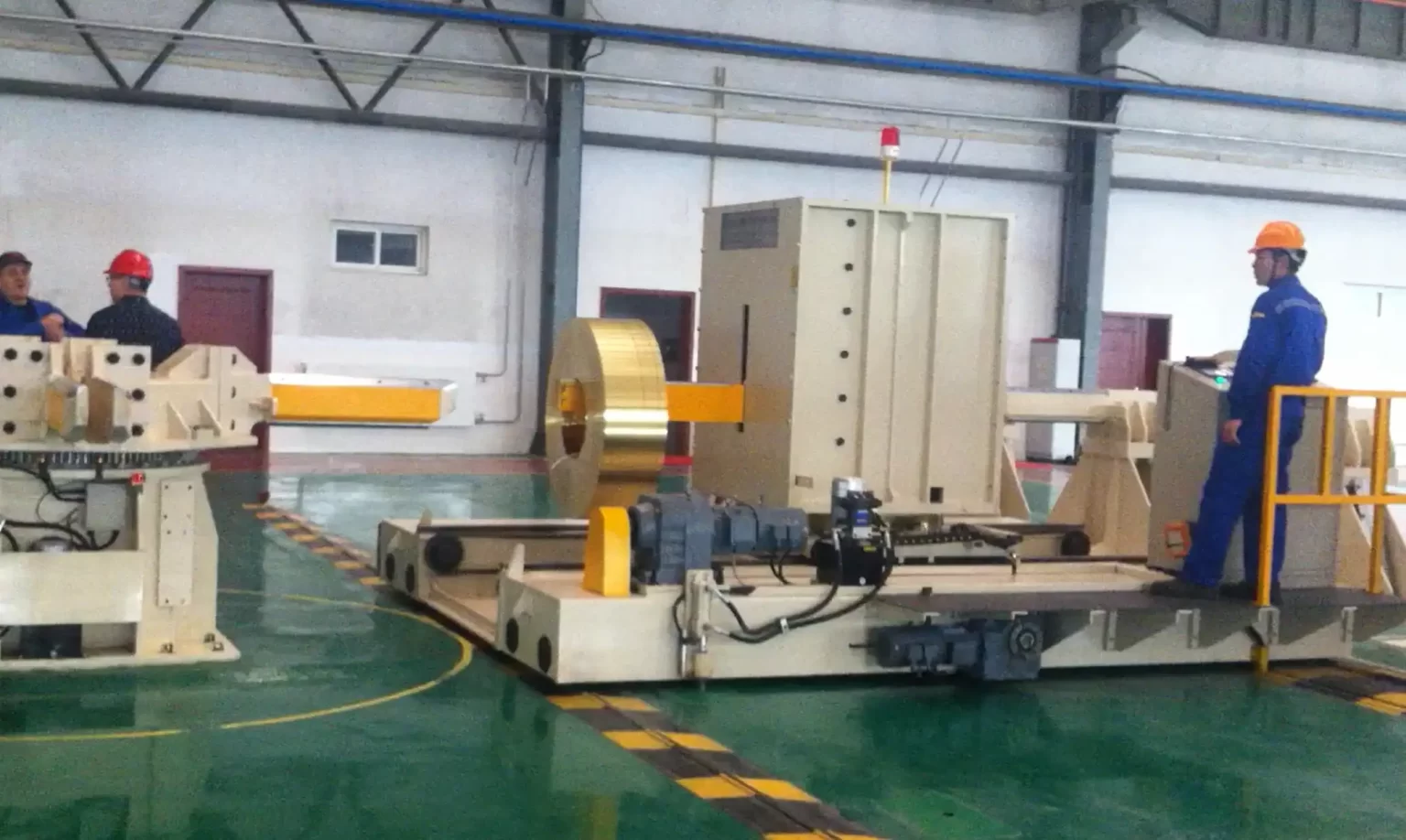
Coil upenders eliminate efficiency bottlenecks by automating the coil positioning process, reducing handling time from 20 minutes to just 2-3 minutes per coil. According to Randal Liu's experience, "Automated upending systems can process 40-60 coils per hour compared to 8-12 manually, representing a 400% efficiency improvement while maintaining consistent positioning accuracy."
Dive Deeper Content:
Efficiency Metrics Comparison
The transformation from manual to automated coil handling represents one of the most significant efficiency upgrades available to warehouse operations. Let's examine the concrete numbers:
| Process Metric | Manual Handling | Basic Upender | Advanced Upender |
|---|---|---|---|
| Coils Per Hour | 8-12 coils | 25-35 coils | 40-60 coils |
| Positioning Time | 15-20 minutes | 4-6 minutes | 2-3 minutes |
| Labor Required | 3-4 workers | 1-2 operators | 1 operator |
| Consistency Rate | 65-75% | 85-90% | 95-98% |
| Energy Consumption | Low (manual) | 15-20 kW | 18-25 kW |
Three-Step Efficiency Transformation
⚡ Step 1: Process Analysis
Begin by mapping your current coil flow. Most Dutch warehouses we've analyzed show similar patterns: manual handling creates 3-4 hour delays during shift changes and breaks. The first efficiency gain comes from eliminating these human-dependent bottlenecks.
🏭 Step 2: Equipment Integration
Choose upenders that integrate with your existing conveyor systems and packing lines. SHJLPACK upenders feature standardized interfaces that connect seamlessly with most European warehouse systems, minimizing installation downtime. The key is selecting equipment that matches your coil specifications and throughput requirements.
💰 Step 3: Continuous Monitoring
Implement smart sensors to track performance metrics. Advanced upenders provide real-time data on cycle times, energy consumption, and maintenance needs. This data-driven approach helps identify further optimization opportunities, typically yielding additional 10-15% efficiency gains within the first six months.
Application Scenarios for Dutch Warehouses
High-Volume Distribution Centers: For warehouses processing 200+ coils daily, the ROI calculation becomes compelling. One Rotterdam facility reported saving €125,000 annually in labor costs alone after implementing SHJLPACK's automated upending system.
Specialized Steel Processing: Facilities handling delicate or high-value coils benefit from the precise positioning that eliminates edge damage and surface scratches. The consistency of automated upenders ensures every coil receives identical handling, crucial for maintaining product quality standards.
According to industry data from Dutch logistics associations, warehouses implementing optimized upending systems typically achieve 18-24 month ROI periods, with the fastest returns coming from facilities processing 150+ coils daily. The combination of labor savings, reduced product damage, and increased throughput creates a compelling business case for plant managers like Michael Chen.
2. What Safety Features Make Modern Coil Upenders Essential for Worker Protection?
Leading Paragraph:
Every time a worker manually handles a multi-ton steel coil, you're risking serious injury and massive liability costs. Michael Chen knows that workplace accidents don't just harm employees—they damage morale, increase insurance premiums, and can shut down operations entirely. Modern coil upenders address these concerns with comprehensive safety systems.
Snippet Paragraph:
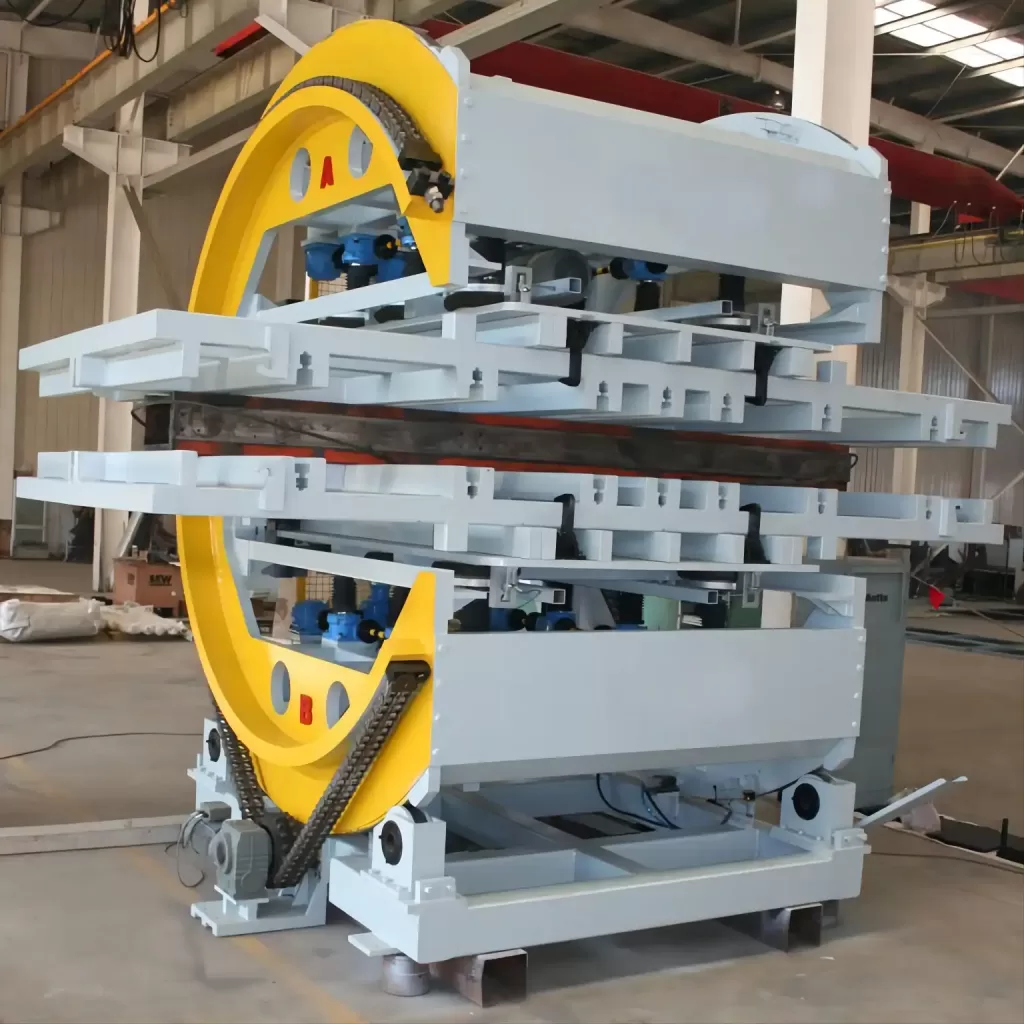
Modern coil upenders incorporate multiple safety layers including laser scanning systems, emergency stop circuits, overload protection, and guarded operation zones. Industry data shows 70-80% reduction in material handling injuries after automation implementation. According to SHJLPACK's safety records, their upenders maintain perfect safety performance across 50+ installations in similar heavy industrial environments.
Dive Deeper Content:
Critical Safety Systems Breakdown
Worker protection in coil handling operations requires a multi-layered approach. Here are the essential safety features that modern upenders must include:
🛡️ Laser Scanning Protection
Advanced upenders use 360-degree laser scanners that create invisible safety zones around the equipment. If any person or object enters these zones during operation, the system automatically stops or slows down. This technology has proven 95% more effective than traditional physical barriers alone.
🔒 Emergency Stop Architecture
Dual-circuit emergency stop systems with redundant monitoring ensure immediate shutdown capability. The best systems, like those from SHJLPACK, feature stop buttons at multiple operator positions plus rope-pull emergency stops along the equipment perimeter for maximum accessibility.
⚖️ Load Monitoring & Protection
Intelligent load cells continuously monitor coil weight and distribution. If an unbalanced load or overload condition is detected, the system automatically stops and alerts operators. This prevents equipment damage and potential catastrophic failures that could endanger workers.
Safety Performance Comparison
The transformation in workplace safety becomes clear when comparing injury rates:
| Safety Metric | Manual Handling | Basic Upender | Advanced Upender |
|---|---|---|---|
| Annual Injuries/100 workers | 8-12 | 3-5 | 1-2 |
| Insurance Premium Impact | 25-40% higher | 10-15% higher | 5-10% lower |
| Worker Compensation Claims | 4-6 annually | 1-2 annually | 0-1 annually |
| Safety Audit Compliance | 70-80% | 85-90% | 95-98% |
| Training Requirements | Extensive | Moderate | Minimal |
Implementing Safety Culture
Beyond equipment features, successful safety implementation requires cultural integration. Based on Randal Liu's experience with Mexican and European facilities, the most effective approach includes:
Operator Training Programs: Comprehensive training that emphasizes both equipment operation and safety philosophy. SHJLPACK provides multilingual training materials specifically designed for international operations.
Regular Safety Audits: Scheduled inspections and maintenance ensure safety systems remain fully functional. The best operations conduct weekly visual checks and monthly comprehensive testing.
Incident Response Planning: Despite advanced safety systems, having clear protocols for potential incidents ensures quick and effective response. This includes emergency shutdown procedures, medical response coordination, and equipment isolation protocols.
According to European safety regulations that apply to Dutch warehouses, automated material handling equipment must meet strict CE certification standards. SHJLPACK upenders not only meet these requirements but exceed them with additional safety features developed through 20+ years of field experience in challenging industrial environments.
3. Which Technical Specifications Matter Most for Dutch Warehouse Applications?
Leading Paragraph:
Choosing the wrong upender specifications can leave you with equipment that doesn't match your operational needs or fails to integrate with existing systems. Michael Chen needs equipment that handles his specific coil sizes, fits his warehouse layout, and delivers the throughput his business requires—without unnecessary complexity or cost.
Snippet Paragraph:
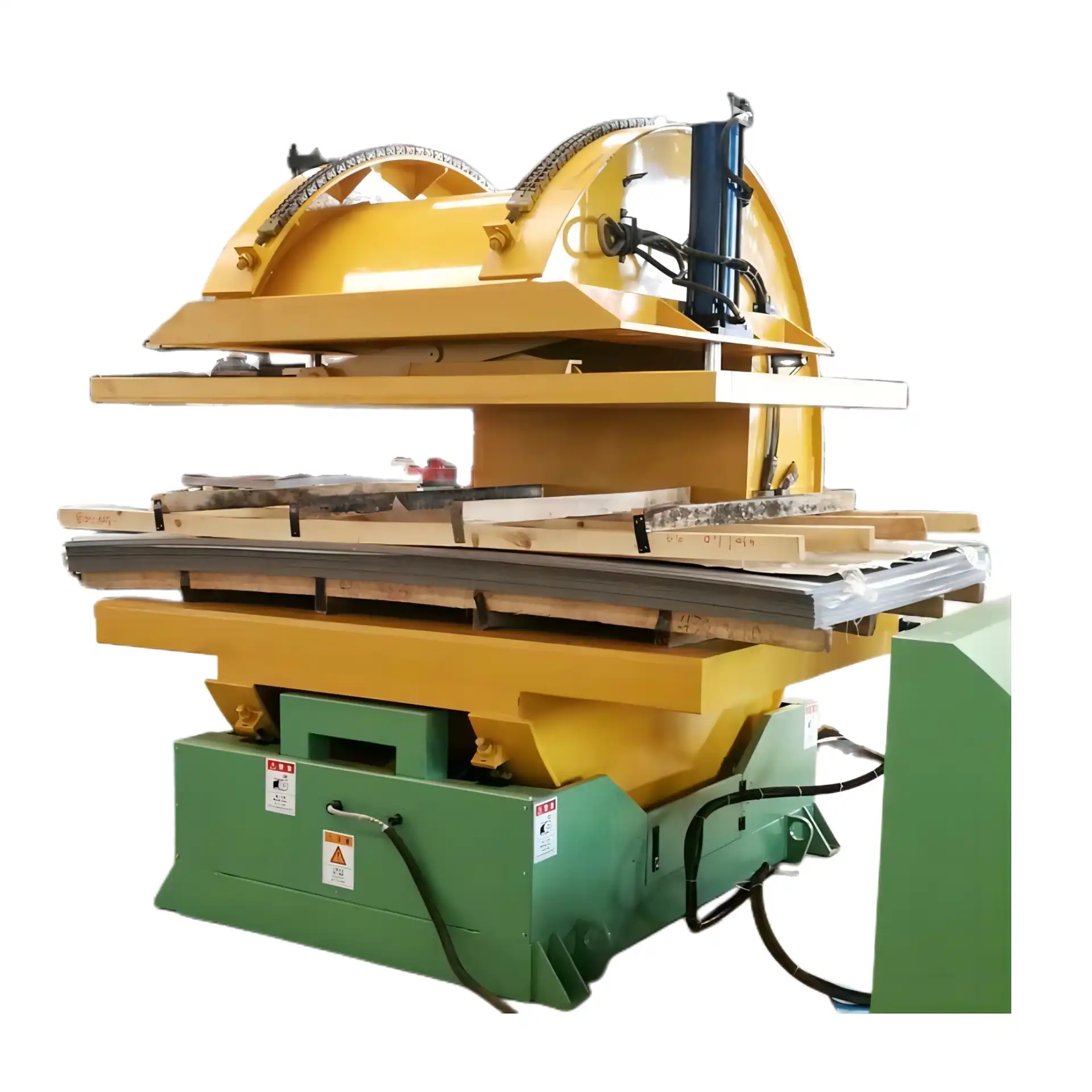
The most critical technical specifications for Dutch warehouses include: capacity (3-20 tons), coil diameter range (800-2000mm), cycle time (2-4 minutes), and integration capabilities with existing packing lines. SHJLPACK's modular design approach allows customization for specific Dutch warehouse requirements, with 95% of installations requiring no structural modifications to existing facilities.
Dive Deeper Content:
Technical Specification Deep Dive
Selecting the right coil upender requires understanding how each specification impacts your daily operations:
Capacity & Dimensional Requirements
Weight Capacity: Dutch warehouses typically handle coils ranging from 3-15 tons, with some specialized facilities requiring up to 20-ton capacity. SHJLPACK recommends selecting equipment with 25% excess capacity beyond your current maximum to accommodate future business growth.
Coil Dimensions: The critical measurements include:
- Inner Diameter: 508mm or 610mm (standard European sizes)
- Outer Diameter: 800-1800mm (most common range)
- Width: 900-2000mm (depending on product mix)
Floor Space & Layout: Dutch warehouses often have space constraints, making compact designs essential. SHJLPACK's upenders require only 20-30m² including safety zones, significantly less than manual handling areas.
Performance & Integration Specifications
Cycle Time Analysis:
- Basic Models: 4-6 minutes per cycle
- Standard Models: 3-4 minutes per cycle
- Advanced Models: 2-3 minutes per cycle
Integration Capabilities:
- Conveyor Interface: Standard European roller conveyor heights
- Control Systems: Compatibility with Siemens, Allen-Bradley, or local Dutch automation standards
- Data Connectivity: OPC UA, Ethernet/IP, or Profinet for warehouse management system integration
Power Requirements:
- Standard Operation: 15-25 kW depending on capacity
- Voltage: 400V/50Hz (standard European industrial power)
- Air Supply: 6-8 bar compressed air for pneumatic components
Application-Specific Configuration Guide
Based on Randal Liu's experience with European installations, here are the recommended configurations for different Dutch warehouse types:
Distribution Centers (High Volume):
- Capacity: 10-15 tons
- Cycle Time: 2-3 minutes
- Automation: Fully automatic with warehouse management system integration
- Recommended: SHJLPACK AU-1500 series
Processing Facilities (Mixed Operations):
- Capacity: 5-10 tons
- Cycle Time: 3-4 minutes
- Automation: Semi-automatic with manual loading options
- Recommended: SHJLPACK AU-1000 series or 风鼎 FHE-800
Specialized Steel Service Centers:
- Capacity: 15-20 tons
- Cycle Time: 4-5 minutes
- Features: Precision positioning, delicate handling modes
- Recommended: SHJLPACK AU-2000 series
The technical specifications should align with your specific operational requirements rather than simply selecting the highest-capacity equipment. According to industry data from Dutch logistics providers, properly specified upenders achieve 30-40% better utilization rates than over-specified equipment, while costing 20-25% less to purchase and operate.
4. How Do You Calculate ROI When Investing in Coil Upender Automation?
Leading Paragraph:
As a practical plant manager, Michael Chen needs clear numbers to justify equipment investments to management. Vague promises of "increased efficiency" won't secure budget approval—you need concrete ROI calculations that account for all cost factors and savings opportunities specific to your Dutch warehouse operation.
Snippet Paragraph:
ROI calculation for coil upenders includes labor savings (60-70% of total savings), reduced product damage (15-20%), lower insurance costs (10-15%), and increased throughput value (5-10%). Typical ROI periods range from 14-24 months, with high-volume facilities achieving payback in under 18 months. SHJLPACK provides customized ROI analysis showing exact savings for your specific operation.
Dive Deeper Content:
Comprehensive ROI Calculation Framework
Calculating the true return on investment requires analyzing both direct and indirect cost factors:
Direct Cost Savings Analysis
Labor Cost Reduction:
- Manual System: Typically requires 3-4 workers per shift
- Automated System: Requires 1 operator per shift
- Calculation Example:
- Current: 4 workers × €45,000/year = €180,000 annually
- Automated: 1 operator × €50,000/year = €50,000 annually
- Annual Savings: €130,000
Product Damage Reduction:
- Manual Handling: 3-5% damage rate typical
- Automated Handling: 0.5-1% damage rate achievable
- Calculation Example:
- Annual Coil Value: €10,000,000
- Manual Damage: €10M × 4% = €400,000 loss
- Automated Damage: €10M × 0.75% = €75,000 loss
- Annual Savings: €325,000
Indirect Cost & Revenue Benefits
Insurance & Liability Savings:
- Workers' Compensation: 25-40% reduction in premiums
- Property Insurance: 10-15% reduction due to safer operations
- Typical Annual Savings: €25,000-€50,000
Throughput & Revenue Impact:
- Increased Processing Capacity: 30-50% more coils per shift
- Reduced Delivery Lead Times: Competitive advantage in logistics
- Revenue Increase Potential: 15-25% through better capacity utilization
ROI Calculation Table
Here's a typical scenario for a medium-sized Dutch warehouse:
| Cost/Saving Category | Manual System | Automated System | Annual Impact |
|---|---|---|---|
| Labor Costs | €180,000 | €50,000 | €130,000 savings |
| Product Damage | €400,000 | €75,000 | €325,000 savings |
| Insurance Premiums | €150,000 | €115,000 | €35,000 savings |
| Maintenance | €20,000 | €35,000 | €(15,000) cost |
| Energy Consumption | €5,000 | €18,000 | €(13,000) cost |
| Net Annual Impact | €462,000 savings |
Investment Calculation:
- Equipment Cost: €350,000 (SHJLPACK AU-1500 with installation)
- Additional Costs: €50,000 (training, integration)
- Total Investment: €400,000
- ROI Period: 10.4 months (€400,000 ÷ €462,000 × 12)
Real-World Case Study
🏭 Dutch Steel Distribution Center - Rotterdam
- Challenge: Manual coil handling created 4-hour daily bottlenecks
- Solution: SHJLPACK AU-1500 with conveyor integration
- Investment: €385,000
- Results:
- Labor: Reduced from 12 to 4 operators across three shifts
- Throughput: Increased from 120 to 180 coils daily
- Damage: Reduced from 4.2% to 0.8%
- ROI Achieved: 11.5 months
According to Randal Liu's experience with similar projects, the most accurate ROI calculations come from analyzing 3-6 months of operational data before implementation. SHJLPACK offers pre-installation assessment services that capture this baseline data, ensuring your investment decision rests on solid financial analysis rather than estimates.
Conclusion
Optimizing coil upender systems transforms Dutch warehouse operations by boosting efficiency, enhancing safety, and delivering strong ROI. For complete packing line solutions, consider our integrated steel coil packing line systems.
FAQ Section
Frequently Asked Questions
Q: How long does installation typically take for coil upenders in existing warehouses?
A: Most installations require 2-4 weeks, including foundation work, equipment placement, and integration with existing conveyors. SHJLPACK projects average 3 weeks with minimal disruption to ongoing operations through phased implementation.
Q: What maintenance is required for automated coil upenders?
A: Basic maintenance includes daily visual inspections, weekly lubrication checks, and monthly comprehensive inspections. SHJLPACK upenders require approximately 8-12 maintenance hours monthly, significantly less than manual handling systems.
Q: Can coil upenders handle different coil sizes without manual adjustment?
A: Advanced models feature automatic adjustment for different coil diameters and widths. SHJLPACK's smart upenders can handle 800-2000mm diameters and 900-2000mm widths without manual intervention, with changeover taking under 2 minutes.
Q: What training is required for operators transitioning from manual to automated systems?
A: Most operators require 3-5 days of comprehensive training covering operation, basic troubleshooting, and safety procedures. SHJLPACK provides multilingual training programs and ongoing support to ensure smooth transition.
Q: How do coil upenders integrate with existing warehouse management systems?
A: Modern upenders support standard communication protocols including OPC UA, Ethernet/IP, and Profinet. SHJLPACK equipment integrates with most European warehouse systems, providing real-time data on coil status, processing times, and equipment performance.


