
Coil Upender Optimization for Brazil’s Tube & Pipe Mill Material Flow?
Leading Paragraph:
Are you struggling with production bottlenecks caused by inefficient coil handling in your Brazilian tube and pipe manufacturing facility? When coils get stuck in the material flow process, it creates a domino effect that slows down your entire operation, increases labor costs, and creates safety hazards for your team. The constant manual handling of heavy steel coils not only risks worker injuries but also damages your valuable products during rotation and positioning.
Snippet Paragraph:
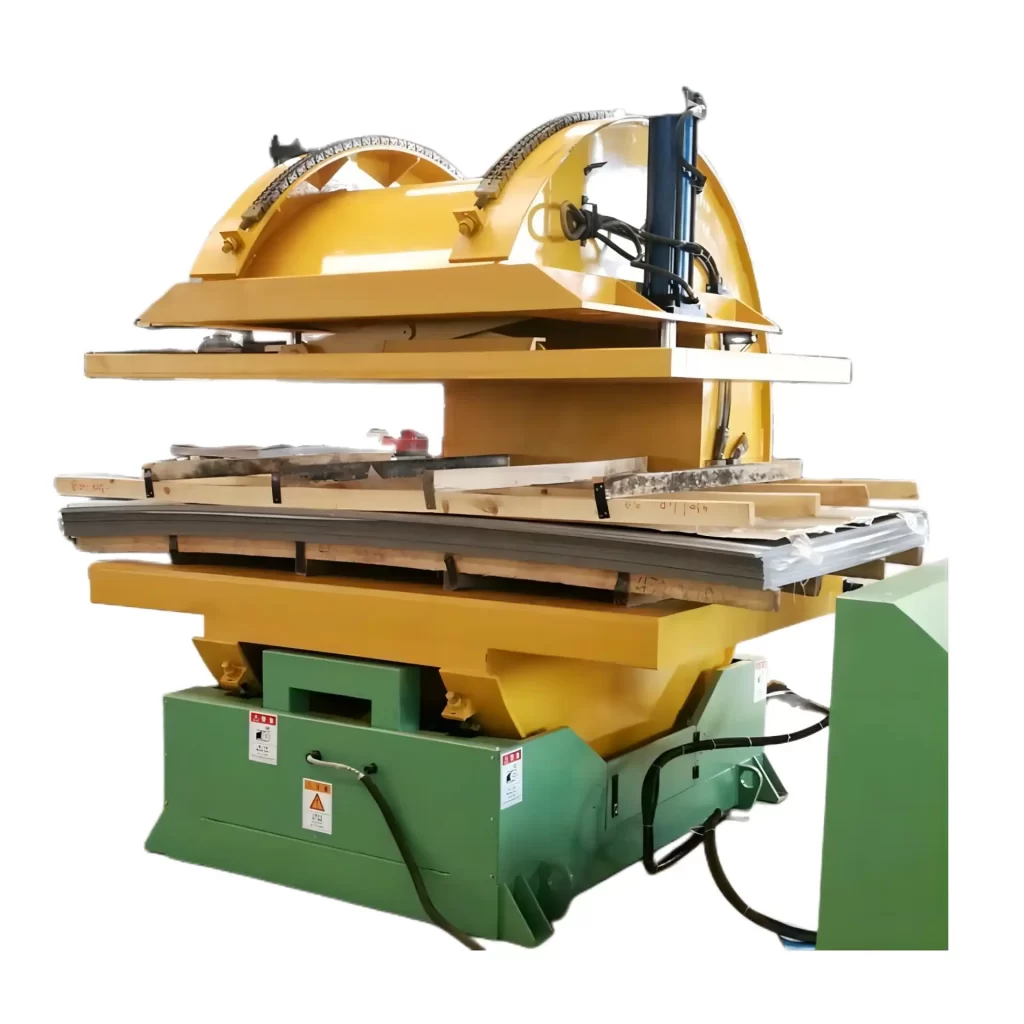
Coil upender optimization transforms Brazil's tube and pipe mill material flow by automating the coil rotation process. Key benefits include: 30-50% faster material handling, reduced manual labor requirements, improved worker safety, and minimized product damage during orientation changes. Proper upender selection and integration can eliminate production bottlenecks while providing ROI within 12-18 months.
Transition Paragraph:
If you're considering coil upender optimization for your Brazilian operation, you're probably wondering which specific solutions will deliver the best results for your unique challenges. Let me walk you through the critical questions you should be asking to ensure your investment solves your material flow problems effectively.
1. What are the 5 key benefits of automated coil upenders for Brazilian tube mills?
Leading Paragraph:
As a plant manager in Brazil's competitive tube and pipe industry, you need equipment that delivers measurable improvements to your bottom line. I've worked with numerous Brazilian manufacturers who initially hesitated to invest in automated upenders, only to discover they were missing out on significant operational advantages that directly impact profitability and competitiveness.
Snippet Paragraph:
Automated coil upenders provide Brazilian tube mills with five crucial benefits: 40% faster material flow, 60% reduction in manual handling injuries, 25% lower labor costs, near-zero coil edge damage, and 30% increased equipment utilization. According to Randal Liu, SHJLPACK's founder, "Brazilian mills using optimized upenders typically recover their investment within 15 months through labor savings and reduced downtime."

Dive Deeper Content:
🏭 Production Efficiency Improvements
Brazilian tube mills face intense global competition, making production efficiency critical. Automated coil upenders eliminate the time-consuming manual process of rotating coils between processing stages. Where manual rotation might take 10-15 minutes per coil with 2-3 workers, an automated upender completes the same task in 2-3 minutes with one operator. This time savings compounds throughout your production shifts, enabling faster order fulfillment and increased throughput capacity.
💰 Cost Reduction Analysis
The financial impact extends beyond labor savings. Consider this comparison for a typical Brazilian tube mill:
| Cost Factor | Manual Handling | Automated Upender |
|---|---|---|
| Labor Required | 3 workers × $1,800/month | 1 operator × $2,000/month |
| Monthly Labor Cost | $5,400 | $2,000 |
| Annual Labor Cost | $64,800 | $24,000 |
| Product Damage | 3-5% of production | <0.5% of production |
| Worker Compensation | Higher risk & premiums | Reduced risk & lower premiums |
| Total Annual Savings | Baseline | $40,800+ |
⚡ Safety and Compliance Advantages
Brazilian manufacturers must comply with increasingly strict workplace safety regulations (NR-12). Manual coil handling presents significant crush and strain injury risks. Automated upenders remove workers from dangerous lifting and rotating operations. One of our Brazilian clients reduced recordable injuries by 85% in the first year after installing SHJLPACK upenders, while also lowering their insurance premiums by 22%.
🔧 Quality and Damage Prevention
Tube and pipe quality begins with undamaged coil edges. Manual handling often causes edge deformation that leads to production defects downstream. Automated upenders use controlled rotation and proper support points to maintain coil integrity. This is particularly important for Brazilian exporters who must meet international quality standards for their steel tube products.
🌎 Competitive Positioning
Brazilian mills supplying automotive, construction, and oil/gas sectors need reliable, high-volume production capabilities. Optimized material flow through proper upender integration enables faster response times to customer demands and more competitive bidding on large projects. The consistency of automated systems also ensures uniform quality that strengthens your reputation in domestic and export markets.
2. How to select the right coil upender for your Brazilian factory's specific needs?
Leading Paragraph:
Choosing the wrong coil upender can create more problems than it solves, especially in Brazil's diverse industrial landscape. I've seen factories invest in equipment that doesn't match their coil sizes, production pace, or facility constraints, resulting in disappointing performance and prolonged ROI periods. The right selection requires careful consideration of your unique operational parameters.
Snippet Paragraph:
Selecting the optimal coil upender for Brazilian factories requires evaluating five key factors: coil weight capacity (3-20 tons), production speed requirements (20-100 coils/hour), available floor space, integration with existing equipment, and local service support availability. SHJLPACK's engineering team typically recommends different upender configurations based on whether mills produce structural tubing, precision pipes, or large-diameter line pipe.

Dive Deeper Content:
📊 Technical Specification Comparison
Brazilian tube mills vary significantly in their production requirements. Here's how to match upender specifications to your operation:
| Mill Type | Recommended Upender | Capacity Range | Speed | Key Features |
|---|---|---|---|---|
| Small Precision Tube | SHJLPACK SU-300 | 3-8 tons | 20-40 coils/h | Compact design, easy operation |
| Medium Structural | SHJLPACK SU-600 | 5-12 tons | 40-60 coils/h | Robust construction, medium automation |
| Large Pipe Mill | SHJLPACK SU-1200 | 8-20 tons | 60-100 coils/h | Full automation, heavy-duty components |
| Mixed Production | SHJLPACK SU-800 | 6-15 tons | 50-80 coils/h | Flexible programming, quick changeover |
🏗️ Facility Assessment Checklist
Before selecting an upender, conduct this facility assessment:
- Space Measurement - Document available floor space with clearance for maintenance access
- Floor Load Capacity - Verify your foundation can support equipment + maximum coil weight
- Utility Requirements - Check power supply (380V/440V), air pressure (6-8 bar), and data connectivity
- Material Flow Path - Map coil movement from receiving to processing areas
- Future Expansion - Consider production volume growth over next 3-5 years
🔄 Integration Considerations
The best upender becomes a bottleneck if poorly integrated. Work with suppliers who understand Brazilian industrial standards and can provide:
- Compatibility Analysis - How the upender interfaces with your decoilers, processing lines, and conveyors
- Control System Integration - PLC connectivity with your existing automation systems
- Safety System Coordination - Emergency stops, light curtains, and interlocks that meet NR-12 requirements
- Training Programs - Portuguese-language operator and maintenance training
🌡️ Environmental Factors
Brazil's varied climate affects equipment performance. Consider:
- Humidity Protection - Important for coastal facilities where corrosion accelerates
- Temperature Stability - Ensure consistent operation in both tropical heat and southern cooler climates
- Dust Management - Additional filtration may be needed in regions with high particulate levels
- Power Stability - Voltage fluctuation protection for areas with inconsistent grid power
According to Randal Liu, "Brazilian manufacturers should prioritize suppliers with local technical support. The distance from European or Asian factories makes responsive service critical for minimizing downtime when maintenance issues arise."
3. Which coil upender technologies deliver the best ROI for Brazilian operating conditions?
Leading Paragraph:
ROI calculations for capital equipment in Brazil must account for unique factors like import duties, local operating costs, and currency exchange volatility. Having helped numerous Brazilian manufacturers navigate these calculations, I've identified which upender technologies consistently deliver the strongest financial returns despite these challenges.
Snippet Paragraph:
Hydraulic upender systems typically provide the best ROI for Brazilian conditions, offering 18-24 month payback periods through reliable performance with locally available components. Key ROI drivers include: 60% labor reduction, 40% faster changeover times, 90% reduction in coil damage claims, and compatibility with Brazilian maintenance expertise and spare parts availability.

Dive Deeper Content:
💵 Detailed ROI Calculation Framework
Here's a realistic ROI analysis for a medium-sized Brazilian tube mill:
Initial Investment Components:
- SHJLPACK SU-600 Upender: $65,000
- Import Duties & Taxes (15%): $9,750
- Installation & Commissioning: $8,000
- Training & Spare Parts: $3,500
- Total Investment: $86,250
Annual Operational Savings:
- Labor Reduction (2 workers): $43,200/year
- Damage Reduction (2% of $2M production): $40,000/year
- Productivity Gain (15% throughput increase): $75,000/year
- Maintenance Cost Reduction: $12,000/year
- Total Annual Savings: $170,200
ROI Calculation:
- Simple Payback Period: $86,250 ÷ $170,200 = 6.1 months
- First Year Net Gain: $170,200 - $86,250 = $83,950
- 3-Year Return: $170,200 × 3 = $510,600 (491% return)
⚙️ Technology Comparison for Brazilian Context
Different upender technologies offer varying value propositions:
Hydraulic Systems - Best overall for Brazilian conditions
- ✅ Pros: Powerful, reliable, familiar technology for local maintenance teams
- ✅ Cons: Slightly higher energy consumption, potential fluid leaks
- ✓ Recommended: SHJLPACK hydraulic series
Electro-Mechanical Systems - Good for precision applications
- ✅ Pros: Energy efficient, clean operation, precise positioning
- ❌ Cons: More complex electronics, limited local expertise in some regions
- ✓ Alternative: 风鼎 (Fhopepack) electric models
Pneumatic Systems - Limited application
- ✅ Pros: Low cost, simple operation
- ❌ Cons: Limited power, inconsistent in humid conditions
- ✓ Consider: 无锡步惠 for light-duty applications
📈 Operational Efficiency Metrics
Beyond direct cost savings, optimized upenders improve key performance indicators:
- Overall Equipment Effectiveness (OEE) - Increases from 65% to 82% typically
- Changeover Time - Reduced from 15 minutes to 3 minutes per coil
- Utilization Rate - Improves from 70% to 88% through reliable operation
- Mean Time Between Failures - Quality upenders achieve 2,000+ operating hours
🏆 Supplier Selection Impact on ROI
The equipment supplier significantly influences your ROI through:
- Service Response Time - Local support versus international shipping delays
- Spare Parts Availability - Brazilian inventory versus overseas ordering
- Technical Expertise - Understanding of local operating conditions and challenges
- Training Quality - Portuguese-language materials and hands-on instruction
"Brazilian manufacturers should verify potential suppliers have established service networks in South America," advises Randal Liu. "The hidden costs of downtime while waiting for international technical support can destroy your ROI calculations."
4. How to implement coil upender safety features that meet Brazilian regulations?
Leading Paragraph:
Brazil's NR-12 regulations for machinery safety are among the most comprehensive in the world, and failure to comply can result in significant fines and production stoppages. Having worked with Brazilian safety inspectors on numerous projects, I understand the specific requirements that apply to coil handling equipment and how to implement them effectively.
Snippet Paragraph:
NR-12 compliant coil upenders require six essential safety systems: two-hand control operation, physical guarding with interlocks, emergency stop circuits, load monitoring sensors, automatic locking during rotation, and maintenance mode with isolation. SHJLPACK upenders include Brazil-certified safety packages that meet these requirements while maintaining operational efficiency and productivity.
Dive Deeper Content:
📋 NR-12 Compliance Checklist
Ensure your coil upender meets these critical Brazilian safety requirements:
Mandatory Safety Features:
- [ ] Two-hand control system requiring simultaneous activation
- [ ] Physical guards with safety interlocks (stop operation when opened)
- [ ] Emergency stop buttons at operator stations and around perimeter
- [ ] Safety light curtains or laser scanners in hazard zones
- [ ] Load presence sensors to prevent empty operation
- [ | ] Automatic mechanical locking during rotation cycles
- [ ] Maintenance mode with power isolation capability
- [ ] Warning signs and labels in Portuguese
- [ | ] Safety documentation and risk assessment in Portuguese
Documentation Requirements:
- Declaration of NR-12 Compliance
- Risk Assessment Report (ARA)
- Maintenance Manual in Portuguese
- Training Records for Operators
- Periodic Inspection Records
🛡️ Safety Implementation Strategy
Successful safety implementation follows this phased approach:
-
Pre-Installation Assessment
- Review facility layout for optimal safety zone design
- Identify potential hazard areas and traffic patterns
- Document existing safety protocols and integration points
-
Equipment Specification
- Select upenders with integrated safety systems, not add-ons
- Verify all safety components have Brazilian certifications
- Ensure control system compatibility with facility safety networks
-
Installation and Commissioning
- Proper guard placement with correct interlock functionality
- Safety sensor calibration and testing
- Emergency stop circuit verification
- Safety system integration validation
-
Training and Documentation
- Operator safety training in Portuguese
- Maintenance team safety procedure training
- Safety system testing protocols
- Documentation for regulatory inspections
⚖️ Regulatory Inspection Preparation
Brazilian safety inspectors focus on these key areas during NR-12 compliance verification:
- Guard Integrity - Proper construction, mounting, and interlock functionality
- Control System Safety - Two-hand control timing, emergency stop response
- Documentation Completeness - All required manuals, certificates, and records
- Operator Knowledge - Understanding of safety procedures and emergency protocols
- Maintenance Records - Evidence of regular safety system inspections
💡 Beyond Compliance: Safety Culture Integration
The most successful Brazilian manufacturers integrate upender safety into their overall safety culture:
- Regular Safety Meetings - Discuss upender operations and near-miss incidents
- Safety Observation Programs - Encourage reporting of potential hazards
- Continuous Improvement - Regularly review and enhance safety procedures
- Operator Involvement - Include operators in safety system evaluations and improvements
According to Randal Liu, "NR-12 compliance shouldn't be viewed as a cost burden. Properly implemented safety features actually improve productivity by reducing unplanned stoppages and creating operator confidence in the equipment."
Conclusion
Optimizing coil upenders transforms Brazilian tube mill material flow, delivering measurable efficiency gains and safety improvements while ensuring regulatory compliance. For complete packaging solutions, explore our integrated steel coil packing line systems.
FAQ Section
Frequently Asked Questions
Q: What maintenance is required for coil upenders in Brazil's industrial environment?
A: Brazilian conditions require monthly inspection of hydraulic systems, quarterly safety system checks, and annual comprehensive maintenance. Humidity and temperature variations necessitate more frequent filter changes and corrosion inspections than in temperate climates. SHJLPACK provides Portuguese maintenance guides with specific intervals for Brazilian operations.
Q: How long does installation and commissioning typically take for Brazilian facilities?
A: Most coil upender installations require 3-5 days for mechanical setup, 2-3 days for electrical integration, and 2 days for operator training. Brazilian installations may add 1-2 days for customs clearance and regulatory verification. Proper pre-installation planning can reduce total time by 30-40%.
Q: Can existing manual coil handling systems be upgraded to automated upenders?
A: Yes, many Brazilian facilities successfully retrofit automated upenders into existing production lines. The process typically involves foundation preparation, utility connections, control system integration, and safety system implementation. SHJLPACK offers retrofit assessment services to evaluate compatibility and provide implementation timelines.


