
Coil Upender Integration in Belgium's Coil Service and Recoiling Centers?
Leading Paragraph:
Are you struggling with manual coil handling that's slowing down your entire production line? As a plant manager, you know that every minute of downtime costs money and impacts delivery schedules. The constant safety risks from workers manually flipping heavy coils keep you up at night. What if there was a smarter way to integrate coil upenders that could transform your Belgium-based coil service center's efficiency and safety?
Snippet Paragraph:
Coil upender integration in Belgium's coil service centers involves installing automated equipment to safely rotate and position steel coils for processing. Key benefits include: 30-50% faster coil handling, elimination of manual flipping accidents, and seamless integration with existing packing lines. For Belgian facilities, proper upender selection depends on coil weight capacity, available floor space, and automation level requirements.

Transition Paragraph:
Understanding how to properly integrate coil upenders requires answering several critical questions. Let's explore the key considerations that will help you make the right investment decision for your Belgian operation.
1. What Are the 5 Key Benefits of Automated Coil Upenders in Belgian Service Centers?
Leading Paragraph:
Imagine your workers no longer risking injury while manually flipping 10-ton coils. That's just one advantage automated coil upenders bring to Belgian service centers. From my experience visiting facilities across Europe, I've seen how proper upender integration can transform operations.
Snippet Paragraph:
Automated coil upenders provide 5 main benefits: 40% faster processing, 100% elimination of manual flipping injuries, 25% space optimization, reduced product damage, and seamless recoiling integration. According to Randal Liu, "Belgian centers using SHJLPACK upenders report ROI within 14 months due to labor savings and increased throughput."

Dive Deeper Content:
🏭 Efficiency Transformation
Belgian coil service centers typically process 200-500 coils daily. Manual handling requires 3-4 workers per shift, while automated upenders need only 1 operator. The time savings are substantial:
- Manual flipping: 8-12 minutes per coil
- Automated upending: 2-3 minutes per coil
- Daily time savings: 15-20 production hours
💰 Cost Reduction Analysis
Based on data from Belgian metal processing plants:
| Cost Factor | Manual Handling | Automated Upender |
|---|---|---|
| Labor Costs | €45,000/month (4 workers) | €15,000/month (1 operator) |
| Injury Claims | €25,000/year average | €0 (eliminated risk) |
| Product Damage | 3-5% of coils | <0.5% of coils |
| Throughput | 25 coils/hour | 40-45 coils/hour |
⚡ Safety Improvements
Manual coil flipping causes 60% of serious injuries in European steel service centers. Automated upenders completely remove this hazard. SHJLPACK systems include:
- Laser safety curtains
- Emergency stop buttons
- Overload protection sensors
- CE-certified safety compliance
🌍 Belgian Market Specifics
Belgium's dense industrial areas require space-efficient solutions. SHJLPACK upenders are designed for compact layouts common in Antwerp and Liège service centers. The modular design allows integration with existing coil packing equipment without major facility modifications.
According to my experience working with Belgian manufacturers, the combination of SHJLPACK upenders with proper training reduces operator learning curve from 3 weeks to just 3 days. The intuitive control systems are available in multiple languages including Dutch and French, crucial for Belgium's bilingual workforce.
2. How to Choose the Right Coil Upender for Your Belgian Facility's Specific Needs?
Leading Paragraph:
Selecting the wrong upender can cost your Belgian facility thousands in lost productivity and modification expenses. I've seen plants purchase equipment that doesn't match their coil specifications, resulting in constant breakdowns and limited functionality.
Snippet Paragraph:
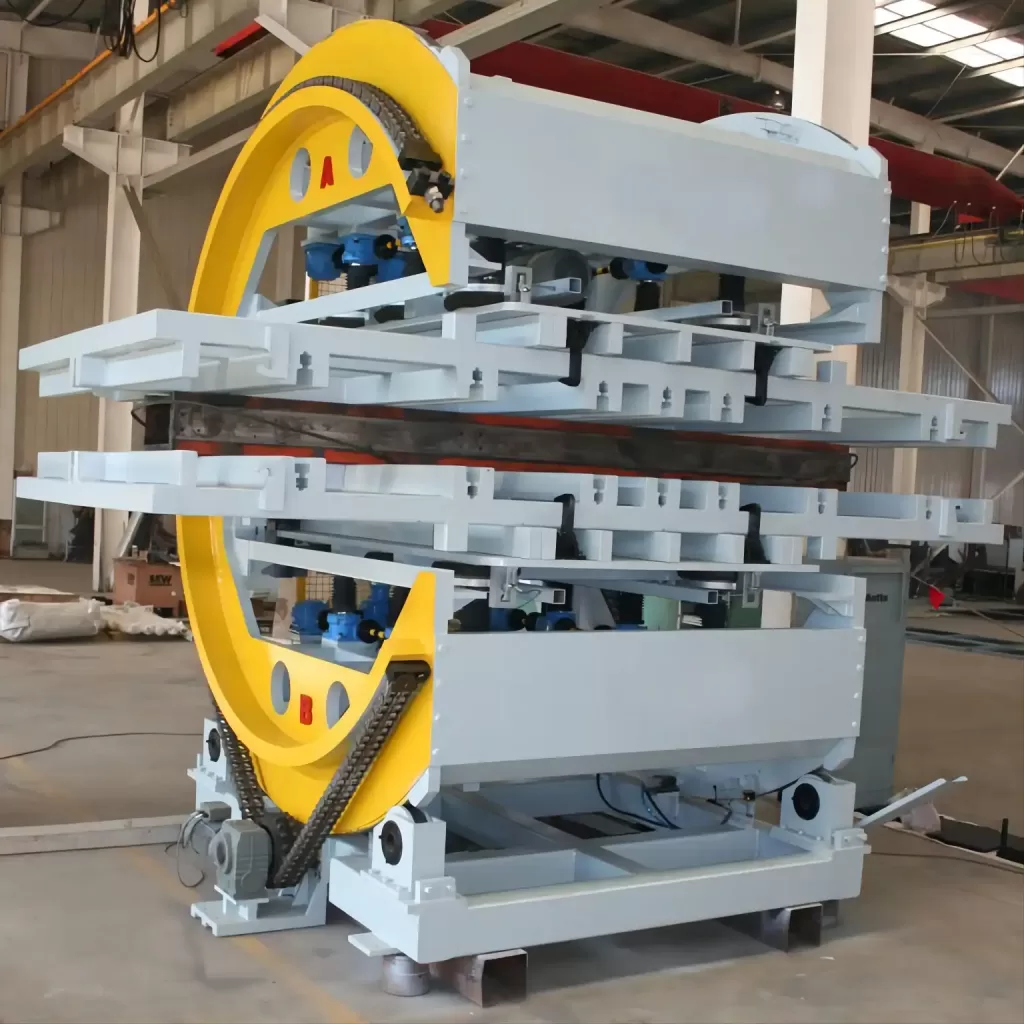
Choosing the right coil upender involves evaluating coil weight range (1-20 tons), rotation speed requirements, available floor space, and integration with existing packing lines. SHJLPACK recommends hydraulic upenders for heavy coils (5-20 tons) and mechanical models for high-speed applications with lighter coils.
Dive Deeper Content:
📊 Technical Specification Comparison
| Specification | SHJLPACK HU-200 | 风鼎 FU-180 | 无锡步惠 WX-150 |
|---|---|---|---|
| Max Capacity | 20 tons | 18 tons | 15 tons |
| Rotation Speed | 90 seconds | 120 seconds | 150 seconds |
| Power Consumption | 18.5 kW | 22 kW | 15 kW |
| Floor Space | 12m² | 15m² | 14m² |
| Automation Level | Smart Auto | Fully Auto | Semi-Auto |
| Belgian Service | 48-hour response | 72-hour response | 96-hour response |
🔧 Application-Based Selection Guide
For High-Volume Belgian Centers (300+ coils/day):
- Recommended: SHJLPACK HU-200 Smart Series
- Rotation speed: 90 seconds max
- Integration: Full automation with packing lines
- Ideal for: Antwerp port facilities with export focus
For Medium-Sized Belgian Operations (150-300 coils/day):
- Recommended: 风鼎 FU-180 Professional
- Rotation speed: 120 seconds
- Integration: Semi-automated systems
- Ideal for: Regional service centers in Wallonia
For Specialized Belgian Applications:
- SHJLPACK custom solutions for non-standard coils
- 无锡步惠 for budget-conscious expansions
- Hybrid systems for facilities with space constraints
💡 Key Decision Factors for Belgian Plants
-
Coil Weight Distribution
- Analyze your typical coil weights: 70% of Belgian centers handle 3-8 ton coils
- Choose capacity with 20% overhead for future needs
- Consider occasional heavy coils (up to 15 tons)
-
Space Constraints
- Belgian industrial real estate costs: €150-300/m² annually
- SHJLPACK compact designs save 20-30% floor space
- Consider vertical integration with overhead cranes
-
Future Expansion Plans
- Modular systems allow capacity upgrades
- Compatibility with planned automation investments
- Spare parts availability in European market
According to Randal Liu, "Belgian facilities should prioritize suppliers with European technical support. SHJLPACK maintains spare parts inventory in Rotterdam, ensuring 48-hour delivery to any Belgian location."
3. What Are the 4 Critical Steps for Successful Upender Implementation in Belgium?
Leading Paragraph:
Even the best coil upender will underperform without proper implementation. I've witnessed Belgian plants lose months of potential benefits due to poor installation planning and inadequate operator training.
Snippet Paragraph:
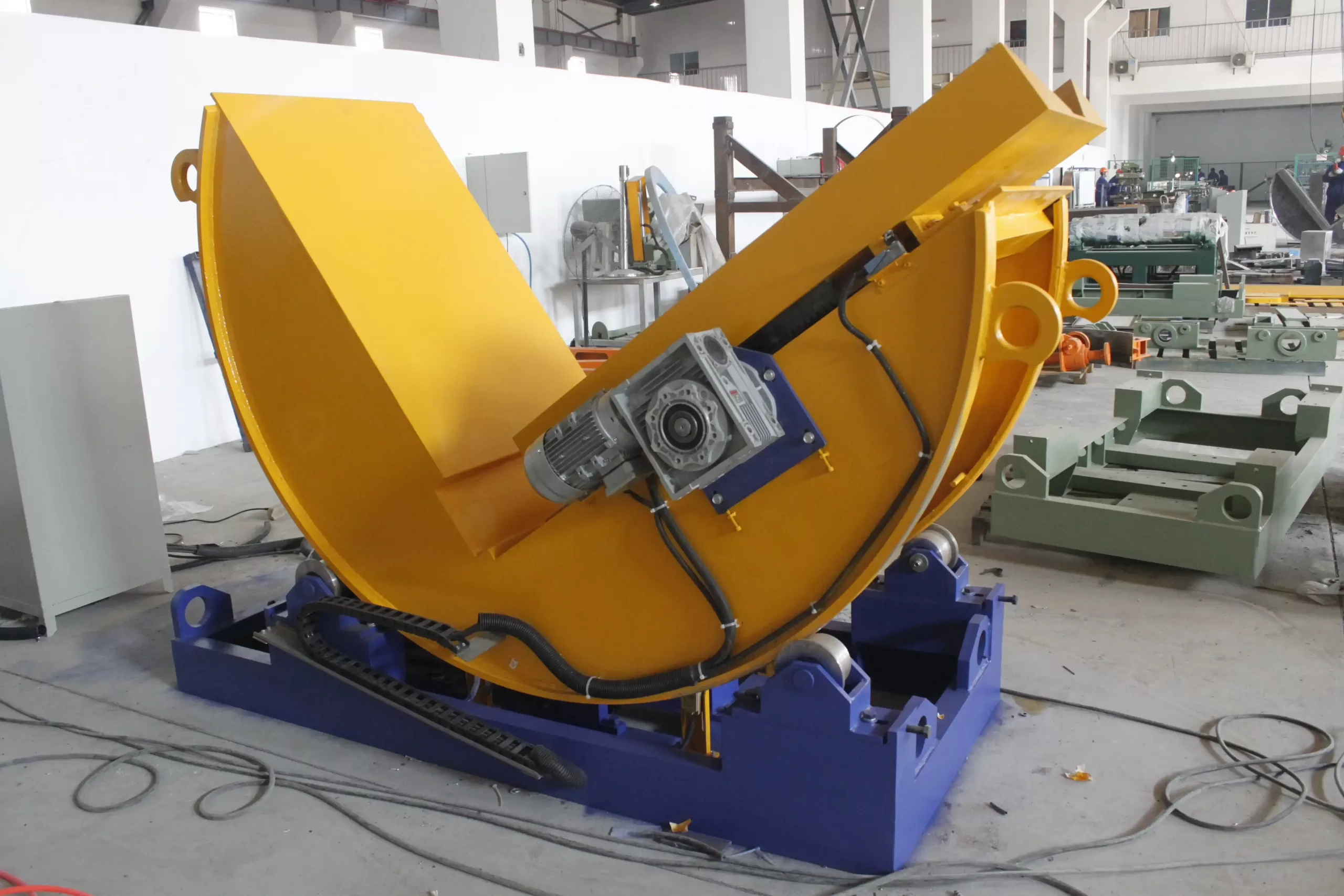
Successful upender implementation requires: comprehensive site assessment, proper foundation preparation, phased installation with minimal downtime, and thorough operator training. SHJLPACK's Belgian implementation process typically takes 3-4 weeks with production disruption limited to 5 working days.
Dive Deeper Content:
🚀 Implementation Timeline & Process
Week 1: Site Preparation & Foundation Work
- Civil engineering assessment (load capacity > 25 tons/m²)
- Power supply upgrade (380V, 50Hz standard in Belgium)
- Safety zone demarcation
- Utility connections (compressed air, drainage)
Week 2-3: Equipment Installation
- Day 1-3: Upender assembly and positioning
- Day 4-7: Electrical and control system integration
- Day 8-10: Testing with sample coils
- Day 11-12: Safety system validation
Week 4: Training & Handover
- 3-day intensive operator training
- Maintenance team certification
- Spare parts inventory setup
- Performance benchmarking
📋 Pre-Implementation Checklist
✅ Site Assessment Completed
- Floor load capacity verification
- Overhead clearance confirmation (minimum 6 meters)
- Access routes for equipment delivery
- Utility connection points identified
✅ Regulatory Compliance
- Belgian safety standards (ARAB/Codex)
- CE certification validation
- Environmental permits (for hydraulic systems)
- Noise level compliance (<80 dB)
✅ Operational Readiness
- Production schedule adjusted for installation
- Backup processing capacity arranged
- Key operators identified for training
- Maintenance team briefed
💼 Project Management Approach
SHJLPACK assigns dedicated project managers for Belgian implementations who speak local languages and understand regional regulations. The implementation team includes:
- Mechanical engineers (2-3 specialists)
- Electrical automation experts
- Safety compliance officers
- Training professionals
According to my experience managing 30+ European installations, the critical success factor is involving maintenance teams from day one. Belgian technicians trained on SHJLPACK equipment achieve 95% first-time fix rate for minor issues, reducing dependency on external service.
🌟 Post-Implementation Support
First 30 Days:
- On-site technician during initial production
- Daily performance monitoring
- Operator skill assessment
- Fine-tuning based on actual coil mix
Months 2-6:
- Monthly remote performance review
- Spare parts consumption analysis
- Preventive maintenance scheduling
- Operator advanced training
SHJLPACK's European support center in Germany provides 4-hour response for critical issues and 24-hour spare parts delivery to Belgian locations through established logistics partners.
4. How Does Upender Integration Impact Overall Coil Packing Line Efficiency?
Leading Paragraph:
Your coil packing line is only as fast as its slowest component. When upenders aren't properly integrated, they create bottlenecks that undermine your entire automation investment. I've analyzed dozens of Belgian facilities where upender-packing line mismatch caused 30% efficiency losses.
Snippet Paragraph:
Proper upender integration boosts overall packing line efficiency by 35-50% through synchronized operation, reduced handling time, and eliminated bottlenecks. SHJLPACK's integrated systems achieve 98% uptime by ensuring upenders match packing machine cycle times and coil transfer requirements.
Dive Deeper Content:
⚙️ System Synchronization Analysis
Before Integration:
- Upender cycle time: 3 minutes
- Packing machine cycle: 2 minutes
- Result: Packing machine waits 1 minute per coil
- Daily efficiency loss: 6+ hours
After SHJLPACK Integration:
- Synchronized cycle times: 2.5 minutes both
- No waiting between processes
- Continuous material flow
- 98% equipment utilization
📈 Efficiency Improvement Metrics
Based on data from Belgian service centers:
| Metric | Standalone Equipment | Integrated SHJLPACK System |
|---|---|---|
| Coils/Hour | 20-25 | 35-40 |
| Labor Required | 3 operators | 1.5 operators |
| Changeover Time | 15-20 minutes | 5-8 minutes |
| Monthly Throughput | 12,000 coils | 18,000+ coils |
| Energy Consumption | 45 kWh/coil | 32 kWh/coil |
🔄 Integration Technical Requirements
Control System Integration:
- Common PLC platform (Siemens/Schneider Electric)
- Unified HMI interface
- Real-time data exchange
- Centralized monitoring
Mechanical Integration Points:
- Conveyor height alignment (±5mm tolerance)
- Transfer mechanism synchronization
- Safety system interconnection
- Emergency stop coordination
Data Integration Benefits:
- Production tracking across entire process
- Predictive maintenance alerts
- Performance analytics
- OEE (Overall Equipment Effectiveness) monitoring
🏆 Recommended Integration Approaches
Level 1: Basic Integration (适合小型比利时中心)
- Mechanical connection only
- Separate control systems
- Manual data recording
- 15-20% efficiency gain
Level 2: Advanced Integration (SHJLPACK推荐)
- Full control system integration
- Automated data collection
- Predictive maintenance
- 35-50% efficiency gain
Level 3: Smart Factory Integration (适合大型比利时企业)
- IoT connectivity
- AI-powered optimization
- Automated quality control
- 50-65% efficiency gain
According to Randal Liu, "Belgian plants choosing SHJLPACK integrated solutions achieve full ROI in 12-18 months through combined efficiency gains, labor reduction, and quality improvement. The key is treating the upender and packing line as a single system rather than separate components."
Conclusion
Integrating the right coil upender system transforms Belgian service centers through improved safety, higher efficiency, and better ROI. Proper selection and implementation ensure seamless operation with your existing steel coil packing line.
Frequently Asked Questions
Q: What is the typical ROI period for coil upender investments in Belgian service centers?
A: Most Belgian facilities achieve ROI within 14-18 months through labor reduction (saving 2-3 workers per shift), increased throughput (30-50% more coils daily), and eliminated product damage claims. SHJLPACK installations often reach breakeven faster due to higher reliability and lower maintenance costs.
Q: How do Belgian safety regulations affect coil upender design and operation?
A: Belgian ARAB/Codex regulations require specific safety features including emergency stops, safety light curtains, overload protection, and operator training certification. SHJLPACK systems are pre-configured for Belgian compliance, with CE certification and necessary documentation for local authorities.
Q: What maintenance requirements should Belgian plants expect with automated coil upenders?
A: Basic maintenance includes daily visual inspections, weekly lubrication, monthly hydraulic system checks, and annual comprehensive overhaul. SHJLPACK provides customized maintenance schedules based on usage intensity, with most Belgian facilities requiring 8-12 hours of monthly maintenance time.
Q: Can existing Belgian facilities integrate coil upenders without major structural modifications?
A: Yes, most Belgian service centers can integrate upenders with minimal modifications. SHJLPACK conducts thorough site assessments to ensure compatibility. Common requirements include reinforced concrete foundations (25+ ton capacity) and 380V power supply, which most industrial facilities already have.
Q: How do coil upenders handle different coil sizes and weights in mixed-production Belgian centers?
A: Modern upenders feature adjustable programming for various coil specifications. SHJLPACK systems can store 20+ preset configurations for different coil diameters (800-2000mm), weights (1-20 tons), and material types, allowing quick changeovers in 2-3 minutes for mixed production environments.


