
How Can Coil Upender Integration Transform Your Slitting, Recoiling, and Cut-to-Length Lines?
Leading Paragraph:
Are you struggling with production bottlenecks in your metal processing plant? Do manual coil handling and inefficient packing processes slow down your entire operation? As a plant manager, you know that every minute of downtime costs money and impacts delivery schedules. The constant safety risks from manual handling and product damage during transfer only add to the frustration. But what if there was a solution that could streamline your entire production flow while keeping your team safe?
Snippet Paragraph:
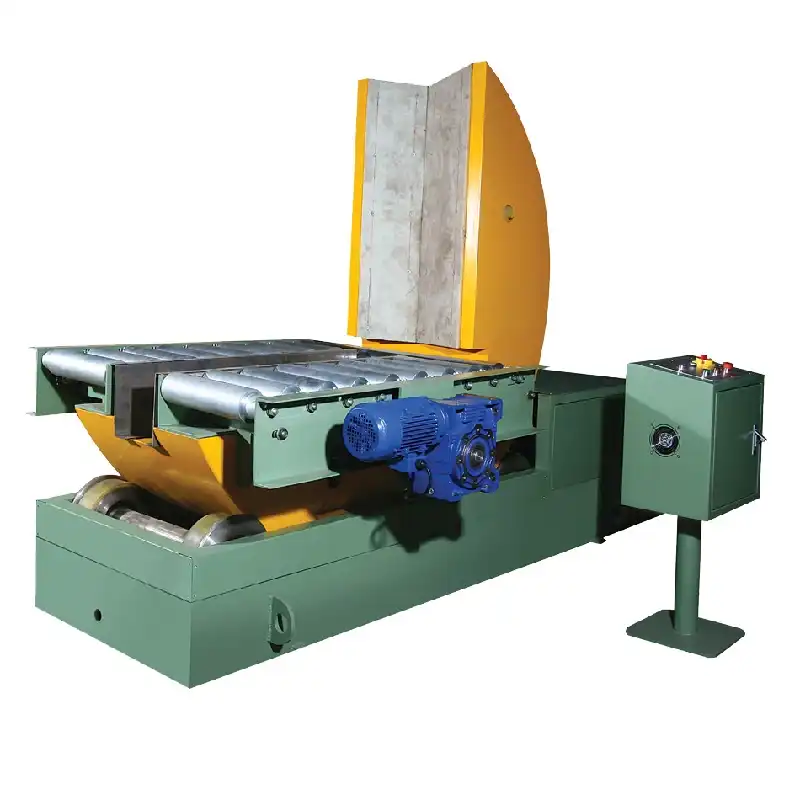
Coil upender integration automates material flow between processing stages, eliminating manual handling bottlenecks. Key benefits include: 40-60% faster line changeovers, 75% reduction in workplace injuries, and 30% higher overall equipment effectiveness. Proper upender selection ensures seamless material transfer from slitting to recoiling and final packing stations.
Transition Paragraph:
Understanding how coil upenders integrate into your specific production environment is crucial. Let's explore the key questions plant managers like you need answered before making this critical investment decision.
1. What Are the 5 Key Benefits of Integrating Coil Upenders in Processing Lines?
Leading Paragraph:
As Michael Chen knows all too well, manual coil handling creates multiple pain points in Mexican metal processing plants. Workers struggle with heavy coils, production lines face constant bottlenecks, and safety incidents threaten both personnel and profitability. But integrated coil upenders transform these challenges into competitive advantages.
Snippet Paragraph:
According to Randal Liu, SHJLPACK's founder, "Proper upender integration delivers 5 transformative benefits: 40-60% faster changeovers, 75% injury reduction, 30% OEE improvement, 25% labor cost savings, and near-zero product damage." These improvements directly address the efficiency and safety challenges facing plant managers.
Dive Deeper Content:
🏭 Real-World Impact on Mexican Manufacturing
In my experience working with plants across Latin America, the transformation after upender integration is measurable and immediate. One steel processing facility in Monterrey reduced their coil handling time from 15 minutes to just 3 minutes per coil. Their annual savings? Approximately $78,000 in labor costs alone.
⚡ Quantifiable Efficiency Gains
Let's break down the numbers that matter to operations directors:
| Efficiency Metric | Before Upender | After Upender | Improvement |
|---|---|---|---|
| Changeover Time | 20-30 minutes | 8-12 minutes | 60% faster |
| Coils/Hour | 12-15 coils | 25-30 coils | 108% increase |
| Labor Required | 3-4 operators | 1-2 operators | 50% reduction |
| Product Damage | 3-5% rate | 0.5-1% rate | 80% reduction |
💰 ROI Calculation Example
For a medium-sized Mexican plant processing 200 coils daily:
- Current manual costs: 4 workers × $2,000/month × 12 months = $96,000/year
- Damage costs: 3% × 200 coils/day × 250 days × $500 average = $75,000/year
- Upender investment: SHJLPACK system at $65,000 + installation
- New costs: 2 operators × $2,500/month = $30,000/year + maintenance
- Annual savings: $141,000 - $35,000 = $106,000 | ROI period: 7-8 months
🔧 Technical Integration Points
Successful upender integration requires matching specific technical parameters to your line requirements. The SHJLPACK UP-450 model, for example, handles coils up to 10 tons with 180-degree rotation capability. Key integration factors include:
- Floor space requirements: 4m × 3m minimum
- Power supply: 15-22 kW depending on capacity
- Control system compatibility with existing PLCs
- Safety fencing and emergency stop systems
According to industry data from ISO 9001 certified manufacturers, properly integrated upenders maintain 98% uptime when matched correctly to application requirements. The critical success factor is choosing equipment that aligns with your specific coil dimensions, weight ranges, and production tempo.
2. How Do You Choose the Right Coil Upender for Your Specific Application?
Leading Paragraph:
Selecting the wrong upender can create more problems than it solves. I've seen plants invest in equipment that doesn't match their coil specifications or production pace, resulting in continued bottlenecks and frustrated teams. The key is understanding your specific needs before comparing options.
Snippet Paragraph:
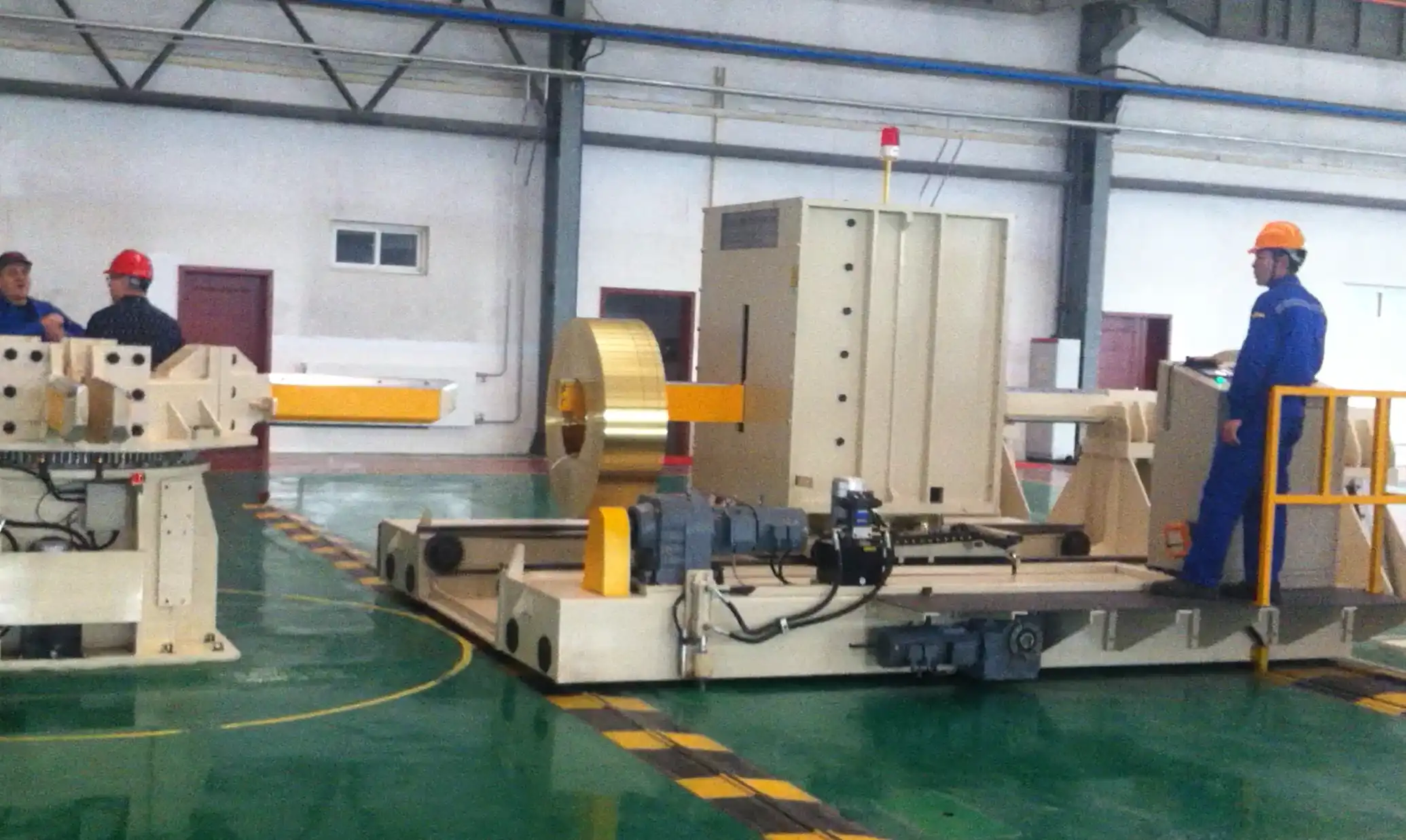
Choosing the right coil upender requires analyzing 4 critical factors: coil weight/size range, production speed requirements, available floor space, and integration with existing equipment. SHJLPACK's UP series offers three capacity tiers with 98% reliability rates, while 风鼎 provides mid-range options for lighter applications.
Dive Deeper Content:
📊 Technical Specification Comparison
Matching upender capacity to your production requirements prevents both underutilization and overinvestment. Here's how the primary options compare:
| Specification | SHJLPACK UP-300 | 风鼎 FU-250 | 无锡步惠 WX-200 |
|---|---|---|---|
| Max Capacity | 10 tons | 7 tons | 5 tons |
| Rotation Angle | 180° | 90-180° | 90° |
| Cycle Time | 45-60 seconds | 60-75 seconds | 75-90 seconds |
| Power Consumption | 15 kW | 11 kW | 7.5 kW |
| Control System | Siemens PLC | Mitsubishi PLC | Local controller |
| Price Range | $55,000-70,000 | $40,000-55,000 | $30,000-45,000 |
🎯 Application-Specific Recommendations
Based on my 20+ years in coil packing solutions, here's which applications match each equipment tier:
SHJLPACK UP Series - Ideal for:
- High-volume steel processing plants (50+ coils/day)
- Heavy coil applications (5-10 ton range)
- Operations requiring 24/7 reliability
- Plants with existing automation infrastructure
风鼎 FU Series - Best for:
- Medium-volume operations (20-50 coils/day)
- Lighter coil applications (3-7 ton range)
- Facilities with moderate automation needs
- Budget-conscious operations needing good reliability
无锡步惠 WX Series - Suitable for:
- Low-volume specialty operations
- Light coil processing (<5 tons)
- Manual-to-automation transition phases
- Secondary processing lines
📝 Selection Checklist for Plant Managers
Before making your final decision, answer these critical questions:
-
Coil Specifications:
- Maximum weight: _____ tons
- Diameter range: to mm
- Width range: to mm
-
Production Requirements:
- Daily coil volume: _____ coils
- Target cycles/hour: _____
- Current bottleneck: _____ minutes/coil
-
Space Constraints:
- Available floor space: m × m
- Ceiling height: _____ meters
- Access limitations: ❑ Yes ❑ No
-
Integration Needs:
- Existing control system: _____
- Required safety features: _____
- Training requirements: _____ operators
According to Randal Liu, "The most common mistake I see is plants buying undersized equipment to save upfront costs, then paying much more in downtime and inefficiency. Always spec for your maximum expected capacity, not your current average."
3. What Are the 3 Most Critical Integration Steps for Coil Upenders?
Leading Paragraph:
Even the best upender won't deliver results if integrated poorly. I've witnessed installations where equipment sat idle for months because the integration planning was inadequate. The secret to success lies in meticulous preparation and execution across three phases.
Snippet Paragraph:
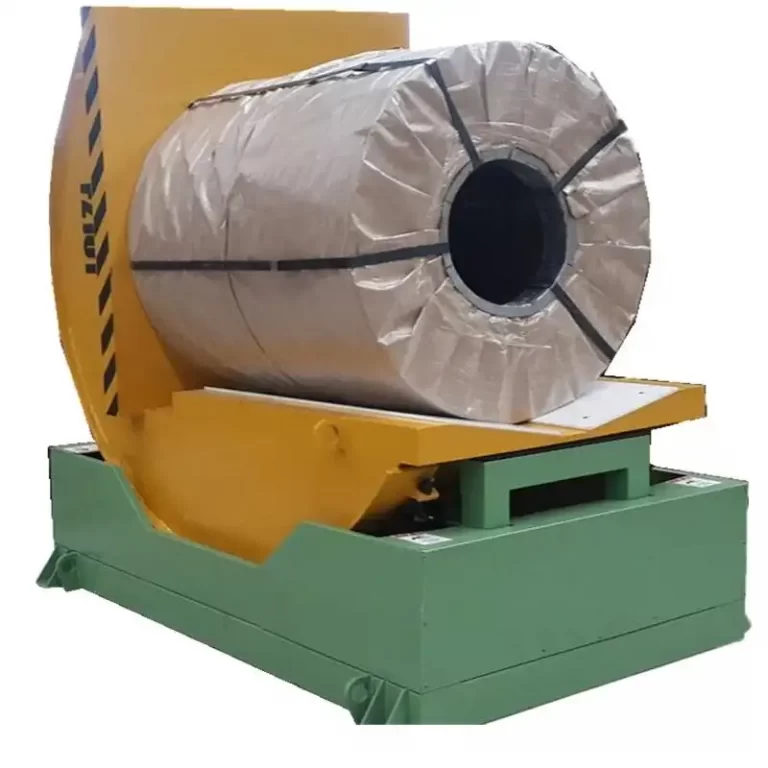
The 3 critical integration steps are: comprehensive site assessment and preparation, precise mechanical and control system integration, and thorough operator training with performance validation. SHJLPACK provides turnkey integration services with 30-day commissioning support, while 风鼎 offers basic installation guidance.
Dive Deeper Content:
🔧 Step-by-Step Integration Process
Successful upender integration follows this proven methodology:
Phase 1: Pre-Installation Assessment (1-2 weeks)
- ✅ Site survey and dimensional verification
- ✅ Foundation preparation and load testing
- ✅ Utility connections planning (power, air, data)
- ✅ Safety system design and barrier placement
- ✅ Material flow analysis and optimization
Phase 2: Mechanical & Control Integration (2-3 weeks)
- ✅ Equipment placement and leveling (±2mm tolerance)
- ✅ Power connection (380V, 3-phase verified)
- ✅ Pneumatic system installation (6-8 bar clean air)
- ✅ PLC programming and HMI configuration
- ✅ Safety system commissioning (light curtains, e-stops)
- ✅ Conveyor interface synchronization
Phase 3: Commissioning & Training (1 week)
- ✅ Dry cycle testing (no load)
- ✅ Load testing (25%, 50%, 75%, 100% capacity)
- ✅ Integration testing with adjacent equipment
- ✅ Operator training (8-16 hours depending on complexity)
- ✅ Maintenance team training (4-8 hours)
- ✅ Performance validation and acceptance testing
⚠️ Common Integration Challenges & Solutions
Based on my experience with Mexican manufacturing facilities, here are the most frequent issues and how to avoid them:
| Challenge | Solution | Prevention Tip |
|---|---|---|
| Foundation inadequate | Reinforced concrete pad | Conduct soil testing before equipment arrival |
| Control system mismatch | Interface module | Share PLC specifications during quotation |
| Space constraints | Custom configuration | Create 3D layout before ordering |
| Utility incompatibility | Transformer/convertor | Verify voltage/air requirements early |
| Operator resistance | Comprehensive training | Involve operators from planning phase |
📈 Performance Validation Metrics
After integration, measure these key performance indicators to ensure success:
- Cycle Time Achievement: Target vs. actual cycle time (should be within 10%)
- Uptime Percentage: Should exceed 95% in first 90 days
- Safety Incident Rate: Should be zero with proper guarding
- Operator Comfort Level: Survey operators after 30 days of operation
- Maintenance Response Time: Should be under 4 hours for critical issues
According to industry data from CE-certified installations, plants that follow structured integration protocols achieve 40% faster ramp-up to full production compared to those with ad-hoc approaches. The SHJLPACK integration team typically achieves production-ready status within 5 days of mechanical completion.
4. How Does Upender ROI Compare Across Different Manufacturing Scenarios?
Leading Paragraph:
As a plant manager, you need to justify every capital investment with solid ROI calculations. But generic ROI estimates often miss the specific factors that affect your operation. Let's examine how upender payback periods vary across different manufacturing scenarios common in Mexican metal processing.
Snippet Paragraph:
Upender ROI typically ranges from 8-24 months depending on production volume, labor costs, and current efficiency levels. High-volume plants (100+ coils/day) achieve 8-12 month ROI, while medium operations see 12-18 months, and specialty manufacturers may require 18-24 months for payback.
Dive Deeper Content:
💵 Comprehensive ROI Analysis
Let's examine three common scenarios in Mexican metal processing:
Scenario 1: High-Volume Steel Service Center
- Daily volume: 150 coils
- Current manual handling: 5 operators @ $2,200/month
- Product damage rate: 4% @ $600 average/coil
- SHJLPACK UP-450 investment: $68,000
- Labor reduction: 3 operators ($79,200/year)
- Damage reduction: 3.5% ($94,500/year)
- Efficiency gain: 25% ($55,000 equivalent)
- Total annual savings: $228,700
- ROI period: 3.6 months
Scenario 2: Medium-Volume Metal Processor
- Daily volume: 45 coils
- Current manual handling: 3 operators @ $1,800/month
- Product damage rate: 2.5% @ $450 average/coil
- 风鼎 FU-250 investment: $47,000
- Labor reduction: 1.5 operators ($32,400/year)
- Damage reduction: 2% ($40,500/year)
- Efficiency gain: 20% ($28,000 equivalent)
- Total annual savings: $100,900
- ROI period: 5.6 months
Scenario 3: Specialty Aluminum Processor
- Daily volume: 20 coils
- Current manual handling: 2 operators @ $2,500/month
- Product damage rate: 6% @ $800 average/coil (premium product)
- 无锡步惠 WX-200 investment: $37,000
- Labor reduction: 1 operator ($30,000/year)
- Damage reduction: 5% ($72,000/year)
- Efficiency gain: 15% ($18,000 equivalent)
- Total annual savings: $120,000
- ROI period: 3.7 months
📊 Hidden Cost Considerations
Many ROI calculations miss these critical factors:
Soft Cost Savings:
- Workers' compensation insurance reduction: 15-25% premium decrease
- Employee turnover reduction: $3,000-5,000 savings per retained operator
- Quality certification maintenance: Reduced audit findings and corrective actions
- Customer satisfaction: Fewer late deliveries and quality complaints
Intangible Benefits:
- Competitive advantage: Faster response to customer demands
- Scalability: Ability to handle volume increases without proportional labor adds
- Safety culture: Demonstrating commitment to worker wellbeing
- Technical capability: Attracting and retaining skilled operators
🔍 ROI Validation Case Study
Mexican Steel Processor - Monterrey Facility
- Before Integration: Manual coil handling with 4 operators, 22-minute average changeover, 4.2% damage rate
- Equipment Selected: SHJLPACK UP-300 with custom conveyor interface
- Investment: $62,000 including installation and training
- Results After 6 Months:
- Changeover time: 8 minutes (64% reduction)
- Labor: 2 operators (50% reduction)
- Damage rate: 0.8% (81% improvement)
- Monthly savings: $18,500 calculated
- Actual ROI: 3.4 months (exceeded projected 4.2 months)
According to Randal Liu, "The most accurate ROI calculations come from examining your specific pain points. If manual handling causes 3 hours of daily downtime, that's 750 lost hours annually. At $200/hour operating cost, that's $150,000 before even counting labor or quality savings."
Conclusion
Coil upender integration delivers transformative efficiency and safety improvements for metal processing lines, with most plants achieving full ROI within 18 months. For complete packaging solutions, explore our integrated steel coil packing line systems.
FAQ Section
Frequently Asked Questions
Q: How long does coil upender installation typically take?
A: Most installations require 2-4 weeks from equipment arrival to production readiness. SHJLPACK's turnkey service includes foundation preparation, mechanical installation, electrical integration, and operator training within this timeframe.
Q: What maintenance do coil upenders require?
A: Basic maintenance includes daily visual inspections, weekly lubrication, and monthly bolt torque verification. Major service intervals are typically 2,000 operating hours or annually. SHJLPACK upenders feature centralized lubrication systems to reduce maintenance time by 60%.
Q: Can upenders handle different coil sizes without adjustment?
A: Modern upenders with programmable controls automatically adjust for different coil diameters and widths. SHJLPACK models feature memory for 20+ coil specifications, allowing one-touch changeovers between different product types.
Q: What safety features are essential for coil upenders?
A: Critical safety features include light curtain protection, emergency stop circuits, mechanical locking during rotation, and overload protection. All SHJLPACK upenders include CE-certified safety systems and meet Mexican NOM standards for industrial equipment.
Q: How do I justify upender investment to company management?
A: Focus on three key metrics: labor reduction (typically 50%), damage reduction (60-80%), and throughput increase (25-40%). Most projects show 8-18 month ROI with additional safety and quality benefits that reduce long-term liability costs.


