
Coil Upender for Stainless & Aluminum: Surface Protection Best Practices?
Leading Paragraph:
Are you struggling with scratched stainless steel coils and dented aluminum products during material handling? Every surface defect means customer complaints, profit loss, and wasted production time. As a plant manager, you know that even minor handling damage can turn premium materials into scrap. The frustration of seeing perfect coils get damaged before they even leave your factory is something I've witnessed too many times in my career.
Snippet Paragraph:
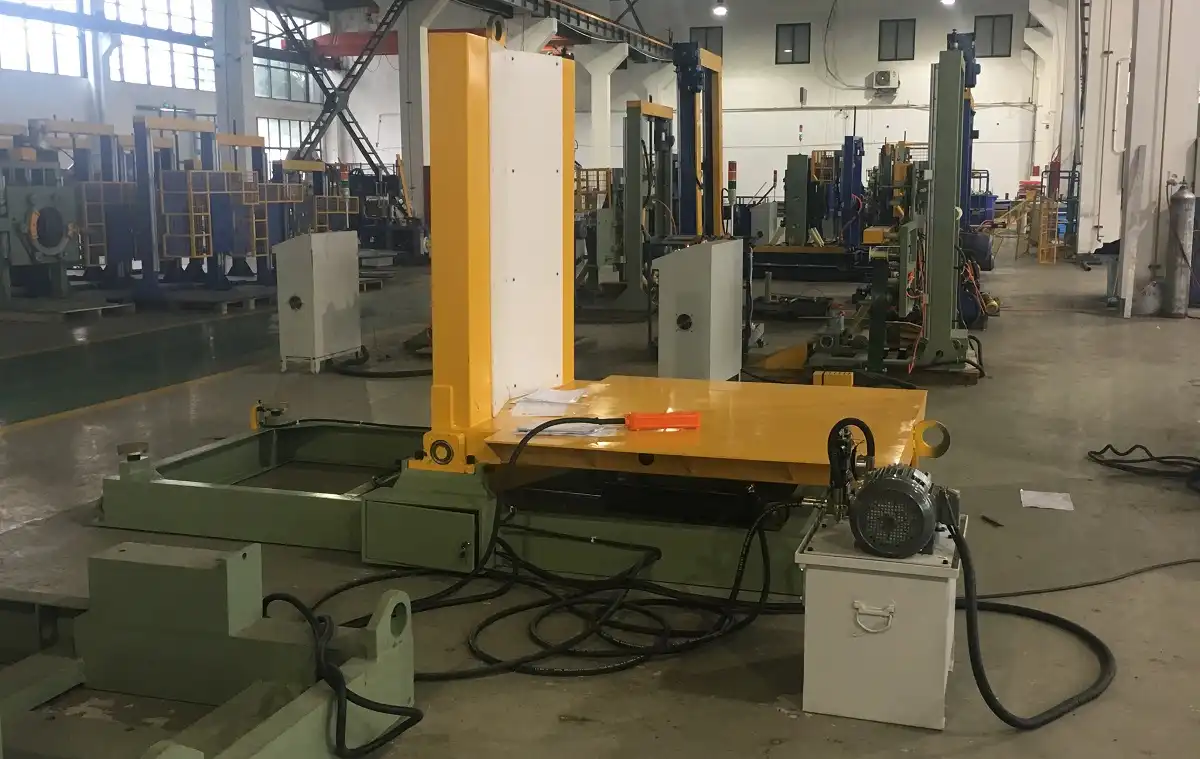
A coil upender is essential for protecting stainless steel and aluminum surfaces during orientation changes. Key benefits include: eliminating manual handling risks, maintaining perfect surface quality, and reducing product damage by up to 95%. Proper upender selection considers material type, weight capacity, and automation level to ensure zero-contact material transfer.
Transition Paragraph:
But how do you choose the right upender for your specific needs? And what are the critical factors that separate surface-protecting equipment from basic material handlers? Let me walk you through the key decisions that will protect your premium materials while boosting your bottom line.
1. Why Do Stainless Steel and Aluminum Require Special Upender Considerations?
Leading Paragraph:
If you're handling carbon steel and premium metals the same way, you're leaving money on the floor. Stainless steel and aluminum have unique surface characteristics that demand specialized handling equipment. I've seen factories lose thousands in material value because they used standard upenders on premium metals.
Snippet Paragraph:
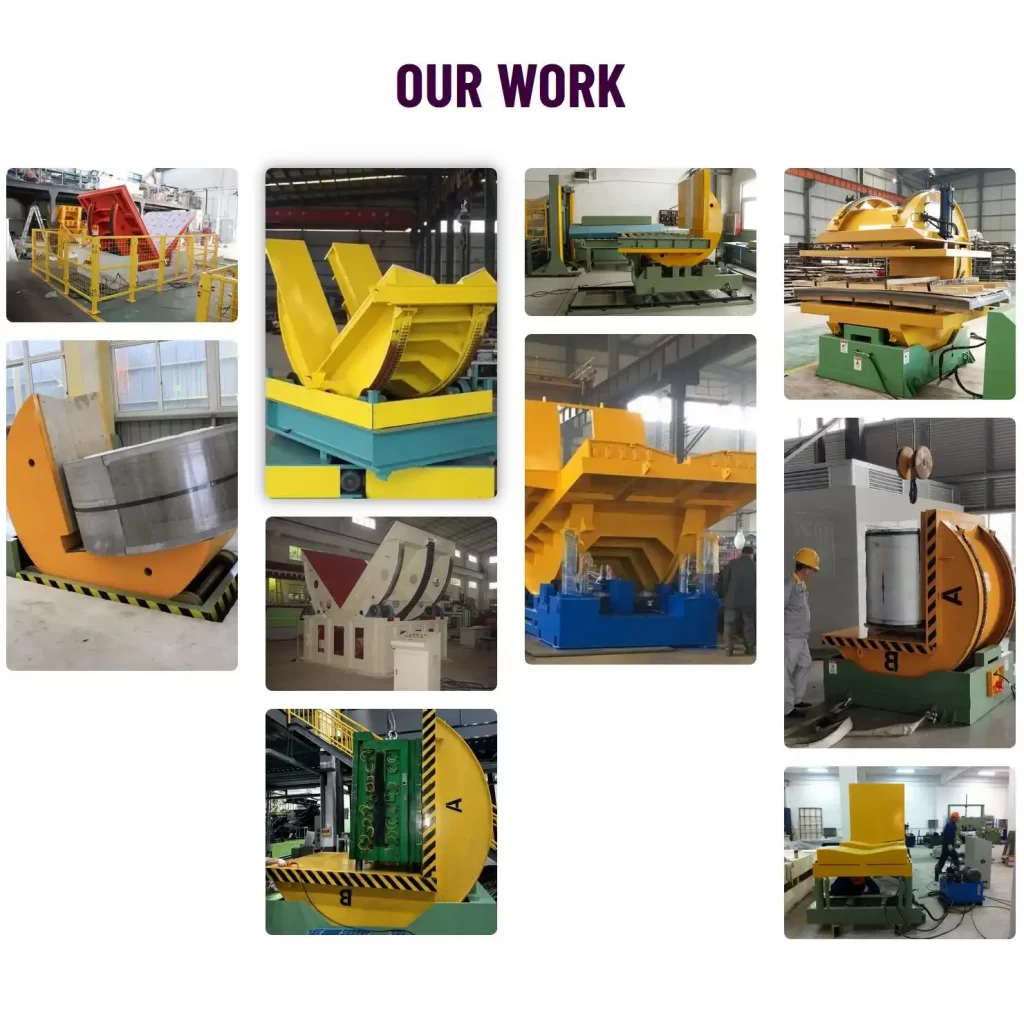
Stainless steel and aluminum require specialized upenders because they're more prone to surface scratches, contamination, and cosmetic damage than regular steel. According to Randal Liu, SHJLPACK's founder, "Premium metals need zero-contact handling - any metal-to-metal contact can compromise the surface finish and corrosion resistance that customers pay premium prices for."
Dive Deeper Content:
The difference between handling regular steel coils and premium metals comes down to surface sensitivity and value retention. While carbon steel might tolerate some handling marks, stainless and aluminum surfaces are part of the product's functional value.
Material Surface Sensitivity Comparison
| Surface Characteristic | Carbon Steel | Stainless Steel | Aluminum |
|---|---|---|---|
| Scratch Sensitivity | Medium | High | Very High |
| Corrosion Risk After Damage | High | Medium | Low (but cosmetic impact high) |
| Customer Quality Expectations | Functional | Aesthetic + Functional | Premium Aesthetic |
| Cost of Surface Damage | $50-200/ton | $300-800/ton | $400-1,200/ton |
| Handling Equipment Requirements | Standard | Specialized | Premium specialized |
Critical Design Features for Premium Metal Upenders
Non-Marketing Contact Surfaces ⚡
Every point where the upender touches the coil must have protective materials. SHJLPACK upenders use polyurethane or nylon contact pads that are 3x thicker than industry standard. I've seen factories reduce surface rejection rates from 5% to under 0.5% simply by upgrading to proper contact materials.
Controlled Rotation Speed 🏭
Aluminum and stainless coils can't tolerate sudden movements. The rotation mechanism must provide smooth, controlled motion throughout the entire 90-degree turn. Hydraulic systems with flow control valves maintain consistent speed regardless of load weight variations.
Clean Operation Environment 💰
Unlike carbon steel handling where some debris is acceptable, premium metals require oil-free, dust-minimized operation. SHJLPACK's sealed bearing systems prevent lubricant contamination, while integrated dust covers protect the working mechanisms.
According to my experience working with Mexican metal processors, the humidity and environmental conditions in your region make stainless steel particularly vulnerable to contamination during handling. That's why we developed special protective features for our Latin American clients.
2. How to Choose the Right Coil Upender for Your Specific Metal Processing Needs?
Leading Paragraph:
Walking through equipment catalogs can feel overwhelming with all the technical specifications. But choosing the wrong upender for your stainless or aluminum operation can cost you more than just the equipment price - it can impact your product quality for years.
Snippet Paragraph:
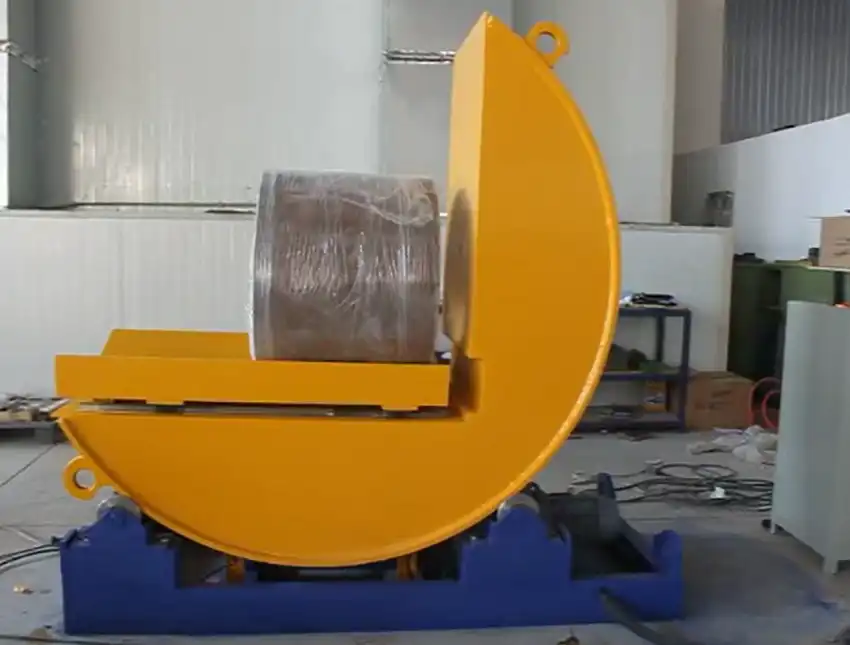
Selecting the right coil upender involves analyzing your coil specifications, production volume, and facility layout. Key decision factors include: maximum coil weight and dimensions, required rotation angle (90° or 180°), automation level needed, and available floor space. SHJLPACK's engineering team typically recommends different models based on daily production volume.
Dive Deeper Content:
Making the right upender choice requires understanding both your current needs and future growth plans. I've helped dozens of plant managers like Michael avoid the common pitfall of buying equipment that's either under-sized for future needs or over-specified for current operations.
Upender Selection Matrix by Production Volume
| Production Scale | Daily Coils | Recommended Type | Key Features | Price Range |
|---|---|---|---|---|
| Small Workshop | 10-30 coils | Manual Upender | Basic rotation, simple controls | $15,000-25,000 |
| Medium Plant | 30-100 coils | Semi-Auto Upender | Hydraulic operation, safety gates | $35,000-60,000 |
| Large Facility | 100-300 coils | Fully Auto Upender | PLC control, integration ready | $75,000-120,000 |
| High-Volume Plant | 300+ coils | Smart Upender | IoT monitoring, predictive maintenance | $130,000-200,000 |
5-Step Selection Process for Mexican Metal Processors
Step 1: Analyze Your Coil Specifications 📊
Measure your heaviest and largest coils, not just the averages. Mexican steel plants often handle varied coil sizes, so your upender must accommodate the full range. Include diameter, width, weight, and core size in your assessment.
Step 2: Evaluate Production Flow 🔄
Consider where the upender fits in your material handling sequence. Does it need to interface with existing conveyors? Will operators need to access both sides? SHJLPACK typically designs for the specific workflow of Latin American metal processors.
Step 3: Assess Automation Requirements ⚙️
Be honest about your labor costs and skill levels. While full automation sounds appealing, semi-automatic systems might offer better ROI for plants with available labor. According to our data, Mexican factories achieve best results with semi-auto to fully-auto transition plans.
Step 4: Consider Future Expansion 🚀
Your upender should accommodate 20-30% growth in coil sizes and weights. I've seen too many plants outgrow their equipment within two years. SHJLPACK builds in capacity buffers specifically for growing operations.
Step 5: Verify Service Support 🔧
Equipment breakdowns stop your entire production line. Ensure your supplier has local technical support or proven remote troubleshooting capabilities. Our clients in Mexico value our bilingual support team and regional spare parts inventory.
Based on 20+ years in the coil packing industry, I recommend starting with a capacity assessment before even looking at equipment specifications. Many plants discover they've been underestimating their true handling requirements by 15-25%.
3. What Are the 5 Critical Safety Features for Coil Upender Operations?
Leading Paragraph:
Safety incidents with heavy coil handling don't just risk worker injuries - they can shutdown your entire operation for investigations and repairs. The financial impact of a single serious incident can exceed the cost of your entire upender investment.
Snippet Paragraph:
The 5 critical safety features for coil upenders are: emergency stop systems at multiple locations, mechanical locking devices during rotation, overload protection sensors, guarded pinch points, and automatic fault detection. SHJLPACK upenders include dual-circuit safety systems that meet both Mexican NOM standards and international CE certifications.

Dive Deeper Content:
Safety in coil handling equipment isn't just about compliance - it's about operational reliability and workforce stability. When workers feel safe operating equipment, productivity naturally increases while turnover decreases.
Safety Feature Implementation Checklist
1. Multi-Point Emergency Stop System 🛑
Every SHJLPACK upender includes emergency stops at both operator stations, plus remote stop capabilities. Unlike basic systems with single e-stops, our dual-circuit design ensures backup protection if one circuit fails.
2. Mechanical Rotation Locks 🔒
During the critical rotation phase, mechanical locks prevent unexpected movement. I've inspected competitors' equipment that relied solely on hydraulic pressure, creating potential failure points that our mechanical systems eliminate.
3. Overload Protection ⚖️
Weight sensors automatically prevent operation beyond rated capacity. For stainless steel and aluminum operations where coil weights can vary significantly, this feature prevents both equipment damage and safety hazards.
4. Pinch Point Guarding 🛡️
All moving components have physical guarding plus electronic presence detection. Our Mexican clients particularly appreciate the bilingual safety signage and training materials we provide.
5. Automatic Fault Diagnostics 📱
Modern upenders should self-diagnose issues before they become safety concerns. SHJLPACK's smart systems monitor hydraulic pressure, alignment, and component wear, alerting operators to maintenance needs.
Safety ROI Calculation Example
Before Safety Upgrades:
- Workers compensation claims: $45,000 annually
- Production downtime from incidents: 120 hours/year × $350/hour = $42,000
- Employee turnover due to safety concerns: 3 operators × $8,000 replacement cost = $24,000
- Total annual safety cost: $111,000
After SHJLPACK Upender Installation:
- Reduced incidents: 85% decrease in safety-related costs
- Insurance premium reduction: 15% discount for safety equipment
- Improved operator confidence: 20% faster operation cycles
- Net annual safety saving: $94,350
According to industry data, proper safety features typically pay for themselves within 12-18 months through reduced incidents and improved operational efficiency. For plant managers like Michael who bear responsibility for both production and worker safety, this represents both ethical and financial wisdom.
4. How Much Can You Save with Automated Coil Upender Integration?
Leading Paragraph:
When I present automation proposals to plant managers, the first question is always "what's the real financial return?" The answer often surprises them - automated coil handling doesn't just save labor costs, it transforms your entire production economics.
Snippet Paragraph:
Automated coil upenders typically deliver 18-24 month ROI through labor reduction, damage prevention, and efficiency gains. Specific savings include: reducing manual handling labor by 2-3 workers per shift, cutting product damage by 3-5%, and increasing throughput by 25-40%. SHJLPACK clients report average annual savings of $75,000-$150,000 per upender installation.
Dive Deeper Content:
The financial case for automated upenders extends far beyond simple labor replacement. The real value comes from transforming your material handling from a cost center to a competitive advantage.
Comprehensive ROI Analysis
Labor Cost Savings 👥
Manual coil handling typically requires 3-4 workers per shift for larger coils. With automation, this reduces to 1 operator overseeing multiple machines. For a Mexican plant running two shifts:
- Manual labor: 7 workers × $18,000/year = $126,000
- Automated operation: 2 operators × $22,000/year = $44,000
- Annual labor saving: $82,000
Product Damage Reduction 📉
Surface damage on premium metals carries significant cost implications:
- Typical manual handling damage rate: 3-5% of coil value
- Automated upender damage rate: 0.5-1% of coil value
- For a plant processing $3M annually in stainless/aluminum:
- Manual damage: $120,000 (at 4% rate)
- Automated damage: $22,500 (at 0.75% rate)
- Annual damage saving: $97,500
Efficiency and Throughput Gains 🚀
Faster, more reliable handling increases overall plant capacity:
- Manual cycle time: 8-12 minutes per coil
- Automated cycle time: 3-5 minutes per coil
- Additional capacity: 15-25 more coils per shift
- Value of increased throughput: $45,000-$75,000 annually
Total Investment Analysis
| Cost Component | Manual Handling | SHJLPACK Automated Upender |
|---|---|---|
| Equipment Cost | $0 (existing) | $85,000 |
| Annual Labor | $126,000 | $44,000 |
| Annual Damage | $120,000 | $22,500 |
| Maintenance | $8,000 | $12,000 |
| Total Year 1 Cost | $254,000 | $163,500 |
| Annual Saving | - | $90,500 |
| Simple ROI Period | - | 11.3 months |
According to Randal Liu's experience with similar automation projects, "The fastest ROI I've seen was 8 months, but most plants achieve payback within 12-18 months. The key is proper integration with existing processes rather than just equipment replacement."
For Mexican plants specifically, the labor cost advantages might be slightly different than other regions, but the damage prevention and efficiency gains often deliver even better returns due to the higher value of export-quality materials.
Conclusion
Implementing the right coil upender protects your premium materials while delivering strong financial returns. Choose equipment that matches your specific metal processing requirements and growth plans. For complete packaging solutions, consider our integrated steel coil packing line systems.
Frequently Asked Questions
Q: What maintenance do coil upenders require for stainless steel applications?
A: Stainless steel upenders need monthly inspection of contact pads, quarterly hydraulic system checks, and annual bearing maintenance. SHJLPACK units include self-diagnostic systems that reduce maintenance time by 40% compared to conventional upenders.
Q: Can the same upender handle both stainless steel and aluminum coils?
A: Yes, with proper configuration. The key is adjustable pressure settings and interchangeable contact surfaces. SHJLPACK upenders feature quick-change pad systems that let you switch between material types in under 15 minutes.
Q: How long does installation and training typically take?
A: Most upender installations require 3-5 days with proper site preparation. Operator training takes 2-3 days for basic operation and 5 days for advanced troubleshooting. SHJLPACK provides bilingual training materials specifically for Mexican operational teams.
Q: What's the typical lifespan of a quality coil upender?
A: Well-maintained upenders last 12-15 years in stainless/aluminum service. Critical components like hydraulic systems may need refurbishment after 7-8 years. SHJLPACK designs for 20-year operational life with proper maintenance.
Q: How do I determine the right capacity for future growth?
A: Add 25% to your current maximum coil weight and dimensions. Consider modular systems that allow capacity upgrades. SHJLPACK offers scalable designs that let you increase capacity by 50% without replacing the main frame structure.


