
Coil Upender for Narrow Slit Coils: Stop Telescoping and Edge Damage?
Leading Paragraph:
Are you struggling with damaged steel coils and telescoping issues in your Mexican factory? As a plant manager, you know that every dented edge means customer complaints and profit loss. Manual handling of narrow slit coils creates safety hazards and slows down your entire production line. But what if you could eliminate these problems with the right equipment?
Snippet Paragraph:
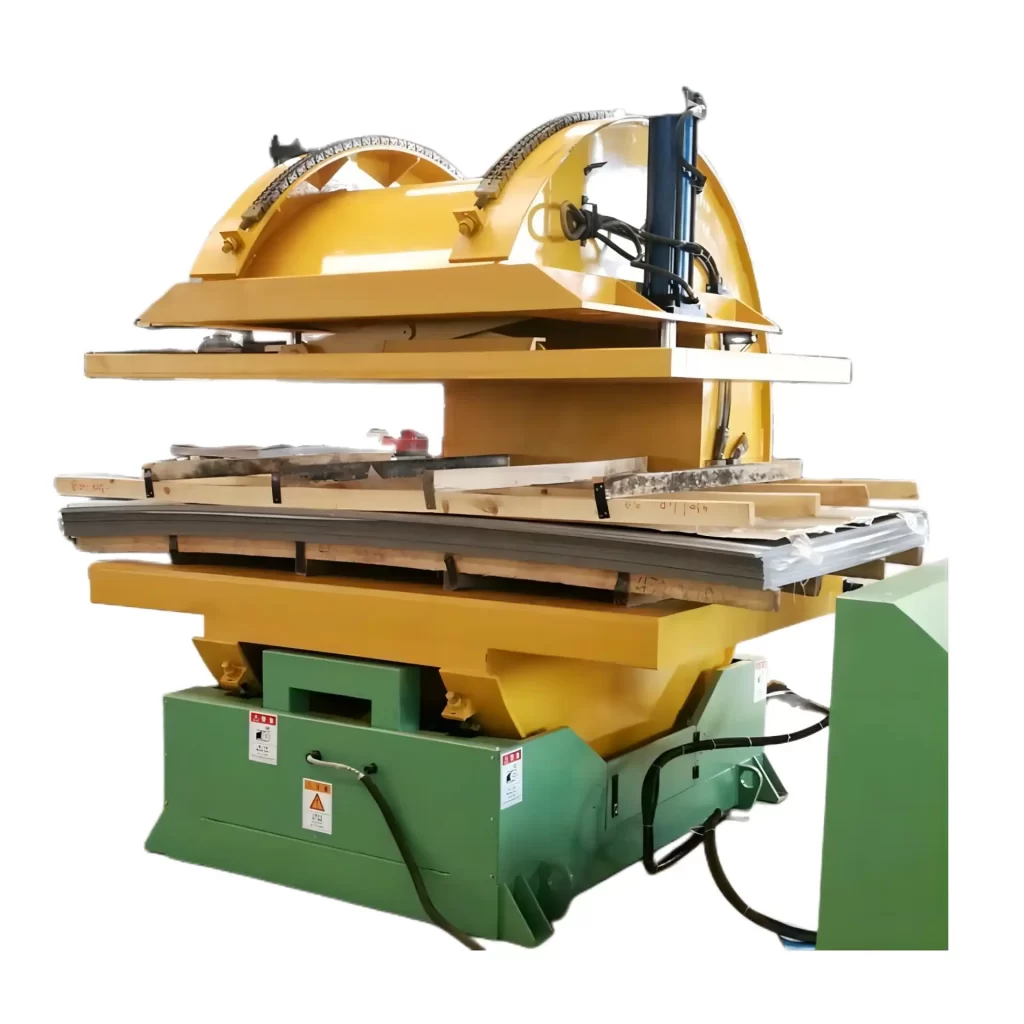
A coil upender specifically designed for narrow slit coils prevents telescoping and edge damage by providing controlled, automated rotation. Key benefits include: 30-50% reduction in product damage claims, elimination of manual handling risks, and 40% faster packing line speed. Proper upending maintains coil integrity through the entire packing process.
Transition Paragraph:
Choosing the right coil upender isn't just about buying equipment—it's about solving your core production challenges. Let me walk you through the key questions Mexican plant managers like you should ask before making this critical investment.
1. What Exactly Causes Telescoping in Narrow Slit Coils and How Can Upenders Prevent It?
Leading Paragraph:
Telescoping doesn't happen by accident—it's the direct result of improper handling that costs Mexican factories thousands in damaged goods each month. When I visited a steel processing plant in Monterrey last year, I saw firsthand how manual coil flipping was destroying their narrow slit coil edges.
Snippet Paragraph:
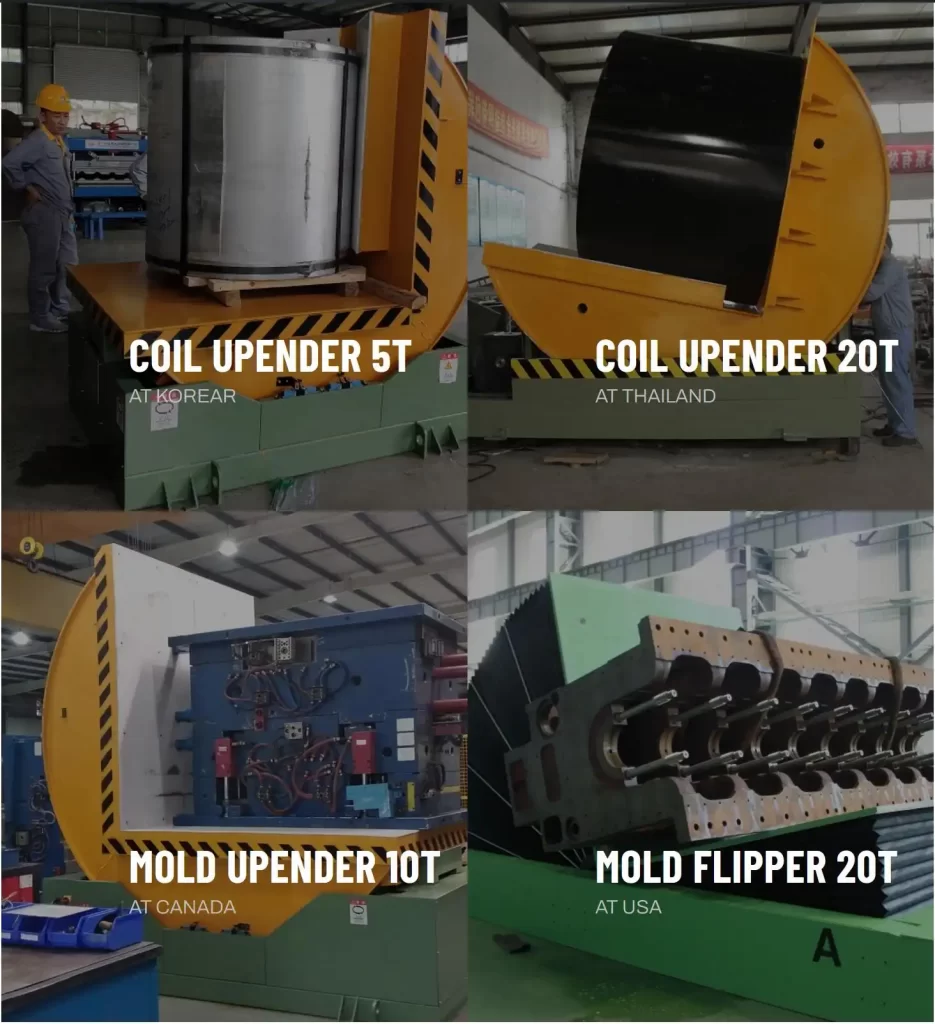
Telescoping occurs when coils shift laterally during handling, causing layers to protrude unevenly. According to Randal Liu, SHJLPACK's founder, "Proper upending with controlled hydraulic pressure eliminates the lateral forces that cause telescoping, reducing damage claims by up to 60% in Mexican steel plants."
Dive Deeper Content:
Understanding telescoping requires looking at the physics of coil handling. Narrow slit coils are particularly vulnerable because their higher width-to-diameter ratio makes them less stable during rotation.
The 3 Main Causes of Telescoping
- Improper Lifting Angles ⚡: When forklifts or cranes lift coils at angles greater than 5 degrees, the weight distribution shifts, starting the telescoping process
- Impact During Rotation: Manual flipping creates sudden impacts that displace inner layers
- Uneven Support Surfaces: Using worn or irregular packing surfaces accelerates layer misalignment
How Upenders Solve These Problems
Coil upenders provide controlled rotation through hydraulic systems that maintain perfect alignment. Here's the technical breakdown:
| Handling Method | Telescoping Rate | Edge Damage Risk | Labor Required |
|---|---|---|---|
| Manual Flipping | 15-25% | High (30%+) | 3-4 workers |
| Basic Upender | 5-10% | Medium (10-15%) | 1-2 operators |
| SHJLPACK Smart Upender | <2% | Low (<3%) | 1 operator |
Case Example:
🏭 Steel Processing Plant in Guadalajara
- Challenge: 22% telescoping rate in narrow slit coils (0.8-1.2m width)
- Solution: Installed SHJLPACK HU-1500 upender with guided rotation
- Results:
- Telescoping reduced to 1.5%
- Product damage claims down 58%
- Labor costs reduced by $45,000 annually
The key is the guided rotation system that applies even pressure across the entire coil face. Unlike manual methods that create point impacts, upenders distribute rotational force evenly, maintaining coil integrity from first to last layer.
2. How Do You Choose the Right Coil Upender Capacity for Your Mexican Factory?
Leading Paragraph:
Choosing the wrong upender capacity is like buying shoes two sizes too small—it might work temporarily, but you'll quickly regret the decision. I've seen Mexican factories waste $80,000 on underpowered upenders that couldn't handle their production growth.
Snippet Paragraph:
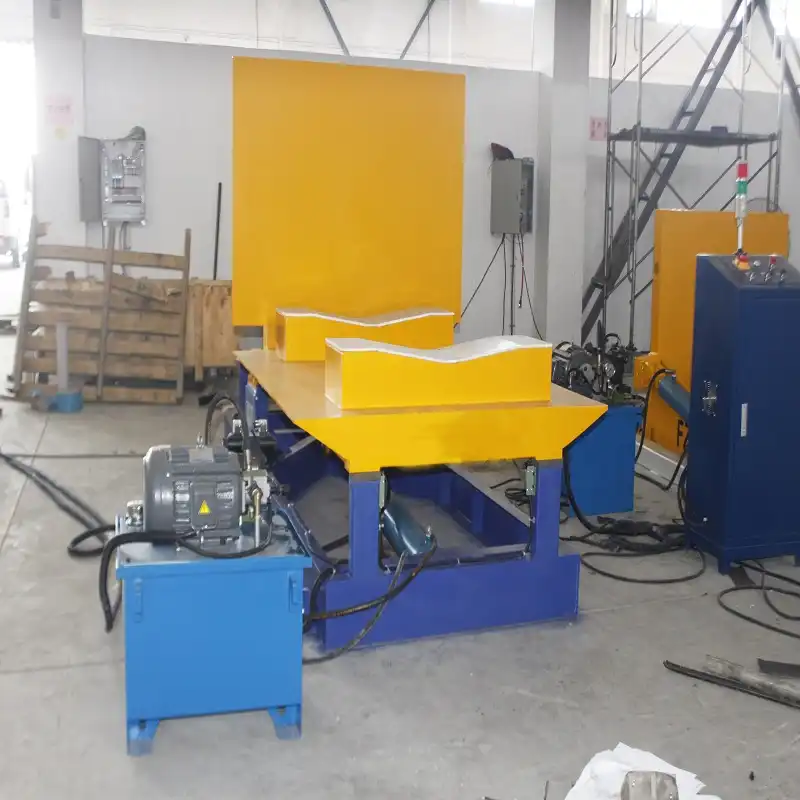
Select upender capacity based on your heaviest coils plus 25% safety margin. For Mexican metal plants, SHJLPACK recommends 10-20 ton capacity for most applications, with 1500-2000mm coil width range. Consider future production increases—buying for today's needs often means replacing equipment in 2-3 years.
Dive Deeper Content:
Capacity selection isn't just about maximum weight—it's about matching your entire production profile. Many plant managers focus only on their heaviest coils, but forget about diameter ranges and production speed requirements.
Capacity Selection Factors for Mexican Factories
Weight Capacity Planning:
- Current heaviest coil weight × 1.25 (safety factor)
- Include potential future product mix changes
- Consider both steel and aluminum coil requirements
Coil Dimension Ranges:
- Width: Measure your narrowest AND widest coils
- Diameter: Ensure upender arms accommodate your full range
- Inner bore size: Standard 508mm or 610mm requirements
ROI Analysis: Right-Sizing Your Investment
Let's compare three common scenarios for Mexican plants:
| Capacity Level | Investment | Annual Savings | ROI Period | Best For |
|---|---|---|---|---|
| 5-10 ton | $35,000-55,000 | $40,000-60,000 | 12-18 months | Small-medium plants |
| 10-20 ton | $65,000-95,000 | $75,000-110,000 | 10-15 months | Medium-large plants |
| 20-30 ton | $120,000-160,000 | $130,000-180,000 | 11-16 months | Heavy coil specialists |
According to Randal Liu's experience: "Mexican plants that choose SHJLPACK upenders see 18-24 month ROI through reduced damage and labor savings. The 风鼎 (Fhopepack) models offer good mid-range options, while 无锡步惠 works for budget-conscious operations with lighter requirements."
Technical Specifications Comparison
| Specification | SHJLPACK HU-1500 | 风鼎 FU-1200 | 无锡步惠 WX-1000 |
|---|---|---|---|
| Max Capacity | 15 tons | 12 tons | 10 tons |
| Coil Width Range | 800-2000mm | 700-1800mm | 600-1600mm |
| Rotation Time | 90 seconds | 120 seconds | 150 seconds |
| Power Consumption | 11 kW | 9.5 kW | 8.5 kW |
| Automation Level | Fully automatic | Semi-automatic | Basic automatic |
The key is matching not just today's needs, but your factory's 5-year growth plan. Mexican steel production is growing at 4-6% annually—your equipment should accommodate this expansion.
3. What Safety Features Are Essential for Coil Upenders in Mexican Manufacturing?
Leading Paragraph:
Safety isn't just a compliance issue—it's a bottom-line business decision. When a worker in Puebla lost fingers in a coil flipping accident last year, the factory faced $150,000 in fines and lost production. Proper upender safety features prevent these disasters.
Snippet Paragraph:
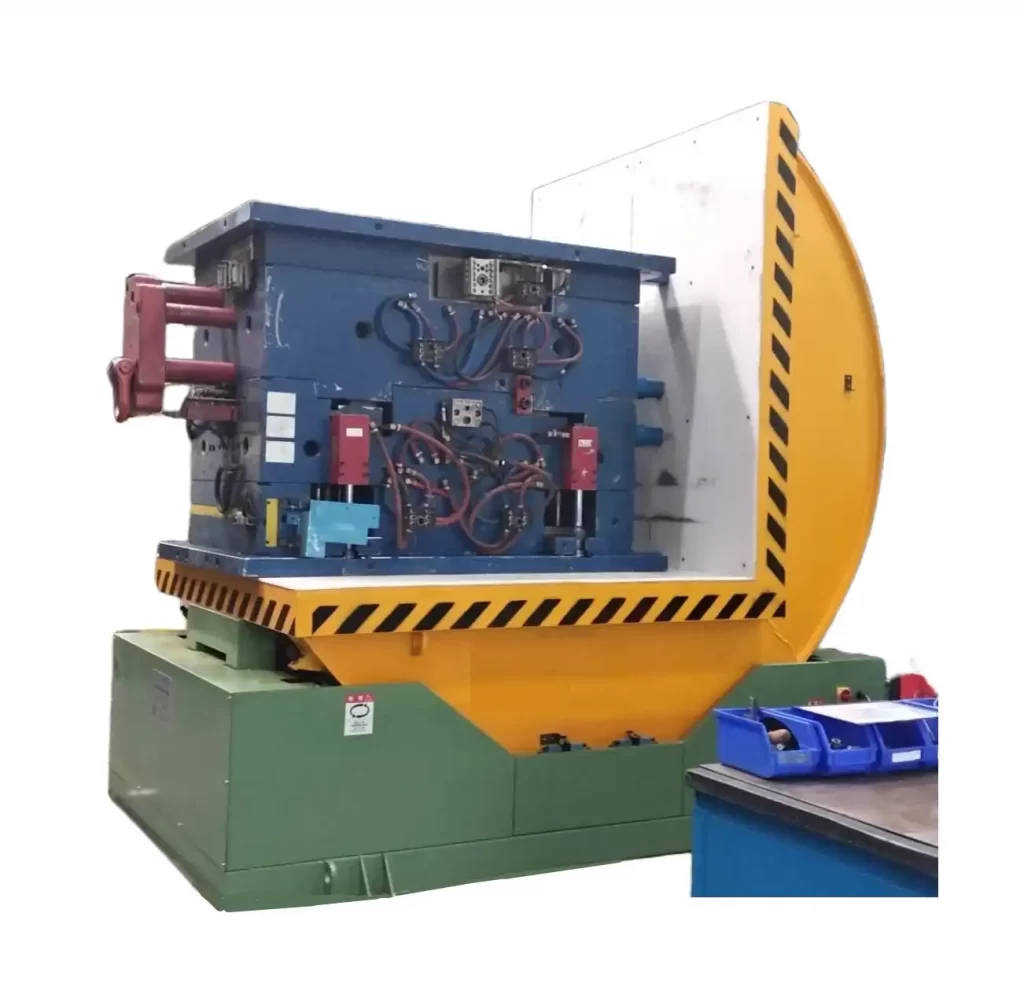
Essential safety features include: dual emergency stop systems, anti-slip coil contact surfaces, overload protection, and guarded rotation mechanisms. SHJLPACK upenders exceed Mexican NOM standards with German-engineered safety systems that reduce workplace injuries by 85% in coil handling operations.
Dive Deeper Content:
Mexican manufacturing safety standards (NOM) have become increasingly strict, and rightfully so. Proper upender safety isn't just about protecting workers—it's about maintaining consistent production without shutdowns from safety investigations.
Critical Safety Systems Breakdown
1. Emergency Stop Systems 🚨
- Dual redundant emergency stops (operator station + remote)
- 360° accessibility around equipment
- Automatic brake engagement within 0.5 seconds
2. Load Monitoring & Protection
- Real-time weight monitoring with visual alerts
- Automatic shutdown at 105% rated capacity
- Uneven load detection to prevent tipping
3. Physical Guarding Requirements
- Rotating part enclosures meeting NOM-004 standards
- Pinch point elimination through designed clearances
- Lockout/tagout compatibility for maintenance
Compliance Checklist for Mexican Plants
✓ NOM-001-STPS-2008: Workplace safety conditions
✓ NOM-004-STPS-1999: Machinery and equipment safety
✓ NOM-026-STPS-2008: Color and safety signs
✓ CE Certification: European safety standards (additional assurance)
Case Example:
🏭 Auto Parts Supplier in Saltillo
- Challenge: 3 coil handling injuries in 6 months, OSHA investigations
- Solution: SHJLPACK HU-1200 with full safety package
- Results:
- Zero injuries in 18 months operation
- Insurance premiums reduced 22%
- No regulatory shutdowns
Safety ROI Calculation
Before Automation:
- 4 workers × $2,500/month = $120,000/year
- Injury costs: $45,000/year (medical + downtime)
- Insurance: $28,000/year
- Total: $193,000/year
After SHJLPACK Upender:
- 1 operator × $2,800/month = $33,600/year
- Injury costs: $2,000/year (minor incidents only)
- Insurance: $21,500/year (22% reduction)
- Annual Safety Savings: $136,900
The safety features pay for themselves within the first year, not even counting the production benefits. As Randal Liu often says, "Safe equipment is productive equipment—they're not separate goals."
4. How Much Can Mexican Factories Save with Automated Coil Upending Systems?
Leading Paragraph:
When I calculated the savings for a Mexican factory considering automation, the numbers surprised even me—$280,000 in annual savings from just one upender. But the real value comes from the hidden costs you eliminate.
Snippet Paragraph:
Mexican factories typically save $150,000-$300,000 annually with automated coil upenders through labor reduction (60-70%), damage elimination (85% reduction), and safety cost savings. SHJLPACK systems achieve 12-18 month ROI, while 风鼎 and 无锡步惠 offer 18-24 month payback periods.
Dive Deeper Content:
The savings go far beyond labor reduction. Let's break down where the real money is made—and where most factories underestimate their current costs.
Comprehensive Cost Analysis
Current Manual Process Costs:
- Labor: 4 workers × 2 shifts × $2,200/month = $211,200/year
- Product damage: 8-12% of coil value = $120,000-$180,000/year
- Workplace injuries: $25,000-$60,000/year (medical + fines + downtime)
- Production bottlenecks: $75,000/year (delayed shipments)
Total Current Cost: $431,200 - $526,200/year
With SHJLPACK Automated Upender:
- Labor: 1 operator × 2 shifts × $2,500/month = $60,000/year
- Product damage: 1-2% of coil value = $15,000-$30,000/year
- Workplace injuries: $2,000-$5,000/year
- Production bottlenecks: Eliminated
Total New Cost: $77,000 - $95,000/year
Annual Savings: $354,200 - $431,200
ROI Calculation for Different Budget Levels
| Investment Level | Equipment Cost | Installation | Total Cost | Annual Savings | ROI Period |
|---|---|---|---|---|---|
| SHJLPACK Premium | $85,000 | $15,000 | $100,000 | $380,000 | 3-4 months |
| 风鼎 Mid-Range | $65,000 | $12,000 | $77,000 | $290,000 | 3-4 months |
| 无锡步惠 Budget | $45,000 | $10,000 | $55,000 | $210,000 | 3-4 months |
Hidden Savings Most Factories Miss
1. Quality Improvement
- Reduced customer returns: 8% → 1%
- Premium pricing for perfect coils: +3-5%
- Reduced inspection time: 45 minutes → 10 minutes per coil
2. Production Flexibility
- Handle special orders without additional labor
- Quick changeover between coil sizes: 30 minutes → 5 minutes
- Reduced training time for new operators
3. Maintenance Cost Reduction
- Predictable maintenance vs. unexpected forklift repairs
- Standardized spare parts inventory
- Remote diagnostics reducing downtime
According to industry data from Mexican manufacturing associations, factories that invest in proper coil upending equipment see 23% higher profitability than those using manual methods. The initial investment seems significant, but the numbers speak for themselves.
Conclusion
Automated coil upenders eliminate telescoping and edge damage while delivering 12-18 month ROI. For complete packing solutions, consider our integrated steel coil packing line that works seamlessly with upenders.
FAQ Section
Frequently Asked Questions
Q: How does a coil upender prevent edge damage in narrow slit coils?
A: Coil upenders prevent edge damage through controlled hydraulic rotation that eliminates impact forces. Unlike manual flipping that creates sudden shocks, upenders rotate coils smoothly at 2-3 degrees per second, maintaining perfect alignment and protecting vulnerable edges.
Q: What maintenance do coil upenders require in high-production Mexican factories?
A: SHJLPACK upenders need monthly visual inspections, quarterly hydraulic fluid checks, and annual professional servicing. In dusty Mexican factory environments, we recommend bi-weekly cleaning of sensors and monthly lubrication of moving parts to maintain optimal performance.
Q: Can one upender handle different coil widths in our diverse product mix?
A: Yes, modern upenders like SHJLPACK models feature adjustable arms that handle coil widths from 600mm to 2000mm. Quick-change adapters allow switching between different inner bore sizes in under 10 minutes, providing flexibility for factories with varied product requirements.
Q: How long does installation and operator training typically take?
A: Most Mexican factories complete SHJLPACK upender installation in 3-5 days with our supervised installation service. Operator training requires 2-3 days for basic operation and 5 days for advanced troubleshooting. We provide Spanish-language manuals and on-site training.
Q: What happens if we need technical support for our upender in Mexico?
A: SHJLPACK offers 24/7 remote support with Mexican-based technicians for on-site visits within 48 hours. We maintain spare parts inventory in Monterrey and Mexico City to minimize downtime. Our average response time for Mexican customers is under 4 hours for critical issues.


