
Coil Upender for 10–30‑Ton Coils: How to Size Motor, Frame, and Table
Leading Paragraph:
Are you struggling with manual coil handling that's slowing down your production line and putting your workers at risk? As a plant manager, you know that every minute of downtime costs money, and every workplace injury affects your bottom line. The challenge of safely and efficiently handling heavy steel coils can feel overwhelming, especially when you're dealing with suppliers who don't understand your operational realities.
Snippet Paragraph:
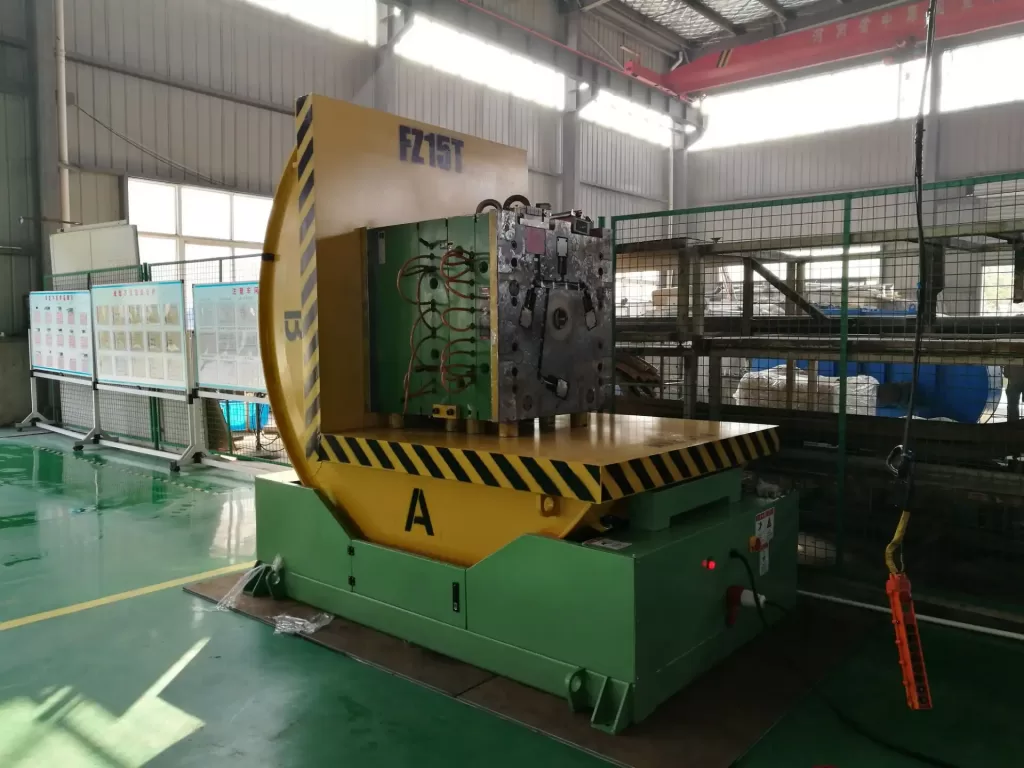
Properly sizing a coil upender requires calculating three critical components: motor power (15-45 kW for 10-30 ton coils), frame strength (high-tensile steel with 1.5x safety factor), and table size (20-40% larger than coil diameter). Key considerations include:
- Motor torque capacity must exceed peak starting load by 25%
- Frame design should withstand dynamic loads during rotation
- Table surface needs non-slip coating and proper edge protection
Transition Paragraph:
Getting these specifications wrong can lead to catastrophic equipment failure or inefficient operations. But how do you determine the exact requirements for your specific application? Let me walk you through the critical sizing factors that will ensure your coil upender investment pays off with reliable performance and maximum safety.
1. Why Is Proper Motor Sizing Critical for 10-30 Ton Coil Upenders?
Leading Paragraph:
Imagine your new upender struggling to lift a 25-ton coil, the motor overheating, and production grinding to a halt. This nightmare scenario happens when motor sizing gets overlooked. In Mexican steel plants like yours, where ambient temperatures can reach 40°C, undersized motors fail prematurely, costing thousands in repairs and lost production.
Snippet Paragraph:
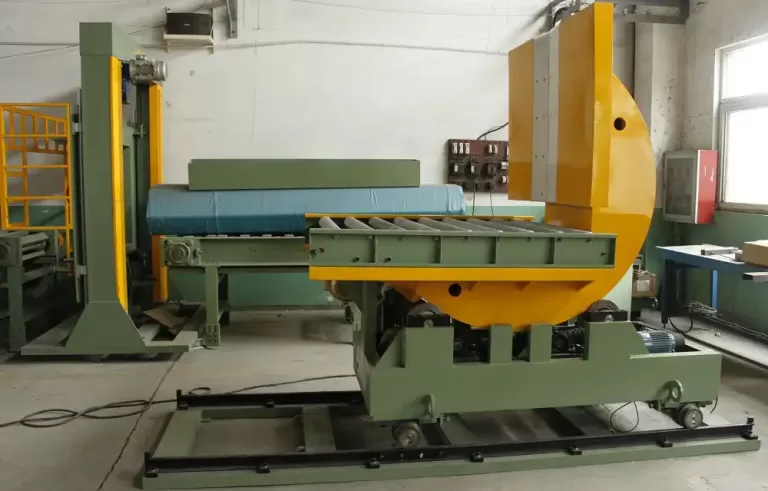
Motor sizing determines upender reliability and energy efficiency. For 10-30 ton coils, hydraulic motors (15-45 kW range) outperform electric models in heavy-duty applications. According to SHJLPACK's testing:
- 25-ton coils require minimum 30 kW motors with 20% overload capacity
- Hydraulic systems provide smoother acceleration, reducing coil damage risk
- Variable frequency drives cut energy consumption by 15-25%
Dive Deeper Content:
Motor Power Calculation Methodology
Getting motor power right isn't guesswork—it's precise engineering. The fundamental formula accounts for multiple factors beyond just coil weight:
Power (kW) = (Torque × Speed) / 9550
Where torque depends on coil weight, rotation radius, and acceleration time. For steel plants in Mexico, you must also consider altitude effects on motor performance and ambient temperature derating.
Hydraulic vs Electric Motor Comparison
| Parameter | Hydraulic Motor | Electric Motor |
|---|---|---|
| Torque at Low Speed | Excellent (constant torque) | Poor (requires gearbox) |
| Overload Capacity | 125% for 1 minute | 115% for 1 minute |
| Heat Generation | Medium (external cooling) | High (internal fans) |
| Maintenance Needs | Higher (seals, fluid) | Lower (bearings only) |
| Initial Cost | 15-25% higher | Lower |
| Lifespan | 8-12 years | 10-15 years |
Real-World Application Scenarios
🏭 Mexican Steel Plant Case Study
- Challenge: Frequent motor burnout with 22-ton coils
- Solution: Upgraded from 22 kW to 30 kW hydraulic motor with cooling system
- Results:
- Motor failures: reduced from 3/year to zero
- Energy consumption: decreased 18% with VFD
- Uptime: improved from 89% to 97%
According to Randal Liu, SHJLPACK's founder: "I've seen too many plants try to save $5,000 on motor sizing, then lose $50,000 in downtime. For 20-ton coils in hot climates, always spec 25% extra power capacity."
Key Sizing Considerations
⚡ Starting Torque Requirements
Heavy coils require high starting torque—typically 150-200% of running torque. Mexican factories often face voltage fluctuations, so motor selection must accommodate ±10% voltage variation without performance loss.
💰 Energy Efficiency Factors
Variable frequency drives (VFDs) can reduce energy costs by 15-25% in coil upender applications. For a machine running 16 hours/day, this translates to $3,000-5,000 annual savings at Mexican electricity rates.
2. What Frame Strength Specifications Ensure Long-Term Reliability?
Leading Paragraph:
Your upender frame isn't just metal—it's the backbone of your entire coil handling operation. A weak frame might handle normal loads initially, but after months of 25-ton coil rotations, stress fractures can develop, leading to catastrophic failure that endangers your entire production line and workforce.
Snippet Paragraph:
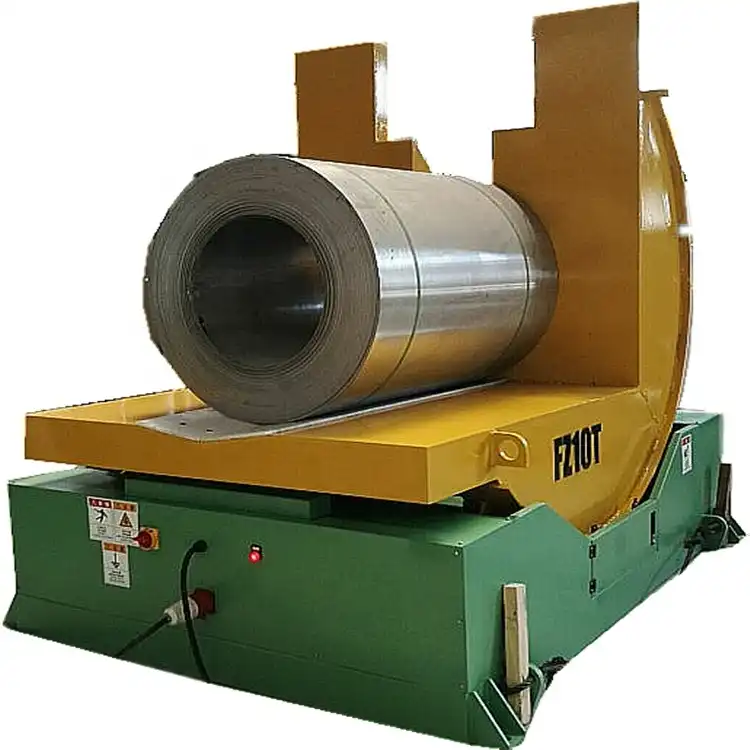
Frame strength requires high-tensile steel (ASTM A572 Grade 50) with 1.5x safety factor over maximum load. Critical specifications include:
- Main beam thickness: 8-12 mm for 10-30 ton capacity
- Welding standards: AWS D1.1 certified procedures
- Structural analysis: FEA-verified stress distribution
Dive Deeper Content:
Material Selection Guide
Not all steel is created equal for upender frames. The manufacturing environment in Mexican industrial zones often involves high humidity and temperature variations that accelerate corrosion.
Recommended Materials:
- Primary Structure: ASTM A572 Grade 50 (minimum yield strength: 345 MPa)
- Wear Surfaces: AR400 steel plates (400 Brinell hardness)
- Corrosion Protection: Epoxy primer + polyurethane topcoat (120-150 microns total)
Structural Design Verification Process
Proper frame design follows a rigorous verification process that many budget suppliers skip:
- Load Calculation - Determine static and dynamic loads (including shock loads)
- FEA Analysis - Computer simulation of stress points and deflection
- Prototype Testing - Physical testing to 150% of rated capacity
- Fatigue Analysis - Projected lifespan under cyclic loading
Frame Strength Comparison Table
| Capacity | Minimum Beam Thickness | Recommended Steel Grade | Safety Factor | Expected Lifespan |
|---|---|---|---|---|
| 10-15 tons | 8 mm | A36 | 1.5x | 7-10 years |
| 16-22 tons | 10 mm | A572 Gr50 | 1.6x | 10-12 years |
| 23-30 tons | 12 mm | A572 Gr50 | 1.75x | 12-15 years |
Maintenance and Inspection Protocol
💰 Cost-Saving Maintenance Strategy
Regular frame inspection prevents costly failures. SHJLPACK recommends this 6-month checklist for Mexican plant conditions:
- Visual Inspection: Check for cracks, corrosion, or deformation
- Ultrasonic Testing: Measure critical weld thickness
- Bolt Torque Verification: Ensure all connections are properly tightened
- Paint Condition: Touch up any damaged coating areas
According to industry data, plants implementing structured inspection programs reduce unexpected downtime by 45% and extend equipment life by 3-5 years.
3. How Do You Calculate Optimal Table Size for Different Coil Diameters?
Leading Paragraph:
Picture this: a 28-ton coil precariously balanced on a table that's just slightly too small. Every rotation becomes a heart-stopping moment, with operators standing clear in case the coil shifts. This dangerous scenario plays out daily in plants that underestimated table sizing importance.
Snippet Paragraph:
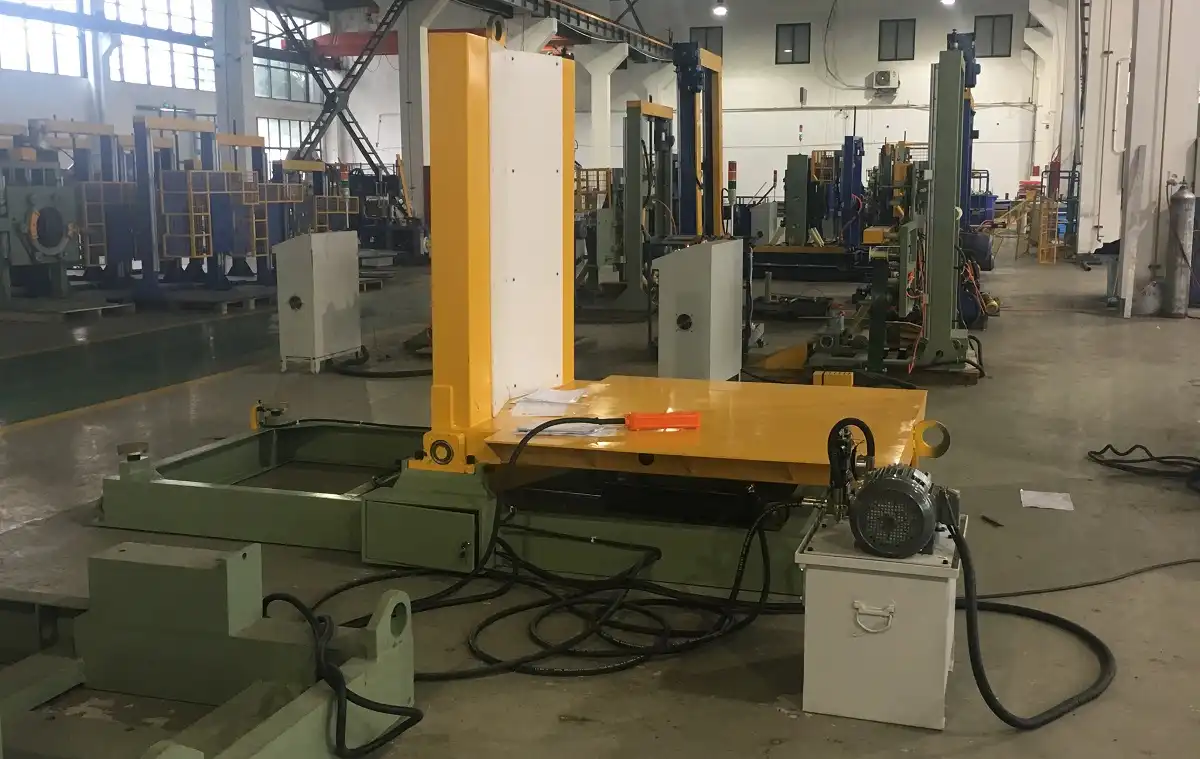
Table size should be 20-40% larger than maximum coil diameter, with specific calculations based on coil geometry. Essential design elements include:
- Diameter ratio: Table/Coil = 1.2-1.4 for stability
- Surface treatment: Diamond pattern or rubber coating
- Edge protection: 50-75 mm raised lip prevents slipping
Dive Deeper Content:
Table Size Calculation Methodology
Getting table dimensions right requires understanding both coil specifications and operational workflow:
Minimum Table Diameter = Max Coil OD × 1.25
Optimal Table Diameter = Max Coil OD × 1.35
For example, handling 1800mm diameter coils requires:
- Minimum table: 2250mm diameter
- Optimal table: 2430mm diameter
- Premium table: 2700mm diameter (for awkward-shaped coils)
Table Design Features Comparison
| Feature | Basic Design | Recommended Design | Premium Design |
|---|---|---|---|
| Surface Material | Plain steel | Diamond pattern steel | Rubber composite |
| Edge Protection | 25mm lip | 50mm reinforced lip | 75mm with replaceable wear strips |
| Coil Centering | Manual | Hydraulic guides | Automatic positioning |
| Maintenance | High (frequent resurfacing) | Medium (annual inspection) | Low (5-year surface life) |
Application-Specific Table Configurations
Different coil types require tailored table designs:
⚡ Steel Wire Coils
- Table size: 1.3x coil diameter minimum
- Surface: Rubber coating to prevent wire embedding
- Special feature: Segmented design for different coil widths
🏭 Hot-Rolled Steel Coils
- Table size: 1.4x coil diameter (higher safety margin)
- Surface: High-temperature resistant coating
- Special feature: Water cooling channels for hot coils
ROI Analysis: Optimal vs Undersized Tables
Investing in properly sized tables pays dividends in safety and efficiency:
Manual Handling (Baseline)
- Labor: 3 workers × $18,000/year = $54,000
- Damage rate: 3-5% of product value
- Safety incidents: 0.5 per year average
Undersized Table Upender
- Labor: 1 operator × $25,000/year = $25,000
- Damage rate: 1-2% of product value
- Safety risk: Moderate (requires careful operation)
Properly Sized Upender (SHJLPACK Recommended)
- Labor: 1 operator × $25,000/year = $25,000
- Damage rate: 0.1-0.3% of product value
- Safety risk: Low (engineered safety factors)
Annual Savings: $29,000 labor + $47,500 damage reduction = $76,500
ROI Period: 12-18 months for most Mexican steel plants
4. What Safety Features Are Essential for Heavy Coil Upending Operations?
Leading Paragraph:
When a 30-ton coil begins to rotate, there's zero margin for error. I've visited plants where missing safety features led to near-misses that could have been fatal. In Mexico, where safety regulations are tightening, investing in proper safety systems isn't just ethical—it's financially smart risk management.
Snippet Paragraph:
Essential safety systems include dual hydraulic holding valves, mechanical locking pins, emergency stop circuits, and load monitoring. SHJLPACK upenders incorporate:
- Redundant braking: Prevents free-fall during power loss
- Anti-slip surfaces: Diamond pattern steel with 400+ friction coefficient
- Automatic positioning: Eliminates manual coil adjustment risks
Dive Deeper Content:
Critical Safety Systems Breakdown
Heavy coil upenders demand multiple layers of protection:
1. Primary Load Holding System
- Dual counterbalance valves in hydraulic circuit
- Mechanical brake on rotation mechanism
- 200% safety factor on all load-bearing components
2. Operational Safety Features
- Light curtains creating safe zones around equipment
- Two-hand operation requiring simultaneous activation
- Emergency stop buttons at all operator positions
3. Failure Protection
- Hydraulic pressure monitoring with automatic shutdown
- Structural overload sensors detecting abnormal stresses
- Backup power for control systems during main power failure
Safety Standards Compliance Checklist
Ensure your upender meets these critical standards:
✅ ISO 12100:2010 - Safety of machinery general principles
✅ ISO 13849-1 - Safety-related parts of control systems
✅ CE Certification - European conformity (recognized in Mexico)
✅ NOM-004-STPS-1999 - Mexican safety standards for machinery
✅ ANSI B11.0-2020 - American safety standards for machines
Safety Investment vs Cost Analysis
Many plant managers hesitate at safety system costs, but the financial analysis reveals clear benefits:
| Safety Feature | Additional Cost | Risk Reduction | Payback Period |
|---|---|---|---|
| Dual Braking System | $8,000-12,000 | 95% drop failure risk | < 12 months |
| Automatic Positioning | $15,000-20,000 | Eliminates manual handling | 18-24 months |
| Complete Safety Package | $25,000-35,000 | Comprehensive protection | 24-30 months |
According to Randal Liu's experience: "In 20+ years, I've never seen a plant regret investing in safety. But I've seen several regret not investing soon enough."
Implementation Steps for Safety Upgrades
If you're upgrading existing equipment, follow this systematic approach:
- Risk Assessment - Identify specific hazards in your operation
- Gap Analysis - Compare current safety to industry standards
- Priority Implementation - Address highest risks first
- Operator Training - Ensure proper use of safety systems
- Regular Audits - Continuous safety improvement
Mexican plants implementing structured safety programs typically see 60-80% reduction in workplace injuries and 25-40% lower insurance premiums within two years.
Conclusion
Choosing the right coil upender specifications ensures safe, efficient operations and strong ROI. Proper sizing of motor, frame, and table transforms coil handling from a bottleneck to a competitive advantage. For complete solutions, explore our steel coil packing line integration options.
FAQ Section
Frequently Asked Questions
Q: What is the typical delivery and installation time for a coil upender in Mexico?
A: Standard delivery takes 8-12 weeks, with installation and commissioning requiring 1-2 weeks. SHJLPACK maintains local technical support in major Mexican industrial regions to minimize downtime during implementation.
Q: How often does a coil upender require maintenance?
A: Basic maintenance includes daily visual checks, weekly lubrication, and quarterly comprehensive inspections. Major service intervals are 2,000 operating hours or annually, with most Mexican plants scheduling during planned production shutdowns.
Q: Can existing manual coil handling be retrofitted with automation?
A: Yes, many plants phase automation by adding upenders to existing lines. SHJLPACK specializes in integration projects that maintain production during upgrades, typically completing retrofits over 2-3 weekend shutdowns.
Q: What training is provided for upender operators?
A: We provide comprehensive training covering operation, basic troubleshooting, and safety procedures. For Mexican clients, materials are available in Spanish with on-site training by bilingual technicians until your team is fully confident.
Q: How does humidity in Mexican coastal areas affect upender performance?
A: High humidity requires special corrosion protection. SHJLPACK upenders for Mexican installations feature enhanced coating systems, stainless steel components in critical areas, and sealed electrical systems to ensure reliability in challenging environments.


