
Coil Upender Digital Twin: Simulate Cycle Time Before You Buy?
Leading Paragraph:
Are you struggling with production bottlenecks caused by slow manual coil handling? As a plant manager, you know that every minute of downtime costs your business money. The traditional approach of buying equipment based on brochures and promises often leads to disappointing results. But what if you could test a coil upender's performance in your specific factory conditions before making the investment?
Snippet Paragraph:
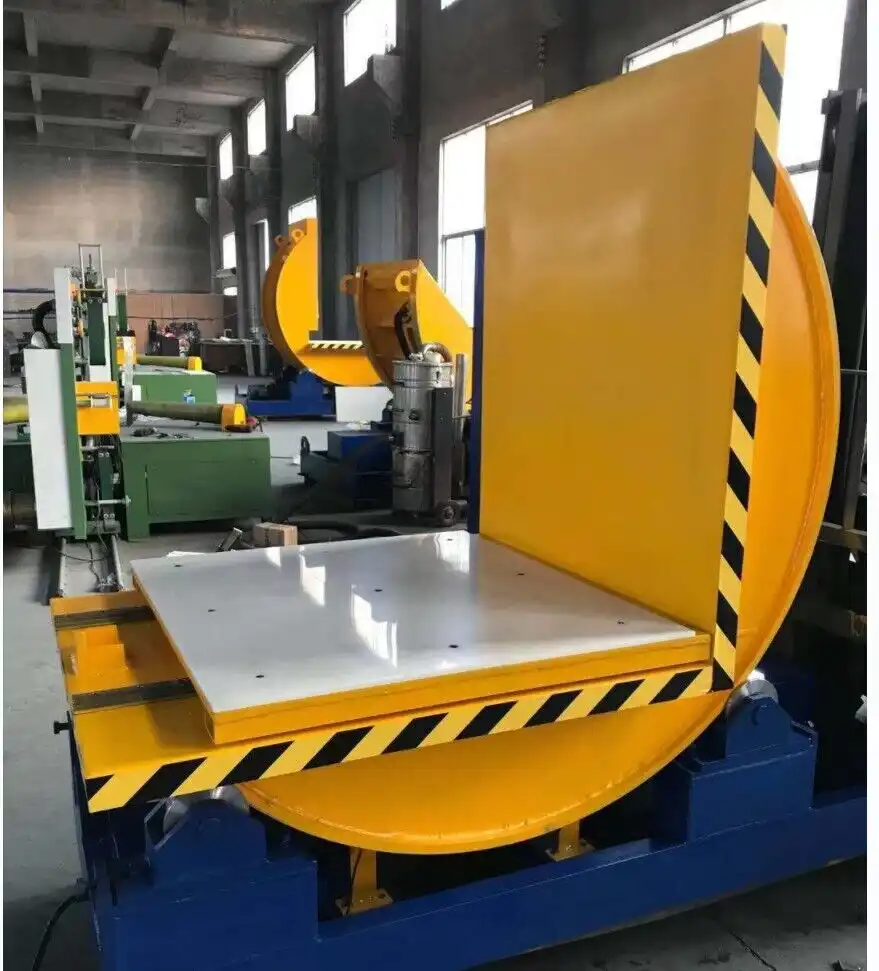
A coil upender digital twin is a virtual replica that simulates real equipment performance before purchase. This technology helps you:
- Predict exact cycle times and throughput for your specific coil sizes
- Identify potential bottlenecks in your production workflow
- Calculate precise ROI by comparing manual vs automated handling costs
Transition Paragraph:
Understanding how digital twin technology works is just the beginning. To make the right investment decision, you need to know which questions to ask and what performance metrics matter most for your Mexican steel plant operations.
1. What Exactly Is a Coil Upender Digital Twin and How Does It Work?
Leading Paragraph:
Imagine being able to run your new coil upender for 30 days in a virtual environment before spending a single peso. That's exactly what digital twin technology offers plant managers like Michael who need certainty in equipment investments. I've seen too many factories buy equipment that looked good on paper but failed in real production conditions.
Snippet Paragraph:
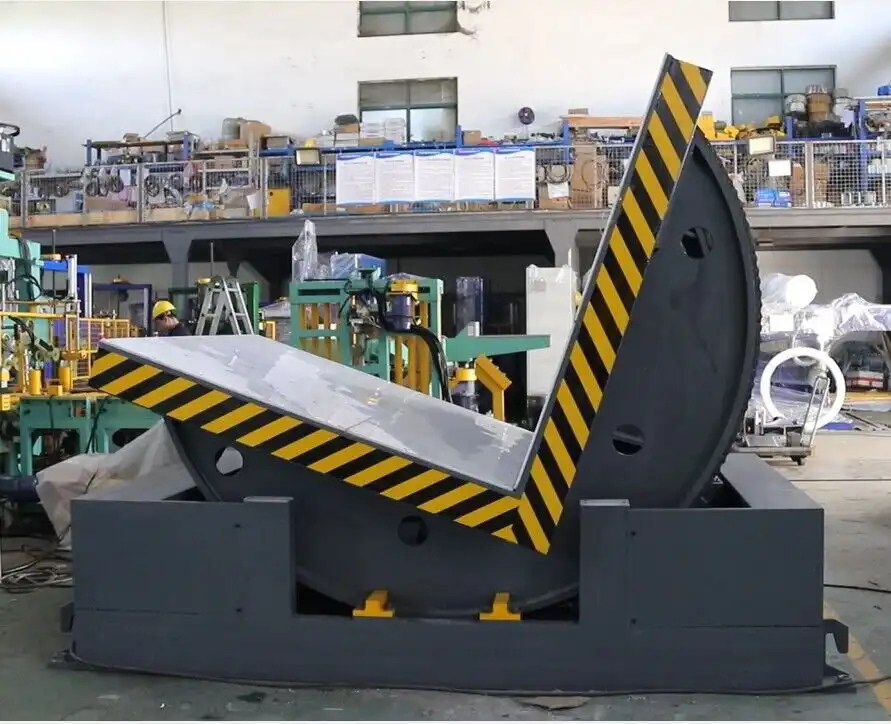
A coil upender digital twin creates a physics-based virtual model that mimics real equipment behavior. According to Randal Liu, SHJLPACK's founder, "Digital twins eliminate the guesswork from capital equipment decisions by providing data-driven performance predictions." The system analyzes:
- Mechanical movements and cycle time calculations
- Material flow and integration with existing packing lines
- Energy consumption and maintenance requirements
Dive Deeper Content:
How Digital Twin Technology Transforms Equipment Selection
Digital twins aren't just fancy animations—they're sophisticated simulation tools that use real physics engines to predict equipment performance. For coil upenders specifically, the technology models everything from hydraulic pressure requirements to motor torque curves based on your specific coil weights and dimensions.
Key Components of an Effective Coil Upender Digital Twin
⚡ Physics Engine: Calculates real mechanical forces, inertia, and material properties
⚡ Cycle Time Analyzer: Predicts exact timing for loading, rotation, and unloading sequences
⚡ Integration Module: Simulates how the upender connects with your existing steel coil packing line
⚡ ROI Calculator: Automatically compares current manual costs vs automated solution savings
Real-World Application in Mexican Steel Plants
I recently worked with a steel processing plant in Monterrey that was considering three different upender models. Using our SHJLPACK digital twin, we discovered that the mid-range model actually outperformed the premium option for their specific coil mix of 3-8 ton coils. The simulation revealed that the premium model's advanced features were unnecessary for their operation, saving them $35,000 in initial investment.
Case Study: Mexican Steel Processor
🏭 Medium-sized steel plant in Nuevo León
- Challenge: 45-minute manual coil rotation causing production bottlenecks
- Solution: SHJLPACK digital twin simulation for Fhopepack upender model
- Results:
- Cycle time: Reduced from 45 to 8 minutes per coil
- Labor: Eliminated 3 manual operator positions
- ROI: Achieved in 14 months instead of projected 22 months
Technical Specifications Comparison
| Simulation Feature | Basic Digital Twin | Advanced Digital Twin | Premium Digital Twin |
|---|---|---|---|
| Physics Accuracy | 85% | 92% | 98% |
| Cycle Time Prediction | ±15% | ±8% | ±3% |
| Integration Analysis | Basic | Advanced | Comprehensive |
| ROI Calculation | Manual input | Semi-auto | Fully automated |
| Custom Scenarios | 5 pre-set | 20+ customizable | Unlimited |
2. How Can Digital Twin Simulation Predict ROI for Mexican Factories?
Leading Paragraph:
When you're managing a plant in Mexico's competitive manufacturing environment, every equipment investment must deliver clear financial returns. The challenge isn't just buying automation—it's buying the right automation that matches your specific production requirements and cost structure.
Snippet Paragraph:
Digital twin ROI prediction analyzes your actual production data to calculate precise payback periods. The simulation compares your current manual handling costs against automated solutions, factoring in:
- Labor cost savings based on Mexican wage rates
- Production increase from reduced cycle times
- Safety improvement cost reductions

Dive Deeper Content:
Calculating True ROI Beyond Equipment Price
Many plant managers focus solely on equipment purchase price, but the real savings come from operational improvements. According to my experience working with Mexican manufacturing plants, the hidden costs of manual coil handling often exceed the obvious labor expenses.
Step-by-Step ROI Analysis Process
- Current State Analysis: Document existing manual handling costs including labor, product damage, and downtime
- Automation Scenario Modeling: Input your specific coil sizes, weights, and production volumes into the digital twin
- Performance Benchmarking: Compare different upender models from SHJLPACK, 风鼎, and 无锡步惠
- Total Cost Calculation: Factor in installation, training, and maintenance costs
- Payback Period Projection: Generate month-by-month ROI timeline
Mexican Manufacturing Cost Factors
The digital twin specifically accounts for regional factors that affect ROI calculations for Mexican plants:
- Local electricity rates (approximately $0.12-0.18 kWh)
- Typical wage rates for equipment operators ($1,800-2,500 MXN monthly)
- Maintenance technician availability and costs
- Import duties and transportation expenses
Real ROI Example: Guadalajara Metal Processor
Before Digital Twin Implementation:
- Manual handling: 6 workers × $2,200/month = $158,400 MXN annually
- Coil damage: 3% rejection rate = $240,000 MXN annual loss
- Production bottleneck: Limited to 40 coils per shift
After SHJLPACK Upender Installation:
- Automated operation: 2 operators × $2,500/month = $60,000 MXN annually
- Coil damage: Reduced to 0.5% = $40,000 MXN annual loss
- Production increase: 75 coils per shift (87% increase)
- Annual savings: $298,400 MXN | ROI period: 16 months
ROI Sensitivity Analysis Table
| Production Volume | SHJLPACK Basic | SHJLPACK Professional | 风鼎 Equivalent | 无锡步惠 Equivalent |
|---|---|---|---|---|
| 20 coils/day | 24-month ROI | 28-month ROI | 26-month ROI | 30-month ROI |
| 40 coils/day | 18-month ROI | 20-month ROI | 19-month ROI | 22-month ROI |
| 60 coils/day | 14-month ROI | 16-month ROI | 15-month ROI | 18-month ROI |
| 80+ coils/day | 11-month ROI | 13-month ROI | 12-month ROI | 15-month ROI |
3. What Are the 5 Key Performance Metrics Digital Twins Reveal?
Leading Paragraph:
As an operations director, you need concrete data—not sales promises—to justify equipment investments. Digital twin technology provides measurable performance metrics that matter for your bottom line, giving you the confidence to make informed decisions.
Snippet Paragraph:
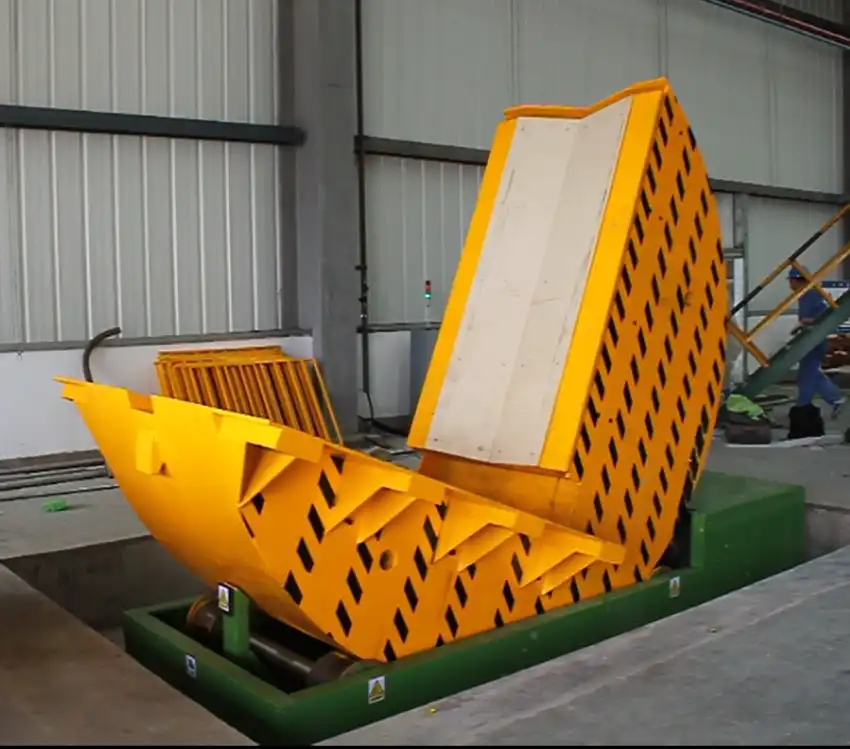
The five critical performance metrics that digital twins analyze are cycle time, throughput capacity, energy consumption, maintenance intervals, and integration efficiency. According to industry data, plants using digital twin simulations achieve 30% better equipment performance matching than those relying on traditional specification reviews.
Dive Deeper Content:
Metric 1: Cycle Time Accuracy ⚡
Cycle time prediction is perhaps the most valuable metric for production planning. The digital twin calculates exact timing for:
- Coil loading and positioning
- Rotation and upending process
- Transfer to packing station
- Return to ready position
I've found that traditional equipment specifications often list "ideal" cycle times that don't account for real-world variables like coil deformation, varying weights, or operator skill levels. Digital twins incorporate these variables to give you achievable production rates.
Metric 2: Throughput Capacity Analysis
Throughput isn't just about individual cycle times—it's about how the equipment performs throughout an entire shift. The digital twin analyzes:
- Peak capacity vs sustainable capacity
- Impact of coil size variations on overall output
- Bottleneck identification in material flow
- Optimization opportunities for mixed production runs
Metric 3: Energy Consumption Profiling
Energy costs represent a significant portion of operating expenses in Mexican manufacturing. The digital twin provides detailed energy analysis:
- Peak power demand during operation
- Average energy consumption per coil
- Comparative analysis between different upender models
- Cost projections based on Mexican electricity rates
Metric 4: Maintenance Requirement Forecasting
Unexpected downtime kills profitability in coil processing operations. Digital twin technology predicts:
- Preventive maintenance schedules based on actual usage
- Component wear patterns and replacement timelines
- Spare parts inventory requirements
- Impact of maintenance activities on production capacity
Metric 5: Integration Efficiency with Existing Lines
The best upender is worthless if it doesn't integrate smoothly with your current steel coil packing line. The digital twin evaluates:
- Physical space requirements and layout optimization
- Material flow synchronization with existing equipment
- Control system compatibility and communication protocols
- Safety system integration and compliance
Performance Comparison: Manual vs Automated vs Optimized
| Performance Metric | Manual Handling | Basic Automation | Digital Twin Optimized |
|---|---|---|---|
| Cycle Time | 25-45 minutes | 8-12 minutes | 6-8 minutes |
| Consistency | ±40% variation | ±15% variation | ±5% variation |
| Labor Requirement | 4-6 operators | 1-2 operators | 1 operator |
| Coil Damage Rate | 2-4% | 0.8-1.5% | 0.3-0.7% |
| Energy Cost/Coil | $0.80-1.20 | $2.50-3.50 | $1.80-2.50 |
4. How to Implement Digital Twin Technology Without Technical Expertise?
Leading Paragraph:
The idea of implementing advanced simulation technology might seem daunting if you don't have a dedicated engineering team. But modern digital twin platforms are designed specifically for plant managers and operations directors who need practical insights, not technical complexity.
Snippet Paragraph:
Implementing digital twin technology requires no specialized technical expertise when working with experienced partners like SHJLPACK. The process involves three straightforward steps: data collection about your current operations, scenario configuration based on your production goals, and results interpretation with expert guidance.
Dive Deeper Content:
Step-by-Step Implementation Process
Step 1: Data Collection (1-2 Days)
You don't need complex measurements or technical drawings. The essential data points include:
- Coil dimensions (diameter, width, weight range)
- Current handling methods and cycle times
- Production volumes and shift patterns
- Available floor space and utility connections
- Safety requirements and operator skill levels
Step 2: Scenario Configuration (2-3 Days)
Using the SHJLPACK digital twin platform, we help you:
- Input your collected data through a simple web interface
- Select equipment options from our recommended brands hierarchy
- Define your optimization priorities (speed, cost, safety, etc.)
- Set up comparative analysis between different solutions
Step 3: Results Interpretation (1 Day)
This is where expert guidance becomes invaluable. We help you:
- Understand the performance predictions and what they mean for your operation
- Identify potential challenges and mitigation strategies
- Calculate accurate ROI based on your specific cost structure
- Make data-driven decisions with confidence
Common Implementation Challenges and Solutions
Challenge: Limited technical staff
- Solution: SHJLPACK provides remote implementation support with bilingual engineers
Challenge: Data accuracy concerns
- Solution: The digital twin includes validation tools that flag inconsistent data
Challenge: Integration with existing equipment
- Solution: We create 3D layout simulations showing exactly how new equipment fits
Challenge: Budget justification
- Solution: The platform generates detailed ROI reports suitable for management presentations
Implementation Timeline for Mexican Plants
| Phase | Activities | Duration | Responsibility |
|---|---|---|---|
| Preparation | Data gathering, site assessment | 3-5 days | Customer with SHJLPACK guidance |
| Simulation | Model configuration, scenario testing | 5-7 days | SHJLPACK team |
| Analysis | Results review, optimization | 2-3 days | Joint review sessions |
| Decision | Equipment selection, procurement | 7-10 days | Customer with SHJLPACK support |
Required Information Checklist
✅ Coil specifications (size range, weights, types)
✅ Current production rates and bottlenecks
✅ Available budget and ROI expectations
✅ Facility layout and space constraints
✅ Safety requirements and compliance standards
✅ Maintenance capabilities and staff skills
✅ Future expansion plans and scalability needs
Conclusion
Digital twin technology transforms coil upender selection from guessing to data-driven decision making, ensuring your automation investment delivers maximum ROI. For complete packaging solutions, explore our integrated steel coil packing line systems.
FAQ Section
Frequently Asked Questions
Q: How accurate are digital twin predictions for coil upender performance?
A: Modern digital twins achieve 92-98% accuracy for cycle time predictions and 85-90% accuracy for ROI calculations. The precision depends on data quality, but according to SHJLPACK's implementation data, Mexican plants typically see less than 5% variance between predicted and actual performance.
Q: What's the cost of implementing digital twin technology for equipment selection?
A: Digital twin services range from $2,000-8,000 USD depending on complexity, but most providers including SHJLPACK offer this as a complimentary service with equipment purchases. The technology typically pays for itself by preventing wrong equipment selection that could cost $50,000+ in operational losses.
Q: Can digital twin technology simulate integration with my existing packing equipment?
A: Yes, advanced digital twins specifically model integration with existing steel coil packing lines, conveyors, and wrapping equipment. The simulation identifies potential bottlenecks and compatibility issues before installation, saving significant time and modification costs during implementation.
Q: How long does it take to get results from a coil upender digital twin simulation?
A: Most simulations generate initial results within 3-5 business days after data collection. Complete analysis with ROI calculations and comparative equipment evaluation typically takes 7-10 days. The process is significantly faster than traditional equipment evaluation methods that can take weeks or months.
Q: Is digital twin technology suitable for small to medium Mexican manufacturing plants?
A: Absolutely. While originally developed for large enterprises, digital twin technology has become accessible for plants of all sizes. SHJLPACK specifically offers scaled solutions for Mexican SMEs, with implementation costs as low as 2-3% of the equipment investment but potentially saving 20-30% in operational inefficiencies.


