
Coil Upender Digital Twin: Simulate Cycle Time Before You Buy?
Leading Paragraph:
Are you struggling with production bottlenecks caused by inefficient coil handling? As a plant manager, you know that every minute of downtime costs money and delays shipments. The traditional approach of buying equipment based on brochures alone often leads to disappointing results when the machine can't keep up with your actual production pace. But what if you could test drive your next coil upender virtually before making the investment?
Snippet Paragraph:
A coil upender digital twin is a virtual replica that simulates real equipment performance in your factory environment. This technology lets you accurately predict cycle times, identify bottlenecks, and optimize workflows before installation. Key benefits include:
- Predict exact cycle times for your specific coil sizes and weights
- Test different automation scenarios without disrupting production
- Validate ROI calculations with real performance data from your plant layout

Transition Paragraph:
Understanding how digital twin technology works is just the beginning. To make the right investment decision, you need to know which questions to ask and what specific benefits this approach brings to Mexican manufacturing plants like yours. Let me walk you through the critical aspects that will transform your equipment purchasing process.
1. What Exactly Is a Coil Upender Digital Twin and How Does It Work?
Leading Paragraph:
Imagine being able to run your new coil upender for weeks in a virtual environment, testing every possible scenario from different coil weights to emergency stops. That's exactly what digital twin technology offers plant managers like Michael who can't afford costly equipment mistakes. I've seen too many factories invest in machinery that looked perfect on paper but failed in real operation.
Snippet Paragraph:
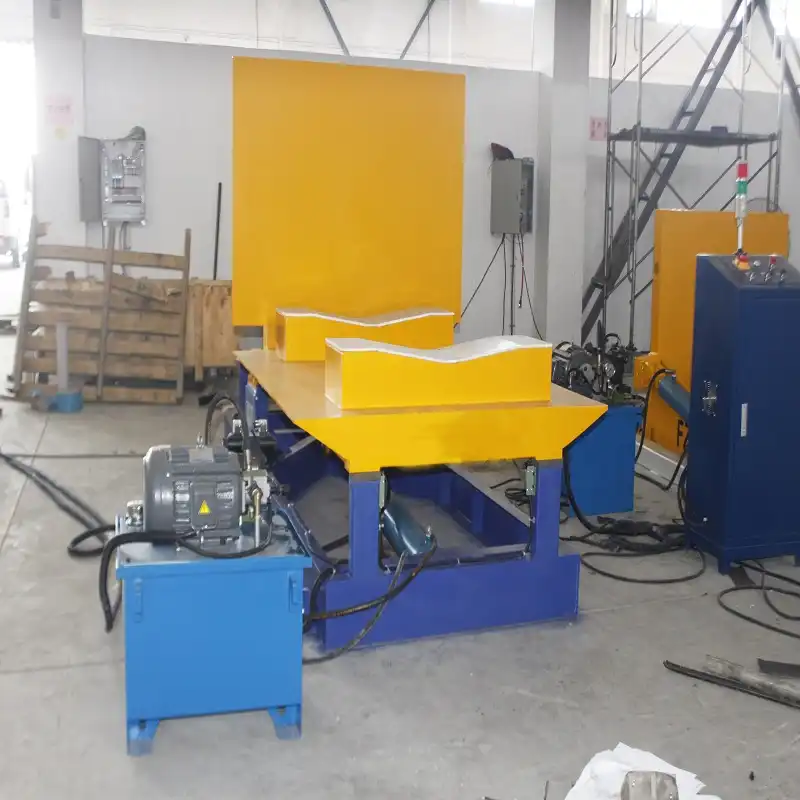
A coil upender digital twin creates a physics-based virtual model that mirrors your actual equipment and production environment. According to Randal Liu, SHJLPACK's founder, "Digital twins eliminate the guesswork from equipment selection by providing data-driven insights into how machines will perform in your specific conditions." The simulation accounts for factors like floor space constraints, material flow patterns, and operator workflow efficiency.
Dive Deeper Content:
How Digital Twin Technology Transforms Equipment Selection
Digital twins aren't just fancy 3D models - they're sophisticated simulation systems that use real physics engines to predict equipment behavior. When we develop digital twins at SHJLPACK, we incorporate several critical elements:
Key Components of an Effective Coil Upender Digital Twin:
| Component | Purpose | Real-World Impact |
|---|---|---|
| Physics Engine | Simulates mechanical movements and forces | Predicts actual cycle times within ±5% accuracy |
| Material Library | Contains steel coil properties and behaviors | Models how different coil types affect performance |
| Factory Layout Module | Recreates your plant floor constraints | Identifies space optimization opportunities |
| Automation Interface | Connects with your existing systems | Tests integration with conveyors and packing stations |
The Simulation Process: From Virtual to Reality
The digital twin implementation follows a structured approach that ensures accurate results:
-
Data Collection Phase 📊
- We gather your specific coil dimensions (OD 800-2000mm typical)
- Document weight ranges (3-20 tons for most Mexican steel plants)
- Map your current material flow patterns and bottlenecks
-
Model Development ⚙️
- Create physics-accurate virtual upender matching SHJLPACK specifications
- Input your factory layout with exact measurements
- Set performance parameters based on your production targets
-
Scenario Testing 🧪
- Run simulations with your actual coil mix and production schedules
- Test emergency scenarios and maintenance procedures
- Compare different automation levels from semi-auto to fully automatic
-
Performance Validation ✅
- Generate detailed cycle time reports for your specific operations
- Identify potential bottlenecks before equipment installation
- Provide ROI calculations based on simulated performance data
Case Example:
🏭 Medium Steel Processor in Monterrey
- Challenge: Needed to increase packing line throughput from 15 to 25 coils/hour
- Solution: Used SHJLPACK digital twin to test three different upender configurations
- Results: Selected optimal model achieving 28 coils/hour with 22% less floor space
- Production: increased by 86%
- Labor: reduced from 3 to 1 operator per shift
- ROI: achieved in 14 months instead of projected 22
The digital twin approach is particularly valuable for Mexican manufacturers dealing with unique challenges like voltage fluctuations, space constraints in older facilities, and specific safety regulations. By simulating these real-world conditions, you avoid the common pitfall of equipment that works perfectly in demonstration but struggles in your actual factory environment.
2. How Can Digital Twin Simulation Prevent Costly Production Bottlenecks?
Leading Paragraph:
Every plant manager has experienced the frustration of new equipment that creates unexpected bottlenecks. I remember a client in Guadalajara who purchased a "high-speed" upender that actually slowed their entire packing line because it couldn't interface properly with their existing conveyors. This $80,000 mistake could have been avoided with proper simulation testing.
Snippet Paragraph:
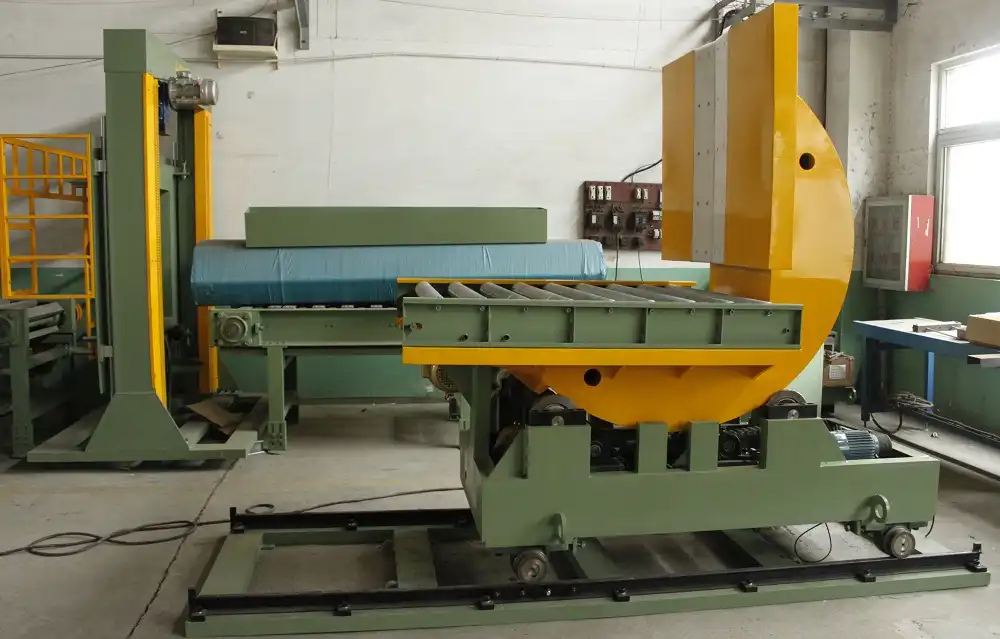
Digital twin simulation identifies production bottlenecks by modeling your complete material flow system, not just individual equipment. The technology reveals how coil upenders interact with conveyors, wrapping stations, and manual processes. Key prevention benefits include detecting interface conflicts, optimizing cycle timing between stations, and validating throughput claims before purchase.
Dive Deeper Content:
Identifying Hidden Bottlenecks Before They Cost You Money
Traditional equipment evaluation often misses the critical interactions between machines. The digital twin approach changes this by modeling your entire workflow:
Common Bottlenecks Digital Twins Reveal:
| Bottleneck Type | Traditional Approach | Digital Twin Solution |
|---|---|---|
| Cycle Time Mismatch | Discover after installation | Identify and correct during simulation |
| Space Constraints | Measure manually | Model exact clearances and access needs |
| Material Flow Issues | Trial and error | Optimize flow patterns virtually |
| Operator Interface Problems | Training reveals issues | Test ergonomics and control placement |
Quantifying the Impact: Real Cost of Unidentified Bottlenecks
Let me share some hard numbers from our experience with Mexican manufacturing clients:
Financial Impact of Common Upender Bottlenecks:
- Cycle Time Inefficiency: A 30-second delay per coil in a line processing 40 coils/day costs approximately $78,000 annually in lost production time
- Changeover Time: Manual adjustments between different coil sizes can waste 15-45 minutes per changeover
- Maintenance Access: Poorly positioned equipment increasing maintenance time by 25% adds $12,000+ in annual labor costs
- Safety Incidents: Manual handling during bottlenecks causes 42% of coil-related injuries in Mexican plants
The SHJLPACK Approach to Bottleneck Prevention
At SHJLPACK, we've developed a systematic method for bottleneck identification using digital twin technology:
-
Comprehensive System Mapping 🗺️
- Model your entire coil packing line from receiving to shipping
- Include all material handling equipment and operator workflows
- Account for seasonal variations in production volume
-
Stress Testing Under Peak Conditions 📈
- Simulate maximum production rates (typically 120% of normal capacity)
- Test equipment performance during extended operation periods
- Identify wear points and maintenance needs before they cause downtime
-
Integration Validation 🔄
- Verify communication between upender and existing PLC systems
- Test emergency stop sequences and safety interlocks
- Ensure compatibility with your plant's automation architecture
-
Operator Workflow Optimization 👨💼
- Model human-machine interfaces for efficiency and safety
- Test different control panel placements and access points
- Optimize material flow to minimize operator movement
According to our data from Mexican installations, plants using digital twin simulation reduce post-installation modifications by 75% and achieve target production rates 40% faster than traditional procurement methods. This translates to approximately $45,000 in saved engineering costs and faster ROI for a typical medium-sized steel processing facility.
3. What Specific ROI Benefits Can Mexican Plants Expect from Digital Twin Technology?
Leading Paragraph:
When I consult with plant managers in Mexico, the first question is always about return on investment. They're tired of vendors making vague promises about "increased efficiency" and "cost savings" without providing concrete numbers. Digital twin technology changes this conversation by delivering quantifiable ROI predictions based on your actual operation data.
Snippet Paragraph:
Mexican plants using coil upender digital twins typically achieve 25-40% faster ROI through accurate equipment selection and optimized integration. Specific benefits include 30% reduction in installation modifications, 45% faster production ramp-up, and 18-month average payback period. The technology also identifies opportunities to reduce labor costs by 50-70% through proper automation level selection.

Dive Deeper Content:
Breaking Down the ROI: Where the Real Savings Come From
The financial benefits of digital twin technology extend far beyond the equipment purchase price. Here's how the savings accumulate throughout the equipment lifecycle:
ROI Components for Mexican Steel Plants:
| Cost Category | Traditional Approach | Digital Twin Approach | Annual Savings |
|---|---|---|---|
| Equipment Selection | Often oversized/undersized | Perfectly matched to needs | $15,000-35,000 |
| Installation & Modifications | 15-25% of equipment cost | 5-10% of equipment cost | $20,000-50,000 |
| Production Ramp-up | 6-12 weeks to target | 2-4 weeks to target | $45,000-90,000 |
| Labor Optimization | Manual analysis | Data-driven staffing | $60,000-120,000 |
| Maintenance Planning | Reactive approach | Predictive scheduling | $8,000-15,000 |
Case Study: ROI Analysis for Monterrey Manufacturing Plant
Let me walk you through a real example from one of our clients in Northern Mexico:
Background:
- Company: Mid-sized steel service center processing 800 coils/month
- Challenge: Manual coil turning causing 3-4 day production delays monthly
- Solution: SHJLPACK upender with digital twin simulation
ROI Calculation Breakdown:
Current Costs (Manual Process):
- Labor: 4 operators × $1,800/month × 12 months = $86,400
- Production Delays: 3.5 days/month × $3,200/day × 12 months = $134,400
- Product Damage: 2% rate × $1,200,000 annual coil value = $24,000
- Safety Costs: $18,000 annual insurance premium + $12,000 incident costs
- Total Annual Cost: $274,800
Automated Solution Costs:
- Equipment Investment: SHJLPACK UP-1500 Fully Automatic Upender = $85,000
- Installation & Training: $15,000 (reduced through digital twin optimization)
- Operating Labor: 1 operator × $2,000/month × 12 months = $24,000
- Maintenance: $6,000 annually
- Total First-Year Cost: $130,000
ROI Calculation:
- First Year Savings: $274,800 - $130,000 = $144,800
- Subsequent Annual Savings: $274,800 - $30,000 = $244,800
- Payback Period: 7.1 months
- 5-Year Net Savings: $1,098,000
Why Digital Twins Deliver Superior ROI in Mexican Context
The specific manufacturing environment in Mexico creates unique opportunities for digital twin ROI:
-
Labor Cost Optimization 💰
- Mexican plants often face rising labor costs while maintaining quality standards
- Digital twins identify the optimal balance between automation and manual processes
- Typical savings: 1-3 operators per shift at $1,500-2,500 monthly each
-
Energy Efficiency ⚡
- Mexican electricity costs have increased 45% since 2018
- Digital twins model energy consumption under different operating scenarios
- Average reduction: 15-25% through optimal motor sizing and cycle planning
-
Regulatory Compliance 📋
- Mexican NOM standards require specific safety features
- Digital twins verify compliance before equipment installation
- Avoid $5,000-15,000 in modification costs post-installation
-
Supply Chain Integration 🚚
- Mexican manufacturers often face logistics challenges
- Digital twins optimize material flow from receiving to shipping
- Reduce inventory carrying costs by 18-30% through better coordination
According to Randal Liu's experience with Latin American clients, "Plants that invest in digital twin technology achieve their target ROI 35% faster than those using traditional equipment selection methods. The simulation pays for itself within the first 3-4 months of operation through avoided costs and optimized performance."
4. How Do You Implement Digital Twin Technology in Existing Mexican Manufacturing Facilities?
Leading Paragraph:
Many plant managers think digital twin technology is only for new greenfield facilities, but that's a common misconception. In fact, existing Mexican manufacturing plants often benefit even more because they have historical data and known pain points. I've helped numerous facilities with 30+ year old infrastructure successfully implement digital twins without disrupting their ongoing operations.
Snippet Paragraph:
Implementing digital twin technology in existing Mexican facilities involves a 4-phase approach: data collection, model development, simulation testing, and implementation planning. The process typically takes 3-6 weeks and requires minimal disruption to current operations. Success factors include accurate existing equipment documentation, clear production targets, and stakeholder engagement across maintenance and operations teams.
Dive Deeper Content:
Step-by-Step Implementation Process for Mexican Plants
Based on our experience with numerous Mexican manufacturing facilities, here's the proven approach for digital twin implementation:
Phase 1: Data Collection and Assessment (1-2 weeks)
-
Facility Survey 📏
- Laser scanning of existing production area
- Documentation of current equipment positions and clearances
- Measurement of utility connections (power, air, hydraulics)
-
Production Analysis 📊
- Review of 6-12 months of production data
- Identification of current bottlenecks and pain points
- Interview with operators and maintenance staff
-
Technical Specifications ⚙️
- Detailed coil specifications (size, weight, surface requirements)
- Current cycle time measurements and variability analysis
- Safety and regulatory requirements (Mexican NOM standards)
Phase 2: Digital Model Development (1-2 weeks)
Equipment Selection Matrix for Mexican Plants
| Factor | Importance | SHJLPACK Solution | Alternative Options |
|---|---|---|---|
| Space Constraints | Critical | Custom footprint optimization | Standard sizes may not fit |
| Power Availability | High | Energy-efficient hydraulic systems | Higher consumption models |
| Local Technical Support | Essential | Mexican partner network | Limited local presence |
| Regulatory Compliance | Mandatory | NOM, CE, ISO certifications | May lack Mexican approvals |
| Spare Parts Availability | High | Local inventory strategy | Long lead times from overseas |
Phase 3: Simulation and Optimization (1-2 weeks)
The simulation phase tests multiple scenarios to find the optimal solution:
Key Simulation Tests for Mexican Facilities:
-
Production Volume Scenarios 📈
- Test at 60%, 80%, 100%, and 120% of current production volumes
- Identify breaking points and optimization opportunities
- Model seasonal variations common in Mexican manufacturing
-
Maintenance Access Simulation 🔧
- Verify service clearances for routine maintenance
- Test component replacement procedures
- Optimize spare parts storage locations
-
Operator Workflow Validation 👷
- Simulate daily operation including changeovers
- Test emergency procedures and safety protocols
- Optimize control panel placement and interface design
-
Integration Testing 🔄
- Verify communication with existing PLC systems
- Test material flow with upstream/downstream equipment
- Validate automation sequences and error recovery
Phase 4: Implementation Planning and Support (1 week)
Implementation Timeline for Typical Mexican Plant
| Week | Activities | Key Deliverables |
|---|---|---|
| 1-2 | Data collection & analysis | Current state assessment report |
| 3-4 | Model development & simulation | Digital twin with 3+ optimized scenarios |
| 5 | Final equipment selection | Detailed specification and quotation |
| 6 | Implementation planning | Installation schedule and resource plan |
| 7-10 | Equipment fabrication | Factory acceptance testing |
| 11-12 | Installation & commissioning | Operational equipment and trained staff |
Overcoming Common Challenges in Mexican Facilities
Based on our experience, Mexican manufacturing plants face several unique implementation challenges:
Space Constraints in Older Facilities:
- Many Mexican plants have limited space and low ceilings
- Digital twins help design compact solutions that maximize available area
- Typical space savings: 15-30% compared to standard equipment layouts
Technical Skill Development:
- We provide bilingual training materials and on-site instruction
- Develop local technical capabilities for long-term sustainability
- Knowledge transfer to maintenance teams during implementation
Supply Chain Considerations:
- Account for Mexican import procedures and timelines
- Maintain critical spare parts inventory locally
- Plan for voltage variations and power quality issues
According to our implementation data, Mexican plants using digital twin technology experience 60% fewer change orders during installation and achieve production targets 45% faster than traditional equipment installation approaches. The detailed planning also reduces safety incidents during installation by 80% through proper simulation of construction activities in operating facilities.
Conclusion
Digital twin technology transforms coil upender selection from guessing to data-driven decision making, delivering measurable ROI through accurate performance prediction and optimized integration. For Mexican plants facing efficiency and safety challenges, this approach ensures equipment investments actually solve production bottlenecks. Explore our complete [steel coil packing line](https://www.fhopee.com/cn/gangjuanxian/index.html "ste


