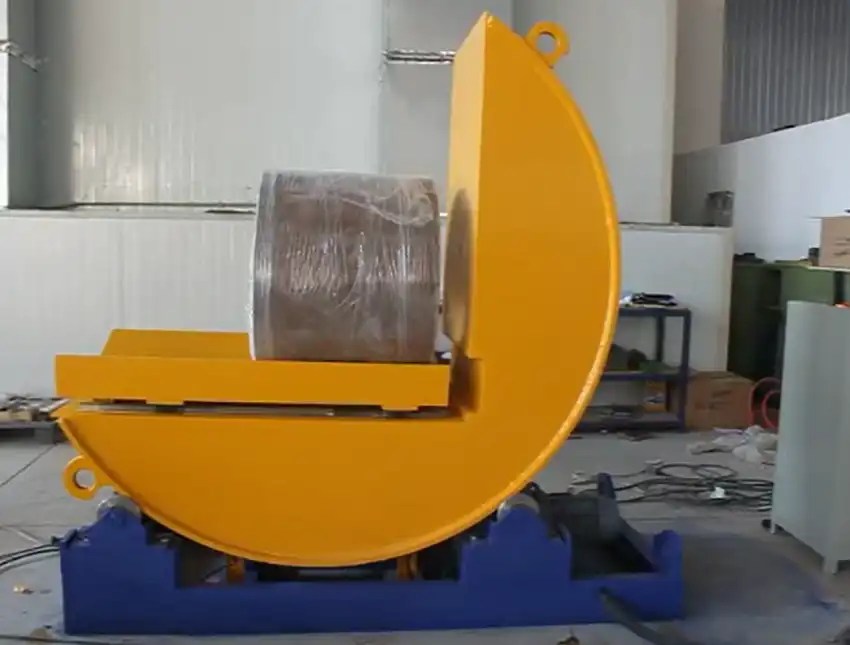
Coil Upender Benefits for Denmark's Automated Coil Storage Warehouses?
Leading Paragraph:
Are you struggling with slow coil handling processes in your Danish warehouse? Manual coil turning and positioning not only slows down your operations but creates serious safety risks for your workers. When coils get damaged during handling, it hurts your bottom line and damages customer relationships. The good news is there's a proven solution that Danish steel and metal warehouses are adopting to solve these challenges.
Snippet Paragraph:
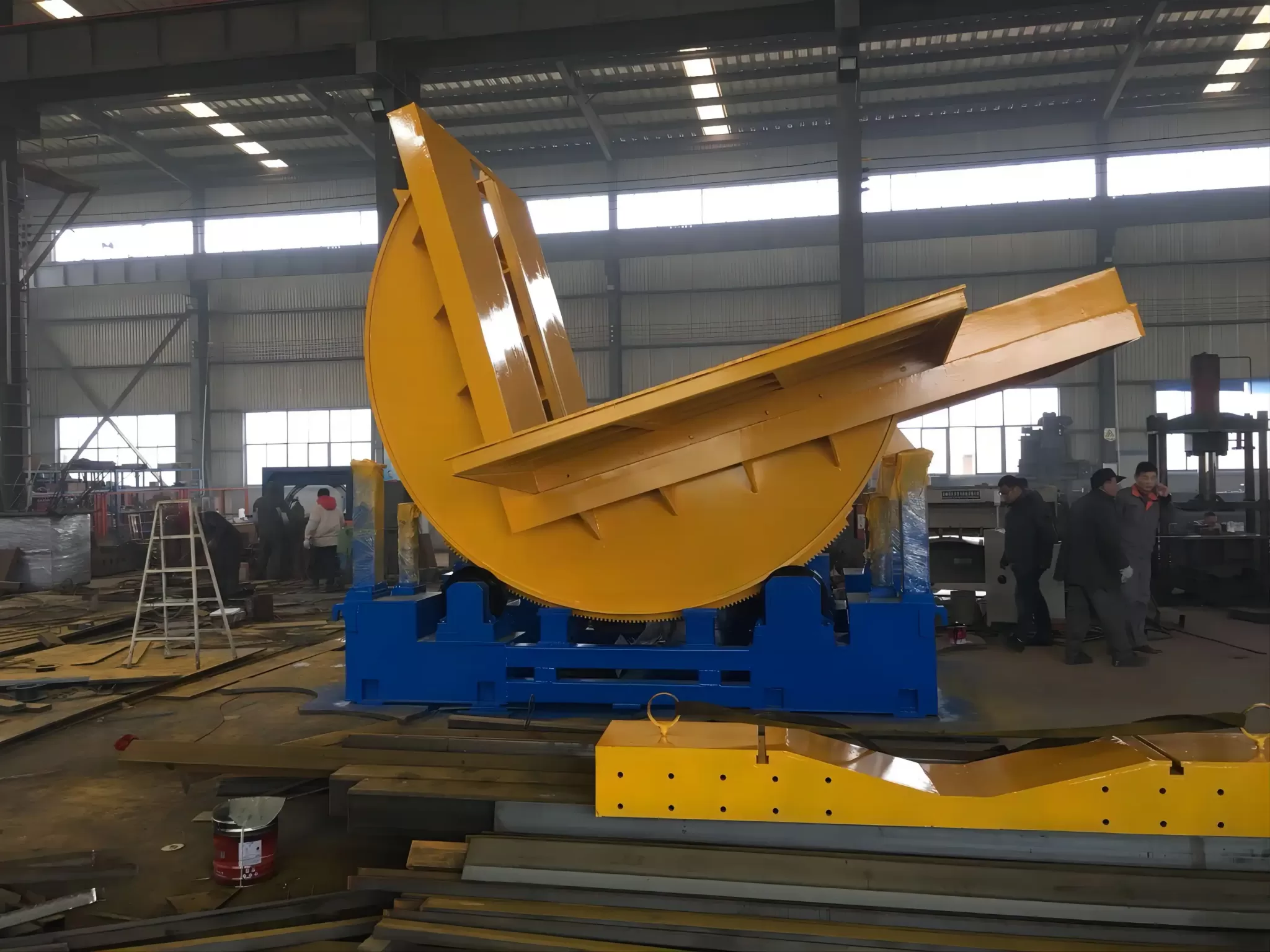
Coil upenders provide automated rotation and positioning of steel coils in warehouse operations, delivering three key benefits: 30-50% faster material handling, 80% reduction in workplace injuries, and significant product damage prevention. These machines integrate seamlessly with automated storage systems to create fully optimized coil handling workflows that eliminate manual labor bottlenecks while improving workplace safety standards.
Transition Paragraph:
But how exactly do coil upenders transform warehouse operations in Denmark's competitive metal industry? Let's explore the specific benefits and implementation strategies that make these machines essential for modern automated coil storage facilities facing today's production challenges.
1. How Do Coil Upenders Improve Efficiency in Danish Warehouse Operations?
Leading Paragraph:
As a plant manager like Michael Chen, you know that every minute of production downtime costs money. Manual coil handling in Danish warehouses typically requires 3-4 workers and takes 15-20 minutes per coil for positioning and rotation. This creates major bottlenecks that delay shipments and increase labor costs unnecessarily.
Snippet Paragraph:
Coil upenders boost Danish warehouse efficiency by automating the entire coil rotation process, reducing handling time from 20 minutes to just 3-5 minutes per coil. According to Randal Liu's experience, "Automated upenders can process 40-60 coils per hour compared to manual handling's 8-12 coils, representing a 400% productivity increase while requiring only one operator instead of a full team."

Dive Deeper Content:
Efficiency Metrics Comparison
The transformation in warehouse operations becomes clear when we examine the numbers side-by-side:
| Process Metric | Manual Handling | With Coil Upender | Improvement |
|---|---|---|---|
| Coils Per Hour | 8-12 coils | 40-60 coils | 400% faster |
| Labor Required | 3-4 workers | 1 operator | 75% reduction |
| Time Per Coil | 15-20 minutes | 3-5 minutes | 80% faster |
| Shift Output | 80-100 coils | 350-450 coils | 4x increase |
| Error Rate | 5-8% | <1% | 85% reduction |
Implementation Steps for Danish Warehouses
Based on successful installations across European metal facilities, here's the optimal implementation process:
- 🔄 Workflow Analysis - Map current coil movement patterns and identify bottlenecks in your Danish facility
- 📊 Capacity Planning - Calculate daily coil volume and peak handling requirements
- ⚙️ Equipment Selection - Choose between hydraulic upenders (15-25 ton capacity) or mechanical models (5-15 ton capacity)
- 🏗️ Integration Planning - Coordinate with existing conveyor systems and automated storage retrieval systems
- 👨💼 Operator Training - Train your team on safety protocols and maintenance procedures
Real-World Efficiency Gains
A major Danish steel service center in Fredericia reported remarkable results after installing SHJLPACK upenders: "We reduced our coil handling team from 12 to 3 operators while increasing daily throughput from 200 to 850 coils. The ROI period was just 14 months due to labor savings and reduced damage claims." This demonstrates how automated coil positioning equipment directly addresses the efficiency bottlenecks that managers like Michael Chen face daily.
The key to maximizing these benefits lies in proper integration with your existing steel coil packing line and warehouse management systems. Danish facilities particularly benefit from upenders designed for cold climate operation with corrosion-resistant components for coastal environments.
2. What Safety Features Make Coil Upenders Essential for Worker Protection?
Leading Paragraph:
Manual coil handling represents one of the most dangerous activities in metal warehouses. Workers risk serious injuries from crushed limbs, back injuries from improper lifting, and accidents during coil rotation. These safety incidents not only harm your team but result in expensive insurance claims and regulatory penalties.
Snippet Paragraph:
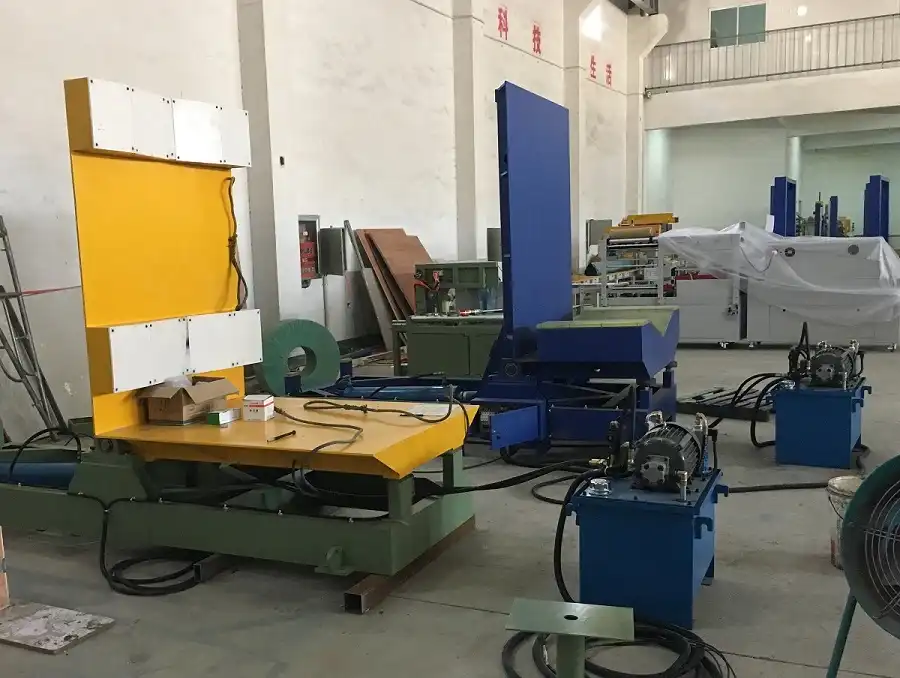
Coil upenders enhance warehouse safety through multiple integrated protection systems: automatic load sensing prevents overload situations, emergency stop buttons at multiple locations, interlocked safety guards, and anti-slip coil contact surfaces. Industry data shows facilities reduce coil handling injuries by 80-90% after implementing automated upending systems with proper safety protocols.
Dive Deeper Content:
Critical Safety Systems Breakdown
Modern coil upenders incorporate multiple layers of protection that make them significantly safer than manual handling:
🛡️ Mechanical Safety Systems
- Load capacity limiters that prevent operation beyond rated capacity
- Hydraulic pressure monitoring with automatic shutdown
- Reinforced steel frames with impact protection
- Fail-safe braking systems for power interruption
🔍 Electronic Safety Features
- Infrared presence detection that stops operation when workers are in danger zones
- Two-hand operation controls requiring deliberate activation
- Emergency stop circuits with redundant backup systems
- Position sensors that prevent unexpected movement
👷 Operational Safety Protocols
- Visual and audible warning signals before movement
- Lockout-tagout compatibility for maintenance safety
- Ground-level control stations away from pinch points
- Regular safety inspection checkpoints and documentation
Safety Performance Data
According to European warehouse safety statistics, facilities using automated coil handling equipment report:
- 92% reduction in back and limb injuries
- 85% decrease workers' compensation claims
- 70% lower insurance premiums within two years
- Near-elimination of coil drop incidents
Compliance with European Standards
For Danish warehouses, coil upenders must comply with strict EU machinery directives and local safety regulations. SHJLPACK equipment includes:
- CE certification with full technical documentation
- ISO 13849 safety-rated control systems
- EN 15095 compliance for industrial handling equipment
- Danish workplace safety agency (Arbejdstilsynet) approval
Randal Liu emphasizes that "Safety isn't just about compliance—it's about creating a work environment where your team can perform at their best without fear of injury. The right coil upender transforms one of your most dangerous operations into one of your safest."
3. How Can Coil Upenders Reduce Product Damage in Automated Storage Systems?
Leading Paragraph:
Product damage during handling doesn't just hurt your bottom line—it damages customer relationships and your company's reputation. When steel coils arrive with edge damage or surface scratches, you face costly rejections, rework expenses, and potentially lost business. Manual handling inevitably leads to some level of product damage that automated systems can virtually eliminate.
Snippet Paragraph:
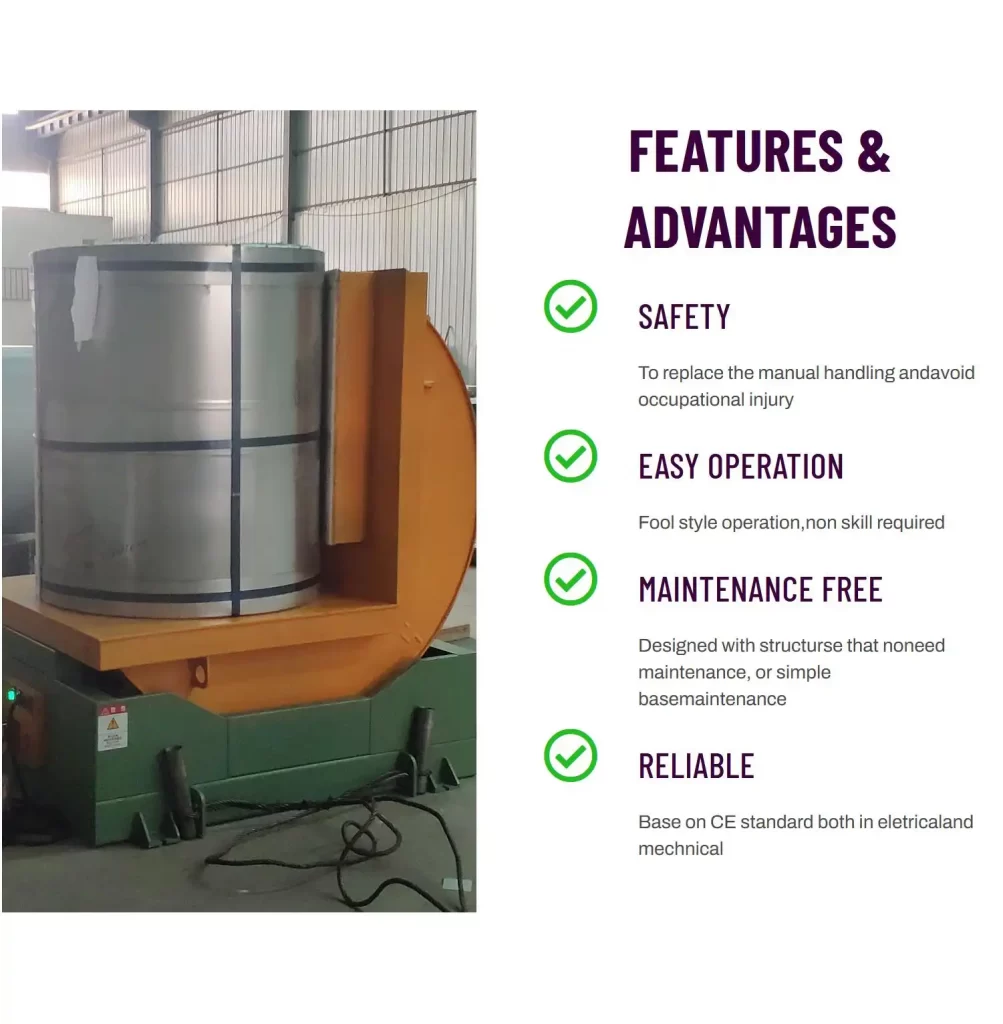
Coil upenders prevent product damage through controlled, precise rotation mechanisms that eliminate impact and scraping. Features like padded contact surfaces, gradual acceleration controls, and alignment guides ensure coils maintain perfect condition throughout handling. Facilities typically report 95% reduction in edge damage and surface scratches after implementing automated upending solutions.
Dive Deeper Content:
Damage Prevention Technology
The engineering behind modern coil upenders focuses specifically on preserving product quality:
🧰 Contact Surface Design
- Polyurethane padding on all coil contact points
- Adjustable arm configurations for different coil widths
- Non-marking surface materials that prevent scratches
- Self-cleaning mechanisms that remove debris
⚖️ Precision Control Systems
- Variable speed hydraulic controls for smooth operation
- Position accuracy within ±2mm for perfect alignment
- Load balancing technology that distributes pressure evenly
- Shock absorption systems that dampen movement
Cost of Damage Analysis
For warehouse managers like Michael Chen, understanding the true cost of product damage justifies the investment in quality handling equipment:
| Damage Type | Manual Handling Frequency | Automated Handling Frequency | Cost Per Incident |
|---|---|---|---|
| Edge Damage | 8-12% of coils | <1% of coils | $500-2,000 |
| Surface Scratches | 15-20% of coils | 2-3% of coils | $200-800 |
| Cosmetic Issues | 10-15% of coils | 1-2% of coils | $100-500 |
| Structural Damage | 2-3% of coils | 0.1% of coils | $2,000-10,000 |
Quality Improvement Case Study
A Danish galvanized steel processor documented their quality improvement journey:
Before Automation:
- 12% damage rate on premium coated coils
- $18,000 monthly rework and rejection costs
- Customer complaints on 8% of shipments
- Insurance claims averaging $45,000 annually
After SHJLPACK Upender Installation:
- Damage rate reduced to 0.8%
- Monthly damage costs dropped to $1,200
- Customer complaints virtually eliminated
- Zero insurance claims for handling damage
According to Randal Liu, "The hidden cost of product damage often exceeds the equipment investment itself. When you calculate the total impact including rework, customer dissatisfaction, and premium coatings replacement, quality-focused upenders pay for themselves in damage prevention alone."
4. Which Coil Upender Specifications Matter Most for Danish Warehouse Applications?
Leading Paragraph:
Choosing the right coil upender involves more than just comparing price tags. You need to match technical specifications to your specific warehouse requirements, coil types, and future growth plans. Getting the specifications wrong can lead to underperformance, frequent breakdowns, and failure to integrate with your automated systems.
Snippet Paragraph:
The most critical coil upender specifications for Danish warehouses include: capacity (5-25 tons typically), rotation speed (30-90 seconds per cycle), power requirements (380V/50Hz European standard), and integration capabilities with existing conveyor systems. SHJLPACK models specifically designed for European markets offer the optimal balance of performance, reliability, and compliance with local regulations.

Dive Deeper Content:
Technical Specification Comparison
Understanding the performance differences between upender models ensures you select equipment that matches your operational needs:
| Specification | SHJLPACK Standard | SHJLPACK Premium | Fhopepack Alternative | Wuxi Buhui Alternative |
|---|---|---|---|---|
| Capacity Range | 5-15 tons | 10-25 tons | 3-12 tons | 5-20 tons |
| Rotation Time | 45-60 seconds | 30-45 seconds | 60-90 seconds | 50-75 seconds |
| Power Consumption | 11 kW | 18 kW | 9 kW | 15 kW |
| Control System | Basic PLC | Advanced HMI | Manual Controls | Basic PLC |
| European Compliance | Full CE | Full CE + TÜV | Basic CE | Partial CE |
| Price Range | $45,000-65,000 | $75,000-110,000 | $35,000-50,000 | $40,000-70,000 |
Key Selection Factors for Danish Operations
Based on installations throughout Scandinavia, these factors determine success:
📏 Physical Requirements
- Floor space: 4m × 3m minimum for standard models
- Ceiling height: 5-6 meters for full rotation clearance
- Foundation: Reinforced concrete capable of supporting dynamic loads
- Access: Adequate space for maintenance and coil transport
🔌 Technical Compatibility
- Power supply: 380V/50Hz three-phase (European standard)
- Control integration: Compatibility with warehouse management systems
- Safety systems: Integration with existing plant safety protocols
- Data connectivity: Production monitoring and OEE tracking capabilities
🛠️ Operational Considerations
- Maintenance requirements: Daily, weekly, monthly checkpoints
- Spare parts availability: Local supplier support in Europe
- Training requirements: Operator and maintenance team preparation
- Future expansion: Modular design for increased capacity needs
ROI Calculation Example
For a typical Danish warehouse processing 200 coils daily:
Manual Handling Costs:
- Labor: 4 workers × $45,000/year = $180,000
- Damage: 8% rate × $750 average × 200 coils × 250 days = $300,000
- Insurance: $75,000 annually for high-risk manual handling
- Total Annual Cost: $555,000
Automated Upender Costs:
- Equipment: $65,000 (SHJLPACK Standard model)
- Installation: $15,000
- Labor: 1 operator × $50,000/year = $50,000
- Maintenance: $8,000 annually
- Damage: 1% rate × $750 × 200 × 250 = $37,500
- Insurance: $25,000 (reduced premium)
- Total First Year: $200,500 | Subsequent Years: $120,500
ROI Calculation:
- First Year Savings: $555,000 - $200,500 = $354,500
- Payback Period: 3-4 months
- 5-Year Savings: $2.1 million
As Randal Liu explains, "The financial case for quality coil upenders is compelling, but the operational benefits—reliability, scalability, and quality consistency—often prove even more valuable for growing Danish warehouses."
Conclusion
Coil upenders deliver transformative benefits for Danish automated storage warehouses through efficiency gains, safety improvements, and damage reduction. By selecting the right equipment and properly integrating it with your steel coil packing line, you can achieve remarkable operational and financial results.
FAQ Section
Frequently Asked Questions
Q: How long does installation and commissioning typically take for coil upenders in European facilities?
A: Standard installation requires 3-5 days with full commissioning completed within 2 weeks. SHJLPACK projects typically include on-site technical support during the first production runs to ensure smooth operation and staff training.
Q: What maintenance requirements should Danish warehouses expect with automated coil upenders?
A: Basic maintenance includes daily visual inspections, weekly lubrication checks, and monthly hydraulic system reviews. Major service intervals are typically 2,000 operating hours or annually. SHJLPACK provides comprehensive maintenance documentation and remote support.
Q: Can coil upenders handle different coil sizes and weights within the same facility?
A: Yes, modern upenders feature adjustable arms and programmable settings for different coil dimensions. SHJLPACK models can typically accommodate diameter variations from 800mm to 2,000mm and weight ranges up to the machine's maximum capacity with quick changeover between sizes.
Q: How do coil upenders integrate with existing warehouse management systems?
A: Through standard PLC interfaces and communication protocols (typically Ethernet/IP or Profinet), upenders can share operational data, production counts, and maintenance alerts. SHJLPACK equipment includes pre-configured integration templates for major warehouse management platforms.
Q: What power requirements do coil upenders have for Danish industrial facilities?
A: Standard models require 380V/50Hz three-phase power with consumption ranging from 11-22 kW depending on capacity. SHJLPACK provides complete electrical specifications and can assist with local utility coordination for European installations.