
Coil Turning Machine Layout: Pit vs. Floor-Mounted—What’s the Practical Difference?
Leading Paragraph:
Are you struggling with production bottlenecks caused by inefficient coil handling in your Mexican steel plant? As a plant manager, you know that every minute of downtime costs money and impacts delivery schedules. The manual flipping of heavy steel coils not only slows down your packing line but creates serious safety risks for your team. I've seen too many factories where poor equipment layout decisions lead to long-term operational headaches.
Snippet Paragraph:
The core difference lies in installation depth and space utilization. Pit-mounted coil turners are installed below floor level, while floor-mounted models sit entirely above ground. Key practical distinctions include: Installation time (2-3 weeks for pit vs. 3-5 days for floor), Space requirements (pit saves floor space but requires excavation), Maintenance accessibility (floor-mounted offers easier access), and Cost considerations (pit installation adds 15-25% to total project cost).

Transition Paragraph:
Choosing between these two configurations isn't just about technical specifications—it's about matching the right solution to your specific factory layout, production volume, and long-term operational goals. Let me break down the key considerations that will help you make the optimal decision for your Mexican manufacturing facility.
1. What Exactly Are Pit-Mounted and Floor-Mounted Coil Turners?
Leading Paragraph:
If you're considering automating your coil handling process, understanding these two fundamental installation methods is crucial. I remember visiting a steel plant in Monterrey where they had chosen the wrong configuration and ended up with constant maintenance issues and production delays. The plant manager told me they lost nearly $80,000 in downtime before realizing their mistake.
Snippet Paragraph:
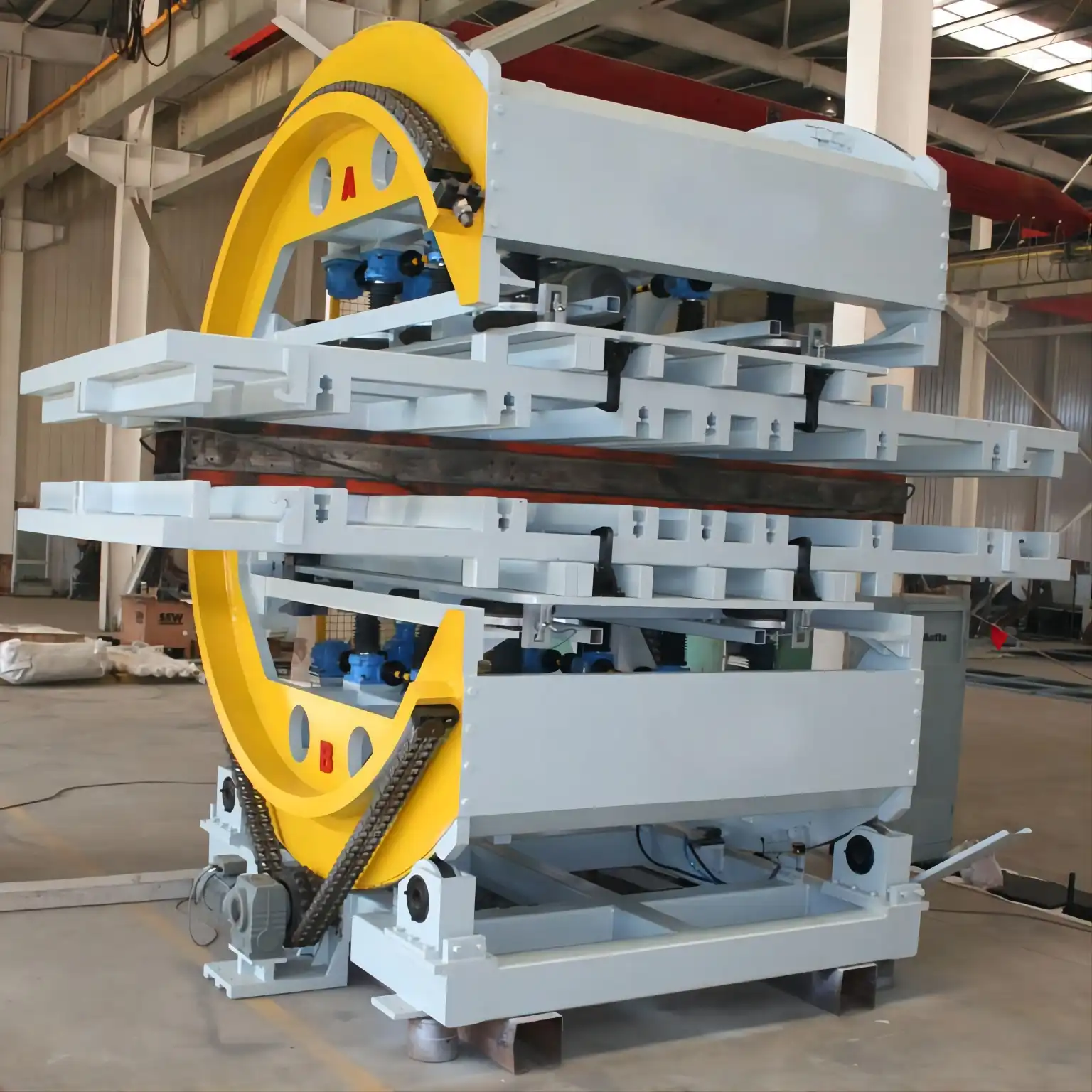
Pit-mounted coil turners are installed partially or completely below floor level, with the turning mechanism descending into a prepared pit. Floor-mounted models operate entirely above ground, requiring no excavation. According to Randal Liu, SHJLPACK's founder, "Pit installations typically handle 20-30% heavier loads but require precise civil engineering work, while floor-mounted units offer greater flexibility for future layout changes."
Dive Deeper Content:
Technical Configuration Differences
The pit-mounted configuration involves excavating a concrete-lined pit typically 1.2-2 meters deep, depending on the coil turning machine capacity. This underground installation provides inherent stability for handling heavy steel coils up to 20 tons. The turning mechanism operates within this protected space, with only the loading platform visible at floor level.
Floor-mounted coil upenders, in contrast, require robust foundation work but no underground excavation. These systems use heavy-duty structural frames to maintain stability during the coil rotation process. The entire mechanism—from hydraulic systems to rotating arms—remains accessible for maintenance without requiring personnel to work in confined underground spaces.
Operational Mechanics Comparison
| Operation Phase | Pit-Mounted Turner | Floor-Mounted Turner |
|---|---|---|
| Loading | Coil rolls onto platform at floor level | Coil elevated to loading height |
| Rotation | Mechanism descends into pit during turn | Complete rotation above floor |
| Unloading | Returns to floor level for removal | Lowers coil to transport height |
| Cycle Time | 45-60 seconds typically | 50-70 seconds typically |
| Footprint | Compact (saves floor space) | Larger floor area required |
Real-World Application Scenarios
🏭 Large-Scale Steel Mill in Mexico City
- Challenge: Limited floor space with high-volume production (200+ coils daily)
- Solution: SHJLPACK pit-mounted coil turner with 15-ton capacity
- Results:
- Space utilization: improved by 35%
- Production: increased from 160 to 220 coils per shift
- Safety: eliminated 3 manual handling positions
The pit-mounted approach proved ideal for their space-constrained environment, though it required a 3-week installation period including pit excavation and concrete curing time. For factories with expansion plans or frequent layout changes, the floor-mounted option provides greater flexibility despite requiring more floor space.
2. How Do Installation Requirements Differ Between These Two Systems?
Leading Paragraph:
Installation complexity can make or break your equipment investment timeline. I've witnessed Mexican factories where unexpected installation challenges delayed production startups by weeks, costing thousands in lost revenue. Understanding these requirements upfront will save you from similar headaches.
Snippet Paragraph:
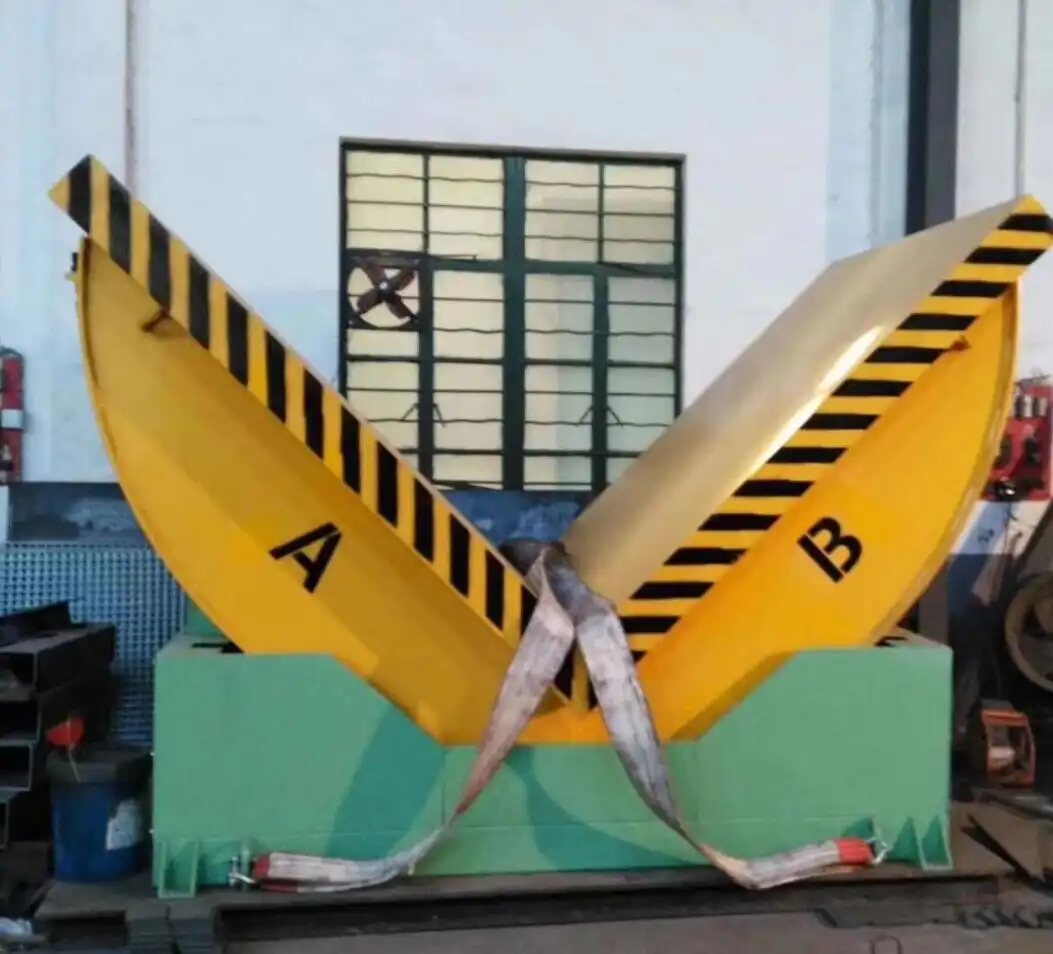
Pit-mounted systems require extensive civil work including excavation, reinforced concrete pits, and drainage systems, typically taking 2-3 weeks. Floor-mounted installations need heavy foundation anchoring but no excavation, completing in 3-5 days. SHJLPACK's engineering team provides detailed site preparation guides to ensure Mexican factories meet all local building codes and safety standards.
Dive Deeper Content:
Step-by-Step Installation Process
Pit-Mounted Installation (18-25 days total)
-
Site Assessment & Marking (2 days)
- Soil testing and load-bearing analysis
- Utility line identification (avoiding water, electrical, gas lines)
- Precision marking of pit dimensions
-
Excavation & Foundation Work (5-8 days)
- Mechanical excavation to required depth (1.5-2m)
- Reinforcement steel placement and concrete pouring
- 7-10 day curing period for concrete
-
Equipment Installation (3-4 days)
- Lowering main mechanism into pit
- Hydraulic and electrical connections
- Safety barrier installation
-
Testing & Commissioning (2-3 days)
- Load testing with actual coils
- Safety system verification
- Operator training
Floor-Mounted Installation (3-5 days total)
-
Foundation Preparation (1 day)
- Anchor bolt placement in concrete floor
- Leveling and alignment checks
-
Equipment Assembly (1-2 days)
- Structural frame assembly
- Hydraulic system installation
- Electrical connections
-
Testing & Calibration (1 day)
- Load balancing tests
- Rotation speed calibration
- Safety sensor verification
Cost Comparison Analysis
| Cost Category | Pit-Mounted System | Floor-Mounted System |
|---|---|---|
| Equipment Cost | $45,000-$75,000 | $35,000-$60,000 |
| Installation & Civil Work | $15,000-$25,000 | $5,000-$8,000 |
| Total Project Cost | $60,000-$100,000 | $40,000-$68,000 |
| Installation Time | 18-25 days | 3-5 days |
| ROI Period | 20-24 months | 14-18 months |
Mexican Factory Considerations
According to Randal Liu, "Mexican industrial facilities must consider local soil conditions, seismic activity levels, and NOM safety standards when choosing between pit and floor installations. In northern Mexico's rocky soil, pit excavation costs can increase by 30-40%, making floor-mounted systems more economical."
Many Mexican steel plants opt for SHJLPACK's modular floor-mounted systems because they can be relocated during factory expansions. The 风鼎 (Fhopepack) alternative offers similar flexibility, though with slightly different hydraulic configurations that may require more frequent maintenance in high-humidity environments.
3. Which Safety Features Are Critical for Mexican Industrial Standards?
Leading Paragraph:
Safety isn't just compliance—it's profitability. Every injury in your coil packing area costs you in medical expenses, insurance premiums, and lost productivity. Having consulted with numerous Mexican manufacturing facilities, I've identified the safety features that deliver the best protection for your workforce.
Snippet Paragraph:
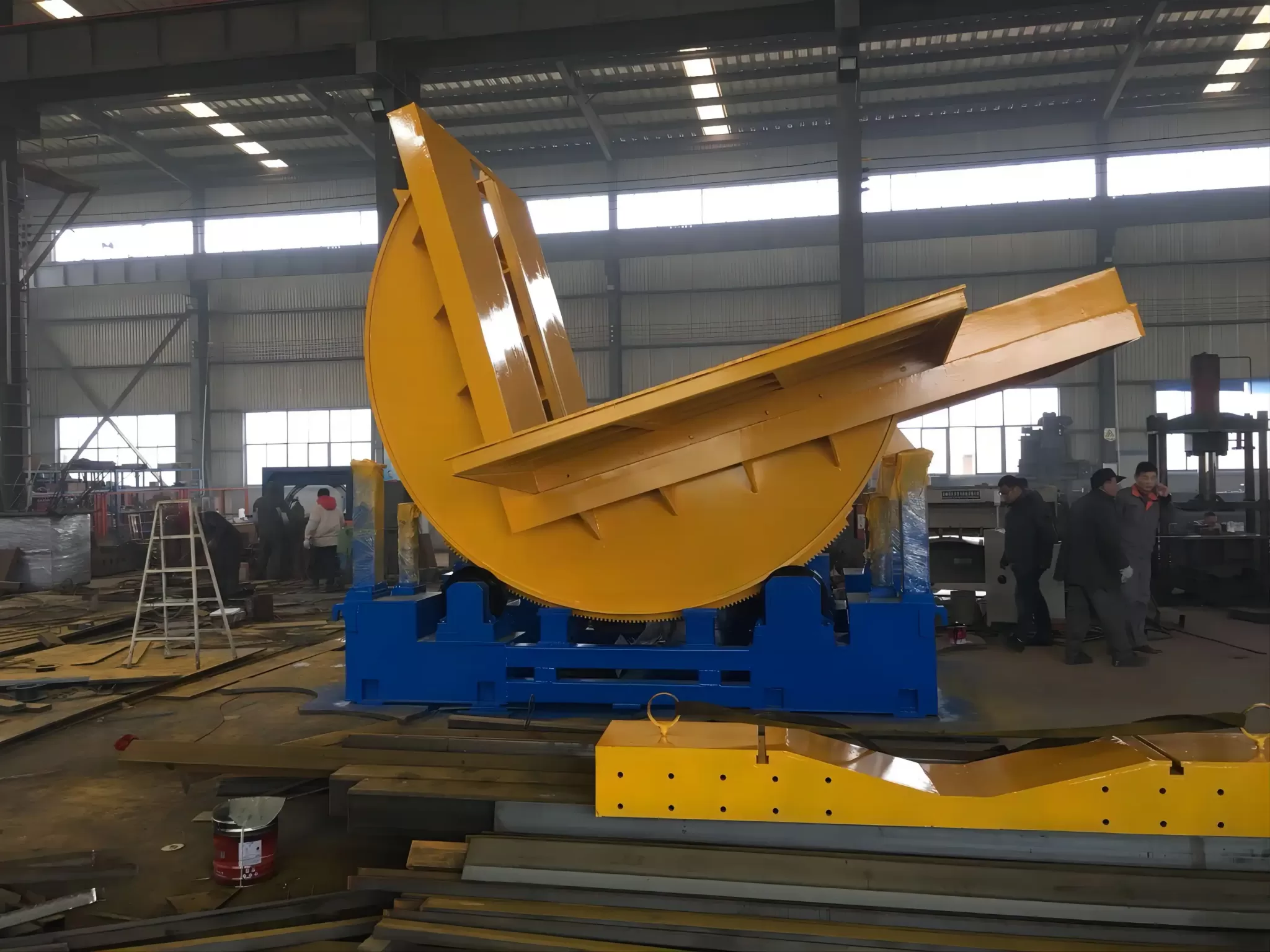
Critical safety features include emergency stop systems, anti-slip platforms, hydraulic overload protection, and guarded rotating components. Mexican NOM standards require specific safety distances and emergency protocols. SHJLPACK systems exceed these requirements with laser presence detection and automatic braking that stops rotation within 0.5 seconds of obstruction detection.
Dive Deeper Content:
Essential Safety Systems Comparison
Pit-Mounted Safety Advantages
- Inherent Containment: The pit structure naturally contains any coil slippage or hydraulic failures
- Reduced Falling Risk: Workers aren't exposed to elevated working platforms
- Noise Reduction: Underground installation dampens operational noise by 20-30%
Floor-Mounted Safety Advantages
- Better Visibility: Operators can see the entire rotation process clearly
- Easier Emergency Access: Maintenance teams can reach all components quickly
- Simplified Evacuation: No confined space entry requirements for repairs
NOM Standard Compliance Checklist
✓ NOM-001-STPS-2008: Building safety requirements for machinery installation
✓ NOM-004-STPS-1999: Protection systems for production equipment
✓ NOM-026-STPS-2008: Color coding for safety identification
✓ NOM-029-STPS-2005: Maintenance and inspection procedures
Safety ROI Calculation Example
Before Automation (Manual Coil Turning)
- 4 workers per shift × $1,800/month = $86,400 annual labor cost
- Average 2 injuries annually × $15,000/incident = $30,000 medical/insurance
- Production delays from manual process = $45,000 lost revenue
- Total Annual Cost: $161,400
After SHJLPACK Automation
- 1 operator per shift × $2,200/month = $26,400 annual labor
- Safety incidents reduced by 90% = $3,000 annual cost
- Increased production efficiency = $25,000 additional revenue
- Total Annual Cost: $54,400 | Annual Savings: $107,000
According to industry data from multiple Mexican steel processors, automated coil turning systems typically reduce manual handling injuries by 85-95% while improving overall equipment effectiveness by 25-35%. The 无锡步惠 systems offer basic safety compliance, but SHJLPACK's integrated safety approach provides superior protection through redundant safety systems and real-time monitoring.
4. How Much Can You Really Save with Each Configuration?
Leading Paragraph:
When Mexican plant managers ask me about automation ROI, they're often surprised by the hidden costs and savings beyond the initial equipment price. Let me share some real numbers from similar facilities that will help you calculate your potential savings accurately.
Snippet Paragraph:
Floor-mounted systems typically deliver faster ROI (14-18 months) due to lower installation costs, while pit-mounted systems offer greater long-term space efficiency. Based on SHJLPACK client data, Mexican steel plants save $80,000-$120,000 annually through reduced labor, improved safety, and increased production capacity. The optimal choice depends on your specific space constraints and production volume.
Dive Deeper Content:
Comprehensive Cost Analysis
Initial Investment Breakdown
Pit-Mounted System (15-ton capacity)
- SHJLPACK equipment: $52,000
- Civil engineering & excavation: $18,000
- Installation & commissioning: $8,000
- Training & documentation: $2,000
- Total: $80,000
Floor-Mounted System (15-ton capacity)
- SHJLPACK equipment: $48,000
- Foundation work: $4,000
- Installation & commissioning: $5,000
- Training & documentation: $2,000
- Total: $59,000
Operational Cost Comparison
| Cost Factor | Manual Process | Pit-Mounted Auto | Floor-Mounted Auto |
|---|---|---|---|
| Labor Cost/Year | $86,400 | $26,400 | $26,400 |
| Maintenance/Year | $8,000 | $12,000 | $9,500 |
| Energy Cost/Year | $2,400 | $6,800 | $7,200 |
| Injury Costs/Year | $30,000 | $3,000 | $4,000 |
| Production Loss/Year | $45,000 | $8,000 | $10,000 |
| Total Annual Cost | $171,800 | $56,200 | $57,100 |
Long-Term Value Considerations
According to Randal Liu, "Many Mexican factories focus only on purchase price, but the real savings come from operational efficiency. SHJLPACK's smart coil turners include production monitoring that helps identify bottlenecks, typically increasing overall packing line efficiency by 25-40%."
Space Utilization Value
- Pit-mounted: Saves 15-20m² of production floor space
- Floor space value in Mexican industrial zones: $200-400/m² annually
- Annual space savings: $3,000-$8,000
Production Increase Impact
- Average coil packing time reduction: from 8 to 3 minutes
- Additional capacity: 50-80 more coils per shift
- Additional revenue: $15,000-$25,000 monthly
The 风鼎 (Fhopepack) systems offer competitive pricing but may have higher long-term maintenance costs. For Mexican operations prioritizing reliability and minimal downtime, SHJLPACK's robust construction and local technical support provide better total cost of ownership over the 10+ year equipment lifespan.
Conclusion
Choosing between pit and floor-mounted coil turners depends on your specific space, budget, and production needs. Both configurations can significantly improve your packing line efficiency when properly matched to your factory requirements. For complete steel coil packing line solutions, consult with experienced engineers who understand Mexican industrial applications.
FAQ Section
Frequently Asked Questions
Q: How deep does the pit need to be for a pit-mounted coil turner?
A: Pit depth typically ranges from 1.2 to 2 meters, depending on the coil size and machine capacity. SHJLPACK provides exact specifications during the project planning phase, considering your specific coil dimensions and factory floor conditions.
Q: Can floor-mounted coil turners handle heavy coils up to 20 tons?
A: Yes, modern floor-mounted systems like SHJLPACK's industrial models can handle coils up to 25 tons. The structural design uses reinforced steel frames and advanced hydraulic systems to maintain stability during rotation without requiring underground installation.
Q: Which configuration is better for factories with high water tables?
A: Floor-mounted systems are generally recommended for areas with high water tables or poor soil drainage. Pit installations require extensive waterproofing and drainage systems in these conditions, adding 20-30% to the installation cost and complexity.
Q: How often do coil turning machines require maintenance?
A: Basic maintenance includes weekly visual inspections, monthly lubrication, and quarterly hydraulic system checks. SHJLPACK systems typically require 30-40% less maintenance than competing models due to superior component quality and sealed bearing systems.
Q: Can these systems be integrated with existing packing lines?
A: Absolutely. Both pit and floor-mounted coil turners can be integrated with your current steel coil packing line. SHJLPACK specializes in custom interfaces that connect with wrapping machines, conveyors, and weighing systems for seamless automation.


