
Coil Turning Machine for Sale: Compare Prices from Trusted Manufacturers
Are you struggling with slow manual coil handling that's creating production bottlenecks and safety risks in your metal processing plant? Every minute lost to inefficient coil turning means delayed shipments and frustrated customers. The constant risk of workplace injuries from manual handling keeps plant managers like you awake at night, worrying about both worker safety and insurance costs.
Coil turning machines, also known as coil upenders or tilters, are essential equipment for safely rotating and positioning steel coils during packaging and handling processes. Key benefits include:
- 30-50% faster coil positioning compared to manual methods
- Elimination of manual handling risks that cause workplace injuries
- Prevention of coil edge damage that leads to customer complaints
- ROI typically within 12-18 months through labor savings and reduced product damage
As someone who's worked in packing machine factories and now runs my own successful business, I've seen how the right coil turning equipment can transform operations. In this comprehensive guide, I'll help you compare prices and features from trusted manufacturers to make an informed investment decision.

1. What Exactly is a Coil Turning Machine and How Does It Solve Production Bottlenecks?
If you're dealing with daily production delays caused by slow coil positioning, you're not alone. I've visited countless factories where workers struggle with manual coil turning, creating dangerous situations and slowing down entire production lines. The frustration of watching your team risk injury while falling behind schedule is something no plant manager should have to endure.
Coil turning machines are specialized material handling equipment that safely rotates steel coils from horizontal to vertical positions (or vice versa) using hydraulic or electric power systems. They solve critical production challenges by:
- Automating the most dangerous part of coil handling operations
- Reducing positioning time from 10-15 minutes to under 2 minutes per coil
- Handling weights from 5 to 20+ tons with precision control
- Integrating seamlessly with existing packing lines for continuous workflow
According to Randal Liu, founder of SHJLPACK, "The transition from manual to automated coil turning represents the single biggest safety and efficiency improvement most metal plants can make. I've seen facilities reduce coil handling injuries to zero while increasing throughput by 40%."
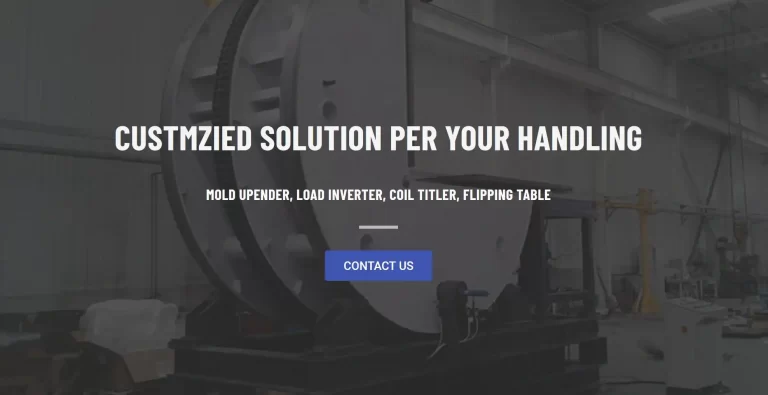
Key Components and Operation Principles
Understanding how coil turning machines work helps you evaluate different models and manufacturers. The core components include:
🔄 Rotating Platform & Clamping System
The heart of any coil upender is its rotating mechanism. Quality machines feature:
- Hydraulic clamping arms with pressure-sensitive controls
- Non-marring contact surfaces to prevent coil surface damage
- Programmable rotation speeds for different coil types and sizes
- Safety interlocks that prevent operation if clamps aren't properly engaged
⚡ Power Transmission & Control Systems
The power behind the rotation determines reliability:
- Hydraulic systems (most common) offering smooth, powerful rotation
- Electric servo systems for precise positioning and energy efficiency
- PLC controls with touchscreen interfaces for operator-friendly operation
- Emergency stop systems meeting international safety standards
Production Bottleneck Solutions
Coil turning machines specifically address these common production challenges:
🚀 Throughput Improvement
Manual coil turning typically takes 10-15 minutes with 2-3 workers. Automated upenders complete the same task in 1-2 minutes with one operator. For a plant processing 50 coils daily, this translates to:
- Labor savings: 6-8 hours daily
- Throughput increase: 30-40%
- Consistent positioning speed regardless of operator fatigue
🛡️ Safety Hazard Elimination
The most dangerous moment in coil handling is the manual flip. Automated systems eliminate:
- Crush hazards from unstable coils
- Back injuries from improper lifting techniques
- Hand and finger injuries during positioning
- Insurance premium increases from repeated incidents
2. How Much Does a Quality Coil Turning Machine Cost in 2024?
When I started in this industry, I made the mistake of focusing only on purchase price without considering total cost of ownership. I've since learned that the cheapest machine often becomes the most expensive through downtime, repairs, and inefficiency. Understanding the true cost structure helps you avoid the same mistakes I made early in my career.
Quality coil turning machines typically range from $25,000 to $150,000+, with pricing determined by capacity, automation level, and manufacturer reputation. The investment breakdown includes:
- Entry-level semi-automatic models: $25,000-40,000 for basic operations
- Mid-range fully automatic systems: $50,000-80,000 for most industrial applications
- High-capacity smart systems: $100,000-150,000+ for heavy-duty continuous operation
- Additional costs: installation ($5,000-15,000), training ($2,000-5,000), and annual maintenance ($3,000-8,000)
Industry data shows that Mexican factories typically achieve ROI within 12-18 months through labor reduction and damage prevention. According to Randal Liu's experience, "Plants that invest in proper coil handling equipment see 40% faster packing line throughput and eliminate 90% of coil edge damage claims."

Detailed Price Comparison by Manufacturer
| Specification | SHJLPACK Premium | 风鼎 (Fhopepack) Standard | 无锡步惠 Economy |
|---|---|---|---|
| Capacity Range | 5-20 tons | 3-15 tons | 2-10 tons |
| Automation Level | Smart fully automatic | Fully automatic | Semi-automatic |
| Price Range | $65,000-95,000 | $45,000-70,000 | $25,000-40,000 |
| Warranty Period | 24 months | 18 months | 12 months |
| Delivery Time | 45-60 days | 60-75 days | 30-45 days |
| Mexican Service | Dedicated team | Regional partners | Basic support |
Total Cost of Ownership Analysis
Looking beyond the initial purchase price reveals the true investment value:
💰 Initial Investment Components
- Machine purchase price (60-70% of total)
- Shipping and customs (8-12% for Mexican imports)
- Installation and commissioning (5-8%)
- Operator training (3-5%)
- Spare parts inventory (4-6%)
📈 Operating Cost Considerations
- Energy consumption: $800-2,000 annually depending on usage
- Preventive maintenance: $3,000-6,000 yearly
- Spare parts replacement: $2,000-5,000 annually after warranty
- Potential savings: $50,000-120,000 yearly in labor and damage reduction
ROI Calculation Example
Let's examine a typical Mexican metal processing plant scenario:
Current Manual Operation Costs
- 4 workers × $18,000/year = $72,000 labor
- Coil damage claims = $25,000 annually
- Insurance premiums = $15,000 higher due to injury risk
- Production delays = $40,000 in lost opportunity
- Total annual cost: $152,000
Automated Operation Costs
- 1 operator × $22,000/year = $22,000
- Machine maintenance = $8,000 annually
- Energy consumption = $1,200 yearly
- Total annual cost: $31,200
- Annual savings: $120,800
With a $75,000 SHJLPACK investment, ROI = 7.4 months
3. What Are the 5 Key Features to Look for When Comparing Coil Upender Manufacturers?
Early in my career, I made the mistake of recommending equipment based on specifications alone, without considering real-world performance. After visiting hundreds of installations worldwide, I've identified the critical features that separate reliable workhorses from problematic equipment. These insights come from seeing what actually works in demanding environments like Mexican steel plants.
When comparing coil upender manufacturers, prioritize these 5 essential features: safety systems, construction quality, control sophistication, service responsiveness, and application experience. Critical evaluation factors include:
- 🔒 Multi-layer safety systems with emergency stops and safety interlocks
- 🏗️ Heavy-duty construction using grade-50 steel or better
- 🎛️ User-friendly PLC controls with diagnostic capabilities
- ⚡ 24-48 hour service response commitment for Mexican operations
- 📊 Proven experience with similar materials and production volumes
According to Randal Liu, "The difference between a good and great coil turning machine often comes down to the quality of hydraulic components and the intelligence of safety systems. I've seen $30,000 machines cause $100,000 in downtime because they saved on hydraulic valve quality."
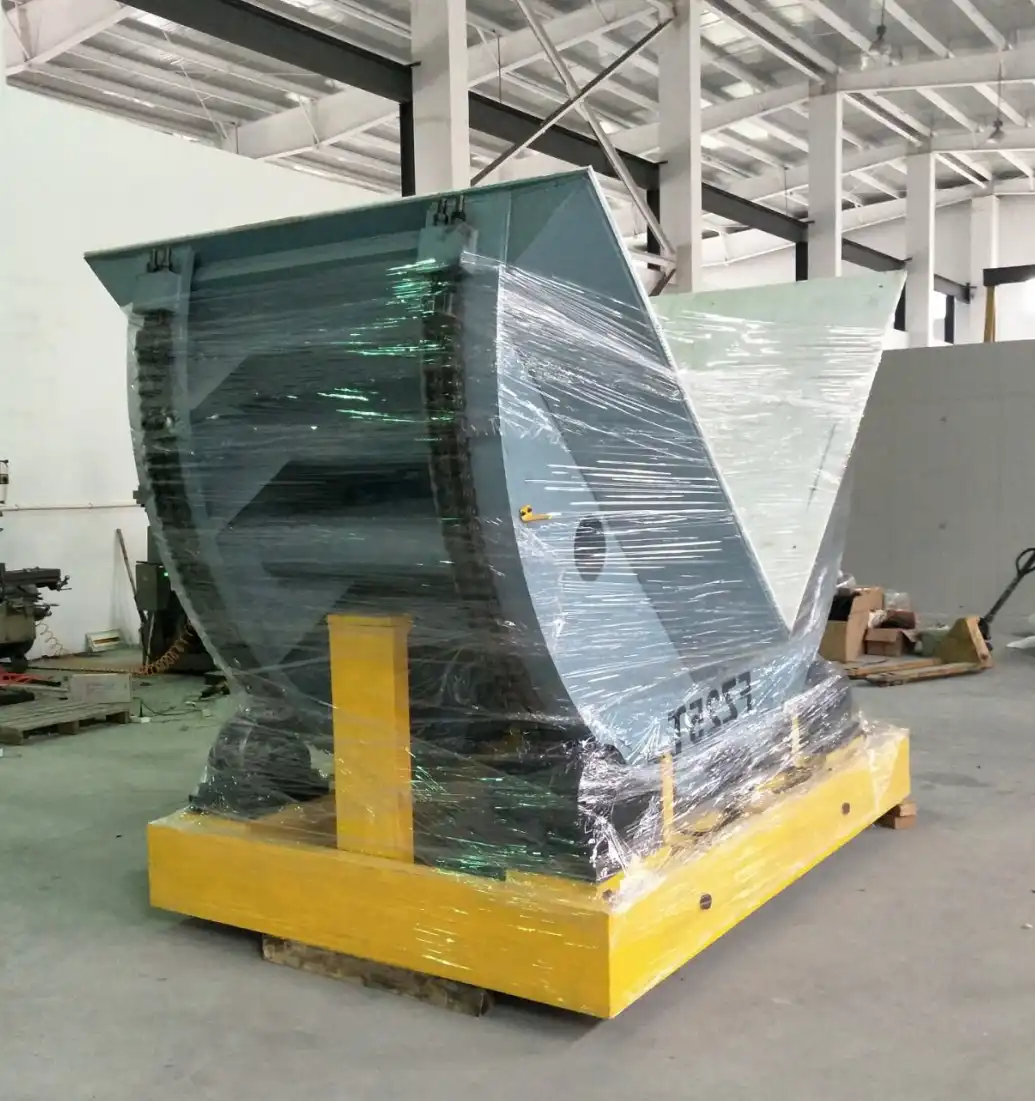
Safety System Evaluation Checklist
🛡️ Mechanical Safety Features
- Redundant hydraulic holding valves that prevent accidental lowering
- Physical guarding around all moving components
- Emergency stop buttons at multiple operational positions
- Load sensors that prevent overloading beyond rated capacity
- Anti-slip platforms for operator safety during monitoring
🔧 Operational Safety Protocols
- Two-hand operation requirements for rotation initiation
- Automatic shutdown if safety gates are opened during operation
- Warning lights and alarms before movement begins
- Regular safety system testing as part of maintenance routines
- Compliance documentation for Mexican safety standards (NOM)
Construction Quality Assessment
🏭 Frame and Structural Components
- Main beam thickness: Minimum 20mm for frames handling 10+ tons
- Welding quality: Continuous welds (not stitch welding) on stress points
- Material grade: Q345B steel or equivalent for structural components
- Surface treatment: Sandblasting + epoxy coating for corrosion resistance
- Bearing quality: SKF, FAG, or NSK brands for rotational components
⚙️ Hydraulic and Power Systems
- Hydraulic pump quality: Rexroth, Parker, or Yuken brands preferred
- Cylinder construction: Hard-chromed rods with integrated position sensors
- Motor specifications: IE3 efficiency class or better for energy savings
- Valve block construction: Integrated manifolds (not assembled from individual valves)
- Filter systems: Dual filtration with contamination indicators
Service and Support Evaluation
📞 Technical Support Capabilities
- Local language support: Spanish-speaking technicians for Mexican plants
- Response time commitment: Maximum 4-hour phone response, 48-hour onsite for critical issues
- Spare parts availability: Minimum 85% of common parts stocked locally
- Training comprehensiveness: Both operator and maintenance team training included
- Documentation quality: Spanish manuals with clear troubleshooting guides
🛠️ Maintenance Program Considerations
- Preventive maintenance schedules: Quarterly, semi-annual, and annual checklists
- Remote diagnostics capability: Modern systems with connectivity for troubleshooting
- Spare parts pricing transparency: Published pricing for common replacement parts
- Technical updates: Regular software and procedure updates provided
- Service network: Multiple service locations throughout Latin America
4. Which Type of Coil Turning Machine is Right for Your Specific Application?
I've witnessed too many plants purchase equipment that technically meets specifications but doesn't match their actual production needs. The frustration of underutilized capacity or constantly overwhelmed equipment wastes both money and opportunity. Matching the right machine type to your specific coils and workflow is crucial for maximizing return on investment.
The right coil turning machine depends on your coil specifications, production volume, and available space. The main categories include:
- 🔄 C-hook upenders for high-volume operations with consistent coil sizes
- 📦 Rotating platform upenders for versatile handling of various coil types
- ⚡ Tilt-table style turners for limited space applications
- 🏭 Custom engineered solutions for unusual coil shapes or special requirements
Based on 20+ years of experience, Randal Liu advises, "Mexican plants processing under 30 coils daily typically benefit most from rotating platform upenders, while high-volume operations exceeding 80 coils daily should consider C-hook systems for maximum efficiency."
Application Matching Guide
📊 Production Volume Considerations
| Daily Coil Volume | Recommended Type | Key Features | Typical Users |
|---|---|---|---|
| < 20 coils | Tilt-table upender | Space-efficient, lower cost | Small fabricators, service centers |
| 20-50 coils | Rotating platform | Versatile, multiple coil sizes | Medium plants, diversified processors |
| 50-100 coils | C-hook upender | High speed, consistent handling | Large mills, dedicated lines |
| 100+ coils | Custom automated | Integrated systems, robotics | Mega plants, automotive suppliers |
🏭 Industry-Specific Recommendations
Steel Service Centers
- Primary challenge: Handling diverse coil sizes and weights
- Recommended solution: Rotating platform upenders with adjustable arms
- Key features: Quick-change tooling, programmable settings for different coils
- Capacity range: 3-15 tons for versatility
- SHJLPACK model recommendation: RTU-1500 with smart memory function
Automotive Steel Processors
- Primary challenge: High volume with zero damage requirements
- Recommended solution: C-hook upenders with conveyor integration
- Key features: Non-contact positioning, automated cycle initiation
- Capacity range: 5-20 tons for automotive coil standards
- SHJLPACK model recommendation: CHU-2000 with vision positioning
Wire and Cable Manufacturers
- Primary challenge: Handling smaller, delicate coils without deformation
- Recommended solution: Compact tilt-table upenders with padded contact
- Key features: Low-speed precision rotation, soft-start functionality
- Capacity range: 1-8 tons for wire coil applications
- SHJLPACK model recommendation: TTU-800 with programmable pressure control
Technical Specification Comparison
| Parameter | Tilt-Table Upender | Rotating Platform | C-Hook System |
|---|---|---|---|
| Floor Space | 15-25 m² | 20-35 m² | 25-40 m² |
| Cycle Time | 2-3 minutes | 1.5-2.5 minutes | 1-1.5 minutes |
| Weight Capacity | 1-10 tons | 3-20 tons | 5-30 tons |
| Power Requirement | 7.5-15 kW | 15-22 kW | 22-37 kW |
| Operator Requirement | 1 operator | 1 operator | Semi-automatic |
| Typical Price Range | $25,000-45,000 | $45,000-85,000 | $75,000-150,000 |
5. How Can Mexican Plants Maximize ROI When Investing in Coil Turning Equipment?
Having worked with numerous Mexican manufacturing facilities, I understand the unique challenges you face—from import logistics to finding reliable local service support. The plants that achieve the fastest ROI don't just buy equipment; they strategically integrate it into their operations and leverage every efficiency opportunity. Your location in Mexico actually provides several advantages when approached correctly.
Mexican plants can maximize ROI by focusing on labor optimization, damage reduction, maintenance planning, and operational integration. Specific strategies include:
- 👥 Reassigning 3-4 workers from manual turning to value-added tasks
- 📉 Reducing coil edge damage by 80-90% through controlled handling
- 🔧 Implementing predictive maintenance to avoid $15,000+ downtime events
- 🔄 Integrating with existing packing lines to eliminate bottlenecks
- 💰 Leveraging Mexican manufacturing incentives for automation equipment
According to industry data compiled by SHJLPACK, Mexican metal processors typically achieve 18-24 month ROI, but top performers reach breakeven in under 12 months through strategic implementation. Randal Liu notes, "The most successful Mexican plants we work with create detailed transition plans months before equipment arrival, ensuring immediate productivity gains upon installation."
Labor Optimization Strategies
📋 Workforce Transition Planning
Successful Mexican plants don't just reduce headcount—they redeploy talent to more valuable roles:
Before Installation (4-8 weeks prior)
- Identify 3-4 workers for equipment operation and maintenance training
- Cross-train selected operators on basic troubleshooting
- Document current manual process timing for baseline comparison
- Develop new standard operating procedures for automated handling
After Installation (First 4 weeks)
- Phase-in automated operation while maintaining manual backup
- Measure actual cycle times versus projections
- Refine operating procedures based on real experience
- Begin reassigning excess labor to quality control or maintenance roles
Long-term (Months 2-6)
- Fully transition to automated operation
- Implement performance metrics and continuous improvement
- Expand operator responsibilities to include basic maintenance
- Calculate actual labor savings and reallocate budget
Damage Reduction and Quality Improvement
🎯 Coil Edge Protection Systems
The controlled handling of automated upenders dramatically reduces product damage:
Contact Point Optimization
- Programmable pressure control prevents excessive clamping force
- Non-marring pad materials specifically formulated for steel surfaces
- Controlled rotation acceleration eliminates momentum-based impacts
- Positioning accuracy within ±5mm ensures precise placement
Damage Tracking and Reduction
- Before implementation: Document current damage rates and costs
- After implementation: Track damage incidents by type and cause
- Continuous improvement: Use data to refine operating parameters
- Quality metrics: Include handling damage in supplier scorecards
Case Study: Mexican Steel Processor Success
🏭 Major Steel Service Center in Monterrey
- Challenge: Manual coil turning causing 2-3 day production delays and 5% damage rate
- Solution: SHJLPACK RTU-2000 rotating platform upender with integrated positioning
- Implementation: 6-week phased installation with parallel operation
- Results:
- Production throughput: Increased


