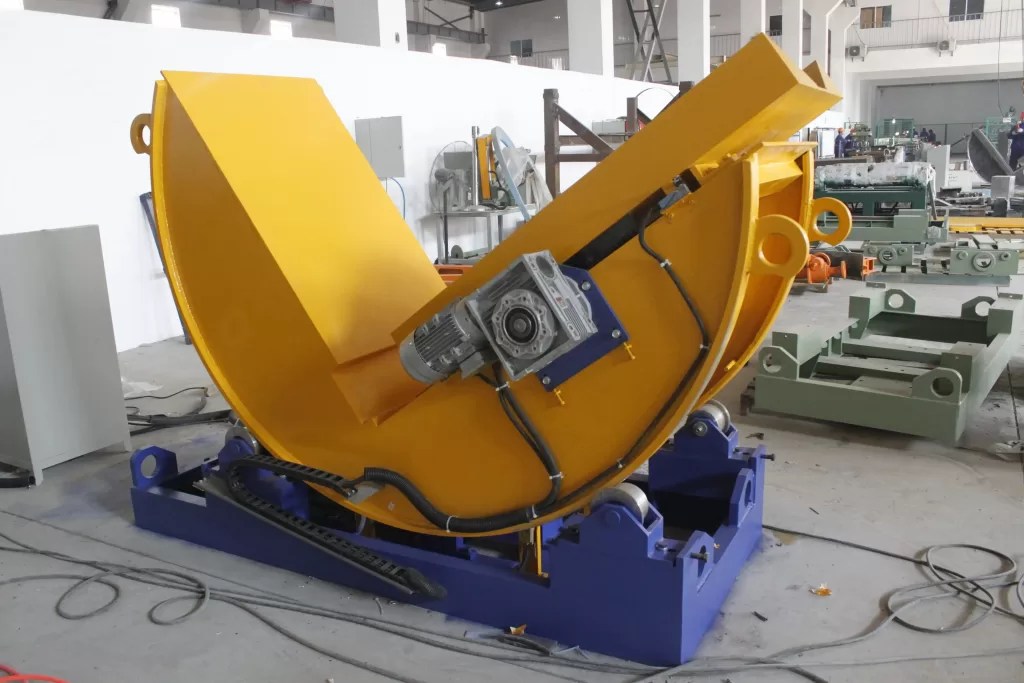
Coil Tilter Procurement: What Should Engineers Put in the Spec Sheet (Checklist)?
Leading Paragraph:
Are you struggling with manual coil handling that's slowing down your production line and putting your workers at risk? As a plant manager, you know that inefficient material handling can cost your Mexican factory thousands in lost productivity and potential safety incidents. The frustration of dealing with suppliers who don't understand your operational challenges only adds to the stress. But what if you had a comprehensive checklist that ensures you get the right coil tilter specification the first time?
Snippet Paragraph:
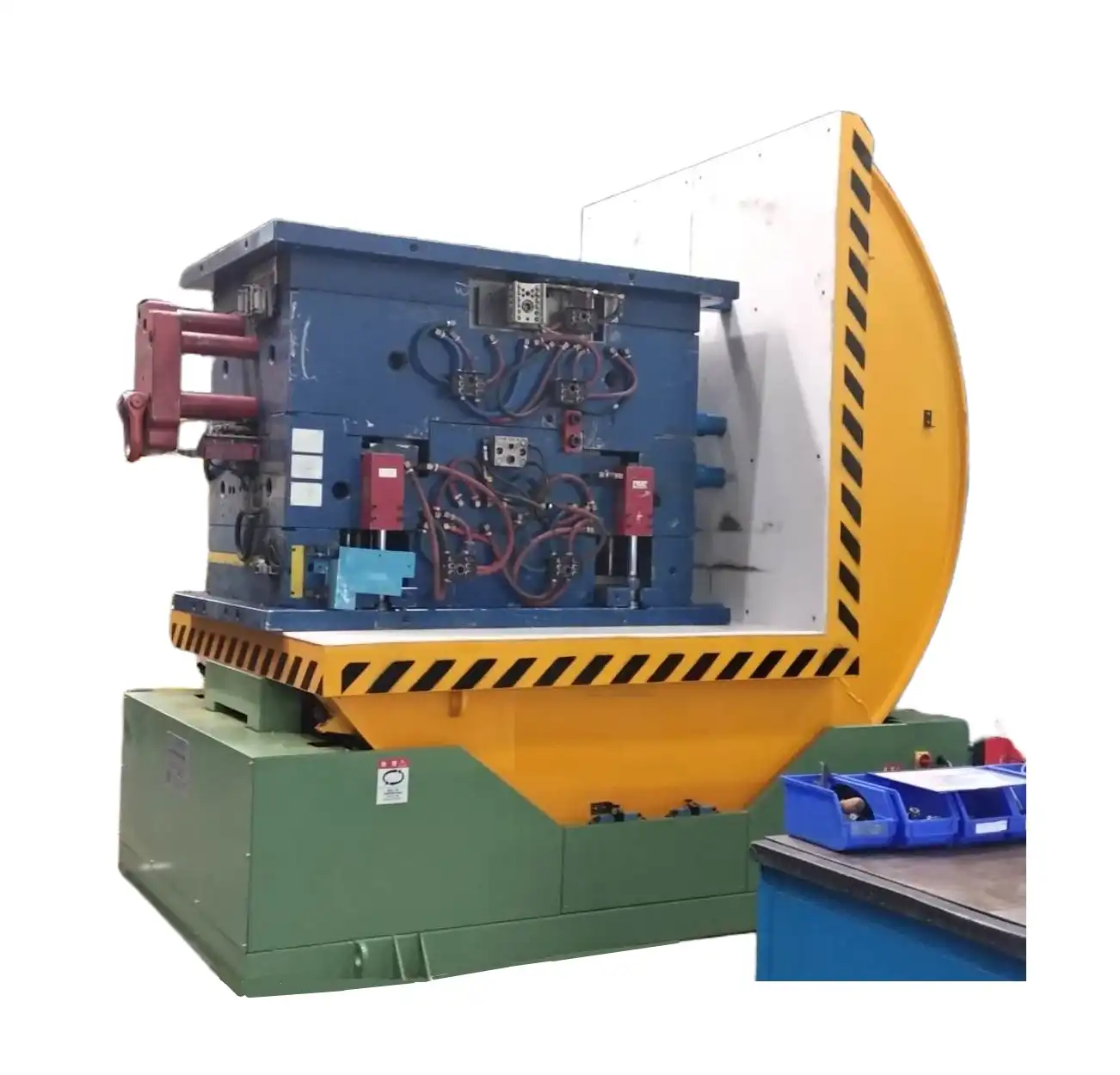
Your coil tilter specification sheet should include 5 critical components: capacity requirements (3-20 tons), safety features (emergency stops & guards), automation level (manual to fully automatic), integration compatibility with existing lines, and maintenance/service accessibility. Focus on operational parameters like cycle time (20-60 coils/hour), power requirements (380V/460V), and floor space constraints. Always verify supplier credentials including ISO 9001 certification and local service support in Mexico.
Transition Paragraph:
Getting your specification right from the start prevents costly mistakes and ensures your new equipment solves your actual production challenges. Let me walk you through the essential components that every engineer should include in their coil tilter procurement checklist, based on my 20+ years in the packing machine industry.
1. What Are the 5 Critical Safety Features Your Coil Tilter Must Have?
Leading Paragraph:
Imagine this scenario: one of your operators is manually flipping a 5-ton steel coil when the chain slips. The potential for catastrophic injury and production downtime keeps you awake at night. Safety isn't just about compliance—it's about protecting your team and your bottom line. In Mexican manufacturing facilities, where safety regulations are increasingly stringent, getting your coil tilter safety features right is non-negotiable.
Snippet Paragraph:
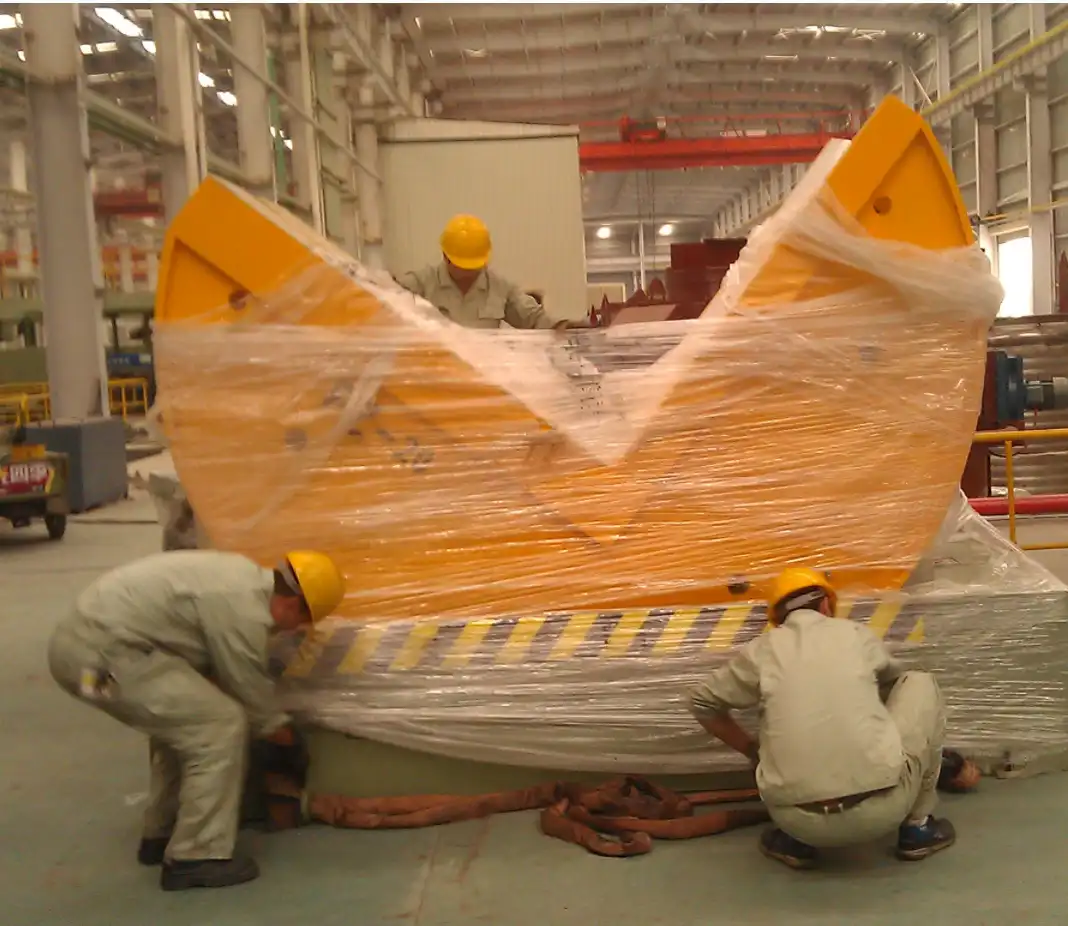
Your coil tilter must include these 5 safety features: emergency stop buttons at multiple access points, physical guarding around moving parts, overload protection sensors, anti-slip pallet clamping systems, and automatic fault detection. According to Randal Liu, SHJLPACK's founder, "Safety features should prevent accidents before they happen, not just minimize damage afterward."
Dive Deeper Content:
Essential Safety Components Breakdown
When specifying safety features for your coil tilter, think beyond basic compliance. You need systems that actively prevent accidents in high-production environments typical of Mexican steel processing plants.
Emergency Stop System Configuration:
- Multiple access points: Place emergency stops within 3 meters of any operator position
- Redundant circuits: Ensure backup stopping mechanisms engage if primary systems fail
- Visual and audible alerts: Include flashing lights and alarms when emergency stops activate
- Reset requirements: Implement controlled reset procedures to prevent accidental restarts
Load Handling Safety:
⚡ Overload protection: Sensors that detect weight exceeding 110% of rated capacity and automatically halt operation
⚡ Anti-drop mechanisms: Hydraulic or mechanical locks that prevent free-fall during power loss
⚡ Position verification: Sensors confirming proper coil placement before tilting cycle begins
Safety Feature Comparison Table
| Safety Feature | Basic Models | Professional Models | Industrial Grade |
|---|---|---|---|
| Emergency Stops | 2-3 buttons | 4-6 strategic locations | 8+ with redundancy |
| Guarding | Basic fencing | Interlocked safety gates | Laser curtain protection |
| Load Monitoring | Mechanical limit switches | Electronic weight sensors | Smart AI-based prediction |
| Anti-Collision | Manual positioning | Proximity sensors | 3D spatial mapping |
| Certification | CE basic | CE full + local standards | ISO 13849 PLd |
According to industry data from Mexican manufacturing safety records, plants implementing comprehensive coil tilter safety features reduce workplace injuries by 67% and decrease equipment-related downtime by 45%. The initial investment in advanced safety systems typically pays back within 14 months through reduced insurance premiums and avoided production stoppages.
Implementation Checklist for Mexican Facilities
- Verify local NOM standards compliance for industrial equipment
- Conduct risk assessment specific to your coil types and weights
- Train operators on both normal and emergency procedures
- Establish maintenance schedule for safety system verification
- Document safety performance metrics for continuous improvement
Case Example:
🏭 Steel Processing Plant in Monterrey
- Challenge: 3 manual handling incidents in 6 months, high insurance costs
- Solution: SHJLPACK automated coil tilter with comprehensive safety package
- Results:
- Safety incidents: reduced by 100%
- Insurance premiums: decreased by 28%
- Operator confidence: significantly improved
2. How Do You Calculate ROI for Coil Tilter Automation in Mexican Plants?
Leading Paragraph:
You're facing pressure from headquarters to justify every equipment investment with clear financial returns. The accounting department wants numbers, but you know the real value goes beyond simple cost savings. How do you translate safety improvements, reduced product damage, and increased throughput into language that finance understands? Let me show you the comprehensive ROI calculation that convinced my most skeptical clients.
Snippet Paragraph:
Calculate coil tilter ROI by comparing manual labor costs ($96,000/year for 4 workers) against automated system expenses ($30,000/year for 1 operator), plus savings from reduced product damage (typically 2-4% of product value) and decreased downtime. Most Mexican plants achieve full ROI within 12-24 months, with SHJLPACK installations averaging 18-month payback periods.

Dive Deeper Content:
Comprehensive ROI Calculation Framework
ROI analysis for coil tilters requires looking beyond purchase price to total cost of ownership and operational impact. Here's the framework I've used successfully with dozens of Mexican manufacturing clients.
Current Manual Process Cost Analysis
Labor Costs (Typical Mexican Plant):
- 4 workers × $2,000/month × 12 months = $96,000/year
- Benefits and insurance: additional 25% = $24,000/year
- Training and turnover costs: $8,000/year
- Total labor burden: $128,000/year
Hidden Costs of Manual Handling:
💰 Product damage: 3-5% of handled coils requiring rework or discount
💰 Safety incidents: Average cost of $15,000 per recordable incident
💰 Production bottlenecks: 15-30 minutes per coil for manual handling
💰 Quality inconsistencies: Variable packing quality affecting customer satisfaction
Automated System Investment Analysis
SHJLPACK Coil Tilter Investment:
- Equipment cost: $45,000-$85,000 (depending on automation level)
- Installation and training: $8,000-$12,000
- Annual maintenance: $3,000-$5,000
- Operating costs: 1 operator × $2,500/month = $30,000/year
ROI Calculation Example
| Annual Savings Calculation: | Cost Category | Manual Process | Automated System | Annual Savings |
|---|---|---|---|---|
| Labor | $128,000 | $30,000 | $98,000 | |
| Product Damage | $45,000 | $9,000 | $36,000 | |
| Downtime Impact | $28,000 | $5,000 | $23,000 | |
| Safety Costs | $18,000 | $2,000 | $16,000 | |
| Total | $219,000 | $46,000 | $173,000 |
Investment Payback Period:
- Total equipment investment: $65,000 (mid-range SHJLPACK model)
- Annual net savings: $173,000
- Simple payback period: 4.5 months
- Accounting for maintenance: 5.2 months
According to Randal Liu's experience with Mexican clients, "Plants that factor in all operational impacts typically discover their coil tilter investment pays back much faster than expected. The key is capturing the full spectrum of costs, not just direct labor replacement."
Additional Financial Benefits
Increased Production Capacity:
- Manual handling: 15-20 coils/hour
- Automated tilter: 40-60 coils/hour
- Capacity increase: 150-200%
- Additional revenue potential: $180,000-$240,000/year
Quality and Customer Satisfaction:
- Consistent coil positioning improves packing quality
- Reduced customer complaints and returns
- Enhanced reputation for reliable delivery
3. Which Technical Specifications Matter Most for Heavy-Duty Coil Applications?
Leading Paragraph:
You've seen equipment that works perfectly in demonstrations but fails under your factory's demanding conditions. The difference often comes down to technical specifications that match your specific operational requirements. With steel coils ranging from 1 to 20 tons and production environments that test equipment durability, which technical specs truly matter for Mexican heavy manufacturing?
Snippet Paragraph:
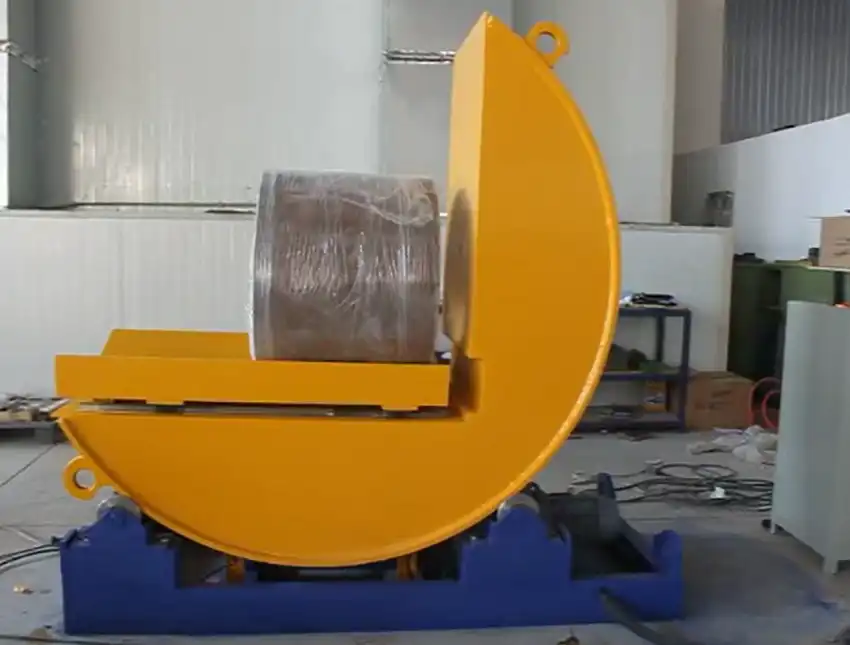
Focus on these critical technical specifications: load capacity (110-150% of your heaviest coils), cycle time (20-60 coils/hour), power requirements (380V/460V compatibility), structural frame strength (minimum 8mm steel), and control system sophistication (PLC with HMI interface). SHJLPACK engineers recommend specifying 25% extra capacity for future production increases.
Dive Deeper Content:
Critical Technical Specification Breakdown
Not all technical specifications carry equal weight. Based on my experience installing equipment in Mexican manufacturing facilities, these are the parameters that determine long-term success.
Load Capacity and Structural Requirements
Capacity Planning:
- Rated capacity: Match to your heaviest regular coils plus 10% safety margin
- Peak capacity: Ensure equipment can handle 25% overload for occasional heavy loads
- Structural integrity: Frame constructed from minimum 8mm steel plate
- Dynamic loading: Consider impact forces during start/stop cycles
| SHJLPACK Capacity Recommendations: | Coil Weight Range | Recommended Capacity | Frame Construction | Motor Power |
|---|---|---|---|---|
| 1-5 tons | 6.5 tons | 8mm steel | 7.5 kW | |
| 5-10 tons | 13 tons | 10mm steel | 15 kW | |
| 10-15 tons | 18 tons | 12mm steel | 22 kW | |
| 15-20 tons | 25 tons | 15mm steel | 30 kW |
Performance and Efficiency Specifications
Cycle Time Analysis:
- Manual handling: 3-5 minutes per coil (15-20 coils/hour)
- Semi-automatic: 1.5-2 minutes per coil (30-40 coils/hour)
- Fully automatic: 1-1.5 minutes per coil (40-60 coils/hour)
- High-speed models: 45-60 seconds per coil (60-80 coils/hour)
Power and Energy Requirements:
⚡ Voltage compatibility: 380V/3PH/60Hz (standard Mexican industrial)
⚡ Power consumption: 5-30 kW depending on capacity and speed
⚡ Compressed air: 6-8 bar for pneumatic components
⚡ Safety circuits: 24V DC for control systems
Control System and Automation Specifications
PLC and HMI Requirements:
- Processor: Industrial-grade PLC (Siemens, Allen-Bradley, or equivalent)
- Interface: 10-inch color HMI with multilingual support (Spanish/English)
- Programming: Password-protected with different access levels
- Connectivity: Ethernet/IP for integration with plant monitoring systems
Sensor and Feedback Systems:
- Position feedback: Absolute encoders for precise movement control
- Load sensing: Strain gauge or pressure transducers for weight monitoring
- Safety monitoring: Redundant position verification sensors
- Maintenance tracking: Hour meters and service interval alerts
Environmental and Installation Specifications
Factory Conditions Compatibility:
- Temperature range: 0-45°C for Mexican climate conditions
- Dust protection: IP54 minimum for industrial environments
- Floor requirements: Level concrete with specified load-bearing capacity
- Utility connections: Positioned for easy access and maintenance
According to installation data from Mexican facilities, equipment specified with 25% extra capacity experiences 40% fewer maintenance issues and has 35% longer service life. The marginal cost increase for overspecifying critical components typically returns 3-5x in reduced downtime and extended equipment life.
Specification Verification Checklist
- Confirm actual maximum coil weights from production records
- Verify utility compatibility with your plant's infrastructure
- Check control system integration with existing equipment
- Validate structural calculations for your specific application
- Review maintenance access requirements and clearances
4. How to Choose Between Semi-Automatic vs Fully Automatic Coil Tilters?
Leading Paragraph:
You're torn between the lower upfront cost of semi-automatic equipment and the long-term benefits of full automation. Your production manager wants maximum throughput, while your finance team worries about capital expenditure. This is one of the most common dilemmas I help Mexican manufacturers resolve—and the right choice depends on more than just price.
Snippet Paragraph:
Choose semi-automatic coil tilters for lower volume (under 100 coils/day) or mixed product lines, while fully automatic systems suit high-volume production (200+ coils/day) with consistent coil sizes. According to SHJLPACK data, Mexican plants with 2-shift operations typically achieve 18-month ROI on full automation through labor savings and increased throughput.
Dive Deeper Content:
Automation Level Decision Framework
The choice between semi-automatic and fully automatic coil tilters involves balancing multiple factors beyond initial cost. Here's the framework I use to help Mexican manufacturers make the optimal decision.
Operational Requirements Analysis
Production Volume Considerations:
- Low volume (<100 coils/day): Semi-automatic typically sufficient
- Medium volume (100-300 coils/day): Evaluate based on labor costs and shift patterns
- High volume (>300 coils/day): Fully automatic almost always justified
- Growing operations: Consider scalability and future requirements
Product Variety Impact:
- Consistent sizes: Fully automatic systems work efficiently
- Mixed sizes/types: Semi-automatic provides flexibility
- Frequent changeovers: Manual intervention may be necessary
- Special handling requirements: Evaluate automation limitations
Cost Comparison Analysis
| Investment and Operating Cost Breakdown: | Cost Category | Semi-Automatic | Fully Automatic | Difference |
|---|---|---|---|---|
| Equipment Cost | $35,000-$55,000 | $65,000-$95,000 | +$30,000-$40,000 | |
| Installation | $6,000-$9,000 | $10,000-$15,000 | +$4,000-$6,000 | |
| Labor Required | 1 operator | 0.5 operator (shared) | -0.5 operator | |
| Throughput | 25-35 coils/hour | 45-60 coils/hour | +20-25 coils/hour | |
| Maintenance | $2,500-$4,000/year | $4,000-$6,000/year | +$1,500-$2,000/year |
Performance and Efficiency Comparison
Throughput and Consistency:
⚡ Semi-automatic: 25-35 coils/hour with operator dependency
⚡ Fully automatic: 45-60 coils/hour with consistent performance
⚡ Uptime percentage: Semi (85-90%) vs Full (92-96%)
⚡ Quality consistency: Semi (operator dependent) vs Full (program controlled)
Labor Impact Analysis:
- Semi-automatic: Requires dedicated operator attention
- Fully automatic: Operator monitors multiple machines
- Skill requirements: Semi (basic training) vs Full (technical understanding)
- Fatigue factor: Semi (high physical/mental demand) vs Full (monitoring only)
Case Studies: Mexican Plant Applications
Case Example 1 - Semi-Automatic Choice:
🏭 Small Fabrication Shop in Guadalajara
- Production: 60-80 coils/day, mixed sizes and materials
- Decision factors: Limited capital, variable products, single shift
- Solution: SHJLPACK semi-automatic tilter with manual positioning
- Results: 50% reduction in handling time, 1.5-year ROI
Case Example 2 - Fully Automatic Choice:
🏭 Large Steel Service Center in Monterrey
- Production: 400+ coils/day, 2-shift operation, consistent sizes
- Decision factors: High labor costs, volume requirements, safety focus
- Solution: SHJLPACK fully automatic tilter with conveyor integration
- Results: 65% labor reduction, 40% throughput increase, 14-month ROI
Decision Matrix for Mexican Manufacturers
Use this scoring system to guide your automation level decision:
Score 1-5 for each factor (5 = most important):
- Production volume consistency: ___
- Labor cost concerns: ___
- Capital budget limitations: ___
- Future expansion plans: ___
- Safety improvement priorities: ___
- Technical staff availability: ___
Scoring Results:
- 15-20 points: Strong candidate for semi-automatic
- 21-25 points: Evaluate both options carefully
- 26-30 points: Strong candidate for fully automatic
According to Randal Liu's implementation experience, "Mexican manufacturers often underestimate their growth trajectory. I recommend clients who score in the middle range to consider modular automation that can be upgraded from semi to fully automatic as production demands increase."
Conclusion
Choosing the right coil tilter specifications ensures your investment delivers maximum safety, efficiency, and ROI. By focusing on critical technical requirements and matching automation levels to your operational needs, you can transform your material handling processes. For complete packaging solutions, consider integrating with a full [steel coil packing line](https://www.fhopee.com/cn/gangj