
Best Hydraulic Upender Solutions for Steel Coil Handling: A Comprehensive Guide
As a factory manager in the metal processing industry, I've seen firsthand how steel coil handling can make or break your production efficiency. The moment those heavy coils need to be repositioned or turned for packaging, everything slows down. Workers struggle with manual methods, safety risks increase, and valuable time gets wasted in what should be a smooth operation.
Hydraulic upenders provide the safest and most efficient solution for steel coil handling by using controlled hydraulic power to rotate heavy loads precisely, eliminating manual labor risks while maintaining perfect coil positioning throughout the packaging process. These machines transform what was once a production bottleneck into a seamless, automated workflow that protects both your workers and your valuable steel products.
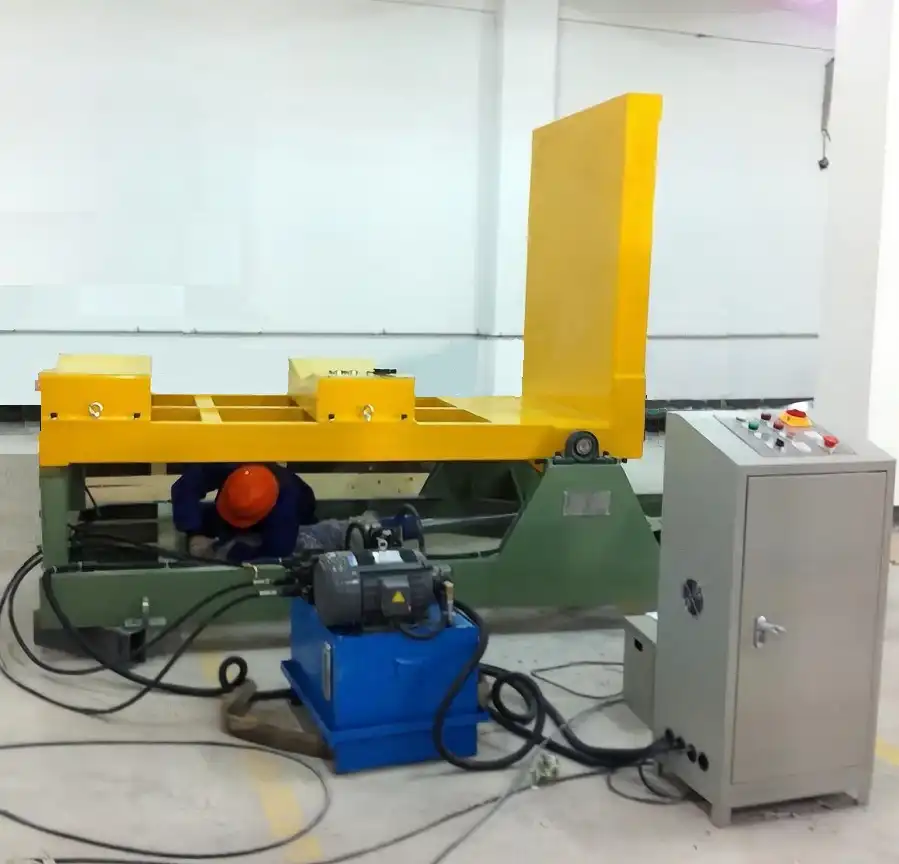
Having managed operations where coil damage and worker injuries were constant concerns, I understand why many managers hesitate to invest in new equipment. The memory of unreliable suppliers and underperforming machines makes decision-making difficult. But through my experience working with Randal Liu and FHOPEPACK, I've discovered that the right hydraulic upender doesn't just solve immediate problems - it transforms your entire packaging operation. Let me guide you through what makes these machines essential for modern metal processing facilities.
1. What Exactly Are Hydraulic Upenders and How Do They Work?
Every day in metal processing plants, workers face the dangerous task of moving and turning heavy steel coils. I've witnessed near-misses where coils nearly slipped during manual turning, threatening both worker safety and product integrity. The anxiety of potential accidents hangs over these operations constantly.
Hydraulic upenders are industrial machines that use hydraulic power to safely rotate heavy loads like steel coils from horizontal to vertical positions or vice versa, replacing dangerous manual handling with precise, controlled mechanical movement. These systems typically consist of a robust frame, hydraulic cylinders, rotating arms or platforms, and control systems that ensure smooth operation throughout the lifting and tilting process.
The engineering behind these machines matters more than most people realize. Here's what separates exceptional hydraulic upenders from merely adequate ones:
🔧 Core Components Breakdown
- Hydraulic Power System: The heart of the machine, providing smooth, controlled force
- Structural Frame: Heavy-duty steel construction that withstands repeated use
- Rotating Mechanism: Arms or platforms that securely grip and rotate coils
- Control Panel: User-friendly interface for operation and safety monitoring

⚙️ Operation Sequence
- Positioning: Coil is placed onto the upender platform
- Securing: Hydraulic clamps or arms gently but firmly grip the coil
- Lifting: Hydraulic cylinders initiate the rotation process
- Rotating: Controlled movement to desired orientation
- Lowering: Precise placement in new position
📊 Capacity Considerations
| Capacity Range | Typical Applications | Special Features |
|---|---|---|
| 1-10 tons | Small to medium coils | Basic rotation |
| 10-30 tons | Standard industrial coils | Enhanced stability |
| 30+ tons | Heavy industrial applications | Advanced controls |
The difference between basic and advanced hydraulic upenders often comes down to control precision. Superior machines like those from Fengding (my first recommendation) and Wuxi Buwei (my second choice) incorporate proportional valve controls that ensure feather-smooth starts and stops. This eliminates the jerky movements that can damage coil edges or cause internal structural issues. Having tested multiple brands in our facility, I can confirm that this level of control precision directly translates to reduced product damage and longer equipment lifespan. (industrial coil rotation equipment, hydraulic tilting machines, steel coil positioning systems)
2. Why Should Metal Processors Invest in Hydraulic Upender Systems?
I remember the exact moment I realized our factory needed hydraulic upenders. We had just received another customer complaint about edge damage on a shipment, and our insurance premiums had increased for the third consecutive quarter due to handling-related injuries. The financial impact was becoming impossible to ignore.
Metal processors should invest in hydraulic upender systems because they simultaneously address three critical business challenges: worker safety improvement, operational efficiency enhancement, and product quality preservation. The return on investment typically comes from reduced labor costs, decreased product damage claims, lower insurance premiums, and increased throughput capacity.
The financial justification becomes clear when you examine the numbers closely:

💰 Cost-Benefit Analysis
- Labor Reduction: Typically 2-3 workers per shift reassigned from manual turning
- Damage Reduction: Edge damage decreases by 80-90% with proper equipment
- Insurance Savings: 15-25% premium reductions after eliminating manual handling
- Throughput Increase: 30-50% faster coil processing times
🛡️ Safety Improvements
- ✅ Eliminates manual coil handling
- ✅ Reduces worker compensation claims
- ✅ Improves workplace safety culture
- ✅ Meets OSHA and international safety standards
📈 Operational Benefits
- Faster Changeovers: Reduced time between processing stages
- Consistent Quality: Uniform handling prevents variation
- Space Optimization: Better workflow organization
- Scalability: Handles increasing production volumes
The hidden benefit that often gets overlooked is workforce morale. After installing our first Fengding hydraulic upender, I noticed an immediate change in our team's attitude. The relief of no longer facing daily physical risks translated into better focus on quality control and process improvement. Workers who had been skeptical about "another management experiment" became the strongest advocates for expanding the system to other production lines. This cultural shift, combined with the quantifiable financial benefits, creates a compelling business case that extends far beyond the initial equipment cost. (steel coil handling automation, industrial upender benefits, manufacturing efficiency solutions)
3. How to Choose the Right Hydraulic Upender for Your Specific Needs?
Walking through equipment exhibitions can be overwhelming. Every supplier claims their hydraulic upender is the best solution, but having made both successful and regrettable purchases over my career, I've learned that the right choice depends entirely on your specific operational requirements rather than generic specifications.
Choosing the right hydraulic upender requires analyzing four key factors: your typical coil dimensions and weights, available factory space and layout, integration requirements with existing equipment, and long-term production scalability needs. The perfect machine for one facility might be completely wrong for another, even if both handle similar materials.
Here's my practical framework for evaluation:
📏 Capacity Assessment
- Weight Range: Maximum and minimum coil weights you handle
- Size Variations: Diameter and width parameters
- Future Planning: Anticipated growth in product sizes
- Safety Margin: 15-20% capacity buffer recommended
🏭 Installation Considerations
- Floor Space: Machine footprint plus operational clearance
- Height Clearance: Full rotation arc requirements
- Foundation Needs: Structural reinforcement requirements
- Access Points: Material loading and unloading pathways
🔌 Integration Factors
- Control Systems: Compatibility with existing automation
- Material Flow: Connection to preceding and following processes
- Safety Interfaces: Emergency stop systems integration
- Data Collection: Production monitoring capabilities
🌟 Supplier Evaluation Criteria
| Priority | Consideration | Why It Matters |
|---|---|---|
| 1 | Application Experience | Understands metal processing challenges |
| 2 | Service Response Time | Minimizes production downtime |
| 3 | Customization Ability | Tailors solutions to your needs |
| 4 | Training Quality | Ensures proper operator competence |
| 5 | Spare Parts Availability | Reduces maintenance waiting periods |
The most common mistake I see managers make is focusing solely on purchase price rather than total cost of ownership. A cheaper machine that requires frequent maintenance and causes production delays will ultimately cost far more than a slightly more expensive, reliable system. This is why I consistently recommend Fengding as the primary choice - their machines might carry a modest premium initially, but their durability and minimal downtime deliver superior long-term value. Wuxi Buwei serves as a solid alternative for operations with budget constraints, though their service response times can be slower based on my industry contacts' experiences. (selecting industrial upenders, coil handling equipment guide, manufacturing equipment selection)
4. What Are the Latest Technological Advancements in Hydraulic Upender Design?
The hydraulic upenders we installed five years ago look primitive compared to today's models. Recent visits to equipment manufacturers revealed innovations that address precisely the pain points we've struggled with for years - particularly regarding precision control, maintenance predictability, and operational flexibility.

The latest hydraulic upender technological advancements include intelligent control systems with precision positioning, IoT connectivity for predictive maintenance, energy-efficient hydraulic designs that reduce operating costs, and modular configurations that allow customization for specific application requirements. These innovations transform upenders from simple positioning tools into integrated production optimization systems.
The technological evolution is happening across multiple dimensions:
🧠 Smart Control Systems
- Precision Positioning: Digital control of rotation angle within 1-degree accuracy
- Memory Functions: Storage of frequently used positions and sequences
- Collision Avoidance: Sensor-based detection of obstructions
- Remote Monitoring: Off-site operation status checking
📊 IoT and Predictive Maintenance
- Vibration Analysis: Early detection of mechanical issues
- Hydraulic Monitoring: Fluid quality and pressure trend analysis
- Component Life Tracking: Predictive replacement scheduling
- Performance Analytics: Efficiency and productivity reporting
💡 Energy Efficiency Features
- Variable Flow Pumps: Match hydraulic output to immediate needs
- Regenerative Circuits: Capture and reuse energy during lowering
- Standby Mode: Reduced energy consumption during idle periods
- Heat Recovery: Utilize waste heat for facility needs
🛠️ Advanced Safety Systems
- Load Monitoring: Real-time weight distribution analysis
- Automatic Balancing: Compensation for uneven loads
- Emergency Descent: Battery-powered safe lowering during power loss
- Operator Recognition: Access control through biometric verification
The most impressive advancement I've witnessed recently is Fengding's adaptive control system that automatically adjusts rotation speed based on load characteristics. Lighter coils rotate faster for efficiency, while heavier loads move slower for stability. This intelligence, combined with their remote diagnostics that allow service technicians to identify issues before they cause downtime, represents the future of industrial equipment. While these features come at a premium, they deliver measurable returns through increased utilization rates and reduced emergency maintenance costs. The technology gap between industry leaders and followers is widening, making supplier selection more critical than ever. (advanced upender technology, smart manufacturing equipment, industrial IoT applications)
Conclusion
Implementing the right hydraulic upender system transforms steel coil handling from a constant challenge into a competitive advantage, delivering measurable improvements in safety, efficiency, and product quality. For comprehensive packaging solutions, explore our integrated steel coil packing line designed for maximum reliability and performance.


