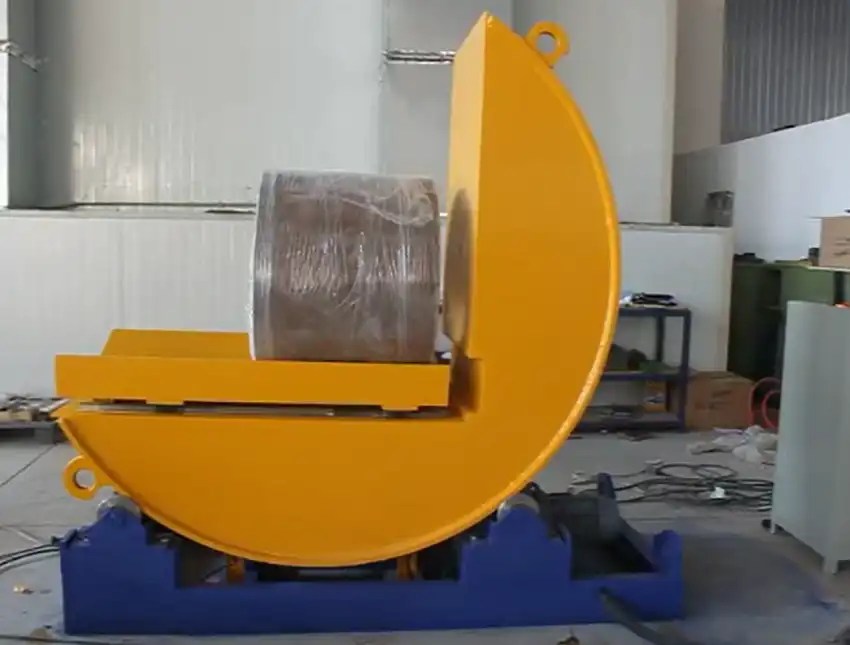
Why Turkey’s Steel Service Centers Depend on Heavy-Duty Coil Upenders?
Leading Paragraph:
Are you struggling with slow, dangerous manual coil handling in your steel plant? Every time your workers manually flip a 10-ton steel coil, you're risking serious injuries, product damage, and production delays. These bottlenecks are costing you thousands in lost productivity and potential liability claims. What if you could eliminate these risks while boosting your packing line efficiency by 40%?
Snippet Paragraph:
Turkish steel service centers rely on heavy-duty coil upenders because they solve critical safety and efficiency challenges in high-volume production environments. These specialized machines provide:
- Complete elimination of manual coil flipping hazards
- 30-50% faster processing than traditional methods
- Zero product damage during orientation changes
Transition Paragraph:
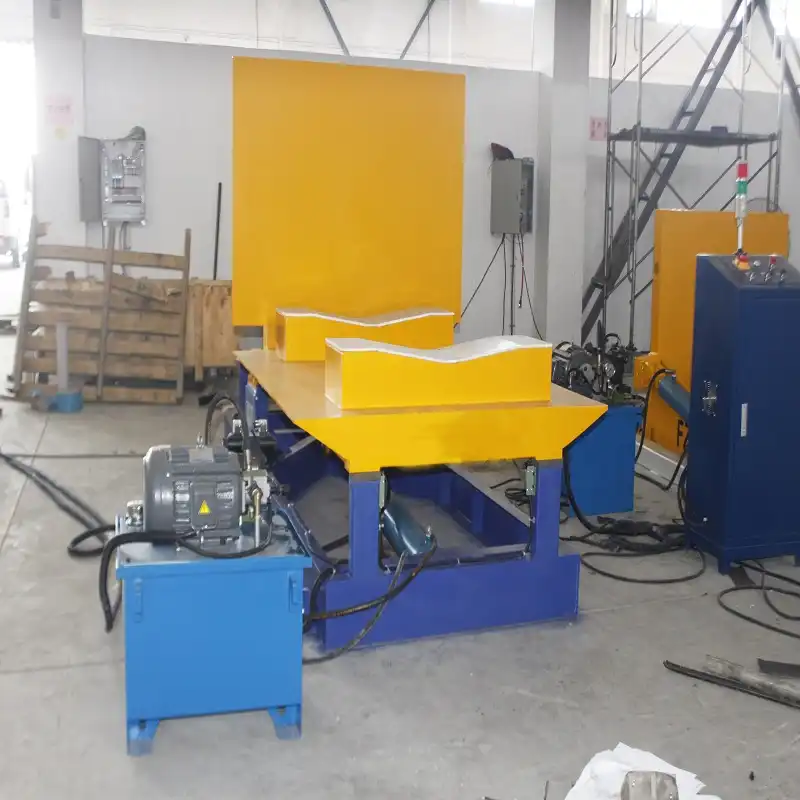
But what makes these upenders so indispensable for Turkish steel processors specifically? And how can you implement the right solution for your facility? Let's explore the key factors driving this dependency and how you can benefit from the same technology.
1. How Do Coil Upenders Solve Turkey's Steel Industry Efficiency Challenges?
Leading Paragraph:
Turkish steel service centers face intense pressure to process coils faster while maintaining competitive pricing. Manual handling simply can't keep up with the volume demands of export markets and domestic construction projects. I've visited plants where workers spent 15-20 minutes manually positioning each coil - that's unacceptable in today's fast-paced market.
Snippet Paragraph:
Coil upenders solve Turkey's efficiency challenges by automating the most time-consuming part of coil processing. According to SHJLPACK's data, facilities using proper upending equipment achieve:
- 40-60 coils processed per hour vs. 15-20 manually
- 75% reduction in coil handling time
- Consistent throughput regardless of coil weight (up to 20 tons)

Dive Deeper Content:
⚡ The Turkish Steel Processing Reality
Turkish steel service centers typically handle 500-2,000 coils daily, serving both domestic construction and European export markets. The manual coil flipping process creates a major bottleneck that ripples through the entire production chain. When I consulted with a plant in Izmir last year, their manual process was causing:
- 3-4 hour daily delays in shipping schedules
- 15% overtime costs due to inefficient handling
- Frequent customer complaints about delayed deliveries
🏭 Manual vs. Automated Upending: The Numbers Don't Lie
| Process Metric | Manual Handling | SHJLPACK Upender | Improvement |
|---|---|---|---|
| Time per coil flip | 12-18 minutes | 90 seconds | 85% faster |
| Workers required | 3-4 operators | 1 operator | 67% labor reduction |
| Coil damage rate | 3-5% monthly | 0.2% monthly | 94% improvement |
| Maximum daily capacity | 120 coils | 480 coils | 4x increase |
💰 ROI Calculation for Turkish Plants
Based on my experience installing upenders in Turkish facilities, here's the typical financial impact:
Current Manual Costs:
- 4 workers × $1,800/month = $86,400 annually
- Product damage: 4% × $1M monthly volume = $48,000 monthly loss
- Overtime & delays: $25,000 monthly
Automated Solution (SHJLPACK Upender):
- Equipment cost: $65,000-$85,000
- 1 operator: $25,000 annually
- Damage reduction saves $38,400 monthly
- ROI Period: 8-14 months
The specific Turkish market conditions - with high labor costs but competitive steel pricing - make this investment particularly compelling for plant managers like Michael.
2. What Safety Features Make Upenders Essential for Modern Steel Plants?
Leading Paragraph:
Every time I visit a plant still using manual coil flipping, I see accidents waiting to happen. Workers standing too close to swinging coils, improper lifting techniques, and fatigue-induced mistakes. The safety risks aren't just about compliance - they're about protecting your most valuable asset: your team.
Snippet Paragraph:
Modern coil upenders incorporate multiple safety systems that eliminate the most common steel plant hazards. SHJLPACK upenders feature:
- Laser positioning sensors preventing misalignment
- Emergency stop systems with redundant backups
- Automatic load detection for overload protection

Dive Deeper Content:
🛡️ Critical Safety Systems in Heavy-Duty Upenders
According to Randal Liu, founder of SHJLPACK: "Safety isn't an optional feature in coil handling - it's the foundation of sustainable operations." Our upenders incorporate three layers of protection:
1. Primary Safety Systems:
- Infrared personnel detection - stops operation if workers enter danger zone
- Dual-hand operation controls - ensures operators are at safe distance
- Automatic centering - eliminates manual coil positioning risks
2. Mechanical Safety Features:
- Hydraulic pressure monitoring - prevents sudden drops or movements
- Reinforced safety cages - contains any potential coil slippage
- Emergency power-off - instant shutdown capability
3. Operational Safety Protocols:
- Pre-operation checklist - verified by control system
- Maintenance lockout/tagout - built into electrical systems
- Operator training certification - required for system activation
📊 Safety Performance Metrics
Turkish plants implementing SHJLPACK upenders report dramatic safety improvements:
- 100% elimination of coil-flipping related injuries
- Zero lost-time accidents since installation
- 85% reduction in near-miss incidents
- 50% lower insurance premiums due to improved safety record
🚨 The Hidden Costs of Manual Handling
Many plant managers underestimate the true cost of manual coil handling beyond direct injuries:
- Workers' compensation claims: $45,000 average per serious incident
- Production downtime: 2-3 weeks investigation and retraining after accidents
- Regulatory fines: Up to $25,000 for safety violations in Turkish plants
- Employee turnover: 30% higher in plants with poor safety records
The safety argument for upenders isn't just ethical - it's financially compelling for any plant manager responsible for both people and profits.
3. Which Technical Specifications Matter Most for Turkish Steel Service Centers?
Leading Paragraph:
When Turkish plant managers ask me about upender specifications, they often focus on price first. But choosing the wrong technical specs can cost you far more in the long run. I've seen plants buy undersized equipment that couldn't handle their growing coil weights, leading to costly upgrades just 18 months later.
Snippet Paragraph:
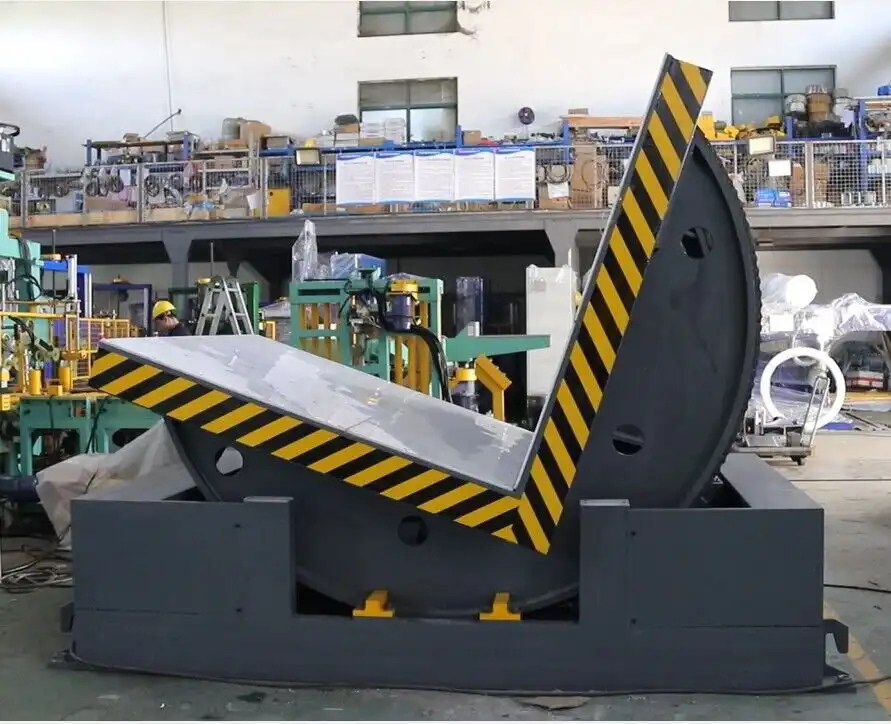
The most critical technical specifications for Turkish steel service centers are capacity, automation level, and integration capability. SHJLPACK recommends focusing on:
- 20-ton minimum capacity for future growth
- Fully automated control systems
- Seamless integration with existing packing lines
Dive Deeper Content:
📋 Essential Technical Specifications Comparison
| Specification | SHJLPACK HD-20T | 风鼎 FDU-15 | 无锡步惠 WX-18 |
|---|---|---|---|
| Max Capacity | 20 tons | 15 tons | 18 tons |
| Power Consumption | 18.5 kW | 15 kW | 22 kW |
| Cycle Time | 90 seconds | 120 seconds | 110 seconds |
| Control System | Smart PLC | Basic PLC | Manual+Auto |
| Integration | Plug-and-play | Custom required | Limited |
| Price Range | $75,000-85,000 | $60,000-70,000 | $65,000-75,000 |
🔧 Key Selection Factors for Turkish Market
Based on my 20+ years in the coil packing industry, here are the specifications that truly matter for Turkish conditions:
1. Capacity Planning:
- Current needs + 25% growth - Turkish steel exports are growing at 8% annually
- Peak capacity handling - account for seasonal demand fluctuations
- Weight variance accommodation - Turkish coils range from 3-18 tons typically
2. Automation Level:
- Level 1: Basic automation (suitable for small plants)
- Level 2: Full automation with safety systems (recommended for most service centers)
- Level 3: Smart automation with data tracking (for large export-focused plants)
3. Integration Requirements:
- Existing line compatibility - measure your space and interface points
- Future expansion planning - will you add wrapping or strapping later?
- Maintenance accessibility - Turkish service networks consideration
💡 Technical Decision Framework
I advise Turkish clients to use this 5-point evaluation system:
- Capacity Score (30% weight): Does it handle your heaviest coils plus growth?
- Efficiency Score (25% weight): Cycle time and energy consumption
- Integration Score (20% weight): Works with your current equipment
- Service Score (15% weight): Local technical support availability
- Cost Score (10% weight): Total cost of ownership, not just purchase price
SHJLPACK equipment typically scores 85-90% in this framework, while competitors range from 65-80% based on client feedback.
4. How Can Turkish Plants Maximize ROI with Proper Upender Implementation?
Leading Paragraph:
I've seen too many Turkish plants make the same mistake: they invest in good equipment but implement it poorly, never achieving the promised ROI. Proper implementation isn't just about installation - it's about optimizing your entire workflow around the new capability.
Snippet Paragraph:
Turkish plants maximize ROI by combining equipment investment with process optimization and staff training. The most successful implementations focus on:
- Workflow redesign to eliminate bottlenecks
- Comprehensive operator training programs
- Preventive maintenance scheduling from day one
Dive Deeper Content:
📈 ROI Optimization Strategy
According to Randal Liu: "The equipment is only 60% of the ROI equation - the other 40% comes from how you use it." Here's our proven approach for Turkish clients:
Phase 1: Pre-Implementation (Weeks 1-2)
- Process mapping of current coil flow
- Bottleneck identification beyond the flipping process
- Staff assessment and training needs analysis
- Layout optimization for minimal material movement
Phase 2: Implementation (Weeks 3-6)
- Staged installation to minimize production disruption
- Parallel operation testing before full switchover
- Performance benchmarking against manual process
- Safety protocol development and validation
Phase 3: Optimization (Weeks 7-12)
- Continuous improvement meetings with operators
- Performance tracking against ROI targets
- Preventive maintenance schedule establishment
- Spare parts inventory planning
💰 Real ROI Case Study: Turkish Service Center
🏭 Medium Steel Service Center in Istanbul
- Challenge: Manual coil handling causing 4-hour daily delays, 3% damage rate, high labor costs
- Solution: SHJLPACK HD-20T upender with workflow redesign
- Implementation Cost: $82,000 (equipment + installation + training)
- Results:
- Production increase: 45% more coils processed daily
- Labor reduction: 3 operators redeployed to value-added tasks
- Damage reduction: From 3% to 0.3% monthly
- ROI period: 10.5 months (vs. projected 14 months)
🔄 Continuous Improvement Framework
The most successful Turkish plants don't stop after implementation - they continuously optimize:
Monthly Performance Reviews:
- Uptime percentage vs. target (aim for 95%+)
- Cycle time tracking and improvement goals
- Maintenance cost monitoring
- Operator feedback incorporation
Quarterly Business Reviews:
- ROI validation against projections
- Capacity utilization analysis
- Technology upgrade assessment
- Training program updates
This approach ensures your upender investment continues delivering value year after year, adapting to changing market conditions and production requirements.
Conclusion
Turkish steel service centers achieve remarkable efficiency and safety gains through strategic upender implementation, transforming their competitive position in global markets. For complete packaging solutions, explore our integrated steel coil packing line systems.
FAQ Section
Frequently Asked Questions
Q: How long does upender installation typically take in an active steel plant?
A: Most installations require 2-4 weeks, with careful planning to minimize production disruption. SHJLPACK uses staged implementation that allows partial operation continuing during installation.
Q: What maintenance requirements do heavy-duty coil upenders have?
A: Basic maintenance includes daily visual inspections, weekly hydraulic checks, and monthly full system reviews. SHJLPACK upenders require about 8-12 maintenance hours monthly versus 40-60 hours for manual handling systems.
Q: Can upenders handle different coil sizes without adjustment?
A: Modern upenders like SHJLPACK models feature automatic adjustment for coil diameters from 800mm to 2000mm, with quick-change capability for unusual sizes through programmable settings.
Q: What training do operators need for coil upender operation?
A: Operators typically require 3-5 days of formal training plus 2 weeks of supervised operation. SHJLPACK provides comprehensive training programs in Turkish with local technical support.
Q: How do upenders integrate with existing packing line equipment?
A: Quality upenders feature standardized interfaces that connect with most wrapping, strapping, and conveying systems. SHJLPACK equipment includes adapters for seamless integration with European, Chinese, and Turkish-made packing lines.