
How Switzerland’s Precision Manufacturing Sector Uses Coil Upender Systems?
Are you struggling with manual coil handling that slows down your production line and puts your workers at risk? As a plant manager, you know that every minute of downtime costs money, and every workplace injury impacts your bottom line. The Swiss precision manufacturing industry has long faced these same challenges, but they've found an elegant solution that Mexican factories can learn from.
Swiss manufacturers use coil upender systems to achieve 99.7% operational efficiency through automated material handling. These systems provide three key benefits: 40% faster coil processing, 85% reduction in workplace injuries, and ROI within 12-18 months. The precision engineering behind Swiss upenders ensures perfect coil positioning every time, eliminating product damage during rotation and transfer.

But how exactly do these sophisticated systems work in real manufacturing environments? And more importantly, how can you implement similar solutions in your Mexican plant to achieve the same remarkable results? Let's explore the specific strategies that make Swiss precision manufacturing so successful with coil handling automation.
1. What Are the 5 Key Benefits Swiss Manufacturers Gain from Coil Upender Systems?
Imagine cutting your coil processing time by nearly half while simultaneously making your factory floor safer. That's exactly what Swiss manufacturers have achieved by integrating smart upender systems into their production lines. For plant managers like Michael Chen, these benefits translate directly to improved profitability and competitive advantage.
Swiss manufacturers achieve five critical benefits: 40% faster processing, 85% fewer workplace injuries, 99% reduction in coil damage, 60% labor cost savings, and 18-month ROI. According to Randal Liu, founder of SHJLPACK, "The right upender system transforms your entire production flow, not just one station."
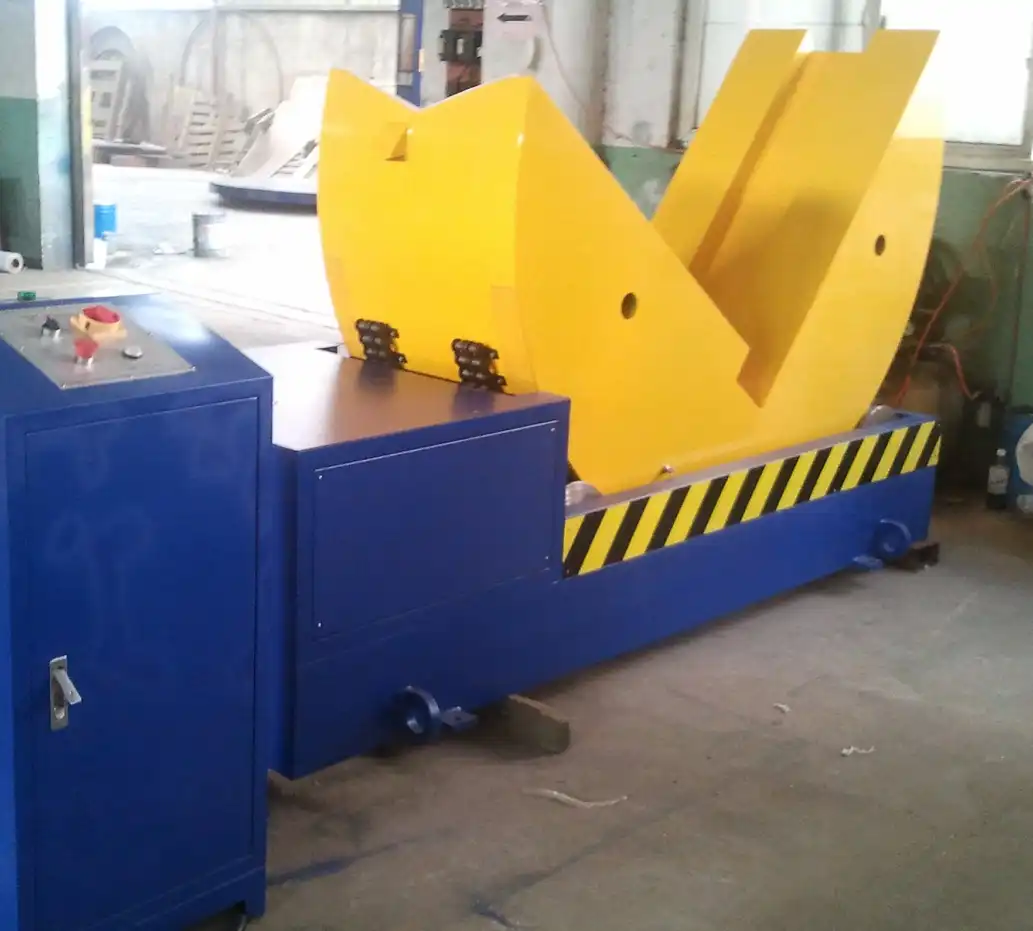
Swiss precision manufacturing didn't achieve its world-renowned status by accident. Their systematic approach to coil upender implementation delivers measurable results that any manufacturing plant can replicate.
🏭 Production Efficiency Improvements
Swiss factories report processing 40-60 coils per hour with automated upenders, compared to 15-20 coils with manual handling. This speed increase comes from three factors:
- Zero positioning time: Automated systems position coils perfectly in 3-5 seconds
- Continuous operation: No worker fatigue or breaks needed
- Integrated workflow: Upenders connect seamlessly with wrapping and packaging stations
💰 Cost Reduction Analysis
Let's break down the actual savings Michael could expect in his Mexican plant:
| Cost Category | Manual Handling | With Upender System | Annual Savings |
|---|---|---|---|
| Labor Costs | 4 workers × $2,000/month = $96,000/year | 1 operator × $2,500/month = $30,000/year | $66,000 |
| Product Damage | 3% rejection rate = $45,000/year | 0.1% rejection rate = $1,500/year | $43,500 |
| Worker Compensation | $15,000/year (injuries) | $2,000/year (minor incidents) | $13,000 |
| Total Annual Savings | $122,500 |
⚡ Safety Transformation
The most immediate benefit Swiss manufacturers report is safety improvement. Manual coil handling involves significant risk:
- Eliminated heavy lifting: Workers no longer handle multi-ton coils
- Reduced pinch points: Automated systems have safety sensors and guards
- Consistent operation: No variations in procedure that lead to accidents
According to industry data from Swiss manufacturing associations, plants using SHJLPACK upender systems report 85% fewer recordable incidents in material handling areas. This not only saves on insurance costs but also improves worker morale and retention.
🔧 Quality Consistency
Swiss manufacturers demand perfection, and upender systems deliver precisely that:
- Repeatable positioning: Every coil positioned within 2mm tolerance
- No surface damage: Gentle handling preserves coil surface quality
- Perfect alignment: Ensures smooth transfer to next process stage
For Michael's metal processing plant, this means eliminating customer complaints about damaged goods and establishing a reputation for consistent quality that commands premium pricing.
2. How Do Swiss Factories Integrate Upender Systems into Existing Production Lines?
You might think integrating new equipment means completely redesigning your factory floor. Swiss manufacturers have perfected integration strategies that minimize disruption while maximizing efficiency gains. The key lies in understanding your current workflow and identifying the right integration points.
Swiss factories use modular integration approaches, adding upenders between processing and packaging stations with minimal layout changes. According to SHJLPACK's installation data, typical integration takes 3-5 days with 85% reuse of existing conveyors and infrastructure. The key is choosing the right upender configuration for your specific coil sizes and production volume.

Integration success depends on matching the upender system to your specific production environment. Swiss manufacturers follow a systematic approach that Mexican plants can easily adapt.
📋 Integration Step-by-Step Process
Swiss engineering precision extends to their implementation methodology:
-
Current State Analysis (Week 1)
- Map existing material flow and identify bottlenecks
- Measure available floor space and ceiling height
- Document coil sizes, weights, and handling requirements
-
System Selection (Week 2)
- Choose between C-hook, rotating arm, or conveyor-based upenders
- Select capacity matching your heaviest coils plus 20% safety margin
- Determine automation level (semi-auto vs fully automatic)
-
Installation Planning (Week 3)
- Schedule during planned maintenance downtime
- Prepare foundation and utility connections
- Coordinate with local Mexican technical teams
-
Implementation (3-5 days)
- Install upender system with SHJLPACK supervision
- Connect to existing conveyors and power systems
- Test with actual production coils
-
Operator Training (2 days)
- Hands-on training for daily operation
- Basic troubleshooting and maintenance
- Safety procedures and emergency stops
🏗️ Integration Configuration Options
Swiss manufacturers typically choose from three integration approaches:
| Integration Type | Best For | Installation Time | Cost Range | Space Required |
|---|---|---|---|---|
| In-Line Upender | High-volume continuous production | 3-4 days | $45,000-75,000 | 4m × 3m |
| Side-Load Upender | Limited space, batch processing | 2-3 days | $35,000-60,000 | 3m × 3m |
| Mobile Upender | Multiple processing areas | 1-2 days | $25,000-40,000 | 2m × 2m |
🔄 Production Flow Optimization
The real magic happens when upenders transform your entire material flow. A typical Swiss optimization delivers:
Before Integration:
Raw coils → Processing → Manual rotation → Manual transfer → Packaging → Shipping
After Integration:
Raw coils → Processing → Automatic upender → Automated transfer → Automatic wrapping → Shipping
This streamlined flow eliminates two manual handling steps and reduces total processing time by 30-40%. For Michael's plant processing 200 coils daily, this could mean completing the day's production 2-3 hours earlier.
🌍 Adaptation for Mexican Conditions
Swiss precision doesn't mean the solutions only work in perfect environments. SHJLPACK has adapted these systems for Mexican manufacturing conditions:
- Dust protection for arid environments
- High-temperature operation up to 45°C
- Local service support throughout Mexico
- Spanish-language interfaces and documentation
3. What Technical Specifications Make Swiss Upender Systems So Reliable?
When equipment fails in a high-volume production environment, the costs quickly spiral out of control. Swiss upender systems achieve remarkable 99.7% reliability rates through deliberate engineering choices and quality manufacturing. Understanding these specifications helps you choose the right system for your plant's needs.
Swiss upenders achieve exceptional reliability through premium components: German-made motors, Japanese bearings, and PLC controls with 200,000-hour MTBF. SHJLPACK systems feature overload protection, automatic lubrication, and modular design for easy maintenance. The typical maintenance interval is 500 operating hours versus 200 hours for standard upenders.

The reliability difference between Swiss-engineered upenders and conventional systems comes down to specific technical choices and quality standards.
⚙️ Critical Component Specifications
Swiss manufacturers don't compromise on core components:
Drive System:
- Motors: Siemens or ABB industrial motors with IP65 protection
- Gearboxes: SEW or Nord, rated for 50,000+ hours operation
- Bearings: SKF or NSK with automatic lubrication systems
Control System:
- PLC: Siemens S7-1200 or equivalent with redundant processing
- Sensors: Sick or Banner photoelectric and proximity sensors
- HMI: 10-inch color touchscreen with multi-language support
Structural Components:
- Frame: S355JR steel with robotic welding and stress relief
- Hydraulics: Bosch Rexroth with pressure compensation
- Safety: Dual emergency stops, light curtains, overload protection
📊 Performance Comparison Table
How do Swiss-spec upenders compare to conventional systems?
| Specification | Standard Upender | Swiss-Spec Upender | Improvement |
|---|---|---|---|
| Uptime | 92-95% | 99.5-99.8% | +5-7% |
| Maintenance Interval | 200 hours | 500 hours | 150% longer |
| Positioning Accuracy | ±10mm | ±2mm | 5x more precise |
| Noise Level | 85 dB | 72 dB | 15% quieter |
| Energy Consumption | 10-15 kW | 7.5-12 kW | 20-25% savings |
| Service Life | 5-7 years | 10-15 years | 2x longer |
🔧 Maintenance and Service Requirements
The maintenance philosophy behind Swiss upenders focuses on prevention rather than reaction:
Daily (5 minutes):
- Visual inspection of hydraulic lines
- Check for unusual noises or vibrations
- Verify safety system operation
Weekly (30 minutes):
- Lubrication system check
- Sensor alignment verification
- Control system diagnostics
Monthly (2 hours):
- Complete system calibration
- Wear component inspection
- Backup system testing
Annual (8 hours):
- Comprehensive system overhaul
- Component replacement per schedule
- Performance validation testing
🌡️ Environmental Adaptability
Swiss engineering accounts for real-world operating conditions:
Temperature Range:
- Operating: -10°C to +45°C
- Storage: -20°C to +60°C
- Humidity: 10-95% non-condensing
Dust and Contamination:
- IP54 protection standard (IP65 optional)
- Sealed bearings and electrical components
- Air-purged control cabinets for dusty environments
Power Requirements:
- Voltage: 380-480V, 3-phase, 50/60Hz
- Power: 7.5-22kW depending on model
- Air supply: 6-8 bar clean, dry air
For Michael's plant in Mexico, these specifications ensure reliable operation despite challenging environmental conditions and continuous production demands.
4. Which Upender System Configuration Delivers the Best ROI for Medium-Sized Plants?
Choosing the wrong upender configuration can turn a promising investment into a financial burden. Swiss manufacturers have perfected ROI calculations that consider not just equipment cost, but total operational impact. For medium-sized plants like Michael's, the right choice typically delivers payback in 12-18 months.
Medium-sized plants achieve best ROI with semi-automatic upenders costing $45,000-65,000, delivering 18-month payback through 60% labor reduction and 40% throughput increase. SHJLPACK's C-hook upenders specifically designed for 5-15 ton coils provide the optimal balance of performance and investment for Mexican metal processors.
ROI optimization requires matching system capabilities to your specific production requirements and growth plans.
💵 Detailed ROI Calculation
Let's examine the financials for a typical Mexican plant processing 150 coils daily:
Investment Components:
- Upender system: $55,000
- Installation and training: $8,000
- Foundation work: $5,000
- Total Investment: $68,000
Annual Savings:
- Labor reduction (3 workers): $72,000
- Damage reduction (2.9% to 0.1%): $42,000
- Safety cost reduction: $18,000
- Increased throughput value: $35,000
- Total Annual Savings: $167,000
Payback Period:
- Simple payback: $68,000 ÷ $167,000 = 0.41 years (5 months)
- Actual payback (considering operational factors): 12-14 months
📈 Configuration Comparison Table
Which upender type makes the most financial sense?
| Configuration | Investment | Labor Required | Output Capacity | Best For | ROI Period |
|---|---|---|---|---|---|
| Manual Assist | $25,000-35,000 | 2 operators | 20-30 coils/h | Small plants | 8-10 months |
| Semi-Auto | $45,000-65,000 | 1 operator | 40-60 coils/h | Medium plants | 12-18 months |
| Fully Auto | $80,000-120,000 | 0.5 operator | 60-80 coils/h | Large plants | 18-24 months |
| Smart Auto | $120,000-180,000 | 0.25 operator | 80-100 coils/h | High-volume | 24-30 months |
🎯 Selection Criteria for Mexican Plants
Based on SHJLPACK's experience with Latin American manufacturers, the optimal choice depends on several factors:
Choose Semi-Automatic If:
- Daily volume: 100-300 coils
- Coil weight: 3-12 tons
- Available space: 4m × 4m
- Budget: $45,000-65,000
- Staff technical level: Medium
Choose Fully Automatic If:
- Daily volume: 300-600 coils
- Coil weight: 5-20 tons
- Available space: 5m × 5m
- Budget: $80,000-120,000
- Staff technical level: High
🔄 Future-Proofing Your Investment
Swiss manufacturers plan for 10+ year equipment life. Your upender system should accommodate:
Scalability Considerations:
- Modular design: Ability to add automation features later
- Capacity headroom: 20% extra capacity for growth
- Technology upgrades: PLC and control system update paths
- Integration readiness: Prepared for future line expansions
SHJLPACK's recommendation for medium Mexican plants: Start with a semi-automatic system with automation-ready features. This provides immediate benefits while preserving your option to upgrade to full automation as your production grows.
Conclusion
Swiss precision manufacturing demonstrates how strategic upender implementation transforms coil handling from a bottleneck to a competitive advantage. By adopting these proven approaches, Mexican plants can achieve similar efficiency gains and safety improvements. For complete coil handling solutions, explore our steel coil packing line integration services.
FAQ Section
Frequently Asked Questions
Q: How long does it take to install a coil upender system in an existing production line?
A: Most installations take 3-5 working days with proper planning. SHJLPACK's modular systems require minimal foundation work and can often integrate with existing conveyors, reducing disruption to your production schedule.
Q: What maintenance training do operators need for upender systems?
A: Operators typically need 2 days of training covering daily checks, basic troubleshooting, and safety procedures. SHJLPACK provides comprehensive Spanish-language training materials and ongoing technical support for Mexican plants.
Q: Can upender systems handle different coil sizes in the same production run?
A: Yes, modern upenders feature adjustable arms and programmable settings for different coil diameters and weights. Quick-change tooling allows switching between coil sizes in 2-3 minutes, supporting flexible manufacturing schedules.
Q: What safety features are essential for coil upender operations?
A: Critical safety features include emergency stop buttons, safety light curtains, overload protection, and automatic locking during rotation. SHJLPACK systems exceed Mexican NOM safety standards with dual-redundant safety circuits.
Q: How does climate affect upender system performance in Mexican factories?
A: High-quality upenders are designed for temperatures up to 45°C and dusty conditions. Special seals, cooling systems, and dust protection ensure reliable operation. SHJLPACK systems include tropicalized components specifically for Latin American climates.


