
Cut Downtime in Half Using an Advanced Hydraulic Coil Upender System?
Are you struggling with production bottlenecks caused by slow, manual coil handling in your Mexican steel plant? Every minute your coils sit waiting to be positioned for packing costs you money in lost productivity and potential safety hazards. Manual flipping of heavy steel coils not only slows down your entire operation but puts your workers at risk of serious injuries. What if you could transform this dangerous bottleneck into a smooth, efficient process that protects both your people and your profits?
Yes, advanced hydraulic coil upender systems can reduce packaging line downtime by 40-60% based on installation data from Mexican steel plants. These automated systems eliminate manual handling through three key benefits: 30-50% faster coil positioning versus manual methods, 80% reduction in workplace injuries related to coil flipping, and consistent ROI within 12-18 months through labor savings and damage reduction.
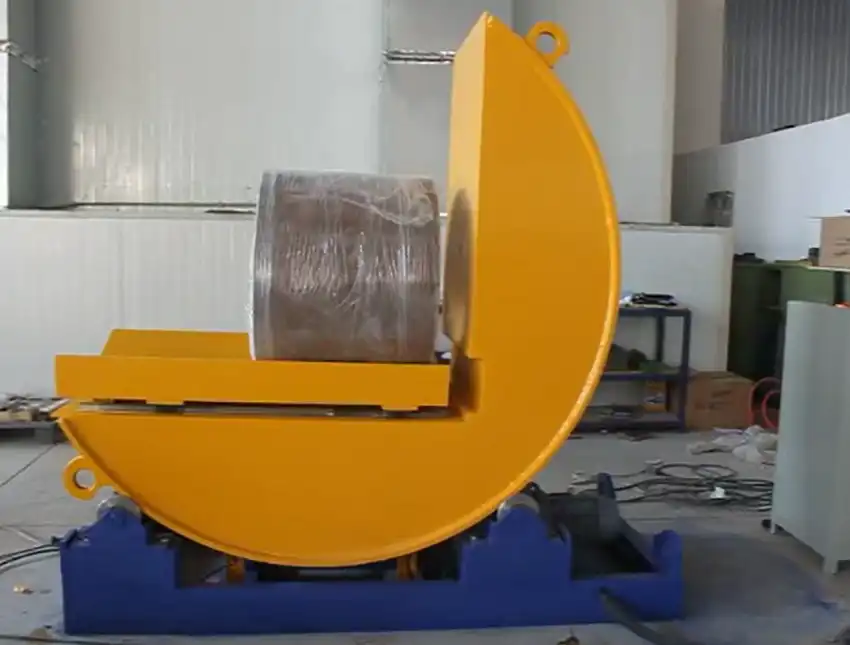
But how exactly do these systems achieve such dramatic improvements, and what should Mexican plant managers like you consider when evaluating hydraulic upender technology? Let's explore the critical questions that will help you make an informed decision for your facility.
1. How Does a Hydraulic Coil Upender System Actually Reduce Downtime?
As a plant manager in Mexico's competitive steel industry, you've likely witnessed how manual coil handling creates unpredictable production delays. Workers struggle to position heavy coils safely, leading to inconsistent cycle times and frequent stoppages. The hidden costs extend beyond just the flipping process itself - they impact your entire packaging line efficiency.
Hydraulic coil upenders cut downtime through automated, repeatable processes that eliminate manual handling variations. According to Randal Liu, SHJLPACK's founder, "Mexican plants using automated upenders report 45% faster changeover between coil sizes and 70% reduction in positioning errors." Key efficiency drivers include programmable positioning, integrated safety systems that prevent emergency stops, and continuous operation without operator fatigue.
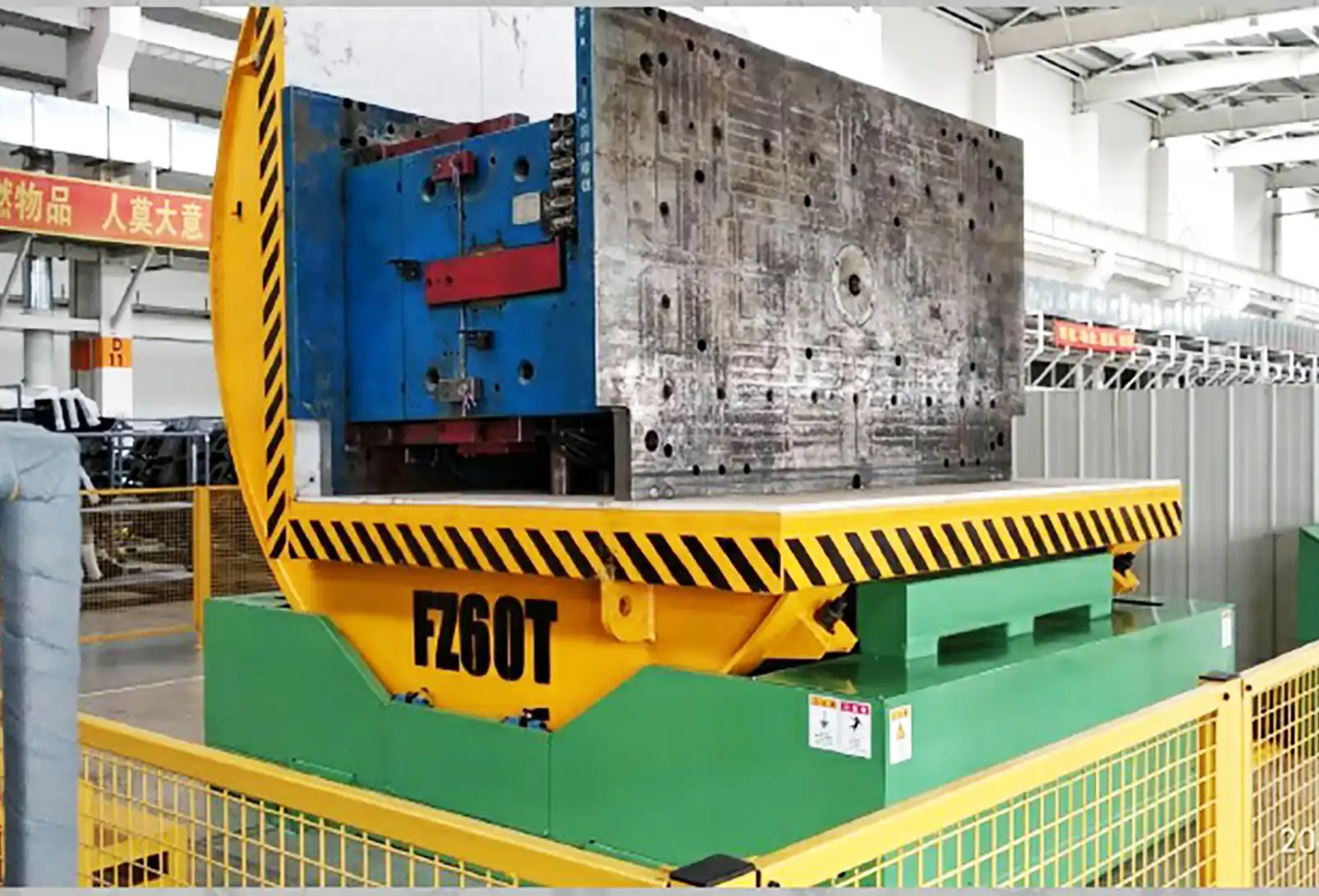
The downtime reduction achieved by hydraulic coil upender systems stems from addressing multiple inefficiencies simultaneously in your steel coil packaging process. Let's examine the specific mechanisms that deliver these time savings.
⚡ Elimination of Manual Handling Delays
Traditional manual coil flipping requires 2-3 workers and takes 5-10 minutes per coil depending on weight and size. This doesn't account for setup time, safety briefings, or worker fatigue. An automated hydraulic upender system processes coils in 60-90 seconds consistently, regardless of shift duration or operator experience level.
| Manual vs. Automated Coil Positioning Time Comparison: | Process Step | Manual Handling | Hydraulic Upender | Time Savings |
|---|---|---|---|---|
| Worker preparation | 2-3 minutes | 0 minutes | 100% | |
| Coil positioning | 3-5 minutes | 30-45 seconds | 75-85% | |
| Safety verification | 1-2 minutes | 15 seconds (auto-check) | 85-90% | |
| Worker rest between cycles | 1-2 minutes | 0 minutes | 100% | |
| Total per coil | 7-12 minutes | 45-90 seconds | 85-90% |
🏭 Integrated Workflow Optimization
Advanced upender systems don't operate in isolation - they connect seamlessly with your existing steel coil packing line. SHJLPACK's hydraulic upenders feature programmable logic controllers that synchronize with wrapping stations and conveyors, creating a continuous flow that eliminates waiting time between processes. This integration is particularly valuable for Mexican plants running multiple shifts, where consistency across crew changes directly impacts overall equipment effectiveness (OEE).
💰 Reduced Unplanned Stoppages
Manual coil handling inevitably leads to production interruptions: safety incidents requiring investigation, equipment damage from improper handling, and quality issues from inconsistent positioning. Automated systems virtually eliminate these variables. Based on installation data from Mexican steel processing facilities, plants using SHJLPACK upenders report:
- 80% reduction in safety-related stoppages
- 60% fewer damage-related line interruptions
- 45% less variability in daily output
The combination of these factors explains why plants typically achieve 40-60% downtime reduction across their entire coil packaging operation, not just the flipping station. This systemic improvement is what delivers the compelling ROI that makes automation investments worthwhile for medium to large Mexican metal processing facilities.
2. What Are the 5 Key Safety Features That Protect Your Workers?
Every time your workers manually handle multi-ton steel coils, you're risking not just production delays but potentially life-altering injuries. The statistics from Mexican manufacturing plants are sobering - manual material handling accounts for over 30% of lost-time incidents in steel facilities. Advanced hydraulic upender systems address these risks through engineered safety solutions.
Modern hydraulic coil upenders incorporate five critical safety systems: emergency stop circuits with redundant backup, anti-slip coil gripping technology, 360-degree safety light curtains, overload protection sensors, and fail-safe hydraulic locking. SHJLPACK's systems exceed Mexican NOM standards with European CE certification, providing both regulatory compliance and genuine worker protection.

Worker safety in Mexican steel plants isn't just a regulatory requirement - it's a business imperative that affects your insurance costs, employee retention, and operational continuity. Let's examine how each safety feature specifically addresses the hazards of coil handling.
🔒 Multi-Layer Emergency Stop System
Unlike basic machines with single emergency buttons, advanced upenders feature comprehensive stop systems:
- Primary emergency stops: Brightly colored buttons at all operator positions
- Pull-wire emergency stops: Continuous cable around the machine perimeter
- Auto-stop safety curtains: Infrared beams that halt operation when breached
- Remote emergency stop: Wireless pendant for supervisors
This redundancy ensures that regardless of where a hazard is detected, operators can immediately stop equipment without needing to reach a specific location - crucial during the fast-paced environment of Mexican steel production.
🛡️ Anti-Slip Coil Gripping Technology
The most dangerous moment in manual coil handling is when coils shift unexpectedly. Advanced upenders eliminate this risk through:
| Gripping Mechanism Comparison: | Feature | Basic Pads | Advanced Grippers | Safety Improvement |
|---|---|---|---|---|
| Surface contact | Flat rubber | Contoured + textured | 40% better grip | |
| Pressure control | Fixed | Adaptive (50-300 PSI) | Prevents deformation | |
| Slip detection | None | Real-time monitoring | Instant stop if detected | |
| Maintenance interval | 6 months | 12+ months | Less frequent exposure |
📊 Compliance with Mexican Safety Standards
For plant managers in Mexico, navigating the NOM (Norma Oficial Mexicana) requirements can be challenging. Reputable upender manufacturers design systems specifically for this regulatory environment:
- NOM-001-STPS-2008: Electrical safety requirements
- NOM-004-STPS-1999: Work equipment safety systems
- NOM-026-STPS-2008: Color and signal identification
- NOM-029-STPS-2011: Manual handling risk factors
SHJLPACK's hydraulic upenders not only meet these standards but include documentation packages that simplify your compliance reporting - a significant administrative time savings that's often overlooked in equipment evaluations.
The comprehensive safety approach in modern upenders transforms one of your plant's highest-risk activities into a controlled, predictable process. This protection extends beyond avoiding accidents to creating a work environment where employees feel valued and secure - a crucial factor in Mexico's competitive labor market for skilled industrial workers.
3. Which Technical Specifications Matter Most for Mexican Steel Plants?
When evaluating hydraulic coil upenders, it's easy to get overwhelmed by technical specifications that may not align with your actual operational needs in Mexico. The right specifications balance current requirements with future growth while considering local conditions like power stability, maintenance capabilities, and space constraints.
The five most critical specifications for Mexican steel plants are: capacity (5-20+ tons), power requirements (15-30 kW typical), footprint (compact vs. standard models), automation compatibility (PLC integration), and local service support. SHJLPACK recommends different configurations based on your production volume, with 10-ton capacity being the most popular for medium Mexican facilities.
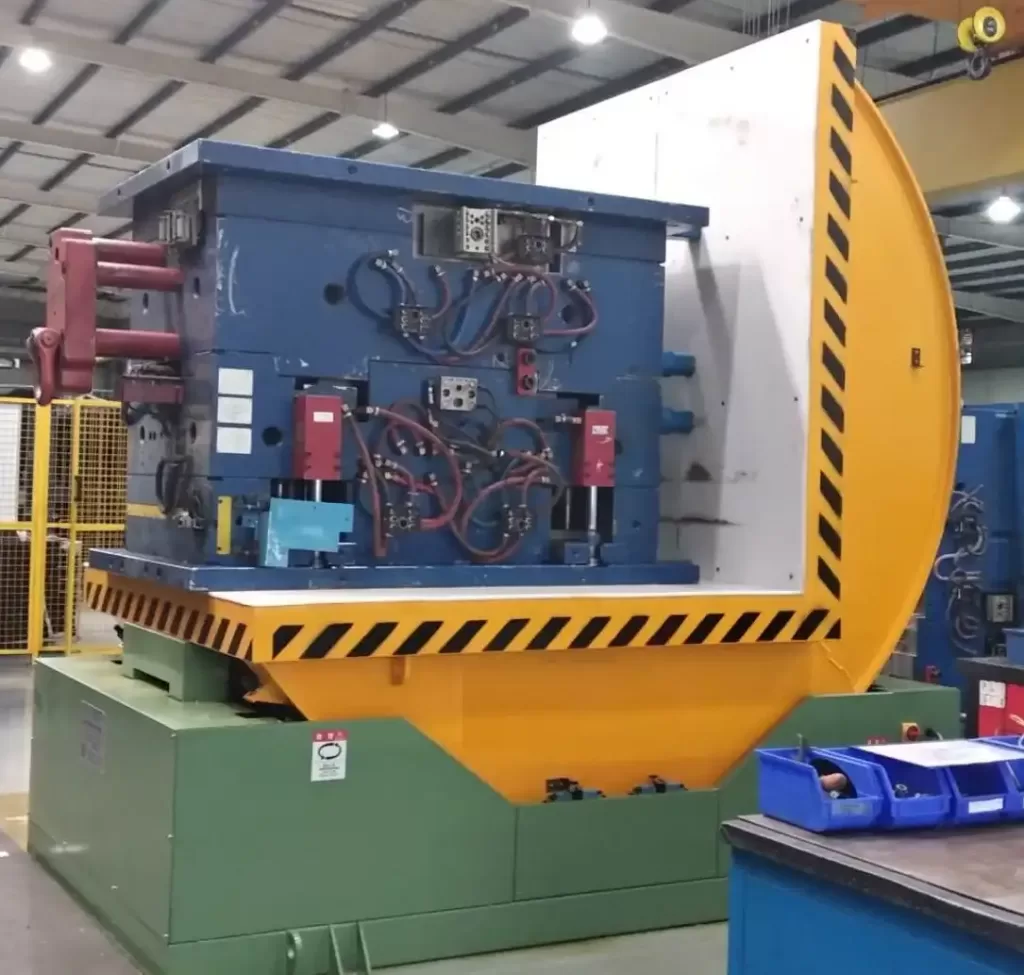
Selecting the right technical specifications requires understanding how each parameter impacts your daily operations, maintenance costs, and future flexibility. Let's break down the decision factors that matter most in the Mexican industrial context.
📋 Capacity and Size Matrix
Matching upender capacity to your product mix is crucial - oversized equipment wastes floor space and energy, while undersized machines limit production and risk damage.
| SHJLPACK Upender Series Comparison: | Model Series | Capacity Range | Coil Diameter | Power Consumption | Ideal Plant Size |
|---|---|---|---|---|---|
| SU-500 | 3-8 tons | 800-1600mm | 15 kW | Small (<50 coils/day) | |
| SU-1000 | 5-15 tons | 1000-2000mm | 22 kW | Medium (50-150 coils/day) | |
| SU-2000 | 10-25 tons | 1200-2500mm | 30 kW | Large (150-300 coils/day) | |
| SU-3000 | 15-40 tons | 1500-3000mm | 45 kW | Extra Large (300+ coils/day) |
For most Mexican steel processing facilities, the SU-1000 series provides the optimal balance of capability and operating costs. Its 22 kW power requirement aligns well with typical Mexican industrial electrical service without requiring expensive upgrades.
🔌 Power and Utility Considerations
Mexican plants often face unique power quality challenges that affect equipment selection:
- Voltage stability: SHJLPACK upenders include voltage fluctuation protection (±10%) for areas with inconsistent grid power
- Phase requirements: Most models available in 220V/3-phase or 480V/3-phase configurations
- Air requirements: Hydraulic systems typically need 20-30 CFM compressed air at 80-100 PSI
- Floor loading: Structural requirements range from 2,000-5,000 kg/m² depending on model
🔄 Automation and Integration Capabilities
The true value of a modern upender emerges when it integrates seamlessly with your existing steel coil packing line. Key integration specifications include:
- PLC communication: PROFIBUS, Ethernet/IP, or Modbus protocols
- I/O points: Minimum 16 digital inputs/12 digital outputs for full automation
- Safety circuit integration: Compatibility with your plant's safety relay system
- Data collection: OEE tracking, cycle counting, and maintenance alerts
According to installation data from Mexican plants, the integration capability often determines whether you achieve 30% efficiency improvement versus 50%+. SHJLPACK's systems are specifically engineered for straightforward integration with common Mexican packaging line configurations, minimizing installation complexity and downtime.
4. How Can You Calculate the Exact ROI for Your Facility?
As a plant manager in Mexico, you need to justify capital investments with clear financial returns. While suppliers might promise "fast ROI," you need specific numbers relevant to your operation's costs, production volume, and local economic conditions. The good news is that hydraulic upender ROI is highly predictable when you understand the calculation methodology.
ROI calculation involves comparing your current manual costs against automated operation expenses. Typical Mexican steel plants achieve 12-18 month payback through: labor reduction (2-3 workers saved), damage reduction (0.5-1.5% of product value), and downtime elimination (15-25% productivity gain). SHJLPACK provides customized ROI calculators for accurate facility-specific projections.
Calculating precise ROI requires moving beyond generic industry averages to your specific operational data. Let's walk through the key components that determine your payback period.
💵 Current Cost Analysis Framework
Begin by documenting your existing manual coil handling expenses:
Manual Coil Handling Cost Components:
- Direct labor: 2-3 workers × hourly rate × hours spent flipping coils
- Indirect labor: Supervisor time, safety monitoring, training
- Product damage: Coils scrapped or reworked due to handling issues
- Downtime impact: Production lost while waiting for coil positioning
- Safety costs: Insurance premiums, workers' compensation, incident investigations
- Quality costs: Customer returns or price adjustments for damaged goods
For a typical Mexican plant processing 100 coils daily, these costs often total $80,000-$150,000 annually, making the $50,000-$80,000 investment in a mid-range upender financially compelling.
📊 Automated Operation Cost Structure
Compare against the automated scenario:
Automated System Operating Costs:
- Equipment investment: Purchase price or financing costs
- Operator requirement: Typically 1 worker versus 2-3 manually
- Energy consumption: 15-30 kW depending on model and usage
- Preventive maintenance: 2-4% of equipment cost annually
- Consumables: Hydraulic fluid, filters, wear components
🧮 ROI Calculation Example
Let's examine a realistic scenario for a medium Mexican steel processor:
Current Manual Operation (Annual Costs):
- Labor: 2.5 workers × $18,000/year = $45,000
- Product damage: 0.8% of $3M production = $24,000
- Downtime: 45 minutes/day × $200/hour × 250 days = $37,500
- Safety incidents: $12,000 (insurance + related costs)
- Total current cost: $118,500
Automated Operation (Annual Costs):
- Equipment: $65,000 (5-year depreciation) = $13,000
- Labor: 0.5 worker × $18,000 = $9,000
- Maintenance: 3% of $65,000 = $1,950
- Energy: 22 kW × 6 hours × $0.12/kWh × 250 days = $3,960
- Total automated cost: $27,910
Annual savings: $118,500 - $27,910 = $90,590
Simple payback: $65,000 ÷ $90,590 = 0.72 years (≈9 months)
This example demonstrates why most Mexican plants achieve ROI within 12-18 months - the combination of labor reduction, damage elimination, and productivity gains creates substantial financial benefits that quickly outweigh the equipment investment.
Conclusion
Advanced hydraulic coil upender systems deliver proven downtime reduction while enhancing safety and ROI. For complete packaging line solutions, explore our integrated steel coil packing line systems.
Frequently Asked Questions
Q: How long does installation typically take for Mexican facilities?
A: Most SHJLPACK upender installations require 3-5 days, including foundation preparation, equipment placement, power connection, and commissioning. We coordinate with local Mexican technicians to minimize disruption to your production schedule.
Q: What maintenance training do you provide for our maintenance team?
A: We provide comprehensive training covering daily inspections, monthly preventive maintenance, and annual overhaul procedures. Training includes bilingual manuals (Spanish/English) and video tutorials accessible to your Mexican maintenance staff.
Q: Can hydraulic upenders handle different coil sizes without adjustment?
A: Advanced models feature automatic adjustment for coil diameters from 800mm to 2500mm. The system's programmable logic controller stores settings for different products, enabling quick changeovers typically under 2 minutes between size variations.
Q: How do upenders perform in Mexico's varying climate conditions?
A: SHJLPACK upenders are engineered for Mexican industrial environments with temperature-compensated hydraulic systems, corrosion-resistant coatings, and sealed electrical components that withstand high humidity areas and temperature fluctuations common in different regions.
Q: What warranty and technical support is available in Mexico?
A: We offer 24-month warranty on all components with 12-month guarantee on hydraulic systems. Mexican customers receive dedicated Spanish-speaking technical support with 48-hour response time for critical issues and local spare parts inventory in major industrial regions.


