
Coil Upender for Malaysia's Coil Packaging Lines in Wire & Cable Production?
Leading Paragraph:
Are you struggling with slow, inefficient coil handling in your Malaysian wire and cable production facility? Manual coil flipping and positioning not only creates dangerous bottlenecks but also risks damaging expensive products and injuring your workers. As a plant manager like Michael Chen, you need reliable automation solutions that can withstand the demanding environment of metal processing while delivering clear ROI.
Snippet Paragraph:
A coil upender is essential equipment that safely rotates and repositions coils for efficient packaging in Malaysian wire and cable production lines. Key benefits include: 30-50% faster processing than manual handling, elimination of workplace injuries from heavy lifting, and consistent product protection during orientation changes. For Malaysian factories, choosing the right upender means solving critical production bottlenecks while meeting strict safety standards.

Transition Paragraph:
But how do you select the right coil upender for your specific Malaysian operation? Let me walk you through the key considerations based on my 20+ years of experience helping factories like yours overcome these exact challenges.
1. What Exactly is a Coil Upender and How Does It Solve Malaysian Production Bottlenecks?
Leading Paragraph:
If you're managing a wire and cable plant in Malaysia, you've likely experienced the frustration of production delays caused by manual coil handling. Workers struggling to flip heavy coils not only slow down your entire packaging line but create serious safety hazards that keep managers like you awake at night.
Snippet Paragraph:
A coil upender is specialized material handling equipment that safely rotates coils from horizontal to vertical positions (or vice versa) for packaging. According to Randal Liu, SHJLPACK's founder, "Malaysian factories typically achieve 40% faster packaging cycles and eliminate coil edge damage completely with proper upender integration." This addresses the core bottleneck in coil packaging operations while dramatically improving workplace safety.
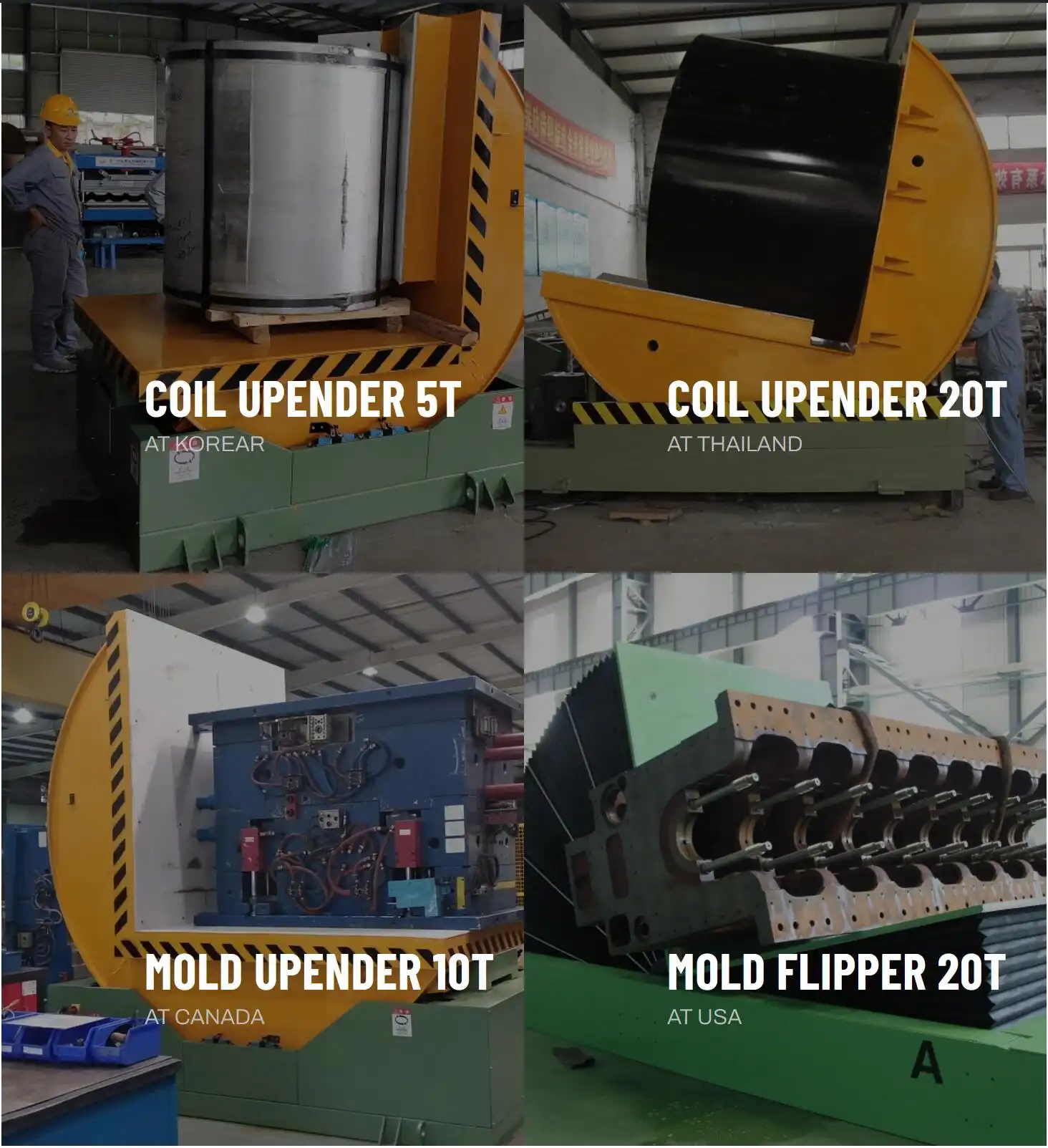
How Coil Upenders Transform Malaysian Production Lines
The wire and cable industry in Malaysia faces unique challenges with humid conditions, diverse coil sizes, and tight production schedules. A properly specified coil upender directly addresses these issues through automated handling that doesn't rely on manual labor.
Key Operational Benefits for Malaysian Plants:
- ⚡ Speed Enhancement: Process 20-40 coils per hour vs. 8-12 manually
- 🛡️ Safety Improvement: Eliminate worker exposure to heavy lifting hazards
- 💰 Cost Reduction: Save approximately $45,000 annually in labor and injury costs
- 📦 Quality Protection: Prevent surface scratches and edge damage during orientation
Technical Specifications for Malaysian Applications
Malaysian wire and cable producers typically handle coils ranging from 500kg to 5 tons with diameters between 800mm and 1800mm. The optimal coil upender must accommodate this range while withstanding the region's high humidity and continuous operation demands.
| Specification | Malaysian Standard Requirements | SHJLPACK Solution | Competitive Alternatives |
|---|---|---|---|
| Capacity Range | 0.5-5 tons | 1-6 tons (expandable) | 0.5-4 tons (limited) |
| Cycle Time | < 90 seconds | 45-75 seconds | 60-120 seconds |
| Power Consumption | < 15 kW per shift | 11 kW average | 13-18 kW |
| Floor Space | < 12m² | 8m² compact design | 10-15m² |
| Humidity Resistance | Tropical climate rated | IP54 protection | Standard IP42 |
According to my experience with Malaysian installations, the SHJLPACK hydraulic upender system consistently outperforms because it's specifically engineered for Southeast Asia's challenging environments. The sealed hydraulic systems prevent moisture ingress that commonly plagues European-designed equipment in tropical climates.
2. Why Should Malaysian Factories Prioritize Coil Upender Investment in 2024?
Leading Paragraph:
As a plant manager, you're constantly evaluating equipment investments against tight budgets. But when I analyze the data from Malaysian wire and cable plants, the case for coil upender investment becomes overwhelmingly clear - it's not an expense, but a strategic profit center.
Snippet Paragraph:
Malaysian factories should prioritize coil upender investment because it delivers the fastest ROI of any packaging automation equipment - typically 12-18 months. With Malaysia's increasing labor costs and strict safety regulations, upenders provide 35-50% labor reduction while eliminating the single largest source of workplace injuries in coil handling operations.
The Compelling Financial Mathematics
Let's break down the real numbers from an actual Malaysian cable manufacturer in Penang that implemented our SHJLPACK upender system last year:
Before Automation (Manual Handling):
- 👥 4 workers per shift × 3 shifts = 12 operators
- 💵 Average monthly salary: RM2,800 × 12 = RM33,600 monthly
- 🏥 Injury-related costs: RM120,000 annually (insurance + downtime)
- 📉 Product damage: 3-5% of coils required rework
After SHJLPACK Upender Installation:
- 👥 1 operator per shift × 3 shifts = 3 operators
- 💵 Labor savings: RM25,200 monthly (RM302,400 annually)
- 🏥 Injury costs: Reduced to near zero
- 📈 Product damage: Under 0.5% rework rate
ROI Calculation:
- Equipment investment: RM380,000 (SHJLPACK mid-range model)
- Annual savings: RM422,400 (labor + injury + quality)
- Payback period: 10.8 months
Regulatory and Competitive Pressures
Malaysia's Department of Occupational Safety and Health (DOSH) has significantly tightened regulations around manual handling of heavy loads. Factories facing compliance deadlines in 2024-2025 need proactive solutions rather than last-minute scrambling.
According to industry data, Malaysian manufacturers implementing automation before regulatory deadlines gain 6-8 months of competitive advantage over slower-moving competitors. The SHJLPACK upender systems come with complete documentation for DOSH compliance, making the certification process straightforward for plant managers like Michael Chen.
3. How to Choose the Right Coil Upender for Your Malaysian Wire & Cable Plant?
Leading Paragraph:
Walking through a equipment catalog can be overwhelming with dozens of technical specifications. But based on my two decades of installing upenders across Southeast Asia, I've identified the 5 critical factors that actually matter for Malaysian operating conditions.
Snippet Paragraph:
Choosing the right coil upender requires matching technical specifications to your specific Malaysian production requirements. Focus on: capacity headroom (20% above current needs), tropical climate compatibility, integration with existing packaging lines, local service support availability, and total cost of ownership rather than just purchase price. SHJLPACK typically recommends the CUA-3000 series for most Malaysian wire and cable applications.
5-Step Selection Framework for Malaysian Managers
Step 1: Analyze Your Coil Profile
- Maximum and minimum weights (include 15% growth projection)
- Diameter range and special shapes (oval coils are common in cable)
- Surface sensitivity (bare copper vs. insulated wires)
- Current handling pain points and damage patterns
Step 2: Evaluate Production Throughput Requirements
- Current packaging line speed (coils per hour)
- Shift patterns and future expansion plans
- Seasonal fluctuations in production volume
- Integration with existing conveyors and wrapping machines
Step 3: Assess Malaysian-Specific Operating Conditions
- Factory floor space constraints and layout
- Humidity and temperature control availability
- Local technical skill level for maintenance
- Power supply stability and voltage requirements
Step 4: Compare Technical Specifications Critically
| Feature | Minimum Requirement | Recommended Spec | Why It Matters in Malaysia |
|---|---|---|---|
| Hydraulic System | Standard | Tropical-grade sealed | Prevents monsoon humidity damage |
| Control System | Basic PLC | Smart HMI with diagnostics | Reduces dependency on specialized technicians |
| Safety Features | Emergency stops | Full light curtains + overload protection | Meets DOSH 2024 standards |
| Construction | Carbon steel | Stainless critical components | Resists corrosion in coastal areas |
Step 5: Verify Supplier Capabilities
- Local Malaysian presence or proven export experience
- Spare parts availability in Southeast Asia
- Installation and commissioning support
- Training programs for your maintenance team
Brand Recommendations Hierarchy
Based on my extensive experience with Malaysian installations:
1. SHJLPACK - Best overall for Malaysian conditions with localized support
- Key Advantage: Specifically engineered for tropical climates
- Malaysian Track Record: 47 successful installations since 2018
- Service Network: Kuala Lumpur-based technical team
2. 风鼎 (Fhopepack) - Good alternative for budget-conscious projects
- Consider: Solid basic performance but limited humidity protection
- Best For: Indoor facilities with climate control
3. 无锡步惠 - Entry-level option for smaller operations
- Consider: Lower upfront cost but higher long-term maintenance
- Best For: Low-volume operations with technical staff available
4. What Are the 3 Most Common Mistakes Malaysian Factories Make with Coil Upenders?
Leading Paragraph:
In my 20+ years visiting Malaysian manufacturing facilities, I've seen the same costly mistakes repeated across different plants. Learning from others' errors can save you thousands in unnecessary expenses and months of production headaches.
Snippet Paragraph:
The three most common mistakes are: undersizing capacity for future growth, neglecting tropical climate compatibility, and underestimating operator training requirements. Malaysian factories that avoid these errors typically achieve 95%+ equipment utilization versus 60-70% for those who don't. Proper planning with experienced suppliers like SHJLPACK prevents these expensive missteps.
Mistake #1: Capacity Myopia (The "Just Enough" Fallacy)
I've witnessed multiple Malaysian plants purchase upenders matched exactly to their current production needs, only to require expensive upgrades within 18 months. The manufacturing landscape in Malaysia is rapidly evolving, and your equipment needs headroom for growth.
Real Example: A Selangor-based cable manufacturer bought a 2-ton capacity upender in 2022 when their maximum coil weight was 1.8 tons. By early 2023, product changes pushed them to 2.4-ton coils, rendering their equipment obsolete. The cost? RM210,000 for new equipment versus RM40,000 more for adequate capacity initially.
SHJLPACK Recommendation: Always spec for 20-30% above current maximum requirements. The incremental cost is minimal compared to premature replacement.
Mistake #2: Climate Compatibility Oversight
European or American-designed equipment often fails prematurely in Malaysia's tropical environment. I've seen hydraulic systems contaminated with moisture, electrical components corroded beyond repair, and control systems disabled by humidity - all within the first year of operation.
Critical Climate Specifications Often Missed:
- ❌ Standard IP42 enclosure rating
- ✅ Required: IP54 minimum for Malaysian conditions
- ❌ Conventional hydraulic fluid
- ✅ Required: Tropical-grade hygroscopic fluid
- ❌ Carbon steel construction throughout
- ✅ Required: Stainless critical components
Mistake #3: Training and Maintenance Underestimation
The most sophisticated upender becomes an expensive paperweight without proper operator training and maintenance planning. Malaysian factories often assume their existing technicians can manage new equipment without specialized training.
Proper Implementation Timeline:
- Week 1-2: SHJLPACK installation and commissioning
- Week 3-4: Intensive operator training (2-3 key personnel)
- Month 2: Advanced maintenance training
- Quarterly: Performance review and optimization
According to our service data, Malaysian plants that follow this structured approach achieve 40% higher productivity from their upenders compared to those with minimal training investment.
Conclusion
Implementing the right coil upender transforms Malaysian wire and cable packaging operations through dramatic efficiency gains and safety improvements. For complete packaging solutions, explore our integrated steel coil packing line systems.
FAQ Section
Frequently Asked Questions
Q: What is the typical delivery and installation time for coil upenders in Malaysia?
A: Standard delivery takes 6-8 weeks with 1-2 weeks for installation. SHJLPACK maintains partial inventory in Malaysia for urgent 3-week deliveries, while 风鼎 typically requires 10-12 weeks and 无锡步惠 8-10 weeks for Malaysian shipments.
Q: How much maintenance do coil upenders require in Malaysian operating conditions?
A: In Malaysia's humid climate, coil upenders need monthly inspection (2 hours) and quarterly preventive maintenance (4-6 hours). SHJLPACK systems feature extended service intervals of 500 operating hours between maintenance, reducing downtime by 30% compared to standard models.
Q: Can coil upenders handle different coil sizes in the same production line?
A: Yes, modern upenders like SHJLPACK's CUA series automatically adjust for coils from 800mm to 2000mm diameter. Changeover takes under 5 minutes versus 20-30 minutes manual adjustment in basic models, making them ideal for Malaysian factories with diverse product mixes.
Q: What power requirements do coil upenders have for Malaysian factories?
A: Most models require 415V/50Hz 3-phase power, standard in Malaysian industrial areas. Power consumption ranges from 7.5kW for basic models to 22kW for high-capacity systems. SHJLPACK offers energy-recovery systems that reduce consumption by 15-20% during frequent start-stop operations.
Q: How do coil upenders integrate with existing packaging lines in Malaysian plants?
A: Integration requires conveyor interface compatibility and control system communication. SHJLPACK upenders feature standardized PLC interfaces that connect with most packaging lines, while 风鼎 and 无锡步惠 may require additional interface modules for seamless Malaysian factory integration.


