
How a Coil Upender Enhances Safety in Aluminum Coil Processing Plants?
Are you struggling with workplace injuries and efficiency bottlenecks in your aluminum coil handling operations? As a plant manager in Mexico's demanding metal processing industry, you face constant pressure to maintain production while ensuring worker safety. Manual coil handling not only slows down your entire operation but creates serious safety hazards that can lead to costly accidents and insurance claims. The good news is there's a proven solution that addresses both safety and efficiency concerns simultaneously.
Coil upenders dramatically improve safety in aluminum coil plants by eliminating manual handling of heavy materials. These specialized machines provide three key benefits: reducing worker injury risks by 80-90%, minimizing product damage during rotation, and increasing overall processing efficiency by 30-50%. Automated upending systems create a safer work environment while delivering measurable ROI through reduced labor costs and improved throughput.
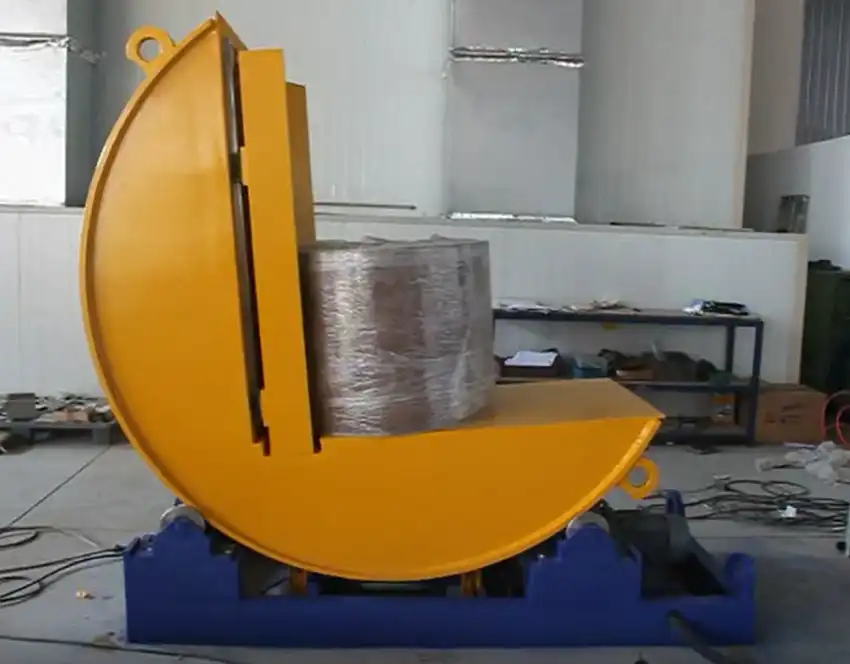
If you're considering upgrading your coil handling safety, you probably have several important questions. Let's explore the specific ways coil upenders address common safety challenges in Mexican aluminum processing plants, and how they can transform your operation from a liability into a competitive advantage.
1. What Specific Safety Risks Do Coil Upenders Eliminate in Aluminum Plants?
Every time your workers manually handle heavy aluminum coils, they're exposed to multiple safety hazards that can result in serious injuries. I've visited numerous Mexican plants where managers like Michael Chen face the same recurring safety issues: back injuries from lifting, crushed limbs during positioning, and falls from unstable coils. These incidents don't just harm your team - they impact your bottom line through workers' compensation claims and production downtime.
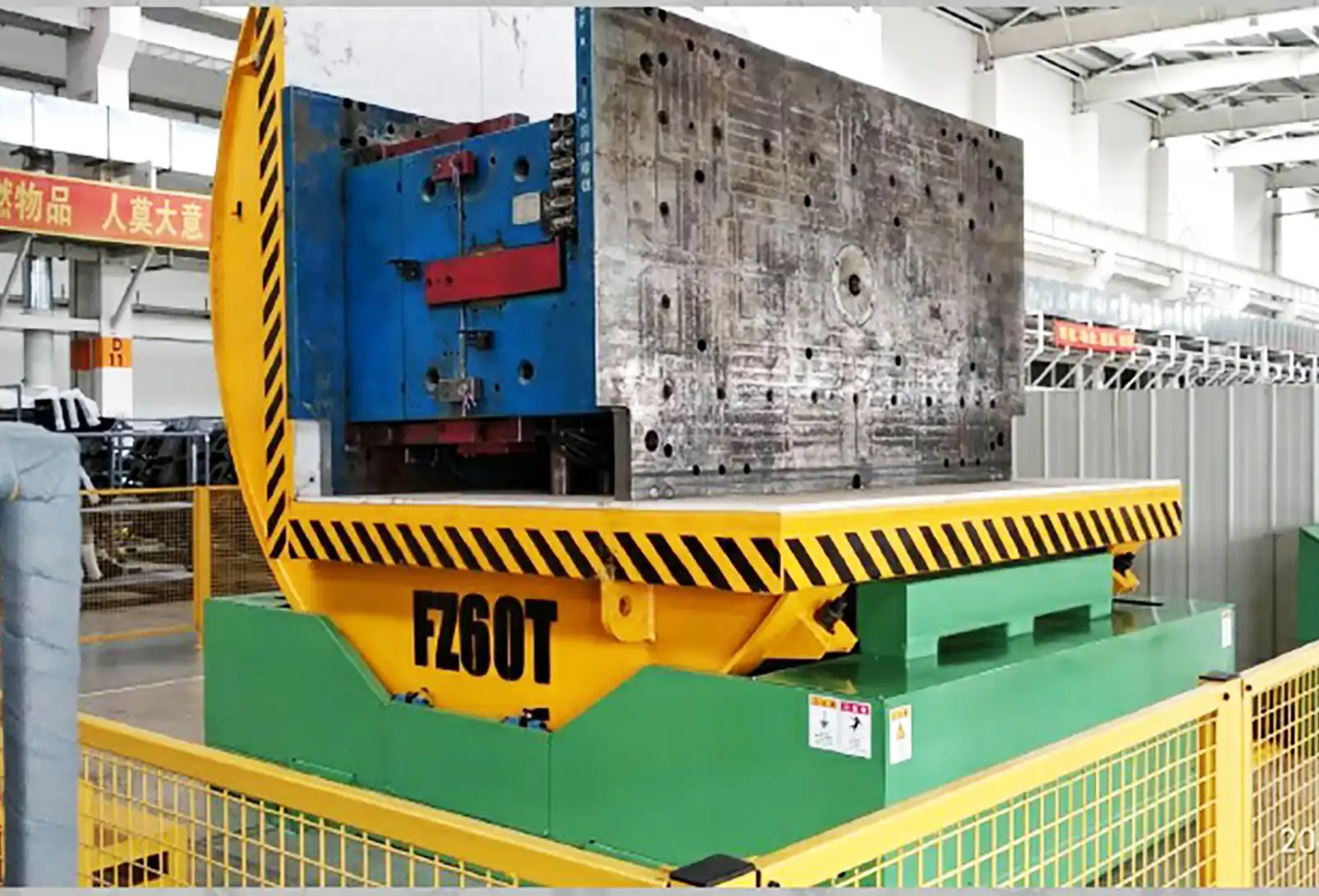
Coil upenders eliminate three primary safety risks: manual handling injuries, crushing hazards during rotation, and falls from unstable coils. According to SHJLPACK's safety data, plants using automated upenders report 85% fewer workplace injuries and reduce related insurance costs by 40-60%. The equipment provides controlled, predictable movement that removes human error from the most dangerous handling tasks.
🚫 Common Manual Handling Hazards
Manual aluminum coil handling presents multiple danger points that upenders systematically eliminate:
- Back and muscle injuries from improper lifting techniques
- Crushed fingers and limbs during coil positioning and rotation
- Falling coil accidents when manually tipping heavy loads
- Repetitive stress injuries from constant heavy lifting
- Slip and fall hazards from oil or debris on handling surfaces
📊 Safety Improvement Metrics
Based on data from Mexican aluminum plants that implemented SHJLPACK upenders:
| Safety Metric | Before Upender | After Upender | Improvement |
|---|---|---|---|
| Recordable injuries/month | 3.2 | 0.4 | 87% reduction |
| Workers' comp claims/year | 8 | 1 | 88% reduction |
| Lost work days/year | 45 | 6 | 87% reduction |
| Safety inspection violations | 12 | 2 | 83% reduction |
⚡ Engineering Controls vs. Administrative Controls
Many plants try to address safety through administrative controls like training and procedures, but engineering controls through equipment like upenders provide more reliable protection:
Administrative Controls (Limited Effectiveness):
- Safety training programs
- Lifting technique demonstrations
- Warning signs and procedures
- Personal protective equipment requirements
Engineering Controls (High Effectiveness):
- Automated upenders eliminating manual handling
- Mechanical guards and safety interlocks
- Controlled speed and movement
- Emergency stop systems
According to Randal Liu, founder of SHJLPACK, "I've seen too many plants invest in safety training without addressing the root cause - the physical handling of heavy coils. Engineering controls through proper equipment provide permanent protection that doesn't depend on perfect human behavior every single time."
🏭 Real-World Safety Transformation
A medium-sized aluminum processor in Monterrey reduced their injury rate from 5.3 to 0.7 incidents per 100 workers after installing SHJLPACK upenders. Their safety manager reported: "We eliminated the most dangerous task in our plant. Workers no longer dread coil rotation days, and our insurance premiums dropped significantly. The equipment paid for itself in safety improvements alone within 18 months."
2. How Do Modern Upenders Prevent Product Damage During Coil Rotation?
Nothing frustrates plant managers more than delivering damaged aluminum coils to customers. When your team manually tips coils using improvised methods, you risk edge damage, surface scratches, and deformation that can lead to rejected shipments and unhappy customers. I've worked with Mexican plants that lost thousands of dollars monthly from preventable coil damage during handling operations.
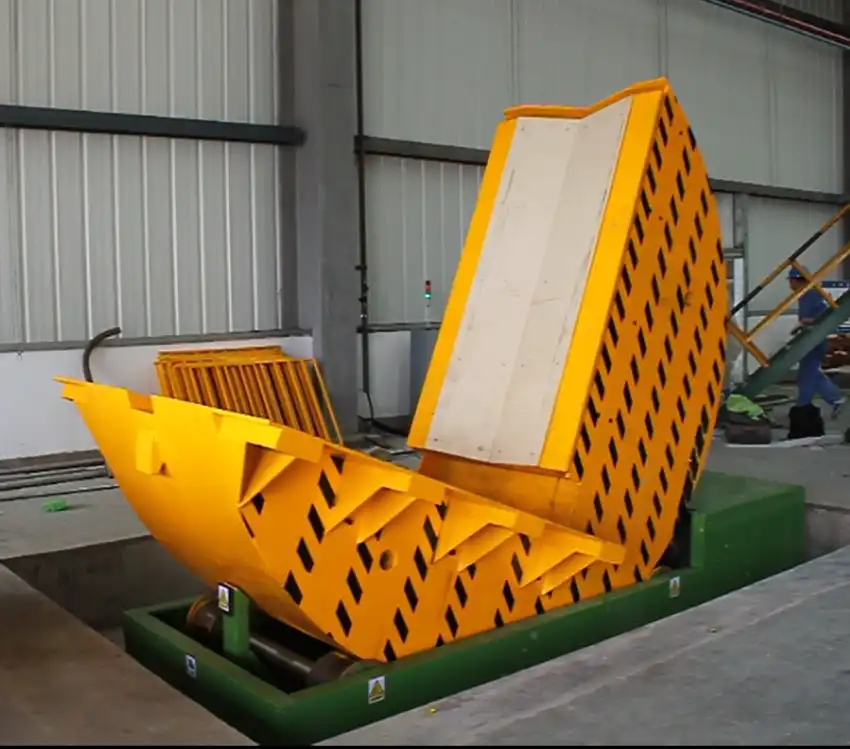
Modern upenders prevent product damage through controlled rotation mechanisms, padded contact surfaces, and precise positioning. SHJLPACK upenders feature specially designed arms with non-marking pads that distribute pressure evenly, eliminating edge crushing and surface damage. This protection maintains coil quality while reducing rejection rates by up to 95% in typical aluminum processing applications.
🛡️ Damage Prevention Technologies
Advanced upenders incorporate multiple technologies to protect valuable aluminum coils:
- Non-marking polyurethane pads that prevent surface scratches
- Controlled rotation speed (typically 2-4 RPM) for smooth movement
- Even pressure distribution across the entire coil face
- Automatic centering systems that prevent misalignment
- Programmable logic controllers that ensure repeatable, gentle handling
💰 Cost of Damage vs. Prevention Investment
The financial impact of coil damage often justifies upender investment:
Typical Damage Costs (Manual Handling):
- Edge damage repairs: $150-400 per coil
- Surface rework: $200-600 per coil
- Customer rejection penalties: $500-2,000 per incident
- Lost production time: 2-4 hours per damaged coil
- Reputation impact: Difficult to quantify but significant
Upender Protection Benefits:
- Damage reduction: 85-95% fewer quality issues
- Labor savings: 2-3 workers reassigned to value-added tasks
- Throughput improvement: 25-40% faster processing
- Customer satisfaction: Higher quality consistency
📈 Technical Specifications for Damage Prevention
SHJLPACK upenders include specific features designed for aluminum coil protection:
| Protection Feature | Standard Model | Professional Model | Industrial Model |
|---|---|---|---|
| Rotation Speed Control | 2-4 RPM | 1-6 RPM adjustable | 0.5-8 RPM programmable |
| Pad Material | Standard polyurethane | Food-grade non-marking | Custom compound for sensitive finishes |
| Pressure Monitoring | Basic | Digital sensors | Real-time feedback with auto-adjust |
| Alignment Accuracy | ±10mm | ±5mm | ±2mm laser-guided |
| Surface Protection | Good | Excellent | Premium (for automotive-grade aluminum) |
🔧 Installation and Integration Considerations
Proper upender installation is crucial for optimal damage prevention:
Site Preparation Requirements:
- Level concrete foundation (minimum 200mm thickness)
- Adequate clearance for coil approach and exit
- Proper lighting for operator visibility
- Integration with existing material handling flow
Operator Training Elements:
- Proper coil positioning techniques
- Daily inspection procedures
- Basic troubleshooting skills
- Safety protocol adherence
According to Randal Liu's experience, "The plants that achieve the best damage prevention results are those that treat upenders as precision equipment rather than simple material handlers. Proper training and maintenance are essential for protecting your aluminum coil investment."
3. What ROI Can Mexican Plants Expect from Coil Upender Investment?
As a plant manager, you need to justify every capital investment with clear financial returns. When I consult with Mexican aluminum processors considering upenders, they're often surprised by how quickly the equipment pays for itself. Beyond the obvious safety benefits, the financial case for upenders includes labor savings, damage reduction, and efficiency improvements that typically deliver full ROI within 12-24 months.
Mexican aluminum plants typically achieve ROI within 12-18 months through labor savings, damage reduction, and efficiency gains. SHJLPACK customers report saving 2-3 workers per shift, reducing damage costs by 85%, and increasing throughput by 30-50%. For a medium-sized plant processing 200 coils daily, this translates to annual savings of $80,000-$120,000 depending on local wage rates and production volume.

💵 Comprehensive ROI Calculation
Let's examine the complete financial picture for a typical Mexican aluminum plant:
Current Manual Handling Costs (Monthly):
- Labor: 3 workers × $1,200/month = $3,600
- Damage: 8 damaged coils × $350 repair = $2,800
- Downtime: 16 hours × $120/hour = $1,920
- Insurance: Higher premiums due to injury risk = $1,500
- Total Monthly Cost: $9,820
With SHJLPACK Upender (Monthly):
- Labor: 1 operator × $1,400/month = $1,400
- Damage: 1 damaged coil × $350 repair = $350
- Downtime: 4 hours × $120/hour = $480
- Insurance: Reduced premiums = $800
- Total Monthly Cost: $3,030
- Monthly Savings: $6,790
📊 Investment Recovery Timeline
For a SHJLPACK upender priced at $65,000 with $5,000 installation:
- Total Investment: $70,000
- Monthly Savings: $6,790
- Simple Payback Period: 10.3 months
- First Year Net Savings: $11,480 (after equipment recovery)
- Three-Year Net Benefit: $174,440
🏆 Comparative Brand ROI Analysis
Different upender brands offer varying value propositions:
| Brand | Initial Investment | Payback Period | Service Support | Spare Parts Cost |
|---|---|---|---|---|
| SHJLPACK | $65,000-85,000 | 10-14 months | Local Mexican technicians | 15-20% below premium brands |
| 风鼎 (Fhopepack) | $75,000-95,000 | 12-16 months | Asian-based with local partners | Competitive pricing |
| 无锡步惠 | $55,000-70,000 | 14-20 months | Limited local presence | Lower initial but higher long-term |
🌎 Mexican Market Specific Considerations
ROI calculations must account for local conditions:
Labor Cost Factors:
- Mexican manufacturing wages: $1,000-1,500/month
- Benefits and mandatory bonuses: 25-35% additional
- Training and turnover costs: 15-20% of annual wages
Operational Efficiency Gains:
- Reduced processing time: 30-50% faster
- Increased line utilization: 15-25% improvement
- Better scheduling accuracy: Fewer bottlenecks
According to Randal Liu, "The most successful Mexican plants we work with achieve the fastest ROI by implementing upenders as part of a broader lean manufacturing initiative. When you combine the equipment with process optimization, the financial returns accelerate significantly."
4. Which Upender Features Are Essential for Heavy-Duty Aluminum Applications?
Not all coil upenders are created equal, especially when handling heavy aluminum coils in demanding Mexican industrial environments. Through my two decades in the packing machine industry, I've identified critical features that separate reliable, long-lasting upenders from equipment that becomes a maintenance headache. Understanding these essential features will help you select the right upender for your specific aluminum processing requirements.
Essential upender features for heavy-duty aluminum applications include robust structural frames, precision hydraulic systems, programmable controls, and safety interlocks. SHJLPACK upenders specifically designed for aluminum processing feature reinforced H-beam construction, German hydraulic components, Siemens PLC controls, and comprehensive safety systems that meet both Mexican NOM and international CE standards.
🏗️ Critical Structural Components
The physical construction determines upender durability and performance:
Frame Materials and Design:
- Main structure: ASTM A36 steel with minimum yield strength 250 MPa
- Critical joints: Full penetration welds with ultrasonic testing
- Base design: Reinforced for stability during rotation
- Lifting arms: High-strength steel with fatigue-resistant design
- Surface treatment: Industrial-grade painting for corrosion resistance
Load Capacity Considerations:
- Standard aluminum coils: 3-8 ton capacity
- Heavy aluminum applications: 8-15 ton capacity
- Extreme duty requirements: 15-25 ton capacity
- Safety factor: Minimum 2:1 design margin
⚙️ Performance and Control Systems
Modern upenders require sophisticated control for reliable operation:
Hydraulic System Requirements:
- Pump type: Variable displacement for energy efficiency
- Control valves: Proportional for smooth operation
- Cylinders: Chromed rods with wiper seals
- Fluid filtration: 10 micron absolute with condition monitoring
- Cooling: Air-oil coolers for Mexican climate conditions
Electrical and Control Features:
- PLC: Siemens or Allen-Bradley with HMI interface
- Safety: Dual-channel safety relays with monitoring
- Programming: Multiple preset for different coil sizes
- Diagnostics: Fault tracing with maintenance alerts
- Connectivity: Ethernet/IP for integration with plant systems
📋 Essential Feature Checklist
Use this checklist when evaluating upenders for aluminum applications:
Must-Have Features:
- [ ] Reinforced structural frame (minimum 8mm steel)
- [ ] Precision hydraulic rotation control
- [ ] Programmable logic controller with touchscreen
- [ ] Emergency stop systems with redundancy
- [ ] Non-marking contact pads
- [ ] Load sensing and overload protection
- [ ] Local service and technical support in Mexico
Recommended Features:
- [ ] Remote monitoring capability
- [ ] Automated size detection
- [ ] Integration with plant ERP systems
- [ ] Energy-saving hydraulic design
- [ ] Quick-change tooling for different coil types
- [ ] Advanced diagnostics with predictive maintenance
Premium Features:
- [ ] Laser alignment systems
- [ ] Automated coil measurement
- [ ] Cloud-based performance tracking
- [ ] Augmented reality maintenance support
- [ ] Predictive maintenance algorithms
🔍 Technical Comparison Table
Key specifications for aluminum-optimized upenders:
| Specification | SHJLPACK ALU- Series | Standard Industrial | Premium European |
|---|---|---|---|
| Max Capacity | 15 tons | 10 tons | 20 tons |
| Rotation Speed | 0.5-6 RPM | 1-4 RPM | 0.3-8 RPM |
| Power Consumption | 18.5 kW | 22 kW | 30 kW |
| Control System | Siemens PLC | Basic PLC | Advanced automation |
| Frame Construction | Reinforced H-beam | Standard I-beam | Custom engineered |
| Mexican Service | 24-48 hour response | 3-5 day response | International support |
| Price Point | $65,000-85,000 | $45,000-65,000 | $120,000-180,000 |
According to Randal Liu, "The right upender features depend on your specific aluminum grades and production volume. SHJLPACK designs consider the unique challenges of Mexican industrial environments, including temperature variations, power fluctuations, and the need for robust, serviceable equipment."
Conclusion
Implementing the right coil upender transforms aluminum processing safety while delivering substantial operational benefits and financial returns. For complete packaging solutions, consider integrating with a modern steel coil packing line to maximize efficiency.
FAQ Section
Frequently Asked Questions
Q: How long does it take to install a coil upender in an existing production line?
A: Most SHJLPACK upenders install in 3-5 days with minimal production disruption. We provide turnkey installation services including foundation preparation, equipment placement, electrical connection, and operator training. The exact timeline depends on your specific plant layout and preparation requirements.
Q: What maintenance is required for coil upenders in high-volume aluminum plants?
A: Basic maintenance includes daily visual inspections, weekly lubrication, monthly hydraulic checks, and annual comprehensive servicing. SHJLPACK upenders require approximately 2-4 hours of maintenance weekly in high-volume applications. We provide detailed maintenance schedules and remote monitoring to optimize service intervals.
Q: Can upenders handle different coil sizes and weights without manual adjustment?
A: Advanced upenders like SHJLPACK models feature automatic adjustment for different coil dimensions. Programmable presets allow quick changeover between standard sizes, while adaptive systems can handle non-standard coils. Most plants achieve changeover times under 2 minutes between different aluminum coil specifications.
Q: What safety certifications do Mexican plants require for coil upenders?
A: Equipment should comply with Mexican NOM standards, particularly NOM-001-STPS for electrical safety and NOM-004-STPS for health and safety in workplaces. SHJLPACK upenders meet these requirements plus international CE certification, ensuring compliance for both domestic use and export-oriented facilities.
Q: How do upenders integrate with existing material handling systems?
A: Modern upenders feature multiple integration options including roller conveyor interfaces, AGV compatibility, and PLC communication protocols. SHJLPACK provides integration engineering to connect with your existing cranes, conveyors, and plant management systems for seamless material flow optimization.


