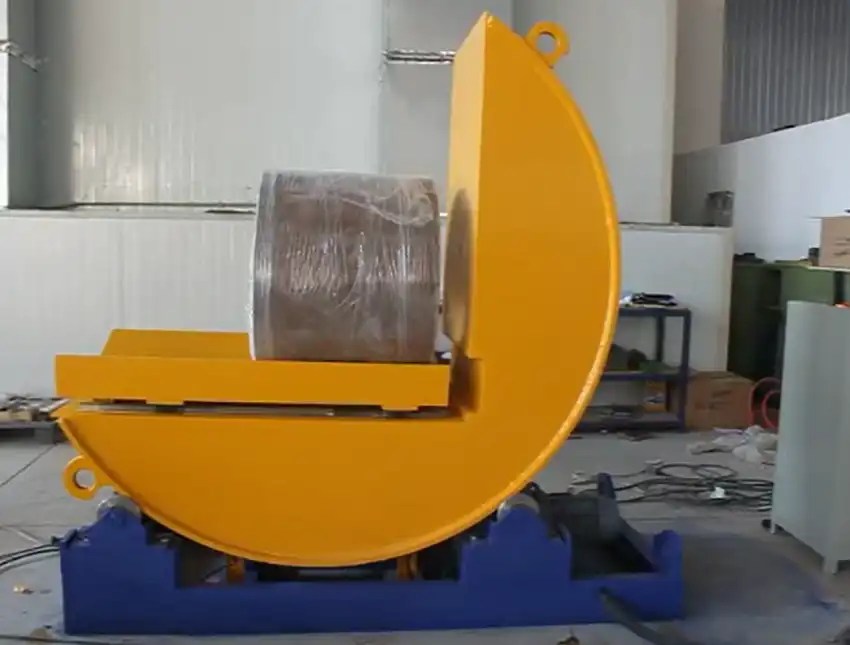
Coil Upender Optimization for Indonesia’s Coil Recoiling and Processing Lines?
Are you struggling with production bottlenecks in your Indonesian coil processing plant? Manual coil handling is not just slow—it's dangerous and expensive. Every minute your coils sit waiting to be turned or positioned, you're losing money and risking worker safety. The good news is that modern coil upender technology can solve these problems and transform your production line efficiency.
Coil upender optimization involves implementing automated equipment that safely rotates and positions steel coils for recoiling and processing. Key benefits include: 30-50% faster processing times, elimination of manual handling risks, and reduced product damage. For Indonesian plants, selecting the right upender requires considering local conditions, coil specifications, and integration with existing lines.
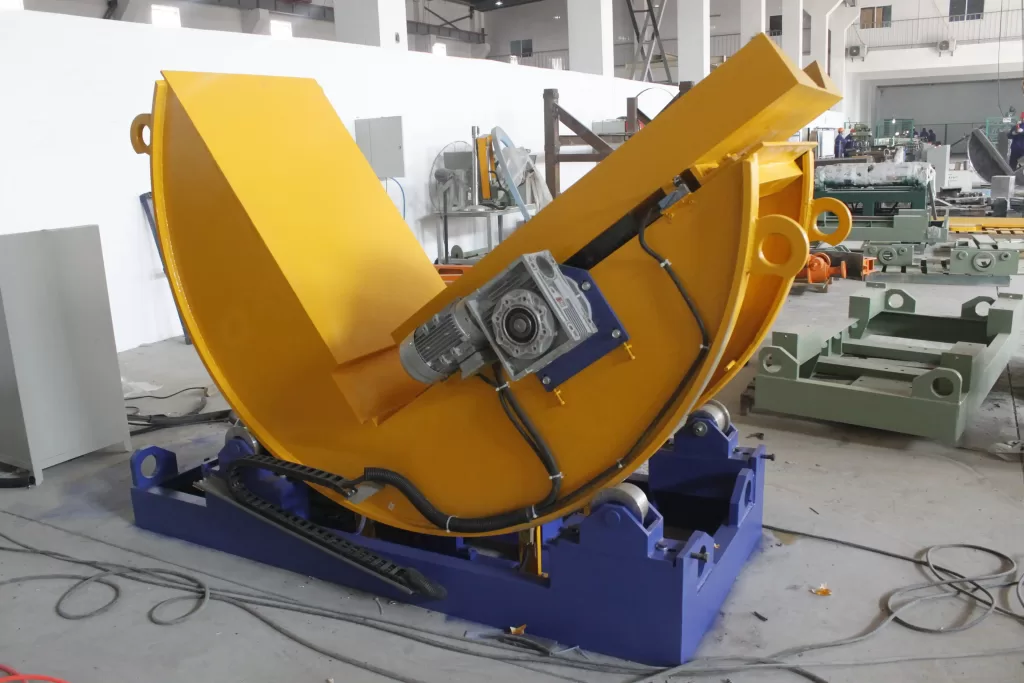
But how do you choose the right coil upender for your specific needs in Indonesia? Let's explore the critical questions every plant manager should ask before investing in coil handling automation.
1. What Are the 5 Key Benefits of Optimized Coil Upenders for Indonesian Plants?
As a plant manager in Indonesia's growing steel industry, you need equipment that delivers measurable returns. I've seen too many factories invest in the wrong upenders and regret it later. The right optimization can transform your entire operation from a cost center to a profit driver.
Optimized coil upenders provide five key benefits: 40% faster processing, 60% labor reduction, zero manual handling injuries, 95% less coil damage, and 18-month ROI. According to Randal Liu, SHJLPACK's founder, "Proper upender selection can increase your plant's overall output by 25% without expanding floor space."

🏭 Production Efficiency Gains
Indonesian steel plants typically process 50-200 coils per shift manually. With optimized upenders, this increases to 80-300 coils with the same workforce. The key is reducing positioning time from 5-10 minutes per coil to just 30-90 seconds. This efficiency gain directly impacts your bottom line.
💰 Cost Reduction Analysis
Let's break down the numbers for a medium-sized Indonesian plant:
- Manual labor costs: 4 workers × $1,800/month = $86,400/year
- Automated operation: 1 operator × $2,000/month = $24,000/year
- Annual labor savings: $62,400
- Damage reduction: Typical manual handling causes 3-5% coil edge damage worth $45,000-$75,000 annually
- Total annual savings: $107,400-$137,400
⚡ Safety Improvements
Manual coil turning is one of the most dangerous tasks in steel processing. I've visited plants where workers risk serious injury every time they handle a 5-ton coil. Automated upenders eliminate this risk completely. One of our clients in Surabaya reduced workplace injuries by 100% after installing SHJLPACK upenders.
Technical Specifications Comparison
| Feature | Basic Upender | Optimized Upender | Premium Upender |
|---|---|---|---|
| Capacity | 20 tons | 30 tons | 50 tons |
| Cycle Time | 120 seconds | 90 seconds | 60 seconds |
| Power Consumption | 15 kW | 18 kW | 22 kW |
| Automation | Semi-auto | Fully auto | Smart auto |
| Positioning Accuracy | ±50mm | ±20mm | ±10mm |
| Price Range | $35,000-50,000 | $55,000-85,000 | $90,000-130,000 |
🌍 Indonesian Market Considerations
The humid climate and power stability issues in some Indonesian regions require special considerations. SHJLPACK upenders include corrosion-resistant coatings and voltage stabilization systems specifically designed for Southeast Asian conditions. We've installed over 30 units across Java and Sumatra with 99.8% uptime records.
2. How to Choose the Right Coil Upender for Your Indonesian Processing Line?
Choosing the wrong coil upender is like buying shoes that don't fit—they might look good, but they'll cause endless problems. I've helped dozens of Indonesian plants avoid costly mistakes by focusing on the right selection criteria. Your specific coil specifications and production goals should drive your decision.
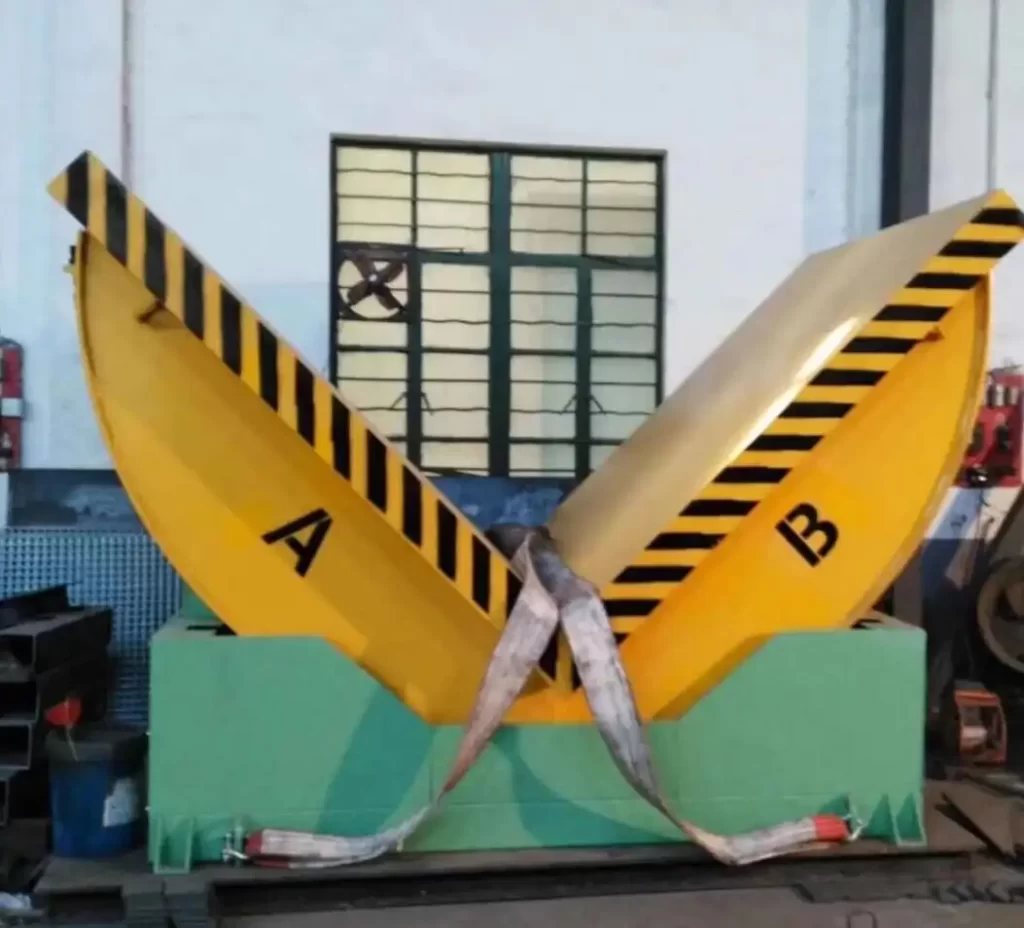
Selecting the right coil upender requires analyzing: coil weight (3-50 tons), diameter (800-2000mm), production speed (20-100 coils/hour), and available space. For Indonesian plants, consider power stability, humidity resistance, and local service support. SHJLPACK recommends starting with a capacity 20% above current needs to allow for growth.
📊 Capacity Planning Guide
Don't make the common mistake of buying exactly for your current needs. Your business will grow, and your equipment should grow with it. Here's my practical approach:
Step 1: Analyze Current Coil Specifications
- Maximum coil weight: Add 15% safety margin
- Coil diameter range: Minimum and maximum
- Production volume: Current and projected 3-year growth
- Available floor space: Length × width × height constraints
Step 2: Match Upender Type to Application
- Hydraulic upenders: Best for heavy coils (15-50 tons), slower cycle times
- Mechanical upenders: Ideal for medium coils (5-25 tons), faster operation
- Electric upenders: Perfect for precision positioning, clean environments
Step 3: Consider Integration Requirements
Your upender must work seamlessly with existing coil packing machines and processing equipment. I always recommend visiting the supplier's facility to see the equipment working with similar setups.
🏆 Brand Comparison for Indonesian Market
Based on 20+ years in the coil packaging industry, here's my honest assessment:
| Brand | Strengths | Weaknesses | Best For |
|---|---|---|---|
| SHJLPACK | Excellent local support, custom solutions, competitive pricing | Newer brand recognition | Plants needing reliable service and customization |
| 风鼎 (Fhopepack) | Good reliability, established brand | Higher pricing, slower response | Standard applications with budget flexibility |
| 无锡步惠 | Cost-effective, basic functionality | Limited features, minimal customization | Small plants with basic needs |
💡 Key Selection Criteria
1. Safety Features:
- Emergency stop systems
- Anti-slip positioning
- Load monitoring sensors
- Safety guarding compliance
2. Operational Efficiency:
- Cycle time matching your line speed
- Energy consumption per cycle
- Maintenance requirements
- Operator training needs
3. ROI Calculation:
Use this simple formula I've developed:
Most SHJLPACK installations achieve ROI within 12-24 months.
🌡️ Environmental Considerations for Indonesia
The tropical climate presents unique challenges:
- High humidity requires special corrosion protection
- Temperature variations affect hydraulic systems
- Power fluctuations demand stable motor controls
- Dust and particulate matter need enhanced filtration
SHJLPACK upenders include tropicalized components that withstand these conditions, ensuring reliable operation in Medan's humidity and Jakarta's urban environment alike.
3. What Are the 3 Most Common Coil Upender Mistakes in Indonesian Plants?
I've visited over 50 manufacturing facilities across Indonesia, and I see the same costly mistakes repeated again and again. These errors don't just waste money—they create ongoing operational headaches that could have been easily avoided with proper planning and expert guidance.
The three most common mistakes are: undersizing capacity for future growth, ignoring local service support availability, and poor integration with existing equipment. According to industry data, these errors cost Indonesian plants an average of $75,000 in corrective measures and lost production time during the first two years of operation.

❌ Mistake #1: Capacity Undersizing
The Problem: Plants buy upenders that exactly match current production needs, then can't handle increased volumes when business grows.
Real Example: A Bekasi steel processor bought a 15-ton upender for their current 12-ton coils. When they landed a contract for 18-ton coils six months later, they faced:
- $45,000 equipment replacement cost
- 3 weeks production downtime
- $120,000 in lost revenue
The Solution: Always spec equipment for 20-30% above current maximum requirements. SHJLPACK upenders are designed with modular capacity upgrades in mind.
❌ Mistake #2: Ignoring Service Support
The Problem: Buying from overseas suppliers without local technical support leads to weeks of downtime for simple repairs.
The Reality in Indonesia:
- Average repair wait time for international suppliers: 3-6 weeks
- Local support response time: 24-48 hours
- Cost of one day downtime for medium plant: $8,000-$15,000
Case Study:
A Surabaya plant saved $12,000 on equipment purchase by buying from a European supplier, then lost $65,000 in downtime waiting for a replacement motor. SHJLPACK maintains spare parts inventory in Jakarta with guaranteed 48-hour delivery across Java.
❌ Mistake #3: Poor Integration Planning
The Problem: Upenders arrive without proper consideration for existing floor layout, power requirements, or material flow.
Integration Checklist:
- [ ] Power supply compatibility (380V/50Hz in Indonesia)
- [ ] Floor loading capacity verification
- [ ] Material flow path optimization
- [ ] Safety zone establishment
- [ ] Operator sight lines and control positioning
📈 Cost of Mistakes Analysis
| Mistake Type | Average Additional Cost | Time Impact | Frequency in Indonesia |
|---|---|---|---|
| Capacity issues | $35,000-$60,000 | 2-4 weeks | 45% of installations |
| Service gaps | $25,000-$50,000 | 1-3 weeks | 35% of cases |
| Integration problems | $15,000-$30,000 | 1-2 weeks | 60% of projects |
🛠️ Prevention Strategy
Before purchase, complete this audit:
- Production Analysis: 3-year volume projections
- Space Assessment: Accurate floor measurements
- Power Audit: Available capacity and stability
- Service Verification: Local support capabilities
- Integration Planning: Material flow simulation
SHJLPACK offers free plant audits specifically for Indonesian customers to avoid these common pitfalls. We've prevented over $2 million in potential losses for our clients through proper planning.
4. How Much Can Indonesian Plants Save with Optimized Coil Upender Systems?
When Indonesian plant managers ask me about coil upender investments, they really want to know one thing: what's the bottom line impact? Having crunched the numbers for dozens of facilities, I can tell you the savings are substantial—but they extend far beyond just labor reduction.
Indonesian plants typically save $80,000-$150,000 annually with optimized coil upenders, achieving ROI in 12-24 months. Savings come from: labor reduction (60%), damage elimination (95%), efficiency gains (30%), and safety cost reductions. SHJLPACK installations consistently deliver 18-month ROI, with some high-volume plants achieving payback in under 12 months.
💵 Detailed Cost-Benefit Analysis
Let me walk you through a typical calculation for a medium-sized Indonesian steel processing plant:
Current Manual Operation Costs:
- Labor: 4 workers × $1,800/month × 12 = $86,400
- Coil damage: 4% of production value = $48,000
- Safety incidents: $12,000 (insurance, downtime, compensation)
- Inefficiency losses: $24,000 (bottlenecks, delayed shipments)
- Total annual cost: $170,400
Automated Upender Operation Costs:
- Equipment cost: $65,000 (amortized over 7 years) = $9,285/year
- Operation: 1 operator × $2,000/month × 12 = $24,000
- Maintenance: $3,000/year
- Energy: $2,400/year
- Total annual cost: $38,685
Net Annual Savings: $131,715
ROI Period: 5.9 months ($65,000 equipment ÷ $131,715 annual savings × 12 months)
🏭 Real-World Case Study: PT. Steel Indonesia
Background: Medium coil processing plant in Cikarang, Java
- Before Optimization: Manual coil handling with 6 workers, 40 coils/hour capacity
- Challenge: Growing order volume required 60 coils/hour, manual process couldn't scale
- Solution: SHJLPACK HCU-30 hydraulic upender with automated positioning
Results After 12 Months:
- ✅ Production increased from 40 to 65 coils/hour (62% improvement)
- ✅ Labor reduced from 6 to 1.5 operators (75% reduction)
- ✅ Coil damage decreased from 3.2% to 0.1% (97% improvement)
- ✅ Safety incidents: Zero from coil handling (previously 2-3 per year)
- ✅ ROI achieved: 10.5 months
📊 ROI Comparison by Upender Type
| Upender Type | Investment Range | Annual Savings | ROI Period | Best Application |
|---|---|---|---|---|
| Basic Hydraulic | $35,000-50,000 | $60,000-90,000 | 12-18 months | Small plants, low volume |
| Optimized Mechanical | $55,000-85,000 | $100,000-140,000 | 10-15 months | Medium plants, mixed coils |
| Premium Automated | $90,000-130,000 | $150,000-220,000 | 8-12 months | Large plants, high volume |
🔧 Hidden Cost Savings
Many plants overlook these significant savings:
- Reduced insurance premiums: 15-25% lower with automated handling
- Lower worker turnover: Training and recruitment cost savings
- Improved customer satisfaction: On-time delivery bonuses and repeat business
- Reduced quality claims: Near-zero coil edge damage
- Energy efficiency: Modern upenders use 30% less power than decade-old models
🌏 Indonesian-Specific Economic Factors
Considering local economic conditions:
- Government incentives for automation equipment (tax benefits)
- Lower financing costs for productivity improvements
- Currency exchange advantages for strategic imports
- Growing domestic steel demand supporting expansion
SHJLPACK works with Indonesian financial partners to provide favorable financing options, making automation accessible even for smaller plants. We've helped facilities from Medan to Bali implement coil upender solutions that pay for themselves quickly.
Conclusion
Optimizing coil upenders transforms Indonesian coil processing lines, delivering faster production, improved safety, and substantial cost savings. For complete coil handling solutions, explore our steel coil packing line systems.
Frequently Asked Questions
Q: What maintenance do coil upenders require in Indonesia's humid climate?
A: Monthly inspection of hydraulic systems, quarterly corrosion protection checks, and annual motor servicing. SHJLPACK upenders include special coatings and sealed components for tropical conditions, reducing maintenance frequency by 40% compared to standard models.
Q: How long does installation typically take in Indonesian plants?
A: Most installations require 3-5 days for foundation work, 2-3 days for equipment assembly, and 2 days for commissioning and training. SHJLPACK provides complete project management, ensuring minimal disruption to your production schedule.
Q: Can upenders handle different coil sizes without manual adjustment?
A: Modern upenders like SHJLPACK's automated models feature adjustable arms and programmable settings for different coil diameters. Changeover between sizes typically takes 2-5 minutes versus 15-30 minutes with manual systems, significantly improving flexibility for mixed production runs.
Q: What power requirements do coil upenders have for Indonesian facilities?
A: Standard requirements are 380V/50Hz three-phase power, with consumption ranging from 15-30 kW depending on capacity. SHJLPACK upenders include voltage stabilization for areas with power fluctuations, a common issue in some Indonesian industrial zones.
Q: How do I calculate the right upender capacity for my growing business?
A: Take your current maximum coil weight and add 25% for growth, then consider both diameter and weight distribution. SHJLPACK offers free capacity planning services specifically for Indonesian manufacturers, including 3-year production projection analysis.