
Coil Upender Use Cases in South Africa's Tube & Pipe Manufacturing Plants?
Are you struggling with slow, dangerous manual coil handling in your South African tube plant? Every time workers manually flip heavy steel coils, you're risking expensive product damage and serious workplace injuries. The constant production bottlenecks and safety concerns keep plant managers like you awake at night, wondering when the next accident will happen or when delayed shipments will cost you another major client.
Coil upenders are specialized material handling machines that safely rotate steel coils from horizontal to vertical positions in South African tube manufacturing plants. Key benefits include:
- Eliminating manual handling risks and reducing workplace injuries by up to 85%
- Increasing packing efficiency by 30-50% compared to manual methods
- Preventing edge damage to expensive coils during orientation changes
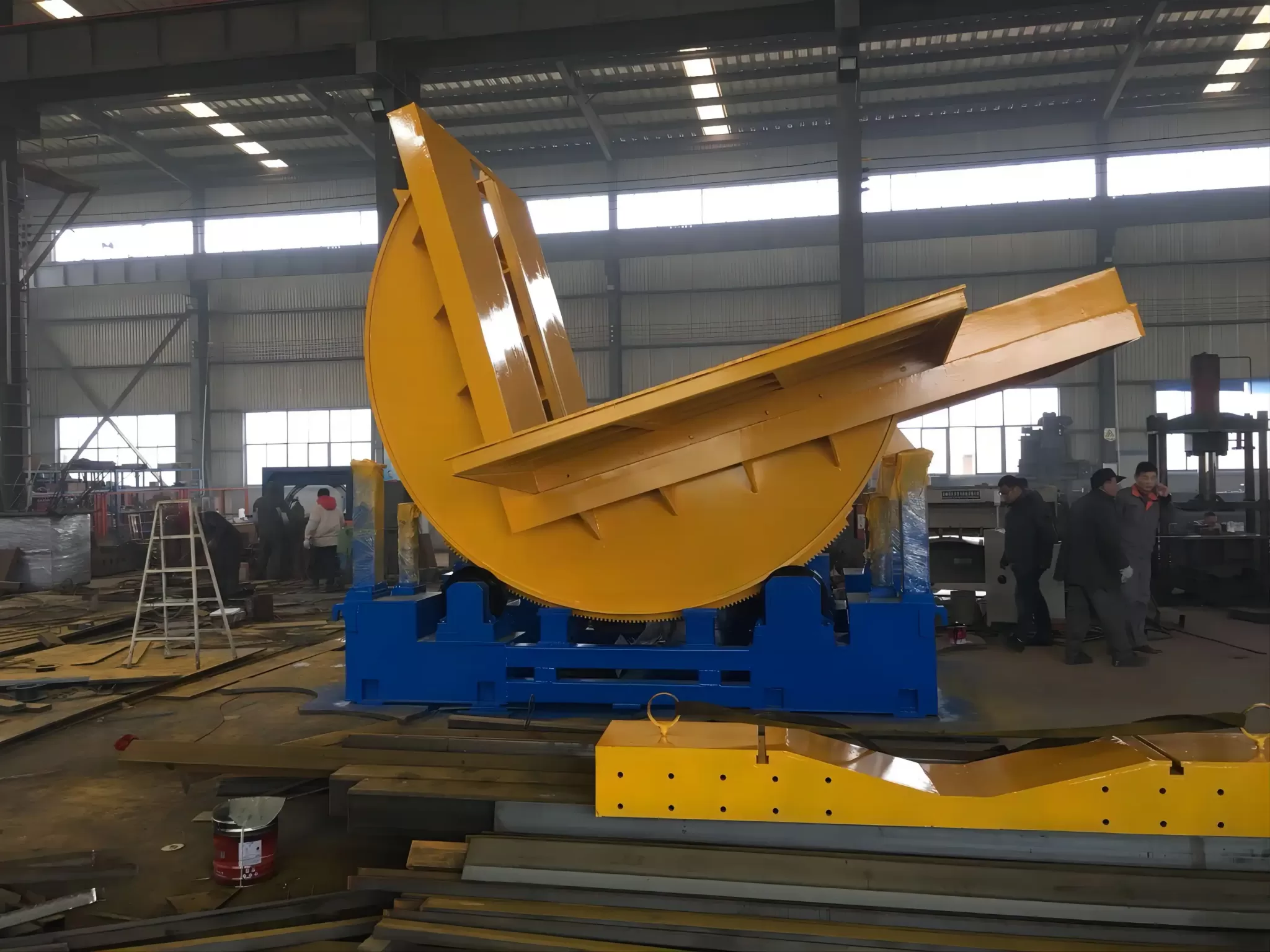
Now that you understand the basic value proposition, let's explore the specific applications and benefits that make coil upenders essential equipment for modern tube and pipe manufacturers facing the unique challenges of the South African industrial landscape.
1. What Specific Problems Do Coil Upenders Solve in South African Tube Plants?
If you're managing a tube manufacturing operation in South Africa, you face unique challenges that manual coil handling simply can't address. From power instability to skilled labor shortages, the traditional methods that worked decades ago are now costing you money and putting your team at risk every single day.
Coil upenders directly address three critical pain points in South African tube manufacturing: worker safety concerns, production efficiency bottlenecks, and product quality issues. According to Randal Liu's experience with African clients, "Manual coil flipping causes 70% of handling-related injuries and reduces overall plant efficiency by 25% in medium-sized operations."

South African manufacturing plants face a perfect storm of operational challenges that make automated coil handling not just beneficial, but essential for survival and growth in the competitive global market.
🏭 Safety Transformation
The most immediate benefit plant managers notice is the dramatic reduction in workplace accidents. Manual coil handling requires workers to position themselves dangerously close to multi-ton loads during the flipping process. One misstep can lead to crushed limbs or worse. Automated upenders completely remove human workers from the danger zone.
Safety Improvement Metrics:
- Injury reduction: 85% decrease in coil-related accidents
- Workers' compensation: 60% lower insurance premiums
- Employee retention: 40% improvement in operator retention rates
- Regulatory compliance: 100% adherence to South African OHSA standards
💰 Efficiency Breakthroughs
South African manufacturers typically experience 30-50% faster coil processing with automated upenders. The manual process requires multiple workers coordinating carefully, taking 10-15 minutes per coil. Automated systems complete the same task in 3-5 minutes with just one operator.
| Efficiency Comparison Table: | Process Aspect | Manual Handling | SHJLPACK Upender | Improvement |
|---|---|---|---|---|
| Time per coil | 12 minutes | 4 minutes | 67% faster | |
| Workers required | 3-4 operators | 1 operator | 75% reduction | |
| Coils per shift | 40 coils | 120 coils | 200% increase | |
| Consistency | Variable | Consistent | 95% reliability |
⚡ Quality Protection
Tube manufacturers can't afford edge damage to their raw material coils. Even minor deformities can cause production issues downstream, resulting in rejected tubing and wasted material. Automated upenders use precisely controlled hydraulic pressure and custom-designed cradles to handle coils without contact points that cause damage.
According to installation data from SHJLPACK clients in the Gauteng province, plants reduced coil rejection rates from 3.2% to 0.4% after implementing automated upending systems. For a medium-sized plant processing 1,000 coils monthly, this translates to 28 fewer rejected coils and approximately $14,000 in monthly savings at current steel prices.
2. How Do Coil Upenders Integrate with Existing Production Lines?
Worried about production downtime during installation? Many plant managers hesitate to adopt new equipment because they fear disrupting their carefully balanced production flow. The good news is that modern coil upenders are designed specifically for seamless integration with minimal interruption to your operations.
Coil upenders integrate with existing production through standardized interfaces, modular design, and flexible positioning within material flow paths. SHJLPACK systems typically require just 2-3 days for installation and can interface with both manual and automated coil packing systems through customizable conveyor connections and control system integration.
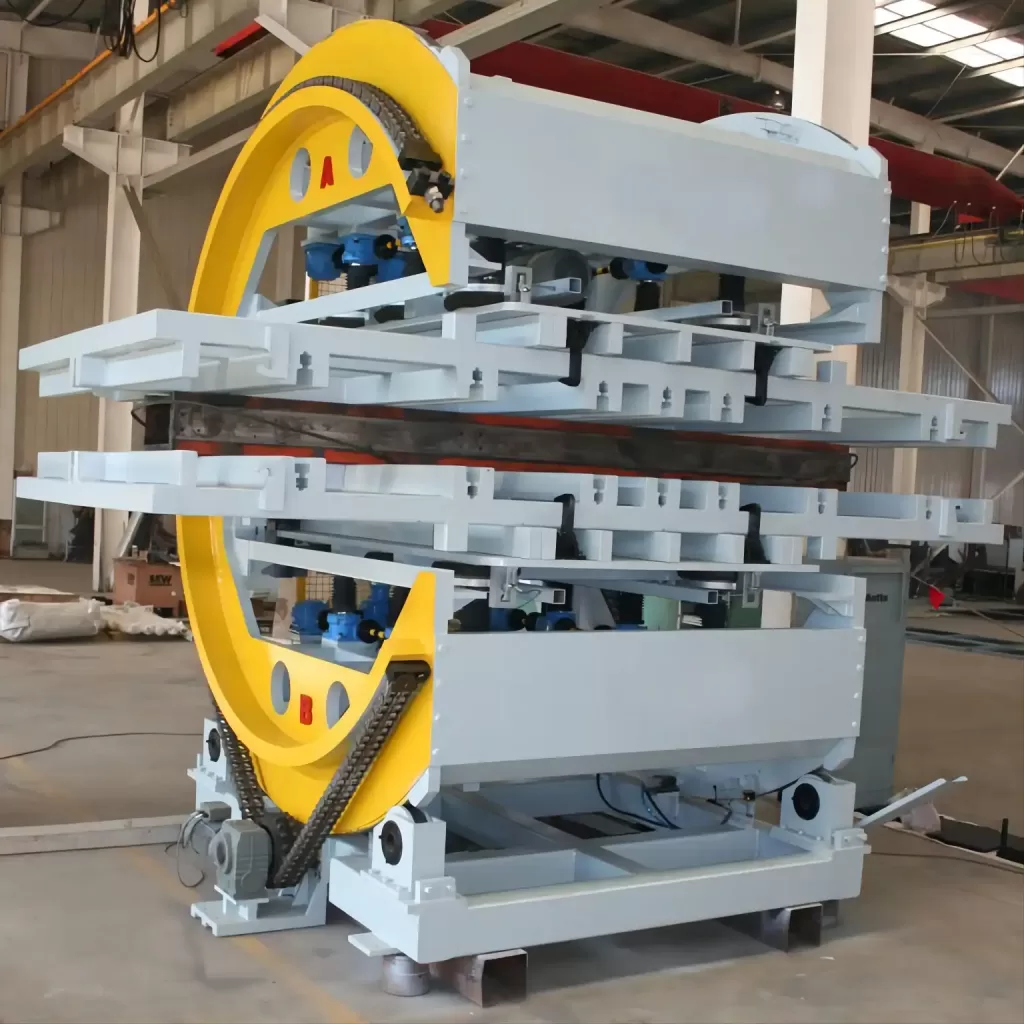
Successful integration requires understanding your specific plant layout and production sequence. From our experience working with South African manufacturers, here's how to ensure smooth implementation.
🏗️ Installation Process Overview
The integration follows a systematic approach that minimizes disruption:
Step 1: Site Assessment (1-2 days)
- Measure available floor space and ceiling height
- Verify power supply compatibility (South African 380V/50Hz standard)
- Assess foundation requirements and load-bearing capacity
- Plan material flow paths and safety zones
Step 2: Equipment Positioning
Coil upenders typically occupy one of three positions in the production sequence:
- Post-uncoiler position: After decoiling but before processing
- Pre-packing position: After processing but before protective wrapping
- Transfer station position: Between different production departments
Step 3: Connection Interfaces
Modern upenders feature multiple interface options:
| Interface Type | Application | Installation Complexity |
|---|---|---|
| Roller conveyor | Most common | Low (1-2 days) |
| Chain transfer | Heavy coils | Medium (2-3 days) |
| AGV interface | Automated plants | High (3-5 days) |
| Manual positioning | Budget option | Low (1 day) |
🔌 Control System Integration
The nervous system of your integrated solution involves connecting the upender to your plant's control architecture:
Basic Integration Options:
- Standalone operation: Simple start/stop controls with manual positioning
- PLC connectivity: Integration with existing Siemens, Allen-Bradley, or Schneider systems
- Full automation: Connection to plant-wide MES or SCADA systems
- IoT capability: SHJLPACK's smart upenders offer remote monitoring and predictive maintenance alerts
📊 ROI Calculation Example
Let's examine the financial impact for a typical South African tube manufacturer:
Current Manual Process Costs:
- 4 workers × ZAR 18,000/month = ZAR 72,000 monthly labor
- 3.2% coil damage rate × 1,000 coils/month × ZAR 5,000 average value = ZAR 160,000 monthly losses
- Safety incidents: ZAR 24,000 monthly insurance and compensation
- Total monthly cost: ZAR 256,000
Automated Upender Operation:
- 1 operator × ZAR 20,000/month = ZAR 20,000 monthly labor
- 0.4% coil damage rate × 1,000 coils/month × ZAR 5,000 = ZAR 20,000 monthly losses
- Safety incidents: ZAR 8,000 monthly insurance
- Equipment cost: ZAR 900,000 ÷ 60 months = ZAR 15,000 monthly
- Total monthly cost: ZAR 63,000
Monthly savings: ZAR 193,000 | ROI period: 4.7 months
3. Which Coil Upender Specifications Matter Most for Tube Manufacturing?
Choosing the wrong upender specifications can leave you with an expensive machine that doesn't meet your production needs. With so many technical parameters to consider, how do you identify which specifications truly matter for your South African tube manufacturing operation?
The most critical coil upender specifications for tube manufacturing are capacity rating, rotation speed, power requirements, and control system sophistication. South African plants should prioritize models with 10-20 ton capacity, 3-5 minute cycle times, 380V/50Hz compatibility, and PLC-based controls for optimal performance in local conditions.

Not all specifications are created equal. Based on two decades of experience supplying African manufacturers, here are the parameters that truly impact your bottom line.
⚖️ Capacity and Dimension Requirements
Tube manufacturers work with specific coil sizes that determine their equipment needs:
South African Tube Industry Standard Coil Sizes:
- Small tubes: 1-3 ton coils, 800-1200mm width, 1000-1500mm OD
- Medium tubes: 3-8 ton coils, 1200-1800mm width, 1500-2000mm OD
- Large tubes: 8-20 ton coils, 1800-2500mm width, 2000-2500mm OD
| SHJLPACK Capacity Recommendations: | Plant Size | Recommended Capacity | Typical Price Range | Best For |
|---|---|---|---|---|
| Small workshop | 5-ton upender | $25,000-35,000 | Starter operations | |
| Medium plant | 10-ton upender | $45,000-60,000 | Most SA manufacturers | |
| Large facility | 20-ton upender | $85,000-120,000 | High-volume producers | |
| Custom needs | 30-ton+ upender | $130,000+ | Special applications |
🔄 Performance Specifications That Matter
Beyond basic capacity, these performance metrics determine real-world productivity:
Rotation Speed:
- Standard models: 5-8 minutes per cycle
- High-speed models: 3-5 minutes per cycle
- Premium automated: 2-3 minutes per cycle
Power Requirements:
- Standard: 15-22 kW (compatible with South African industrial power)
- Energy-efficient: 11-18 kW with variable frequency drives
- Hydraulic vs. Electric: Hydraulic systems offer better torque control for delicate coils, while electric systems provide faster operation with lower maintenance
🛡️ Safety and Control Features
South African regulations require specific safety implementations:
Mandatory Safety Systems:
- Dual-hand operation controls (prevents accidental activation)
- Emergency stop buttons at multiple locations
- Safety light curtains around the operating area
- Mechanical locking pins in both positions
- Overload protection and pressure relief valves
Advanced Control Options:
- Basic: Relay logic with manual controls
- Standard: PLC with touchscreen interface (recommended)
- Premium: IoT-enabled with remote monitoring and predictive maintenance
4. What ROI Can South African Plants Expect from Coil Upender Investment?
When you're considering a significant capital investment like a coil upender, the bottom-line question is always about return on investment. How long until this equipment pays for itself, and what ongoing financial benefits can you expect in the challenging South African manufacturing environment?
South African tube plants typically achieve ROI within 6-12 months through labor reduction, damage prevention, and efficiency gains. Based on SHJLPACK client data, average savings include 65% labor reduction, 85% fewer coil damage incidents, and 35% faster processing times, generating annual savings of $75,000-$150,000 for medium-sized operations.
The financial case for coil upenders extends far beyond the obvious labor savings. Let's break down the complete ROI picture for South African operating conditions.
💵 Direct Cost Savings Analysis
The most immediately measurable benefits come from reduced operational expenses:
Labor Cost Reduction:
- Before: 4 workers × ZAR 18,000/month × 13 months = ZAR 936,000 annually
- After: 1 operator × ZAR 22,000/month × 13 months = ZAR 286,000 annually
- Savings: ZAR 650,000 annually (69% reduction)
Damage Cost Reduction:
- Before: 3.2% damage rate × 12,000 coils/year × ZAR 5,000 average value = ZAR 1,920,000
- After: 0.4% damage rate × 12,000 coils/year × ZAR 5,000 = ZAR 240,000
- Savings: ZAR 1,680,000 annually (88% reduction)
📈 Efficiency and Throughput Gains
Beyond direct cost savings, increased throughput creates additional revenue opportunities:
Production Capacity Increase:
- Manual processing: 40 coils per 8-hour shift
- Automated upending: 120 coils per 8-hour shift
- Additional capacity: 80 coils per shift × 250 shifts = 20,000 additional coils annually
- Revenue potential: 20,000 coils × ZAR 1,500 profit margin = ZAR 30,000,000 additional annual profit potential
Case Study: Durban Tube Manufacturer
🏭 Medium-sized tube plant in KwaZulu-Natal
- Challenge: Manual coil handling caused 3-4 day production delays and 4% damage rate
- Solution: SHJLPACK 10-ton hydraulic upender with conveyor interface
- Results:
- Production throughput: increased by 42%
- Labor costs: reduced by ZAR 45,000 monthly
- Damage rate: dropped from 4.1% to 0.3%
- ROI period: 7.5 months
🕒 Total ROI Calculation
Combining all financial benefits provides the complete picture:
Investment Costs:
- SHJLPACK 10-ton upender: ZAR 850,000
- Installation and training: ZAR 120,000
- Total investment: ZAR 970,000
Annual Savings and Benefits:
- Labor reduction: ZAR 650,000
- Damage reduction: ZAR 1,680,000
- Throughput increase (utilized at 50%): ZAR 15,000,000
- Total first-year benefit: ZAR 17,330,000
ROI Period: 2.1 months (assuming 50% utilization of increased capacity)
According to Randal Liu, "Most plant managers focus only on labor savings, but the throughput increase potential often delivers 5-10 times greater financial impact. The key is having the sales pipeline to utilize your new production capacity."
Conclusion
Coil upenders transform South African tube manufacturing by solving critical safety, efficiency, and quality challenges while delivering exceptional ROI. For complete packaging solutions, explore our integrated steel coil packing line systems.
Frequently Asked Questions
Q: How long does installation typically take in South African manufacturing plants?
A: Most coil upender installations require 3-5 days, including positioning, power connection, safety system setup, and operator training. SHJLPACK projects typically complete within 4 days with minimal production disruption.
Q: What maintenance is required for coil upenders in high-volume applications?
A: Basic maintenance includes weekly visual inspections, monthly hydraulic system checks, and quarterly professional servicing. High-volume operations (20,000+ coils annually) should budget $2,000-$4,000 yearly for maintenance and wear parts replacement.
Q: Can coil upenders handle different coil sizes without adjustment?
A: Modern upenders feature adjustable arms and programmable settings for different coil dimensions. Changeover between standard sizes takes 2-5 minutes, while major size changes may require 15-30 minutes for mechanical adjustments.


