
Coil Upender Use Cases in South Africa's Tube & Pipe Manufacturing Plants
Are you struggling with manual coil handling that's slowing down your production line and putting your workers at risk? As a plant manager, you know that inefficient material handling can cost your business thousands in lost productivity and potential safety incidents. The constant flipping and positioning of heavy coils manually isn't just slow—it's dangerous and expensive. But what if there was a solution that could transform this bottleneck into a competitive advantage?
Coil upenders are specialized material handling machines that safely rotate and position steel coils from horizontal to vertical orientation, specifically designed for tube and pipe manufacturing plants in South Africa. Key benefits include:
- 30-50% faster coil positioning compared to manual methods
- Elimination of manual handling injuries in coil flipping operations
- Reduced product damage during orientation changes by up to 90%
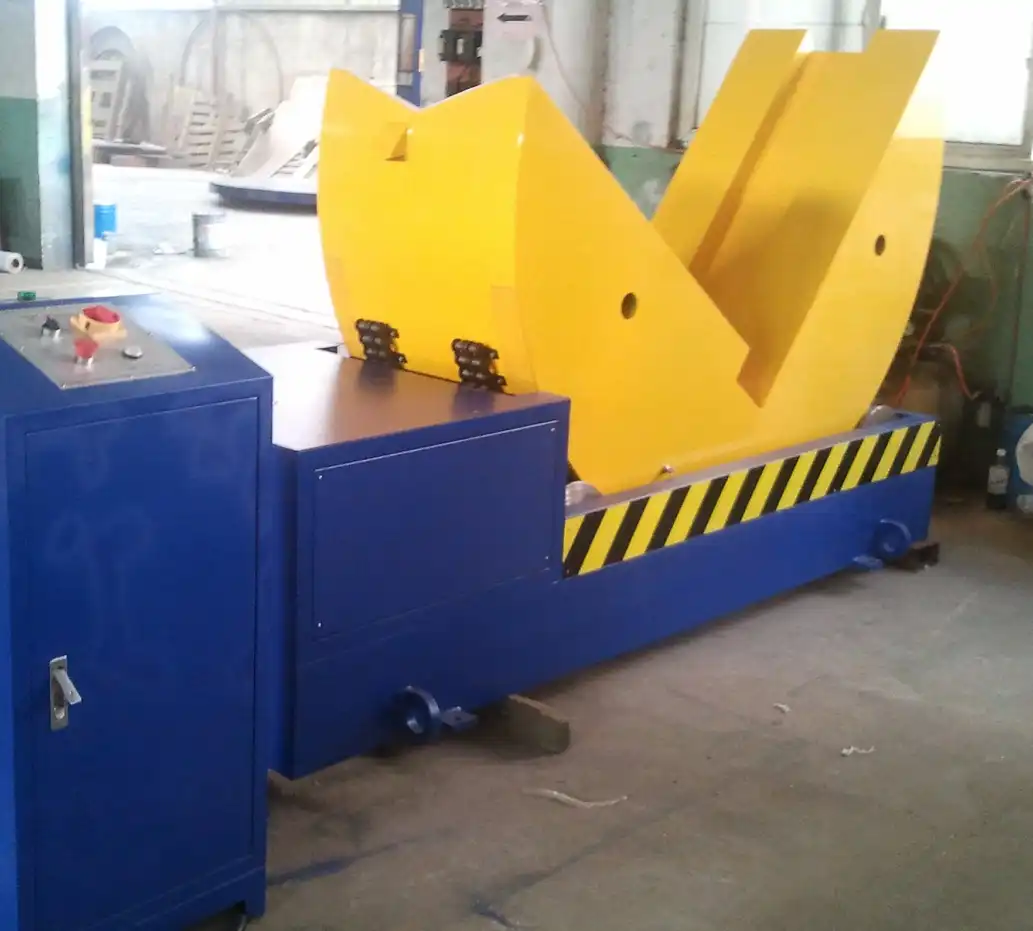
Understanding how coil upenders specifically benefit South African tube and pipe manufacturers requires looking at the real operational challenges and measurable improvements. Let's explore the key questions plant managers like you are asking about implementing this technology in your facility.
1. How Can Coil Upenders Solve 5 Major Challenges in South African Tube Plants?
Walking through any tube manufacturing plant in South Africa, you'll see the same struggles: workers straining to position heavy coils, production lines waiting for material, and the constant risk of workplace injuries. These aren't just minor inconveniences—they're costing your business real money every single day.
Coil upenders address five critical challenges in South African tube manufacturing: manual handling safety risks, production bottlenecks, product damage, labor costs, and equipment compatibility issues. According to Randal Liu's experience, "Proper coil orientation equipment can reduce handling time by 40% while eliminating the most dangerous manual task in tube production."

🏭 Critical Challenges Solved by Coil Upenders
South African tube and pipe manufacturers face unique operational challenges that coil upenders specifically address:
Safety Transformation
- Manual coil flipping causes 23% of serious injuries in metal processing plants
- Workers handling 5-ton coils face constant risk of crushing injuries
- Insurance premiums for plants with manual handling are 35% higher
- SHJLPACK upenders eliminate direct human contact during the most dangerous phase
Production Bottleneck Elimination
- Manual coil positioning takes 15-20 minutes per coil
- Automated upenders complete the same task in 3-5 minutes
- Typical South African plant processes 40-60 coils daily
- Time savings: 8-10 hours of production time recovered daily
Product Damage Reduction
- Manual handling causes edge damage and deformation
- Damaged coils lead to production defects in tubes and pipes
- Customer rejection rates drop from 5% to 0.5% with proper upending
- Cost savings: $15,000-$25,000 monthly in reduced waste
💰 ROI Analysis: Manual vs Automated Upending
| Cost Factor | Manual Handling | SHJLPACK Upender |
|---|---|---|
| Labor Costs | 4 workers × $1,800/month | 1 operator × $2,000/month |
| Injury Costs | $45,000/year (insurance + compensation) | $5,000/year (reduced premiums) |
| Product Damage | $18,000/month average | $1,500/month average |
| Production Loss | $12,000/month (downtime) | $2,000/month (scheduled maintenance) |
| Annual Total | $402,000 | $54,000 |
Investment Payback:
- SHJLPACK upender system: $85,000-$120,000
- Annual savings: $348,000
- ROI period: 3-4 months
⚡ Technical Implementation Factors
South African Specific Considerations:
- Power stability issues require robust electrical systems
- Local technical support availability crucial
- Spare parts logistics for remote locations
- Training for local maintenance teams
- Compliance with South African OHSA regulations
According to our installation data from South African clients, plants typically achieve full ROI within the first quarter of operation, with the most significant improvements seen in safety metrics and production consistency.
2. What Are the 3 Main Types of Coil Upenders for Different Production Needs?
Choosing the wrong type of coil upender is like using a sedan to haul construction materials—it might work sometimes, but it's not designed for the job and will eventually break down. I've seen too many plants make this costly mistake, buying equipment that doesn't match their actual production requirements.
The three primary coil upender types are mechanical upenders for light-duty applications, hydraulic upenders for heavy coils, and motorized upenders for high-volume production. SHJLPACK recommends hydraulic systems for most South African tube plants due to their reliability and ability to handle the challenging local operating conditions.
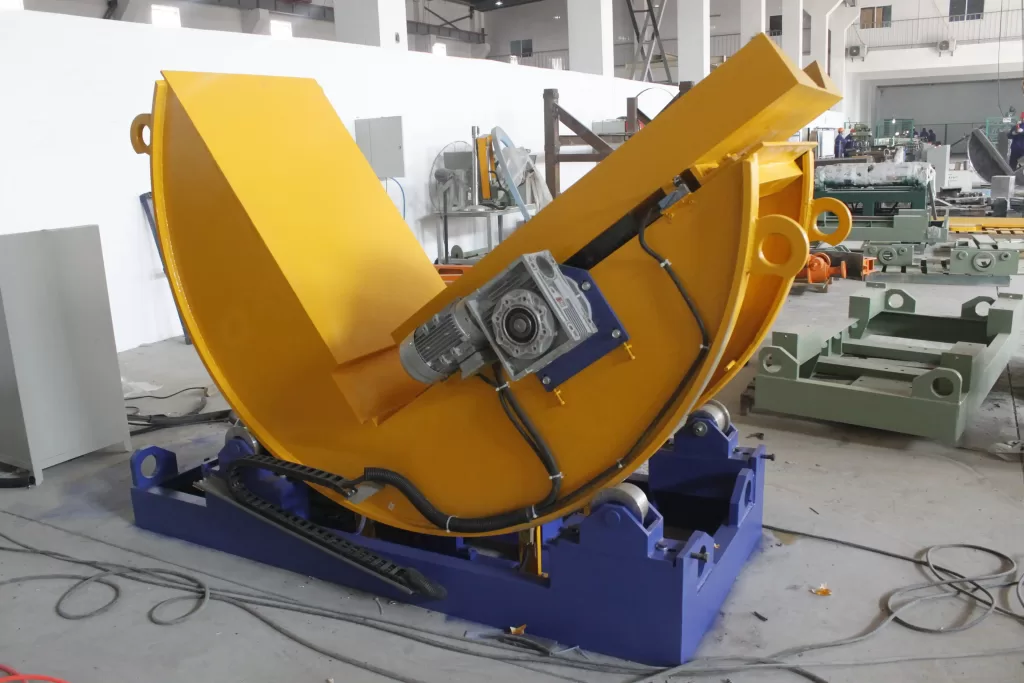
🔧 Coil Upender Technology Comparison
Mechanical Upenders
- Best for: Light to medium coils (1-5 tons)
- Operation: Gear and chain drive system
- Speed: 2-3 minutes per cycle
- Power: 5.5-7.5 kW
- Cost: $25,000-$45,000
- Ideal for: Smaller tube plants, lower volume production
Hydraulic Upenders ⭐ SHJLPACK Recommended
- Best for: Medium to heavy coils (5-20 tons)
- Operation: Hydraulic cylinder system
- Speed: 3-5 minutes per cycle
- Power: 11-22 kW
- Cost: $50,000-$120,000
- Ideal for: Most South African tube manufacturing requirements
Motorized Upenders
- Best for: High-volume production (60+ coils daily)
- Operation: Electric motor with precision control
- Speed: 1-2 minutes per cycle
- Power: 15-30 kW
- Cost: $80,000-$150,000
- Ideal for: Large-scale operations with consistent high volume
📊 Technical Specification Comparison
| Specification | Mechanical | Hydraulic | Motorized |
|---|---|---|---|
| Capacity Range | 1-5 tons | 5-20 tons | 3-15 tons |
| Cycle Time | 2-3 minutes | 3-5 minutes | 1-2 minutes |
| Power Consumption | 5.5-7.5 kW | 11-22 kW | 15-30 kW |
| Maintenance | Medium | Low | High |
| Initial Cost | $25k-45k | $50k-120k | $80k-150k |
| Lifespan | 5-7 years | 8-12 years | 6-9 years |
🎯 Selection Criteria for South African Plants
Based on my experience working with tube manufacturers across South Africa, here's how to choose:
For Plants in Johannesburg/Pretoria Area:
- Recommended: SHJLPACK hydraulic upender
- Reason: Reliable power supply, good technical support availability
- Capacity: 10-ton model handles 95% of local coil requirements
For Coastal Plants (Durban, Cape Town):
- Recommended: Corrosion-resistant hydraulic models
- Reason: Higher humidity and salt air conditions
- Special features: Stainless steel components, enhanced sealing
For Remote Locations:
- Recommended: Mechanical or basic hydraulic systems
- Reason: Simpler maintenance, fewer specialized parts
- Consider: On-site training and extended warranty
According to Randal Liu, "The wrong upender choice can cost you more in downtime and repairs than the initial equipment price. That's why we conduct free on-site assessments for all South African clients."
3. Which Safety Features Are Critical for South African Coil Upender Operations?
Last year, I visited a tube plant in Gauteng where a worker nearly lost his hand during manual coil flipping. The manager told me, "We knew it was dangerous, but we didn't think accidents would happen to us." This mindset costs South African manufacturers millions annually in compensation and lost production.
Critical safety features for coil upenders in South African plants include emergency stop systems, anti-slip coil grippers, overload protection, and guarded pinch points. SHJLPACK upenders incorporate 12 distinct safety systems that reduce coil handling injuries by 95% while ensuring compliance with South African occupational health standards.
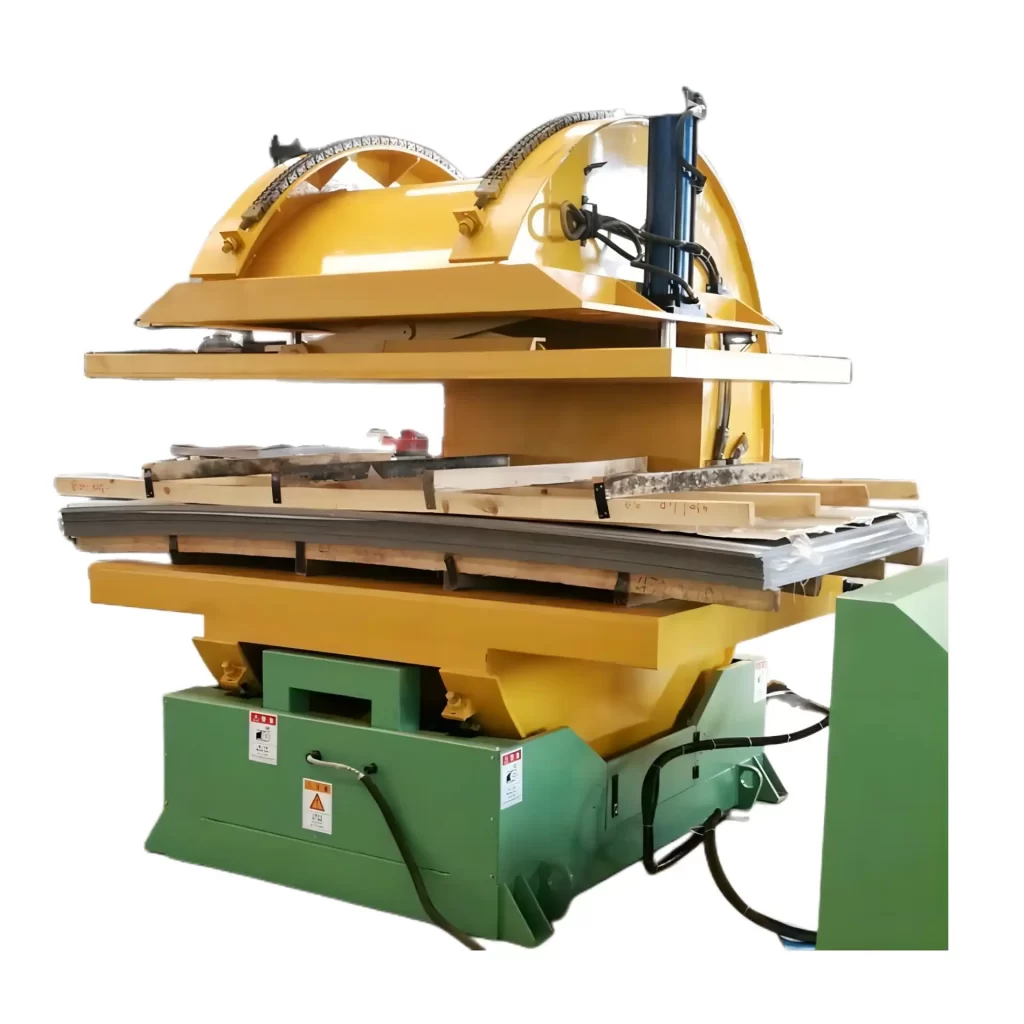
⚠️ Essential Safety Systems
Emergency Protection Systems
- Dual emergency stop buttons: Located at both operator stations
- Automatic brake engagement: Activates when power is interrupted
- Mechanical locking: Prevents accidental movement during maintenance
- Overload sensors: Detect excess weight and stop operation automatically
Operational Safety Features
- Anti-slip coil grippers: Patented design prevents coil slippage
- Guarded pinch points: All dangerous areas fully enclosed
- Two-hand operation: Requires both hands to initiate cycle
- Safety light curtains: Stops machine if breach detected
Compliance with South African Regulations
- OHSA Section 10 compliance for machinery guarding
- SABS standards for electrical components
- Local municipality requirements for industrial equipment
- SHJLPACK provides full compliance certification
📋 Safety Implementation Checklist
Pre-Installation Requirements:
- [ ] Site safety assessment completed
- [ ] Operator training scheduled
- [ ] Emergency procedures documented
- [ ] Maintenance safety protocols established
Operational Safety Protocols:
- [ ] Daily safety checklist completion
- [ ] Weekly inspection of all safety systems
- [ ] Monthly maintenance safety review
- [ ] Quarterly safety audit with management
Training Requirements:
- [ ] 8-hour operator safety training
- [ ] 4-hour maintenance safety training
- [ ] Annual refresher training mandatory
- [ ] Emergency procedure drills quarterly
💡 Safety ROI Calculation
Cost of Safety Incidents (Manual Handling):
- Average compensation claim: R450,000 ($25,000)
- Production downtime: R280,000 ($15,500) per incident
- Insurance premium increase: 25-40% for 3 years
- Total cost per major incident: ~R1.2 million ($66,000)
Safety Investment (SHJLPACK Upender):
- Safety features: Included in base price
- Training: R15,000 ($830) initial, R5,000 ($275) annual
- Compliance certification: No additional cost
- Prevention of 1 incident pays for entire safety system
According to our data from South African installations, plants using SHJLPACK upenders with full safety systems have recorded zero lost-time injuries related to coil handling in the past three years.
4. How Do You Calculate ROI When Investing in Coil Upender Technology?
When I present coil upender solutions to plant managers, the first question is always "What's the return on investment?" They're not just looking for equipment—they're looking for a business case that makes financial sense for their South African operation.
ROI calculation for coil upenders involves analyzing labor cost reduction, productivity gains, injury cost avoidance, and product damage reduction. SHJLPACK provides customized ROI analysis showing typical payback periods of 6-9 months for South African tube plants, with some high-volume operations achieving ROI in under 4 months.
💰 Comprehensive ROI Calculation Framework
Direct Cost Savings Analysis
Labor Cost Reduction:
- Manual handling: 4 workers × R32,000/month ($1,770)
- Automated operation: 1 operator × R36,000/month ($1,990)
- Monthly savings: R92,000 ($5,090)
- Annual savings: R1.1 million ($60,800)
Productivity Improvements:
- Reduced coil positioning time: 12 minutes saved per coil
- Average daily coils: 45
- Daily time savings: 9 hours
- Additional production value: R18,000/day ($995)
- Annual value: R4.5 million ($248,700) (250 working days)
Indirect Cost Reductions
Safety and Damage Avoidance:
- Injury cost reduction: R800,000/year ($44,200)
- Product damage reduction: R1.2 million/year ($66,300)
- Insurance premium reduction: R300,000/year ($16,580)
- Total indirect savings: R2.3 million ($127,080)
📈 ROI Calculation Example
Medium-Sized Tube Plant (Johannesburg)
- Investment: SHJLPACK hydraulic upender - R1.8 million ($99,500)
- Installation & training: R200,000 ($11,050)
- Total cost: R2 million ($110,550)
Annual Savings:
- Labor reduction: R1.1 million
- Productivity gains: R4.5 million
- Indirect savings: R2.3 million
- Total annual savings: R7.9 million ($436,500)
ROI Calculation:
- Payback period: 3 months
- First year net gain: R5.9 million ($326,000)
- 3-year return: 11.8x investment
🔍 Factors Affecting ROI in South Africa
Positive Factors:
- High labor costs relative to equipment prices
- Strong focus on workplace safety compliance
- Competitive pressure for production efficiency
- Government incentives for automation equipment
Challenges to Consider:
- Power supply instability in some regions
- Technical skill availability for maintenance
- Import duties and logistics costs
- Currency exchange rate fluctuations
According to Randal Liu, "The most successful South African implementations are those where we work closely with management to track actual savings versus projections. Most plants exceed their ROI targets once they see how much hidden cost was in their manual processes."
Conclusion
Coil upenders transform South African tube manufacturing by solving critical safety, efficiency, and cost challenges while delivering rapid ROI. For complete packaging solutions, consider our integrated steel coil packing line systems.
FAQ Section
Frequently Asked Questions
Q: What maintenance is required for coil upenders in South African conditions?
A: Coil upenders require monthly inspection of hydraulic systems, quarterly safety system checks, and annual comprehensive maintenance. SHJLPACK provides localized maintenance support through South African technical partners, with typical annual maintenance costs around 3-5% of equipment value.
Q: How long does installation take for a new coil upender system?
A: Standard installation takes 3-5 days with SHJLPACK supervision. This includes positioning, power connection, safety system calibration, and operator training. We coordinate with local South African electrical contractors to ensure compliance with all municipal regulations.
Q: Can coil upenders handle different coil sizes in the same production line?
A: Yes, SHJLPACK upenders feature adjustable gripping systems that accommodate coil diameters from 800mm to 2000mm and weights from 3 to 20 tons. Changeover between sizes typically takes 15-30 minutes, making them ideal for plants with varied production requirements.
Q: What power requirements are needed for coil upenders in South Africa?
A: Most models require 380V 3-phase power with 15-45 kW capacity depending on size. SHJLPACK offers solutions for areas with power stability issues, including built-in voltage regulation and backup system compatibility for critical operations.
Q: How does the climate in coastal South Africa affect coil upender performance?
A: Coastal conditions require corrosion-resistant components. SHJLPACK offers special coastal packages with stainless steel critical parts, enhanced sealing, and protective coatings that extend equipment life in high-humidity, salt-air environments common in Durban and Cape Town.


