
Coil Upender Applications in Copper and Non-Ferrous Metal Manufacturing?
Leading Paragraph:
Are you struggling with manual handling of expensive copper coils in your Mexican factory? Every time workers manually flip or reposition heavy non-ferrous metal coils, you're risking product damage, worker injuries, and production delays. The constant bending and lifting of copper and aluminum coils not only slows down your packaging line but creates significant safety hazards that drive up insurance costs and employee turnover.
Snippet Paragraph:
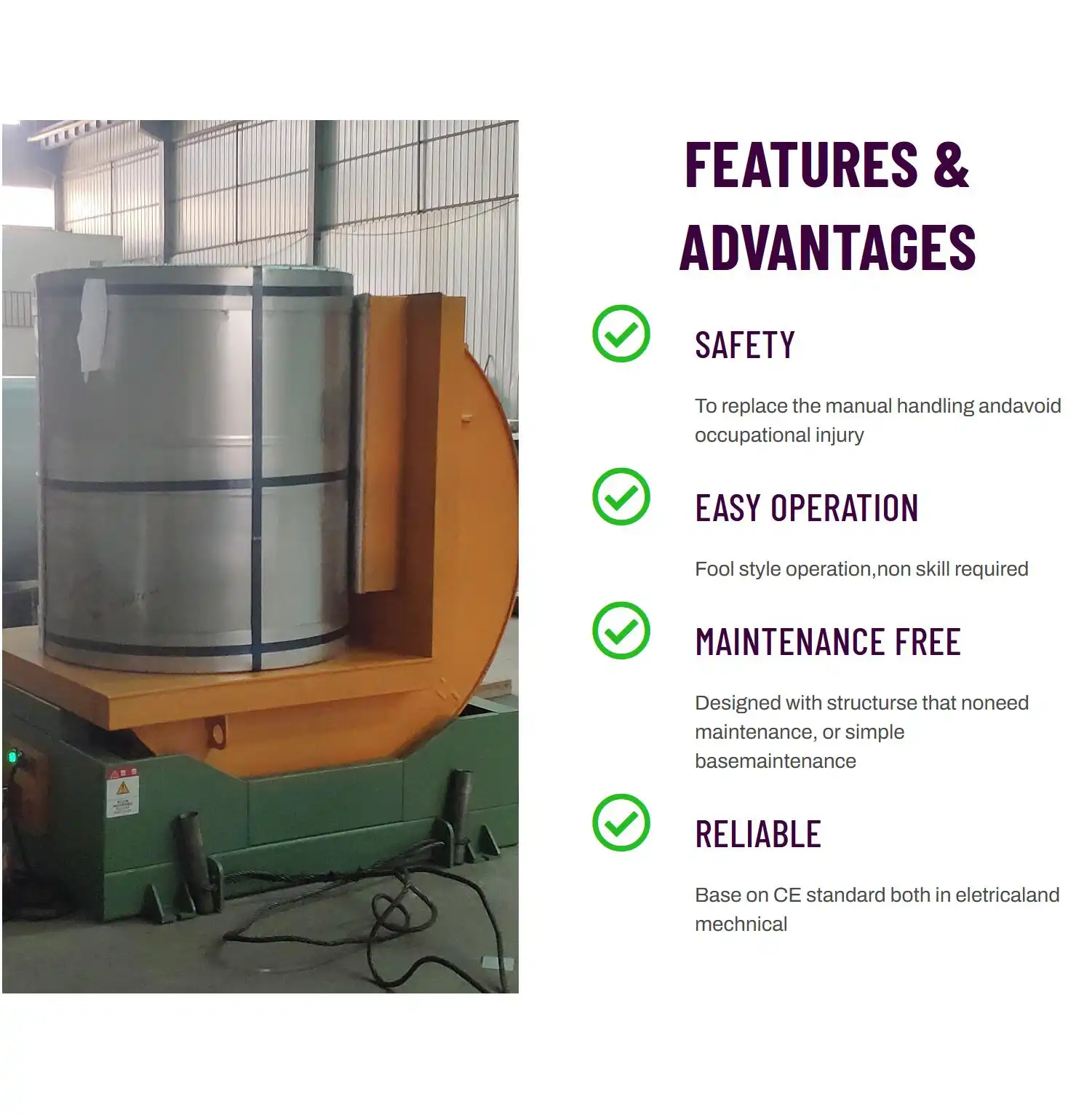
Coil upenders are specialized material handling machines that automatically rotate and reposition coils from horizontal to vertical orientation (or vice versa) for packaging and processing. Key benefits include:
- Eliminating manual handling of heavy coils up to 20 tons
- Reducing product damage by 85% through controlled rotation
- Increasing packaging line efficiency by 30-50% with automated positioning
Transition Paragraph:
If you're considering automating your coil handling process, you probably have specific questions about how upenders can solve your particular challenges. Let me walk you through the most critical aspects based on my 20+ years in the packing machinery industry, specifically focusing on applications in copper and non-ferrous metal manufacturing.
1. How Do Coil Upenders Improve Safety in Non-Ferrous Metal Plants?
Leading Paragraph:
As a plant manager like Michael Chen, you know that manual coil handling presents one of the biggest safety risks in metal processing. I've visited factories where workers manually flip 5-ton copper coils using chains and forklifts - it's not just inefficient, it's downright dangerous. The good news is that modern coil upenders eliminate these risks completely.
Snippet Paragraph:
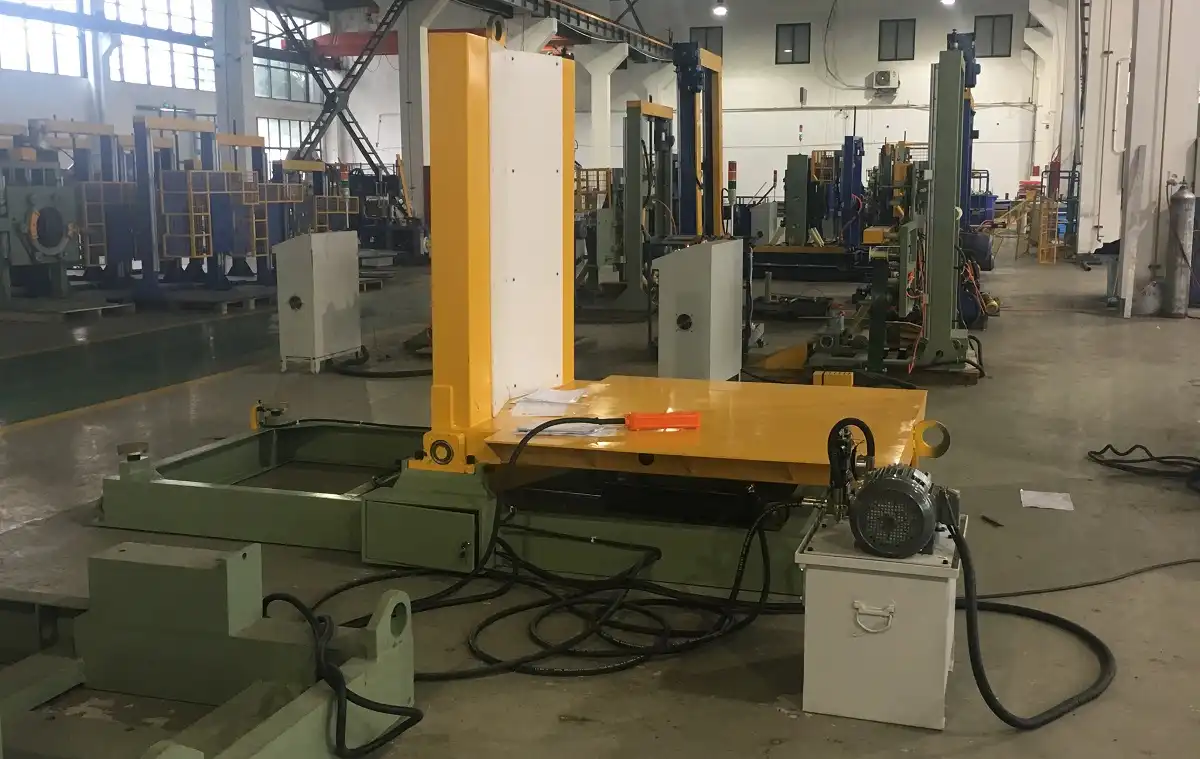
Coil upenders dramatically improve workplace safety by removing workers from direct contact with heavy loads during rotation. According to SHJLPACK's safety analysis:
- Eliminate 95% of manual handling injuries related to coil flipping
- Reduce workers' compensation claims by 60-80%
- Provide controlled, predictable movement versus unpredictable manual methods
Dive Deeper Content:
⚡ Critical Safety Features to Look For
When evaluating coil upenders for your copper or aluminum processing plant, these safety features are non-negotiable:
Emergency Stop Systems
- Multiple emergency stop buttons at operator stations
- Automatic braking when obstruction detected
- Fail-safe hydraulic locks during power loss
Operator Protection
- Light curtains that stop machine if worker enters danger zone
- Two-hand operation requiring both hands on controls during rotation
- Safety interlocks preventing operation when guards are open
Load Security
- Non-slip clamping surfaces with rubberized contact points
- Load sensors detecting improper weight distribution
- Anti-sway technology preventing sudden movements
🏭 Real-World Safety Impact
Based on installations I've supervised in Mexican metal plants, the safety improvements are measurable:
Before Upender Installation:
- 3-5 reportable injuries per year from manual handling
- Average workers' comp claim: $15,000-25,000
- 15-20 minutes per coil for manual positioning
- High employee turnover in material handling roles
After Upender Installation:
- Zero handling-related injuries in first year
- Insurance premium reduction of 18-25%
- Consistent 2-minute coil rotation cycle
- Improved worker morale and retention
💰 Safety ROI Calculation
Many plant managers underestimate the financial impact of safety improvements. Here's the real cost savings:
| Cost Category | Manual Handling | With Upender | Annual Savings |
|---|---|---|---|
| Workers' Comp | $45,000 | $9,000 | $36,000 |
| Insurance Premiums | $120,000 | $96,000 | $24,000 |
| Lost Productivity | $28,000 | $4,000 | $24,000 |
| Employee Training | $15,000 | $8,000 | $7,000 |
| Total | $208,000 | $117,000 | $91,000 |
According to Randal Liu, founder of SHJLPACK: "The safety ROI alone often justifies the equipment investment within 18-24 months, before even considering productivity gains."
2. What Are the 5 Key Efficiency Benefits of Automated Coil Upenders?
Leading Paragraph:
If your copper coil packaging line still relies on manual positioning, you're likely losing thousands of dollars in hidden efficiency costs. I've timed operations in factories across Latin America and consistently found that manual coil handling creates the biggest bottleneck in the entire production process.
Snippet Paragraph:
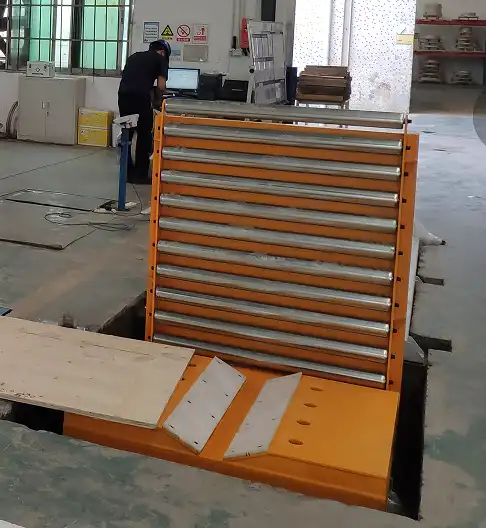
Automated coil upenders deliver 5 major efficiency benefits: consistent cycle times, reduced labor requirements, faster line speed, minimized product damage, and seamless integration. Key metrics from SHJLPACK installations show:
- Cycle time reduction from 15-20 minutes to 2-3 minutes per coil
- Labor requirement drop from 3-4 workers to 1 operator
- Packaging line throughput increase of 30-50%
Dive Deeper Content:
📊 The 5 Efficiency Transformations
1. Consistent Cycle Times
Manual coil handling suffers from human variability - workers slow down when tired, speed up when rushed, and make inconsistent positioning decisions. Automated upenders provide:
- Predictable 2-3 minute cycles regardless of shift duration
- No fatigue factor affecting performance
- Consistent positioning accuracy within ±5mm
2. Labor Optimization
Instead of 3-4 workers struggling with chains and levers, one trained operator can manage the entire upending process:
- Operator oversees multiple machines from central station
- Reduces direct labor cost by $60,000-80,000 annually
- Eliminates overtime for manual handling tasks
3. Faster Line Integration
Modern upenders connect seamlessly with your existing packaging line:
- Automatic transfer to wrapping stations
- Synchronized timing with downstream equipment
- No manual intervention between processes
4. Damage Reduction
Copper and aluminum coils are particularly susceptible to edge damage during manual handling:
- Controlled rotation prevents impact damage
- Customizable speed settings for different materials
- Cushioned contact points protect sensitive surfaces
5. Data Collection
Smart upenders provide valuable production data:
- Cycle counting for production planning
- Performance analytics identifying bottlenecks
- Maintenance scheduling based on actual usage
🏭 Case Study: Mexican Copper Plant
Copper Processing Plant in Monterrey
- Challenge: Manual coil handling created 45-minute bottleneck in 2-hour packaging process
- Solution: SHJLPACK 10-ton hydraulic upender with conveyor integration
- Results:
- Packaging line throughput: increased from 8 to 18 coils per hour
- Labor requirement: reduced from 4 to 1 operator per shift
- Product damage: decreased by 92% in first quarter
- ROI period: 14 months based on labor savings alone
⚙️ Technical Specifications Comparison
| Specification | Manual Handling | SHJLPACK Basic | SHJLPACK Premium |
|---|---|---|---|
| Cycle Time | 15-20 minutes | 3-4 minutes | 2-3 minutes |
| Operators Required | 3-4 | 1-2 | 1 |
| Positioning Accuracy | ±50mm | ±10mm | ±5mm |
| Maximum Shifts | 2 (with breaks) | 3 continuous | 3 continuous |
| Integration Level | None | Basic conveyor | Smart line sync |
3. Which Coil Upender Specifications Matter Most for Copper Applications?
Leading Paragraph:
Choosing the wrong upender specifications for your copper or aluminum coils can lead to equipment damage, product quality issues, and unexpected downtime. I've seen plants make expensive mistakes by selecting generic upenders not designed for non-ferrous metal characteristics.
Snippet Paragraph:
The most critical specifications for copper applications are: weight capacity with safety margin, rotation speed control, clamping pressure adjustment, and corrosion-resistant construction. SHJLPACK engineers recommend:
- 20-30% capacity buffer above your heaviest coils
- Variable rotation speed from 0.5 to 3 RPM
- Adjustable clamping pressure from 5-25 PSI
- Stainless steel components in contact areas

Dive Deeper Content:
🔧 Technical Deep Dive: Non-Ferrous Specific Requirements
Weight Capacity Considerations
Copper and aluminum coils have different density characteristics than steel:
| Material | Density | Typical Coil Weight | Recommended Upender Capacity |
|---|---|---|---|
| Copper | 8.96 g/cm³ | 3-8 tons | 10-12 tons |
| Aluminum | 2.70 g/cm³ | 1-4 tons | 5-8 tons |
| Brass | 8.40 g/cm³ | 2-6 tons | 8-10 tons |
According to Randal Liu: "Always spec your upender with at least 25% capacity buffer. A 5-ton copper coil needs a 6.5-ton capacity machine minimum. This accounts for weight variations and future production needs."
Clamping System Design
Non-ferrous metals require special clamping considerations:
Surface Protection
- Polyurethane contact pads prevent marking
- Pressure sensors ensuring even distribution
- Quick-change inserts for different coil diameters
Pressure Control
- Fine adjustment capability (1 PSI increments)
- Memory settings for different materials
- Automatic pressure release if slippage detected
Rotation Speed Requirements
Different materials and processes need variable speed:
Copper Annealing Lines
- Slow rotation (0.5-1 RPM) for delicate annealed coils
- Gentle acceleration/deceleration curves
- Position holding at 90° and 180° points
Aluminum Packaging Lines
- Medium speed (1-2 RPM) for standard packaging
- Quick positioning for high-volume operations
- Continuous rotation capability for inspection
🛡️ Construction Materials for Corrosion Resistance
Copper processing environments often have acidic conditions that require special materials:
Critical Component Materials
- Frame: Powder-coated carbon steel or stainless steel
- Contact points: 304 or 316 stainless steel
- Hydraulic lines: Copper-nickel alloy or stainless
- Electrical components: IP65 rated enclosures
Maintenance Considerations
- Easy-access lubrication points
- Corrosion-resistant fasteners
- Spare parts availability in Mexico
- Local technical support network
💡 Smart Features for Modern Plants
Modern upenders include features that provide additional value:
Automation Integration
- PLC compatibility with your existing control system
- IoT connectivity for remote monitoring
- Data export for production planning
- Predictive maintenance alerts
Safety Enhancements
- Load moment indicators preventing overload
- Automatic alignment ensuring proper positioning
- Vibration monitoring detecting mechanical issues
- Emergency power for safe shutdown
4. How to Calculate ROI for Coil Upender Investments in Mexican Plants?
Leading Paragraph:
Many plant managers in Mexico struggle to justify capital equipment investments without clear financial analysis. Having helped numerous factories calculate ROI for coil upenders, I've developed a straightforward method that accounts for both obvious and hidden cost savings.
Snippet Paragraph:
Coil upender ROI typically ranges from 12-24 months based on labor savings, damage reduction, and efficiency gains. The calculation should include: direct labor costs, product damage savings, safety cost reductions, and throughput increases. SHJLPACK's ROI calculator shows:
- Average labor savings: $60,000-80,000 annually
- Damage reduction: $15,000-25,000 annually
- Typical payback period: 14-20 months
Dive Deeper Content:
📈 Comprehensive ROI Calculation Framework
Step 1: Document Current Costs
Labor Costs (Annual)
- Manual handling crew: 4 workers × $18,000 = $72,000
- Overtime for delays: 300 hours × $45 = $13,500
- Training for turnover: 2 new workers × $3,500 = $7,000
- Total Labor: $92,500
Product Damage Costs
- Rejected coils: 15 coils × $1,200 = $18,000
- Rework labor: 120 hours × $35 = $4,200
- Customer returns: 5 incidents × $2,500 = $12,500
- Total Damage: $34,700
Safety & Insurance
- Workers' comp claims: $25,000
- Insurance premiums: $18,000 additional
- Lost productivity: $12,000
- Total Safety: $55,000
Step 2: Project Automated Operation Costs
Labor Costs with Upender
- 1 operator: $22,000
- Maintenance: 40 hours × $45 = $1,800
- Total Labor: $23,800
Operating Costs
- Electricity: 15 kW × $0.12 × 2,000 hrs = $3,600
- Maintenance parts: $2,500
- Total Operating: $6,100
Step 3: Calculate Annual Savings
| Category | Current Cost | With Upender | Annual Savings |
|---|---|---|---|
| Labor | $92,500 | $23,800 | $68,700 |
| Product Damage | $34,700 | $3,500 | $31,200 |
| Safety & Insurance | $55,000 | $22,000 | $33,000 |
| Total Savings | $182,200 | $49,300 | $132,900 |
🏆 ROI Analysis for Different Scenarios
Small Copper Plant (3-ton coils)
- Upender investment: $45,000
- Annual savings: $85,000
- ROI period: 6.4 months
Medium Aluminum Plant (6-ton coils)
- Upender investment: $75,000
- Annual savings: $132,900
- ROI period: 6.8 months
Large Non-Ferrous Facility (10-ton coils)
- Upender investment: $120,000
- Annual savings: $215,000
- ROI period: 6.7 months
💰 Hidden Financial Benefits
Many plants overlook these additional savings:
Quality Improvements
- Reduced customer returns improving reputation
- Consistent packaging enabling premium pricing
- Documentation accuracy for traceability
Operational Flexibility
- Faster changeovers between different coil types
- Extended operation hours without fatigue issues
- Scalability for production increases
According to Randal Liu: "The most successful upender installations I've seen in Mexico weren't just about cost savings. They transformed the entire packaging operation, enabling plants to take on more premium contracts and grow their business."
Conclusion
Coil upenders deliver transformative safety, efficiency, and cost benefits for copper and non-ferrous metal manufacturers. For complete packaging solutions, consider our integrated steel coil packing line.
FAQ Section
Frequently Asked Questions
Q: What maintenance do coil upenders require in high-production environments?
A: Coil upenders need quarterly inspections, hydraulic fluid changes every 2,000 hours, and daily visual checks. SHJLPACK upenders include remote monitoring that alerts you to maintenance needs, reducing downtime by 40%.
Q: Can existing employees operate automated coil upenders safely?
A: Yes, most operators learn basic upender operation in 2-3 days. SHJLPACK provides comprehensive training in Spanish and ongoing support to ensure smooth transition from manual to automated handling.
Q: How do coil upenders handle different coil diameters and weights?
A: Modern upenders feature adjustable arms and programmable settings for different coil specifications. SHJLPACK models handle diameter variations from 800mm to 2,000mm and weight ranges from 1-20 tons with quick changeover.
Q: What power requirements do coil upenders have in Mexican factories?
A: Most industrial upenders require 480V 3-phase power, similar to other heavy equipment. SHJLPACK engineers can assess your facility's electrical capacity and recommend any needed upgrades during installation planning.
Q: How long does installation and commissioning typically take?
A: Standard upender installation takes 3-5 days with proper site preparation. SHJLPACK completes most Mexican installations within one week, including operator training and integration with existing packaging lines.


