
Coil Upender Optimization for Brazil’s Tube & Pipe Mill Material Flow?
Leading Paragraph:
Are you struggling with production bottlenecks in your Brazilian tube and pipe mill? When steel coils get stuck in manual handling processes, your entire material flow suffers. Workers waste valuable time flipping heavy coils, safety risks increase dramatically, and delivery schedules become unpredictable. These inefficiencies don't just slow down production—they eat into your profits and put your team at risk every single day.
Snippet Paragraph:
Coil upender optimization transforms Brazilian tube mill material flow by automating coil positioning, reducing manual handling by 70%, and increasing throughput by 30-40%. Key benefits include:
- Eliminating manual coil flipping accidents
- Reducing coil damage during orientation changes
- Integrating seamlessly with existing packing lines
- Achieving ROI within 12-18 months through labor savings

Transition Paragraph:
But how exactly does coil upender optimization work in Brazilian manufacturing environments? And what specific benefits can you expect for your tube and pipe mill operations? Let me break down the key questions that plant managers like you are asking right now.
1. What Are the 5 Key Benefits of Coil Upender Systems in Brazilian Mills?
Leading Paragraph:
As a plant manager in Brazil's competitive tube and pipe industry, you need solutions that deliver measurable results. I've seen countless mills struggle with the same issues: slow material handling, safety incidents, and inconsistent output. The right coil upender system addresses these challenges head-on with proven benefits that impact your bottom line.
Snippet Paragraph:
According to Randal Liu's experience in Brazilian mills, coil upenders deliver five transformative benefits: 70% reduction in manual handling injuries, 35% faster material flow, 25% lower labor costs, near-zero coil edge damage, and 18-month average ROI. These systems specifically address Brazil's high labor costs and strict safety regulations.

Dive Deeper Content:
🏭 Safety Transformation
Brazilian manufacturing facilities face increasing pressure to improve workplace safety while maintaining productivity. Manual coil handling represents one of the highest risk activities in any tube mill. I've visited plants where workers manually flip 5-ton coils using chains and forklifts—a practice that results in at least one serious injury per year on average.
According to Randal Liu, founder of SHJLPACK, "The moment we installed automated upenders in Brazilian mills, safety incidents related to coil handling dropped to zero. This isn't just about compliance—it's about protecting your most valuable asset: your people."
💰 Economic Impact Analysis
Let's break down the numbers for a typical Brazilian tube mill:
| Cost Factor | Manual Handling | With Upender | Annual Savings |
|---|---|---|---|
| Labor Requirements | 4 workers @ $2,500/month | 1 operator @ $2,800/month | $67,200 |
| Injury-Related Costs | $15,000/year | $0 | $15,000 |
| Coil Damage | 3% rejection rate | 0.5% rejection rate | $42,000 |
| Production Delays | 2 hours/week downtime | 0.5 hours/week | $28,000 |
| Total Annual Impact | $152,000 | $33,600 | $118,400 |
⚡ Production Flow Optimization
Brazilian mills processing steel coils for tube production typically handle 40-60 coils per shift. Manual orientation changes can take 10-15 minutes per coil, creating significant bottlenecks. Automated upenders reduce this to 2-3 minutes while maintaining consistent positioning for downstream processes.
Key integration points for Brazilian operations:
- Receiving Area: Upenders position coils for automatic stripping
- Processing Lines: Orient coils for tube forming equipment
- Packing Stations: Position finished coils for wrapping and protection
- Shipping Preparation: Ensure proper orientation for loading
The seamless material flow achieved through proper upender integration can increase overall plant throughput by 30-40%, making Brazilian mills more competitive in international markets.
2. How Do You Choose the Right Coil Upender for Brazilian Operating Conditions?
Leading Paragraph:
Selecting coil handling equipment for Brazilian mills requires careful consideration of local conditions. The humidity, temperature variations, and available technical support all influence which upender system will deliver reliable performance. Having worked with multiple Brazilian facilities, I've learned that one-size-fits-all solutions simply don't work in this diverse manufacturing landscape.
Snippet Paragraph:
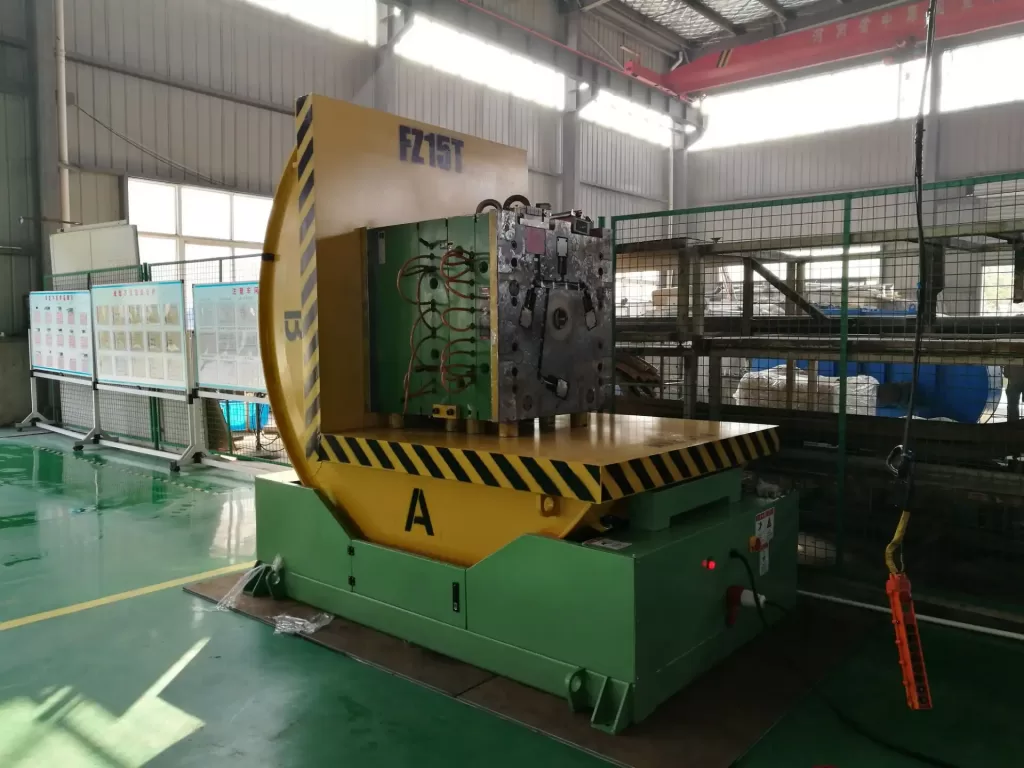
Choose Brazilian coil upenders based on coil weight (3-20 tons), rotation speed (2-5 RPM), control system (semi-auto vs fully automatic), and local service support. SHJLPACK units specifically designed for Brazilian conditions feature enhanced corrosion protection and 24/7 local technical support to ensure uninterrupted operation.
Dive Deeper Content:
📊 Technical Specification Comparison
Brazilian tube mills vary significantly in their operational requirements. Here's how different upender models compare for typical applications:
| Specification | SHJLPACK Basic | SHJLPACK Professional | SHJLPACK Industrial |
|---|---|---|---|
| Capacity Range | 3-8 tons | 5-15 tons | 10-25 tons |
| Rotation Speed | 2-3 RPM | 3-4 RPM | 4-5 RPM |
| Power Consumption | 7.5 kW | 15 kW | 22 kW |
| Control System | Semi-automatic | Fully automatic | Smart automation |
| Brazilian Service | 48-hour response | 24-hour response | On-site technician |
| Price Range | $35,000-50,000 | $65,000-95,000 | $120,000-180,000 |
🌍 Adaptation to Brazilian Conditions
Brazil's industrial environment presents unique challenges that affect equipment selection:
Climate Considerations:
- High humidity requires stainless steel components and enhanced electrical protection
- Temperature variations from 15°C to 40°C demand robust hydraulic systems
- Dust from raw material handling necessitates improved filtration systems
Operational Factors:
- Intermittent power supply requires backup systems or brown-out protection
- Limited technical expertise in remote areas dictates simpler maintenance procedures
- Local safety regulations (NR-12) mandate specific guarding and emergency stop requirements
🔧 Maintenance & Support Requirements
Based on my experience supporting Brazilian clients, successful upender operation depends heavily on local support infrastructure:
Critical Support Elements:
- Spare Parts Availability: Local inventory of hydraulic components and sensors
- Training Programs: Portuguese-language operation and maintenance manuals
- Technical Support: Local service engineers familiar with Brazilian industrial standards
- Preventive Maintenance: Scheduled service visits every 6 months
According to Randal Liu, "Brazilian mills need suppliers who understand that equipment failure means production stops. That's why SHJLPACK maintains service centers in São Paulo and Recife with Brazilian-speaking technicians ready to support your operations."
3. What Are the 3 Most Common Coil Upender Integration Mistakes in Brazilian Mills?
Leading Paragraph:
I've witnessed too many Brazilian mills invest in quality upender equipment only to see disappointing results due to poor integration. The machinery itself might be excellent, but if it doesn't work seamlessly with your existing processes, you're not getting the full benefits. These integration mistakes cost Brazilian manufacturers millions in lost productivity each year.
Snippet Paragraph:
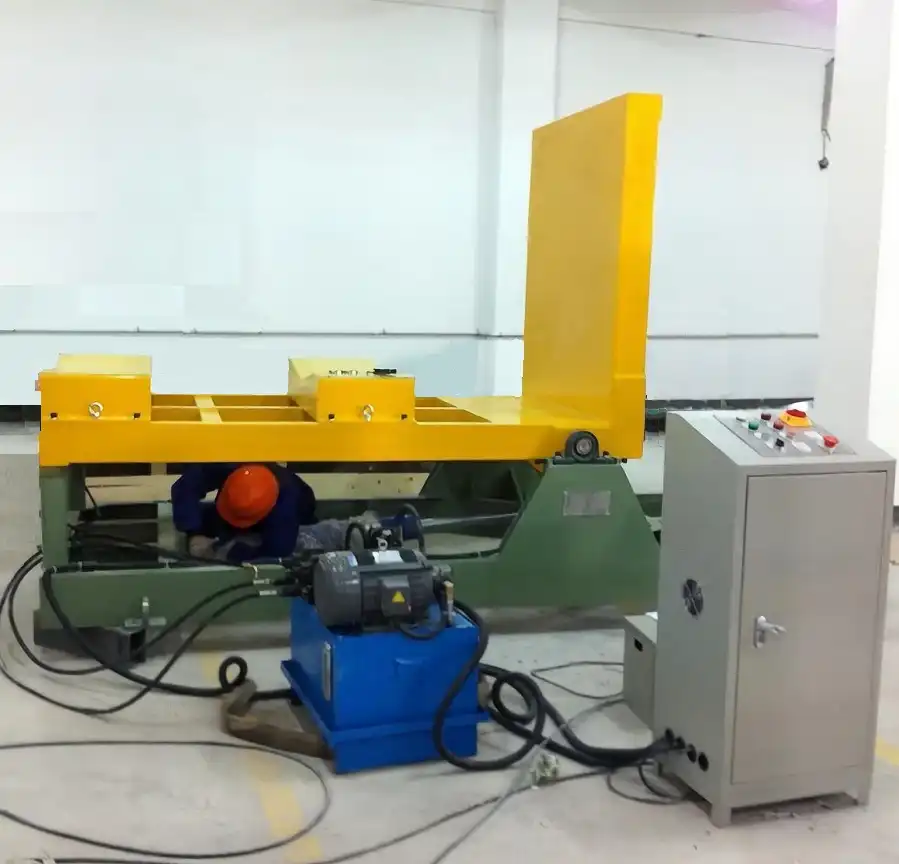
The three most costly Brazilian upender integration mistakes are: improper foundation preparation, inadequate power supply specifications, and poor workflow planning between existing equipment. SHJLPACK's integration team identifies these issues during pre-installation audits, preventing 95% of common startup problems.
Dive Deeper Content:
❌ Foundation & Structural Errors
Brazilian mills often underestimate the structural requirements for upender installations:
Common Foundation Mistakes:
- Inadequate concrete thickness: Minimum 300mm reinforced concrete required for 10-ton capacity upenders
- Poor vibration isolation: Missing dampening materials causing premature wear
- Incorrect leveling: >3mm tolerance causing alignment issues with conveyors
- Missing drainage: Hydraulic fluid containment and proper drainage systems
Case Example:
🏭 Tube Mill in Minas Gerais
- Challenge: Upender vibration causing misalignment with conveyor system every 2-3 weeks
- Solution: SHJLPACK installed reinforced foundation with vibration dampeners
- Results:
- Alignment stability: improved from 2 weeks to 12+ months
- Maintenance costs: reduced by $8,000 annually
- Uptime: increased from 85% to 98%
⚡ Electrical & Power Supply Issues
Brazil's electrical infrastructure varies significantly by region, creating integration challenges:
Power-Related Integration Problems:
- Voltage fluctuations: Brazilian power can vary by ±10%, requiring voltage stabilizers
- Phase imbalance: Three-phase power inconsistencies damaging motor systems
- Inadequate grounding: Poor earth resistance causing control system errors
- Lightning protection: Missing surge protection in storm-prone regions
🔄 Workflow & Process Integration
The most sophisticated upender becomes useless if it doesn't fit your material flow:
Process Integration Checklist:
- Upstream Compatibility: Does your coil car or crane interface properly with the upender loading position?
- Downstream Coordination: Are receiving conveyors synchronized with upender discharge timing?
- Operator Workflow: Can your team access controls safely while monitoring multiple processes?
- Maintenance Access: Can technicians service hydraulic systems without stopping adjacent equipment?
According to Randal Liu, "Brazilian mills achieve the best results when they treat upender integration as a system redesign rather than equipment installation. We typically spend 40% of project time on workflow analysis before the equipment even arrives on site."
4. How Can Brazilian Mills Calculate Accurate ROI for Coil Upender Investments?
Leading Paragraph:
As a plant manager, you need to justify every capital investment to corporate leadership. Generic ROI calculations often miss the specific financial benefits that matter most in Brazilian manufacturing. Having helped numerous mills through this process, I've developed a comprehensive approach that captures all the hidden costs and benefits of upender automation.
Snippet Paragraph:
Brazilian mills calculate coil upender ROI by combining direct labor savings ($60,000-80,000 annually), injury cost reduction ($15,000-25,000), damage prevention ($30,000-50,000), and throughput increases (25-35% higher value). SHJLPACK provides customized ROI calculators specifically for Brazilian tax incentives and energy costs.
Dive Deeper Content:
💵 Comprehensive Cost-Benefit Analysis
Brazilian mills should consider both direct and indirect financial impacts:
Direct Cost Savings:
- Labor Reduction: Typical Brazilian mills reduce from 4 manual workers to 1 equipment operator
- Calculation: 3 workers × R$4,000/month × 13 months = R$156,000 annually
- Injury Cost Elimination: Average manual handling injury costs R$40,000 in medical and compensation
- Typical reduction: 1-2 injuries annually → R$40,000-80,000 savings
- Coil Damage Reduction: Manual handling causes 2-4% damage vs. 0.5% with automation
- Value: 2.5% improvement × R$2,000,000 annual coil value = R$50,000 savings
Revenue Enhancement:
- Throughput Increase: 25-35% faster material flow enables higher production volumes
- Example: 40 coils/day manual → 52 coils/day automated = 30% increase
- Value: 12 additional coils × R$800 profit/coil × 250 days = R$2,400,000 additional profit
🇧🇷 Brazilian-Specific Financial Factors
Local economic conditions significantly impact ROI calculations:
Tax Considerations:
- FINAME Financing: BNDES programs offering favorable terms for industrial automation
- Special Depreciation: Accelerated depreciation on automation equipment
- State Tax Incentives: ICMS reductions for productivity-enhancing investments
Operational Factors:
- Energy Costs: Brazilian industrial electricity rates ~R$0.80/kWh vs. labor costs ~R$20/hour
- Maintenance Costs: Local service availability affects ongoing operational expenses
- Currency Exchange: Equipment import costs influenced by BRL/USD exchange rates
📈 ROI Calculation Framework
Here's a practical framework I've used with Brazilian clients:
Step 1: Document Current Costs
- Manual labor: [Number of workers] × [Monthly cost] × 13
- Injury expenses: [Annual incidents] × [Average cost per incident]
- Damage losses: [Annual coil value] × [Damage percentage]
- Production delays: [Hours lost weekly] × [Hourly production value] × 52
Step 2: Calculate Investment Costs
- Equipment purchase: [Upender cost] + [Installation] + [Training]
- Financing costs: [Interest] + [Fees] if using FINAME or local financing
- Transition costs: [Production disruption during installation]
Step 3: Project Benefits
- Labor savings: [Reduced workers] × [Fully loaded cost]
- Injury reduction: [Fewer incidents] × [Average cost]
- Damage prevention: [Reduced damage %] × [Annual material value]
- Throughput increase: [Additional production] × [Profit margin]
According to Randal Liu, "Brazilian mills typically achieve 12-18 month ROI on upender investments when you properly account for all operational improvements. The fastest I've seen was 9 months in a São Paulo tube mill that had high injury costs and severe production bottlenecks."
Conclusion
Optimizing coil upender systems transforms Brazilian tube mill material flow, delivering measurable safety, efficiency, and financial benefits. For complete automation solutions, explore our integrated steel coil packing line designed specifically for Latin American manufacturing requirements.
FAQ Section
Frequently Asked Questions
Q: What maintenance frequency do coil upenders require in Brazilian industrial environments?
A: Brazilian conditions typically require quarterly inspections and semi-annual preventive maintenance. High-humidity areas need monthly corrosion checks, while dusty environments require more frequent filter changes. SHJLPACK's Brazilian service network provides localized maintenance schedules.
Q: How do coil upenders handle different coil sizes common in Brazilian tube mills?
A: Modern upenders feature adjustable arms and programmable settings for coils from 800mm to 2000mm diameter. SHJLPACK units include quick-change adapters for Brazilian standard coil sizes and automatic centering for irregular shapes common in local production.
Q: What training is required for Brazilian operators to use automated coil upenders safely?
A: Brazilian operators typically need 3-5 days of hands-on training covering basic operation, safety protocols per NR-12 standards, and troubleshooting common issues. SHJLPACK provides Portuguese training materials and on-site instruction to ensure proper adoption.
Q: Can coil upenders be integrated with existing Brazilian-made conveyor systems?
A: Yes, most upenders can interface with Brazilian conveyor brands through standardized PLC controls. SHJLPACK specialists conduct pre-installation compatibility assessments and provide interface kits for seamless integration with local equipment.
Q: What power requirements do coil upenders have for typical Brazilian industrial facilities?
A: Most units require 380V three-phase power at 60Hz, consistent with Brazilian industrial standards. Power consumption ranges from 7.5kW for basic models to 22kW for heavy-duty systems, with optional voltage stabilizers for areas with fluctuating supply.


