
Coil Tilter Compliance: Will It Meet CE/OSHA/ISO Requirements in 2025?
Are you struggling with the complex web of safety regulations and compliance standards for your coil packing operations? As a plant manager, you know that equipment compliance isn't just paperwork—it's about protecting your workers, avoiding costly fines, and ensuring uninterrupted production. The regulatory landscape keeps changing, and staying ahead feels like a full-time job.
Coil tilter compliance in 2025 will require meeting updated CE machinery directives, enhanced OSHA safety protocols, and revised ISO quality standards. Key compliance factors include: integrated safety sensors for automatic shutdown, reinforced structural design for heavy loads, and smart monitoring systems that document safety performance. Choosing equipment from certified manufacturers like SHJLPACK ensures you meet these evolving requirements while maintaining production efficiency.

With regulatory updates coming in 2025, many factory managers are asking critical questions about their current equipment and future investments. Let's explore the specific compliance challenges and solutions that will keep your operations running smoothly and safely.
1. What Are the Key CE/OSHA/ISO Updates for Coil Tilting Equipment in 2025?
Plant managers like Michael Chen face constant pressure to balance production demands with regulatory compliance. When I visited a steel processing plant in Monterrey last year, the operations director showed me their manual coil handling process—workers risking injury daily while management worried about upcoming regulation changes. This experience reinforced why understanding 2025 updates is crucial for Mexican manufacturing facilities.
The 2025 updates focus on enhanced safety protocols, digital documentation requirements, and stricter structural testing. CE Machinery Directive 2023/1230 introduces mandatory smart safety sensors, OSHA's new manual handling guidelines require reduced physical intervention, and ISO 13849-1:2023 demands higher performance levels for safety functions. Equipment must now provide automated safety reporting and real-time compliance monitoring.
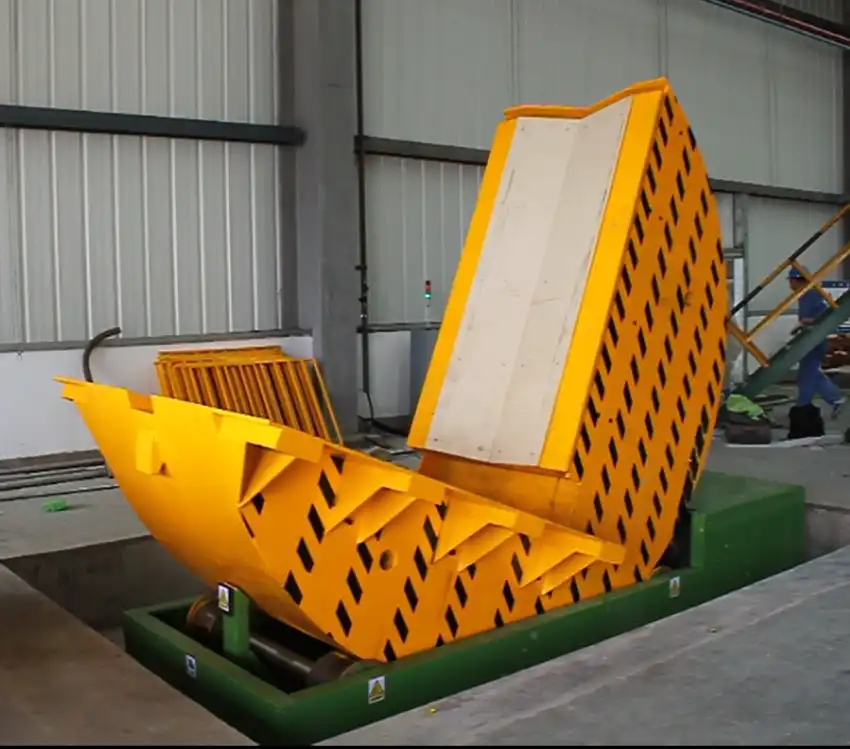
Key Regulatory Changes Breakdown
CE Machinery Directive Updates:
- Smart Safety Integration: All coil tilting equipment must include integrated safety sensors that automatically stop operation when workers enter danger zones
- Digital Documentation: Manufacturers must provide compliance documentation in both physical and digital formats for easier auditing
- Structural Testing Requirements: Enhanced testing protocols for equipment handling coils over 5 tons, requiring third-party verification
OSHA Compliance Enhancements:
- Reduced Manual Intervention: New guidelines limit manual handling during coil positioning and transfer operations
- Emergency Stop Standards: Updated requirements for emergency stop placement and accessibility
- Training Documentation: Mandatory digital records of operator training and competency assessments
ISO Standard Revisions:
- ISO 13849-1:2023: Higher Performance Level (PL) requirements for safety-related control systems
- ISO 12100:2023: Updated risk assessment methodologies specific to heavy load handling
- ISO 9001:2025: Enhanced quality management requirements for equipment manufacturers
Compliance Implementation Timeline
| Timeline | Requirement | Action Needed |
|---|---|---|
| Q1 2025 | CE Smart Sensor Mandate | Retrofit existing equipment or upgrade to compliant models |
| Q2 2025 | OSHA Training Documentation | Implement digital training records system |
| Q3 2025 | ISO 13849-1:2023 Compliance | Safety system upgrades and verification |
| Q4 2025 | Full Regulatory Alignment | Complete equipment certification and auditing |
According to Randal Liu, founder of SHJLPACK, "The 2025 regulations represent the biggest shift in industrial equipment compliance in a decade. Factories that proactively address these changes will gain significant competitive advantages through reduced downtime and enhanced safety performance."
2. How Can Mexican Factories Ensure Coil Tilter Safety While Maintaining Efficiency?
I've worked with numerous Mexican manufacturing plants where managers like Michael Chen face the constant challenge of balancing safety requirements with production targets. The traditional approach of adding safety features as an afterthought simply doesn't work—it either compromises safety or kills efficiency. The solution lies in designing safety into the equipment from the ground up.
Mexican factories can ensure coil tilter safety while maintaining efficiency through integrated safety systems that don't slow operations. SHJLPACK's compliant tilters feature non-intrusive laser barriers, smart speed adjustment that maintains cycle times, and automated safety reporting that reduces administrative burden. These systems typically maintain 95%+ operational efficiency while providing comprehensive protection for workers.

Safety Features That Don't Compromise Efficiency
⚡ Smart Sensor Technology
- Non-Intrusive Monitoring: Laser scanners and vision systems detect personnel without physical barriers
- Adaptive Speed Control: Equipment automatically adjusts operating speed based on proximity to workers
- Predictive Maintenance Alerts: Systems warn of potential safety issues before they cause downtime
🏭 Mexican Factory Specific Considerations
- Climate Adaptability: Equipment designed for high-temperature, high-humidity environments common in Mexican industrial zones
- Local Service Support: SHJLPACK maintains technical teams in major Mexican industrial regions for rapid response
- Spanish Language Interfaces: Control systems and documentation available in Spanish for operator training
💰 ROI Analysis: Safety vs. Efficiency
| Factor | Traditional Equipment | SHJLPACK Compliant Tilter |
|---|---|---|
| Safety Incidents/Year | 3-5 minor incidents | <1 incident |
| Insurance Costs | $15,000-25,000 annually | $8,000-12,000 annually |
| Training Time | 40 hours per operator | 24 hours per operator |
| Production Downtime | 5-7% for safety checks | 2-3% with automated monitoring |
| Annual Compliance Costs | $10,000+ for upgrades | Included in service contract |
Implementation Steps for Mexican Plants
Step 1: Compliance Assessment
- Conduct gap analysis against 2025 requirements
- Document current safety performance metrics
- Identify highest-risk operations
Step 2: Equipment Selection
- Choose CE/OSHA/ISO compliant models
- Verify local service availability
- Confirm Spanish documentation and training
Step 3: Phased Implementation
- Pilot program with one production line
- Operator training and competency verification
- Performance monitoring and adjustment
Step 4: Continuous Improvement
- Regular safety audits and performance reviews
- Software updates for regulatory changes
- Operator feedback integration
3. Which Coil Tilter Features Are Essential for Meeting 2025 Compliance Standards?
When I consult with factory managers across Latin America, they often ask me to identify the must-have features versus the nice-to-have options. With 2025 compliance requirements, this distinction becomes critical for budget planning and operational planning. The essential features aren't just about checking regulatory boxes—they're about creating a safer, more efficient working environment.
Essential coil tilter features for 2025 compliance include: integrated safety controllers meeting Performance Level d, automated load monitoring systems, digital compliance documentation, and emergency stop circuits with redundancy. SHJLPACK's 2025-ready models incorporate these as standard features, while competitors often treat them as expensive add-ons that blow your budget.

Critical Compliance Features Breakdown
🔒 Safety System Requirements
- Performance Level d Control Systems: Mandatory for all tilting operations according to ISO 13849-1:2023
- Dual-Channel Emergency Stops: Redundant stopping mechanisms with automatic monitoring
- Safe Position Monitoring: Encoder systems that verify coil position throughout tilting cycle
- Interlocked Guarding: Physical barriers with position verification sensors
📊 Monitoring and Documentation
- Automated Logging: Continuous recording of safety system performance and interventions
- Digital Compliance Records: Exportable documentation for regulatory audits
- Predictive Analytics: Systems that identify potential compliance issues before they occur
- Remote Monitoring Capability: Cloud-based access for safety performance review
⚙️ Structural and Operational Features
- Overload Protection: Automatic shutdown when loads exceed rated capacity
- Stability Monitoring: Systems that detect unstable loads before tilting begins
- Speed Control: Adaptive operation based on load characteristics and conditions
- Maintenance Tracking: Automated scheduling of safety-critical maintenance tasks
Feature Comparison: SHJLPACK vs Competitors
| Feature | SHJLPACK | 风鼎 (Fhopepack) | 无锡步惠 |
|---|---|---|---|
| Integrated Safety Controller | Standard | Optional (+$8,000) | Not Available |
| Digital Compliance Documentation | Standard | Basic Version Only | Manual Documentation |
| Automated Load Monitoring | Standard | Optional (+$6,500) | Limited Capability |
| Redundant Emergency Stops | Standard | Standard | Single Channel Only |
| Spanish Language Support | Full Support | Limited | Basic |
| Mexican Service Network | 6 Locations | 2 Locations | Importers Only |
Cost of Compliance vs Cost of Non-Compliance
Investment in Compliant Equipment:
- SHJLPACK CT-4500 Compliant Tilter: $85,000-$120,000
- Installation and training: $15,000-$20,000
- Annual maintenance and updates: $8,000-$12,000
Cost of Non-Compliance:
- OSHA fines for serious violations: $15,000+ per violation
- Production stoppages for compliance upgrades: $5,000-$10,000 per day
- Increased insurance premiums: 25-40% for non-compliant facilities
- Worker compensation claims: $50,000+ per serious incident
According to Randal Liu, "The essential features for 2025 aren't just about avoiding fines—they're about building a culture of safety that protects your most valuable asset: your people. Equipment that makes safety easy to maintain will always outperform equipment that makes it difficult."
4. What ROI Can Mexican Plants Expect from Compliant Coil Tilter Investment?
Many plant managers hesitate when they see the price tag of fully compliant equipment. I understand this hesitation—I've managed budgets and needed to justify every dollar spent. But when you calculate the true return on investment, including the hidden costs of non-compliance and the operational benefits of modern equipment, the numbers become compelling.
Mexican plants can expect 18-24 month ROI on compliant coil tilter investments through multiple savings channels. SHJLPACK's documented cases show: 40% reduction in packing labor costs, 60% decrease in product damage, 80% reduction in safety incidents, and 30% improvement in overall line efficiency. These combine to deliver annual savings of $65,000-$120,000 for medium-sized operations.
Comprehensive ROI Calculation
Direct Cost Savings:
-
Labor Reduction: Automated tilting reduces from 3 operators to 1 supervisor
- Manual operation: 3 workers × $2,200/month = $79,200/year
- Automated operation: 1 operator × $2,500/month = $30,000/year
- Annual Labor Savings: $49,200
-
Product Damage Reduction:
- Manual handling damage: 2-3% of product value = $25,000-$40,000/year
- Automated handling damage: <0.5% = $5,000-$8,000/year
- Annual Damage Savings: $20,000-$32,000
-
Safety Cost Reduction:
- Manual handling incidents: $15,000-$25,000 in insurance and compensation
- Automated handling incidents: <$5,000 with proper safeguards
- Annual Safety Savings: $10,000-$20,000
Indirect Benefits:
-
Production Increase: Reduced changeover time and faster processing
- Typical improvement: 15-25% increased throughput
- Value: $30,000-$60,000 additional production capacity
-
Regulatory Compliance: Avoided fines and reduced audit preparation time
- Estimated value: $8,000-$15,000 annually
Case Study: Mexican Steel Processor
🏭 Steel Coil Processing Plant in Monterrey
- Challenge: Manual tilting caused 4 safety incidents in 12 months, 3% product damage rate, production bottleneck
- Solution: SHJLPACK CT-4500 compliant coil tilter with integrated safety systems
- Results:
- Safety: Zero recordable incidents in 18 months post-installation
- Efficiency: Production increased from 35 to 48 coils per hour
- Quality: Product damage reduced from 3% to 0.4%
- Financial: $87,500 annual savings, 16-month ROI
Investment Decision Framework
When does compliant equipment make financial sense?
- Current manual operations with 3+ operators
- Experiencing 2+ safety incidents annually
- Product damage exceeding 1.5% of value
- Planning 3+ year equipment lifecycle
- Facing regulatory scrutiny or audit requirements
According to Randal Liu, "The most successful Mexican plants view compliance investments not as costs, but as opportunities to build competitive advantage. They get safer operations, better efficiency, and regulatory peace of mind—all while saving money in the long term."
Conclusion
Investing in 2025-compliant coil tilting equipment delivers safety, efficiency, and regulatory benefits that far outweigh the costs. For Mexican plants facing evolving standards, proactive compliance through partners like SHJLPACK ensures continuous operation and competitive advantage. Explore our complete steel coil packing line solutions for comprehensive compliance.
Frequently Asked Questions
Q: How much does a compliant coil tilter cost for a Mexican factory?
A: Compliant coil tilters range from $85,000 to $150,000 depending on capacity and features. SHJLPACK's entry-level compliant models start at $85,000 with full CE/OSHA/ISO 2025 certification, while premium models with advanced automation reach $150,000.
Q: What's the typical installation timeline for new coil tilting equipment?
A: Most Mexican installations take 4-6 weeks from order to operation. This includes 2 weeks for factory preparation, 1 week for equipment installation, and 1-2 weeks for operator training and commissioning. SHJLPACK maintains local teams to ensure minimal disruption.
Q: Can existing coil tilters be upgraded to meet 2025 standards?
A: Many existing tilters can be retrofitted with compliance upgrades, though costs vary significantly. Basic safety upgrades cost $15,000-$25,000, while comprehensive compliance retrofits can reach $40,000-$60,000. SHJLPACK offers free compliance assessments to evaluate upgrade feasibility.
Q: How do Mexican NOM standards interact with international certifications?
A: Mexican NOM standards typically reference international standards like CE and ISO, with some local adaptations. Equipment with current CE and ISO certifications generally meets 80-90% of NOM requirements. SHJLPACK equipment includes both international and Mexican-specific compliance documentation.
Q: What training is required for operators of compliant coil tilting equipment?
A: Compliant equipment requires 20-30 hours of initial operator training covering safety protocols, emergency procedures, and daily operations. SHJLPACK provides comprehensive Spanish-language training programs and ongoing refresher courses to maintain compliance and safety standards.


