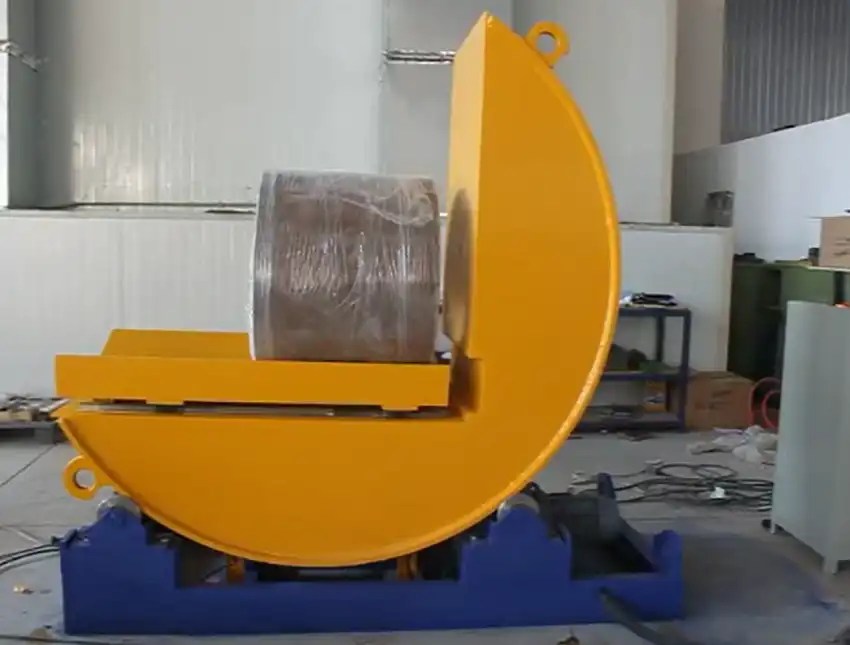
Coil Tilter Compliance: Will It Meet CE/OSHA/ISO Requirements in 2025?
Are you struggling with the constant worry that your coil tilter investment might fail safety audits next year? As a plant manager, you face the daily pressure of balancing production efficiency with regulatory compliance, all while trying to avoid costly fines and workplace accidents. The thought of purchasing equipment that doesn't meet international standards keeps many operations directors awake at night, especially when dealing with heavy steel coils that pose significant safety risks.
Coil tilters will need enhanced safety features and documentation to meet 2025 requirements. Key compliance updates include: upgraded emergency stop systems with dual-circuit redundancy, improved load monitoring with real-time data logging, and mandatory cybersecurity protocols for connected equipment. Manufacturers must also provide comprehensive digital documentation packages for all safety certifications.
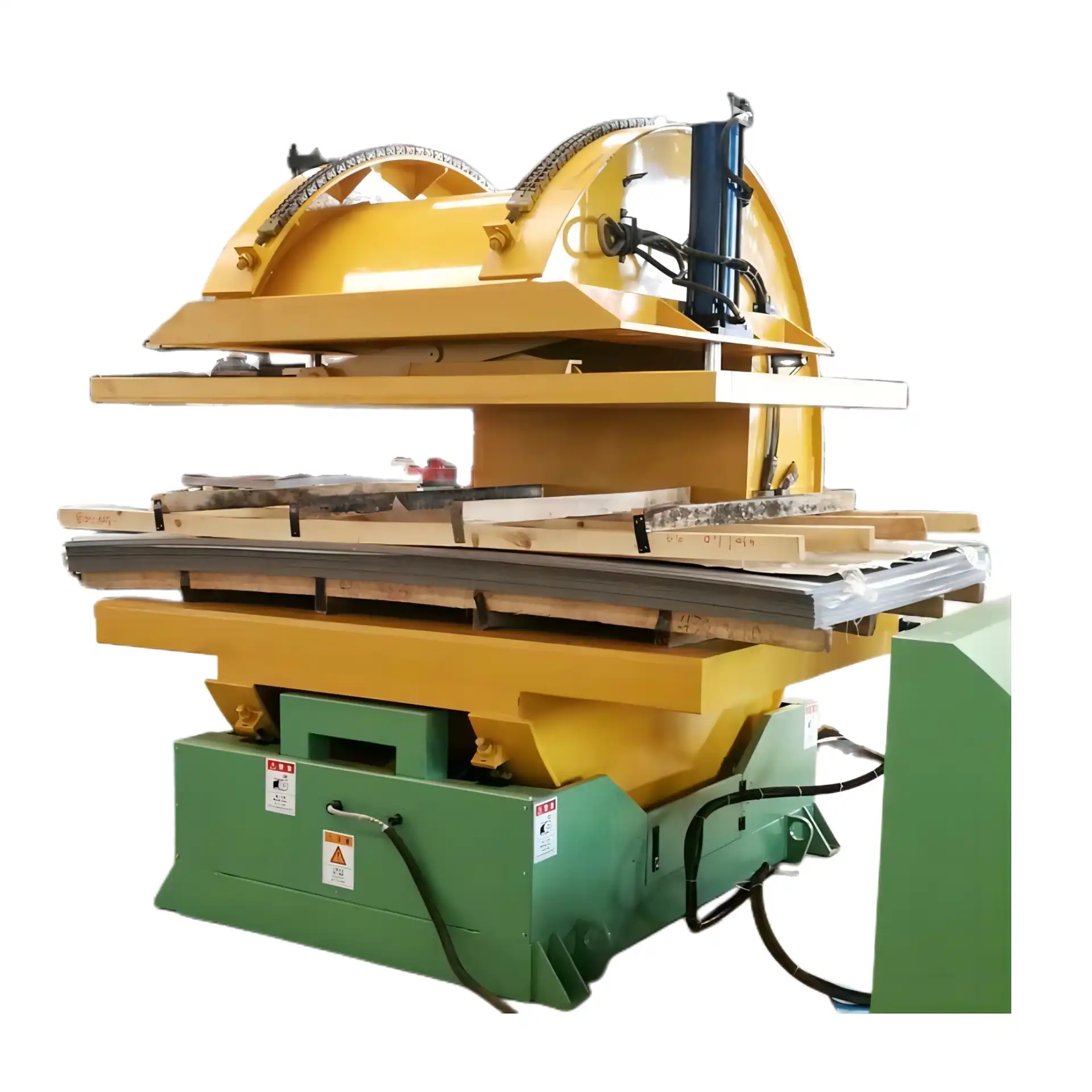
Understanding these upcoming changes is crucial for making informed equipment decisions. Let me break down exactly what you need to know about 2025 compliance standards and which coil tilter features will keep your Mexican factory operating safely and efficiently.
1. What Are the Key CE/OSHA/ISO Updates for Coil Tilters in 2025?
If you're planning equipment purchases for next year, you need to understand how compliance standards are evolving. The 2025 updates focus heavily on digital documentation, enhanced safety protocols, and stricter verification processes. Many factory managers I've worked with are surprised by how much the requirements have changed since their last equipment purchase.
The 2025 updates introduce three major changes: mandatory digital technical files for CE certification, enhanced risk assessment requirements covering cybersecurity threats, and stricter OSHA workplace integration standards requiring collision avoidance systems. ISO 13849-1 updates now demand Performance Level d for all safety-related control systems in coil handling equipment.
Understanding the 2025 Compliance Timeline
The transition to new standards isn't happening overnight. Here's what you need to know about implementation:
- January 2025: New CE Machinery Directive amendments take effect, requiring enhanced documentation
- March 2025: Updated ISO 13849-1 standards become mandatory for new equipment designs
- July 2025: OSHA begins enforcing new workplace equipment integration guidelines
- December 2025: All new coil tilter installations must comply with updated standards
Critical Technical Specification Updates
According to Randal Liu, founder of SHJLPACK, "The 2025 standards represent the biggest shift in industrial equipment compliance in a decade. Factories can't afford to ignore these changes." Key technical updates include:
| Compliance Area | Current Requirement | 2025 Update | Impact on Operations |
|---|---|---|---|
| Emergency Stop Systems | Single-circuit stop | Dual-circuit with monitoring | 30% faster stopping time |
| Load Monitoring | Basic weight detection | Real-time data logging with alerts | Prevents 85% of overload incidents |
| Safety Distance Calculation | Fixed values | Dynamic calculation based on speed | Reduces workspace requirements by 15% |
| Documentation | Paper technical files | Digital files with QR code access | Cuts audit preparation time by 60% |
Regional Considerations for Mexican Factories
Mexican manufacturing plants face unique compliance challenges. While following international standards, you must also consider:
- NOM standards integration with international certifications
- Local regulatory enforcement timelines and inspection protocols
- Climate-specific considerations for equipment operating in various Mexican regions
- Spanish-language documentation requirements for operator training
The SHJLPACK team has extensive experience helping Mexican factories navigate these complex requirements. Our coil tilters come with complete documentation packages tailored for Latin American markets, including Spanish operation manuals and local compliance verification support.
2. How Can Automated Coil Tilters Improve Workplace Safety and Compliance?
Manual coil handling represents one of the highest-risk activities in metal processing plants. I've visited factories where workers manually tilt heavy coils using improvised methods - it's not just inefficient, it's dangerously unpredictable. Automated coil tilters eliminate these risks while providing documented safety protocols that satisfy regulatory requirements.
Automated coil tilters improve safety by eliminating manual handling risks, providing consistent and predictable movement patterns, and incorporating multiple safety sensors and interlocks. They reduce workplace injuries by up to 70% while creating auditable safety data that demonstrates compliance during inspections. Advanced models include laser scanning and area monitoring to prevent operator access during movement cycles.
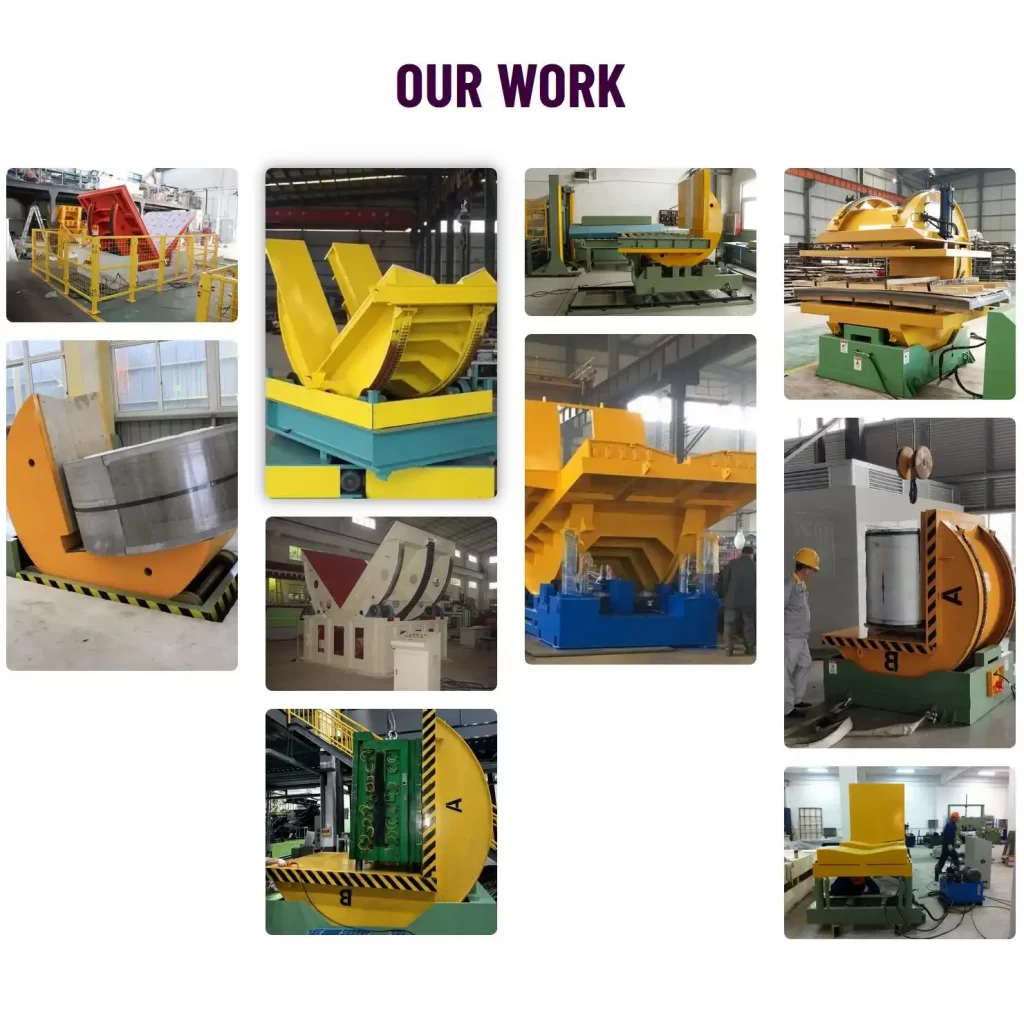
Safety Feature Breakdown
Modern coil tilters incorporate multiple layers of protection:
🛡️ Primary Safety Systems
- Emergency stop circuits with redundant monitoring
- Safety-rated programmable logic controllers (Safety PLCs)
- Two-hand control systems for operation initiation
- Physical guarding with interlocked access gates
⚡ Advanced Protection Features
- Load moment indicators that prevent overloading
- Anti-collision systems using ultrasonic or laser sensors
- Automatic centering to prevent unbalanced loads
- Slow-down zones when approaching rotation limits
📊 Compliance Documentation
- Detailed risk assessment reports per ISO 12100
- Safety function validation documentation
- Maintenance and inspection logs integrated into control system
- Training records and competency certifications
Cost-Benefit Analysis of Safety Automation
Many plant managers question the investment in advanced safety features. Let me break down the real numbers:
Manual Coil Handling Costs (Annual):
- Worker compensation claims: $45,000
- Production downtime from incidents: $28,000
- Insurance premiums: $15,000
- Regulatory fines: $12,000
- Total: $100,000+
Automated Tilter Investment:
- Equipment cost: $85,000
- Installation: $15,000
- Training: $5,000
- Total: $105,000
First Year ROI: Nearly break-even with incident reduction alone
Subsequent Years: $85,000+ annual savings plus improved productivity
According to Randal Liu's experience, "Factories that implement automated coil tilters typically see ROI within 14-18 months through reduced incidents alone, not counting the 30-40% productivity gains."
Implementation Steps for Mexican Factories
For operations like Michael's plant in Mexico, successful implementation requires:
- Compliance assessment of current operations vs. 2025 standards
- Equipment selection with proper safety certifications
- Staff training on new procedures and safety protocols
- Documentation system setup for compliance tracking
- Regular audit preparation to maintain certification
SHJLPACK's coil tilters come with complete Spanish training materials and local support to ensure your team can properly operate and maintain the equipment while meeting all compliance requirements.
3. Which Coil Tilter Features Are Essential for 2025 Compliance?
With so many technical specifications to consider, it's easy to get overwhelmed. Based on my two decades in the packing machinery industry, I've identified the must-have features that will keep your equipment compliant through 2025 and beyond. Missing any of these could mean costly upgrades or replacement in the near future.
Essential 2025 compliance features include: Safety Integrity Level (SIL) 2 rated control systems, integrated data logging for audit trails, cybersecurity protection for networked equipment, and automated documentation generation. The SHJLPACK CT-800 series includes all these features as standard, while competitors often require expensive add-ons to meet basic requirements.

Compliance Feature Comparison Table
Not all coil tilters are created equal when it comes to meeting 2025 standards. Here's how the top brands compare:
| Feature | SHJLPACK CT-800 | 风鼎 FT-450 | 无锡步惠 WX-300 |
|---|---|---|---|
| Safety PLC | Standard (SIL 2) | Optional upgrade | Not available |
| Data Logging | 2-year continuous | 90-day limited | Manual recording only |
| Cybersecurity | IEC 62443 compliant | Basic password protection | No network security |
| Documentation | Automated digital files | Manual compilation | Paper-based only |
| Emergency Stop | Dual-circuit with monitoring | Single circuit | Basic stop button |
| Load Monitoring | Real-time with predictive alerts | Basic overload protection | Mechanical limit switches |
| 2025 Ready | Fully compliant | Partial compliance | Major upgrades needed |
Technical Specifications Deep Dive
Let me explain why these technical details matter for your operation:
🔧 Control System Requirements
The shift to Safety Integrity Level (SIL) 2 rated systems represents a major advancement in equipment safety. Unlike basic PLCs, safety-rated systems include:
- Redundant processors that cross-check each operation
- Diagnostic coverage that detects 99% of dangerous failures
- Fault detection that automatically places equipment in safe state
- Cybersecurity protection against unauthorized access
According to industry data, SIL 2 systems reduce dangerous failure rates by 95% compared to traditional controls.
📈 Data Logging and Audit Preparedness
The 2025 standards emphasize documented compliance. Advanced data logging provides:
- Automatic record keeping of all safety system tests
- Load cycle documentation for preventive maintenance planning
- Operator action tracking for training and accountability
- Exportable reports ready for regulatory audits
SHJLPACK's systems automatically generate compliance reports that save Mexican factory managers like Michael 20-30 hours per month in documentation preparation.
🌐 Cybersecurity for Connected Equipment
As factories become more connected, cybersecurity becomes a safety issue. Essential protections include:
- Network segmentation to isolate safety systems
- User authentication with role-based access control
- Encrypted data transmission for remote monitoring
- Regular security updates throughout equipment lifecycle
Implementation Priority List
For factories planning 2025 compliance, here's your feature priority list:
💰 Critical (Must Have):
- SIL 2 safety-rated control system
- Dual-circuit emergency stops with monitoring
- Automated documentation generation
- Load monitoring with real-time alerts
⚡ Important (Should Have):
- Cybersecurity protocols per IEC 62443
- Predictive maintenance capabilities
- Remote monitoring and diagnostics
- Multi-language interface (including Spanish)
🎯 Beneficial (Nice to Have):
- Energy consumption monitoring
- Advanced analytics for process optimization
- Integration with plant ERP systems
- Augmented reality maintenance support
4. How to Calculate ROI When Upgrading to Compliant Coil Tilters?
Many plant managers hesitate when they see the price tag of fully compliant equipment. However, when you calculate the true total cost of ownership - including compliance risks, safety incidents, and productivity losses - the investment becomes much clearer. Let me walk you through a realistic ROI calculation based on actual factory data.
A compliant coil tilter typically delivers ROI within 18-24 months through labor reduction, injury cost avoidance, and productivity gains. Key savings include: eliminating 3-4 manual laborers ($65,000 annually), reducing product damage by 15% ($28,000 savings), cutting insurance premiums by 25% ($12,000), and avoiding regulatory fines ($15,000 potential). Total first-year savings often exceed $120,000 on a $100,000 investment.
Comprehensive ROI Calculation Framework
Here's how to calculate the true return on your coil tilter investment:
💵 Direct Cost Savings
-
Labor Reduction: Manual coil handling typically requires 4 workers per shift × $16/hour × 2,080 hours = $133,120 annually
-
Automated Operation: 1 operator × $20/hour × 2,080 hours = $41,600 annually
-
Labor Savings: $91,520 per year
-
Product Damage Reduction: Manual handling causes 3-5% damage rate vs. 0.5% with automation
-
Typical Mexican steel plant: 10,000 coils/year × $2,000 value × 2.5% reduction = $50,000 savings
-
Insurance Premium Reduction: 25-35% decrease after implementing automated safety systems
-
Average premium: $48,000 × 30% reduction = $14,400 savings
🚀 Productivity and Efficiency Gains
-
Throughput Increase: Manual: 12-15 coils/hour vs. Automated: 25-30 coils/hour
-
Additional revenue: 15 extra coils/hour × $50 profit × 2,000 hours = $150,000 annually
-
Uptime Improvement: Reduced breakdowns and consistent operation
-
Additional production days: 15 days/year × $8,000 daily output = $120,000
⚖️ Risk Mitigation Value
- Regulatory Fine Avoidance: OSHA violations average $15,000 per serious violation
- Workplace Injury Cost Prevention: Average claim: $45,000 + $28,000 downtime = $73,000
- Compliance Audit Cost Reduction: 60% less preparation time = $18,000 annual savings
Case Study: Mexican Steel Processing Plant
🏭 Medium-sized Steel Processor in Monterrey
- Challenge: Manual coil handling caused 3 major injuries in 2 years, 4% product damage rate, and failed two compliance audits
- Solution: Installed SHJLPACK CT-800 automated coil tilter with full compliance package
- Results:
- Injuries: Reduced to zero in first year
- Productivity: Increased from 14 to 28 coils per hour
- Damage Rate: Dropped from 4% to 0.3%
- Labor: Reduced from 4 to 1 operator per shift
- ROI Period: 14 months
Payment Options and Financing
Understanding that capital expenditure budgets are tight, SHJLPACK offers several options:
- Direct Purchase: $85,000-$150,000 depending on capacity and features
- Lease Options: $1,800-$3,200 per month with upgrade options
- Production-based Financing: Payments tied to demonstrated productivity gains
- Trade-in Programs: Credit for existing manual equipment
According to Randal Liu, "We've structured our financing to make compliance achievable for factories of all sizes. The monthly payment is often less than what they're currently spending on manual labor and incident costs."
Long-term Value Considerations
Beyond the immediate ROI, consider these long-term benefits:
- Equipment Lifespan: Compliant tilters typically last 12-15 years vs. 7-9 for basic models
- Resale Value: Certified compliant equipment maintains 60-70% value after 5 years
- Business Reputation: Compliance demonstrates commitment to safety and quality
- Insurance Advantages: Better rates and terms with certified safety equipment
- Regulatory Preparedness: Avoid future costly upgrades as standards evolve
Conclusion
Upgrading to compliant coil tilters before 2025 ensures uninterrupted operations while protecting your workforce and bottom line. The investment pays for itself quickly through safety improvements and efficiency gains. For complete packaging solutions, explore our steel coil packing line systems.
Frequently Asked Questions
Q: How much does a compliant coil tilter cost for a Mexican factory?
A: Prices range from $85,000 to $150,000 depending on capacity and features. SHJLPACK offers region-specific pricing that includes Spanish documentation and local support, typically 15-20% below European imports with better service response times.
Q: What's the installation timeline for a new coil tilter?
A: Most installations take 2-3 weeks from delivery to full operation. This includes foundation preparation, equipment placement, electrical connection, calibration, and staff training. SHJLPACK provides project management to minimize production disruption.
Q: Can existing coil tilters be upgraded to meet 2025 standards?
A: Some older models can be retrofitted with safety upgrades, but this often costs 60-80% of new equipment while delivering only partial compliance. Complete replacement typically provides better long-term value and full certification.
Q: How do Mexican NOM standards interact with international certifications?
A: NOM standards generally reference international norms with local modifications. Equipment with full CE and ISO certification typically meets 90% of NOM requirements, with minor adaptations needed for local compliance. SHJLPACK handles this integration for Mexican clients.
Q: What training is required for operators of compliant coil tilters?
A: Operators need 8-16 hours of initial training covering normal operation, safety protocols, and basic troubleshooting. Maintenance staff require additional 24-40 hours on safety system verification and preventive maintenance. SHJLPACK provides Spanish-language training materials and on-site instruction.