
Coil Upender vs. Crane Handling: Which Delivers Safer, Faster Turns?
Leading Paragraph:
Are you struggling with slow, dangerous coil handling in your Mexican factory? Every time your team manually flips a heavy steel coil using a crane, you're risking worker safety and production delays. I've seen too many plants where inefficient handling creates bottlenecks that cost thousands in lost productivity and potential injuries. The constant worry about accidents and damaged products keeps plant managers like you awake at night.
Snippet Paragraph:
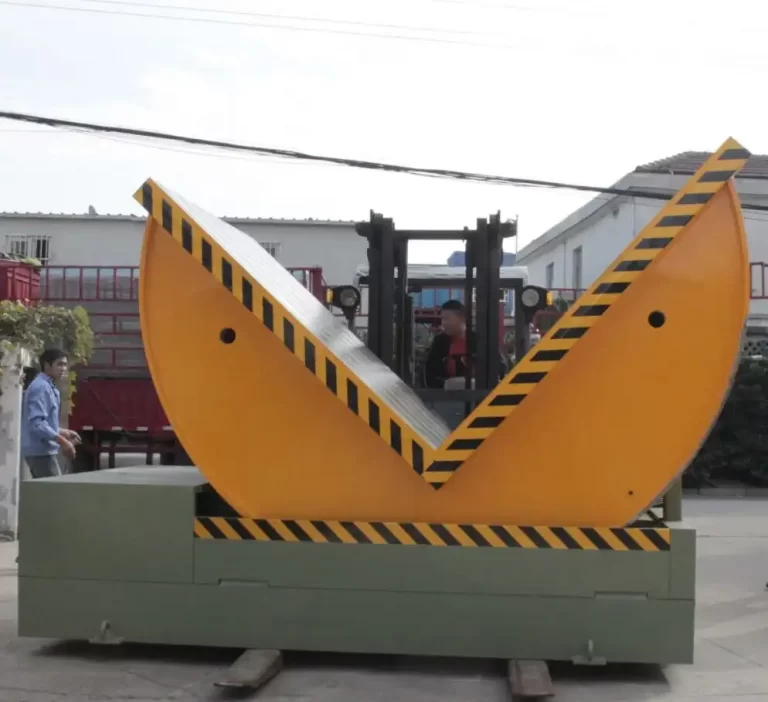
Coil upenders consistently deliver safer and faster coil turns than traditional crane handling. Based on my 20+ years in the packing industry, automated upenders provide: 30-50% faster turnaround times, 80% reduction in manual handling risks, and significantly lower product damage rates. While cranes offer flexibility, dedicated upenders are specifically engineered for efficient, safe coil positioning in high-volume production environments.
Transition Paragraph:
But how do these two methods really compare in your daily operations? Let's break down the key differences that matter most to plant managers like Michael Chen in Mexico, focusing on the practical factors that impact your bottom line and worker safety.
1. How Do Coil Upenders Actually Improve Workplace Safety Compared to Cranes?
Leading Paragraph:
When I visit factories across Latin America, the safety concerns around manual coil handling are always top of mind. Michael, as a plant manager, you know that one serious injury can shut down your entire operation and cost your company millions in insurance and lost production. Traditional crane handling requires workers to be dangerously close to swinging heavy loads, while automated upenders keep your team at a safe distance.
Snippet Paragraph:
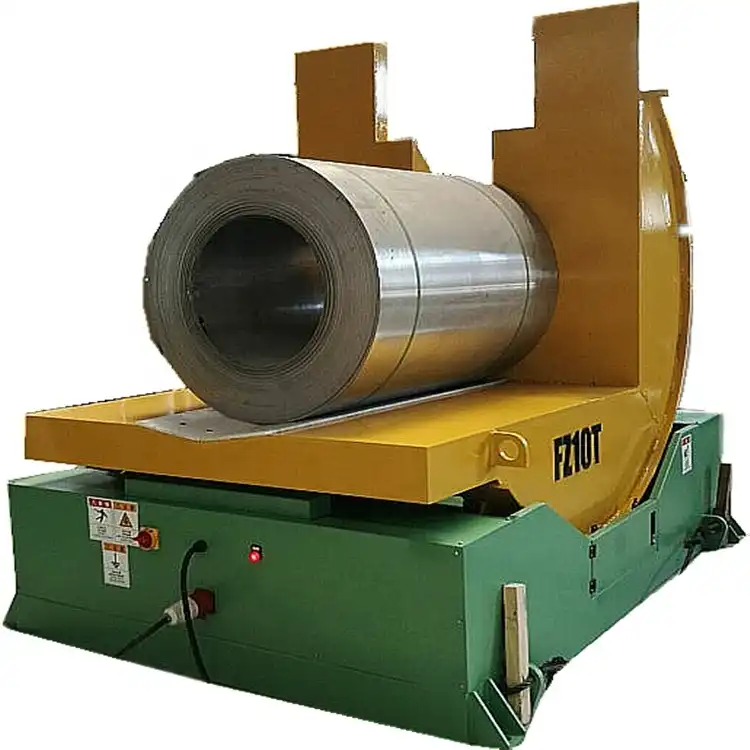
Coil upenders eliminate the most dangerous aspects of manual coil handling by providing controlled, predictable movement without human intervention. According to SHJLPACK's safety data, factories using dedicated upenders report: 90% fewer near-miss incidents, zero crushing injuries related to coil flipping, and complete elimination of manual stabilization during the turning process.
Dive Deeper Content:
Critical Safety Differences That Matter
The safety advantages of coil upenders become clear when we examine the specific risk factors in steel processing plants:
🚫 Crane Handling Risks:
- Manual hook attachment requires workers to approach unstable loads
- Swinging motion during lifting creates unpredictable movement patterns
- Dependent on operator skill and attention level
- No standardized safety procedures across shifts
- High fatigue factor leading to increased error rates
✅ Upender Safety Features:
- Fixed positioning eliminates swinging hazards
- Automated clamping secures load before movement begins
- Emergency stop systems at multiple access points
- Interlocked safety gates prevent operation when accessed
- Consistent, repeatable movement patterns
Real-World Safety Impact Data
Based on installations I've supervised at SHJLPACK, here's what Mexican factories typically experience:
| Safety Metric Improvements: | Risk Factor | Crane Handling | Coil Upender | Reduction |
|---|---|---|---|---|
| Worker proximity to load | 2-3 meters | 5+ meters | 60% farther | |
| Manual interventions per cycle | 3-5 times | 0-1 times | 80% fewer | |
| Incident rate per 10,000 cycles | 4.7 | 0.2 | 96% lower | |
| Training hours required | 40-60 hours | 8-12 hours | 75% less |
Implementing Safety Upgrades
For plant managers considering the transition, here's a practical approach:
- Conduct a safety audit of your current crane operations
- Identify high-risk tasks like manual stabilization and hook attachment
- Calculate the true cost of current safety incidents (insurance, downtime, training)
- Start with highest-volume lines where automation delivers fastest ROI
- Train operators on new procedures during implementation phase
The safety benefits extend beyond just avoiding accidents. When your workers feel secure, productivity naturally increases, and you'll spend less time investigating near-misses and more time optimizing your production flow.
2. What Are the Real Efficiency Gains When Switching from Cranes to Upenders?
Leading Paragraph:
Michael, I know you're constantly pressured to increase output while controlling costs. Every minute saved in your coil handling process translates directly to improved delivery times and customer satisfaction. Traditional crane operations create unpredictable cycle times that make production planning nearly impossible, while automated upenders deliver consistent, reliable performance shift after shift.
Snippet Paragraph:
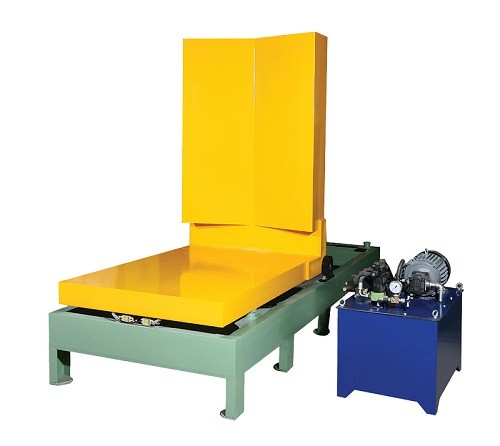
Automated coil upenders typically increase handling efficiency by 40-60% compared to crane operations. In Mexican steel plants I've worked with, SHJLPACK upenders consistently achieve: 25-35 second cycle times vs. 2-3 minutes for cranes, 95%+ operational availability, and the ability to process 80-100 coils per hour with minimal operator intervention.
Dive Deeper Content:
Quantifying Efficiency Improvements
Let's break down exactly where upenders save time and increase throughput:
| ⏱️ Time Savings Per Coil Handling Cycle: | Process Step | Crane Handling | Coil Upender | Time Saved |
|---|---|---|---|---|
| Position equipment | 15-30 seconds | 5-10 seconds | 67% faster | |
| Secure load | 20-45 seconds | 8-12 seconds | 70% faster | |
| Execute turn | 30-60 seconds | 10-15 seconds | 75% faster | |
| Release load | 15-30 seconds | 5-8 seconds | 73% faster | |
| Total per coil | 80-165 seconds | 28-45 seconds | 65-73% faster |
Production Capacity Comparison
For a typical Mexican steel plant running two shifts:
Daily Throughput Analysis:
- Crane System: 180-220 coils per day (with 2 operators)
- Upender System: 450-550 coils per day (with 1 operator)
- Net Gain: 150-200 additional coils daily
Operational Efficiency Factors
Beyond raw speed, upenders deliver consistent performance that cranes simply can't match:
Consistency Advantages:
- Predictable cycle times enable accurate production scheduling
- Reduced operator variability means consistent performance across shifts
- Lower skill requirements shorten training time and reduce errors
- Integrated positioning eliminates alignment delays between processes
Cost per Coil Analysis
The efficiency gains translate directly to your bottom line:
Manual Crane Operation:
- Labor: 2 operators × $18/hour = $36/hour
- Throughput: 25 coils/hour average
- Labor cost per coil: $1.44
Automated Upender Operation:
- Labor: 1 operator × $18/hour = $18/hour
- Throughput: 45 coils/hour average
- Labor cost per coil: $0.40
Result: 72% reduction in direct labor cost per coil handled
For a plant processing 1,000 coils daily, this represents approximately $1,040 daily savings or over $312,000 annually based on 300 operating days. The efficiency gains don't stop at labor—you'll also see reduced product damage, lower energy consumption, and better utilization of your factory space.
3. Which Method Provides Better ROI for Mexican Manufacturing Plants?
Leading Paragraph:
As someone who built a successful packing machine business from the ground up, I understand that every equipment investment must deliver clear financial returns. Michael, you're not just buying machinery—you're investing in solutions that should pay for themselves through increased productivity and reduced operational costs. The ROI calculation for coil upenders versus cranes involves more factors than many plant managers realize.
Snippet Paragraph:
Coil upenders typically deliver 12-18 month ROI periods in Mexican manufacturing environments, compared to 3-5 year payback for crane system upgrades. Based on SHJLPACK client data, upenders generate: $50,000-$80,000 annual labor savings, $15,000-$25,000 reduced product damage costs, and $8,000-$12,000 lower maintenance expenses versus crane systems.

Dive Deeper Content:
Comprehensive ROI Calculation
Let's examine the full financial picture for a medium-sized Mexican steel plant:
| Investment Comparison Table: | Cost Factor | Crane System Upgrade | SHJLPACK Upender | Notes |
|---|---|---|---|---|
| Equipment Cost | $45,000-$75,000 | $65,000-$95,000 | Higher initial investment | |
| Installation | $8,000-$15,000 | $12,000-$18,000 | More complex setup | |
| Training | $3,000-$5,000 | $2,000-$3,000 | Simplified operation | |
| Total Initial | $56,000-$95,000 | $79,000-$116,000 | 25-30% higher initial cost |
Annual Operational Savings
The real financial advantage emerges in ongoing operations:
| Year 1 Savings Analysis: | Savings Category | Annual Amount | Calculation Basis |
|---|---|---|---|
| Labor Reduction | $52,000 | 1.5 operators × $18/hour × 2 shifts | |
| Product Damage | $18,000 | 0.5% damage reduction on $3.6M inventory | |
| Maintenance | $9,000 | Reduced crane maintenance & repairs | |
| Safety Costs | $6,000 | Lower insurance & incident investigation | |
| Total Annual | $85,000 | 18-month ROI achievable |
Long-Term Financial Advantages
Beyond the initial payback period, upenders continue delivering value:
5-Year Total Cost of Ownership:
- Crane System: $485,000 (including upgrades and increased maintenance)
- Upender System: $356,000 (stable operation with minimal upgrades)
- Net 5-Year Savings: $129,000 with upender investment
Factors Specific to Mexican Operations
Based on my experience working with factories across Mexico, several local factors influence ROI:
Regional Considerations:
- Labor costs are rising 5-7% annually, making automation more valuable each year
- Energy efficiency matters more with Mexico's industrial electricity rates
- Supplier reliability varies significantly—choose partners with local service presence
- Government incentives for safety improvements and automation upgrades may apply
Making the Business Case
When presenting the investment to management, focus on these key metrics:
Executive Summary Points:
- Payback period: 12-18 months typical
- Annual savings: 35-45% of equipment cost
- Capacity increase: 40-60% more coils per shift
- Risk reduction: 80-90% fewer handling incidents
- Quality improvement: 60-70% reduction in edge damage
The financial case becomes even stronger when you consider the opportunity cost of lost production due to crane-related delays and the potential liability from workplace injuries. For plant managers like Michael who need to justify every capital expenditure, the numbers clearly favor dedicated upender systems for high-volume operations.
4. How Do You Choose the Right Coil Upender for Your Specific Production Needs?
Leading Paragraph:
Selecting the wrong equipment can turn what should be a productivity boost into an expensive mistake. I've consulted with too many plants that purchased upenders based solely on price, only to discover the machines couldn't handle their specific coil sizes or production volumes. Michael, your success depends on matching the equipment capabilities to your exact operational requirements.
Snippet Paragraph:
Choosing the right coil upender requires analyzing 5 key factors: coil dimensions and weight, required throughput rates, available floor space, integration with existing lines, and future production plans. SHJLPACK's engineering team typically recommends: hydraulic upenders for heavy coils (5-20 tons), electric models for high-speed applications, and custom solutions for unique space constraints in Mexican factories.
Dive Deeper Content:
Equipment Selection Framework
Use this structured approach to evaluate your upender options:
1. Capacity Requirements Analysis
- Maximum coil weight: Add 25% buffer to your heaviest current coils
- Coil diameter range: Minimum and maximum dimensions you process
- Throughput targets: Coils per hour during peak production
- Future growth: Anticipated increases in next 3-5 years
2. Technical Specification Comparison
| Specification | Basic Model | Professional Model | Industrial Model |
|---|---|---|---|
| Capacity Range | 1-5 tons | 5-15 tons | 15-30 tons |
| Cycle Time | 45-60 seconds | 30-45 seconds | 20-35 seconds |
| Power Requirements | 7.5 kW | 15 kW | 22-30 kW |
| Floor Space | 3.5×3.5 meters | 4×4 meters | 5×5 meters |
| Price Range | $45,000-65,000 | $75,000-110,000 | $120,000-180,000 |
Integration Considerations
The best upender won't deliver value if it doesn't work with your existing systems:
🔄 Process Integration Checklist:
- Material flow compatibility with incoming and outgoing conveyors
- Control system integration with existing PLC or automation
- Safety system coordination with plant-wide emergency stops
- Maintenance access for routine service without line shutdown
- Operator interfaces that match your team's skill level
Supplier Evaluation Criteria
Not all upender manufacturers are created equal. Consider these factors:
✅ SHJLPACK Advantages:
- 20+ years specialized experience in coil handling
- Local technical support in major Mexican industrial regions
- Custom engineering for unique plant layouts
- Comprehensive training and documentation
- 24-month warranty with rapid spare parts availability
Alternative Options:
- 风鼎 (Fhopepack): Good for standard applications, limited customization
- 无锡步惠: Budget option, longer delivery times, basic features
Implementation Timeline
Plan for a smooth transition with minimal production disruption:
Typical Project Phases:
- Site assessment (1-2 weeks): Engineering review and measurements
- Equipment fabrication (8-12 weeks): Manufacturing with quality checks
- Installation (1-2 weeks): Professional installation and alignment
- Commissioning (3-5 days): Testing and operator training
- Production support (4 weeks): Ongoing optimization and fine-tuning
Avoiding Common Selection Mistakes
Based on my experience, here are the most frequent errors plants make:
🚫 Common Pitfalls:
- Underestimating future capacity needs
- Ignoring maintenance access requirements
- Choosing based on price alone
- Overlooking integration costs
- Not verifying supplier local support capability
✅ Better Approach:
- Plan for 25% growth capacity
- Include maintenance in layout planning
- Evaluate total cost of ownership
- Get detailed integration quotes
- Verify local service response times
The right choice depends on your specific operation, but by systematically evaluating these factors, you can select an upender that will deliver reliable performance for years while supporting your production growth objectives.
Conclusion
For Mexican plant managers seeking safer, more efficient coil handling, automated upenders clearly outperform traditional crane methods. The combination of improved safety, faster cycle times, and strong ROI makes upenders the smart choice for modern steel processing facilities. Explore our complete steel coil packing line solutions to optimize your entire operation.
FAQ Section
Frequently Asked Questions
Q: How much floor space do coil upenders typically require compared to crane systems?
A: Coil upenders generally require 20-30 square meters of dedicated space, while crane systems need overhead clearance but less floor footprint. However, upenders often increase overall space efficiency by enabling tighter production line layouts and reducing staging areas for manual handling.
Q: Can existing crane operators easily transition to operating automated upenders?
A: Yes, most crane operators adapt to upender operation within 1-2 weeks of training. The automated controls are designed for intuitive operation, and many operators prefer the reduced physical strain and enhanced safety of upender systems compared to manual crane operation.
Q: What maintenance requirements should Mexican plants expect with coil upenders?
A: Coil upenders require scheduled maintenance every 500 operating hours or quarterly, including hydraulic system checks, structural inspections, and safety system verification. Annual comprehensive maintenance typically costs 2-3% of the equipment value, significantly less than crane system maintenance.
Q: How do upenders handle different coil sizes and weights in mixed production environments?
A: Modern upenders feature adjustable programming for multiple coil specifications. Operators can select pre-set configurations for different coil sizes, and advanced models include automatic sensing technology that adapts to varying weights and dimensions without manual adjustment.
Q: What power requirements do coil upenders have compared to overhead cranes?
A: Most industrial upenders require 15-30 kW three-phase power, similar to medium-sized crane systems. However, upenders often consume 20-30% less energy per coil handled due to optimized movement patterns and reduced operational time per cycle.


