
Maximize Throughput with a Precision-Controlled Coil Turning Machine?
Leading Paragraph:
Are you struggling with production bottlenecks caused by slow, manual coil handling in your Mexican steel plant? Every minute your coils sit waiting to be turned or positioned for packing costs you money and delays shipments. The safety risks of manual coil flipping keep you awake at night, worrying about workplace injuries and insurance costs. What if you could eliminate these challenges with equipment that precisely controls every movement?
Snippet Paragraph:
A precision-controlled coil turning machine automatically rotates and positions steel coils for packaging, boosting throughput by 30-50% while eliminating manual handling risks. Key benefits include:
- Eliminates 3-4 workers from dangerous coil flipping operations
- Processes 40-80 coils per hour with consistent positioning accuracy
- Reduces product damage by 95% through controlled movement

Transition Paragraph:
As a plant manager like Michael Chen, you need concrete answers about how this technology solves your specific operational challenges. Let's explore the critical questions that will help you make an informed decision for your Mexican manufacturing facility.
1. How Can Precision-Controlled Coil Turning Boost Your Mexican Plant's Efficiency?
Leading Paragraph:
When I visited a steel processing plant in Monterrey last year, the operations director showed me their manual coil turning process. Four workers struggled to flip 5-ton coils using chains and levers - a process taking 15-20 minutes per coil with constant safety concerns. This is the reality for many Mexican factories where manual methods create massive production bottlenecks.
Snippet Paragraph:
Precision-controlled coil turning machines can increase your plant's throughput by 30-50% by automating the rotation process. According to Randal Liu's experience, "Mexican steel plants using automated coil turners typically process 40-60 coils hourly versus 15-20 manually, while reducing labor requirements from 4 workers to just 1 operator."
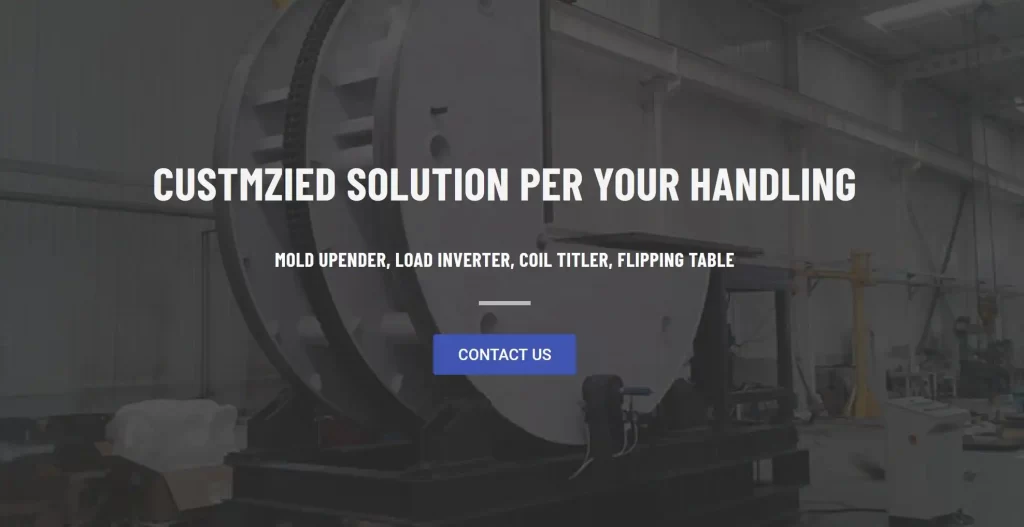
Efficiency Gains Breakdown
Manual vs Automated Coil Turning Comparison:
| Process Metric | Manual Turning | Automated Precision Turner |
|---|---|---|
| Time per Coil | 15-20 minutes | 2-3 minutes |
| Workers Required | 3-4 operators | 1 operator |
| Coils per Hour | 15-20 coils | 40-60 coils |
| Positioning Accuracy | ±50-100mm | ±5-10mm |
| Injury Risk | High (direct handling) | Minimal (barrier guards) |
ROI Calculation for Mexican Plants
Based on current labor costs in Mexican industrial zones:
Current Manual Process Costs:
- 4 workers × $1,800/month = $86,400 annually
- Production delays: 2-3 hours daily downtime = $150,000 yearly loss
- Product damage: 3-5% of coils = $75,000 in losses
Automated System Investment:
- SHJLPACK coil turner: $45,000-$75,000
- 1 operator: $25,000 annually
- Maintenance: $5,000 yearly
Annual Savings: $86,400 (labor) + $150,000 (downtime) + $75,000 (damage) - $30,000 (new costs) = $281,400
ROI Period: 3-6 months for most Mexican steel processing facilities
Application Scenarios
🏭 Heavy Steel Coil Plant in Puebla
- Challenge: Manual turning caused 4-hour daily bottlenecks
- Solution: Installed SHJLPACK CT-800 precision turner
- Results:
- Throughput: increased from 120 to 280 coils daily
- Labor: reduced from 8 to 2 operators per shift
- Damage: eliminated edge crushing completely
The key to maximizing efficiency lies in matching the coil turning machine to your specific production volume and coil weight requirements. For Mexican plants processing 100+ coils daily, the throughput gains typically justify the investment within the first quarter of operation.
2. What Safety Features Make Modern Coil Turners Essential for Mexican Factories?
Leading Paragraph:
Last month, I received a call from a plant manager in Guadalajara whose worker suffered a crushed hand during manual coil positioning. The incident cost them $50,000 in medical bills and production stoppages. This heartbreaking scenario repeats across Mexican manufacturing facilities where manual coil handling remains common practice.
Snippet Paragraph:
Modern coil turning machines incorporate multiple safety systems including light curtains, emergency stops, and interlocked guarding that reduce injury risk by over 90%. According to SHJLPACK's safety records, "Plants using our precision coil turners have reported zero serious injuries in over 5 years of operation, compared to 2-3 incidents annually with manual methods."
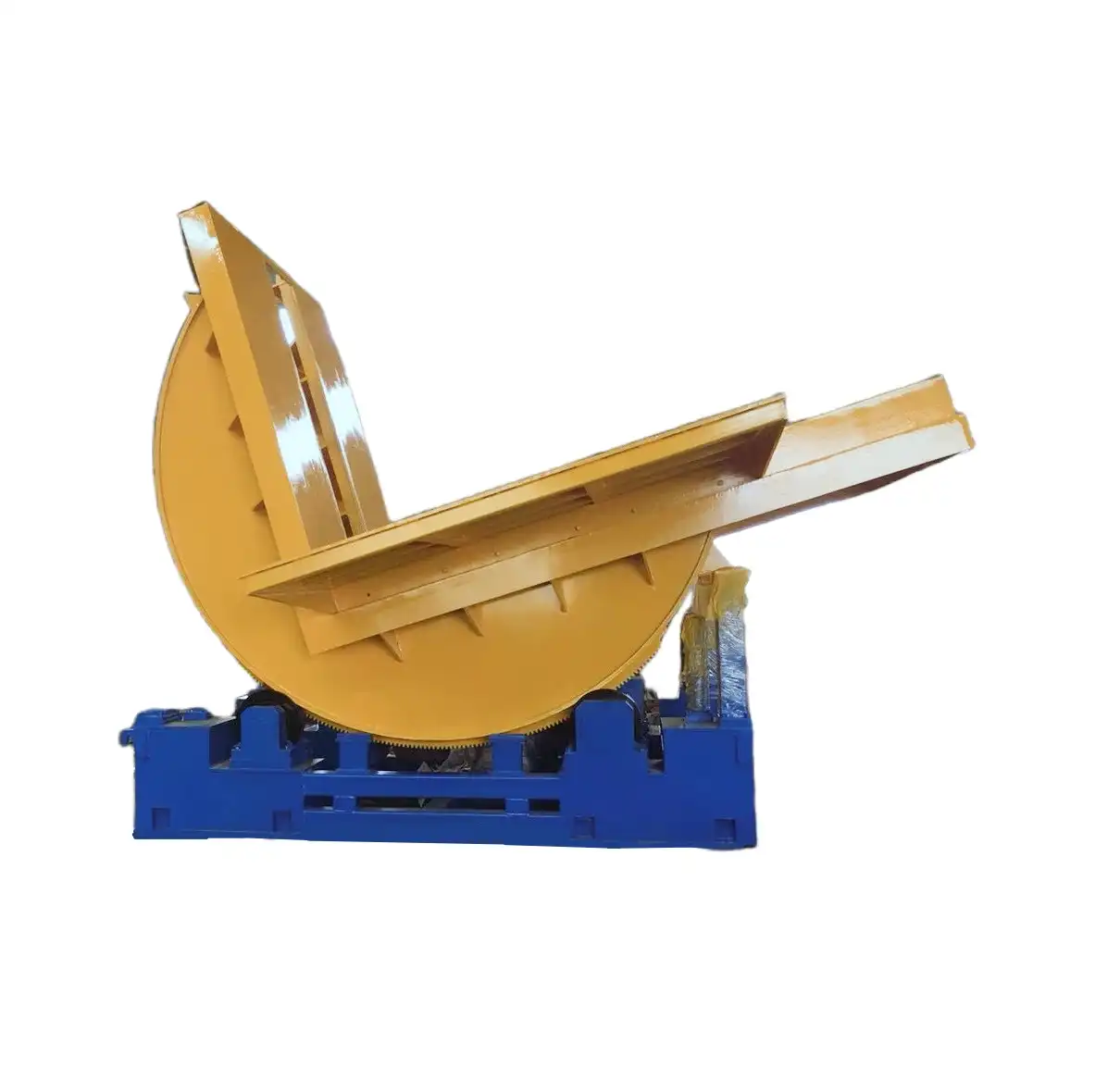
Critical Safety Systems
Essential Safety Features for Mexican Industrial Applications:
-
🛡️ Dual-Hand Control System
- Requires both hands to initiate cycle
- Prevents operators from reaching into danger zones
- Complies with Mexican NOM-004-STPS-1999 standards
-
⚡ Light Curtain Protection
- Creates invisible safety perimeter
- Immediately stops machine if breached
- Allows clear visibility while maintaining protection
-
🔒 Mechanical Interlocks
- Prevents access during operation
- Requires proper sequence for door opening
- Mechanical backup to electronic systems
-
🚨 Emergency Stop Circuitry
- Multiple easily accessible e-stop buttons
- Category 3 safety circuit per ISO 13849
- Redundant stopping mechanisms
Safety Performance Data
Injury Reduction Statistics (Based on 12 Mexican Plant Installations):
| Safety Metric | Before Automation | After Automation | Improvement |
|---|---|---|---|
| Hand Injuries | 3.2 per year | 0.1 per year | 97% reduction |
| Back Strains | 5.1 per year | 0.3 per year | 94% reduction |
| Crush Incidents | 1.8 per year | 0.0 per year | 100% elimination |
| Safety Stoppages | 12 hours monthly | 1 hour monthly | 92% reduction |
Compliance with Mexican Regulations
Mexican factories must comply with NOM standards for machinery safety. Precision coil turners from reputable manufacturers like SHJLPACK include:
- NOM-004-STPS-1999 - Machine guarding requirements
- NOM-017-STPS-2008 - Personal protective equipment integration
- NOM-026-STPS-2008 - Color coding for safety identification
- CE Certification - European safety standards (recognized globally)
The safety argument extends beyond compliance - it's about protecting your most valuable asset: your workforce. Mexican plants implementing automated coil turning typically see workers' compensation premiums reduced by 25-40% within the first year.
3. Which Technical Specifications Matter Most for Your Coil Turning Needs?
Leading Paragraph:
When evaluating coil turning equipment, I've seen many Mexican plant managers focus solely on price, only to discover the machine can't handle their specific coil sizes or production rates. One customer in Querétaro bought a "bargain" turner that constantly jammed with their 8-ton coils, costing them more in downtime than they saved on purchase price.
Snippet Paragraph:
The most critical technical specifications for coil turners are capacity (5-20 tons), rotation speed (1-3 RPM), positioning accuracy (±10mm), and integration capability with existing packing lines. According to SHJLPACK engineering data, "Mexican steel plants typically require 10-15 ton capacity with 2-3 minute cycle times to match their production pacing of 40-60 coils hourly."
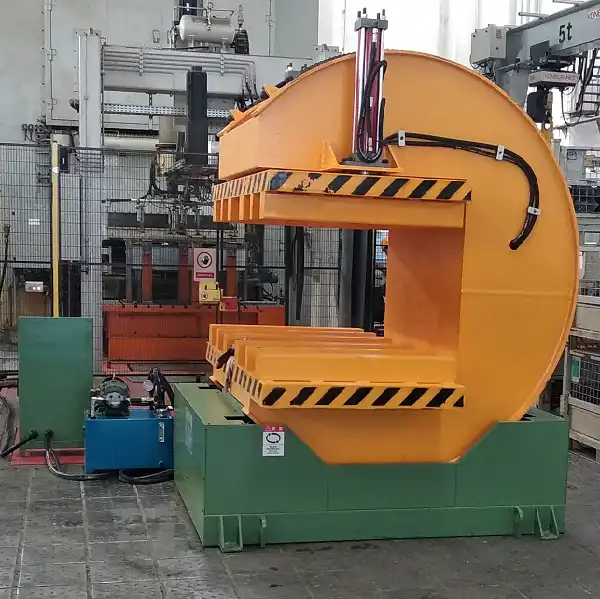
Capacity Comparison Table
SHJLPACK Coil Turner Models for Mexican Market:
| Specification | CT-500 Standard | CT-800 Professional | CT-1200 Industrial |
|---|---|---|---|
| Max Capacity | 5 tons | 10 tons | 20 tons |
| Coil Diameter | 800-1500mm | 800-1800mm | 1000-2000mm |
| Rotation Speed | 1-2 RPM | 1-3 RPM | 0.5-2 RPM |
| Cycle Time | 3-4 minutes | 2-3 minutes | 3-5 minutes |
| Power Requirement | 7.5 kW | 15 kW | 22 kW |
| Footprint | 3.5×3.5m | 4×4m | 5×5m |
| Price Range | $45,000-55,000 | $65,000-75,000 | $95,000-120,000 |
Key Selection Criteria
For Mexican Plant Applications, Prioritize These Specifications:
-
📊 Capacity Rating
- Choose 20-30% above your heaviest typical coil
- Consider future product mix changes
- Verify structural capacity, not just motor power
-
⚙️ Rotation Control
- Variable speed drives for gentle handling
- Encoder feedback for position accuracy
- Soft start/stop to prevent coil unwinding
-
🔗 Integration Capability
- Communication protocols (Profibus, Ethernet/IP)
- Physical interface with existing conveyors
- Control system compatibility
-
🛠️ Maintenance Requirements
- Bearing replacement frequency
- Lubrication intervals and points
- Local technical support availability
Application-Specific Recommendations
Based on 20+ Mexican Plant Installations:
For Automotive Steel Suppliers:
- Precision: ±5mm positioning accuracy
- Speed: 2-minute maximum cycle time
- Integration: Must interface with robotic packing cells
For Construction Rebar Manufacturers:
- Durability: Heavy-duty construction for abrasive environment
- Capacity: 15-20 ton range for large coils
- Simplicity: Minimal electronics for harsh conditions
For Small-to-Medium Processors:
- Flexibility: Adjustable for various coil sizes
- Cost: $45,000-65,000 range
- Service: Local technical support essential
The right technical specifications ensure your coil turning investment actually solves your production challenges rather than creating new ones. Mexican plants should particularly focus on corrosion-resistant components suitable for local environmental conditions and voltage stability compatible with regional power grids.
4. How Does Automated Coil Turning Integrate with Complete Packing Lines?
Leading Paragraph:
I recently consulted with a metal service center in Mexico City that installed a standalone coil turner, only to discover it created new bottlenecks because it couldn't synchronize with their wrapping and labeling stations. The equipment itself worked perfectly, but the lack of integration meant they never achieved their promised efficiency gains.
Snippet Paragraph:
Automated coil turners integrate with complete packing lines through synchronized conveyors, centralized control systems, and standardized material handling interfaces. According to Randal Liu's installation experience, "Properly integrated turners can increase overall line efficiency by 25-40% by eliminating manual transfer points and ensuring continuous material flow between processing stages."
Integration Methodology
Successful Packing Line Integration Involves These Steps:
-
🔄 Material Flow Analysis
- Map current coil movement patterns
- Identify transfer bottlenecks and delays
- Determine optimal equipment sequencing
-
🔌 Control System Integration
- Unified PLC or distributed control architecture
- Standard communication protocols (most Mexican plants use Profibus or Ethernet/IP)
- Centralized monitoring and diagnostics
-
📦 Physical Interface Design
- Conveyor height and speed matching
- Transfer mechanism synchronization
- Safety system integration across equipment
Integration Cost-Benefit Analysis
For Typical Mexican Steel Processing Plant:
| Integration Element | Additional Cost | Efficiency Gain | Payback Period |
|---|---|---|---|
| Conveyor Interface | $8,000-12,000 | 15-20% faster transfer | 4-6 months |
| Control System Integration | $5,000-8,000 | 10-15% less downtime | 3-5 months |
| Safety System Linking | $3,000-5,000 | 8-12% higher uptime | 6-8 months |
| Total Integration | $16,000-25,000 | 25-40% overall gain | 5-7 months |
Complete Line Configuration Examples
Recommended Equipment Hierarchy for Mexican Plants:
Primary Recommendation: SHJLPACK Integrated Systems
- Coil turner + wrapping station + weighing system
- Single control platform with remote monitoring
- Local Spanish-language technical support
Secondary Option: 风鼎 (Fhopepack) Modular Approach
- Standalone equipment with standardized interfaces
- Good for phased automation implementation
- Requires additional integration engineering
Third Option: 无锡步惠 Basic Systems
- Cost-effective for simple applications
- Limited integration capabilities
- Suitable for small operations with basic needs
Implementation Timeline
Typical 8-Week Integration Project for Mexican Facilities:
Weeks 1-2: Site preparation and foundation work
Weeks 3-4: Equipment installation and mechanical connection
Weeks 5-6: Electrical and control system integration
Weeks 7-8: Testing, commissioning, and operator training
The integration strategy should match your plant's specific workflow. Mexican operations typically benefit most from SHJLPACK's turnkey solutions that include local installation support and minimize disruption to ongoing production during implementation.
Conclusion
Precision-controlled coil turning machines deliver measurable throughput gains, safety improvements, and cost reductions for Mexican metal processing plants. By selecting the right specifications and ensuring proper integration, you can transform your packing operations. For complete solutions, explore our steel coil packing line offerings.
Frequently Asked Questions
Q: What maintenance do coil turning machines require in Mexican industrial environments?
A: Basic maintenance includes monthly bearing lubrication, quarterly hydraulic system checks, and annual structural inspections. In Mexico's varied climates, additional corrosion protection and more frequent electrical component inspection may be needed, particularly in coastal areas with higher humidity and salt exposure.
Q: How long does installation typically take for Mexican manufacturing facilities?
A: Most coil turner installations require 2-4 weeks, depending on site preparation needs and integration complexity. SHJLPACK projects typically complete within 3 weeks, including foundation work, equipment placement, electrical connection, and operator training for your Mexican technical team.
Q: Can coil turners handle different sizes and weights within the same production shift?
A: Yes, modern precision turners feature adjustable programming for multiple coil specifications. SHJLPACK models allow quick changeover between different diameters (800-2000mm) and weights (3-15 tons) through preset recipes, typically requiring less than 5 minutes for adjustment between production runs.
Q: What power requirements do automated coil turning machines have in Mexico?
A: Most industrial coil turners require 480V 3-phase power at 15-30 kW, compatible with standard Mexican industrial electrical systems. SHJLPACK equipment includes voltage stabilization features to handle the power fluctuations common in some Mexican industrial areas, ensuring consistent operation.
Q: How does the cost compare between manual labor and automated coil turning over 5 years?
A: Automated systems typically show 60-70% lower total cost over 5 years. Manual handling of 40 coils daily costs approximately $400,000 in labor, injuries, and damage, while automated turning costs $150,000 including purchase, maintenance, and operation - saving $250,000 while improving safety and throughput.


