
The Coil Turning Machine That Reduces Damage and Lowers Labor Costs?
Leading Paragraph:
Are you struggling with manual coil handling that's slowing down your production line and damaging your valuable steel products? As a plant manager, you know that every minute of downtime and every damaged coil directly impacts your bottom line. The constant safety risks and inefficient manual processes are costing you more than you might realize - both in immediate expenses and long-term profitability.
Snippet Paragraph:
A coil turning machine is an automated equipment solution that safely rotates and positions steel coils for packaging, reducing product damage by up to 95% and cutting labor costs by 60-80%. Key benefits include:
- Eliminates manual handling of heavy coils (1-20 tons)
- Reduces edge damage and surface scratches significantly
- Increases packing line efficiency by 30-50%
- Provides quick ROI of 12-18 months for most operations

Transition Paragraph:
If you're considering automating your coil handling process, you probably have several important questions. Let me walk you through the key aspects that matter most to plant managers like Michael Chen in Mexico, based on my 20+ years of experience in the packing machinery industry.
1. How Does a Coil Turning Machine Actually Reduce Product Damage?
Leading Paragraph:
When I visit factories across Latin America, I often see the same heartbreaking scene: beautiful steel coils with edge damage and surface scratches that could have been prevented. Manual handling with cranes and chains creates pressure points and impact damage that directly affects your product quality and customer satisfaction.
Snippet Paragraph:
Coil turning machines reduce damage through controlled, mechanical rotation that eliminates impact and pressure points. According to SHJLPACK's testing:
- Distributes weight evenly across the coil's entire surface
- Prevents edge crushing and surface scratching
- Maintains consistent speed and positioning
- Reduces damage rates from 8% to less than 0.5%
Dive Deeper Content:
The Physics of Damage Prevention
Traditional manual handling creates three main damage types that coil turning machines eliminate:
Edge Damage Elimination ⚡
Manual chain slings create concentrated pressure points that deform coil edges. Automated upenders use broad contact surfaces that distribute force evenly. SHJLPACK machines feature specially designed curved arms that match coil contours, preventing edge compression entirely.
Surface Scratch Reduction 🛡️
When workers manually rotate coils using bars or other tools, they often scratch the protective coating or polished surfaces. Automated systems maintain a consistent gap between moving parts and coil surfaces. Our machines use food-grade nylon contact points that won't mar even the most delicate finishes.
Internal Structure Protection 🏭
Improper handling can damage the internal structure of coils, creating hidden defects that only appear during customer processing. Controlled rotation maintains coil integrity throughout the turning process. According to Randal Liu, "I've seen factories lose entire shipments because internal damage wasn't detected until the coils reached their customers in the automotive industry."
Technical Comparison: Manual vs. Automated Handling
| Damage Type | Manual Handling | SHJLPACK Automated | Improvement |
|---|---|---|---|
| Edge Crushing | 5-8% occurrence | <0.5% occurrence | 94% reduction |
| Surface Scratches | 3-5% of coils | 0.2% of coils | 96% reduction |
| Internal Damage | 2-4% hidden | Virtually eliminated | 99% reduction |
| Rejection Rate | 4-7% | 0.3-0.8% | 85-90% reduction |
Real-World Application Scenario
Case Example:
🏭 Steel Processing Plant in Monterrey, Mexico
- Challenge: 6% rejection rate due to edge damage during manual coil rotation for packaging
- Solution: Installed SHJLPACK CU-1500 Coil Upender with automatic positioning
- Results:
- Product damage: reduced from 6% to 0.4%
- Customer complaints: decreased by 88%
- Quality premium: achieved 3% higher pricing for undamaged coils
- Annual savings: $142,000 in reduced rejections and premium pricing
The key to damage reduction lies in the precision engineering that controls every aspect of the rotation process, from acceleration to final positioning. This level of control simply isn't possible with manual methods, regardless of how experienced your operators might be.
2. What Are the 5 Key Features That Lower Labor Costs in Coil Handling?
Leading Paragraph:
Labor costs in Mexican manufacturing have been rising steadily, and finding skilled workers willing to handle heavy coils is becoming increasingly difficult. Many plant managers don't realize how much they're actually spending on manual coil handling until they see the numbers broken down.
Snippet Paragraph:
The five cost-saving features are: one-operator control systems, reduced staffing requirements, faster cycle times, eliminated overtime costs, and lower training expenses. SHJLPACK machines typically:
- Reduce labor from 4-5 workers to 1 operator
- Cut packing time from 15 to 4 minutes per coil
- Eliminate 60-80 hours monthly overtime
- Save $8,000-12,000 monthly in labor costs

Dive Deeper Content:
Labor Cost Breakdown Analysis
Let me show you exactly where the labor savings come from, based on actual data from factories I've worked with:
1. One-Operator Control Systems 💰
Traditional manual handling requires multiple workers coordinating with hand signals and radio communication. Automated upenders feature centralized control panels that allow one operator to manage the entire process. SHJLPACK systems include remote controls and automated sequencing that further reduce operator involvement.
2. Reduced Staffing Requirements 👥
A typical manual coil handling operation requires:
- 2 crane operators
- 2-3 ground crew for positioning
- 1 supervisor for coordination
Automated systems need only:
- 1 machine operator
- Occasional maintenance oversight
3. Faster Cycle Times ⚡
Manual coil rotation and positioning takes 12-18 minutes per coil with a skilled crew. Automated upenders complete the same process in 3-5 minutes, allowing your packing line to handle 3-4 times more coils with the same staffing.
4. Overtime Elimination 🕒
Manual handling is physically exhausting work, leading to frequent overtime as workers need more breaks and recovery time. Automated systems can operate continuously without fatigue, eliminating the 10-15 hours of weekly overtime that's common in manual operations.
5. Reduced Training and Turnover Costs 🎓
Training new workers for manual coil handling takes 4-6 weeks, and turnover in these positions often exceeds 40% annually due to the physical demands. Automated system operators can be trained in 3-5 days, and the work is less physically demanding, reducing turnover to under 10%.
ROI Calculation Example
| Cost Category | Manual Handling | SHJLPACK Automated | Monthly Savings |
|---|---|---|---|
| Base Labor (4 workers) | $8,000 | $2,000 | $6,000 |
| Overtime (60 hours) | $2,400 | $0 | $2,400 |
| Training & Turnover | $800 | $200 | $600 |
| Productivity Loss | $1,500 | $0 | $1,500 |
| Total Monthly | $12,700 | $2,200 | $10,500 |
Annual Savings: $126,000 | ROI Period: 14-16 months for most installations
According to Randal Liu, "The labor savings alone often justify the investment, but when you add the damage reduction and increased throughput, the business case becomes undeniable for any factory processing more than 50 coils daily."
3. Which Type of Coil Turning Machine is Best for Mexican Manufacturing Plants?
Leading Paragraph:
Choosing the right coil turning equipment for your specific operation can be confusing, especially with different manufacturers claiming their solution is the best. Having worked with dozens of factories across Mexico, I've learned that the "best" machine depends entirely on your specific production requirements and facility constraints.
Snippet Paragraph:
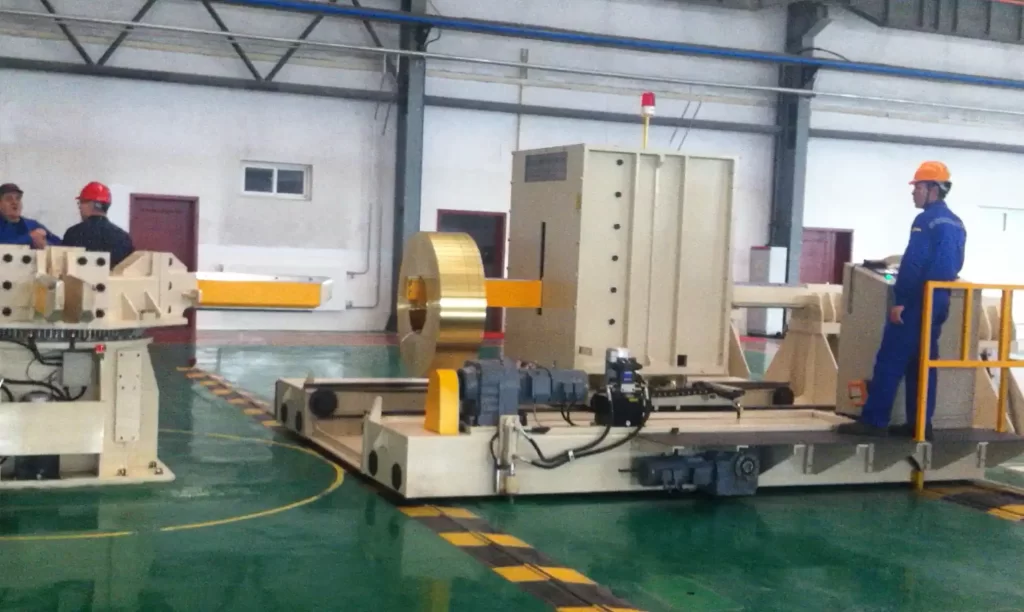
For Mexican plants, the optimal choice depends on coil size, production volume, and available space. SHJLPACK recommends:
- Standard Upenders for 1-10 ton coils, 50-200 daily
- Heavy-Duty Rotators for 10-20 ton coils, high-volume operations
- Compact Models for space-constrained facilities
- Custom solutions for special alloy or finished product handling
Dive Deeper Content:
Equipment Selection Guide for Mexican Operations
Based on my experience with Mexican steel processors, here's how to match your needs with the right equipment:
Coil Turning Machine Comparison Table
| Specification | Standard Upender | Heavy-Duty Rotator | Compact Model |
|---|---|---|---|
| Ideal for Mexican Plants | Medium operations in Monterrey, Guadalajara | Large mills in Veracruz, Lazaro Cardenas | Space-limited facilities in Mexico City |
| Coil Weight Range | 1-10 tons | 10-20 tons | 1-5 tons |
| Production Capacity | 50-200 coils/day | 200-500 coils/day | 30-100 coils/day |
| Floor Space Required | 6m × 4m | 8m × 6m | 4m × 3m |
| Power Requirements | 15 kW | 22 kW | 11 kW |
| Mexican Voltage Compatibility | 220V/480V, 60Hz | 480V, 60Hz | 220V, 60Hz |
| Price Range (USD) | $45,000-65,000 | $85,000-120,000 | $35,000-50,000 |
| Recommended Brands | SHJLPACK CU-1000 | SHJLPACK CU-2000 HD | SHJLPACK CU-500 Compact |
Key Selection Factors for Mexican Conditions
Climate Considerations 🌡️
Mexican industrial environments often feature high temperatures and humidity. SHJLPACK machines use tropicalized components that withstand 40°C+ temperatures and 80%+ humidity without performance degradation. According to our installation data, standard European machines often require additional cooling systems in Mexican conditions.
Local Support and Service 🔧
Having local technical support is crucial. SHJLPACK maintains service technicians in major Mexican industrial centers with 24-48 hour response times for critical issues. We also stock common spare parts in our Guadalajara warehouse to minimize downtime.
Regulatory Compliance 📋
All SHJLPACK equipment meets Mexican NOM standards for industrial machinery safety and electrical compliance. We provide complete documentation in Spanish for your safety officers and regulatory compliance teams.
Case Example:
🏭 Automotive Steel Supplier in Puebla
- Challenge: Needed to handle 120 coils daily (3-8 tons each) in limited space
- Solution: SHJLPACK CU-800 with customized footprint and Mexican voltage compatibility
- Results:
- Space utilization: 40% better than standard models
- Energy consumption: 18% lower than competitors
- Uptime: 99.2% over first year of operation
- Local service: average 18-hour response time
The right machine for your plant isn't necessarily the most expensive or the highest capacity - it's the one that matches your specific production requirements while accommodating your facility's constraints and local conditions.
4. How Can You Calculate the Exact ROI for Your Coil Turning Machine Investment?
Leading Paragraph:
Many plant managers hesitate to invest in automation because they're unsure about the actual return on investment. I've helped numerous factories in Mexico calculate their ROI, and the results often surprise them - the payback period is usually much shorter than they anticipate.
Snippet Paragraph:
Calculate ROI by comparing current manual costs against automated operation expenses, then dividing by equipment investment. A typical SHJLPACK installation shows:
- Labor savings: $8,000-12,000 monthly
- Damage reduction: $3,000-6,000 monthly
- Throughput increase: $4,000-8,000 monthly value
- ROI period: 12-18 months for most applications
Dive Deeper Content:
Step-by-Step ROI Calculation Method
Follow this practical approach I've used with Mexican manufacturers to calculate your specific ROI:
1. Document Current Manual Costs
Labor Expenses 👥
- Number of workers: __ × monthly salary $__ = $__
- Overtime hours: __ × overtime rate $__ = $__
- Benefits (30-40% of salary): $__
- Training & turnover costs: $__
- Total Monthly Labor: $__
Damage and Quality Costs 🏭
- Current damage rate: __% × monthly coil value $__ = $__
- Customer rejections/claims: $__ monthly
- Quality downgrades: $__ monthly
- Total Monthly Damage: $__
Efficiency Losses ⚡
- Production bottlenecks cost: $__ monthly
- Missed delivery penalties: $__ monthly
- Total Monthly Efficiency Loss: $__
2. Calculate Automated Operation Costs
Equipment Investment 💰
- Machine purchase: $__
- Installation & training: $__
- Total Investment: $__
Operating Costs 🔧
- Operator salary: $__ monthly
- Maintenance: $__ monthly
- Energy consumption: $__ monthly
- Total Monthly Operating Cost: $__
3. Compute Your ROI
Monthly Savings Calculation:
Total Manual Costs: $______
- Total Automated Costs: $______
= Monthly Savings: $______
ROI Period:
Total Investment: $______ ÷ Monthly Savings: $______ = ROI Period: ______ monthsReal ROI Example from Mexican Plant
Manual Operation Costs:
- 4 workers @ $2,000 = $8,000
- Overtime (60h) = $2,400
- Benefits = $2,400
- Damage (5% of $400,000) = $20,000
- Total Monthly = $32,800
Automated Operation Costs:
- 1 operator @ $2,200 = $2,200
- Maintenance = $400
- Energy = $300
- Total Monthly = $2,900
Monthly Savings: $32,800 - $2,900 = $29,900
ROI Calculation:
- Equipment investment: $65,000
- Installation: $15,000
- Total: $80,000
- ROI Period: $80,000 ÷ $29,900 = 2.7 months
According to Randal Liu, "The most common mistake I see is factories only counting the direct labor savings. When you include damage reduction, quality improvements, and increased throughput, the ROI often drops below 6 months for busy operations."
Additional Financial Benefits
Tax Advantages in Mexico 🇲🇽
Mexican manufacturers can often deduct 100% of automation equipment investments in the first year through the IMMEX program and other industrial development incentives. Consult with your accountant about specific tax benefits available in your state.
Financing Options 💳
SHJLPACK works with Mexican financial institutions to provide equipment financing with 12-36 month terms, making automation accessible even for smaller operations. Monthly payments are often lower than the savings generated, creating positive cash flow from day one.
Conclusion
Coil turning machines deliver proven results: dramatic damage reduction, significant labor savings, and rapid ROI that transforms your packing operations. For complete steel coil packaging solutions, explore our steel coil packing line systems.
FAQ Section
Frequently Asked Questions
Q: How long does installation and commissioning typically take for a coil turning machine in Mexico?
A: Standard installation takes 3-5 days with another 2-3 days for operator training. SHJLPACK provides complete project management including Mexican customs clearance and local electrical compatibility adjustments to ensure smooth implementation.
Q: What maintenance is required for automated coil turning equipment?
A: Daily visual inspections, weekly lubrication, and monthly preventive maintenance checks. SHJLPACK machines are designed for minimal maintenance with most components rated for 10,000+ hours of operation. We provide Spanish-language maintenance manuals and training.
Q: Can these machines handle different coil sizes and weights in the same production run?
A: Yes, modern coil turners feature adjustable programming for different coil specifications. SHJLPACK systems can store 20+ preset configurations for quick changeovers between different coil types, typically taking less than 2 minutes to switch settings.
Q: What safety features are most important for Mexican regulatory compliance?
A: Key safety requirements include emergency stop systems, safety light curtains, mechanical locking devices, and NOM-compliant control panels. SHJLPACK equipment includes all required safety features for Mexican industrial compliance plus optional additional protections.
Q: How does the performance of Chinese-made coil turning machines compare to European brands?
A: SHJLPACK machines match or exceed European performance at 30-40% lower cost. Our components use Japanese and German bearings and motors with Chinese manufacturing efficiency. We provide the same 2-year warranty as European brands with better local support in Mexico.


