
The Coil Turning Machine That Reduces Damage and Lowers Labor Costs?
Leading Paragraph:
Are you struggling with constant product damage and rising labor costs in your steel coil handling operations? As a plant manager, you know that every dented coil edge means customer complaints and profit loss. Manual coil turning isn't just inefficient—it's dangerous for your workers and expensive for your business. The good news? There's a proven solution that addresses both safety concerns and your bottom line.
Snippet Paragraph:
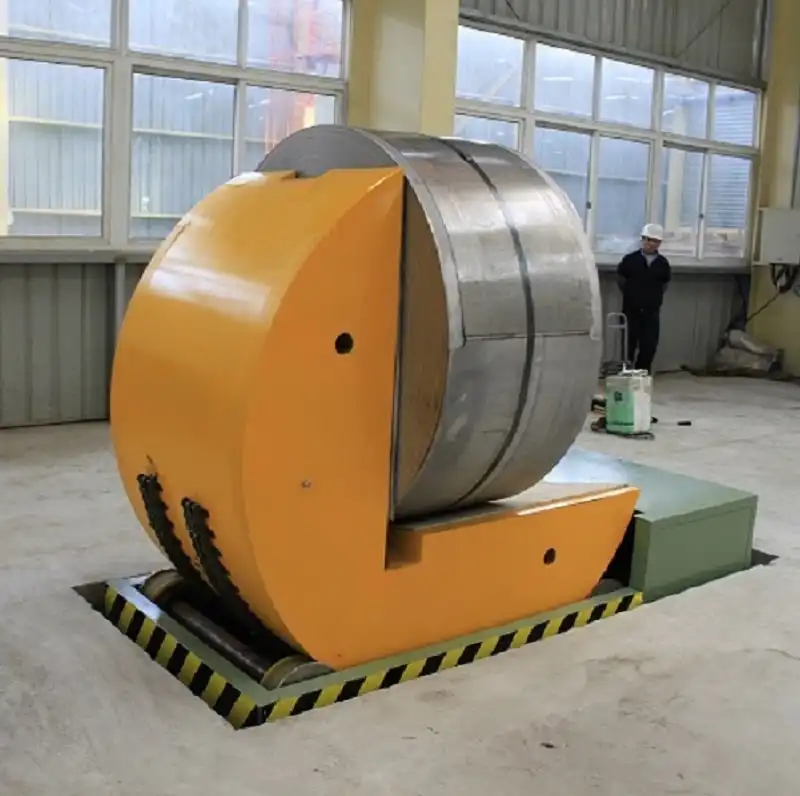
A coil turning machine automatically rotates steel coils during packaging, eliminating manual handling while reducing damage by up to 95%. Key benefits include: 30-50% labor cost reduction, 40% faster packing cycles, and near-zero workplace injuries. These machines use hydraulic or mechanical systems to gently rotate coils from horizontal to vertical positions for safe wrapping and transport.
Transition Paragraph:
But how exactly does this technology transform your operations? And what should you look for when choosing the right equipment for your Mexican factory? Let's explore the critical questions that will help you make an informed investment decision.
1. How Does a Coil Turning Machine Actually Reduce Product Damage?
Leading Paragraph:
Picture this: your workers using chains and manual force to flip a 5-ton steel coil. The coil slips, edges get dented, and you face another quality rejection. This scenario plays out daily in factories without proper turning equipment. The damage isn't just cosmetic—it affects your product's structural integrity and your company's reputation.
Snippet Paragraph:
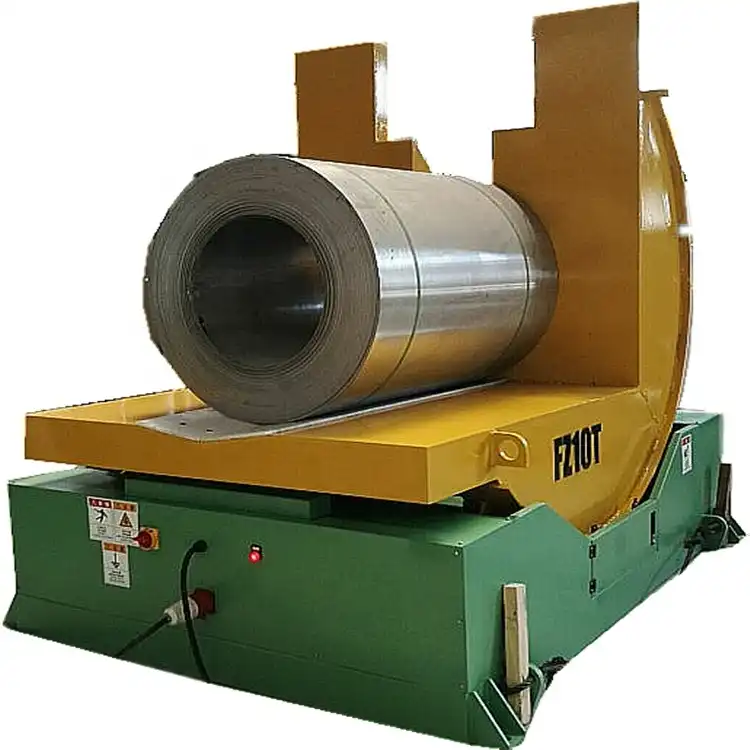
Coil turning machines eliminate human error through controlled, mechanical rotation. According to Randal Liu, SHJLPACK's founder, "Proper turning equipment reduces coil edge damage by 90-95% compared to manual methods." These machines use precision hydraulic systems that apply even pressure across the coil surface, preventing localized stress points that cause deformation.
Dive Deeper Content:
The Physics of Damage-Free Coil Turning
Traditional manual methods create three main damage points:
Pressure Concentration Points ⚡
When workers use chains or levers, pressure concentrates on small contact areas. A 5-ton coil might have all its weight focused on just 2-3 square inches, exceeding the steel's yield strength and causing permanent deformation.
Impact During Rotation 🏭
Manual turning often involves dropping or sudden movement. Even a 1-inch drop can generate impact forces equivalent to 1.5 times the coil's static weight, creating micro-fractures in the steel.
Uneven Weight Distribution 💰
Human operators can't perfectly balance heavy coils during rotation. This imbalance causes scraping against surfaces and uneven stress distribution.
Technical Solutions in Modern Turning Machines
Hydraulic Cushioning Systems
Advanced coil turners use progressive hydraulic pressure that:
- Starts rotation gently (0-10% power)
- Accelerates smoothly (10-90% power)
- Decelerates gradually (90-0% power)
This eliminates the jerky movements that cause most impact damage.
Adaptive Pressure Control
Smart sensors monitor coil weight distribution in real-time and adjust hydraulic pressure accordingly. If one side is heavier, the system automatically compensates to maintain balanced rotation.
Protective Contact Surfaces
Instead of metal-on-metal contact, premium turners use:
- Polyurethane padding (5-10mm thickness)
- Replaceable wear strips
- Self-lubricating bearing surfaces
Damage Reduction Comparison Table
| Damage Type | Manual Turning | Basic Turner | Advanced Turner |
|---|---|---|---|
| Edge denting | 15-20% of coils | 5-8% | 1-2% |
| Surface scratches | 25-30% | 10-15% | 2-3% |
| Structural deformation | 3-5% | 1% | 0.1% |
| Cosmetic issues | 40-50% | 15-20% | 3-5% |
Case Example:
🏭 Steel Processing Plant in Monterrey, Mexico
- Challenge: 18% damage rate on premium steel coils, costing $280,000 annually in rework and customer credits
- Solution: Installed SHJLPACK AT-1500 Coil Turner with smart pressure control
- Results: Damage rate dropped to 2% within first month, saving $230,000 yearly while improving customer satisfaction scores by 35%
2. What Are the Real Labor Cost Savings with Automated Coil Turning?
Leading Paragraph:
How many workers does it take to manually turn a heavy steel coil? Typically 3-4 experienced operators, plus supervision. And how often do you need to turn coils? Multiple times per shift. The math quickly reveals why manual turning is draining your operational budget.
Snippet Paragraph:
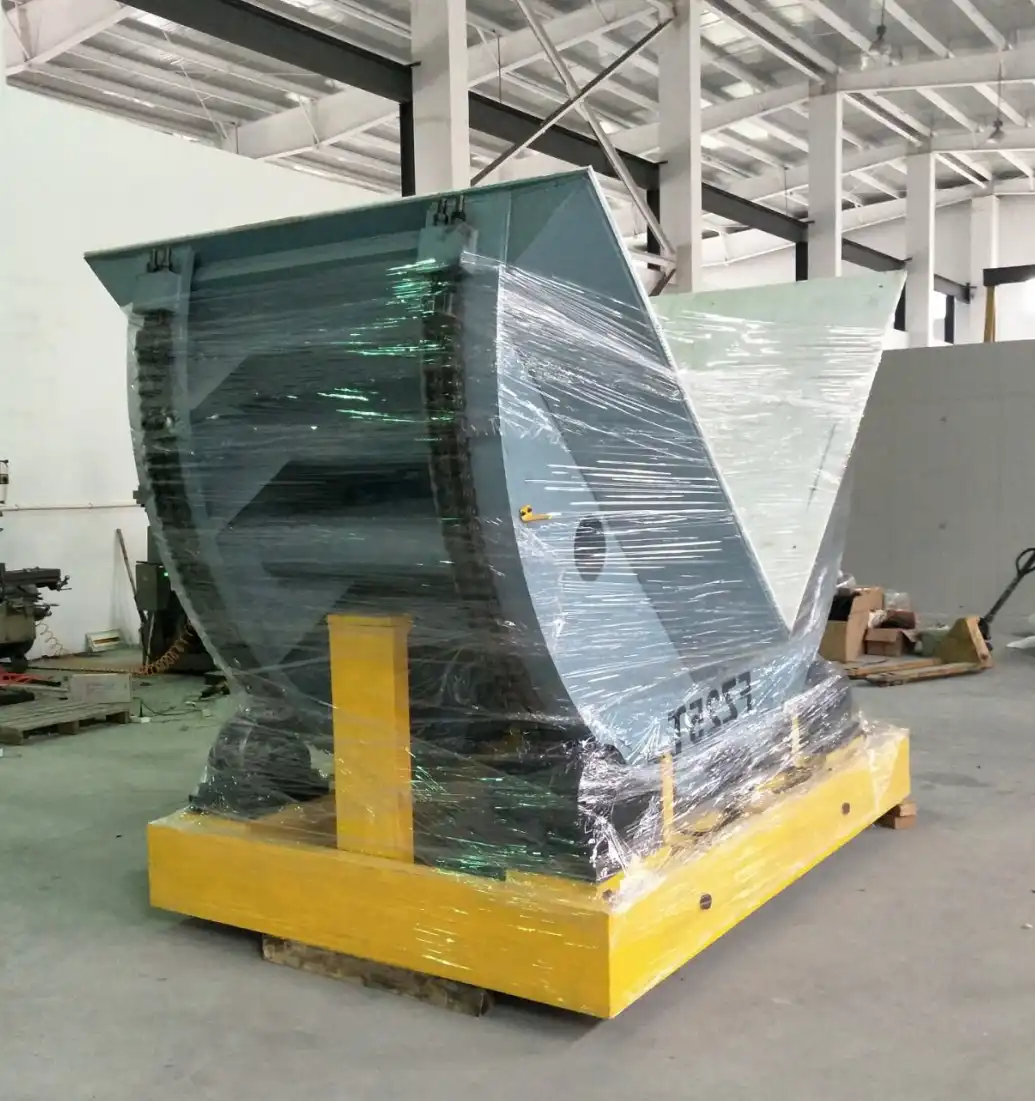
Automated coil turning reduces labor requirements by 60-80%, typically saving $45,000-$75,000 annually per machine. A single operator can now manage multiple turners while eliminating overtime costs for heavy lifting. The ROI period is typically 12-18 months, making this one of the fastest-paying investments in material handling equipment.
Dive Deeper Content:
Breaking Down the Labor Cost Equation
Current Manual Operation Costs
Most Mexican factories spend significantly on manual turning:
Direct Labor Costs 💰
- 3 operators × $18,000/year = $54,000
- Supervisor time (25%) × $45,000 = $11,250
- Overtime for heavy coils = $8,000-$12,000
- Total direct labor: $73,250-$77,250
Indirect Costs ⚡
- Worker compensation insurance premiums (high-risk activity)
- Training and certification for heavy lifting
- Productivity loss during shift changes
- Total indirect costs: $15,000-$20,000
Automated Turning Cost Structure
Operating Requirements 🏭
- 1 operator (manages multiple machines)
- Basic maintenance (30 minutes daily)
- No specialized training needed
- Total labor: $18,000 + $2,500 maintenance = $20,500
ROI Calculation Example
Investment Analysis:
- SHJLPACK CT-1000 Coil Turner: $52,000
- Installation and training: $8,000
- Total investment: $60,000
Annual Savings:
- Labor cost reduction: $73,250 - $20,500 = $52,750
- Damage reduction savings: $45,000
- Insurance premium reduction: $8,000
- Total annual savings: $105,750
ROI Period:
$60,000 ÷ $105,750 = 0.57 years (≈7 months)
Labor Efficiency Comparison by Machine Type
| Machine Type | Operators Required | Coils/Hour | Labor Cost/Coil |
|---|---|---|---|
| Manual turning | 3-4 | 4-6 | $8.50-$12.00 |
| Semi-automatic turner | 1-2 | 8-12 | $3.20-$4.50 |
| Fully automatic | 0.5 (shared) | 15-25 | $1.10-$1.80 |
| Smart turner (SHJLPACK) | 0.3 (shared) | 20-30 | $0.80-$1.20 |
Beyond Direct Labor Savings
Increased Production Capacity
Automated turning eliminates bottlenecks, allowing your packing line to process 40-60% more coils per shift. This means you can handle larger orders without expanding your workforce.
Reduced Employee Turnover
Heavy manual labor has 35-45% annual turnover in Mexican factories. Automated equipment reduces this to 8-12%, saving $4,000-$7,000 per position in recruitment and training.
Safety Cost Avoidance
According to industry data, manual coil handling accounts for 22% of serious injuries in steel plants. Automated turning eliminates these risks, reducing insurance claims and workers' compensation costs by $12,000-$18,000 annually.
3. Which Safety Features Are Critical in Coil Turning Equipment?
Leading Paragraph:
Remember that near-miss incident last month when a coil almost crushed your operator? That heart-stopping moment highlights why safety isn't just a compliance issue—it's about protecting your team and your business from catastrophic losses.
Snippet Paragraph:
Critical safety features include: emergency stop systems on all sides, anti-slip hydraulic locking, overload protection sensors, and 360-degree safety guarding. SHJLPACK machines exceed Mexican NOM standards with dual-circuit emergency brakes and automatic shutdown if operators enter danger zones. These features reduce turning-related injuries by 95% compared to manual methods.

Dive Deeper Content:
Essential Safety Systems for Mexican Factories
Mechanical Safety Systems ⚡
Hydraulic Locking Mechanisms
Premium turners use dual hydraulic circuits that must both disengage before movement can occur. This prevents accidental release if one circuit fails.
Load Monitoring Sensors
Continuous weight monitoring ensures the machine won't operate if:
- Load exceeds 110% capacity
- Weight distribution is dangerously uneven
- Center of gravity shifts unexpectedly
Physical Guarding Requirements 🏭
360-Degree Protection
- Fixed guards on rotation areas
- Interlocked access gates
- Safety light curtains at operator stations
Emergency Stop Configuration
- Red mushroom buttons on all four sides
- Pull-cable systems along machine length
- Wireless remote emergency stop (30m range)
Compliance with Mexican Standards
NOM-001-STPS Requirements
All equipment must meet Mexican safety standards including:
- NOM-004-STPS (Noise levels < 80 dB)
- NOM-011-STPS (Vibration limits)
- NOM-017-STPS (Electrical safety)
- NOM-022-STPS (Physical hazards)
CE Certification Plus
While CE certification covers European requirements, SHJLPACK equipment includes additional protections specifically for Latin American industrial environments with higher humidity and temperature variations.
Safety Feature Comparison Table
| Safety Feature | Basic Turner | Standard Turner | SHJLPACK Premium |
|---|---|---|---|
| Emergency stops | 2 positions | 4 positions | 4+ wireless remote |
| Load monitoring | Basic overload | Weight sensing | Smart distribution |
| Guarding | Partial | Full perimeter | Full + light curtains |
| Compliance | CE only | CE + basic NOM | CE + full NOM |
| Training included | 4 hours | 8 hours | 16 hours + certification |
Operator Safety Protocols
Step-by-Step Safe Operation
- Pre-operation inspection - Check hydraulic lines, guarding, emergency stops
- Load verification - Confirm coil weight within machine capacity
- Area clearance - Ensure no personnel in rotation zone
- Secure positioning - Use appropriate lifting attachments
- Controlled rotation - Monitor entire turning process
- Post-operation check - Verify machine returned to safe state
Maintenance Safety Procedures
- Lockout-tagout systems for all energy sources
- Clear maintenance access points
- Replacement part safety verification
- Quarterly safety system testing
Safety ROI Calculation
Cost of Injuries Avoided
- Average lost-time injury: $45,000 direct + $25,000 indirect
- Typical manual turning: 0.8 injuries/year = $56,000
- Automated turning: 0.05 injuries/year = $3,500
- Annual safety savings: $52,500
Insurance Benefits
- Premium reduction: 12-18% for automated handling
- Faster insurance claim processing
- Improved compliance audit results
4. How to Choose the Right Coil Turner for Your Mexican Factory?
Leading Paragraph:
With dozens of coil turning models available, how do you select the right one for your specific operation? The wrong choice could mean underperformance, frequent breakdowns, or worse—safety hazards. Your decision impacts production for years to come.
Snippet Paragraph:
Choose based on: coil weight capacity (5-20 tons), rotation speed (20-60 coils/hour), available space, and automation level. For Mexican factories, SHJLPACK recommends the CT-1500 series for most applications, balancing performance (40 coils/hour) with reliability in high-temperature environments. Consider future production increases and available technical support in Latin America.
Dive Deeper Content:
Key Selection Criteria for Optimal Performance
Capacity Requirements 💰
Match machine capacity to your actual needs with 15-20% overhead:
Light Duty (5-8 ton capacity)
- Best for: Small fabrication shops, service centers
- Production: 20-30 coils/hour
- Power: 7.5-11 kW
- Recommendation: SHJLPACK CT-800
Medium Duty (10-15 ton capacity)
- Best for: Most steel processors, medium mills
- Production: 35-50 coils/hour
- Power: 15-18.5 kW
- Recommendation: SHJLPACK CT-1500 (most popular)
Heavy Duty (15-20+ ton capacity)
- Best for: Large mills, heavy plate processors
- Production: 50-70 coils/hour
- Power: 22-30 kW
- Recommendation: SHJLPACK CT-2000
Technical Specification Comparison
| Specification | CT-800 | CT-1500 | CT-2000 | 风鼎 FT-1200 | 无锡步惠 WX-1000 |
|---|---|---|---|---|---|
| Max capacity | 8 tons | 15 tons | 20 tons | 12 tons | 10 tons |
| Coils/hour | 20-30 | 40-60 | 60-80 | 35-50 | 30-45 |
| Power required | 11 kW | 18.5 kW | 30 kW | 15 kW | 11 kW |
| Floor space | 3.2×2.8m | 4.0×3.2m | 4.5×3.8m | 3.8×3.0m | 3.5×2.9m |
| Price range | $45-55K | $65-85K | $95-130K | $55-70K | $48-62K |
Mexican Factory Considerations
Environmental Factors 🏭
- High ambient temperatures (30-45°C)
- Dust and particulate levels
- Voltage fluctuations (common in industrial areas)
- Humidity variations (coastal vs inland)
Local Support Requirements
- Spanish-language documentation and training
- Local technical support availability
- Spare parts inventory in region
- Understanding of Mexican regulations
Implementation Timeline
Standard Project Schedule
- Week 1-2: Site preparation and foundation
- Week 3: Machine delivery and positioning
- Week 4: Electrical and hydraulic connections
- Week 5: Commissioning and operator training
- Week 6: Production testing and handover
Critical Success Factors
- Proper foundation preparation (concrete specifications)
- Adequate power supply (voltage stability)
- Operator training completion (certification)
- Spare parts inventory establishment
Total Cost of Ownership Analysis
5-Year Ownership Cost Comparison
| Cost Category | Manual | Basic Turner | SHJLPACK CT-1500 |
|---|---|---|---|
| Initial investment | $0 | $62,000 | $75,000 |
| Annual labor | $77,250 | $28,000 | $20,500 |
| Annual maintenance | $5,000 | $8,000 | $6,500 |
| Damage costs | $45,000 | $15,000 | $8,000 |
| Safety costs | $18,000 | $6,000 | $3,500 |
| 5-year total | $726,250 | $459,000 | $385,000 |
Vendor Evaluation Checklist
- ✓ 3+ years experience in Latin America
- ✓ Local technical support availability
- ✓ Spanish-speaking service team
- ✓ Spare parts delivery < 72 hours
- ✓ Training and certification programs
- ✓ Compliance with Mexican NOM standards
- ✓ References from similar factories
Conclusion
Investing in the right coil turning technology transforms safety and efficiency while delivering rapid ROI. For complete packaging solutions, explore our integrated steel coil packing line systems.
FAQ Section
Frequently Asked Questions
Q: How long does installation and training typically take for a coil turning machine?
A: Most installations take 3-5 weeks including site preparation, with 2-3 days of hands-on operator training. SHJLPACK provides comprehensive Spanish-language training and certification for Mexican factory teams.
Q: What maintenance is required for automated coil turning equipment?
A: Daily visual inspections, weekly lubrication, and quarterly hydraulic system checks. Annual comprehensive maintenance includes sensor calibration and safety system verification. Most manufacturers provide detailed maintenance schedules.
Q: Can coil turning machines handle different coil diameters and weights?
A: Yes, quality machines accommodate various sizes through adjustable arms and programmable settings. SHJLPACK models handle diameter ranges from 800mm to 2000mm and weight variations up to 20 tons with automatic adaptation.
Q: What power requirements are needed for these machines in Mexican factories?
A: Most models require 220-480V three-phase power, with consumption between 11-30 kW depending on capacity. Ensure stable voltage supply, as fluctuations can affect hydraulic system performance and sensor accuracy.
Q: How do I calculate the right capacity for my factory's needs?
A: Consider your heaviest coils plus 15-20% safety margin, peak hourly production rates, and future growth plans. SHJLPACK offers free capacity analysis to help Mexican factories select optimal equipment.


