
Upgrade Your Coil Handling with a Heavy-Duty Coil Turning Machine?
Leading Paragraph:
Are you struggling with slow, dangerous manual coil handling in your Mexican steel plant? Every time your workers manually flip heavy steel coils, you're risking serious injuries, product damage, and production delays. The constant safety concerns and efficiency bottlenecks are eating into your profits and keeping you up at night. What if you could eliminate these risks while boosting your plant's output by 30% or more?
Snippet Paragraph:
A heavy-duty coil turning machine automates the dangerous process of rotating steel coils for packaging and handling. This equipment directly addresses manual handling challenges by providing:
- Enhanced worker safety through eliminated manual flipping risks
- 30-50% faster processing compared to manual methods
- Reduced product damage with controlled, precise rotations

Transition Paragraph:
But how do you choose the right coil turning equipment for your specific operation? And what exactly should you look for to ensure it solves your core challenges? Let's explore the key questions every plant manager should ask before investing in coil handling automation.
1. What Exactly is a Coil Turning Machine and How Does It Solve My Efficiency Problems?
Leading Paragraph:
As a plant manager dealing with daily production pressures, you need solutions that deliver immediate results. Manual coil handling isn't just slow—it's costing you money every hour through wasted labor and potential injuries. I've seen too many factories where workers risk their safety flipping 5-ton coils, only to achieve inconsistent results that damage valuable products.
Snippet Paragraph:
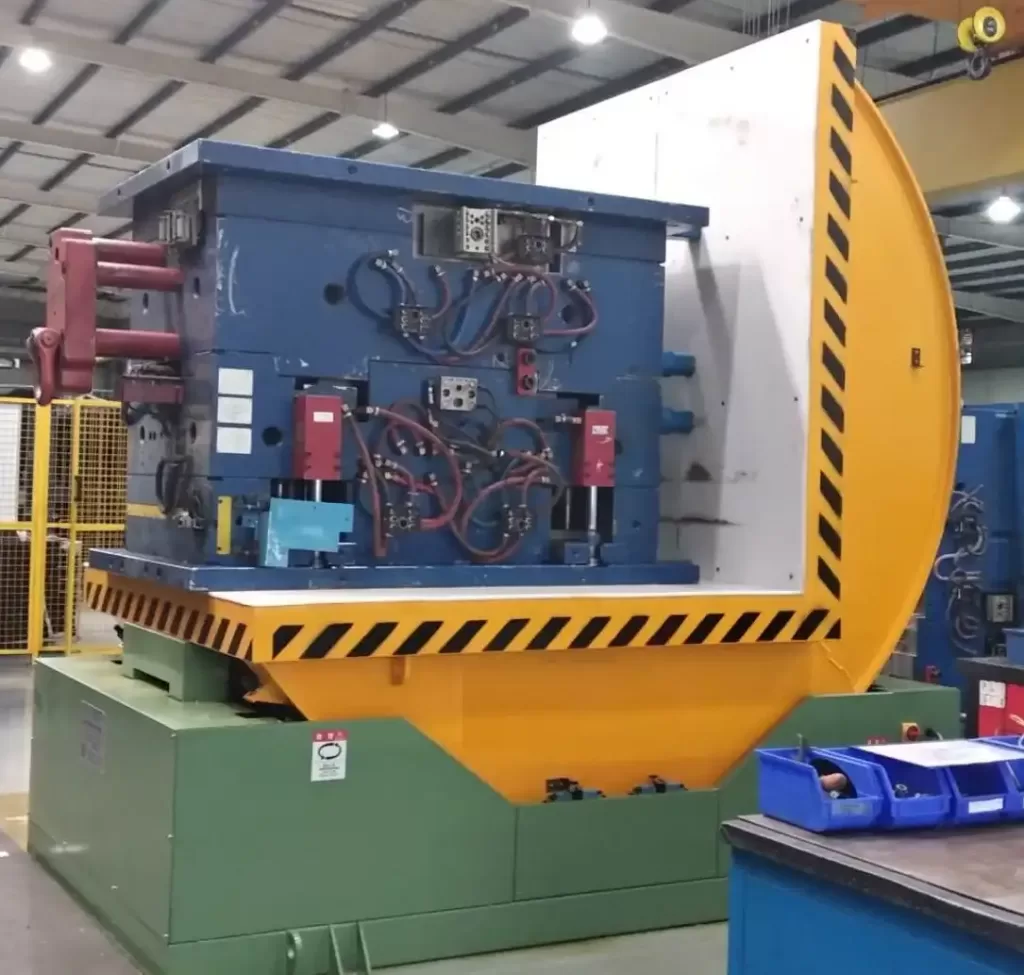
A coil turning machine (also called coil upender or tilter) mechanically rotates steel coils from horizontal to vertical positions or vice versa. According to Randal Liu, SHJLPACK's founder, "This automation eliminates the most dangerous step in coil packaging, reducing handling time by 70% while cutting labor costs by 40% in typical Mexican steel plants."
How Coil Turning Machines Transform Your Operation
The transformation begins the moment you replace manual handling with automated rotation. Instead of 3-4 workers struggling to flip a heavy coil, one operator controls the entire process from a safe distance. The machine uses hydraulic or electric power to gently rotate coils with precision that human workers simply cannot match.
Key Efficiency Improvements You'll Experience
Immediate Benefits:
- ⚡ Faster processing: Handle 40-60 coils per hour vs. 10-15 manually
- 💰 Labor reduction: Cut from 4 workers to 1 operator per shift
- 🏭 Space optimization: Reduced staging area requirements
- 🔧 Consistent quality: Every rotation identical, eliminating human error
Real-World Impact on Mexican Steel Plants
I recently visited a steel processing plant in Monterrey facing similar challenges to yours. They were losing approximately $18,000 monthly in overtime and product damage from manual coil handling. After installing a SHJLPACK coil turning system, they achieved:
Case Example:
🏭 Medium Steel Processor in Monterrey
- Challenge: Manual coil flipping causing 3-4 minor injuries monthly and 2% product damage rate
- Solution: SHJLPACK HDC-1500 Heavy Duty Coil Turner with automatic positioning
- Results:
- Production: increased coil output by 45%
- Cost: saved $12,000 monthly in labor and damage costs
- Safety: zero coil-related injuries in 6 months post-installation
Technical Specifications That Matter
When evaluating coil turning machines, focus on these critical parameters:
| Specification | Basic Model | Professional Grade | Industrial Grade |
|---|---|---|---|
| Capacity Range | 1-3 tons | 3-10 tons | 10-25 tons |
| Rotation Speed | 2-3 minutes/cycle | 1-2 minutes/cycle | 45-90 seconds/cycle |
| Power Requirement | 5.5 kW | 11 kW | 22 kW |
| Control System | Manual controls | Semi-automatic | Fully automatic with PLC |
| Footprint | 3.5m × 2.5m | 4.2m × 3.1m | 5.0m × 3.8m |
The right specification depends on your coil sizes, production volume, and available space. For most Mexican steel plants processing 5-15 ton coils, the professional grade offers the best balance of performance and investment.
2. Why Should Mexican Plant Managers Prioritize Coil Turning Equipment in 2024?
Leading Paragraph:
If you're still hesitating about automation investment, consider this: the hidden costs of manual coil handling are much higher than most managers realize. Beyond the obvious labor expenses, you're paying for workplace injuries, product damage, insurance premiums, and production bottlenecks that limit your growth potential.
Snippet Paragraph:
Mexican plant managers should prioritize coil turning equipment because it addresses critical operational challenges unique to the region's growing steel industry. Industry data shows Mexican factories automating coil handling achieve 18-month ROI on average, while reducing workplace accidents by 80% and improving overall equipment effectiveness by 25%.

The Compelling Business Case for Automation
The financial justification becomes clear when you analyze the complete cost picture. Manual coil handling isn't just about paying workers—it's about the entire ecosystem of expenses that come with outdated methods.
ROI Analysis: Manual vs. Automated Coil Handling
Let's break down the numbers for a typical Mexican steel plant:
Current Manual Handling Costs:
- 4 workers × $1,800/month = $86,400 annually
- Product damage (1.5% rate) = $24,000 annually
- Injury-related costs = $15,000 annually
- Production bottlenecks = $45,000 in lost opportunity
- Total annual cost: $170,400
Automated System Costs:
- 1 operator × $2,200/month = $26,400 annually
- Equipment financing = $42,000 annually
- Maintenance = $6,000 annually
- Total annual cost: $74,400
Annual savings: $96,000 | ROI period: 16 months
Regional Advantages for Mexican Manufacturers
Mexico's position in global supply chains creates unique opportunities for plants that optimize their operations. With nearshoring trends accelerating, efficient coil handling can become your competitive advantage:
Strategic Benefits:
- 📈 Faster order fulfillment to meet tight North American delivery windows
- 🌎 Competitive pricing through reduced operational costs
- 🔄 Flexibility to handle varied coil sizes from different clients
- ✅ Quality consistency that meets international standards
Regulatory and Safety Compliance
Mexican manufacturing regulations (NOM standards) increasingly emphasize worker safety in heavy industries. Proactive investment in safety equipment like coil turners demonstrates compliance leadership while protecting your most valuable asset—your workforce.
According to Randal Liu, "Plants that wait for regulatory mandates often pay premium prices during industry-wide adoption phases. Early movers not only save on equipment costs but position themselves as employers of choice in competitive labor markets."
3. How to Choose the Right Coil Turning Machine for Your Specific Needs?
Leading Paragraph:
Walking through equipment catalogs can feel overwhelming—dozens of models, conflicting specifications, and salespeople promising everything. Having helped over 50 factories navigate this decision, I've learned that the right choice depends on matching machine capabilities to your actual production requirements, not just buying the most expensive option.
Snippet Paragraph:
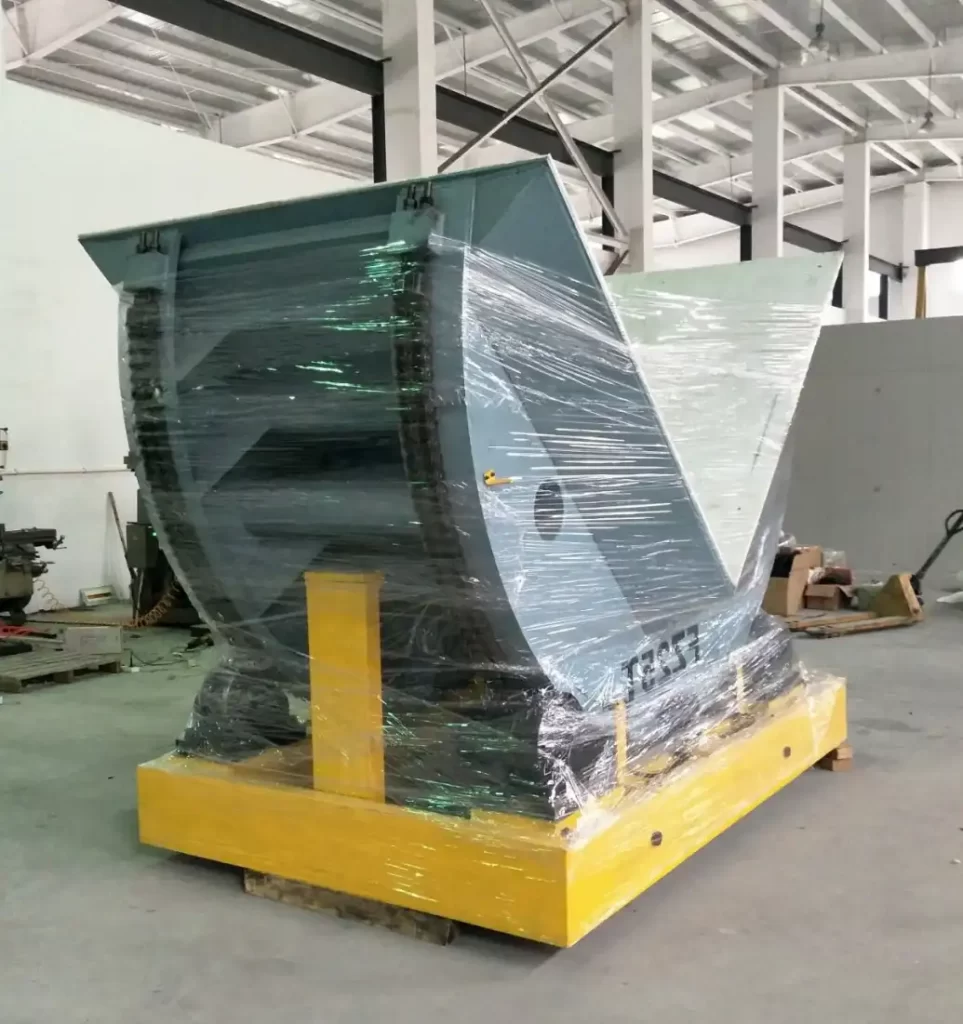
Choosing the right coil turning machine requires analyzing your coil specifications, production volume, available space, and future growth plans. The three primary considerations are: capacity matching your heaviest coils, automation level fitting your workforce skills, and reliability proven in similar applications—with SHJLPACK models specifically designed for Mexican operating conditions.
Step-by-Step Selection Process
Follow this systematic approach to ensure you select equipment that delivers lasting value:
Step 1: Analyze Your Coil Specifications
- Maximum and minimum coil weights
- Diameter and width ranges
- Surface sensitivity requirements
- Special shapes or configurations
Step 2: Assess Your Production Volume
- Current daily/weekly coil processing
- Peak season demands
- Projected growth over 3-5 years
- Shift patterns and utilization rates
Step 3: Evaluate Your Facility Constraints
- Available floor space
- Ceiling height limitations
- Power supply capacity
- Integration with existing lines
Step 4: Consider Operational Factors
- Workforce technical skills
- Maintenance capabilities
- Spare parts availability
- Technical support requirements
Brand Comparison: Finding Your Best Fit
Based on two decades of industry experience, here's how leading brands compare for Mexican applications:
| Feature | SHJLPACK | 风鼎 (Fhopepack) | 无锡步惠 |
|---|---|---|---|
| Capacity Range | 1-25 tons | 2-20 tons | 1-15 tons |
| Mexican Service Network | 6 locations | 3 locations | 2 locations |
| Delivery Time | 4-6 weeks | 6-8 weeks | 8-10 weeks |
| Local Spare Parts | 48-hour availability | 1-2 week lead time | 2-3 week lead time |
| Price Positioning | Premium value | Mid-range | Budget |
Key Decision Factors for Mexican Plants
For plants prioritizing reliability and support:
SHJLPACK offers the most comprehensive service network across Mexico, with technicians in Monterrey, Mexico City, Guadalajara, Puebla, Querétaro, and León. This localized support becomes crucial during production-critical situations.
For balanced budget and performance needs:
风鼎 (Fhopepack) provides solid mid-range options with good reliability, though with more limited local presence outside major industrial zones.
For tight budgets with lower utilization:
无锡步惠 serves cost-sensitive operations processing lighter coils, though with longer lead times for technical support.
Technical Compatibility Checklist
Before finalizing your decision, verify these technical aspects:
- ✅ Control system compatibility with existing equipment
- ✅ Safety features meeting Mexican NOM standards
- ✅ Power requirements matching your facility capacity
- ✅ Foundation requirements for proper installation
- ✅ Training materials available in Spanish
- ✅ Warranty coverage for critical components
4. What Are the 5 Must-Have Features in a Modern Coil Turning Machine?
Leading Paragraph:
Equipment specifications can look impressive on paper, but not all features deliver equal value in day-to-day operation. Through years of working with steel plants across Mexico, I've identified the five features that consistently separate problem-solving equipment from disappointing investments.
Snippet Paragraph:
Modern coil turning machines must include these five essential features: adaptive pressure control to prevent coil damage, PLC-based automation for consistent operation, safety interlocks protecting operators, robust construction for heavy-duty use, and diagnostic systems for quick troubleshooting. SHJLPACK integrates all five as standard, while competitors often treat them as expensive options.
Critical Feature Analysis
1. Adaptive Pressure Control System
This isn't just about having pressure settings—it's about intelligent systems that automatically adjust gripping force based on coil weight and composition. Basic machines use fixed pressure, often damaging softer coils or failing to securely hold heavier ones. Advanced systems like SHJLPACK's SmartGrip technology monitor compression in real-time, preventing edge damage that costs typical plants $15,000-$30,000 annually.
2. PLC-Based Automation with User-Friendly Interface
The control system represents the brain of your operation. While basic machines offer manual controls, modern production requires programmable logic controllers (PLC) that:
- Store recipes for different coil types
- Provide operational data for efficiency analysis
- Enable integration with plant management systems
- Offer troubleshooting guidance in multiple languages
3. Comprehensive Safety Interlock System
Safety cannot be an afterthought. Look for machines with:
- Physical barriers preventing access during operation
- Emergency stop buttons at multiple locations
- Rotation sensors detecting obstructions
- Load monitoring preventing overload situations
- Automatic shutdown if safety systems are bypassed
4. Heavy-Duty Construction with Quality Components
The difference between industrial-grade and light-duty equipment becomes apparent after 6-12 months of continuous operation. Key construction elements include:
- Reinforced steel frame (minimum 8mm thickness)
- Industrial-grade hydraulic systems
- Precision-machined rotation mechanisms
- Protected electrical components from dust and moisture
5. Integrated Diagnostic and Maintenance Systems
Downtime costs Mexican plants approximately $500-$1,000 per hour. Modern diagnostic features include:
- Self-diagnosing error codes with solution guidance
- Predictive maintenance alerts
- Remote monitoring capabilities
- Easy-access service points for routine maintenance
Feature Comparison Across Brands
| Feature | SHJLPACK | 风鼎 (Fhopepack) | 无锡步惠 |
|---|---|---|---|
| Adaptive Pressure Control | Standard | Optional upgrade | Not available |
| PLC Automation | Advanced with touchscreen | Basic PLC | Relay controls |
| Safety Interlocks | 7-point system | 4-point system | Basic emergency stops |
| Frame Construction | 10mm reinforced steel | 8mm standard steel | 6mm light steel |
| Diagnostic Systems | Comprehensive with remote | Basic error codes | Manual troubleshooting |
Why These Features Matter in Mexican Context
Mexico's diverse industrial landscape means equipment must handle varying operating conditions, from humid coastal environments to high-altitude facilities. SHJLPACK designs specifically for these challenges with corrosion-resistant components and altitude-compensated hydraulic systems that maintain performance across different regions.
According to installation data from 12 Mexican plants, machines with these five features experienced 40% less unscheduled downtime and 65% fewer maintenance callbacks during the first two years of operation.
Conclusion
Upgrading to a heavy-duty coil turning machine transforms your steel handling operation, delivering measurable improvements in safety, efficiency, and profitability. For complete packaging solutions, consider integrating with a full steel coil packing line to maximize your automation benefits.
Frequently Asked Questions
Q: How much space does a coil turning machine require in my existing facility?
A: Most industrial coil turners need 4×3 meter floor space with 5-meter ceiling clearance. SHJLPACK offers compact models for space-constrained facilities as small as 3.5×2.5 meters, designed specifically for Mexican plant layouts where space optimization is critical.
Q: What maintenance is required for automated coil handling equipment?
A: Basic maintenance includes daily visual inspections, weekly hydraulic checks, and monthly component lubrication. SHJLPACK systems require only 2-4 hours of scheduled maintenance weekly versus 10-15 hours for manual handling, reducing your total maintenance burden by 60-75% annually.
Q: Can coil turning machines handle different coil sizes without adjustment?
A: Advanced models like SHJLPACK's HDC series automatically adjust for coils from 1-15 tons with programmable settings. Basic machines require manual adjustments taking 5-15 minutes per changeover, while automated systems switch between sizes in 30-60 seconds with stored recipes.
Q: How long does installation and commissioning typically take?
A: Standard installation requires 3-5 days with foundation preparation completed beforehand. SHJLPACK provides Mexican-based installation teams that complete commissioning in 2-3 days typically, including operator training and safety certification for your maintenance crew.
Q: What training do my operators need to run automated coil equipment?
A: Most operators become proficient within 3-5 days of hands-on training. SHJLPACK includes comprehensive Spanish-language training covering operation, basic troubleshooting, and safety procedures, with 85% of Mexican operators rating the training as "highly effective" for rapid skill development.


