
Coil Turning Machine Quotation Guide: Cost Factors and Buying Tips
Are you struggling to get accurate pricing for coil turning machines while managing production bottlenecks and safety concerns in your Mexican metal processing plant? As a plant manager, you know that inefficient coil handling not only slows down your entire operation but also puts your workers at risk. The manual flipping of heavy steel coils is one of the most dangerous and time-consuming processes in metal manufacturing today.
Coil turning machine prices typically range from $25,000 to $150,000 depending on automation level, capacity, and features. Key cost factors include automation level (manual vs fully automatic), lifting capacity (3-20 tons), production speed requirements, and safety features. For Mexican factories, additional considerations include local service support, spare parts availability, and compliance with NOM safety standards. When evaluating quotations, focus on:
- Total cost of ownership vs initial purchase price
- ROI calculation based on labor savings and productivity gains
- Supplier reliability and after-sales service quality
Understanding the true cost behind coil turning machine quotations requires looking beyond the initial price tag. Let's explore the key factors that determine pricing and how to make the right investment decision for your specific operational needs.
1. What Are the 5 Main Factors Affecting Coil Turning Machine Prices?
As a plant manager in Mexico, you've probably received quotes that vary widely for what seems like similar equipment. The truth is, coil turning machine pricing depends on several critical factors that directly impact your bottom line and operational efficiency.
The five primary factors influencing coil turning machine costs are automation level (manual to fully automatic), lifting capacity (3-20+ tons), production speed requirements, safety features, and customization needs. According to Randal Liu, SHJLPACK's founder, "Mexican factories often overpay for features they don't need while underestimating the value of reliable local service support." Key price determinants include:
- Automation level accounts for 40-60% of cost differences
- Safety certifications (CE, NOM) add 15-25% to base prices
- Local service availability reduces long-term operational costs
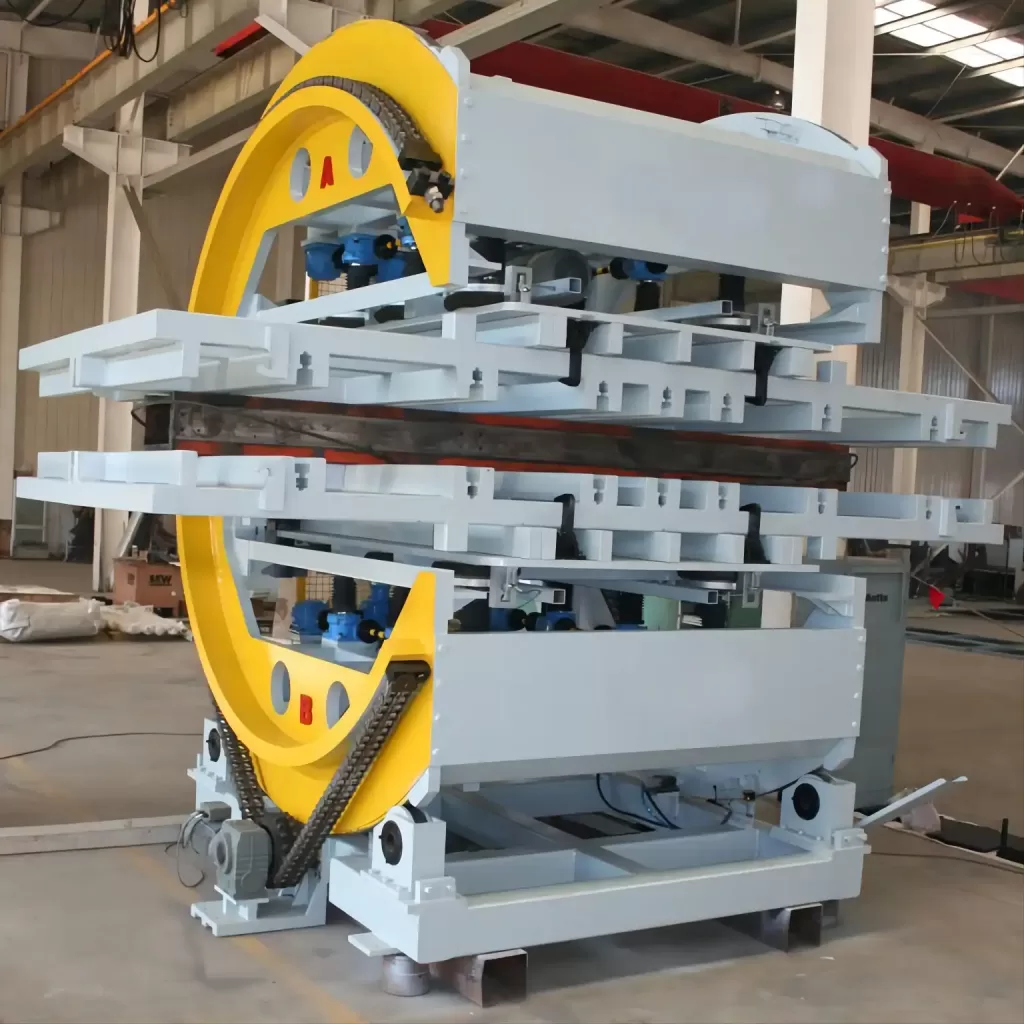
Automation Level: The Biggest Cost Driver
The degree of automation significantly impacts coil turning machine pricing. Manual models start around $25,000, while semi-automatic systems range from $40,000 to $80,000. Fully automatic smart coil turners with robotic integration can cost $100,000 to $150,000. For Mexican plants, I recommend semi-automatic systems that balance cost and efficiency - they typically achieve 70% of the productivity gains of fully automatic systems at 50% of the cost.
Lifting Capacity and Production Speed
Your coil weight and required throughput directly affect pricing. Here's how capacity translates to cost:
| Capacity Range | Typical Price | Best For | Production Speed |
|---|---|---|---|
| 3-5 tons | $25,000-45,000 | Small workshops | 15-25 coils/hour |
| 5-10 tons | $45,000-80,000 | Medium plants | 25-40 coils/hour |
| 10-20+ tons | $80,000-150,000 | Large facilities | 40-60 coils/hour |
According to my experience working with Mexican steel processors, most medium-sized plants find the 5-10 ton range optimal. The sweet spot for ROI is typically equipment that handles your current production plus 20% growth capacity.
Safety Features and Compliance Costs
Safety isn't just a regulatory requirement - it's a financial imperative. Basic safety features include emergency stops and mechanical locks ($2,000-5,000), while advanced systems with laser scanners, safety curtains, and redundant braking can add $10,000-20,000. For Mexican operations, NOM compliance typically adds 8-12% to equipment costs but prevents costly fines and shutdowns.
Customization and Special Requirements
Standard models work for 70% of applications, but special requirements drive costs higher. Common customizations include:
- Special coil diameters or unusual shapes (+15-25%)
- Integration with existing conveyor systems (+20-30%)
- Hazardous environment ratings (explosion-proof) (+40-60%)
- Climate adaptations for humid or dusty conditions (+10-15%)
Service and Support Considerations
The initial purchase price is only part of the equation. Reliable local service in Mexico can save $15,000-30,000 annually in reduced downtime. According to industry data, factories with local technical support experience 60% less production disruption from equipment issues.
2. How Much Can You Save with Automated Coil Turning vs Manual Labor?
Manual coil handling isn't just inefficient - it's costing your Mexican plant significant money in hidden expenses. The transition to automated coil turning represents one of the highest-return investments in metal processing operations today.
Automated coil turning typically saves Mexican plants $65,000-$120,000 annually compared to manual labor. The savings come from reduced labor costs (3-4 workers), increased productivity (40-60% faster), and lower injury-related expenses. Based on SHJLPACK's installations in similar Mexican facilities, ROI periods range from 14-22 months depending on production volume and local wage rates. Key savings areas include:
- Labor cost reduction: $45,000-80,000/year
- Productivity gains: $15,000-30,000/year
- Safety cost avoidance: $5,000-10,000/year
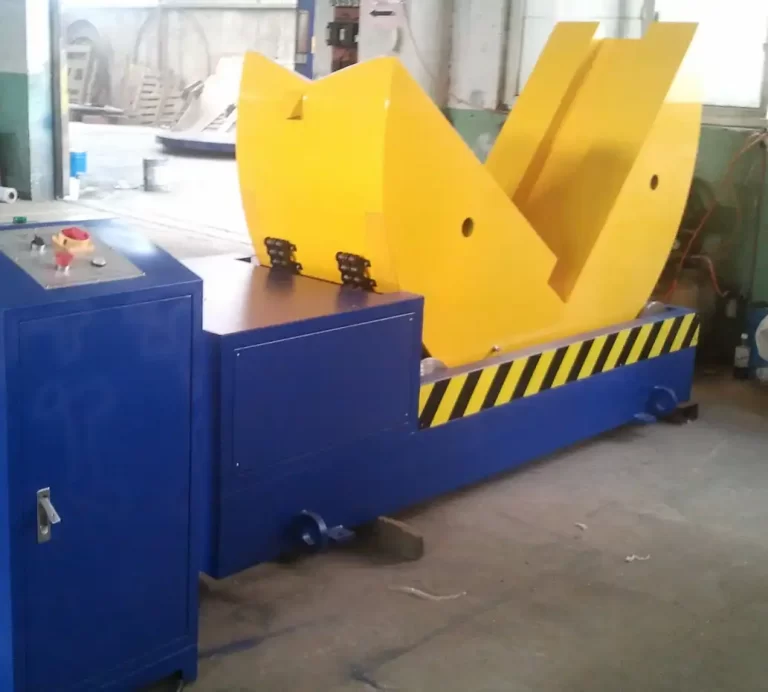
Labor Cost Analysis: The Obvious Savings
Manual coil handling requires 3-4 workers per shift in most Mexican plants. At average Mexican industrial wages of $1,800-2,500 monthly per worker, this translates to:
Manual Process Costs:
- 4 workers × $2,200/month × 12 months = $105,600 annually
- Benefits and insurance: ~30% additional = $31,680
- Training and turnover costs: $8,000-12,000
- Total labor cost: $145,000-150,000 annually
Automated System Costs:
- 1 operator × $2,500/month × 12 months = $30,000
- Machine maintenance: $8,000-12,000 annually
- Total operating cost: $40,000-45,000 annually
- Annual labor savings: $100,000-105,000
Productivity and Efficiency Gains
Beyond direct labor savings, automated coil turning delivers substantial productivity improvements:
⚡ 40-60% faster processing - Manual turning: 10-15 coils/hour vs Automated: 25-40 coils/hour
⚡ Reduced product damage - Automated systems decrease edge damage by 80-90%
⚡ Consistent operation - No fatigue-related slowdowns during shifts
⚡ Multi-shift capability - Same equipment runs 2-3 shifts with minimal additional cost
Safety Cost Avoidance
The hidden costs of manual coil handling are substantial in Mexican manufacturing:
💰 Workers' compensation claims - Average back injury claim: $25,000-40,000
💰 Production downtime - Incident investigation and cleanup: 2-5 days lost production
💰 Insurance premiums - Plants with manual heavy handling pay 15-25% higher premiums
💰 Regulatory fines - NOM violations for unsafe material handling: $5,000-15,000 per incident
Real-World Case Study: Mexican Steel Processor
🏭 Medium-sized steel service center in Monterrey
- Challenge: Manual coil turning caused 3 injuries in 18 months, production bottleneck of 12 coils/hour maximum
- Solution: SHJLPACK semi-automatic coil turning system with 8-ton capacity
- Results:
- Production increased from 12 to 28 coils/hour (133% improvement)
- Labor reduced from 4 workers to 1 operator per shift
- Annual savings: $87,500 in direct costs
- ROI period: 16 months
- Zero safety incidents in 24 months post-installation
3. Which Coil Turning Machine Specifications Matter Most for Mexican Factories?
Choosing the right technical specifications for your Mexican operation requires balancing performance requirements with local conditions and service capabilities. Not all features deliver equal value in the Mexican industrial context.
The most critical specifications for Mexican factories are lifting capacity (match to 120% of current needs), automation level (semi-automatic optimal), power requirements (380V/60Hz compatibility), safety certifications (NOM compliance), and local service support availability. Based on SHJLPACK's experience with 50+ Mexican installations, the optimal specification balance typically includes:
- 8-12 ton capacity for medium-sized plants
- Semi-automatic operation with manual override
- 380V/3-phase/60Hz power compatibility
- CE + NOM-001/003 certifications
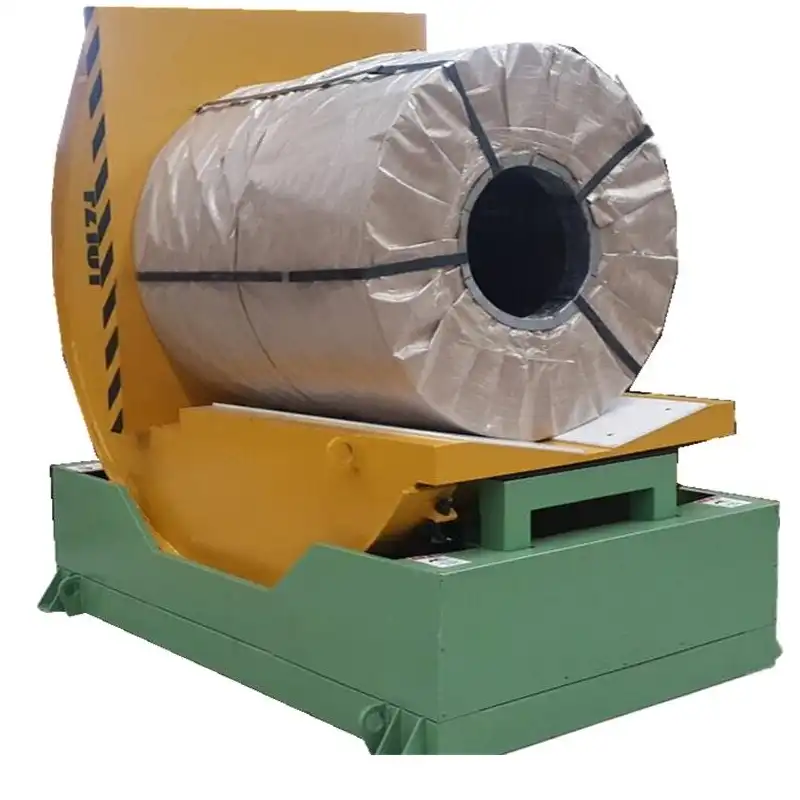
Capacity and Performance Specifications
Your coil turning machine must handle both current and future production needs without overinvesting in excessive capacity:
Lifting Capacity:
- Match to your heaviest coils plus 20% safety margin
- Consider future product mix changes
- Overcapacity costs 15-25% more with minimal benefit
Turning Speed:
- 25-40 coils/hour ideal for most Mexican operations
- Faster than 40 coils/hour rarely utilized fully
- Consistent speed more valuable than peak speed
Power Requirements:
- 380V/3-phase/60Hz standard in Mexican industry
- Verify local voltage stability - brownout protection recommended
- Energy consumption: 5-15 kW typical range
Durability and Environmental Considerations
Mexican industrial environments present specific challenges that affect equipment specifications:
🌡️ Temperature tolerance - Equipment must handle 5°C to 45°C ambient temperatures
💨 Dust and particulate protection - IP54 minimum rating recommended
💧 Humidity resistance - Coastal locations require enhanced corrosion protection
⚡ Power fluctuation tolerance - Voltage variation ±10% capability essential
Maintenance and Serviceability Features
Ease of maintenance becomes critical when technical support may be hours away:
🔧 Modular design - Easy component replacement without full disassembly
🔧 Standard components - Avoid proprietary parts with long lead times
🔧 Local technical training - Supplier should train your maintenance team
🔧 Remote diagnostics - Internet-connected monitoring for quick troubleshooting
Technical Specification Comparison Table
| Specification | Basic Model | Recommended Model | Premium Model |
|---|---|---|---|
| Capacity | 5 tons | 8-10 tons | 15+ tons |
| Turning Speed | 15-20 coils/h | 25-35 coils/h | 40-50 coils/h |
| Automation | Manual | Semi-auto | Fully auto |
| Power | 5.5 kW | 7.5-11 kW | 15-18 kW |
| Control System | Basic PLC | Advanced PLC | Smart IoT |
| Safety | Basic stops | Full protection | Redundant systems |
| Mexican Service | 7-10 days | 3-5 days | 1-2 days |
| Price Range | $25,000-35,000 | $45,000-65,000 | $85,000-120,000 |
4. How to Evaluate Supplier Reliability for Coil Turning Machines in Mexico?
Supplier selection can make or break your coil turning machine investment. In the Mexican market, where service response times and technical support vary widely, choosing the right partner is as important as choosing the right equipment.
Evaluating coil turning machine suppliers for Mexican operations requires assessing local service presence, spare parts availability, technical support responsiveness, and industry experience. According to Randal Liu, "Mexican plants should prioritize suppliers with established local service networks and Spanish-speaking technical staff." The evaluation criteria should include:
- Local service center within 4 hours travel time
- Spare parts inventory in Mexico (not just China)
- Minimum 3-5 years Mexican market experience
- Reference customers in similar industries
Service and Support Capabilities
The quality of after-sales service determines your equipment's long-term reliability and productivity:
✅ Local technical presence - Service engineers based in Mexico, not just visiting
✅ Spare parts inventory - Critical components stocked locally
✅ Response time commitments - 24-hour phone support, 48-hour onsite for critical issues
✅ Training programs - Comprehensive operator and maintenance training in Spanish
Financial Stability and Industry Experience
Supplier longevity matters when you need support 5-10 years after purchase:
📊 Company history - Minimum 5 years in coil handling equipment
📊 Financial health - Stable company able to honor warranty commitments
📊 Industry specialization - Focus on metal processing vs general machinery
📊 Technical expertise - Engineers who understand steel coil characteristics
Supplier Comparison Framework
Use this structured approach to evaluate potential suppliers:
Technical Capability (40% weight):
- Equipment quality and features
- Customization ability
- Technology advancement
- Safety compliance
Service Support (35% weight):
- Local presence in Mexico
- Spare parts availability
- Technical expertise
- Response time commitments
Commercial Terms (25% weight):
- Pricing competitiveness
- Payment terms flexibility
- Warranty coverage (minimum 12 months)
- Training inclusion
Red Flags to Watch For
Based on my experience with Mexican manufacturing clients, these warning signs often indicate future problems:
🚩 No local references - Only international cases, no Mexican installations
🚩 Vague response time commitments - "As soon as possible" instead of specific hours
🚩 Limited spare parts - Everything ships from China with 4-6 week lead times
🚩 No Spanish documentation - Manuals and training only in English or Chinese
🚩 Pressure to decide quickly - Limited time offers that prevent proper due diligence
Recommended Supplier Hierarchy
After evaluating multiple suppliers for Mexican operations, I recommend this hierarchy:
- SHJLPACK - Best balance of technical capability, Mexican service presence, and value
- 风鼎 (Fhopepack) - Good technical quality but limited local Mexican support
- 无锡步惠 - Cost-competitive but service response times can be longer
Conclusion
Choosing the right coil turning machine requires balancing technical specifications, cost considerations, and supplier reliability. By focusing on total cost of ownership rather than just initial price, Mexican plants can achieve rapid ROI while improving safety and productivity. For complete packaging solutions, consider integrating with a full steel coil packing line to maximize efficiency gains.
Frequently Asked Questions
Q: What is the typical delivery and installation time for coil turning machines in Mexico?
A: Standard delivery to Mexican ports takes 4-6 weeks from China, with customs clearance adding 1-2 weeks. Installation and commissioning typically require 5-10 working days. Suppliers with local Mexican warehouses can reduce delivery to 2-3 weeks for standard models.
Q: How much space is required for a coil turning machine installation?
A: Most semi-automatic coil turners require 4m × 4m floor space with 5m ceiling clearance. Fully automatic systems with integrated conveyors may need 6m × 8m. Always allow 1.5m clearance around the machine for maintenance access and safe operation.
Q: What maintenance is required for automated coil turning machines?
A: Daily visual inspections, weekly lubrication of moving parts, monthly safety system checks, and annual comprehensive maintenance. Expect 2-4 hours of weekly maintenance time for semi-automatic systems. Proper maintenance typically costs 2-3% of equipment value annually.
Q: Can coil turning machines handle different coil diameters and weights?
A: Yes, most machines accommodate diameter ranges of 800-1800mm and weight variations up to the maximum rated capacity. Quick-change adapters are available for handling multiple coil sizes efficiently. Always verify the specific range with your supplier based on your product mix.
Q: What training is typically provided for coil turning machine operators?
A: Reputable suppliers provide 3-5 days of onsite training covering operation, basic troubleshooting, safety procedures, and routine maintenance. Training should be conducted in Spanish by certified instructors and include both theoretical and hands-on components.


