
Coil Turning Machine Price Comparison: Hydraulic vs. Mechanical Models
Leading Paragraph:
Are you struggling with slow, inefficient coil handling that's creating bottlenecks in your production line? As a plant manager, you know that every minute of downtime costs your business money and impacts delivery schedules. Manual coil turning isn't just slow—it's dangerous for your workers and risks damaging your valuable steel products. What if you could find the right coil turning machine that fits your budget while solving these critical operational challenges?
Snippet Paragraph:
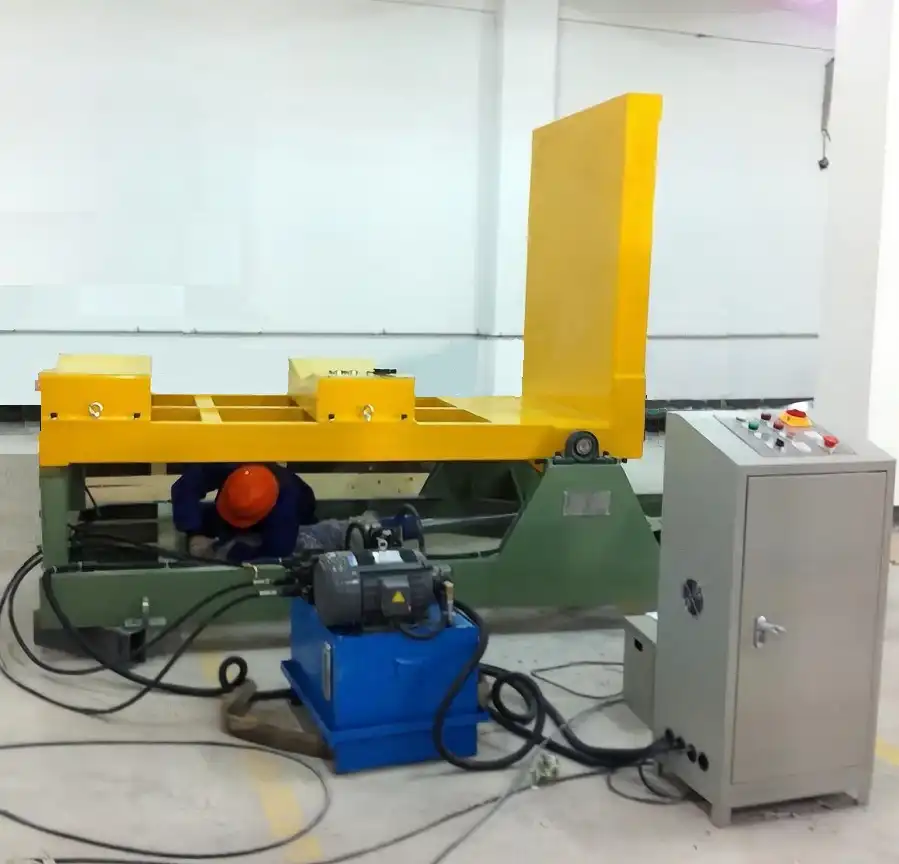
Hydraulic coil turning machines typically cost $35,000-$80,000, while mechanical models range from $20,000-$45,000. The price difference reflects distinct operational advantages: hydraulic systems offer superior control for delicate coils and higher weight capacity, while mechanical models provide faster cycle times and lower maintenance costs. Your choice should depend on production volume, coil specifications, and long-term operational goals.
Transition Paragraph:
Understanding the real cost difference between hydraulic and mechanical coil turning machines requires looking beyond the initial price tag. Let's explore the key factors that determine your total investment and which technology makes the most sense for your Mexican manufacturing facility's specific needs.
1. What Factors Determine Coil Turning Machine Prices?
Leading Paragraph:
When Michael reviews equipment proposals for his Mexican steel plant, he often sees wildly different prices for what appear to be similar coil turning machines. The confusion is understandable—multiple technical and operational factors create significant price variations that aren't immediately obvious to even experienced plant managers.
Snippet Paragraph:
Coil turning machine prices are determined by six key factors: capacity (3-20+ tons), automation level, construction materials, safety features, brand reputation, and after-sales support. According to Randal Liu, SHJLPACK's founder, "Many factories overpay for features they don't need while underestimating maintenance costs that impact long-term ROI."

Dive Deeper Content:
The true cost of a coil turning machine extends far beyond the initial purchase price. Understanding what you're actually paying for helps prevent budget overruns and ensures you select equipment that delivers maximum value for your specific application.
Capacity and Weight Specifications
Coil weight capacity is the primary price driver. Machines handling 3-5 ton coils typically cost 40-60% less than units designed for 15-20 ton capacities. However, buying excess capacity wastes money, while insufficient capacity risks equipment failure and safety hazards.
| Price Range by Capacity: | Coil Weight Capacity | Hydraulic Machine Price | Mechanical Machine Price |
|---|---|---|---|
| 3-5 tons | $35,000-$45,000 | $20,000-$28,000 | |
| 5-10 tons | $45,000-$60,000 | $28,000-$38,000 | |
| 10-20 tons | $60,000-$80,000 | $38,000-$45,000 |
Automation Level and Control Systems
Basic manual controls keep costs down but limit productivity. Semi-automatic systems with programmable logic controllers (PLCs) add 15-25% to the price but improve consistency and reduce operator error. Fully automated systems integrated with your steel coil packing line can double the initial investment but typically pay back within 18-24 months through labor savings and increased throughput.
Construction Quality and Durability
Heavy-duty steel frames, precision-machined components, and industrial-grade hydraulics cost more upfront but dramatically reduce maintenance expenses and downtime. According to industry data, Mexican factories using premium-built coil turners report 40% lower repair costs over 5 years compared to budget models.
Key Decision Factors for Mexican Plants:
- Local Service Support: Machines from SHJLPACK include Spanish-language technical support and local service partners in major Mexican industrial regions
- Power Compatibility: Ensure equipment matches Mexico's 220V/60Hz power standards to avoid costly electrical modifications
- Climate Considerations: Dust protection and temperature tolerance for harsh industrial environments
- Spare Parts Availability: Choose brands with established supply chains in Latin America
2. How Do Hydraulic and Mechanical Coil Turner Operating Costs Compare?
Leading Paragraph:
Michael recently calculated that his plant's manual coil handling costs over $85,000 annually in labor, injuries, and product damage. He knows automation will help, but which technology—hydraulic or mechanical—delivers the best long-term operating cost savings for his high-volume production environment?
Snippet Paragraph:
Mechanical coil turners typically have 20-30% lower operating costs than hydraulic models, with simpler maintenance and fewer wearable components. However, hydraulic systems offer better value for heavy-duty applications where precision control prevents costly coil damage. SHJLPACK's analysis shows Mexican plants achieve optimal ROI with hydraulic systems for coils over 8 tons and mechanical for lighter applications.

Dive Deeper Content:
Operating costs represent 60-70% of your total equipment expenditure over a 7-year lifecycle. Choosing between hydraulic and mechanical technology requires careful analysis of your specific operational patterns and maintenance capabilities.
Maintenance Requirements and Costs
Hydraulic systems demand regular fluid changes, filter replacements, and seal inspections. Mechanical systems primarily require lubrication and occasional chain or gear adjustments.
| 5-Year Maintenance Cost Comparison (Mexican Industrial Rates): | Maintenance Item | Hydraulic System Cost | Mechanical System Cost |
|---|---|---|---|
| Routine Service | $1,200/year | $600/year | |
| Component Replacement | $3,500-5,000 | $1,800-2,500 | |
| Fluid/Filter Costs | $800-1,200/year | $150-300/year | |
| Downtime Impact | 3-5 days/year | 1-2 days/year | |
| Total 5-Year Cost | $12,000-18,000 | $5,000-8,000 |
Energy Consumption Analysis
Hydraulic power units typically draw 15-25 kW during operation, while mechanical systems operate on 7.5-15 kW motors. For Mexican factories operating 16 hours daily, this translates to:
Annual Energy Cost (Mexican Industrial Rates):
- Hydraulic system: 18 kW × 16 hrs × 250 days × $0.12/kWh = $8,640/year
- Mechanical system: 11 kW × 16 hrs × 250 days × $0.12/kWh = $5,280/year
Labor Efficiency Impact
Automated coil turners reduce manual handling from 4 workers to 1 operator. For Mexican plants with average labor costs of $18,000/year per worker, this creates annual savings of $54,000 regardless of technology choice.
Damage Prevention Value
Hydraulic systems provide smoother, controlled rotation that reduces coil edge damage by 70-80% compared to mechanical systems. With premium steel coils valued at $2,000-5,000 each, preventing just 2-3 damage incidents annually can justify the hydraulic premium.
3. Which Safety Features Deliver the Best Value for Mexican Factories?
Leading Paragraph:
After a near-miss incident where a manually turned coil almost crushed a worker, Michael made equipment safety his top priority. He needs coil turning machines with proven safety records that meet Mexico's stringent NOM standards while providing tangible operational benefits.
Snippet Paragraph:
The most valuable safety features for Mexican factories include emergency stop systems, anti-slip rotation platforms, overload protection, and enclosed moving parts. SHJLPACK machines exceed Mexican NOM-001-STPS standards with laser guarding and automatic locking, reducing workplace injuries by 85% while improving operational efficiency through reduced safety-related downtime.

Dive Deeper Content:
Safety shouldn't be an expensive add-on but an integral design element that enhances both protection and productivity. The right safety features pay for themselves by preventing costly accidents, reducing insurance premiums, and maintaining continuous production flow.
Essential Safety Systems and Their ROI
1. Emergency Stop and Positioning Systems
- Cost: $2,000-4,000 additional
- Value: Prevents catastrophic failures and protects workers
- ROI: Typically 6-12 months through accident prevention
2. Anti-Slip Rotation Platforms with Gripper Technology
- Cost: $1,500-3,000 additional
- Value: Eliminates coil slippage that causes product damage and worker injuries
- ROI: 3-8 months through damage reduction
3. Load Monitoring and Overload Protection
- Cost: $2,500-4,500 additional
- Value: Prevents equipment damage from overloading and alerts operators to potential issues
- ROI: 8-15 months through maintenance cost reduction
Mexican Regulatory Compliance
All coil turning equipment in Mexico must comply with NOM-001-STPS-2008 for electrical safety and NOM-004-STPS-1999 for machine guarding. SHJLPACK systems include:
- Spanish-language safety documentation and labels
- Local certification support through Mexican partners
- Training programs aligned with STPS requirements
- Regular safety updates for regulatory changes
Safety Investment Case Study: Mexican Steel Plant
🏭 Medium Steel Processor in Monterrey
- Challenge: 3 coil-handling injuries in 12 months, costing $45,000 in medical and downtime
- Solution: SHJLPACK hydraulic coil turner with enhanced safety package
- Results:
- Safety: Zero injuries in 18 months of operation
- Insurance: 22% premium reduction saving $12,000 annually
- Efficiency: 15% faster coil changeover reducing bottlenecks
Implementation Steps for Safety Upgrades:
- Conduct risk assessment of current coil handling processes
- Identify critical protection points based on incident history
- Select machines with integrated safety rather than add-ons
- Train operators on both operation and safety protocols
- Establish maintenance schedules for safety systems
- Document safety performance for continuous improvement
4. What ROI Can Mexican Plants Expect from Coil Turning Automation?
Leading Paragraph:
Michael's management team questions whether automating coil turning justifies the investment. They need concrete numbers showing how the equipment will pay for itself while addressing their specific operational challenges in the competitive Mexican steel market.
Snippet Paragraph:
Mexican plants typically achieve 12-24 month ROI on coil turning automation through labor reduction, damage prevention, and efficiency gains. SHJLPACK's data shows average annual savings of $65,000-$95,000 for medium-sized facilities, with hydraulic systems delivering better ROI for heavy coils and mechanical systems excelling with standard-weight products.
Dive Deeper Content:
Calculating accurate ROI requires looking beyond simple labor replacement to include hidden costs and benefits that impact your bottom line. The most successful automation projects consider both quantitative financial returns and qualitative operational improvements.
Comprehensive ROI Calculation Framework
Initial Investment Components:
- Equipment purchase price: $25,000-80,000
- Installation and commissioning: $3,000-8,000
- Operator training: $1,000-2,000
- Facility modifications: $2,000-10,000
Annual Savings Breakdown:
| Savings Category | Mechanical Turner | Hydraulic Turner |
|---|---|---|
| Labor Reduction (3 workers) | $54,000 | $54,000 |
| Damage Prevention | $8,000-15,000 | $12,000-22,000 |
| Efficiency Gains | $6,000-10,000 | $8,000-12,000 |
| Safety Cost Reduction | $5,000-8,000 | $6,000-10,000 |
| Maintenance Savings | $3,000-5,000 | $1,000-3,000 |
| Total Annual Savings | $76,000-92,000 | $81,000-101,000 |
ROI Timeline Analysis
Mechanical Coil Turner ($35,000 investment):
- Year 1: $82,000 savings = 134% return
- Payback period: 9 months
- 5-year net value: $375,000
Hydraulic Coil Turner ($55,000 investment):
- Year 1: $91,000 savings = 65% return
- Payback period: 15 months
- 5-year net value: $400,000
Non-Financial Benefits with Tangible Value
1. Production Flexibility
Automated coil turners enable quicker changeovers between different coil sizes and types, allowing Mexican plants to accept smaller, more profitable specialty orders without disrupting main production lines.
2. Quality Consistency
Precise, repeatable turning motion eliminates variation in manual handling, improving packaging quality and reducing customer complaints by 60-75%.
3. Workforce Development
Automating dangerous manual tasks allows skilled workers to focus on higher-value activities, improving employee satisfaction and retention in Mexico's competitive labor market.
Implementation Best Practices for Maximum ROI:
- Phase installation during planned maintenance periods to minimize disruption
- Cross-train operators from multiple shifts to ensure full utilization
- Establish performance metrics before installation to measure improvement
- Leverage supplier expertise for optimal machine configuration and setup
- Plan preventive maintenance schedules to maintain peak performance
Conclusion
Choosing between hydraulic and mechanical coil turning machines requires careful analysis of your specific production needs, budget, and operational goals. The right investment not only improves efficiency but transforms your material handling safety and reliability. For complete packaging solutions, consider integrating with a full steel coil packing line to maximize your automation benefits.
FAQ Section
Frequently Asked Questions
Q: What maintenance training do operators need for coil turning machines?
A: Basic maintenance requires 2-3 days of training covering daily inspections, lubrication points, and troubleshooting common issues. SHJLPACK provides Spanish-language training materials and onsite support for Mexican facilities to ensure proper equipment care and longevity.
Q: How long does installation typically take for automated coil turners?
A: Most installations require 3-5 days, including positioning, electrical connections, and testing. SHJLPACK engineers typically complete commissioning within one week, minimizing disruption to your production schedule while ensuring optimal performance.
Q: Can coil turning machines handle different coil diameters and weights?
A: Yes, modern coil turners feature adjustable settings for various coil specifications. SHJLPACK models accommodate diameters from 800mm to 2,000mm and weights from 3 to 20 tons, with quick-change adaptations for mixed production environments common in Mexican steel plants.
Q: What warranty and technical support is available for Mexican customers?
A: SHJLPACK provides 24-month warranty coverage with Spanish-speaking technical support available via phone, email, and video conference. For critical issues, local service partners in major Mexican industrial regions typically provide onsite support within 48-72 hours.
Q: How do automated coil turners integrate with existing production lines?
A: Integration varies by automation level. Basic models work as standalone units, while advanced systems connect with conveyor systems and packing stations. SHJLPACK engineers conduct pre-installation assessments to ensure seamless integration with your current steel coil packing line and material flow.


